Motorcycle Running Lean Atlanta — How to Fix It
A rider got quoted for a whole new fuel system. Here's what was really going on, and how we'd find it.
A friend rode over last spring with a folded quote in his tank bag and a face like he already knew the number was wrong. Another shop had listened to his bike idle for maybe ten seconds and written him up for a whole new fuel system. Of course, he didn’t pay it, and he was right not to. What he actually had is the thing behind a search plenty of people type in a quiet panic — motorcycle running lean Atlanta riders ask us about almost every week — and it’s usually far more fixable than that quote made it sound.
In fact, let’s start with the phrase itself, because it does a lot of heavy lifting. Your engine wants a steady recipe of air and fuel on every stroke. When there’s too much air and not quite enough fuel in that mix, we call it running lean. When there’s too much fuel, we call it running rich. Neither one is a moral failing on your bike’s part. It’s simply a recipe that drifted off, and recipes can be corrected.
What running lean actually feels like from the seat
Here’s the honest part: you usually feel a lean condition long before you can put words to it. The bike pops and snaps on deceleration, little firecracker sounds out the pipe every time you roll off the throttle. At a steady cruise it surges, like it can’t quite hold a smooth line. Pull the clutch at a light and the idle hangs high, then drops slowly instead of settling right down. On a warm day it runs hotter than it should. And a hard lean condition can even make it stumble or cut out low in the rpm range.
Riders describe all of this a dozen different ways. Some say the bike feels “busy” or “nervous.” Others only notice it on the reverse commute up I-75 to East Cobb, cruising north mid-morning against the inbound wave, where the bike should feel relaxed but instead keeps hunting for a steady idle at every single stop. If that’s you, you’re not imagining things, and you’re not being fussy. You’re feeling a real, measurable thing.
Why a bike runs lean in the first place
Nearly every motorcycle running lean Atlanta riders show us traces back to one of a handful of causes. We’ll list them the way we actually rank them in the shop, most common first, so you can see where your money and time are likely to go.
- An aftermarket exhaust or slip-on bolted on with no matching tune. This is the big one. More airflow out the back, same fuel map, instant lean.
- An intake or air filter change for the same reason — more air in, fuel didn’t move to match.
- A vacuum or exhaust leak sneaking in extra air the bike never planned for.
- Clogged or lazy injectors, or a tank of old, dirty fuel starving the mix.
- Weather and altitude nudging the tune off, which matters more than folks think as seasons swing.
- A tired sensor feeding the computer bad numbers, so it fuels for a world that isn’t there.
See the pattern? Most lean conditions come from a change that only did half the job. Somebody added a pretty pipe and stopped. The air side got louder; the fuel side never got the memo. That’s good news, honestly, because a recipe problem is a recipe fix. It also explains why two identical bikes can behave completely differently. One got tuned after the exhaust went on, the other didn’t, and now they idle like two different machines. Your bike isn’t broken. It just got half an upgrade and has been trying to cope ever since.
Here’s the part nobody tells you up front, though. There’s a version of this that’s cheap and a version that isn’t. If your bike went lean because a slip-on got installed without a retune, the fix is mostly knowledge and time on a machine, not a pile of new parts. But if it went lean because an injector is failing or a sensor died, then a part genuinely does need to change. The whole trick is knowing which story is true before anyone orders a single thing.
How we actually find the real cause
This is where a dyno earns its keep. A dyno is a stand with a big roller drum. We strap the bike down, spin the rear wheel against that drum, and hold the engine under load exactly like it’s climbing a hill — without either of us going anywhere. While it pulls, a wideband probe sits in the exhaust and reads the air-fuel ratio, the actual recipe, moment by moment, all the way up the rpm range. It’s the same wideband approach you can read about over at Dynojet’s dyno center.
That number is the whole ballgame. On the monitor, a lean stretch shows up as a line sitting where it shouldn’t, and we can point right at the rpm where the trouble lives. Idle lean, midrange lean, top-end lean — they’re different problems with different fixes, and guessing between them is how a good bike gets a bad reputation. Before we touch a map, we also rule out the mechanical gremlins, so we’re never tuning around a leak we could have just tightened. It’s a little like a doctor reading a chart before writing a prescription. Nobody wants the version where somebody skips the reading and just starts swapping expensive parts, hoping one of them was the culprit. The dyno turns a hunch into a picture, and a picture is a lot cheaper to act on than a guess.
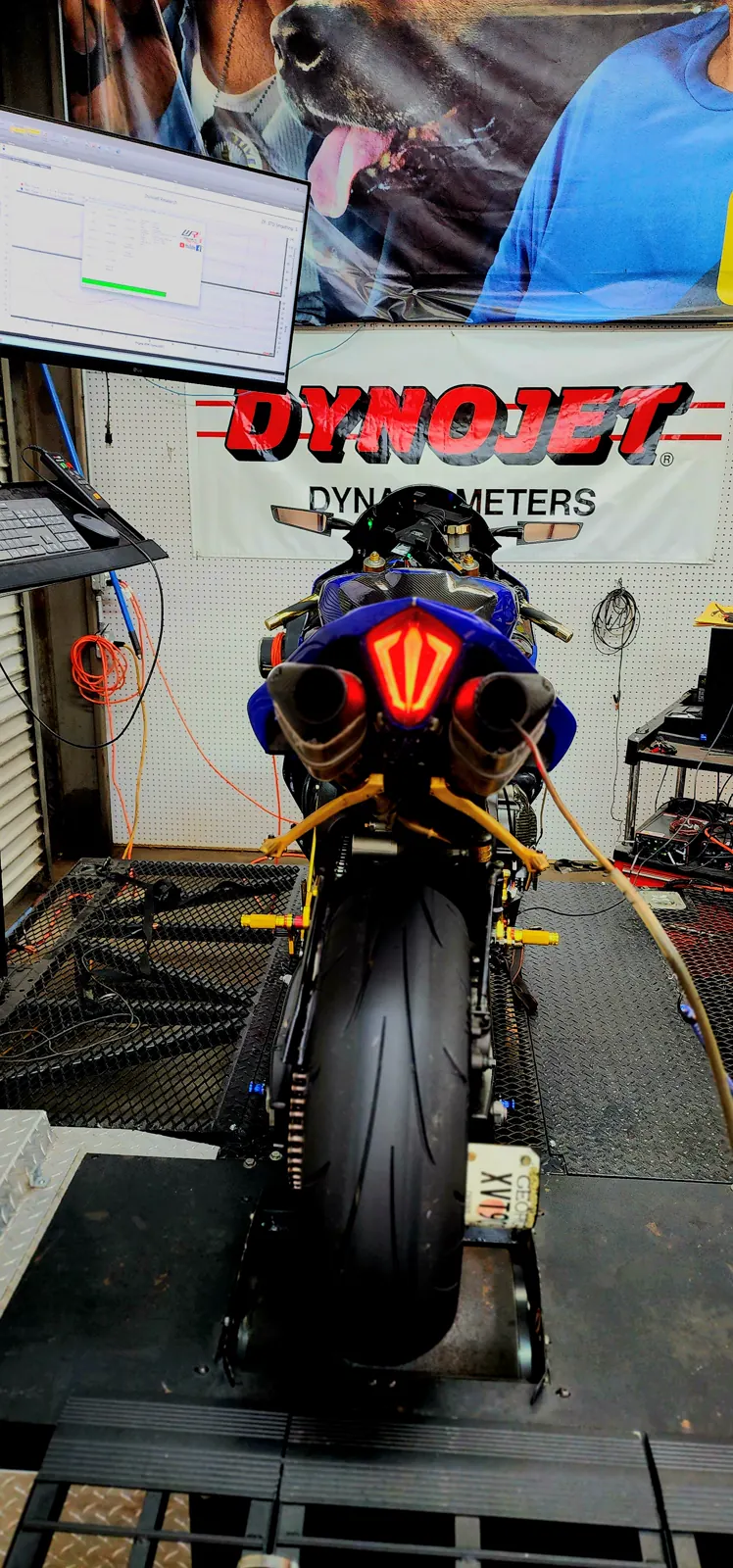
A dyno doesn't guess. It reads the bike back to you, one rpm at a time.
What the fix actually involves
Once we can see the recipe, correcting it is calm, methodical work. Most modern bikes get an ECU flash — we reprogram the brain the bike already has with a fuel map matched to your exact exhaust, intake and riding. Some bikes ride better with a Power Commander, a small box that fine-tunes fuel on the fly. Both roads lead to the same place: the right amount of fuel, everywhere. If you’re weighing a factory setup against a custom map, we broke down the tradeoffs between them in plain language, and our full dyno tuning services lay out the whole process.
Here’s roughly how a session runs, start to finish:
- Baseline the bike on the dyno and read the air-fuel ratio across the whole rpm range.
- Rule out the mechanical stuff — leaks, sensors, fuel delivery — so we’re never tuning around a hidden fault.
- Load a fresh map, either an ECU flash or a Power Commander, matched to your exact setup.
- Make pulls, read the graph, nudge the fuel, and repeat until the recipe is right from idle to redline.
- Send you home on a bike that finally behaves.
The good news about a motorcycle running lean Atlanta riders lose sleep over is that it’s almost always tunable, not replaceable. If you want a fuller picture of the bench work behind it, another one of our posts walks through what that service actually involves, step by step.
Is it safe to ride while it's running lean?
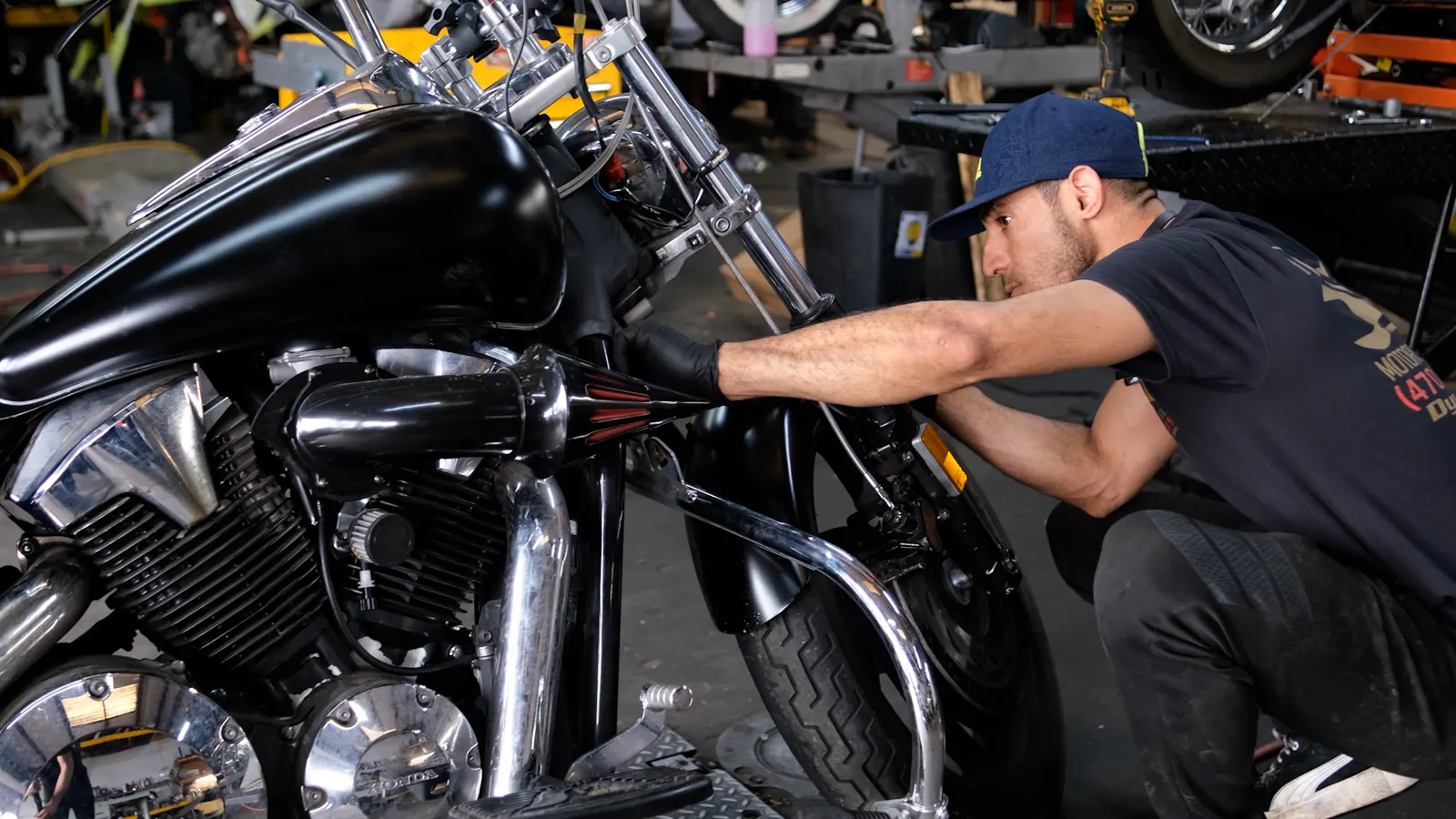
Fair question, and the honest answer has two halves. A mild lean condition — a little popping, a slightly high idle, nothing dramatic — is usually fine to ride gently for the short trip to get it checked. Plus, a hard lean condition is a different animal. If the bike stumbles, cuts out, or runs noticeably hot, park it and text us. Lean plus heat is the combination that actually wears an engine, and there’s no reason to gamble a good motor to save one trip. When in doubt, roll it into the shade and message us a voice memo of the sound. We can usually tell a lot from that alone.
Why in-town riders end up in Marietta anyway
Here’s the local piece. There’s no dense cluster of full-service motorcycle shops inside the Perimeter, so in-town riders already drive out for real work, and dyno time is exactly the kind of work you can’t get on your block. We see bikes roll in from all over the map. A cruiser comes down from the estate streets of Tuxedo Park, where the Governor’s Mansion sits, its owner far more worried about how the bike behaves than about what the fix costs. Meanwhile, a cafe racer rides over from Blandtown, the old settlement along Huff Road that’s turning into new construction almost faster than you can watch it happen. A cottage-sized commuter putters up from Peachtree Hills, the 1910 neighborhood tucked between Peachtree Creek and Lindbergh Drive. Different bikes, same drifted recipe.
A lot of them first noticed the problem in the worst possible spot. Idling lean and hot in stop-and-go near Phipps Plaza, that luxury mall across Peachtree from Lenox. Crawling down Moreland Avenue, US 23, the east-side artery that ties together Little Five Points, Reynoldstown and East Atlanta. A lean bike genuinely hates sitting still, and Georgia riders can’t legally filter out of a jam either — state law keeps you fully in your lane — so when the Connector locks up, you sit in the heat with the clutch pulled in, listening to a lean idle hunt. That’s a cooling-and-clutch story more than a time story. A few friends have even described the deceleration pops echoing off the walls of the Krog Street Tunnel, the graffiti tunnel between Cabbagetown and Inman Park, loud enough to turn every head at the mouth of it. Fun the first time. Old by the third week.
From most of those neighborhoods we’re about 13 miles and 20 to 30 minutes out of Buckhead, a little more from West Midtown or Old Fourth Ward, and worth every minute when the bike comes back right. Add 20 to 40 minutes at rush hour, of course, because this is Atlanta. Our neighbors over at Vespa Marietta keep the scooter, Piaggio and Royal Enfield crowd happily rolling, and they do good work. Dyno tuning and custom mapping is simply a different bench — and it’s the bench we live at.
What it feels like when it's finally right
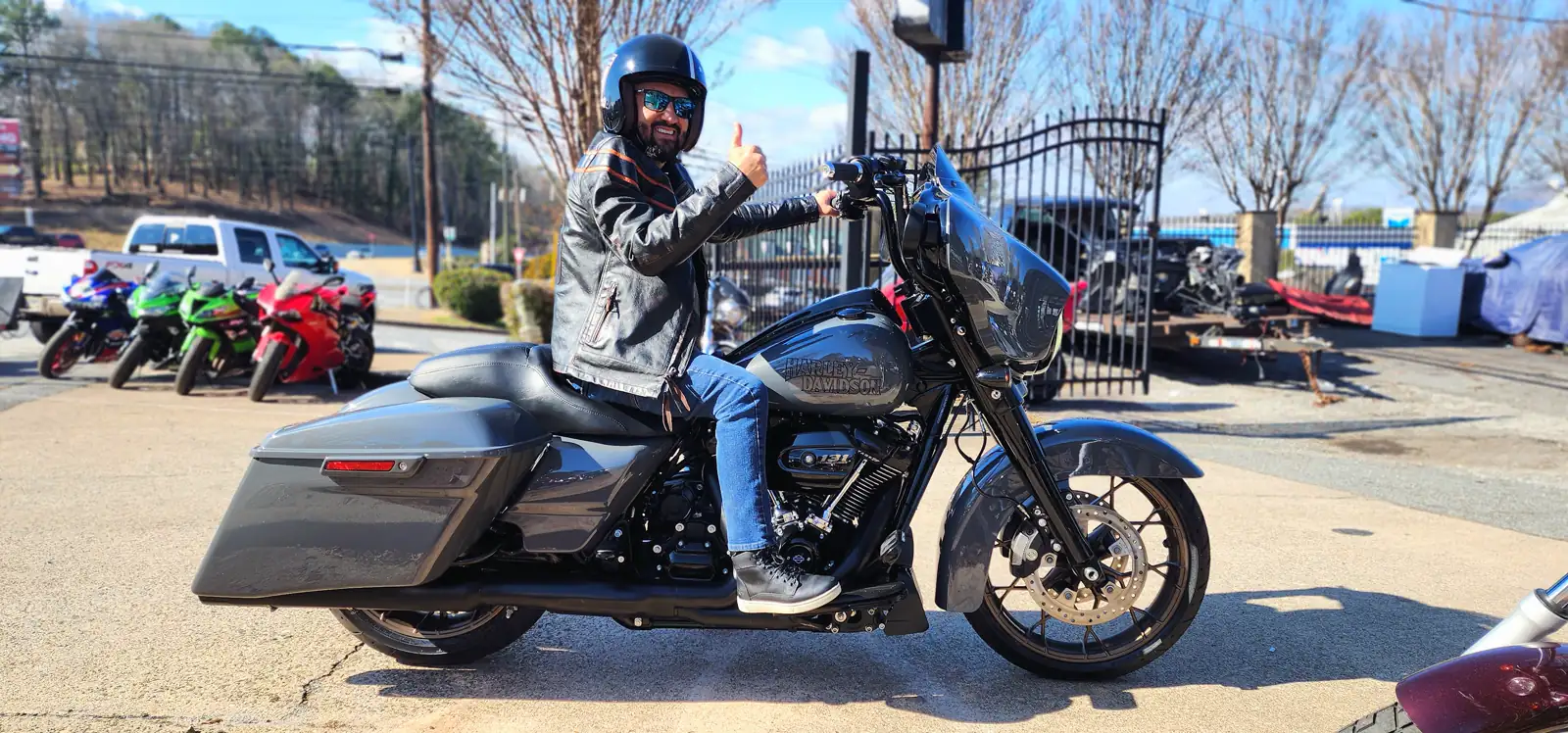
When the recipe lands, the bike quits fighting you. The popping quiets down. The idle drops and settles like it’s supposed to. Roll-on gets smooth and predictable, the heat comes down, and the engine pulls clean from the bottom instead of stumbling into the fun part. Friends we’ve helped tend to describe it the same way — like getting their bike back. Same machine, none of the jitter. That’s the feeling we’re actually chasing, and it’s a lot closer than a whole-new-fuel-system quote would ever let you believe.
And once your bike is dialed in and behaving, it’s honestly a better time to sharpen your own riding too. Brushing up with MSF rider courses never hurts, and a tuned bike makes every lesson easier to feel. If you’re just outside town, we also walked through how this plays out in Alpharetta, where the story is nearly identical.
THE SHORT VERSION
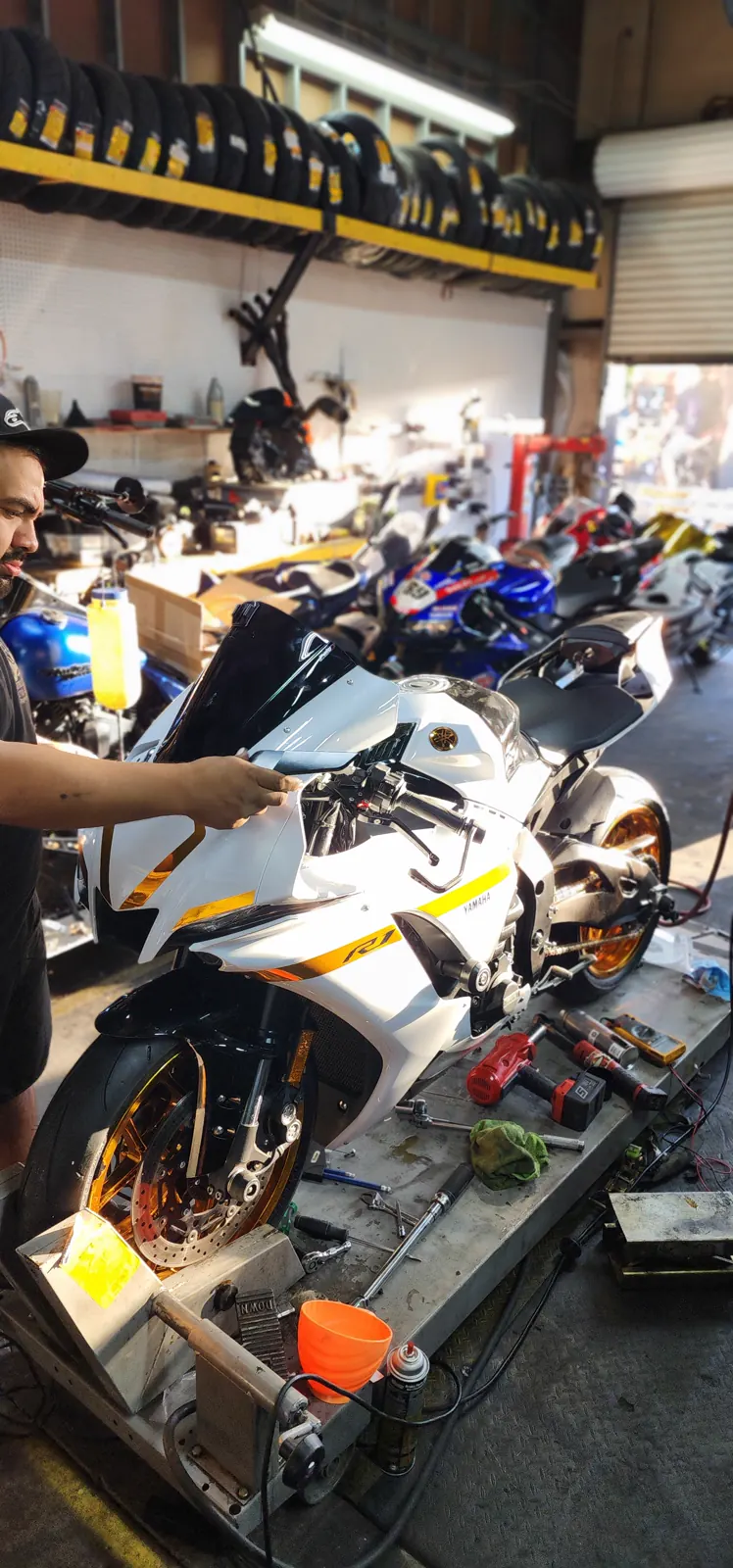
Lean usually means a change was made without a matching tune. A dyno reads the real recipe, a fresh map corrects it, and mild cases are safe to ride gently in for a look. Hard cases — stumbling, cutting out, running hot — get parked and texted about first.
Questions Atlanta riders ask us
How do you actually find what's making my bike run lean?
We strap the bike to the dyno and load the engine while a wideband probe reads the air-fuel ratio across the whole rpm range. That shows us exactly where it’s lean — idle, midrange or top end. Then we rule out leaks, sensors and fuel delivery before we change a single line of the map.
Could it be something other than the tune?
Definitely, which is why we test instead of guess. A vacuum leak, a failing sensor, a clogged injector or a tank of old fuel can all mimic a lean tune. Finding the difference on the dyno is what keeps you from paying to fix the wrong thing.
Is it safe to ride while it's running lean?
A mild lean — light popping, a slightly high idle — is usually fine for a gentle trip in to get it checked. A hard lean that stumbles, cuts out or runs hot should be parked, because lean plus heat is the combination that wears an engine. When you’re not sure, text us a quick voice memo of the sound and we’ll tell you.
What usually causes a bike to go lean?
The most common cause by far is an exhaust or intake change without a matching retune — more air, same fuel. After that come vacuum or exhaust leaks, weather and altitude swings, tired sensors, and dirty fuel or clogged injectors. We rank them that way when we start looking.
Can I fix a lean condition myself?
Some of the groundwork, sure. Cleaning a filter, checking for obvious leaks and running fresh fuel are all fair game at home. But dialing in the actual fuel map safely needs a dyno and a wideband reader, because guessing at fuel usually makes the problem worse before it gets better.
Why drive all the way to Marietta for this?
There’s no dense cluster of shops with an in-house dyno inside the Perimeter, so most in-town riders already drive out for real service. For most Atlanta neighborhoods we’re roughly 20 to 40 minutes away, and a proper tune only happens once — then you just enjoy the bike.
We tune bikes for riders all over metro Atlanta, so wherever you park yours, we’ve probably fixed a lean one nearby. That includes Buckhead and Midtown in the city, plus Decatur, Sandy Springs, Smyrna, Vinings, Brookhaven, Chamblee, East Point, Mableton and Tucker. And of course we’re right at home in Marietta, where the dyno lives. If your neighborhood isn’t on that list, you’re almost certainly still an easy ride away.
TEXT US ABOUT YOUR LEAN BIKE
If your bike pops, surges or idles high, don’t buy a whole new fuel system before anyone reads the real recipe. Send us a quick text from anywhere in Atlanta — even a short voice memo of the sound helps — and we’ll tell you what we’re hearing and get it on the dyno in Marietta. Getting your bike back to smooth is closer than that scary quote made it look.
470-460-9883Diaz Motorcycles and Service, LLC · 847 Barnes Mill Road, Marietta, GA 30062