Dyno Tuning Cost Atlanta — What You Pay
What a dyno really measures, why a bike runs lean or rich, and why a good shop looks before it quotes.
You own three bikes. Meanwhile, the supermoto lives closest to the door because you ride it most. Of course, the cruiser sleeps under a cover in the corner. In fact, and the sportbike in the back has been begging for a real tune since spring. For example, each one goes to a different shop, and each shop tells you something different. So when you finally sit down to work out dyno tuning cost Atlanta riders actually pay, the number feels like a moving target. Even so, here’s the good news: it’s a lot simpler than it looks once you know what the job really is.
What you're really asking
When you type dyno tuning into a search bar, you’re not really asking about a machine. You’re asking a bigger question. Is my bike running its best? What’s more, Am I leaving something on the table? After that, and what will it take to make it right? Also those are fair questions, and every rider we help asks some version of them. Instead let’s answer them in plain words, one at a time.
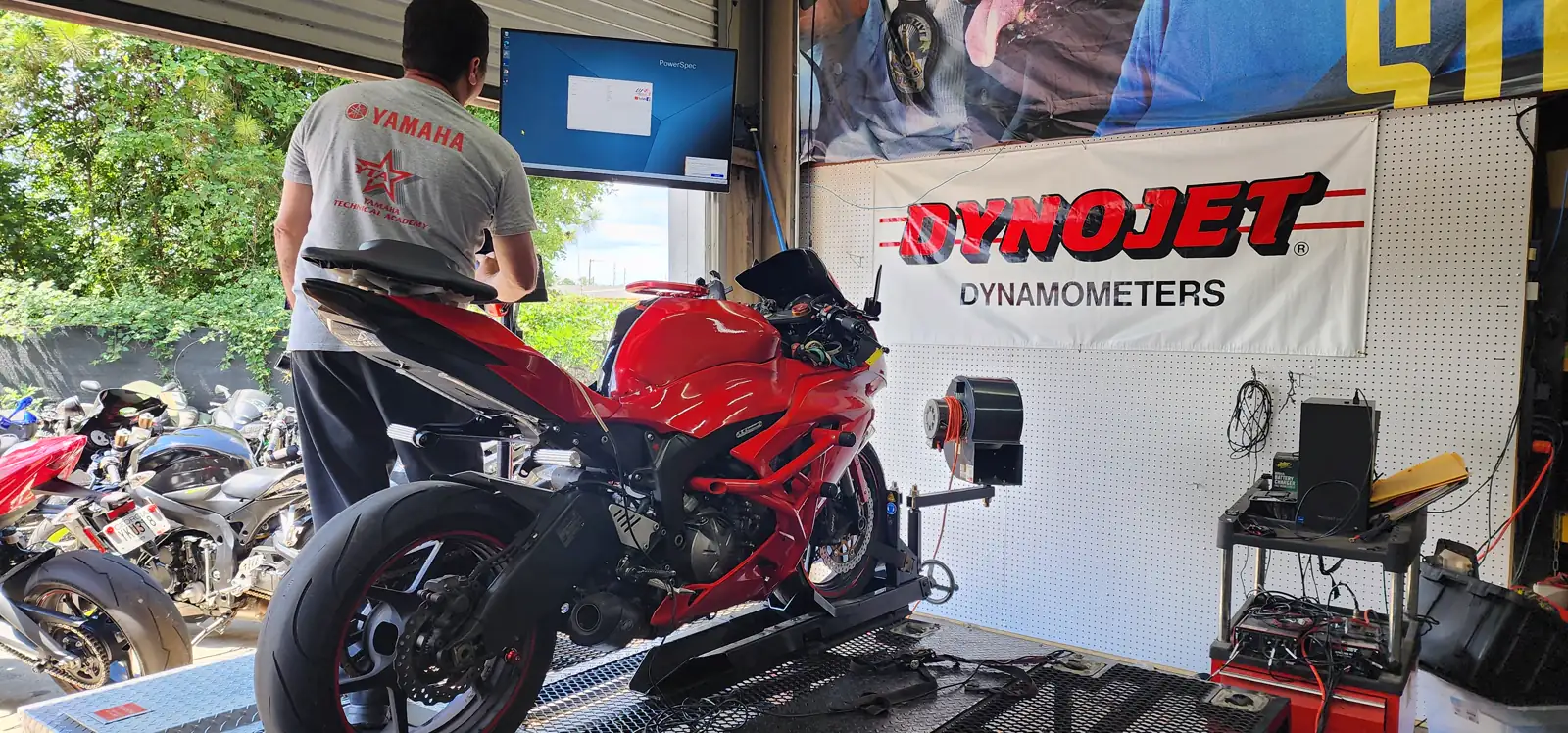
First, what a dyno even is. Picture a treadmill for your bike. Besides the rear wheel spins a big steel drum instead of the road. Actually the bike stays put, strapped down tight, while a technician runs it up through the gears. That’s why Sensors read how much power reaches that drum across the whole rev range, from a lazy idle all the way to redline. That’s it. No magic, no smoke. Either way it’s just a very honest scale for your engine, and it can’t be sweet-talked.
While the bike spins, the dyno also sniffs the exhaust. In short that reading tells us the air-fuel mix. At the same time every engine wants a certain balance of air and gas to burn clean and strong. As a result Too much air and not enough fuel, and we call that lean. On the other hand Too much fuel and not enough air, and that’s rich. So both cause trouble, just different kinds of trouble. Still, the dyno shows us, in real numbers, exactly where your bike sits.
Why a bike runs lean or rich
A lean bike runs hot. Plus, it can surge at steady speed, pop on the downshift, and feel snatchy when you crack the throttle. Meanwhile, run it lean long enough and you risk real heat damage inside the motor. Of course, a rich bike is the flip side. In fact, it wastes gas, fouls its plugs, and feels lazy and soft down low. For example, Neither is how the factory wants it, but bikes drift there anyway. Even so, a new pipe, a fresh air filter, a change in elevation, even our thick Georgia summer air all nudge the mix off target.
Here’s the part that surprises people. What’s more, Bikes leave the factory tuned a touch lean on purpose. After that, Emissions rules push builders to run them that way so they pass clean at the dealer. Also that keeps the regulators happy, sure, but it isn’t what makes your engine feel awake. Instead a proper tune walks the mix back to where the motor is smooth, cool, and eager. Nothing gets abused. Besides it just gets set the way the engineers would have if the rules let them.
The honest answer about cost
Now the question you came for. What does dyno tuning cost Atlanta shops charge, and why won’t a good one just blurt a number over the phone? The plain truth is that the number depends on your bike and what it needs. A tune isn’t one fixed thing you pull off a shelf. It’s a range of work, and where your bike lands on that range decides the size of the job. That’s not a dodge. It’s just honest.
Think of it in two buckets: parts and labor. Some bikes only need labor. We strap it down, read the mix, and rewrite the fuel map that already lives in the bike’s own computer. Nothing new gets bolted on at all. Other bikes need parts first. Maybe a Power Commander to piggyback the stock computer, or a full ECU flash to rewrite the factory brain. Add a fuel controller or an auto-tune module, and now there’s hardware in the mix, plus the labor to wire it and dial it in.
PLAIN TERMS
An ECU flash rewrites your bike’s own computer. A Power Commander adds a small module that tweaks the signal on the way through. Both get you a custom map. Which one fits depends on your bike, not on us trying to upsell you.
Labor tracks with time on the dyno. A clean stock bike with a simple slip-on pipe reads quick and maps quick. A heavily modded build with cams, a big bore, and a stubborn sensor takes far longer, because we chase the map in small steps until every part of the rev range is right. More parts and more time mean more labor. That, right there, is the whole reason an honest shop won’t quote you sight-unseen.
The timing on this matters more than the fix does.
Get a tune too early, before your final pipe or filter is on, and you pay to map a bike that’s about to change. Every new part shifts the air-fuel mix, which means the map you just paid for is already stale. Do it in the right order and you tune once. So we tell friends to finish their bolt-ons first, then bring the whole package in together. One session, one dialed bike, one trip to the shop. Rush the order and you end up doing it twice, and nobody wants that.
What changes the size of the job
Two bikes can wear the same badge and still need very different work. A stocker and a built motor are not the same afternoon. Here’s what actually moves the needle:
- How modified it is. A stock bike with a slip-on is a short job. A big-bore build with cams is a long one.
- What kind of controller it needs. A simple flash, a piggyback module, or a full standalone all take different time to set.
- The bike’s condition. Worn plugs, a clogged filter, or a lazy sensor have to be sorted before we can trust a single reading.
- How the bike gets used. A track bike gets mapped differently than a stop-and-go commuter.
- Brand and model quirks. Some computers open up easy. Others fight us for every change.
None of that is a reason to worry. It’s simply why we look before we quote. When you drop the bike off, or when we come pick it up for you, we can see exactly what it’s running and hand you a straight answer. Guessing over the phone helps nobody, least of all you. A five-minute look saves everyone a bad surprise later.
Our approach, start to finish
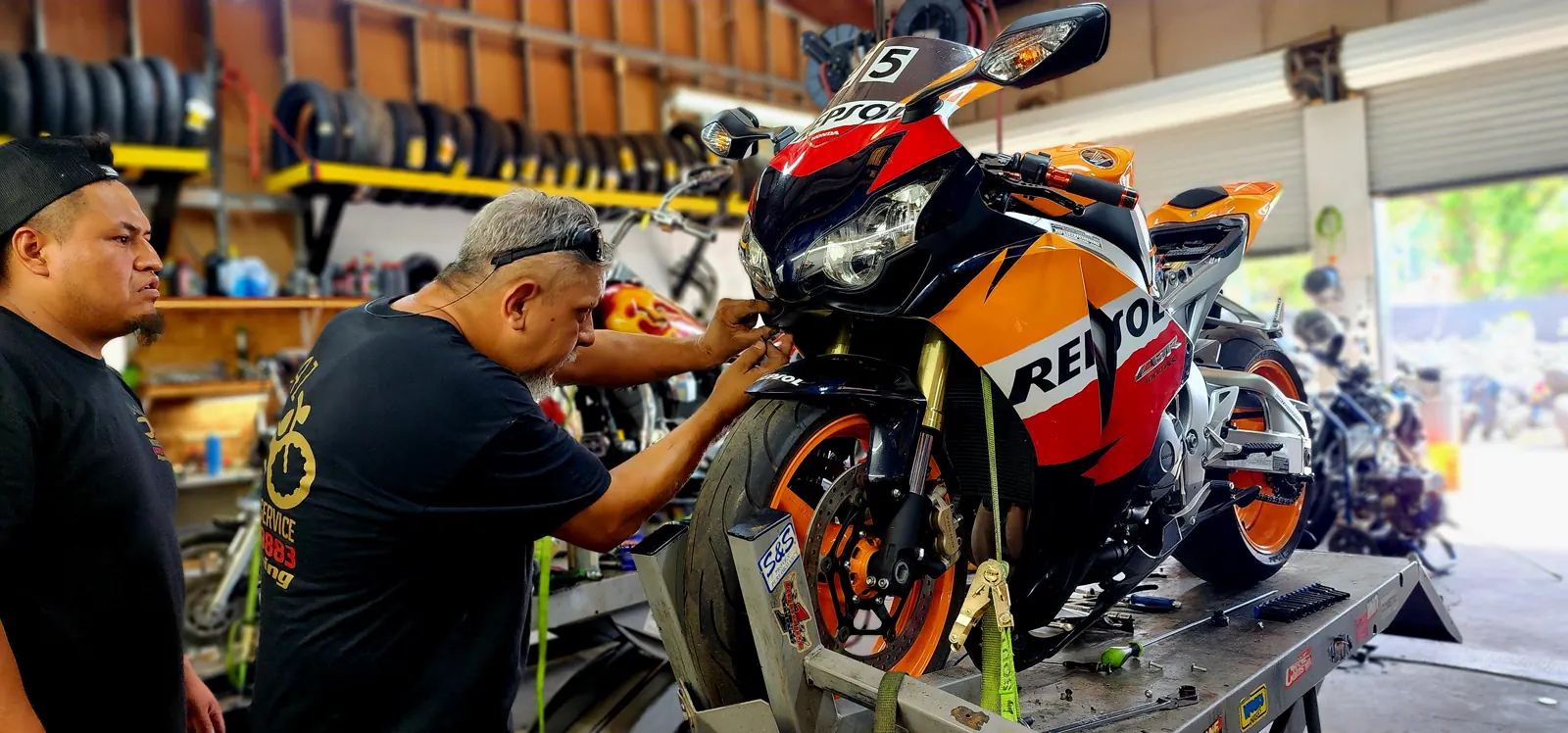
Here’s how a tune goes when you bring us a bike. Walking the whole thing start to finish takes the mystery right out of it, and it shows you where the time actually goes.
- We talk. What bike, what mods, how you ride, and what feels off. This shapes everything that follows.
- We inspect. Plugs, filter, sensors, and leaks all get a look, because a tune built on a tired part won’t hold.
- We strap it down. The bike goes on the Dynojet, cinched tight, rear wheel sitting on the drum.
- We take a baseline pull. This shows us the mix and the power curve before we touch a single thing.
- We build the map. Small changes, one zone at a time, from idle to redline, reading the exhaust the whole way.
- We confirm. A final pull checks that the whole range came out smooth, cool, and clean.
- We hand it back. You get the bike and a clear picture of what changed and why.
That inspect step is the one folks skip and later regret. A fresh map can’t fix a fouled plug or a torn intake boot. We’d much rather find it on the bench than chase a ghost on the dyno for an hour. For a fuller look at everything a session covers, here’s what we take care of here, laid out step by step.
The local picture
Atlanta’s in-town riders don’t all ride the same bike, and that shapes what rolls onto our dyno. Over in Buckhead, around the estates of Tuxedo Park near the Governor’s Mansion, we see cruisers, big touring rigs, and the city’s thickest cluster of pricey European machines. Those owners care about a bike that pulls clean and never leaves them stranded on the way to a summer show at Chastain Park Amphitheatre. For them, a smooth, trustworthy tune beats a bragging number every time.
Head east and the whole story flips. Along Moreland Avenue and the tight east-side grid, short trips make small-displacement bikes and supermotos the smart pick. Those riders want crisp throttle and no flat spots for stop-and-go duty. A rider out of Reynoldstown, the old railroad neighborhood freed families settled after the Civil War just a couple miles from Downtown, needs a different map than a Buckhead tourer, even when both bikes share the same year and badge.
In between sits a neighborhood like Peachtree Hills, the 1910s pocket of cottages between Peachtree Creek and Lindbergh Drive, where you’ll find a bit of everything on two wheels. Good shops know this. Motorcycles and Trikes of Atlanta, for instance, has built a name on Japanese bikes and Gold Wings. The point is simple: where you ride and how you ride change the tune. That’s why what separates a good shop is a session built around your bike, not a copy-paste file dropped onto every machine.
Distance is smaller than folks think, too. From Buckhead we’re roughly 13 miles up the road, about the same hop as a museum afternoon at the Atlanta History Center on West Paces Ferry. Plenty of in-town shops actually sit farther out than we do. Marietta is no farther than the alternatives, and it’s often closer for Buckhead and West Midtown riders. Northside Drive carries you most of the way here, sliding past Mercedes-Benz Stadium and Georgia Tech before it points you toward the shop.
A bike came in from Tuxedo Park with exactly this problem. The owner had a fresh exhaust and a new filter, but the bike ran hot and popped on every downshift. Classic lean. Nobody had touched the map after the parts went on. We put it on the dyno, read the mix, and walked the fuel back where it belonged. Same bike, same parts, night-and-day feel. It left cool, smooth, and quiet on decel. The fix wasn’t exotic at all. It was just done in the right order, by someone who looked first.
What you walk away with
When it’s done right, the change is easy to feel. The bike starts easier and idles steady. The throttle wakes up with no dead spots. It runs cooler, sips a little less gas, and pulls clean from the bottom of the range to the top. You don’t need a printout to notice, though we’ll show you one anyway. Your right hand does most of the reading, and it doesn’t lie.
That’s the whole point of a tune. Not a number to brag about at a stoplight, but a bike that does exactly what you ask, right when you ask it. A safer, happier ride matters more than any single figure, which is part of why groups like the Motorcycle Industry Council and the folks tracking NHTSA crash data push riders toward well-kept machines. A bike that responds the instant you want it to is a bike you can trust in traffic.
If you’re weighing shops in another part of the metro, we cover the Sandy Springs side of things too, and if you’re up north, here’s how we handle that job in Kennesaw. Same care, same dyno, same honest look, wherever you happen to ride in from.
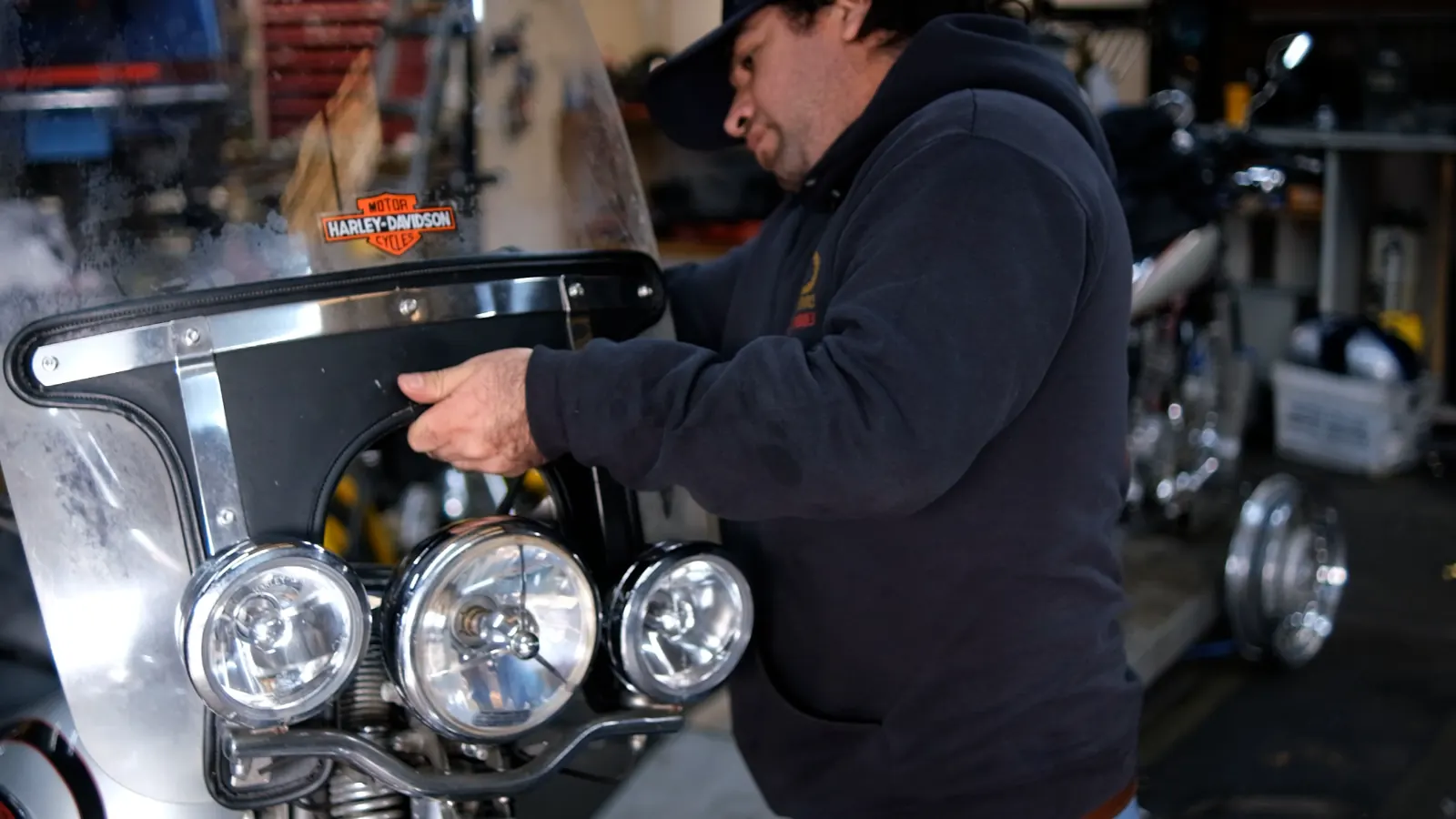
The bottom line is this. You can’t shortcut a good tune, and honestly, you shouldn’t want to. Bring us the bike, let us look it over, and we’ll give you a straight answer with no surprises tacked on at the end. That’s the honest version of dyno tuning cost Atlanta riders deserve, and once you feel the difference, you’ll wonder why the bike ever ran any other way.
Questions Atlanta riders ask us
Why can't you just quote a tune over the phone?
Because the honest number depends on your bike. A stock bike with a slip-on and a modded build with cams are two very different afternoons on the dyno. We look first, see what it’s running, then give you a straight answer. Guessing blind would only set you up for a bad surprise.
What's included in a dyno tune?
We talk through your bike and how you ride, inspect the basics, strap it down, and take a baseline pull. Then we build the fuel map in small steps from idle to redline, reading the exhaust the whole time. A final pull confirms it’s smooth and cool. You leave with the bike dialed and a clear picture of what changed.
How long does a tune take?
It depends on the work. A clean stock bike reads and maps fairly quick. A heavily modified build takes longer because we chase the map one zone at a time. We’ll give you a real time estimate once we’ve seen the bike, so you can plan your drop-off or let us pick it up.
What's the difference between parts and labor here?
Some bikes only need labor, since we rewrite the map already living in the bike’s computer. Others need parts first, like a Power Commander or an ECU flash, plus the labor to wire and dial them in. Where your bike lands decides the size of the job, and we walk you through it before anything starts.
Does the type of bike change the work?
Yes, a lot. A commuter, a track bike, a cruiser, and a supermoto all get mapped differently, and some computers open up easier than others. How modified the bike is and what shape it’s in matter too. That’s exactly why we build each session around your machine instead of reusing one file.
When is the best time to tune after adding parts?
After all your bolt-ons are on, not before. Every new pipe or filter shifts the air-fuel mix, so tuning too early means paying to map a bike that’s about to change. Finish the parts, then bring the whole package in. You tune once and it holds.
We tune and wrench for riders all across the metro, not just here in Marietta. Friends bring us bikes from Buckhead and Midtown, from Decatur and Brookhaven, and from Sandy Springs, Vinings, and Smyrna just up the road. We also help riders in Mableton, East Point, Chamblee, and Tucker. Wherever you park it, the drive is usually shorter than you’d guess, and we’re happy to pick the bike up if getting it here is the hard part.
GET YOUR BIKE DIALED
Ready to feel what an honest tune does? Text us about your Atlanta ride, tell us what you’re running, and we’ll set up a real look, no phone-quote guesswork. We can even come grab the bike. Let’s get it reading cool, smooth, and eager the way it should.
470-460-9883Diaz Motorcycles and Service, LLC · 847 Barnes Mill Road, Marietta, GA 30062