Best Dyno Tuning Atlanta — What to Look For
A dyno graph is fun to look at, but it's the last page of the story. Here's how to read the whole thing and pick a shop that tunes right.
What’s more, most riders picture a dyno as a bragging machine. After that, you strap the bike down, chase one big number, save the graph, and post it online. Also that belief is only half true, and it’s the half that leaves a lot of good bikes running rough. When you go hunting for the best dyno tuning Atlanta has to offer, the number on the screen matters far less than what the shop does with it.
The Myth: A Dyno Is Just a Horsepower Contest
Instead the horsepower line is the fun part. Besides Nobody puts a torque curve on a screen and yawns. But that curve is a report card, not a trophy. Actually it shows a tuner where your engine is starving for fuel, where it’s drowning in it, and where the timing is off. That’s why a sharp tuner reads it the way a doctor reads an X-ray. Either way the pretty line is just the summary at the bottom.
Now for the flip. In short the real point of a tune isn’t a bigger peak number. At the same time it’s a bike that pulls clean everywhere you actually ride, not just at full throttle on a closed course. Smooth roll-on out of a corner. No surging at a steady cruise. No popping on the way down. Cooler running in traffic. As a result that’s what a real tune buys you, and it’s exactly why chasing a headline number can steer you toward the wrong shop.
What a Dyno Actually Measures
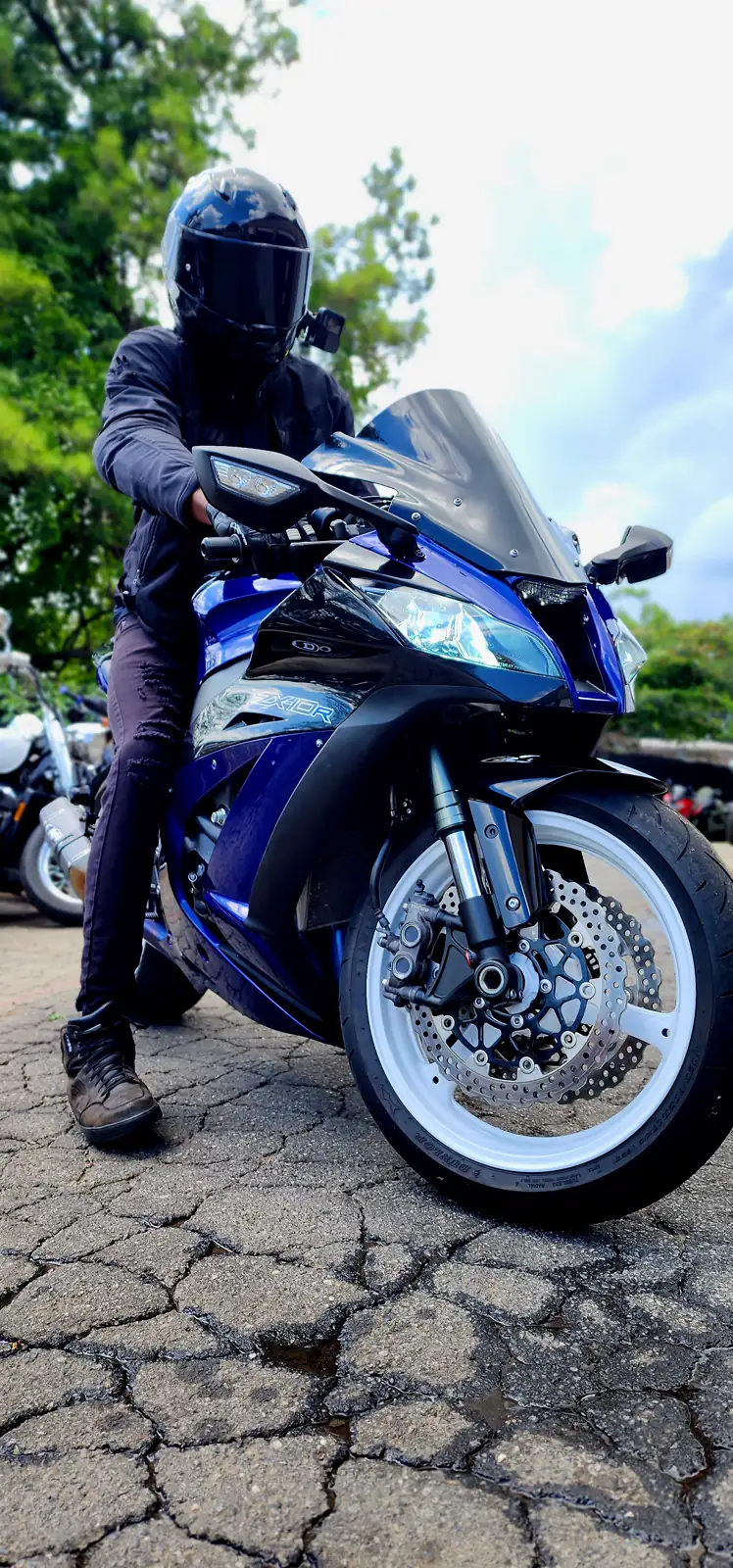
On the other hand a dyno is a big drum that your rear wheel spins against. So the machine adds resistance and measures how hard your engine has to work to keep the wheel moving. Still, From that, it figures out horsepower and torque across the whole rev range. Plus, Picture a treadmill for your bike, with sensors reading every single step.
Meanwhile, here’s the twist: the number most tuners care about isn’t horsepower at all. It’s the air-fuel ratio. A sniffer sits in your exhaust and reads how much fuel is burning against how much air. That one reading tells the tuner whether the engine is running lean, rich, or right. Everything else flows out from there.
A dyno also lets the tuner load the engine safely. On the road, you can’t hold your bike at a steady throttle up a long pull without a car cutting you off or a light turning red. On the drum, the tuner can hold that exact spot for as long as it takes to read it clean. That control is the whole reason a real tune happens on a dyno and not on a joyride around the block.
Why Your Bike Runs Lean or Rich
Lean means too much air and not enough fuel. Rich means the opposite. Bikes drift lean from the factory more often than you’d guess, because makers tune them to pass emissions rules, not to make you grin. Bolt on an aftermarket exhaust or a fresh air filter and you’ve changed the recipe again. If your bike pops on decel, runs hot, or feels flat down low, a lean condition is often what usually causes it.
Rich has its own tells. Black soot on the pipe. A whiff of raw gas. Fouled plugs and a soft, lazy throttle. Neither state is a disaster, and that’s the good news. Both are just a mismatch between what your engine breathes and what it’s being fed. A tune lines the two back up so they agree again.
Weather plays into it more than people expect, too. Hot, thick summer air changes how your engine breathes compared to a cool morning. That’s why a tune done for the roads and seasons you actually ride beats a one-size map every time. A shop that knows the local air isn’t guessing at it.
What a Good Tune Changes in How the Bike Feels
This is the point where a lot of riders make the wrong call. They feel a flat spot, throw a slip-on exhaust at it, and never touch the fuel map. Now the bike breathes differently but still eats the same, so the flat spot gets worse instead of better. A tune is the step that finally makes the new parts and the fuel agree.
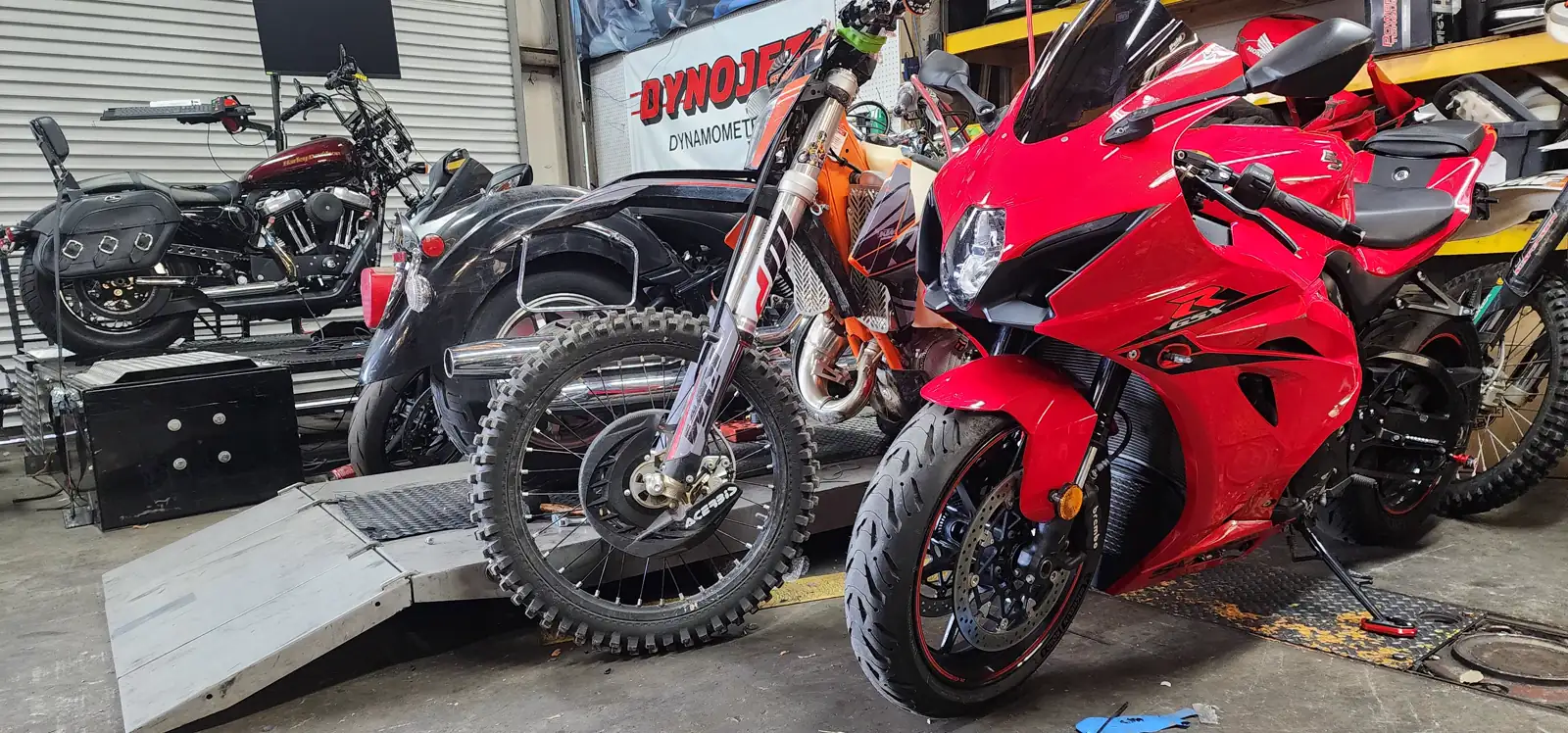
When the map is right, you feel it in your wrist before you ever see it on a graph. Throttle response turns crisp. The bike picks up right off idle instead of hesitating. Heat drops in stop-and-go. That surge at a steady 40 smooths out. Nothing about the bike is louder or scarier. It simply does what your right hand asks, the moment you ask it.
The Actual Process, Start to Finish
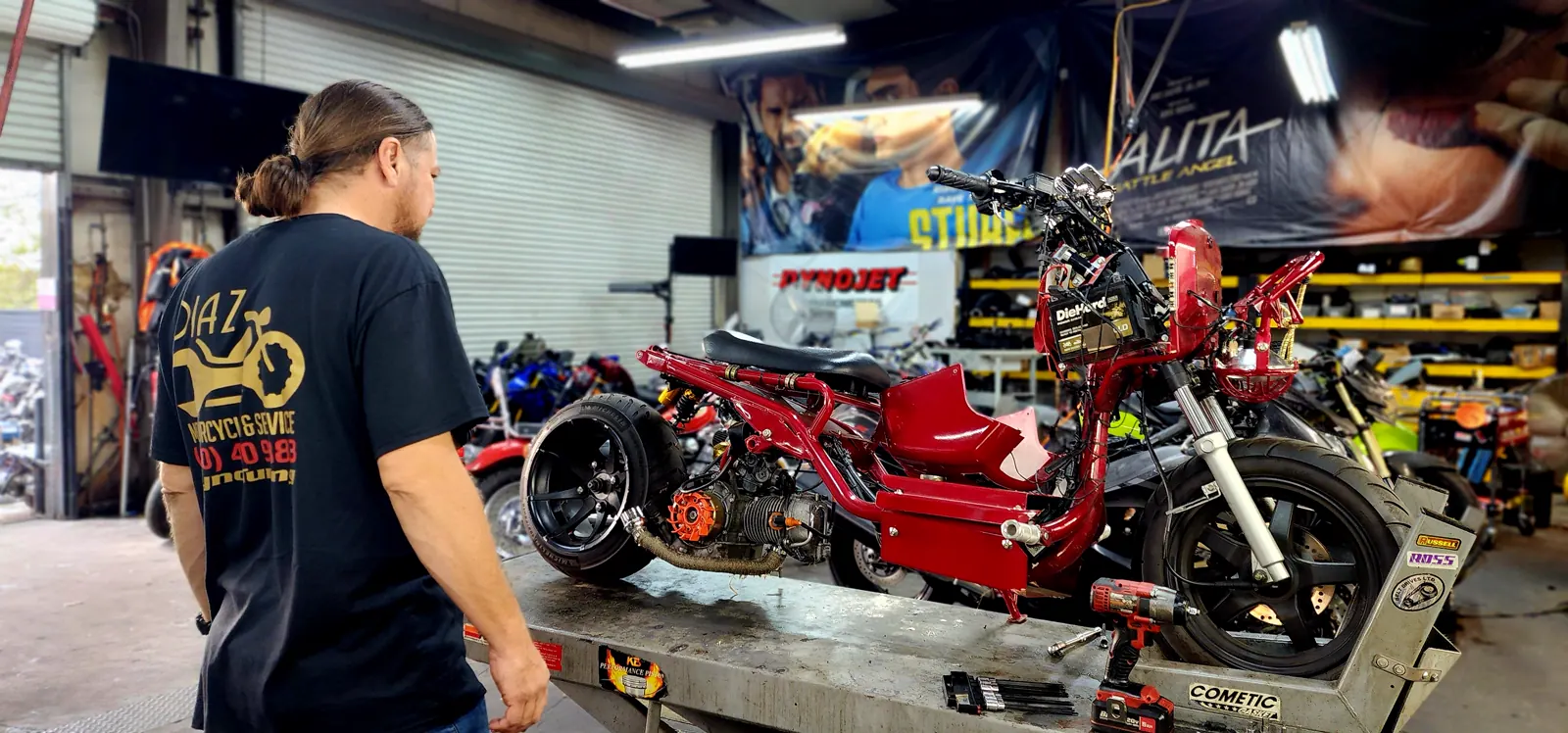
Every honest tune starts with a baseline pull. The bike goes on the dyno exactly as it sits, and the tuner records what it’s doing right now, no changes made. That first graph is the truth you’re tuning away from. Skip it, and you’re driving with your eyes shut.
From there, the tuner adjusts fuel and timing in small steps, running pull after pull, watching the air-fuel reading settle into a safe window across the whole range. On modern bikes, that means one of two paths, and picking the right one matters more than most people think.
- An ECU flash rewrites the bike’s own computer, so the stock brain runs the new map with nothing extra bolted on.
- A Power Commander or piggyback module sits between the sensors and the ECU and corrects the signal on the fly, which is the move when the stock computer is locked down.
- Either way, the tuner loads the engine at real throttle openings, not just a quick blip, so the map holds up out on the street.
There’s no such thing as a universal map for your model. A downloaded tune was built on someone else’s bike, with someone else’s exhaust, altitude, and weather. It might get you close. It won’t get you dialed. That gap is the entire reason a dyno exists in the first place.
A good tuner also keeps your safety window front of mind. Push an engine too lean chasing a big number and it runs hot and hard on the parts. A careful tune leaves a little cushion, so your bike makes honest, usable power without living on the edge. That’s the difference between a map that impresses on a screen and one that still runs strong three summers from now.
How to Tell a Good Shop From a Guessing One
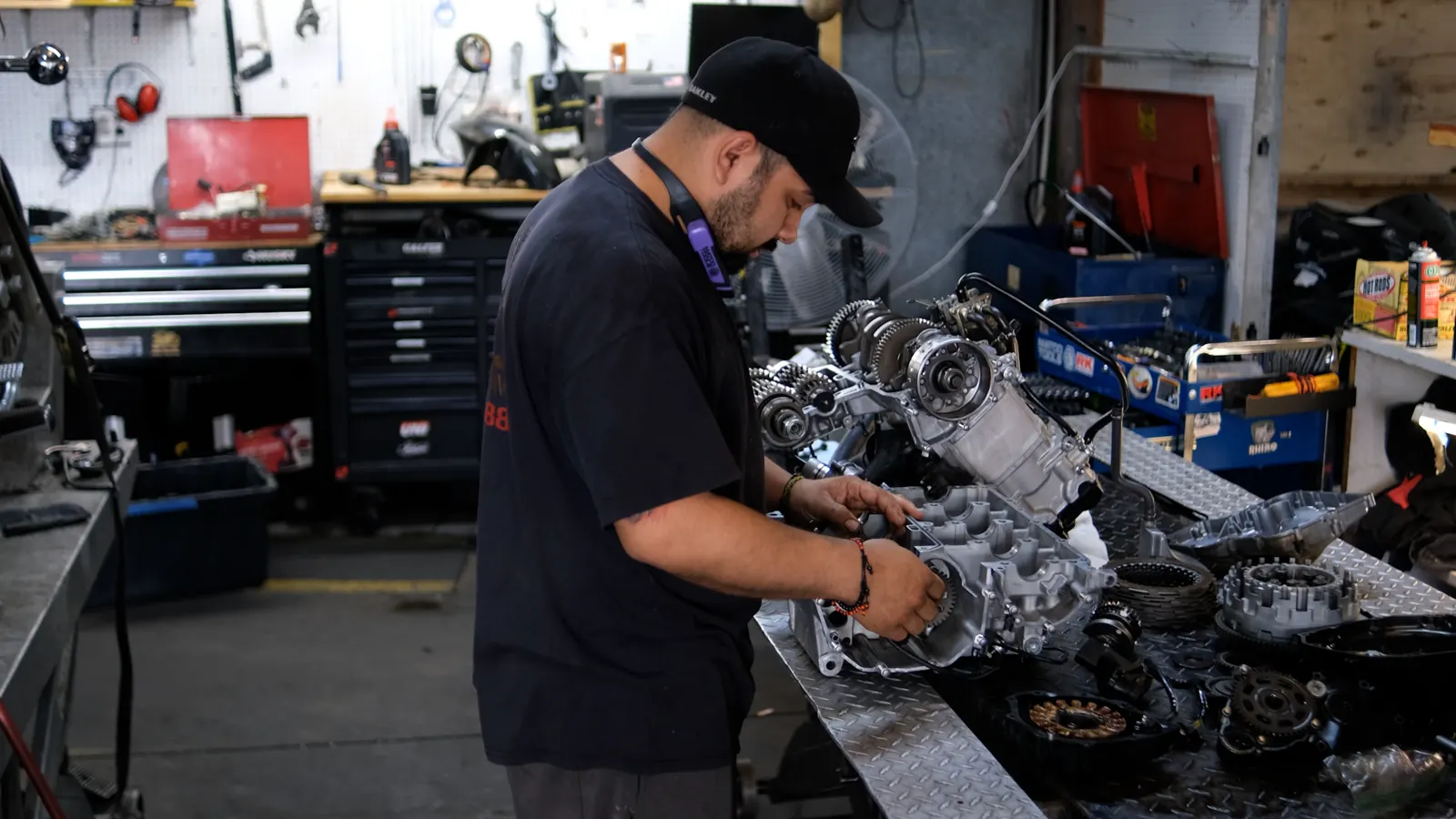
So how do you judge a shop before you hand over the keys? Finding the best dyno tuning Atlanta has starts with the dyno itself. A shop that owns an in-house dyno and does its own ECU flashing and Power Commander work is tuning on-site, watching your bike in real time. A shop that ships the work out is guessing from a phone call. On our end, that in-house setup is everything we cover, and it’s the first thing worth asking any shop about.
- They do a baseline pull before touching anything, and they show it to you.
- In fact, they read air-fuel ratio out loud, not just the horsepower number.
- They ask what you ride, where you ride, and what feels off, before they quote a thing.
- For example, they explain flash versus Power Commander in plain words instead of hand-waving.
- They text you back. In-town riders judge a shop on this more than anything else.
Be fair to the dealers, too. A big multi-line dealership can be great at warranty work and stocking parts. Real custom mapping on-site is simply a different craft, and most shops around Cobb Parkway send it out or skip it entirely. If you want to see how the same job reads a little closer to home, here’s what the work covers for riders on the Marietta side, and what Douglasville riders run into a bit farther west.
The Atlanta Context Behind the Tune
Here’s the thing we wish every rider knew a season earlier. In-town Atlanta riders don’t find a shop by driving past it. The rider population here is small next to the cars, and it clusters tight by district. East Atlanta and Old Fourth Ward run small-displacement bikes and sportbikes because the dense grid and short hops make them the smart pick. Buckhead skews cruiser and premium European. West Midtown leans cafe racer and vintage build. Every one of those bikes wants a different map.
The roads shape the tune, too. Thread the east-side grid and Moreland Avenue on a supermoto and you live in the low and midrange, so that’s where your fuel has to be perfect. Ride DeKalb Avenue beside the MARTA line and crisp throttle stops being a luxury, because that reversible center lane is a genuine head-on risk and you want the bike doing exactly what you ask, right when you ask it. The NHTSA crash data is a quiet reminder that a bike which responds the same way every time is an easier bike to ride well.
We help friends from all over the map. Someone garaging a bike near Tuxedo Park, the Buckhead estate district that’s home to the Georgia Governor’s Mansion. Someone parking in a Buckhead Village high-rise at Peachtree and East Paces Ferry with no outlet for a battery tender. A rider over in Poncey-Highland, tucked between Ponce and Freedom Parkway, who commutes on two wheels. Whether you’re catching a show at Chastain Park Amphitheatre or grabbing lunch at Krog Street Market by the Eastside Trail, the ride home should feel effortless. Atlanta has real craft in it, like the custom builds Southern Cycle turns out. Sharp tuning belongs in the same city, on the same bikes. From Buckhead we’re about 13 miles and 20 to 30 minutes out, a touch more at peak.
One more Atlanta wrinkle: because filtering and lane splitting are both against the law here, you can’t sneak out of a jam on the Connector. That means summer heat with the clutch pulled in for a while. A crisp, cool-running tune helps your bike shrug that off instead of getting cranky in traffic. It’s a small thing that shows up every single ride through town.
The Payoff: A Bike That Runs Right
Strip away the graph and the jargon, and a tune is a simple promise. Your engine breathes and eats in the same rhythm. It runs cooler, pulls cleaner, and lasts longer because it isn’t fighting itself. New riders sometimes worry a tune is only for racers. It really isn’t. If you’re still building your skills, pair a smart tune with an MSF Basic RiderCourse and you’ve got a bike that behaves and a rider who knows how to read it.
There’s a quiet confidence that comes with a properly tuned bike. You stop babying the throttle. Even so, you stop wondering if that flat spot is going to bite you pulling into traffic. You just ride, and the bike keeps up with your hands. Friends we’ve helped often tell us the same thing afterward: they didn’t realize how much they were fighting the bike until they weren’t anymore. That relief is the real reason people come back for the next one.
So when you line up shops, look past the loudest graph. The best dyno tuning Atlanta offers isn’t the biggest headline number. It’s the shop that reads your bike honestly, tunes for the roads you actually ride, and hands you back a machine that does exactly what you ask. That’s the clear-headed way to choose, and it’s the feeling we want you rolling out of the door with.
Questions Atlanta riders ask us
What makes your dyno tuning different?
We run an in-house dyno and do our own ECU flashing and Power Commander work, so your bike is tuned on-site while we watch it in real time. Nothing gets shipped out or guessed at over the phone. You get a baseline pull, a custom map for your exact setup, and a real explanation of what changed and why.
How do I pick a good tuning shop?
Start with the dyno. A good shop owns one, does a baseline pull before touching anything, and reads your air-fuel ratio out loud instead of only pointing at horsepower. Ask what they’d change for the roads you ride. If they text you back fast and explain things in plain words, that’s a strong sign.
Dealer or independent shop for a tune?
Both have their place. A big dealer is often great at warranty work and stocking parts. Real custom mapping on-site is a different craft, and many multi-line shops send it out or skip it. If you want a tune built for your bike and your roads, look for a shop that keeps a dyno in the building.
What should I ask a shop before I book?
Ask if they do a baseline pull, whether they tune by ECU flash or Power Commander, and how they decide between the two for your bike. Ask what they need to know about your exhaust, filter, and riding. Good answers come out clear and calm. Vague ones tell you a lot too.
Do you work on all brands?
Yes. Sportbikes, cruisers, Harleys, dirt bikes, supermotos, and small-displacement machines all come through the shop. Every brand and model gets its own custom map, because a tune built for one bike won’t fit another. Tell us what you ride and what feels off, and we’ll take it from there.
We tune bikes for riders all across the metro. That includes Buckhead and Midtown in-town, plus Decatur, Brookhaven, and Chamblee on the east side. We see plenty of friends from Sandy Springs and Tucker up north, and from Smyrna, Vinings, and Mableton over on the west. East Point riders roll in from the south, and Marietta is right in our backyard. Wherever you park it, a proper tune is worth the short trip.
TUNE IT RIGHT, RIDE IT HAPPY
If your Atlanta bike feels flat, runs hot, or pops on the way down, a real dyno tune fixes the recipe. Text us what you ride and what feels off, and we’ll tell you straight whether a tune is the answer. No guessing, no shipping it out — just an honest read on our own dyno and a map built for the roads you ride.
470-460-9883Diaz Motorcycles and Service, LLC · 847 Barnes Mill Road, Marietta, GA 30062