Dyno Tune vs Stock Dallas: How to Choose the Right Setup
Plain talk on what a dyno measures, why bikes run lean or rich, and how to know if your bike needs a tune or runs fine the way it is.
After that, every spring, right around the time the pollen turns all of Paulding County a dusty shade of yellow, our phones start doing the same thing. Also the first warm Saturday hits, folks pull the cover off the bike, and they call with one question. Instead Should they leave the machine the way the factory built it, or have it tuned? Besides the whole dyno tune vs stock Dallas debate really comes down to one thing: how you actually ride.
Here’s the good news. Actually there’s a clear answer for most bikes, and it’s easier to sort out than you’d think. That’s why we do this work in-house every single week, so we’re going to walk you through it in plain words. No jargon, no upsell. Just what a dyno does, why bikes run lean or rich, and how a tune changes the way your bike feels under your hand.
What you're really asking
When someone asks about a tune, they’re usually not asking about horsepower charts. They’re asking a simpler question. Will the bike feel better to ride? Most stock bikes leave the factory set up to pass emissions and to run okay on the worst gas in the country. That means the fuel mix is a compromise. It’s safe, but it’s rarely dialed in for your bike, your exhaust, or the way folks ride around here.
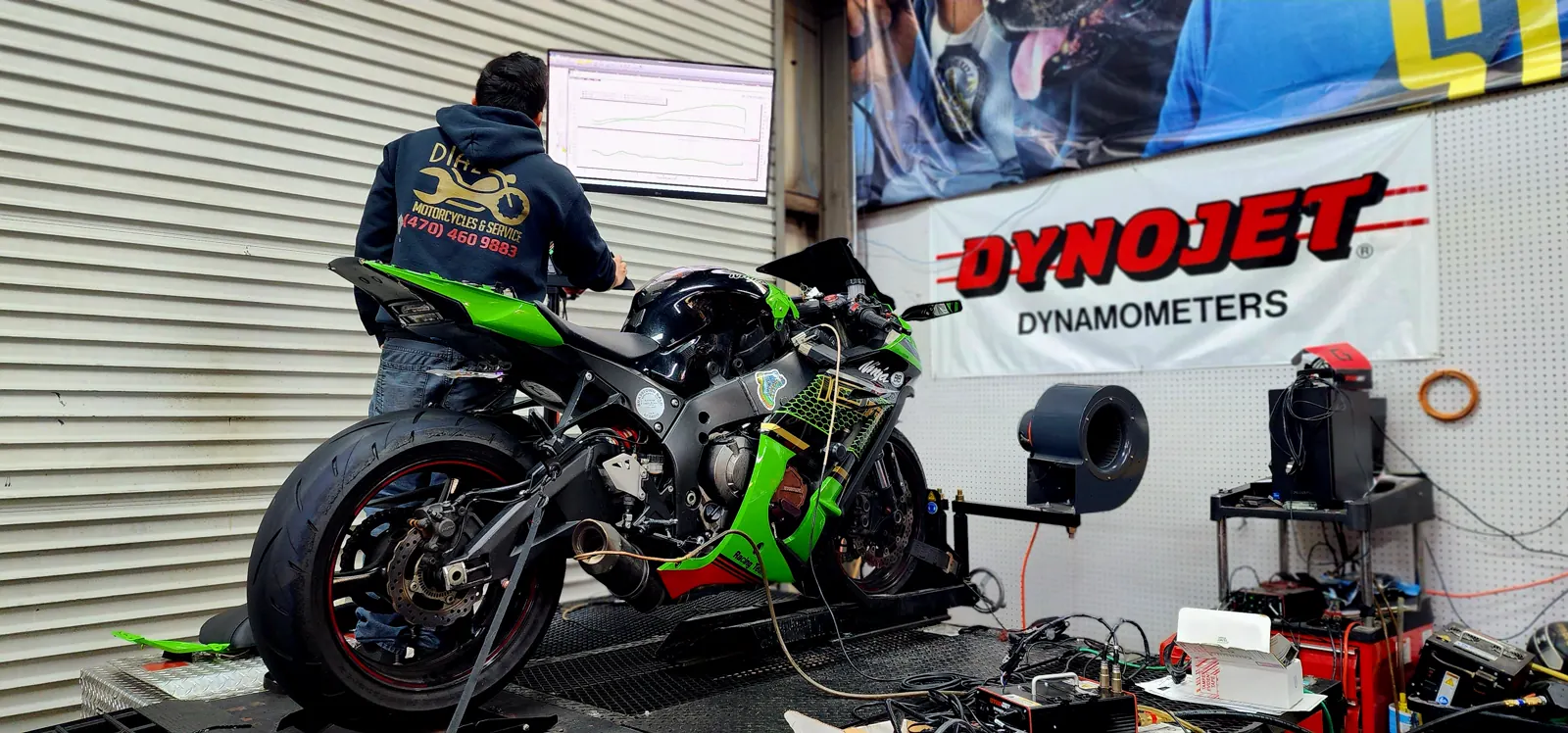
A dyno is just a machine that lets us measure all of that. Think of it like a treadmill for your motorcycle. We strap the bike down, spin the rear wheel against a heavy drum, and let the engine work hard while it stays put. A sensor reads the exhaust, and a screen shows us exactly what the engine is doing at every point in the throttle. Nothing guessed. Everything measured.
That measurement matters because you can’t feel a fuel mix problem with a screwdriver in your hand. You can feel the symptoms, sure. A flat spot off idle. A little pop on decel. Heat cooking your right leg in stop-and-go traffic out on 278. But the actual cause lives in numbers only the dyno can show. Once we see those numbers, the fix stops being a mystery and turns into a plan.
Lean, rich, and the honest answer
Lean and rich are just two ways of describing the fuel mix. Lean means the engine is getting too much air and not enough fuel. Rich means the opposite, too much fuel for the air coming in. Both throw off how the bike runs, and both show up in ways you can feel right from the seat. Neither one is a death sentence, either. Both are fixable once we know which one you’ve got.
A lean bike runs hot. It can surge at steady throttle, hesitate when you crack it open, and pop through the pipes when you roll off. On a modern bike with an aftermarket exhaust, lean is common straight out of the crate, because the factory tune was written for the stock muffler. If you’ve ever wondered why your bike gets uncomfortably warm at a red light, a lean mix is often what usually causes it.
A rich bike has the opposite trouble. It runs sluggish, fouls plugs, smells like a campfire, and drinks fuel faster than it should. You might spot black soot on the tailpipe or feel the throttle go lazy up top. So neither lean nor rich is the end of the world. But neither is how your bike is supposed to feel, and both come out in the wash on the dyno.
A tune doesn't add magic. It just tells the engine the truth about what's bolted to it.
Why two identical bikes need different work
Two bikes with the same symptom can need completely different work. We see it all the time. Two riders roll in the same week, both saying the bike runs hot and hesitates. One is a stock cruiser that’s just never been serviced right. The other is a sportbike with a full exhaust and a swapped air filter. Same complaint, but the honest answer for each is night and day.
The stock cruiser might not need a tune at all. Sometimes the fix is clean injectors, a fresh air filter, and the right plugs. That’s it. Selling that rider a full custom map would be charging for nothing, and we won’t do it. The modified sportbike, though, is running lean because the hardware changed and the computer never got the memo. That bike needs a tune to run right, not just to run faster.
When leaving it stock is the right call
Let’s be fair to stock, because stock wins more often than the internet admits. If your bike is bone stock, runs clean, starts easy, and feels good on your Saturday loop, leave it alone. The factory spent real engineering getting that tune close enough. A rider over in Edenwood on the east side, near the Cobb line, who bought a new bike, kept it stock, and just wants to ride to work and back doesn’t need a dyno session. Those dollars are better spent on tires.
Stock is also the smart move if you’re about to sell the bike, or if it’s still under warranty and you’d rather not open that conversation with the dealer. And if you ride gently, short hops around a quiet Paulding subdivision like Hickory Creek and back, a stock tune will likely never bother you. There’s no shame in leaving a good thing alone. A bike that already feels right doesn’t owe you anything.
When a dyno tune is worth it
Now the flip side. The moment you bolt on an aftermarket exhaust, a high-flow air filter, or both, your bike is no longer running the tune it was designed for. It’s running a guess. That’s when a dyno session earns its keep. We can flash the ECU or add a Power Commander to change the fuel and timing so the engine matches the parts you actually have on the bike.
A tune is also worth it if your bike came from the factory with a known lean spot, which plenty of modern bikes do just to pass emissions. And it’s worth it if you simply want the bike to feel its best. A good tune smooths the throttle, kills flat spots, cools the engine down, and makes the roll-on feel like the bike and your wrist are finally on the same team.
Our approach: ECU flash vs Power Commander
So how do we actually do it? There are two main paths, and we pick based on your bike. An ECU flash rewrites the software already living inside your bike’s computer. A Power Commander is a small add-on unit that sits between the computer and the engine and trims the fuel on the fly. Both get you a custom map. One is built into the brain, the other rides along as a piggyback.
Here’s what makes the difference. Every run happens on our in-house dyno, with a wideband sensor reading the exhaust the whole time. We’re not copying a map off a forum and hoping for the best. Instead, we build the map for your bike, on the day, with your parts installed. Most multi-line shops around Cobb Parkway send this work out or don’t offer it at all. We keep it under our own roof, start to finish.
| Leave it stock | Get a dyno tune |
|---|---|
| The bike is fully stock and runs clean | You added an exhaust, an intake, or both |
| You ride gently and rarely push it | The bike runs hot, hesitates, or pops on decel |
| It's under warranty or about to sell | You want a smoother throttle and roll-on |
| Your budget's better spent on tires | You ride hard and want it truly dialed in |
Read down whichever column sounds like you. If most of your honest answers land on the left, save the money and go ride. But if they land on the right, a tune will change how the bike feels every single time you thumb the starter. There’s no wrong answer here, only the one that fits your bike and your miles.
What this looks like around Paulding
Paulding County is a riding county, even if it doesn’t always get credit for it. There’s no full-line motorcycle shop out here, no dyno, no ECU flashing. The nearest big Harley crowd runs up to Southern Devil Harley-Davidson on US-411 in Cartersville, home of H.O.G. Chapter #1593, roughly forty-five minutes north. That’s a real haul when all you want is your fuel mix sorted out and your bike back.
We’re the other direction, and it’s an easy shot. GA-120, the Charles Hardy Parkway, runs east out of Dallas and turns into Dallas Highway right at the Cobb line. Stay on it and you’re at our door in West Cobb before your coffee’s cold. A weekend rider out in Seven Hills, with its big thirteen-acre amenity park and ten tennis courts, sits a straight twenty-something miles from a real tune. No maze, just one road east.
You know the Silver Comet Trail Dallas Trailhead, where the Paulding stretch runs twenty miles through Hiram and Dallas out to the Paulding WMA. Plenty of our riders warm up on those same back roads before they ever point the bike toward the mountains. And if you’ve ever passed Wellstar Paulding Medical Center on Jimmy Lee Smith Parkway in Hiram, you’ve been within a few minutes of some of the best two-lanes in the whole metro.
The part riders thank us for later
One more thing, and it’s the part riders thank us for later. A tune isn’t just about the loud, fun end of the throttle. The biggest change most folks feel is down low, in the everyday stuff. Smoother idle. No lurch when you ease out in traffic. A bike that doesn’t try to cook your leg at a long light. That’s the piece that makes you glad you did it, long after the dyno day is over.
And when you do finally get to open it up, that’s where a clean tune really sings. Picture a fall run up to Johns Mountain and over toward Cloudland Canyon, seventy-two miles of GA-136, Armuchee Road, Pocket Road and Floyd Springs Road, plus the Lookout Mountain Scenic Highway with its tight hairpins and ridge-top views. A bike with honest fueling makes those corners feel effortless. No flat spots mid-corner, no surprise surge. Just you and the road.
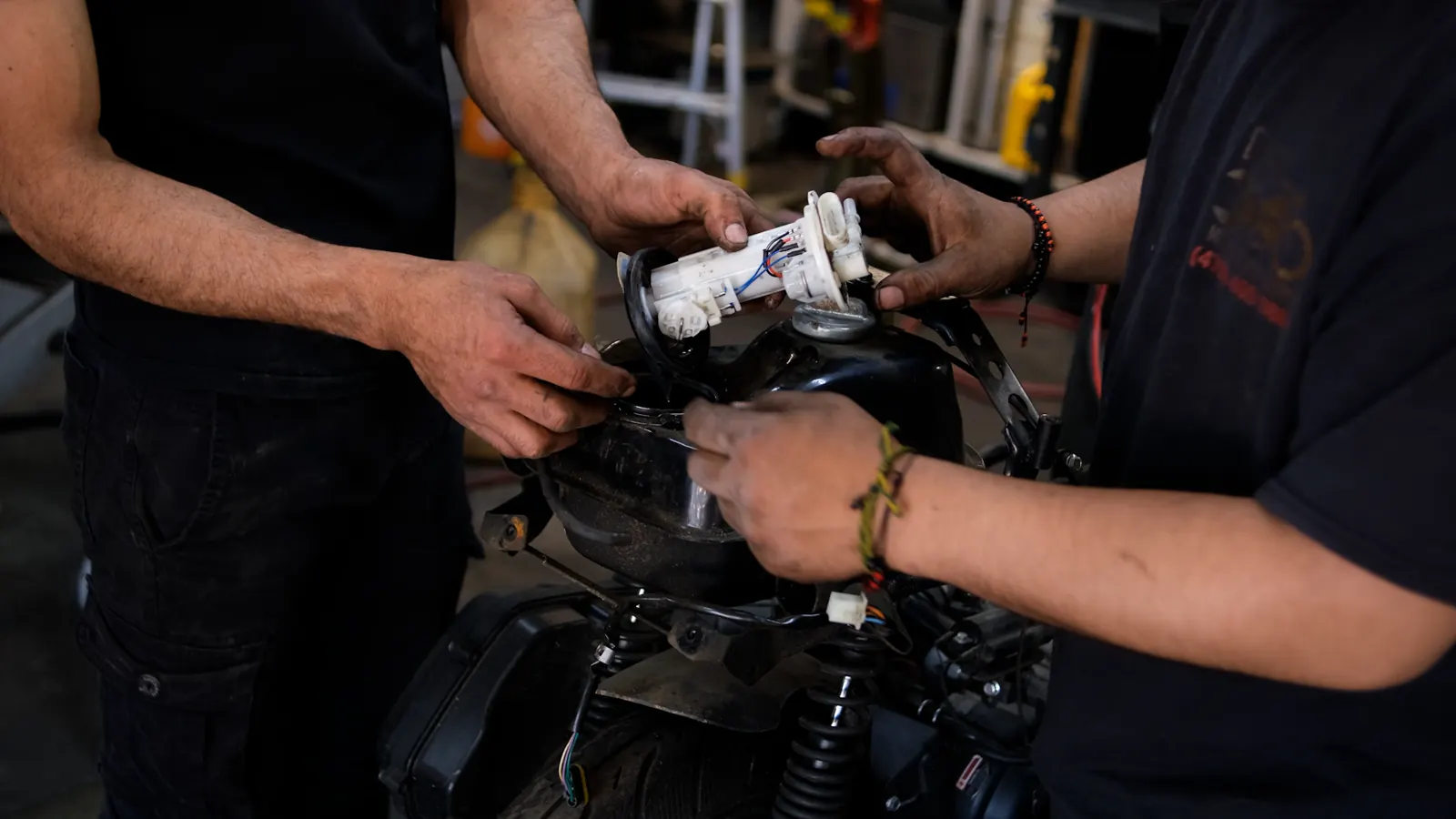
If you want to see how our crew approaches it, or read what the work covers on a full session, we’ve laid it all out for you. And if you’re curious how folks one county over weigh the very same choice, here’s what Newnan riders run into. Same question, different roads, same honest math.
One note before you ride off. A tune makes a bike run right, but it doesn’t replace good habits. Fresh tires, a DOT helmet, and a clear head matter more than any map ever will. If you’re newer to riding or want a refresher, the Georgia Motorcycle Safety Program is a great place to start, and Dunlop’s technical resources are worth a read when it’s time for new rubber.
So, which should you choose?
Here’s our straight recommendation. If you’ve added an exhaust or an intake, get the tune. Your bike is already running a guess, and the dyno tune vs stock Dallas comparison isn’t even close once hardware’s involved. The tune isn’t a luxury at that point. It’s simply how you make the parts you paid for actually work together the way they were meant to.
But if your bike is fully stock, runs clean, and puts a grin on your face every Saturday, keep your money and go ride. Stock wins that round, plain and simple. That proud feeling doesn’t come from spending on a dyno. It comes from knowing exactly what your bike needs and giving it that, no more and no less. That’s the whole game, and now you know how to play it.
Questions Dallas riders ask us
Which is right for my riding?
It comes down to your bike and your miles. If it’s fully stock and feels good on your usual loop, stock is right for you. If you’ve added an exhaust or intake, or the bike runs hot and hesitates, a tune is the better call. Tell us how you ride and we’ll point you the honest way.
Can I switch later if I start stock?
Absolutely. Nothing about riding stock now locks you out of a tune later. Plenty of friends we’ve helped rode stock for a season, added an exhaust, then came in for a map once the hardware changed. You can start simple and dial it in whenever you’re ready.
Which do you actually recommend?
If any performance parts are bolted on, we recommend the tune, because the bike is already running a mix it was never set up for. If the bike is bone stock and runs clean, we recommend leaving it alone and spending on tires instead. We’d rather tell you the truth than sell you a session you don’t need.
Does my specific bike change the answer?
Yes, quite a bit. Some modern bikes leave the factory with a known lean spot and feel noticeably better tuned, even stock. Others run great as-is and gain little. Cruisers, sportbikes, and baggers each respond differently. Bring the bike by and we’ll read it before we ever suggest a thing.
Is the upgrade really worth it?
If your bike is modified, most riders feel it right away in smoother throttle, cooler running, and no more flat spots. That everyday improvement is the part folks thank us for later. If your bike is stock and already runs well, the honest answer is that you may not feel enough to justify it.
How long does a dyno session take?
Most tunes are a same-day or next-day job, depending on the bike and how booked we are. We strap it down, make our runs, read the exhaust, and build the map with your parts installed. If you’re coming from Paulding, ask us about drop-off so one trip covers it.
We tune and wrench for riders all across the western arc of metro Atlanta. From Dallas and nearby Hiram, folks run east on Dallas Highway to reach us, and we see plenty of bikes from Powder Springs, Acworth, and Kennesaw too. Douglasville and Villa Rica riders come up from the south, while friends from Cartersville, Rockmart, Taylorsville, Braswell, and Yorkville make the trip when they want a real in-house dyno. And of course, right here in Marietta, we’re the home shop for anyone who wants their fuel mix done right.
STILL NOT SURE? LET'S FIGURE IT OUT
Trying to decide between a dyno tune and leaving your bike stock in Dallas? Don’t guess. Text us what you ride and what you’ve added, and we’ll tell you straight whether a tune is worth it or your bike is already good to go. One honest conversation, no pressure, and an easy shot east on Dallas Highway when you’re ready.
470-460-9883Diaz Motorcycles and Service, LLC · 847 Barnes Mill Road, Marietta, GA 30062