Motorcycle Dyno Tuning Douglasville — What to Expect
Plain talk about what a dyno measures, why a bike runs lean or rich, and how a real tune changes the way your bike feels.
You have owned this bike a long time. Long enough to know every click of the shifter and the exact spot in the powerband where it wakes up. It has carried you through a lot of good miles, and you are not looking to replace it. You want to keep it healthy and get more out of it. That patient, long-haul love for a machine is exactly what motorcycle dyno tuning Douglasville riders bring through our door, and it happens to be our favorite kind of job.
So let us talk plainly about what tuning is, who it is for, and how it works. No jargon, no upsell. Just what a dyno measures, why a bike runs lean or rich, and what a good tune changes in how your bike feels. By the end, you will know enough to walk into any shop and ask the right questions with confidence.
The myth that scares good riders off
A lot of folks think a tune is only for race bikes or big engine builds. They picture a bike torn apart on a bench and a scary surprise at the end. That myth keeps solid, everyday riders from ever picking up the phone. Here is the happy truth, though: tuning is not surgery. It is more like finally getting glasses that fit your eyes.
Your bike left the factory with one tune meant to fit thousands of bikes across the whole country. That factory map has to pass strict noise and emissions rules, so it plays it very safe. It does not know you added a slip-on exhaust, swapped the air filter, or that you ride the thick, humid air out here in Douglas County. A tune simply fixes that mismatch. It teaches your bike about the parts it wears and the air it actually breathes today.
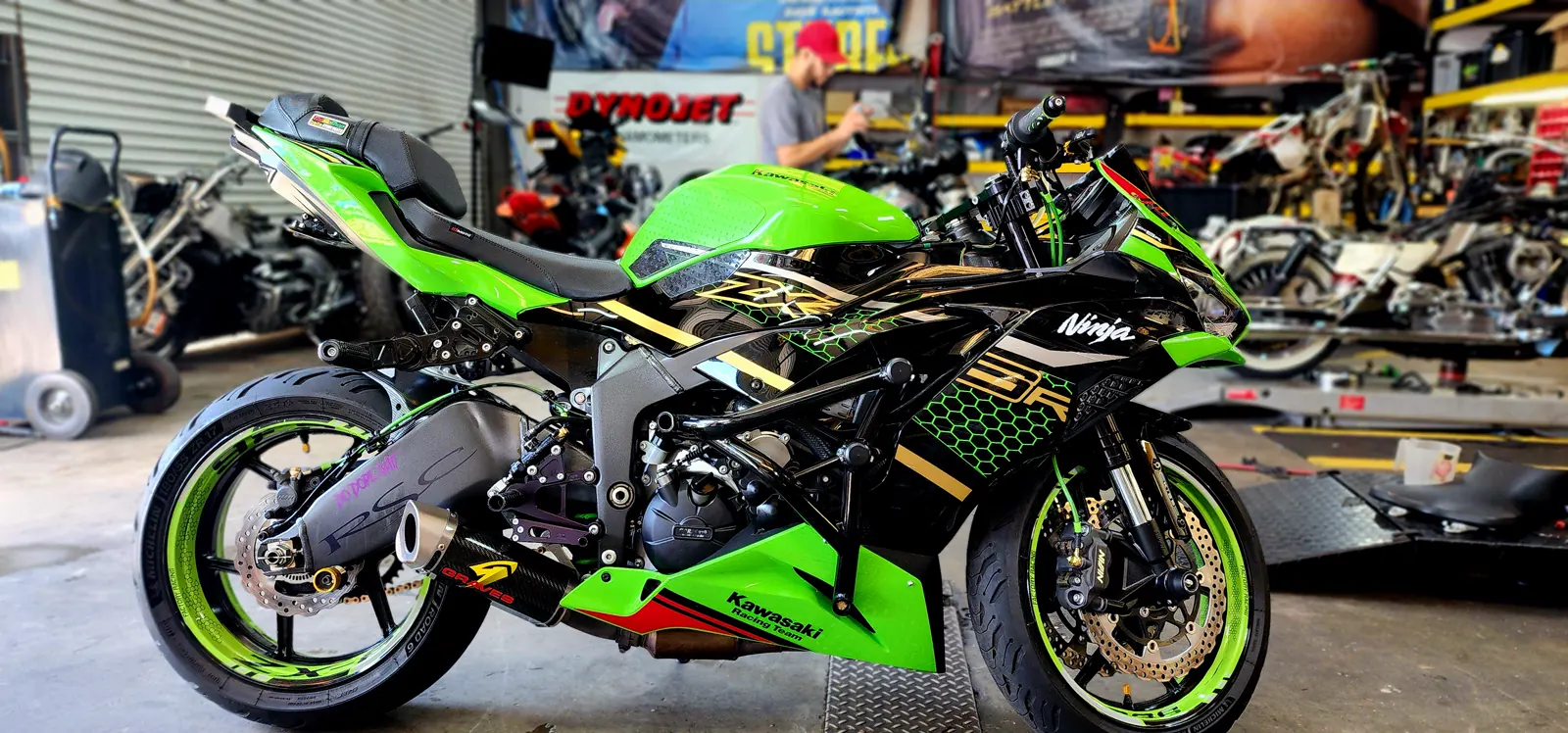
What a dyno actually measures
A dyno is just a machine built around a big steel drum. We strap your bike down, the rear wheel spins that drum, and sensors read how much power really reaches the ground. At the same time, a probe in the exhaust reads your air-fuel ratio. That number tells us whether the engine is getting too much fuel or too little at every single point in the rev range.
Think of it like a treadmill for your motorcycle with a heart monitor clipped on. The bike runs hard while it stays still and safe, and we watch what the engine does under real load. We are not guessing from the curb. Instead, we read the truth straight off the drum, in real time, from idle all the way to redline.
- How much usable power actually reaches the rear wheel
- The air-fuel ratio at every rpm, so we can spot lean and rich spots
- Flat spots, surging, and hesitation that you feel but cannot always explain
- How the engine behaves cold, warm, and hot, since air changes everything
We are not guessing from the curb. We read the truth right off the drum.
And out here, the air matters more than most folks think. Douglas County summers run hot and heavy with humidity, and that thick air changes how your engine breathes between a cool spring morning and a muggy August afternoon. A tune done on our own dyno accounts for the real conditions you ride in, not some lab far away. That is a big reason a local tune beats a downloaded file every time you twist the throttle.
Here’s the question we’d ask if you were standing in the shop. When does the bike feel wrong to you? Is it a stumble off idle in stop-and-go traffic, a hiccup at a steady highway cruise, or a flat spot when you roll the throttle open hard? Your answer points us straight at the part of the map that needs work. You know your bike better than any sensor, and that story is where a good tune really starts.
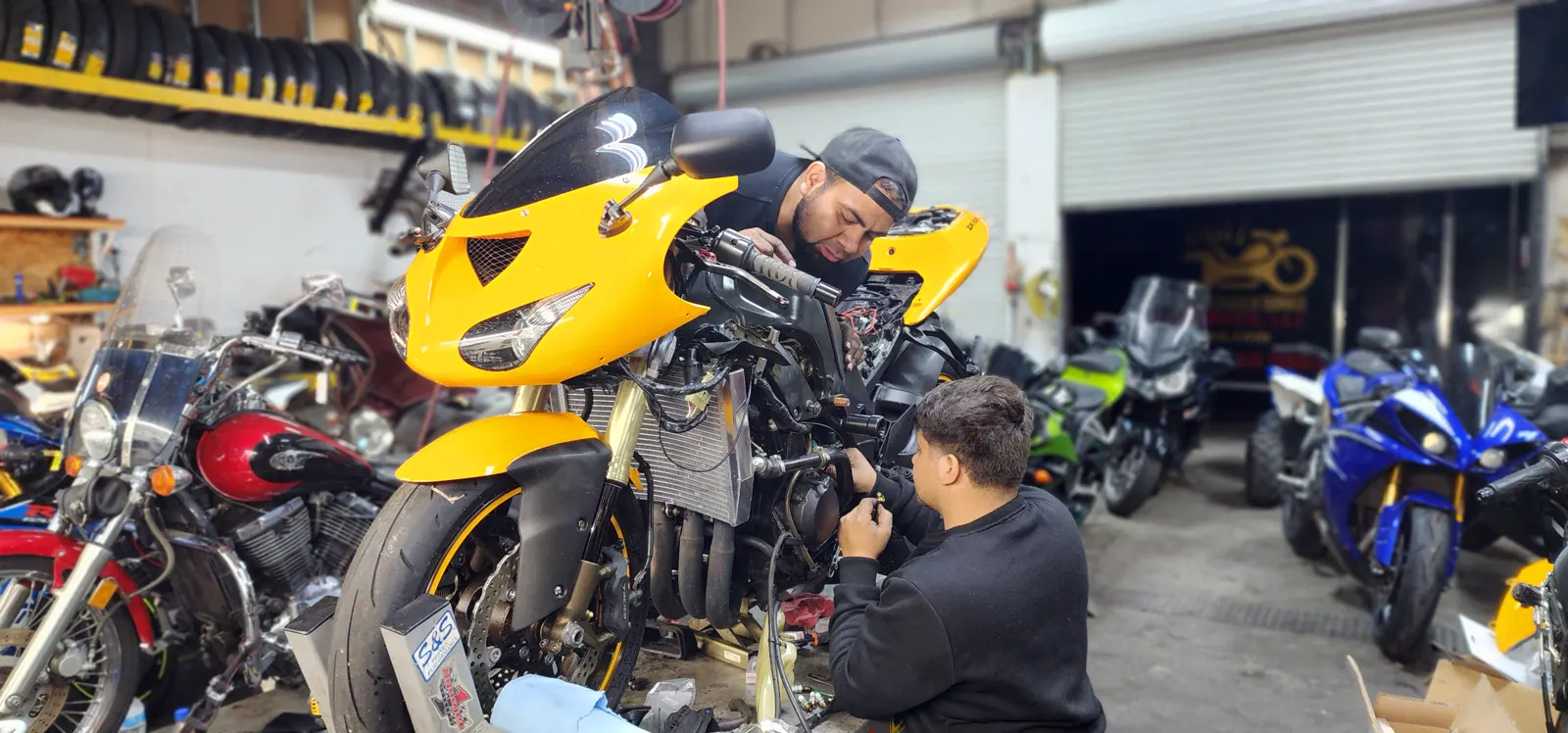
What happens when we tune your bike
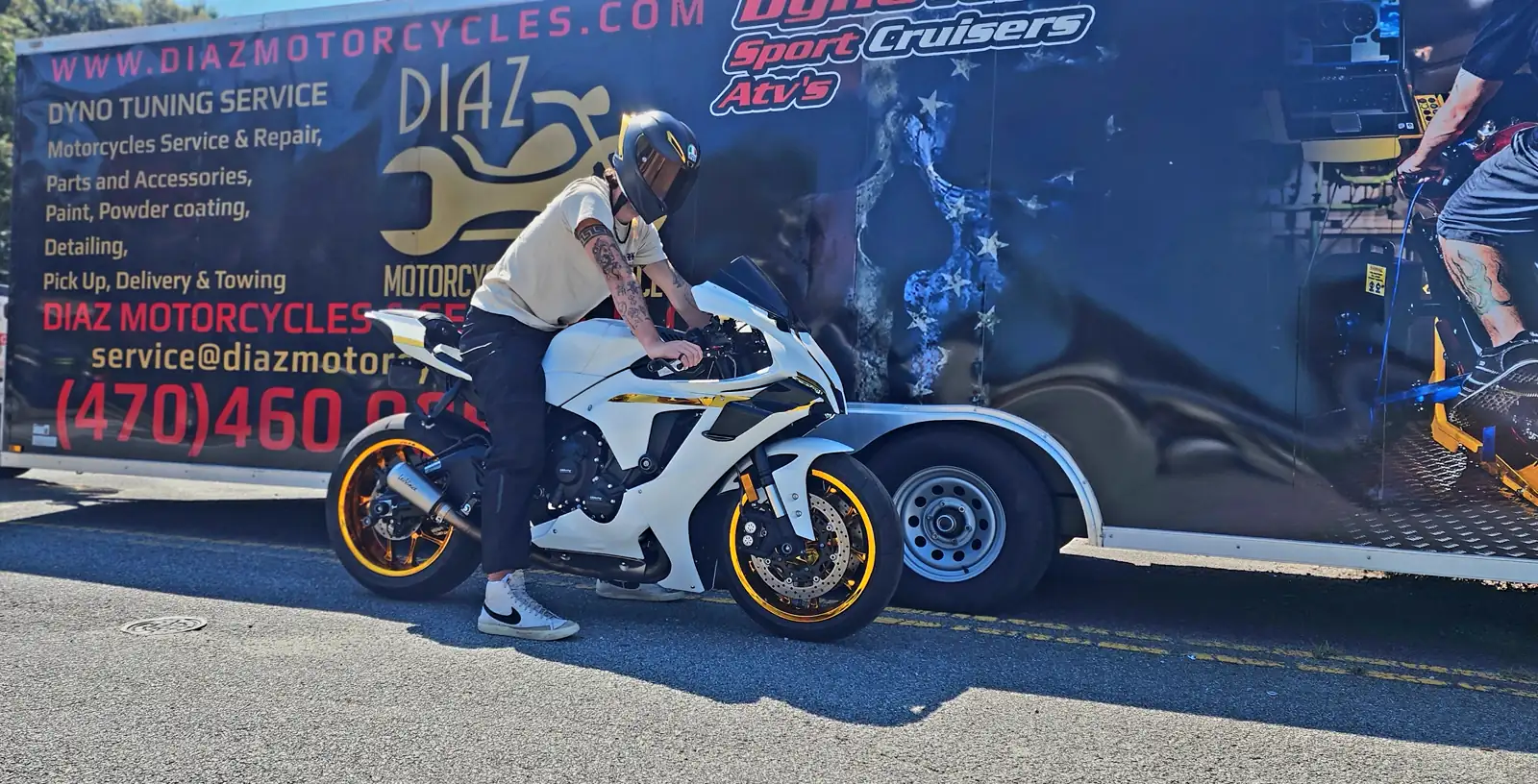
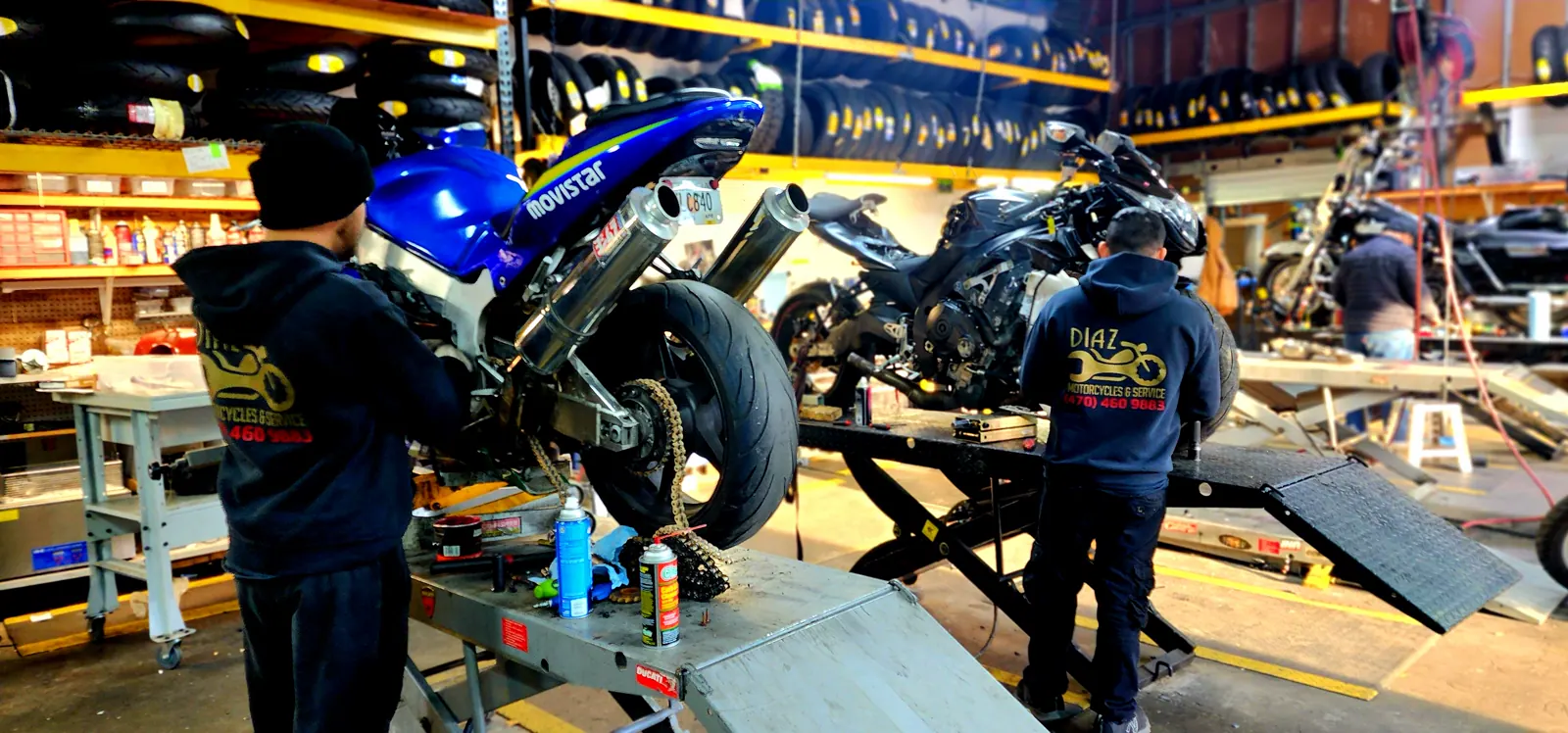
The word tune covers a few different tools, and we pick the one your bike actually needs. Some bikes get an ECU flash, where we reprogram the brain that came in the bike. Others use a piggyback like a Power Commander that sits between the sensors and the engine and adjusts the fuel on the fly. Diaz runs an in-house dyno plus ECU flashing and Power Commander work, so we do real custom mapping right here instead of shipping your bike off or handing you a one-size file. That is what real motorcycle dyno tuning Douglasville riders are after, and it is exactly the work we do under one roof. If you want the full walkthrough, here is how we handle that job.
- We talk first. You tell us how the bike rides and what feels off.
- We check the basics — plugs, air filter, throttle bodies — because a tune cannot fix a mechanical problem.
- Instead we strap the bike to the dyno and run a baseline pull to see where it stands.
- We read the air-fuel numbers and adjust the map, then pull again.
- Besides we repeat until the curve is smooth and the fueling is right across the whole range.
- We show you the before and after, then hand the bike back with notes.
Why a bike runs lean or rich, and what changes
Lean means too much air and not enough fuel. A lean bike can run hot, pop on deceleration, and feel snatchy when you crack the throttle. Rich is the opposite — too much fuel. A rich bike can foul plugs, smell heavy, waste gas, and feel lazy or soft. Neither one is a disaster, and both are completely fixable. Honestly, that is the whole point of a tune.
When the fueling is dialed in, the bike stops fighting you. The throttle feels connected, like the bike responds the instant you think about it. Power comes on smooth instead of in a lumpy rush. Heat off the engine usually drops, too. On a long ride it is far less tiring, because you are not babysitting a bunch of little quirks the whole way. Same bike, better manners.
| What you feel | What it often means |
|---|---|
| Popping on deceleration | Running lean in that range |
| Sluggish, heavy, soft power | Running rich |
| Flat spot when you roll on | A fueling gap in the map |
| Runs hot in slow traffic | Lean spots at cruise |
| Dark or fouled plugs | Too much fuel |
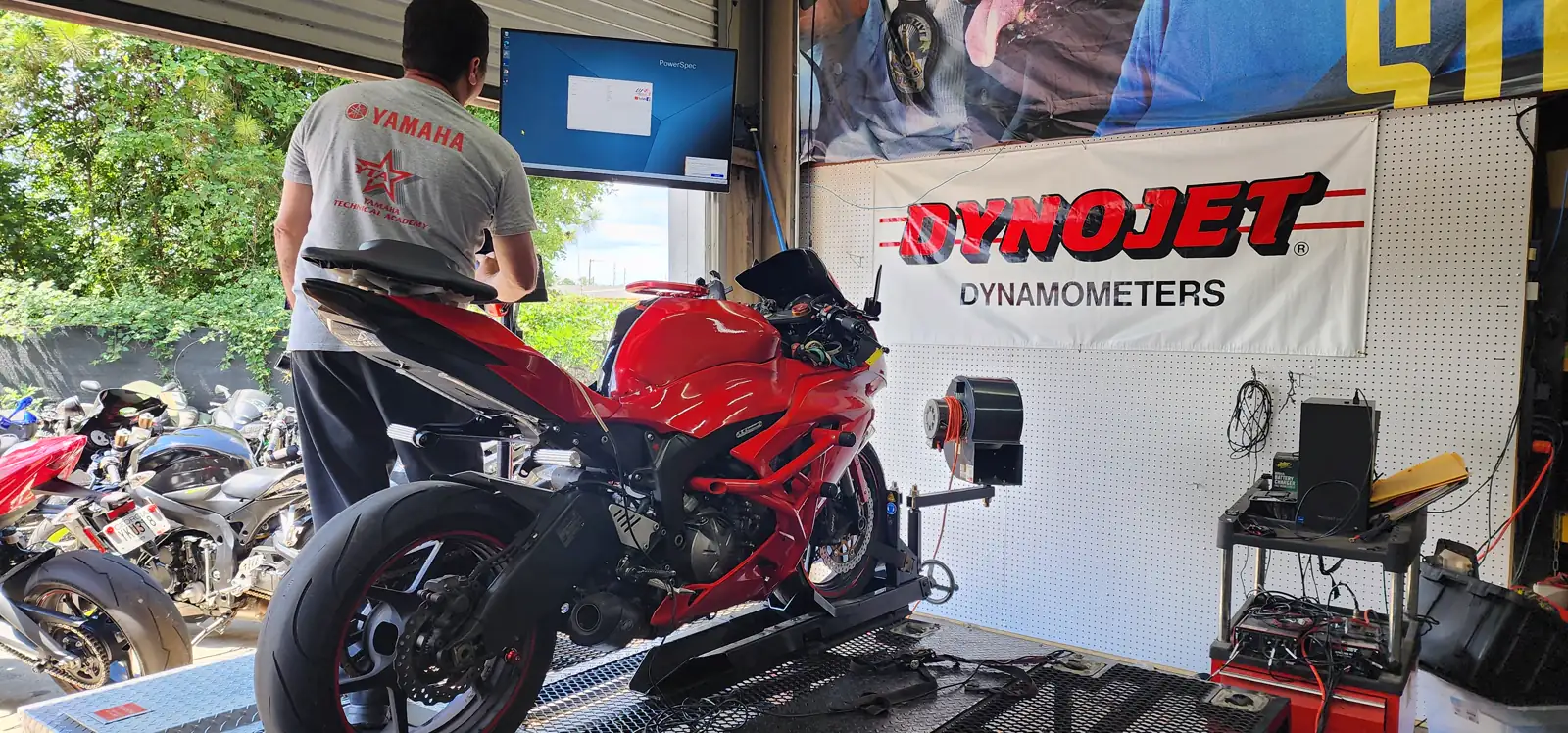
How to tell a good shop from a guessing shop
Here is the part that protects your wallet and your bike. A shop that truly tunes will always put your bike on a dyno and show you the numbers. That, more than anything, is the mark of honest motorcycle dyno tuning Douglasville riders can trust. A shop that just loads a generic file and sends you off is only guessing, and a bad guess can leave your bike running lean and hot. If you want the deeper version, we wrote a whole post on what separates a good shop. The short list below covers the basics.
- They diagnose before they quote, and they explain what they found
- They use a real dyno, not just a laptop and a stock file
- They show you the before and after curves side by side
- They tell you when your bike does not need a tune, because honest shops lose that sale on purpose
- They answer your questions in plain words, not a wall of jargon
Is your bike even a good fit?
You might wonder if your bike is worth tuning at all. Here is the good news: almost any modern fuel-injected bike can benefit, and plenty of older carbureted ones do too with a proper jetting job. If you have added an exhaust, a filter, or both, your bike is practically begging for a tune. Even if it is bone stock, a tune can still smooth out that safe, sleepy factory map. The only way to know for sure is to read it on the dyno and let the numbers talk.
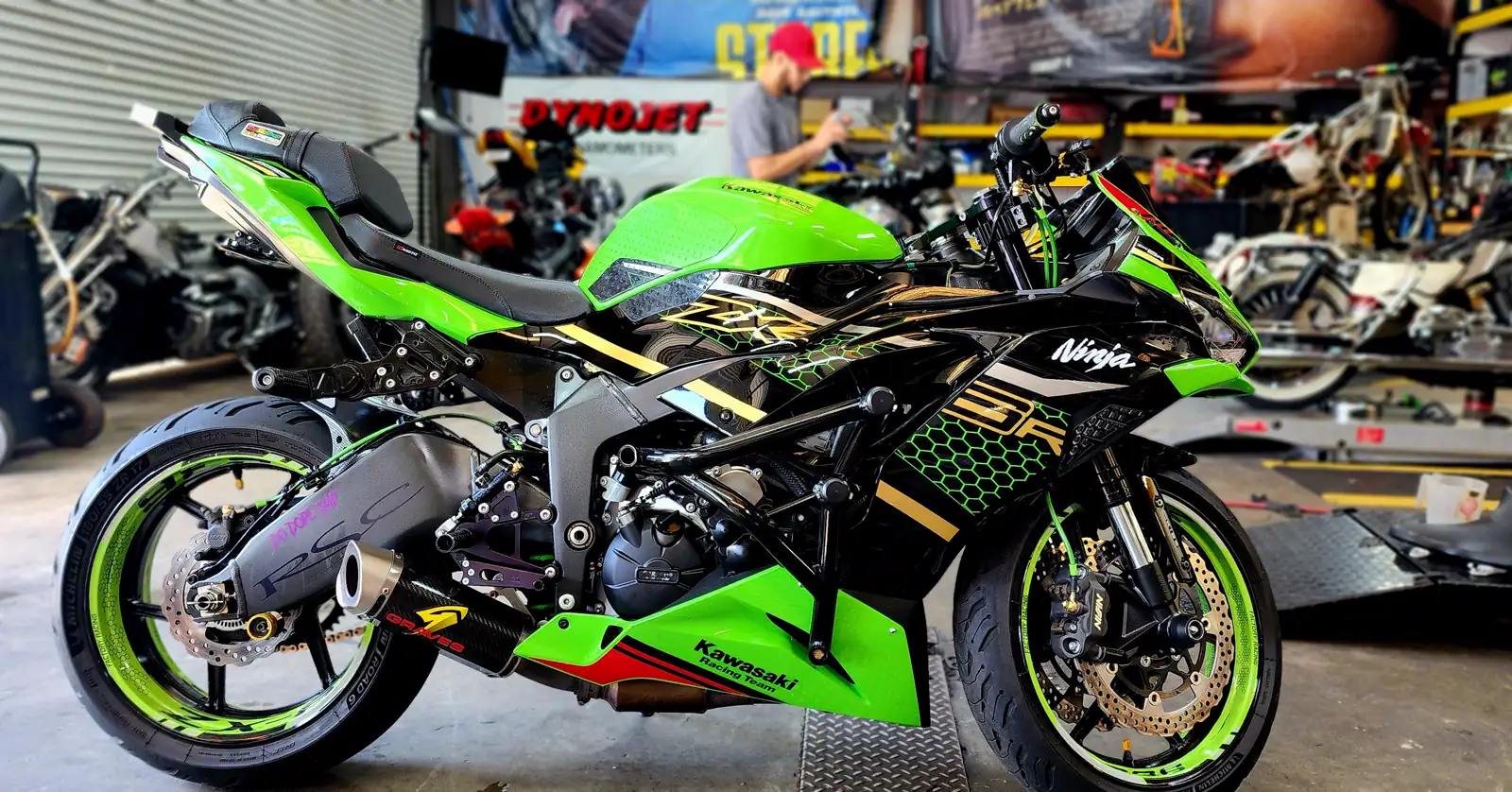
This is where Douglasville is genuinely different from other towns. Most multi-line dealers around here will happily sell you a bike, but real custom mapping done in-house stays rare on the west side. Douglasville sits in the heart of metro Atlanta’s west-side riding scene, and it shows in the machines. You see sportbikes built for show and group rides, baggers with big front wheels and loud audio, and metric cruisers from Honda, Yamaha, Suzuki and Kawasaki. Every one of them responds to a proper tune, yet most of them have never had one.
Riding out here, and getting to us
The riding around Douglas County has real range. Down in south Douglas and around Winston you have got quiet, rolling two-lanes — Post Road, Dorsett Shoals Road, and the Basket Creek and Chattahoochee-side backroads, where the pavement is wooded and the traffic stays thin. Then there is I-20, the busy spine through town, packed with trucks that chew up the pavement and drop debris. A bike that is tuned right handles both moods better: patient and cool in traffic, eager and crisp when the road finally opens up.
We help friends from all over the county. Some ride out of newer places like Tributary at New Manchester, with its walking trails that tie into Sweetwater Creek State Park, and others come from Anneewakee Trails with its clubhouse and pools. Plenty live out in Winston, in the wooded lots of traditional and ranch homes near the Clinton Nature Preserve, or in the homes around Chapel Hills Golf Club. A good number start their day near Historic Downtown Douglasville before a ride. If you already roll over to Atlanta Harley-Davidson on Thornton Road for a bike night, we are just a little further, and we tune the Japanese bikes that counter does not always cover.
We are over in Marietta, and the drive is easier than you might expect. Rather than fighting I-20 east to I-285 north, most folks take Thornton Road and GA-6 north to the East-West Connector, which drops you near the shop without the worst of the interchange mess. If you would rather read up on the Marietta side of things first, we have a post for that too. Either way, we can talk it through before you ever ride out.
What you get at the end
When it is done, you get your same beloved bike back — just smoother, cooler, and more honest with the throttle. The quirks you had quietly learned to live with are simply gone. On a long ride it feels less like work and more like the bike you fell for in the first place. That is the real reward of dyno tuning, and it is why long-time owners keep coming back to us. We love handing a bike back to someone who lights up on the first pull out of the lot. Better still, a tune that gets the fueling right tends to be kinder to your engine over the long haul, which is exactly what you want when the plan is to keep this bike for years to come. Smoother running, cleaner burning, less heat soak in traffic — those are the quiet wins that add up mile after mile.
It really is that simple. If you want the short version of what we take care of here, bring the bike, tell us the story, and let the dyno do the talking. And if you are newer to riding and still sorting out your Georgia Class M licensing, get that handled first — your bike will be tuned and waiting when you are.
GET A STRAIGHT ANSWER
The easiest first step is a text. Tell us your bike and what it is doing. We will tell you honestly whether a tune will help before you ride a single mile.
Questions Douglasville riders ask us
How long does a dyno tune take?
Most tunes are a same-day or next-day job once the bike is on the dyno. If we find a mechanical issue first, like worn plugs or a clogged filter, we fix that before we tune, which can add a little time. We always share the plan before we start, so nothing catches you off guard.
Do you tune my brand of bike?
We tune sportbikes, cruisers, baggers, and metric bikes from Honda, Yamaha, Suzuki, Kawasaki, and more. If your bike takes an ECU flash or a Power Commander, we can map it in-house. Text us your make and model and we will confirm the right approach for it.
Do I need an appointment?
An appointment is best, so the dyno is open and waiting for you when you arrive. That said, we will always try to fit you in when we can. A quick text ahead of time usually saves you a wait.
Can you pick up my bike?
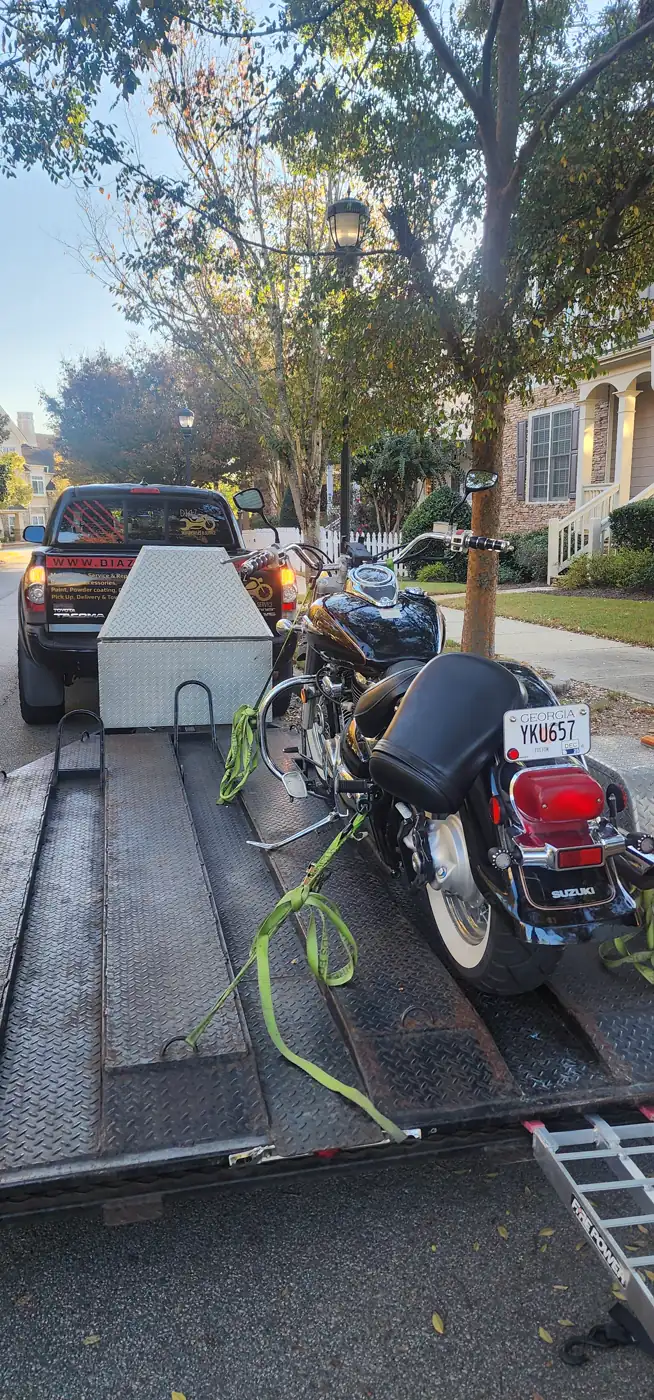
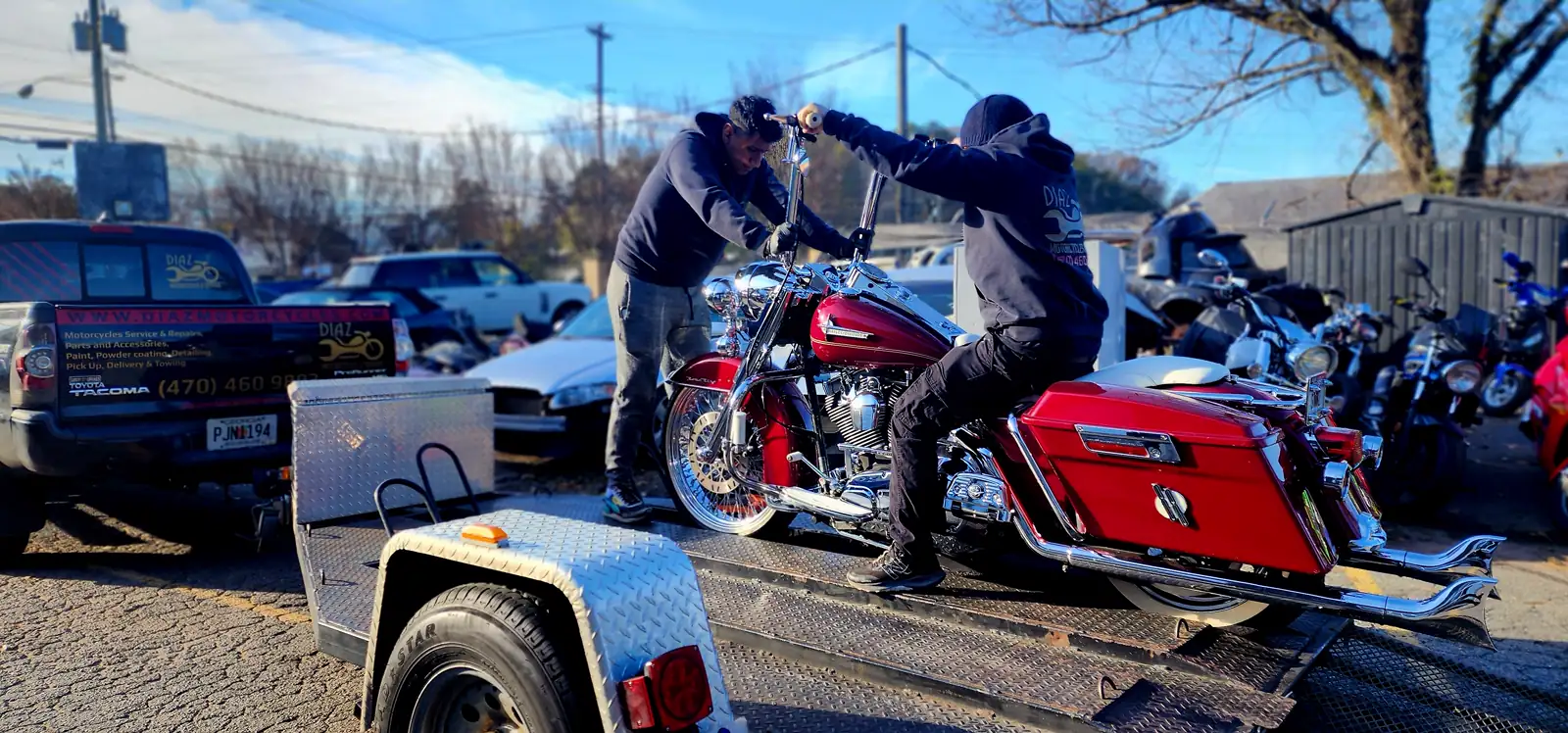
In a lot of cases, yes. If you are in Douglasville or nearby and cannot ride the bike in, ask us about transport. We would much rather move the bike safely than have you push a tuning problem down the road.
Is a tune worth it if my bike is stock?
Often, yes. Even a stock bike carries a safe factory map that leaves smoothness on the table. A tune can clean up flat spots and cold-start manners. And if it truly will not help yours, we will tell you so plainly.
How do I get a quote?
Send us a text with your bike, any parts you have added, and what feels off. We look before we quote, so if we need to see the bike first, we will say so. No surprises, just a straight answer and a clear plan.
We take care of riders all across the west metro. That means friends in Lithia Springs, Villa Rica, and Austell, plus Hiram, Powder Springs, and Mableton. We also help folks riding out of Dallas, Winston, and Smyrna, along with Temple and Fairplay. And of course our home base is right in Marietta, so wherever you set out from, we are an easy call or text away.
TEXT US, KEEP YOUR BIKE
If you love your bike and want to keep it running its best, a real tune is the honest way to get there. Douglasville riders can text us the make, model, and what feels off, and we will tell you straight whether a tune will help. No pressure and no jargon — just a real answer and a plan you can trust.
470-460-9883Diaz Motorcycles and Service, LLC · 847 Barnes Mill Road, Marietta, GA 30062