Motorcycle Running Lean in Douglasville — Causes, Fixes, and Calm Miles Again
The popping, the heat, the flat spot off the line — here's what your bike is really telling you, and how simple the fix usually is.
In short two riders left Douglasville on the same warm Saturday with the exact same complaint. At the same time both bikes popped and crackled on the way down from speed, ran hot sitting in traffic, and felt flat pulling away from a green light. As a result one rider shrugged it off, twisted the throttle a little harder, and kept riding like that for another month. On the other hand the other rolled into our shop that week. So that second rider is the one still grinning, because a motorcycle running lean Douglasville riders tend to ignore almost never heals on its own — it just gets louder about it.
Still, here’s the thing about those two riders. Plus, they weren’t different in skill, and they weren’t different in how much they loved their bikes. The only real gap was that one treated a small warning as a small job, while the other waited until the small job grew into a bigger one. We think about that a lot, because we meet both riders every season. So let’s walk through what was actually happening under that gas tank, in plain words, with no scary talk and no guessing.
First, a quick promise. Nothing here is meant to spook you. A lean-running bike is a common thing, it’s a knowable thing, and it’s a fixable thing. By the time you reach the end, you’ll understand the symptom, you’ll know the usual causes in order, and you’ll know when it’s fine to keep riding and when it’s smart to park it for a bit. That’s the whole point of this.
What a Bike That Runs Lean Is Really Telling You
Your engine runs on a mix of air and fuel. Picture a recipe. When that recipe carries too much air and not enough fuel for the amount of air, we call it lean. When it carries too much fuel, we call it rich. A healthy engine keeps the mix in a tight, happy range across every rpm. Lean simply means the fuel side fell behind the air side, so the burn gets hotter and rougher than it should be.
Riders usually feel it before they can name it. The bike surges a touch at a steady cruise. It pops and snaps through the pipe when you roll off the throttle. Besides it heats up fast in stop-and-go crawls, the kind you hit on Thornton Road where GA-6 feeds into the I-20 tangle at Exit 44. It hangs at a high idle for a second after you pull the clutch, like it doesn’t want to settle down. None of those on its own means disaster. Together, they’re your bike waving a little flag at you.
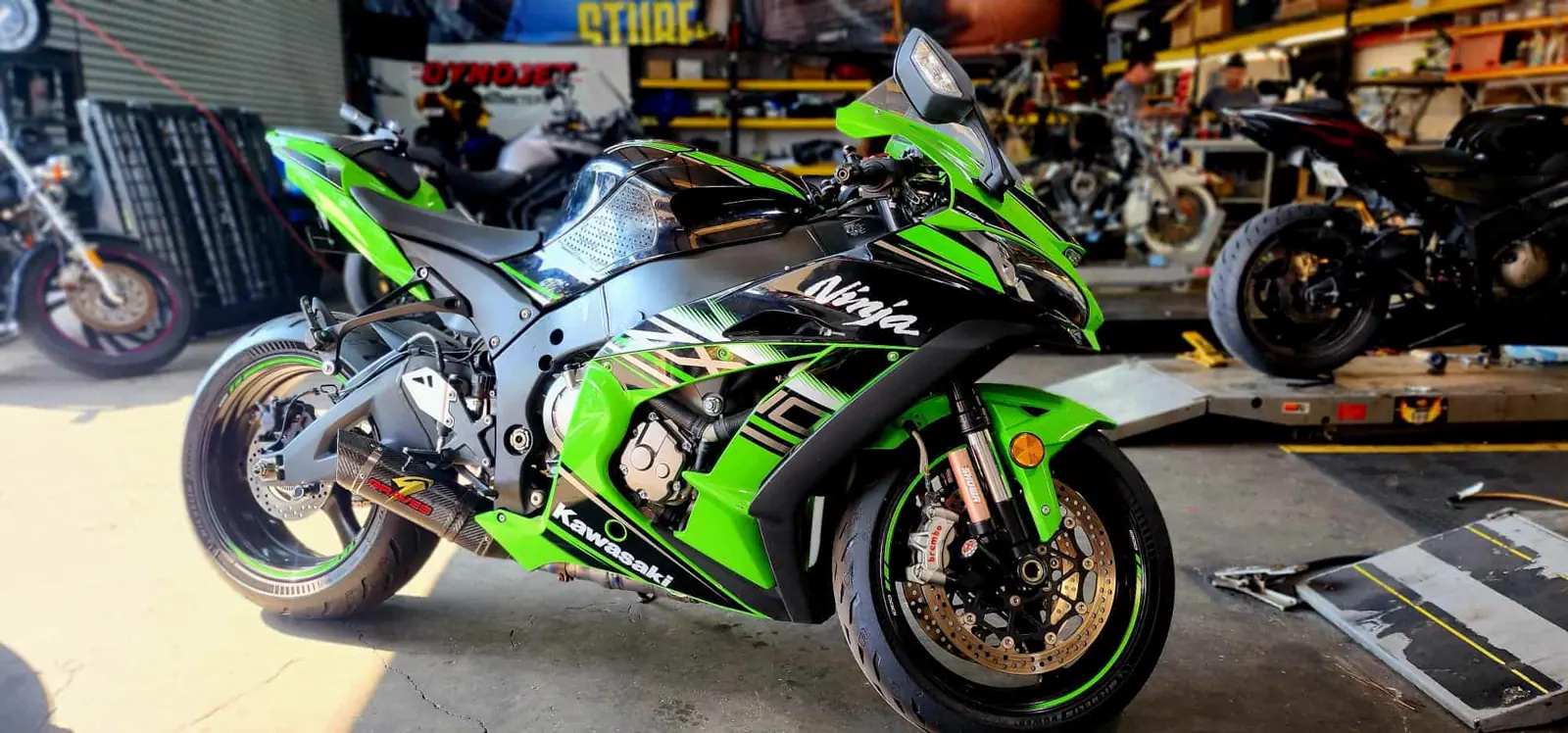
A hot burn also leaves clues you can see. Pull a spark plug on a lean bike and it often looks pale, chalky white, or even a little glazed instead of a healthy tan. On some bikes the header pipes turn a deeper blue than normal from the extra heat. You don’t need to be a mechanic to notice these. You just need to know they point the same direction that the seat-of-the-pants feel already told you.
So that’s the symptom. Now for the part that actually helps — why it happens, and why the fix is usually simpler than all that noise suggests.
The Real Cause — Most Common First
There’s rarely one single villain. When a motorcycle running lean Douglasville owners bring in lands on our bench, we treat it as a category, not one fault, and the good news is that the usual causes fall in a short, predictable list. We start at the top and work down, because the common stuff is common for a reason.
- An air leak. A cracked intake boot, a loose clamp, or a tired gasket lets in extra unmetered air. The engine breathes in air it never planned for, and the mix goes lean. This is the number-one cause we find, and it’s often the cheapest to sort out.
- An aftermarket exhaust or air filter with no re-tune. A louder pipe or a free-flowing filter changes how much air moves through the engine. If nobody adjusted the fuel to match, the bike is now running old numbers for a new setup.
- Clogged or dirty fuel delivery. Gummed-up injectors or a weak fuel pump can’t push enough fuel, so the fuel side falls behind. Old gas that sat all winter is a frequent guest here.
- A lazy or fouled oxygen sensor. On fuel-injected bikes, that little sensor reads the exhaust and helps the computer trim the mix. When it drifts, the computer trims wrong.
- Factory-lean from the showroom. Some modern bikes leave the crate a touch lean on purpose to pass emissions. It’s legal and fine, yet it can feel rough, and a proper tune wakes it right up.
See the pattern? Most of these are mechanical and boring in the best possible way. They’re the kind of thing a careful eye and the right tools sort out without any drama.
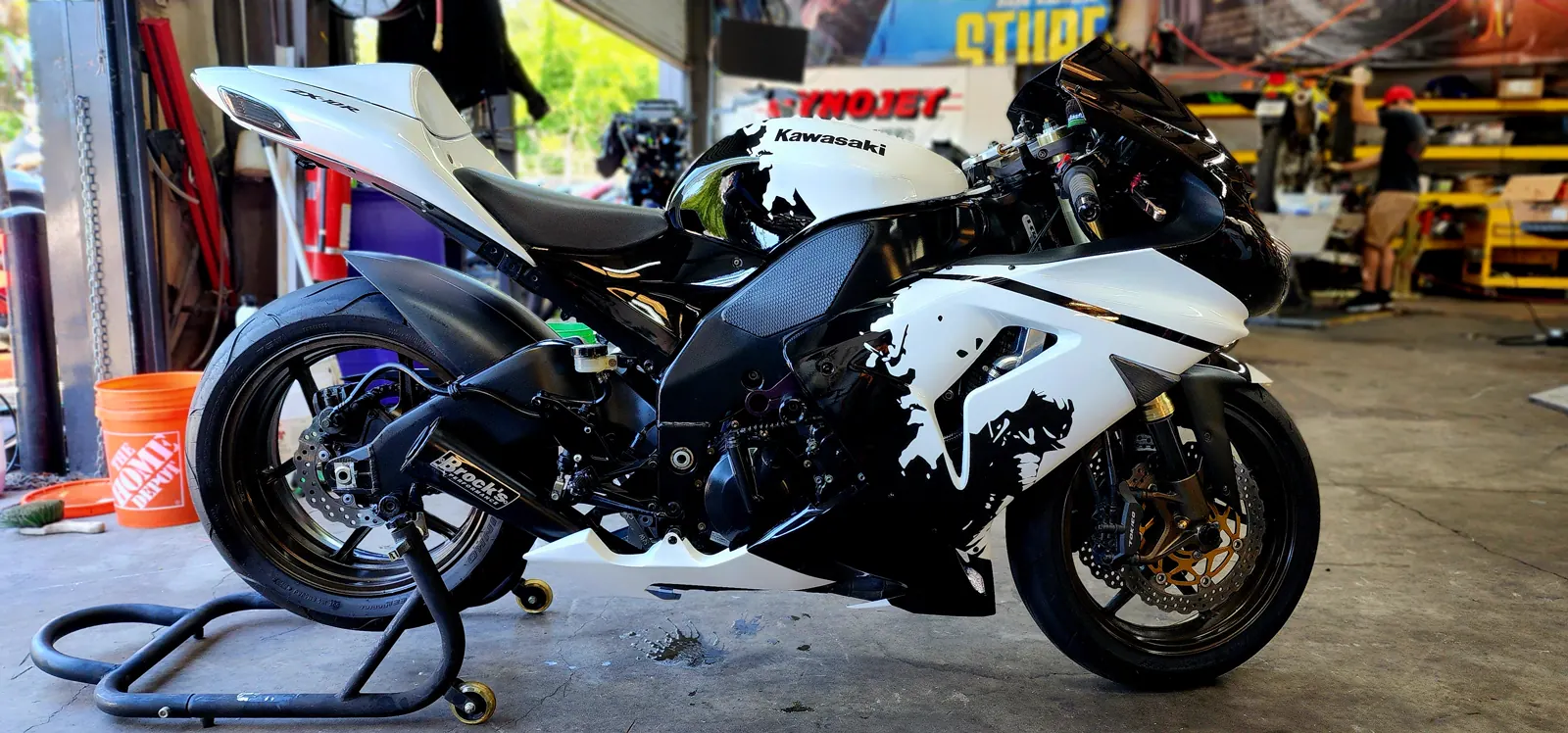
Now flip it around and look at it from the bike’s side. Your engine isn’t broken, and it isn’t out to get you. It’s doing exactly what it’s built to do with the air and fuel it’s handed. Feed it a mix that’s short on fuel, and it burns hot and ragged — not because it’s failing, but because it’s obeying. That reframe matters, because it means the fix is about handing the engine the right recipe again, not about tearing anything apart.
When we say a bike is lean, we’re really saying the numbers drifted. Parts wear. Filters load up. Someone bolted on a slip-on last spring. The map the computer follows was written for a different day. Put the right numbers back, and the same engine that felt cranky turns sweet again.
Your Options From Here
Once we know why a bike went lean, the path forward is usually one of a few clear choices. None of them is scary, and we’ll always name the honest smallest fix first.
Sometimes it’s a straight repair. We find the cracked boot or the loose clamp, we seal the leak, and the mix snaps right back where it belongs. No tuning needed, because the hardware was the whole story. If your symptoms showed up suddenly after nothing changed, this is often the answer, and it’s the one we quietly hope for.
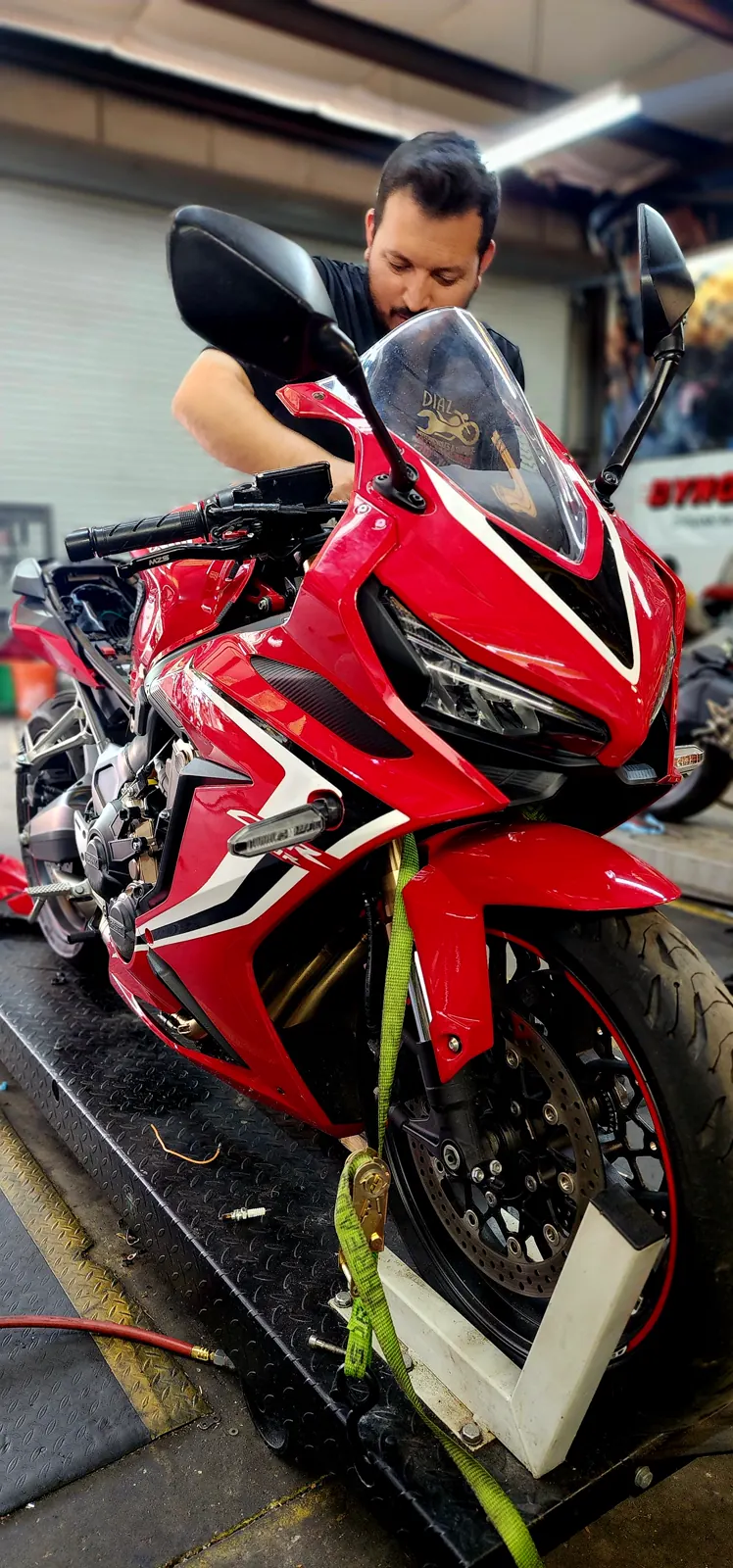
Other times the hardware is fine but the map is wrong. That happens after an exhaust swap, an air filter change, or on a bike that left the factory lean. Here the fix is a tune — teaching the computer a fresh, correct set of fuel numbers. That’s where the dyno comes in, and it’s the part most multi-line shops around Cobb Parkway send out or skip. We do it in-house, whether that means an ECU flash or a Power Commander, and if you want the deeper version, we wrote up what that service actually involves in its own post.
And once in a while it’s both — a small repair to seal a leak, then a tune to dial the recipe in tight. We’ll lay out which one you’re looking at before we touch a single wrench, so there are no surprises waiting for you.
How We Figure Out What's Actually Wrong
Guessing is the enemy here. A lean symptom can come from five different places, so we don’t throw parts at it and cross our fingers. Instead, we measure. That’s the whole reason we built a dyno into the shop rather than tuning by ear out on the street.
A dyno is a rolling drum that the back wheel spins on. The bike stays put, strapped down safe, while we run it through its rpm range under real load. Sensors read the exhaust and tell us the air-fuel mix at every point — idle, midrange, top. It’s like reading the bike’s vitals instead of guessing from the outside. Here’s the order we work in.
- Listen to you first. You know your bike. When did it start, what changed, where does it act up? Your story narrows the list fast.
- Check the easy mechanical stuff. Boots, clamps, filter, plugs, and fuel condition. Cheap to look at, and it catches the most common cause early.
- Strap it to the dyno and pull. We watch the real air-fuel numbers across the whole range instead of trusting a hunch.
- Read the map against the hardware. If the numbers are off for the parts on the bike, we know it’s a tune, not a repair.
- Fix, then verify on the dyno again. We don’t call it done until the mix reads right from bottom to top.
That last step is the one people forget. A tune isn’t real until it’s proven under load, on the drum, with data — not just a happier idle in the parking lot.
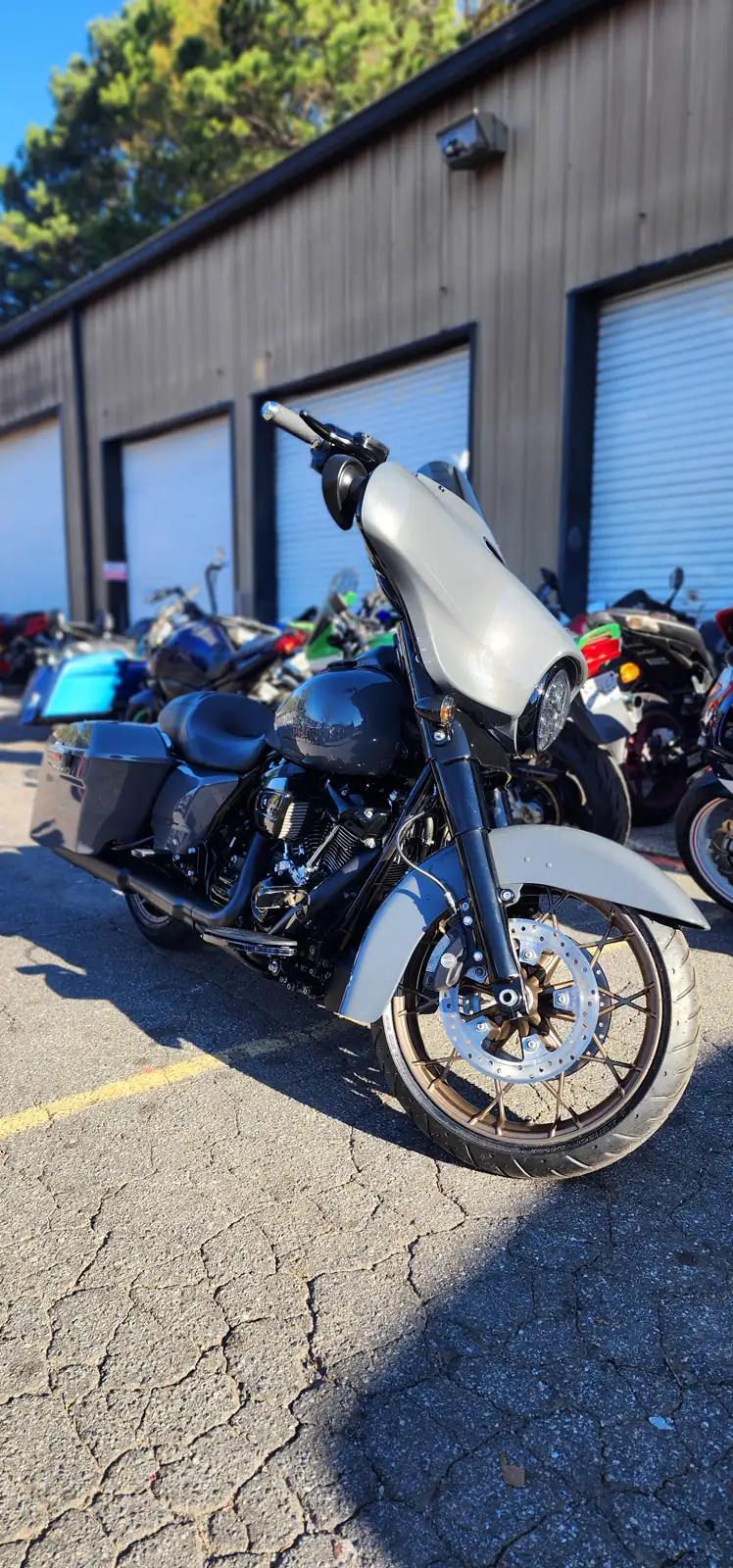
There’s a detail in all this that changes how you’ll ride out of here. A lean bike isn’t just cranky — it runs hotter than it should, and steady heat is what wears an engine out early. Fix the mix and you’re not only buying back the fun. You’re buying back the miles. That’s the quiet part most riders don’t hear until it’s too late, and it’s exactly why the second rider from our story came out ahead.
What It Feels Like After
Here’s the fun part, because this is where the reassurance stops being words and turns into something you feel in the grips. A bike with its mix dialed in doesn’t fight you. The flat spot off the line fills in. Actually the popping on decel quiets down. The temperature stops climbing every time you’re stuck in traffic near the Douglas County Courthouse in the historic downtown. That’s why the throttle feels like it’s wired straight to your wrist.
Where you really notice it is out on the open road. Point the bike west on US-78 and GA-5 toward Villa Rica, Carrollton, and on out to the Alabama line — the classic westbound run — and a properly tuned engine just breathes. It pulls clean and even. It settles into a cruise without hunting. Riders who live out toward the woods and creek beds of Anneewakee, or over in the trail-laced streets of Tributary at New Manchester where the paths run all the way to Sweetwater Creek State Park, tell us the same thing every time: the bike finally feels like it did the day they fell for it.
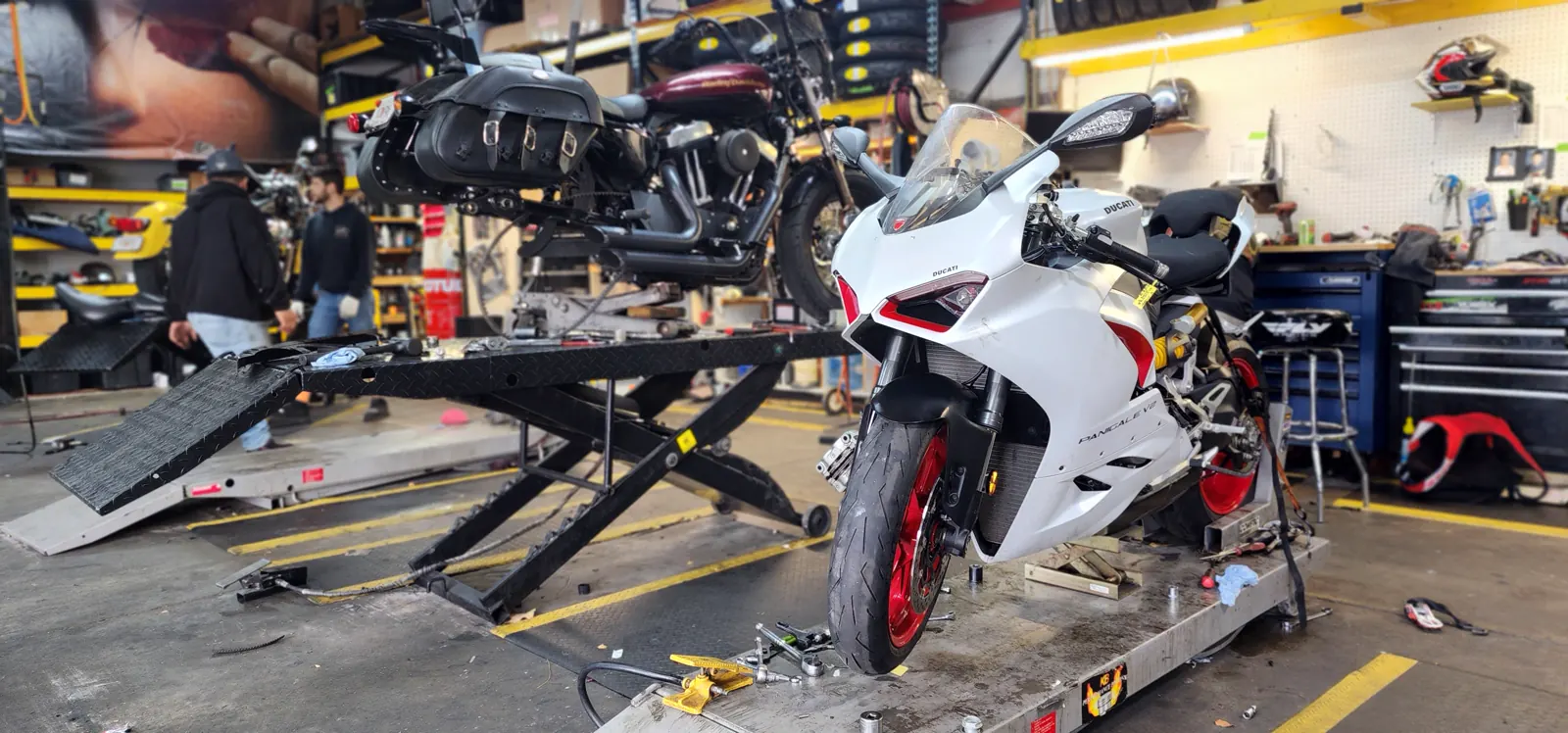
It’s not magic, and we won’t pretend it is. It’s just the right recipe put back where it belongs. The same idea works on a supersport, a metric cruiser, or a big bagger — the numbers differ, but the goal stays identical: air and fuel in the happy range at every rpm. Friends we’ve helped on everything from a Japanese sportbike to a Harley tell us the calm, even pull is the part they didn’t know they were missing.
The Outcome — What Those Two Riders Learned
Remember our two riders? The one who came in early got a small repair, a quick tune, and a bike that ran cool and clean by the weekend. Either way the one who waited a month didn’t ruin anything — bikes are tougher than that — but he did ride a hot, unhappy engine longer than he needed to, and he spent a few extra evenings wishing he’d stopped by sooner. Same problem, two moods. The only variable was how soon each one asked.
If you’re weighing where to take it, you’ve got choices, and that’s a good thing. There are solid folks around, like Xtreme Cycles of Dallas up on East Memorial Drive, roughly thirty to forty minutes north. What we bring to the table is real in-house dyno work — measured, verified, and done under one roof. If you want to compare notes on that, riders over in East Cobb ran into the same thing, and you can also read the full rundown on it before you decide.
Getting to us is easier than it looks on a map. From Douglasville it’s roughly 28 to 32 miles, usually 40 to 60 minutes, and we’d steer you up Thornton Road and GA-6 to the East-West Connector into Marietta rather than fighting I-20 east to I-285 north, since that interchange is one of the worst knots in the state. Keep your tires honest for the ride, too — Michelin’s motorcycle tire resources are a good gut-check, and Georgia DOT posts current road conditions. When you’re ready, here’s what we take care of here.
Questions Douglasville riders ask us
Is a lean bike urgent, or can it wait?
It’s usually not an emergency, so take a breath. A mild lean condition can ride for a little while without harm. That said, the sooner we sort it, the less heat your engine takes on, and heat is the thing that adds up over time. Think of it as a soon job, not a today-or-never one.
What happens if I just ignore it?
Nothing dramatic overnight, but the extra heat slowly wears an engine faster than it should. You’ll also keep living with the popping, the flat spot, and the higher running temperature in traffic. The good news is that catching it early usually means a smaller, simpler fix. Waiting rarely makes the repair bigger, it just makes the ride less fun for longer.
How do you find the real cause?
We start by listening to your story, then check the easy mechanical stuff like boots, clamps, filter, and fuel. After that, we strap the bike to the dyno and read the actual air-fuel numbers across the whole rpm range. That tells us whether a motorcycle running lean Douglasville owners bring in needs a repair, a tune, or both — no guessing.
Could my symptoms be something other than lean?
They could, and we always keep that door open. Popping and heat can also come from ignition timing, a weak coil, or a valve that needs adjustment. That’s exactly why we measure on the dyno instead of assuming. The data points us to the right cause before we touch a wrench.
Is it safe to ride my bike like this in the meantime?
For a mild lean condition and normal street riding, usually yes. Keep an eye on your temperature, avoid long hard pulls on a hot day, and don’t lug the engine. If it’s stalling, badly overheating, or you smell fuel, park it and text us. We’d rather answer a quick question than have you push through something worth a look.
Do I need a full tune, or just a repair?
It depends on what the dyno shows. If the hardware caused the leak, a simple repair often fixes everything. If the map no longer matches the parts on your bike, then a tune is the right call. Plenty of bikes only need one of the two, and we’ll tell you which before we start.
We take care of riders all across the west metro and beyond, so you don’t have to live in town to roll with us. Folks come from Lithia Springs and Austell just up Thornton Road, from Villa Rica and Temple out toward the Alabama line, and from Winston and Fairplay south of downtown. We also see plenty of bikes from Hiram, Dallas, and Powder Springs to the north, along with Mableton and Smyrna as you head back toward Marietta. Wherever you park it, if your bike’s running hot and cranky, we’ve got a dyno with its name on it.
LET'S GET YOUR BIKE BREATHING RIGHT
If your ride is popping, running hot, or falling flat off the line, don’t just crank the throttle harder — let’s find the real cause. We do in-house dyno work, ECU flashing, and Power Commander tuning for Douglasville riders, and we’ll always name the smallest honest fix first. Text us a few notes about what your bike is doing and we’ll tell you what we’re looking at, no pressure.
470-460-9883Diaz Motorcycles and Service, LLC · 847 Barnes Mill Road, Marietta, GA 30062