Motorcycle Dyno Tuning Cartersville — What It Costs
The flat spots, the popping, the hunting idle — here's what they mean and how a real tune fixes them.
As a result you back the bike out of the garage on a cool morning, thumb the starter, and it catches on the second try like it’s a little mad at you. The idle climbs, then drops, then hangs there. On the other hand you roll on the throttle and hit a flat spot right where you wanted the pull. So a blip gives you a pop from the pipe. None of it is scary. All of it is annoying. Still, that flat, popping, hunting feeling is exactly what motorcycle dyno tuning Cartersville riders bring to us to fix, and the good news is that it’s almost always a simple story once you can actually see the numbers.
So let’s take the mystery out of it. Plus, a dyno is just a big roller under the rear tire. Meanwhile, we strap the bike down, spin that roller, and read what the engine really does under load instead of guessing. Meanwhile, sensors sniff the exhaust and tell us how much fuel is burning against how much air. That’s the whole magic trick. We’re not selling you fairy dust. Of course, we’re reading your engine like a page and then rewriting the part that’s spelled wrong.
This post is for the rider who’s already decided something is off and just wants to know it can be fixed by someone honest. That’s you? Good. We’ll walk through the symptoms, what each one is telling you, what actually happens when you drop the bike off, how long it takes, and why folks up in Bartow keep making the run down for it.
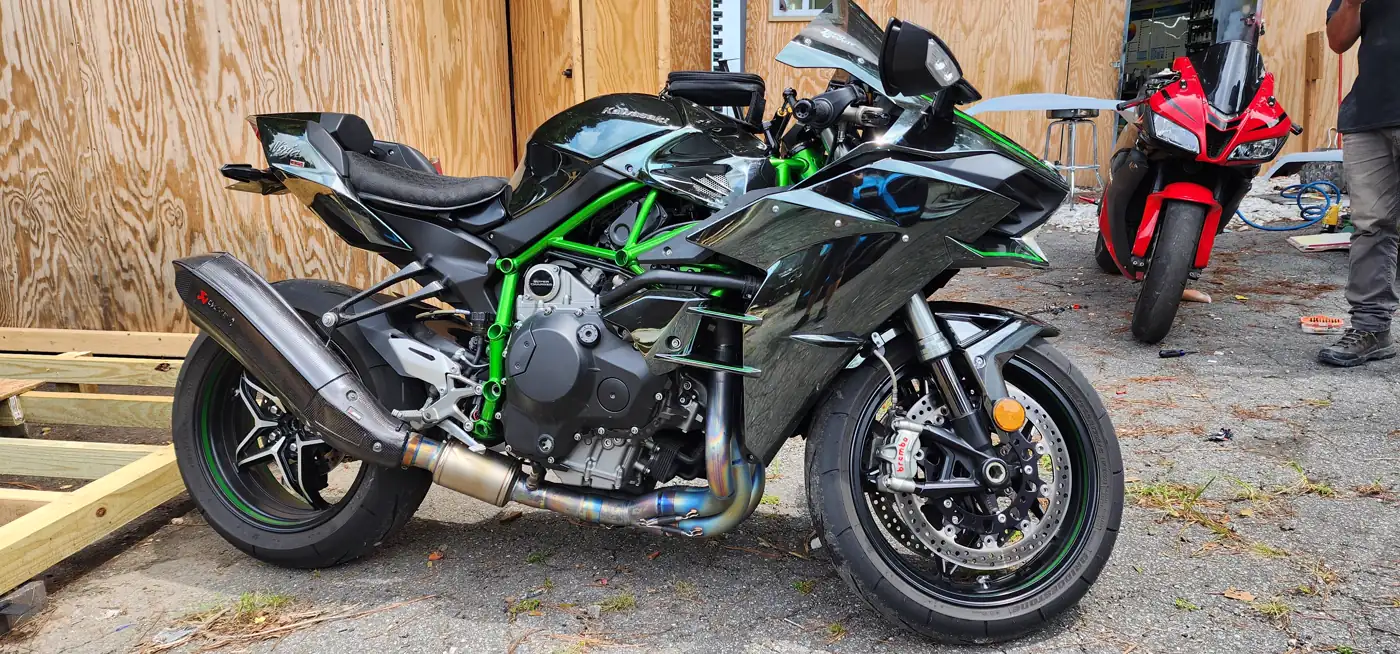
Start with the symptoms you already feel
You don’t need a laptop to know your bike is unhappy. Your right hand already knows. Riders describe the same short list to us over and over, so here’s the one we hear most:
- A flat spot or stumble at a certain rpm, usually low-to-mid, right when you crack the throttle
- Popping and crackling on decel, that machine-gun burble when you close the throttle for a light
- An idle that hunts up and down instead of sitting steady
- Runs hot, cooks your right leg at stoplights, fan cycling on and off in traffic
- Hard starts, especially cold, or that first fire-up after the bike sat all week
- Sooty black plugs and a rich, gassy smell, or the opposite — a lean surge and a whitish plug
- Jerky, snatchy throttle at steady cruise, like the bike can’t pick a speed
If two or three of those sound like your morning, you’re not broken. You’re just tuned wrong. And honestly, most of the bikes we see were never tuned right in the first place — they left the factory with a safe, boring map and then someone bolted on a pipe or a filter and never told the computer about it.
What each symptom is actually telling you
Here’s the plain-English version. Every one of those symptoms comes down to one question: is the engine getting the right amount of fuel for the air it’s breathing? Too little fuel for the air is lean. Too much is rich. That’s it. That’s the whole ballgame, and everything on the list above is just your bike waving a flag about which way it’s leaning.
When the bike runs lean
A lean bike is starving. There’s plenty of air but not enough gas in the mix, so combustion runs hotter and choppier. That’s your flat spot, your surging cruise, your leg-cooking heat, and a lot of that decel popping. Aftermarket pipes and open filters are the usual culprit, because they let more air in but the stock computer keeps feeding the old, smaller fuel amount. If you want the deeper dig on the causes and the risks, we wrote up why that problem shows up in its own post. The short version: lean isn’t just annoying, it’s hard on the engine over time, so it’s worth chasing down.
When the bike runs rich
A rich bike is drowning. Too much fuel, not enough clean burn, so you get sooty plugs, a gassy smell, sluggish response, and fuel economy that makes you wince. Sometimes it’s a leftover map from a mod that got removed. Sometimes it’s a cheap plug-and-play box that dumped fuel everywhere to be safe. Either way, the fix is the same idea in reverse — take fuel away where it isn’t needed and hand it back where it is.
A tune doesn’t add some mystery horsepower out of thin air. What it changes is how the bike feels. The throttle wakes up. In short the flat spot fills in. The heat drops. At the same time the idle sits still. The bike stops arguing with your right hand and just goes where you point it. That’s the real payoff, and it’s why so many riders say the bike feels like a different machine after a session on the roller.
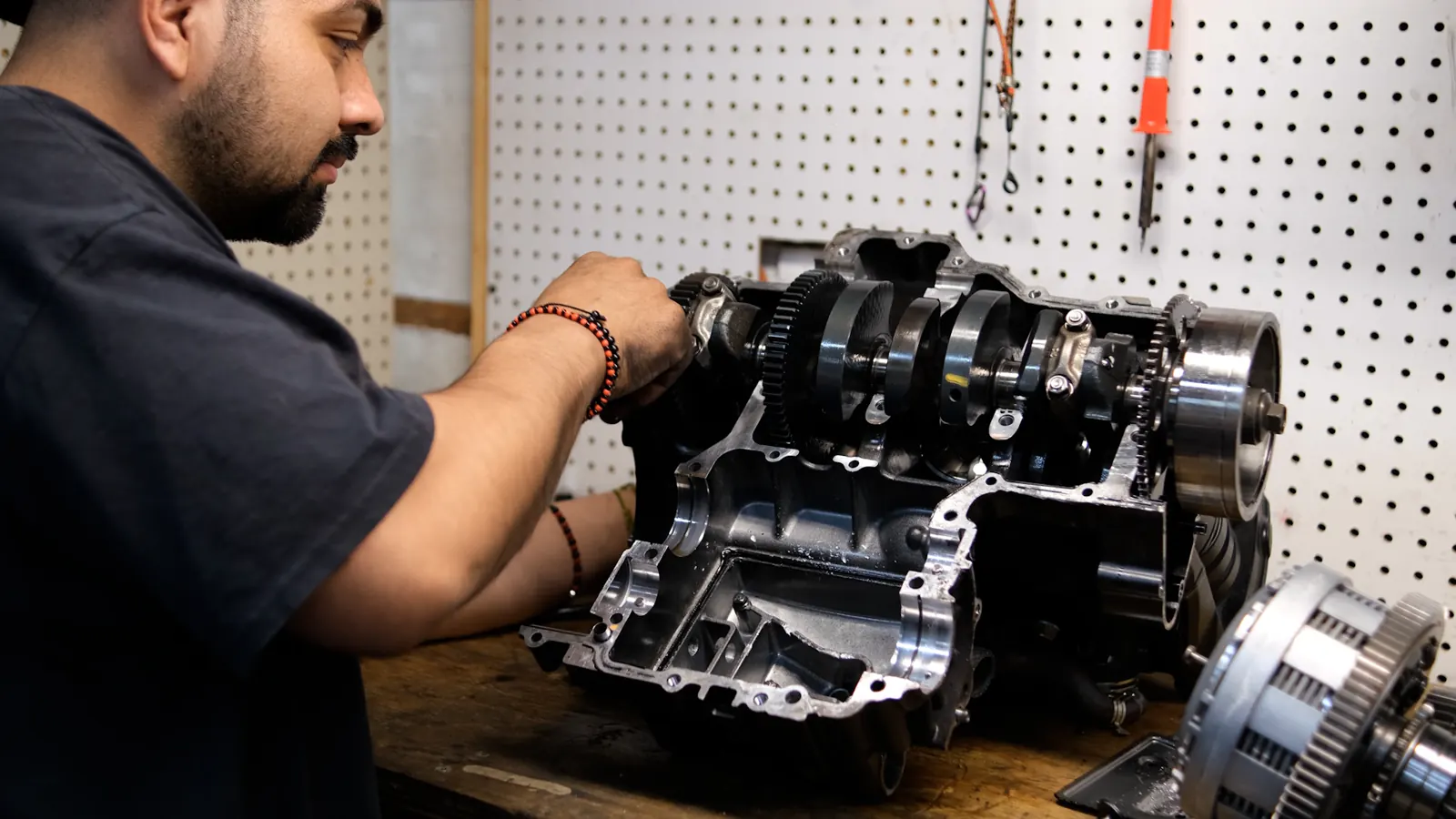
But here’s what most riders get wrong about this. They think a tune is a magic upload — that you plug in a cable, drop in a file someone emailed you, and boom, you’re done. A canned map off the internet is a guess made for an average bike in an average climate that isn’t your bike in Bartow County. Your exhaust, your air filter, your altitude, our Georgia heat, even how worn your bike is — all of it shifts the target. A real tune is custom, measured on the roller, dialed for the exact machine strapped down that day.
What actually happens when you drop it off
This is the part that makes people relax, because there’s no smoke and mirrors. Here’s the whole flow, start to finish:
- We talk first. You tell us what it’s doing and how it rides. Symptoms are clues, and you’ve been living with them.
- We do a health check. A tune can’t fix a mechanical problem, so we look for tired plugs, a leaky intake, a worn chain, low compression — anything that would poison the numbers.
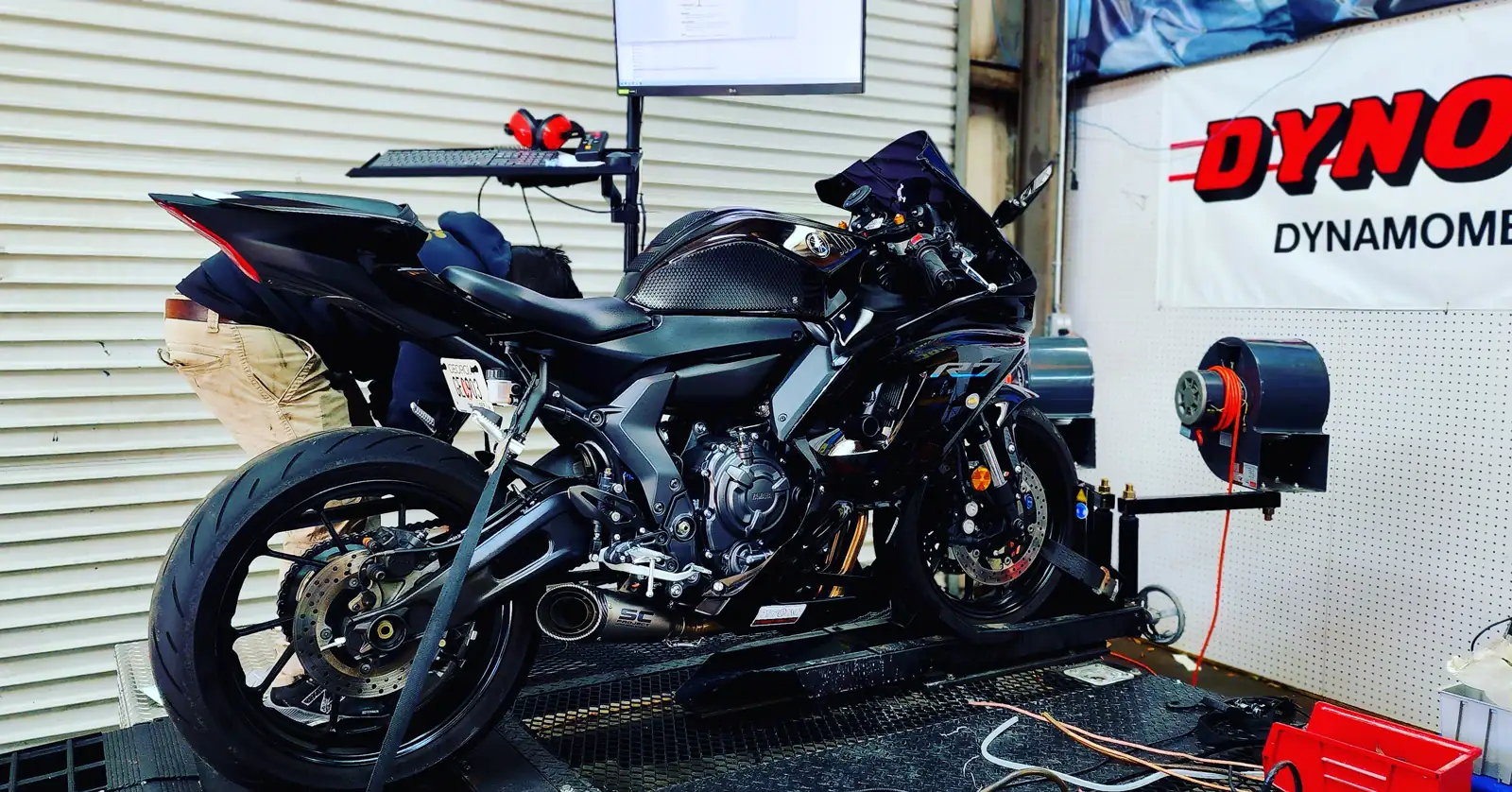
- We strap it to the dyno and take a baseline run. This is the honest before picture. We watch the air-fuel ratio across the whole rpm range and find exactly where it’s lean or rich.
- We diagnose, then we quote. You get a straight answer about what’s wrong and what the fix takes before any money is on the table.
- We build the map. Whether your bike wants an ECU flash or a Power Commander, we adjust fuel and timing in small steps, run after run, until the whole curve is clean.
- We take an after run and show you both. You see the flat spot filled and the mix corrected, right there on the screen. No adjectives, just the graph.
That diagnose-before-we-quote step is the heart of good motorcycle dyno tuning Cartersville riders can trust, and it’s the thing folks in a show-me county appreciate. We’re not going to sell you a big-power build when your bike just needs its mix corrected. Bartow riders evaluate a shop the way they evaluate a machine, and we’d rather earn the next ten years than pad one invoice. If you want the whole picture of the services around this, here’s the full list of what we do on the dyno.
IN-HOUSE MEANS IN-HOUSE
Our dyno lives under our roof, not at a partner shop three towns over. ECU flashing and Power Commander work happen here too, so nobody’s shipping your data around. That’s rare for multi-line shops, and it’s most of why riders make the trip.
How long does motorcycle dyno tuning take?
For a clean, healthy bike that just needs a custom map, most sessions are a same-day or next-day deal. The dyno time itself isn’t long — it’s the careful, run-by-run dialing that eats the clock, because we’d rather take an extra pass than hand you a rushed map. If the health check turns up something mechanical first, like a tired sensor or a vacuum leak, we’ll call you before we touch it and give you the timing straight. You’ll never get a surprise on the back end. That’s a promise, not a slogan.
Cost for motorcycle dyno tuning works the same honest way. We won’t throw a number at you sight-unseen, because a bone-stock bike and a heavily modded one are different jobs. We diagnose, we show you the baseline, and then you get a real quote for your bike. Riders over in Powder Springs get the same treatment, and so does everybody who rolls in from up north.
Why Bartow riders make the run
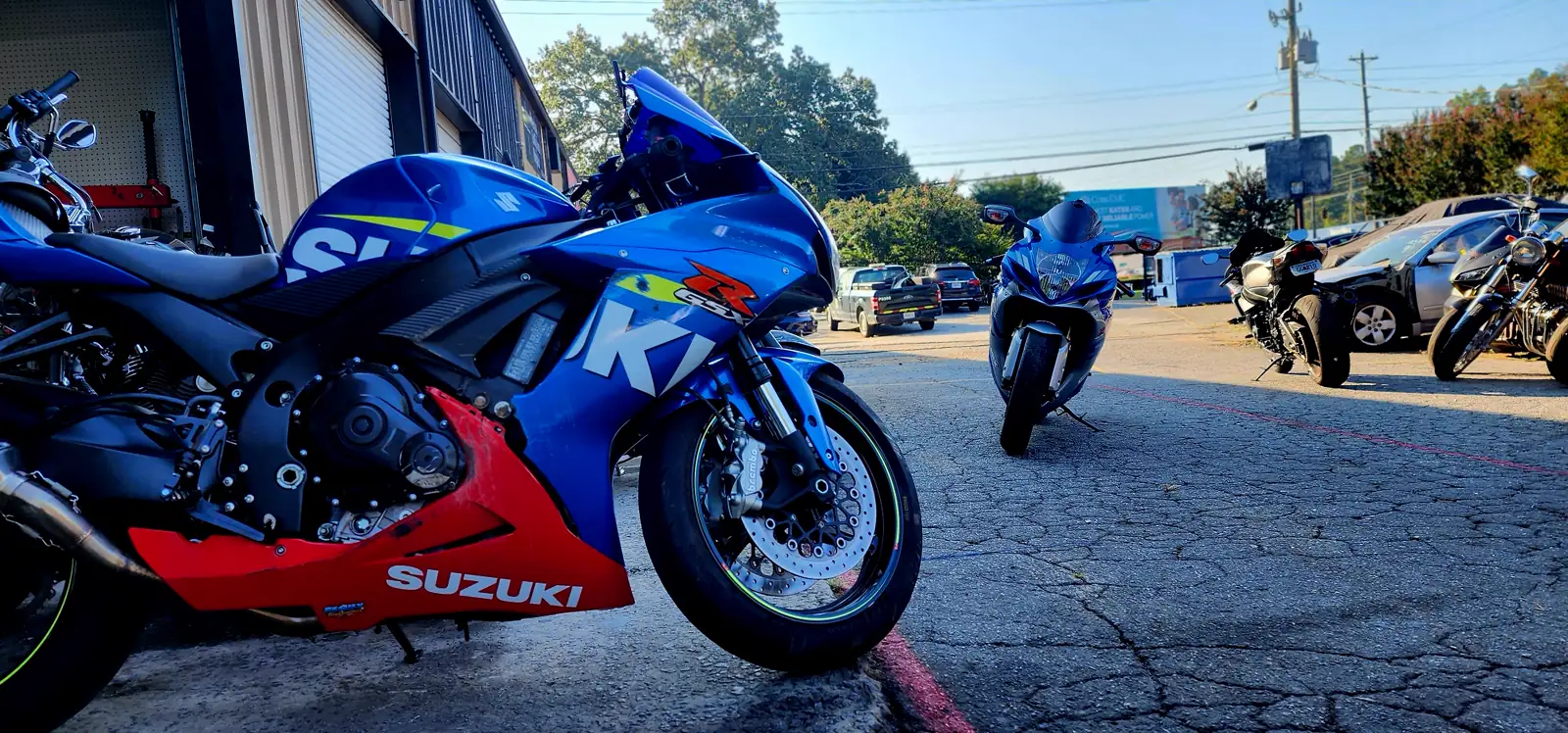
Cartersville is a real motorcycle town, and everybody knows it. Southern Devil Harley-Davidson up on 411 is the beating heart of it, with the H.O.G. chapter and a packed calendar of poker runs and toy runs that keep the community tight all year. That’s a great thing. But a Harley house is a Harley house, and Bartow County has no visible multi-line independent performance shop of its own — which leaves metric bikes, sportbikes, and project builds looking elsewhere for real custom mapping. That’s the gap we fill.
And geography does you a favor here. Plenty of Cartersville folks already run I-75 south to Cobb every workday, past the Tellus Science Museum sitting just off the interstate, so dropping a bike in East Cobb is on the way rather than a special trip. That same I-75 is a rough ride for a machine, too — heavy truck volume chews it into ruts and grooved concrete, with expansion joints and blown-retread debris that make a snatchy, poorly-tuned throttle even more miserable in traffic. A clean map won’t fix the pavement, but it sure makes the slog easier to live with.
Let us tell you about a rider near the Downtown Business District. He kept a clean older metric cruiser garaged in one of those pre-1940 homes over in Granger Hill, the kind of detached, unheated storage that’s great for a project and hard on a fuel system. The bike had picked up a stumble and a hot-running habit after a pipe swap, and he’d been babying it for a year. We strapped it down, found it running lean right in the cruise range, and built a proper map for it. He texted us a week later — first thing he did was run GA-20 Knox Bridge Highway east across the Lake Allatoona causeway toward Canton, top-to-bottom, no flat spot, no cooked leg. That’s the whole point of the job right there.
You don’t have to be chasing a track record to want this, either. A rider in a mid-market Cedarcrest home with a daily commuter benefits just as much as a weekend canyon carver. Whether your bike lives downtown between the Grand Theatre and the Legion Theater on their two sides of the square, or out on a county road, the fix is the same: measure it, correct it, ride it. If you like nerding out on the why, the folks at RevZilla’s Common Tread and the Motorcycle Industry Council both keep good, honest reading on how modern bikes fuel and breathe.
A tune doesn't invent power. It just stops your bike from fighting you.
So here’s where you land after all this. That flat spot has a cause. That popping has a cause. The heat, the hard starts, the hunting idle — all of it is fixable, and none of it is a mystery once the bike is on the roller and the numbers are on the screen. You don’t have to keep babying it. If you want to go deeper on the payoff, we put together the full rundown on it in a companion post. Then all that’s left is the easy part — get it to us.
Questions Cartersville riders ask us
What does a dyno tuning session actually include?
You get a full health check first, a baseline run so we can see exactly how your bike is fueling, a straight diagnosis, and then a custom map built run-by-run on the roller. We handle ECU flashing and Power Commander work in-house. You leave with a before-and-after graph, not just our word for it.
How long does it take?
A clean, healthy bike is usually a same-day or next-day job. The dyno time is short, but the careful dialing takes patience, and we won’t rush it. If the health check finds something mechanical first, we’ll call you with honest timing before we go further.
Do you work on my brand?
Almost certainly, yes. Harley, Indian, and every metric brand — Yamaha, Suzuki, Kawasaki, Honda, and more. Cruisers, baggers, sportbikes, and project builds all read the same way on the dyno. Bartow County is short on multi-line shops, and that’s exactly the gap we fill.
Do I need an appointment?
Yes, please. The dyno is a one-bike-at-a-time deal, so we set a slot and give it your full attention. A quick text is all it takes to get on the calendar. Tell us what your bike is doing and we’ll get you booked.
Can you pick up my bike?
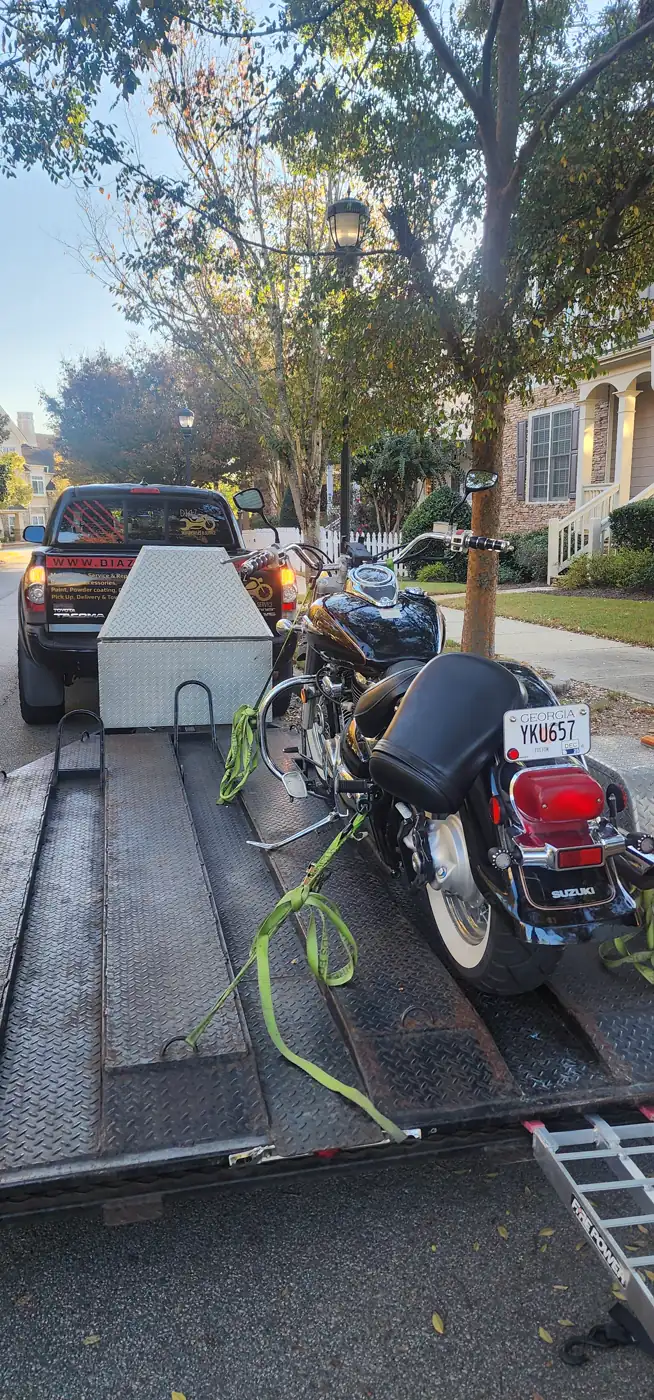
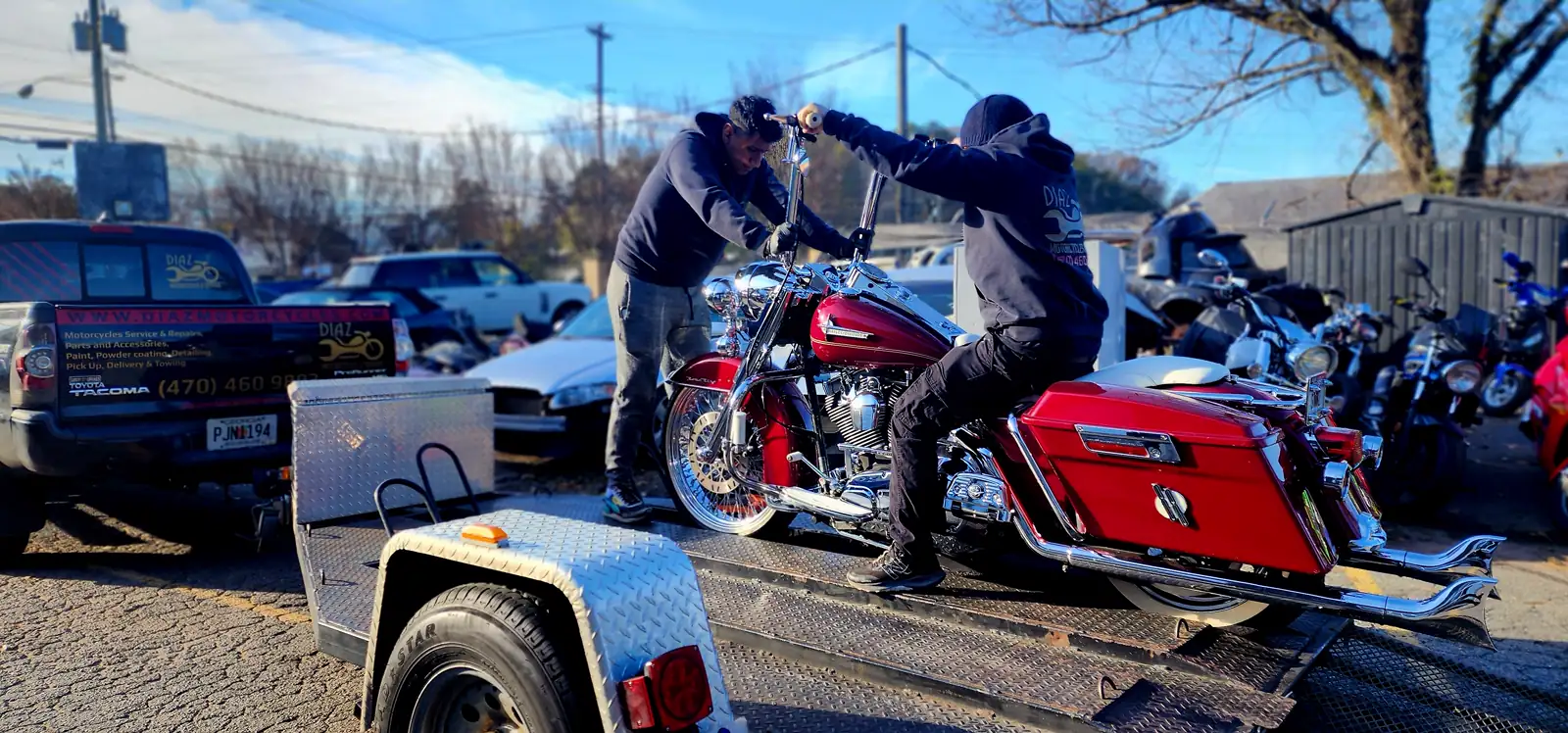
Reach out and let’s talk about it. Plenty of Cartersville riders already run I-75 south for work, so a drop-off is often on the way. If getting it here is a hassle, text us your situation and we’ll figure out the easiest path.
Will a tune add horsepower?
A tune’s real job is to fix how the bike feels — filling flat spots, cooling it down, smoothing the throttle. Any gains come from letting the engine breathe right, not from magic. We show you honest numbers on the screen and never invent a figure to sell a job.
We take care of riders all across Bartow County and the northwest metro. That means folks in Acworth and Kennesaw running down through the corridor, riders out in Emerson, White, and Adairsville, and the crews around Euharlee, Kingston, Taylorsville, and Rydal. We also see plenty of bikes come in from Canton, Woodstock, and Dallas when their riders want real custom mapping close to home. Wherever you keep your bike parked, if you can get it to us in East Cobb, we can read it right.
LET'S FIX THAT FLAT SPOT
If your bike’s been fighting you every morning, you don’t have to keep living with it. Text us and tell us what it’s doing — that’s the whole first step. We’ll get your Cartersville bike on the dyno, show you the honest before-and-after, and hand you back a machine that finally does what your right hand asks. The fix exists, and it’s an easy trip down the interstate.
470-460-9883Diaz Motorcycles and Service, LLC · 847 Barnes Mill Road, Marietta, GA 30062