Motorcycle Running Lean Lawrenceville — What to Check
A decel pop, extra heat, and a hunt for surge. Here's what a lean bike is telling you, why it happens, and when it's safe to ride.
You’ve got more than one bike in the garage, and a little mental map of who works on what. The commuter goes to one shop. Even so, the weekend bike goes to another. The tire place is a third stop entirely. So when one of them starts running hot and popping on the way down through the gears, you’re already flipping through which number to call. If you’ve got a motorcycle running lean Lawrenceville riders will tell you the same thing, because that decel pop and that extra engine heat are usually the very first clues it gives you.
Here’s the good news up front. A lean bike is not a broken bike. It’s a bike that’s asking for the right amount of fuel, and right now it isn’t getting it. Once you understand what’s happening, the fix is honest and clear. So let’s walk through it together, the way we would if you rolled it into the shop and stood next to us while we looked.
What you're really asking
When a rider says “I think my bike is running lean,” they’re usually describing a feeling, not a diagnosis. And that’s fine. That feeling is real data. Most of the time it sounds like this. The engine gets hotter than it used to, especially in stop-and-go traffic. There’s a snap or pop out the pipe when you roll off the throttle. Down low the bike feels a little jerky, like it can’t decide how much power to give you. And on a hot afternoon it might surge or hang at a steady cruise, where the RPMs float up on their own instead of holding steady.
So what does “lean” actually mean? Your engine wants a specific mix of air and fuel to run its best. When there’s too much air for the amount of fuel, we call that lean. When there’s too much fuel for the air, that’s rich. Lean burns hotter and feels twitchy. Rich runs cooler but sluggish and sooty. Neither one is a moral failing on your part. It’s just a recipe that’s off, and recipes can be corrected.
The honest answer: what a dyno actually measures
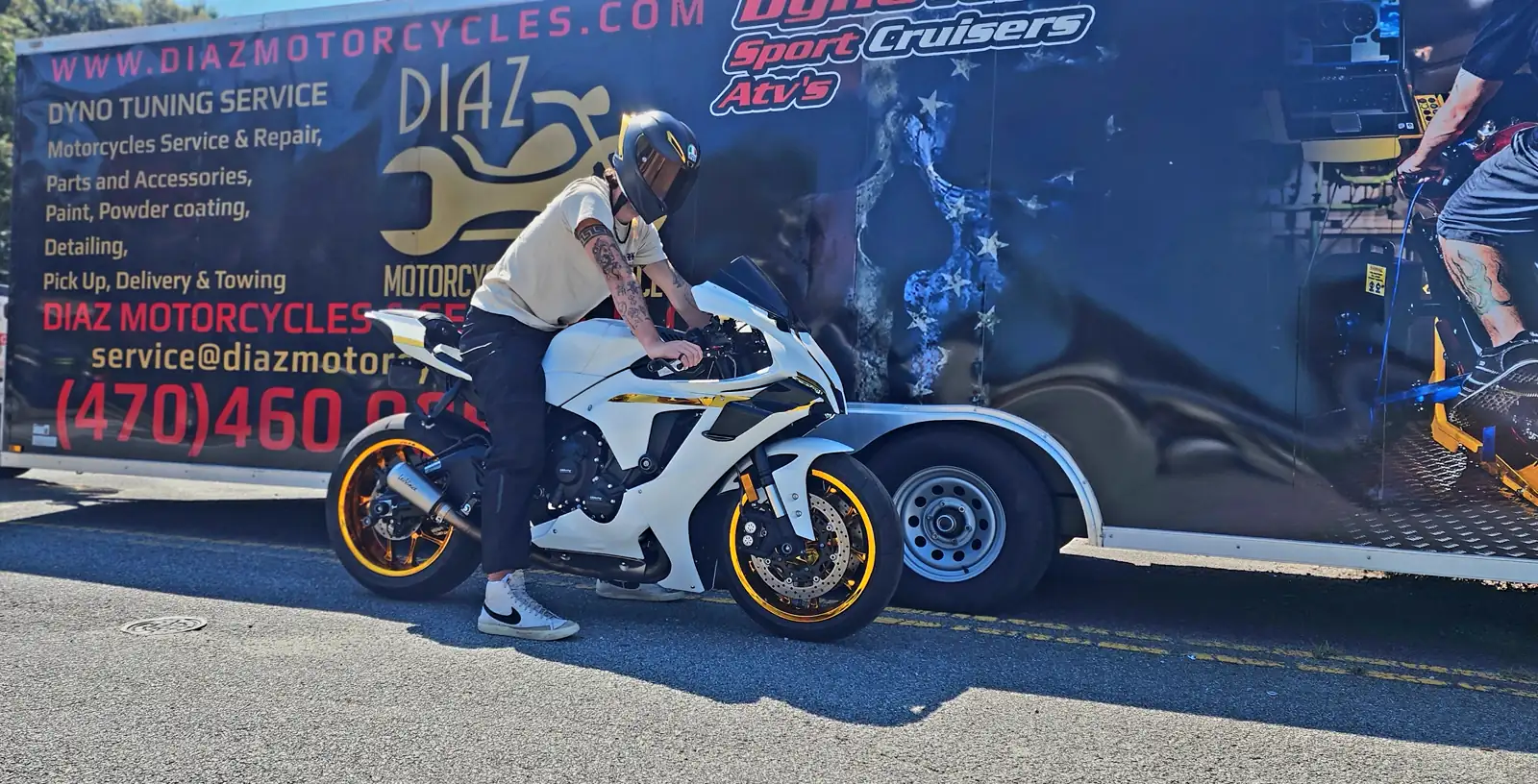
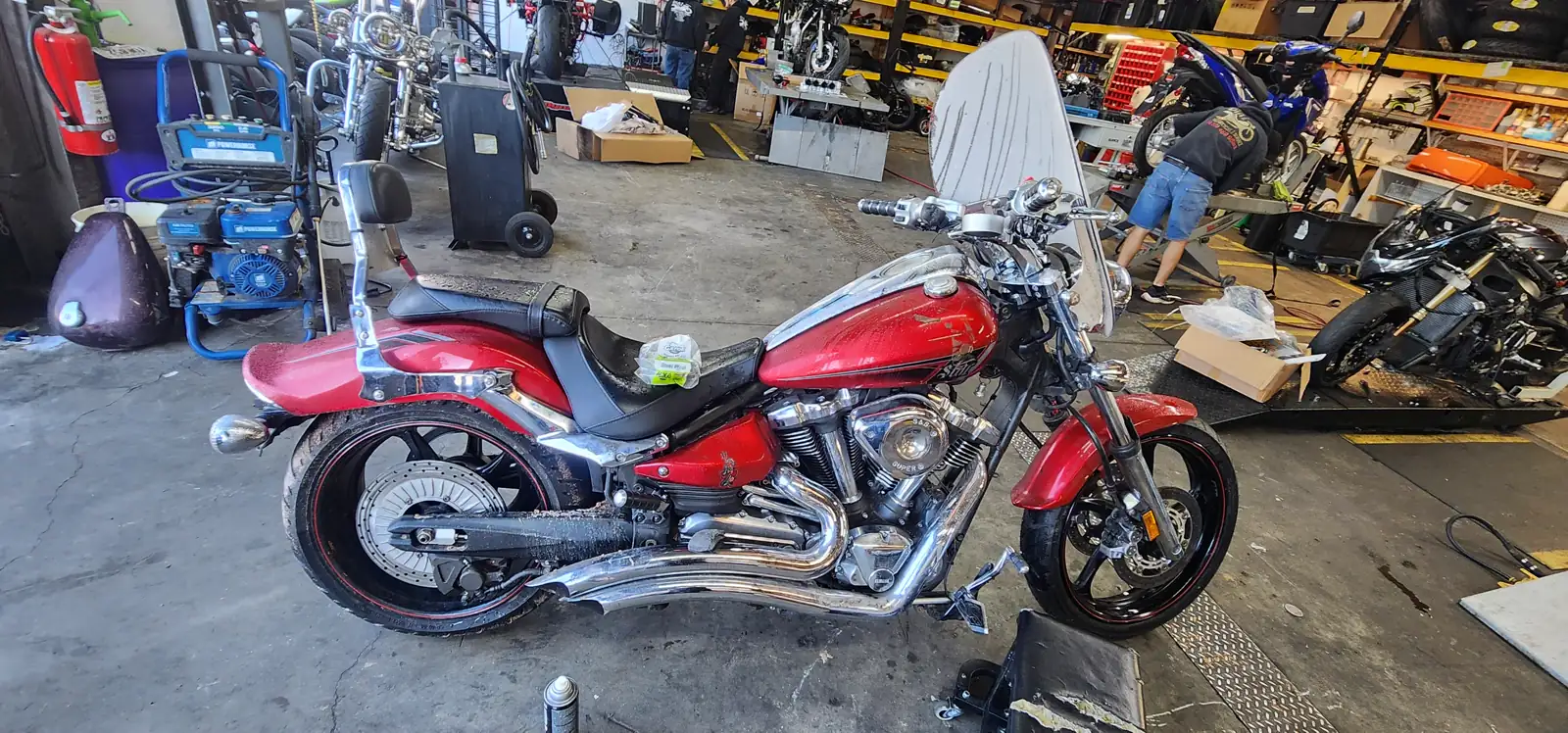
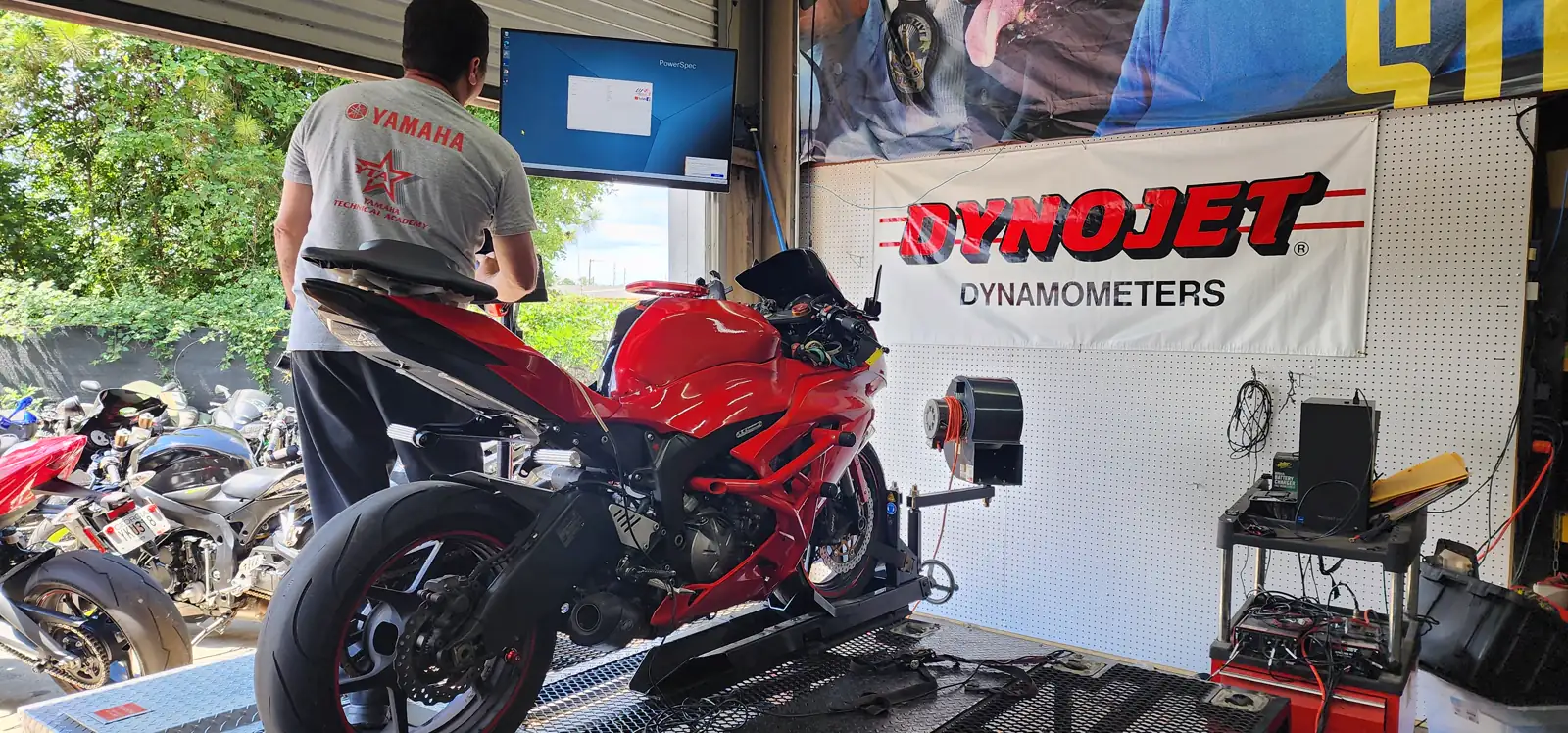
So how do we know for sure, instead of just guessing? We put the bike on a dyno. A dyno is basically a treadmill for your motorcycle. The rear wheel spins a big drum, so the engine can run under real load while the bike stays put in the shop. That lets us watch what it’s doing at every RPM, not just at idle in the parking lot.
While it spins, a sniffer sits in the exhaust and reads the air-fuel ratio the whole way through the pull. That number tells us the truth. It shows us exactly where the bike is starving for fuel and where it might be drowning in it. A dyno also reads power and torque across the rev range, so we can see the flat spots and the surges you feel in your hand. So a motorcycle running lean Lawrenceville owners have been babying all season stops being a mystery — the machine simply shows us where the fuel isn’t keeping up. We measure first, and we never guess and hope.
What changes it: the common causes, easiest first
Now for the part you actually came here for. Why is your bike lean in the first place? In our experience the reasons line up in a pretty reliable order, so let’s go through them from most common to least.
The number one cause we see is simple. You changed something and never told the computer. A slip-on exhaust, a full system, a high-flow air filter, new gearing after a slip-on — every one of those lets more air move through the engine. More air with the same fuel equals lean. Your bike didn’t do anything wrong. It just did exactly what it was told, and nobody updated the instructions. This is far and away the most common story we hear, and it’s the easiest one to fix.
- A slip-on or full exhaust that flows more air than stock
- A high-flow or aftermarket air filter
- A stock map that was already a little lean from the factory to pass emissions
- A vacuum or intake leak sneaking in unmetered air
- A clogged injector or a weak fuel pump not delivering enough fuel
- Worn plugs or a tired sensor feeding the computer bad numbers
Notice the pattern. The first two are things riders add on purpose, and they’re great mods. What’s more, the rest are wear items that creep up over the miles. A factory map that runs a touch lean is more common than people think, because modern bikes are tuned right at the edge to meet clean-air rules. So even a bone-stock bike can feel lean on a hot day. That’s not a defect. It’s just a factory recipe playing it safe, and a tune gives it back some breathing room.
Here’s the question we’d ask if you were standing in the shop. Did the symptoms start right after you changed something? If the answer is yes — a new pipe, a filter, a fresh set of sprockets — then you’ve almost certainly found your cause, and it’s the friendly kind. It means the hardware is fine and the bike just needs its map updated to match. If the symptoms crept in slowly over a season with no changes, then we’re looking more at a wear item, like a lazy fuel pump or a leaking intake. Either way, the dyno tells us which, so nobody has to argue about it.
When it's safe to ride and when it isn't
Let’s be straight with you, because this is the part that matters. A slightly lean bike is usually safe to ride for a while. If it starts fine, idles okay, and only pops a little on decel, you’re not in danger of a breakdown on your next trip to grab lunch. Plenty of riders roll around lean for a whole season without a clue. So don’t panic and don’t park it out of fear.
That said, lean runs hot, and heat is what wears an engine out early. So here’s the honest line. If your bike is doing any of the following, treat it as “fix it soon,” not “someday.” Get it looked at before you rack up more hot miles.
- The temperature gauge climbs higher than normal or the fan runs constantly
- It surges or hangs at a steady cruise so you can’t hold a smooth speed
- It stumbles, backfires hard, or wants to stall at stoplights
- You smell it running hot or notice the header glowing more than usual
- It pings or knocks under load, which is the one that means stop and call us
THE ONE THAT MEANS STOP
A sharp metallic ping or knock when you’re on the throttle is the exception to “ride it a while.” That sound is the fire lighting at the wrong moment, and it’s the one lean symptom that can hurt the engine quickly. If you hear it, ease off and get the bike checked before your next real ride.
So the short version is this. Mild lean with good starting and idling? Ride it, but book the fix. Overheating, hard surging, or any knock? Don’t put it off. And if you’re ever unsure which camp you’re in, that’s exactly the kind of thing you can text us about before you ride. We’d rather answer a quick question than have you guess.
Our approach on the dyno
Once the bike’s on the drum, the process is calm and it’s the same every time. First we do a baseline pull and read the air-fuel ratio across the whole rev range, so we can see the truth about where it’s lean. Then we adjust the fueling. On many modern bikes that means flashing the ECU, the bike’s own computer, with a corrected map. On others we add a Power Commander, a small piggyback unit that fine-tunes the fuel signal. Either way, the goal is the same — feed the engine the right amount of fuel everywhere, not just at one RPM.
Then we pull it again and check our work. And again, until the numbers are clean and the power line is smooth from bottom to top. When it’s dialed, the bike stops running hot, the decel pop settles down, and that jerky low-end turns into a smooth, connected pull. That’s the feeling people are chasing when they finally get a real tune. It’s not magic. It’s just the recipe, corrected and confirmed on the machine. If you want the deeper version, here’s how our crew approaches it start to finish.
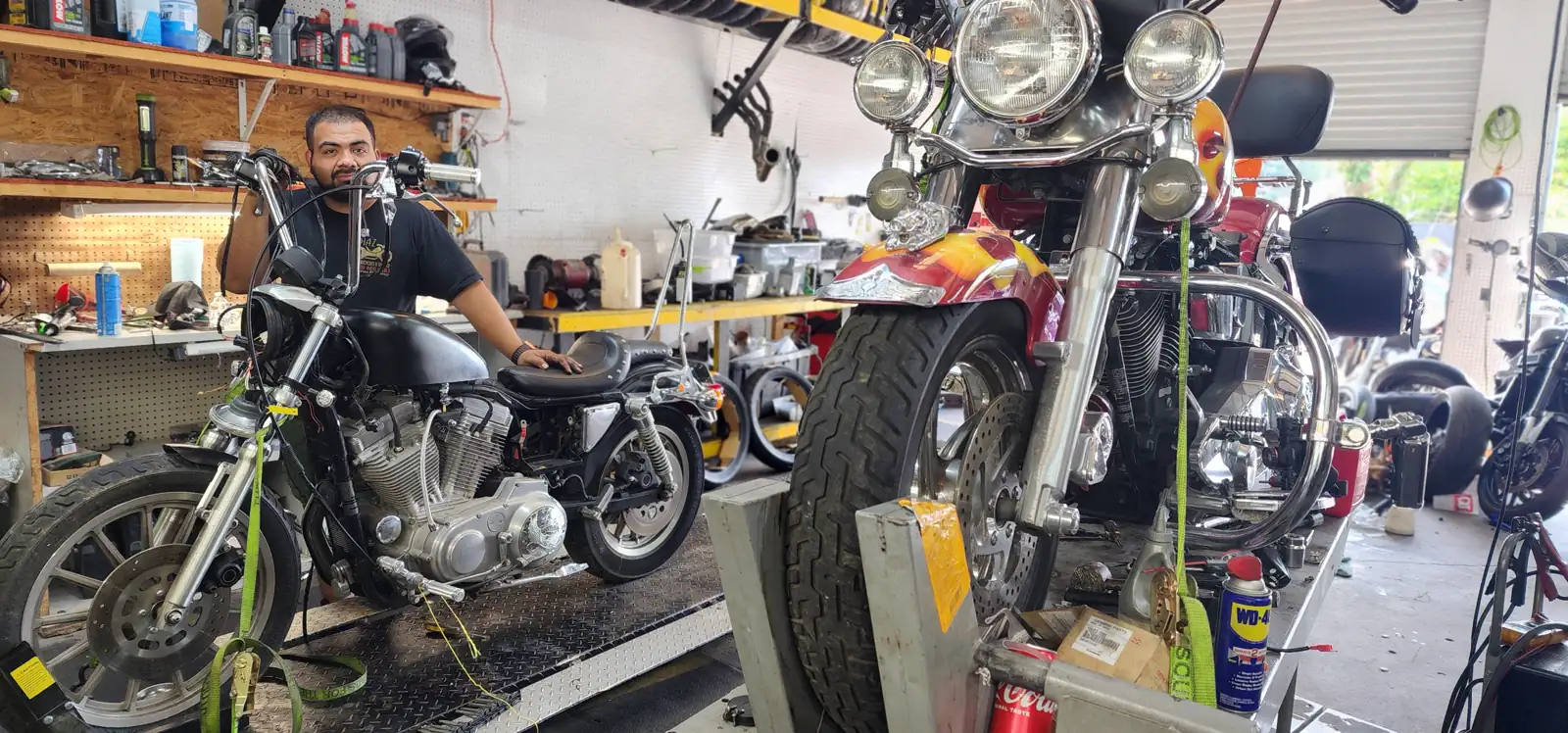
A quick word on canned maps you download off the internet. A canned map is a guess made for an average bike in average weather. Your exact pipe, your filter, and the Georgia humidity all move the target. A custom dyno tune is made for your bike, on your bike, on the day. That’s a big part of what separates a good shop from a parts-swapper.
Where Lawrenceville comes in
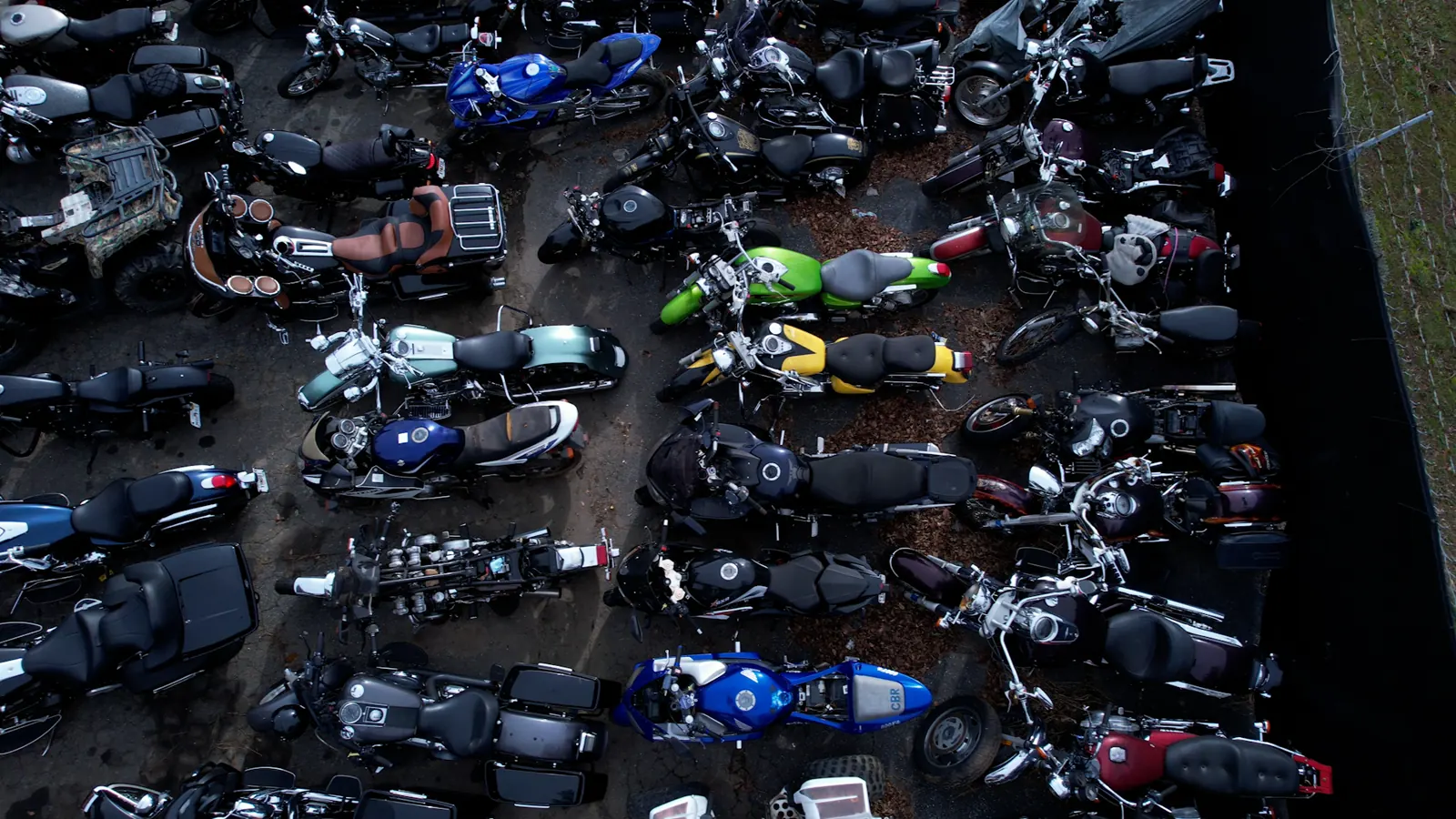
This is where Lawrenceville is genuinely different from other towns. Gwinnett is one of the busiest motorcycle counties in the whole state, and it leans hard toward sportbikes — R-series Yamahas, GSX-Rs, Ninjas, CBRs, plenty of Ducatis and Aprilias in the mix. And here’s the catch. It’s a modified-bike culture. Riders around Collins Hill Heights and Coopers Pond bolt on exhausts and filters and fender eliminators all the time, which is great fun, but it means a whole lot of local bikes are running lean and never got mapped for it. Over in the Gates Mill, Glynwater, Highland Manor, and Highland Oaks stretch, the story’s the same — nice bikes with new parts and no tune to match.
The honest problem is that Gwinnett doesn’t really have a dyno. You’ll find good independents — a shop like Polini Motorsports over on Swanson Drive does solid repair and custom work — but real in-house dyno tuning, ECU flashing, and custom mapping just aren’t sitting in Lawrenceville waiting for you. So a rider who wants proper fueling work is leaving the county either way. That’s not a knock on anybody local. It’s just where the machines happen to be. Riders who’ve spent a Saturday circling the fishing lake at Rhodes Jordan Park, or made the ride downtown past the Gwinnett Veterans War Museum and the Fallen Heroes Memorial and Armed Forces Monument, know the county’s full of bikes and short on dynos.
Gwinnett modifies bikes better than anywhere, and then has nowhere local to make the mods actually work.
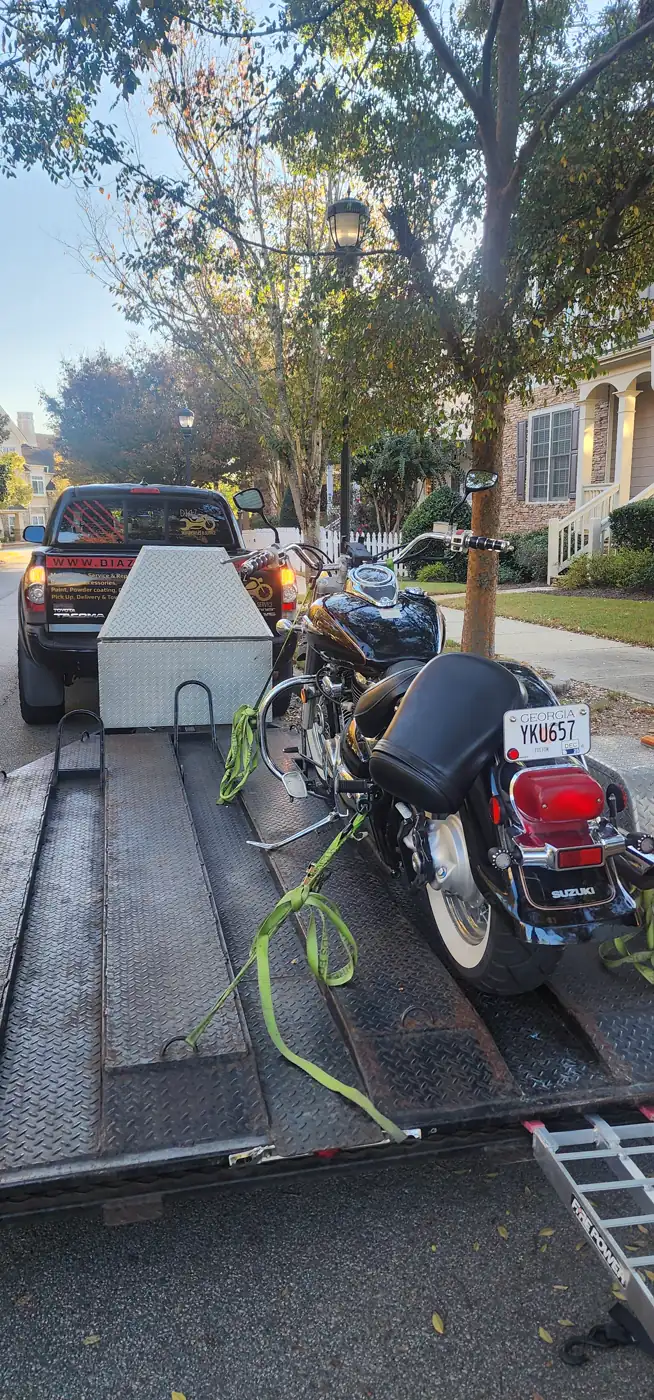
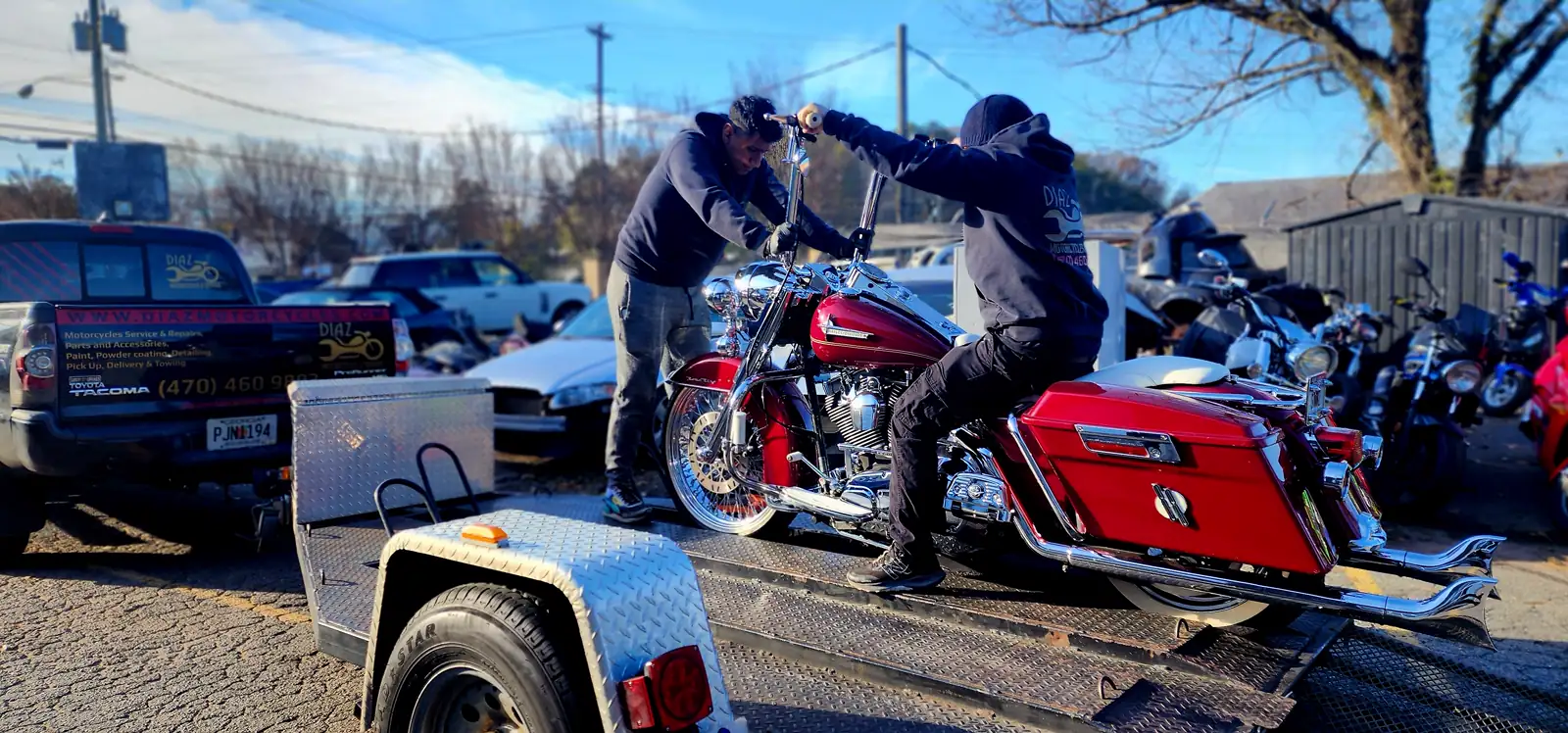
We’re in Marietta, and getting to us from Lawrenceville is a cross-metro run — roughly 33 to 38 miles, and depending on traffic somewhere around 45 to 70 minutes. You can take GA-120 west through Duluth and Roswell with no interstate at all, or drop down to I-85 and loop around. It’s a real drive, so that’s exactly why we offer pickup and delivery for riders coming from that side. If you’d rather compare notes first, here’s the Gainesville side of things too, since we help a lot of riders from up that way.
There’s a riding-road angle here that’s easy to miss. A lot of Gwinnett folks stretch their bikes’ legs on US-78 and GA-316 heading east toward Athens — flat, fast, the run out to UGA and the eastern back roads. That’s exactly the kind of steady, high-speed cruising where a lean surge shows up worst, because the engine’s holding one spot for a long time. Fix the fueling and that hang at cruise just disappears. For the long freeway hauls, keeping an eye on your rubber matters too, and Michelin’s motorcycle tire resources are a straightforward place to start.
The outcome you can expect
So let’s tie it together. A motorcycle running lean Lawrenceville riders bring us is a solvable bike, not a broken one. We measure it on the dyno instead of guessing. We find the cause — usually a mod that never got mapped, sometimes a wear item — and we correct the fueling until the numbers are clean and confirmed. The heat drops. After that, the pop quiets down. The low-end smooths out. And you get back a bike that pulls the way it was supposed to all along.
You don’t need to become an expert to make a good call here. You just need to know what you’re feeling and roughly what’s causing it, and now you do. If you want to see a real job walked through end to end, here’s how we handle that job from the baseline pull to the final confirmation. Whenever you’re ready, we’re a text away.
Questions Lawrenceville riders ask us
What actually causes a motorcycle to run lean?
Most often it’s a mod that added airflow — a slip-on, a full exhaust, or a high-flow filter — without a matching fuel update. More air with the same fuel equals lean. Less often it’s a wear item like a weak fuel pump, a clogged injector, or a small intake leak. A dyno reading tells us which one it is instead of guessing.
Can I fix a lean condition myself?
You can handle the basics, like a fresh air filter, good spark plugs, and checking for loose intake clamps. But actually correcting the fuel mix means reading the air-fuel ratio under load and changing the map, and that needs a dyno and the software. It’s not a driveway job, and a canned map off the internet is only a guess for an average bike, not yours.
Will a lean condition get worse over time?
It can. Lean runs hot, and heat is what wears an engine early, so a bike that’s fine today can get harder on itself the more hot miles you add. It rarely fixes itself. The good part is that catching it early keeps the repair small and simple, so sorting it sooner is always the easier road.
How urgent is it — can I still ride?
A mildly lean bike that starts, idles, and only pops a little on decel is usually safe to ride while you book the fix. The exceptions are overheating, hard surging at cruise, or any metallic knock under throttle. That knock is the one that means ease off and get it checked before your next real ride.
What happens if I just ignore it?
Nothing dramatic on day one, which is why people put it off. Over a season, though, the extra heat can cook plugs, tire out sensors, and shorten the life of the top end. You’ll also leave power and smoothness on the table the whole time. Fixing the recipe is cheaper on the engine than running it hot for months.
Do I have to bring the bike all the way to Marietta?
Only if you want to. It’s roughly a 33 to 38 mile trip from Lawrenceville, so we offer pickup and delivery for riders on that side of the metro. You don’t have to give up a whole Saturday just to get your fueling dialed in — text us and we’ll set it up.
We tune and wrench for riders all across Gwinnett and the northeast metro, so if you’re coming from Lawrenceville you’re in good company. That includes friends we’ve helped in Duluth, Suwanee, and Snellville, out through Grayson, Dacula, and Lilburn, up around Buford and Sugar Hill, and over toward Norcross, Loganville, Tucker, and Stone Mountain. Wherever you ride from, a lean bike gets the same careful read on the dyno.
LET'S GET YOUR BIKE OFF THE LEAN EDGE
If your Lawrenceville bike is running hot, popping on decel, or surging at cruise, don’t guess at it. We’ll read it on the dyno, find the real cause, and set the fueling right so it pulls smooth and cool again. Text us your bike and your symptoms and we’ll tell you the next step — pickup and delivery included for Lawrenceville riders.
470-460-9883Diaz Motorcycles and Service, LLC · 847 Barnes Mill Road, Marietta, GA 30062