Dyno Tune vs Stock Lawrenceville: How to Choose the Right One
A straight, no-hype guide to which one your bike actually needs — and when it's fine to just ride.
Actually most riders think a dyno tune is about one thing: bragging rights. A big number on a screen. That’s why a printout to wave at your buddies on the next group ride. But the real story is quieter, and honestly a lot more useful for the way you actually ride. When folks weigh a dyno tune vs stock Lawrenceville riders almost always picture a full-on race bike — not the commuter they take to work every day. Either way that picture is exactly what steers good people toward the wrong choice.
The myth: a tune is only for race bikes
In short here’s the belief we hear the most. At the same time Stock is safe, stock is fine, and a tune is only for people chasing lap times. If you’re not racing, why bother? It sounds reasonable. It’s also mostly wrong.
As a result Bikes don’t leave the factory tuned for you. On the other hand they leave tuned for everybody — every rider, every altitude, every gas station, every emissions rule in every state. So the factory plays it safe. So your bike’s computer, called the ECU, runs a fuel map that has to cover all of that at once. Still, that’s a compromise, and a compromise is never the best answer for one specific bike in one specific spot.
Plus, Think of the stock map like a pizza made to please a whole party. Nobody hates it. Nobody’s blown away by it either. Meanwhile, it’s the safe middle, and the safe middle is exactly what a tune is built to leave behind.
The reality: what a dyno actually measures
So let’s clear up what a dyno even does, in plain words. Of course, a dyno is a machine your bike sits on while the rear wheel spins a heavy drum. In fact, Sensors read how hard your engine pushes that drum through the whole rev range. For example, that gives us a real picture of how the engine is running — not a guess, not a feel, an actual reading we can see and adjust.
While the bike runs, we also sniff the exhaust. That tells us the air-fuel ratio — how much fuel is mixing with the air as it burns. Too little fuel for the air and we call it lean. Too much and we call it rich. Both cause problems, just different ones.
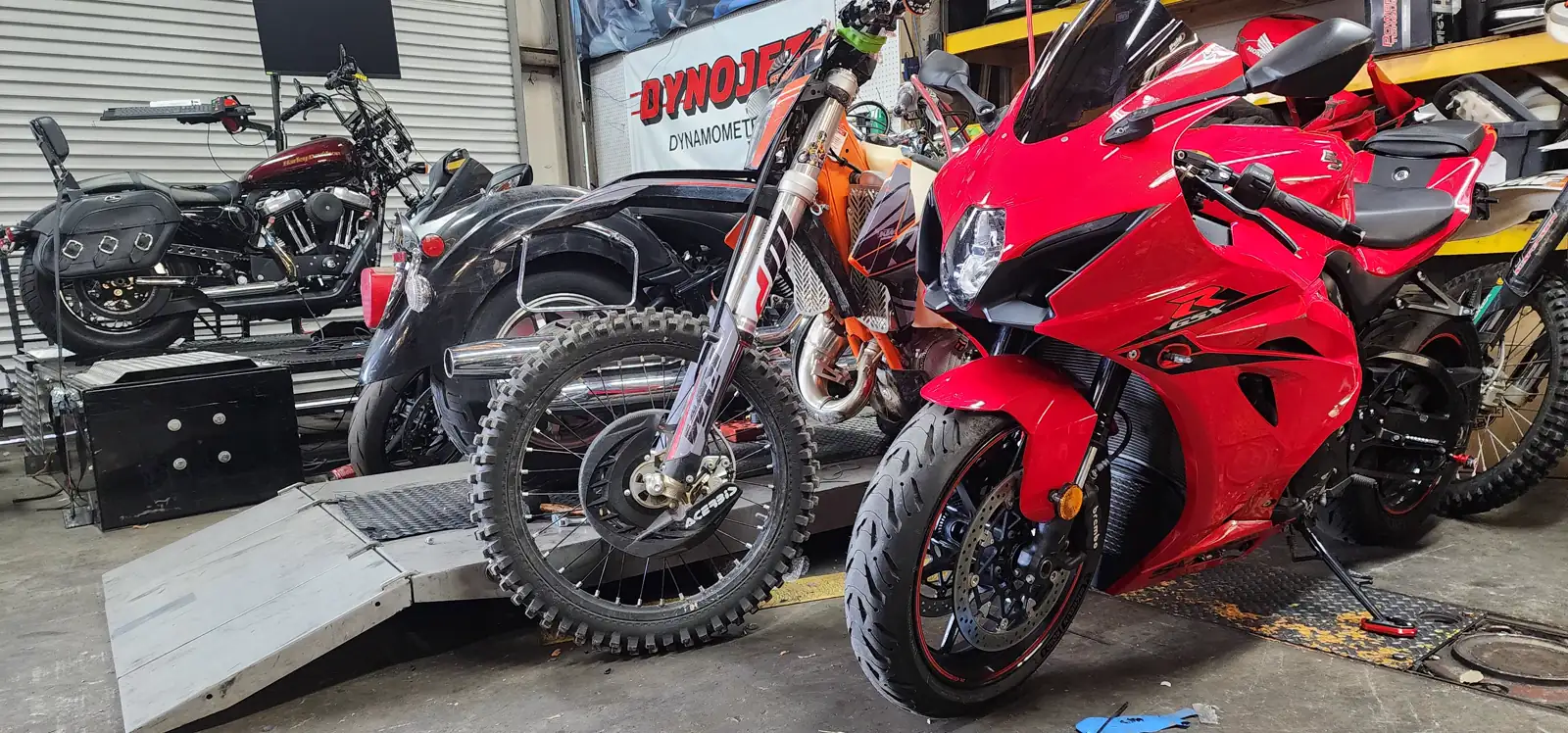
Why a bike runs lean or rich
A lean bike runs hot. It can feel jerky at low speed, pop and backfire when you roll off the throttle, and it dumps extra heat into parts that don’t love heat. A rich bike wastes fuel, fouls plugs, and feels soft and lazy. Neither one is the end of the world. Both are fixable, and that’s the good news.
A lot of Gwinnett bikes run lean, and it’s usually not a mystery — it’s the slip-on exhaust or the air filter someone added last spring. If you want the plain-english version of what usually causes it, we wrote a whole piece on that. The short version: you changed how the bike breathes, but nobody changed how it feeds.
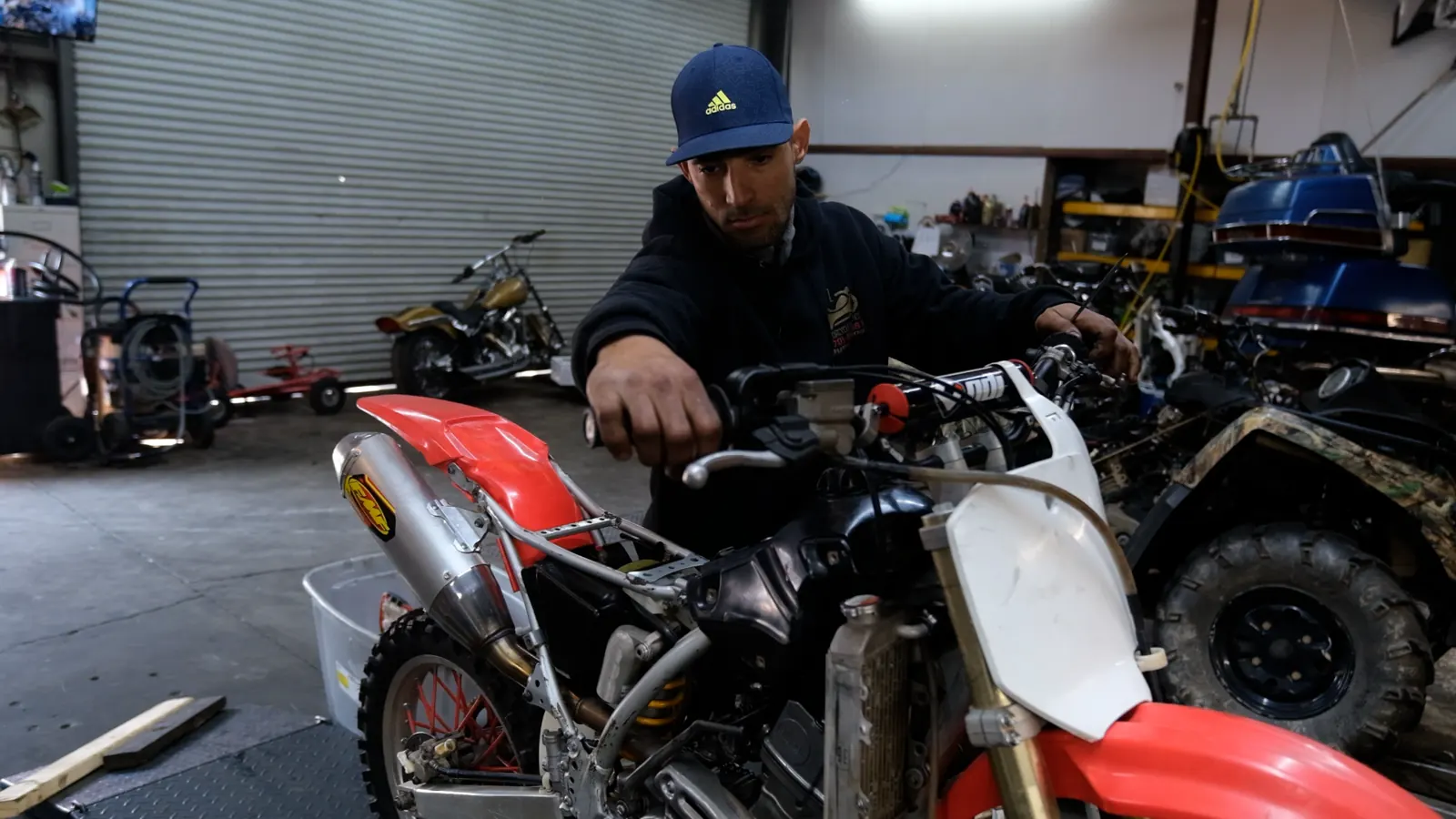
What a tune actually changes in how the bike feels
This is the part that sells people, and it’s got nothing to do with the dyno sheet. A good tune smooths out the throttle. That snatchy, on-off feeling down low gets cleaner. The bike pulls without hesitating. Cold starts settle down. On a hot day stuck in traffic on GA-316, the engine isn’t fighting itself as much.
You’ll feel it most in the boring moments — creeping through a parking lot, easing out of a light, rolling steady on the highway. That’s where a lean, twitchy bike wears you out. Fix the map and the bike just gets easier to live with. More power usually tags along for the ride, but the feel is the real prize.
The dyno sheet is the receipt. The way the bike feels on Monday is the thing you actually bought.
Now, the part nobody mentions until you’re already paying for it.
There are two honest paths here, and they aren’t a dyno tune versus nothing. They’re a canned tune versus a real custom tune. A canned tune is a pre-made map you load onto the bike. It’s cheaper and quick. It’s built for a “typical” bike with typical mods. A custom dyno tune is built for your bike, on the dyno, reading your engine, your exhaust, your filter, your fuel.
A canned map can be a fine starting point. But it can’t see your bike. If your combo is even a little different, you’re back to a compromise — just a slightly better one. And here’s the trap: a bad or generic tune can leave a bike leaner than stock. So you paid for a fix and got a new problem instead.
The actual process: what a real tune looks like
When we tune a bike, it’s not some mystery ritual. Here’s the whole thing, start to finish, so you know what you’re paying for.
- We strap the bike down on the dyno so the rear wheel spins the drum safely.
- After that, we do a baseline run and read the air-fuel ratio across the whole rev range.
- We find the lean and rich spots — the places the bike is starving or drowning.
- Also we adjust the fuel map, either by flashing the ECU or through a piggyback like a Power Commander.
- We run it again, and again, until the numbers are clean and the bike pulls smooth.
- We ride-check the feel, because a good number that rides bad isn’t done.
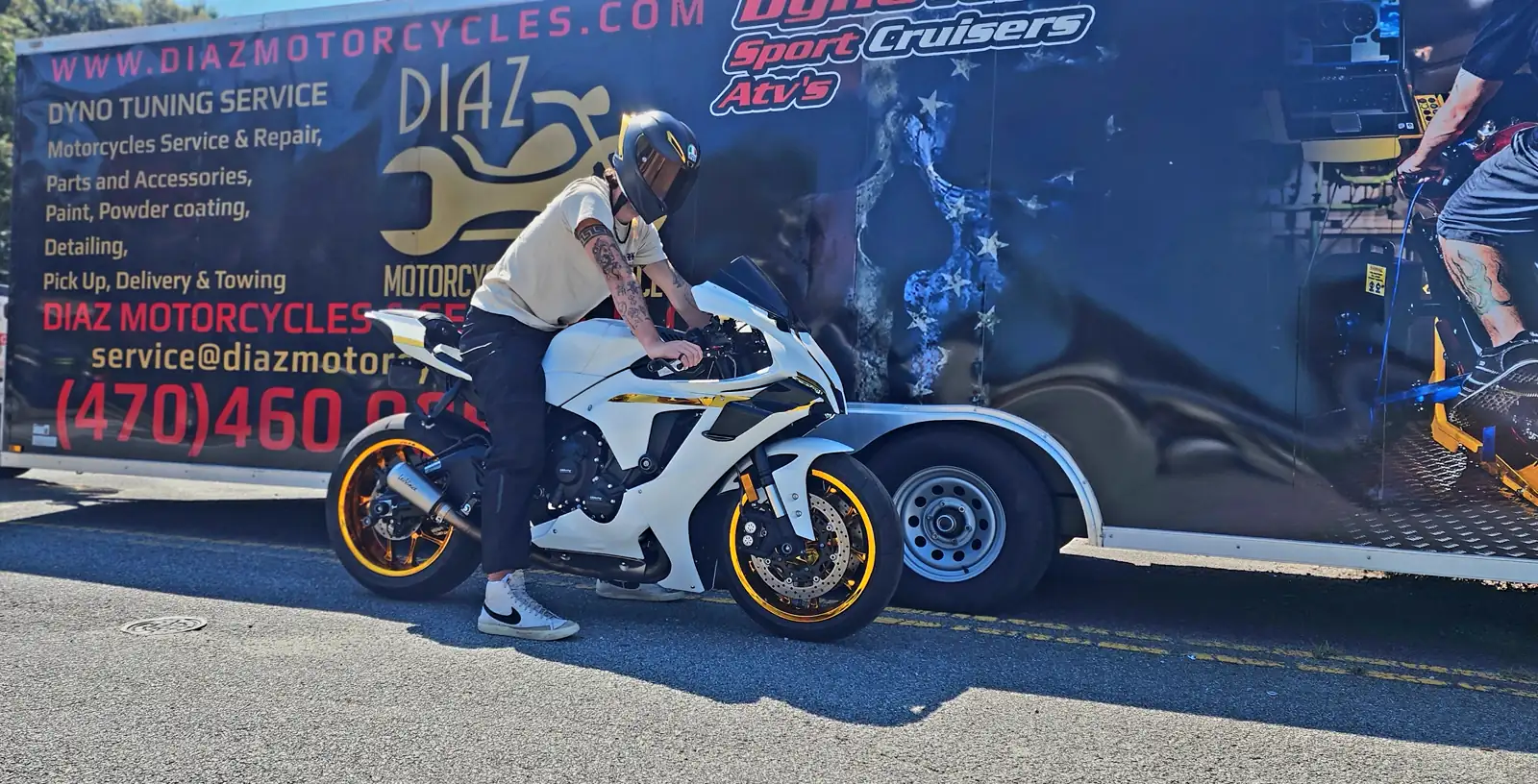
That whole loop is the heart of what we take care of here. ECU flashing rewrites the bike’s own computer. A Power Commander sits alongside it and trims the fuel on the fly. Both roads get you to the same place — a map that matches your actual bike instead of a factory average.
This isn’t a Gwinnett-only thing, by the way. The same lean-after-a-slip-on story shows up all over metro Atlanta — here’s what Peachtree City riders run into, and it’ll probably sound familiar.
How to tell a good tuning shop from a bad one
Not every place with a dyno does real custom work. Some just load a canned map and roll the bike back off. So here’s how to spot a shop that’ll actually earn it.
- They put your bike on the dyno and read your numbers — not a template.
- Instead they ask what mods you’ve made, and they care about the details.
- They do multiple runs, not one and done.
- Besides they talk about the air-fuel ratio in plain words, and show you before and after.
- They ride-check the bike, or let you, before they call it finished.
If a shop promises you a magic number before they’ve even heard your bike run, keep your helmet on. Real tuning starts with listening, not a sales pitch. Any place worth the drive will explain the plan before they touch a wrench.
Want a neutral second opinion? RevZilla’s Common Tread has good, plain-english reads on tuning and mods that back up most of what we’re telling you here. Read around. A tune is worth understanding before you buy it.
Dyno tune vs stock: who each one is right for
So let’s put the whole dyno tune vs stock Lawrenceville question side by side, honest and simple. Both answers are right for somebody, and the trick is knowing which somebody is you.
| Stock is right for you if | A tune is right for you if |
|---|---|
| Your bike is bone stock and feels fine | You added a slip-on, full exhaust, or air filter |
| You ride gentle and mostly short trips | Your bike runs hot, pops, or feels twitchy |
| You plan to sell soon and keep it simple | You do track days and want every clean pull |
| You just want the money to stay in your pocket | You ride high miles and want it easy to live with |
Our honest recommendation? If your bike is truly stock and it feels good, leave it alone. Stock is a fine place to be, and there’s no shame in it. But the moment you change how the bike breathes — a slip-on, a full system, a high-flow filter — a tune stops being a luxury and becomes the missing half of the job. You already paid for the mod. A tune is what makes that mod actually work the way you pictured.
So where does stock win? If you’re about to sell the bike, or you like it stone-stock for resale, or you simply ride easy and it runs clean, then save your money and ride. A tune won’t rescue a bike that was already happy. And a carbureted classic is its own world; for those, a specialist like Motorcycles and Trikes of Atlanta over in Lawrenceville knows the carb side cold. Not every bike needs a computer tune, and we’ll tell you when yours doesn’t.
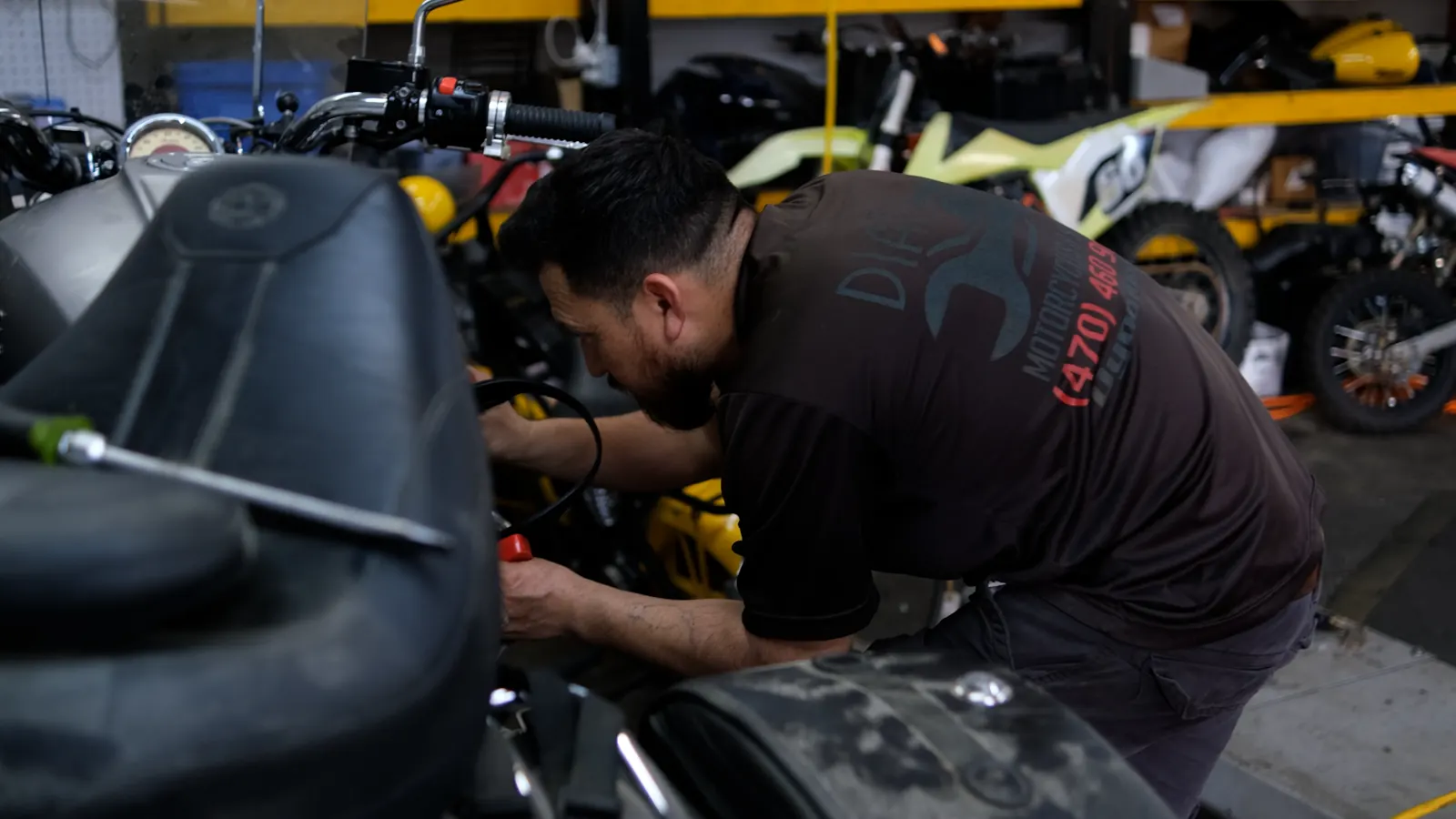
And then there’s the part that’s just about riding again. Strip away the numbers, the sheets, the online debates. The reason most friends thank us later isn’t the power. It’s that the bike stopped fighting them. The commute got calmer. The Sunday ride got fun again. That’s the quiet payoff nobody puts on a dyno chart.
The local wrinkle: modified bikes, nowhere to map them
Here’s the Gwinnett catch, though. This is one of the biggest sportbike counties in Georgia. Ninjas, GSX-Rs, R-series Yamahas, CBRs — they’re everywhere out here, and a huge share of them are modified. Slip-ons, filters, fender eliminators. Which means a lot of Lawrenceville bikes are running lean, and almost nobody local is set up to map them.
We help friends from all over the area. Riders in Collins Hill Heights, up near the schools and the aquatic center. Folks in the premium Arbors at Sugarloaf along the Sugarloaf Parkway corridor. Names like Gates Mill, Glynwater, Highland Manor and Highland Oaks roll through too. Different streets, same story — a modified bike carrying a factory map that never got updated.
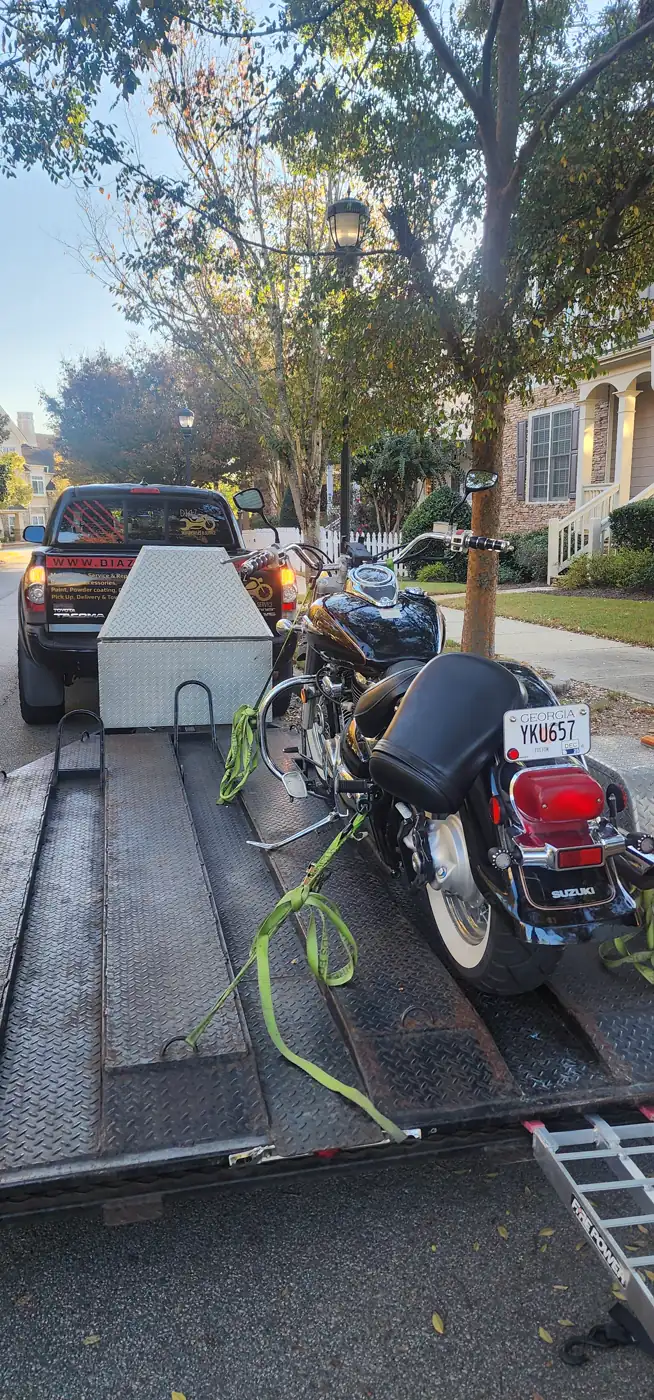
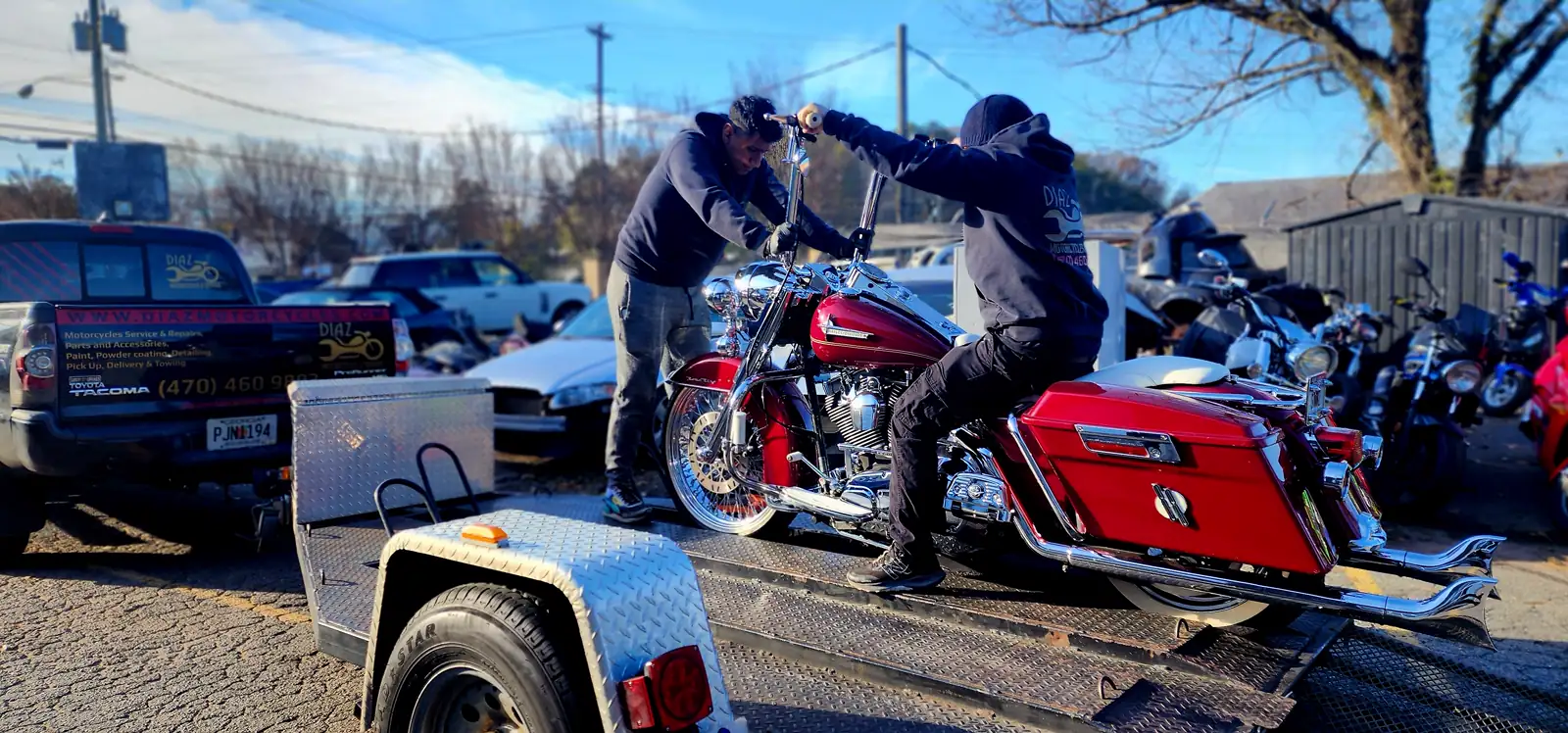
The one hurdle is the drive. There’s no verified tuning house in Lawrenceville, so the fix means coming to us in Marietta. It’s roughly 33 to 38 miles, and figure somewhere around 45 to 70 minutes depending on traffic — that’s our estimate off the map, not a stopwatch reading. You can take GA-120, the Duluth Highway, straight across through Duluth and Roswell on surface streets the whole way, no interstate at all. Drop the bike off and it’s a lot easier than it sounds. And if the drive’s a hassle, we run pickup and delivery.
Plenty of our Lawrenceville friends plan the drop-off around something fun. Catch the free Beats on the Streets series at the Lawrenceville Lawn, that downtown green with the amphitheater and the dog park, and the day’s already a win. Lawrenceville’s got some genuinely odd claims to fame, too — the CDC’s CASPIR facility right in town quietly holds over six and a half million samples, which almost nobody ever writes about. Your bike getting a proper tune is a lot less of a secret than that.
Once the tune’s done, there’s a reward waiting northeast of town. Run GA-124, the Braselton Highway, up toward Braselton and Michelin Raceway Road Atlanta — about 30 to 35 minutes out — where they hold motorcycle track days. A well-tuned bike on good rubber is where that road gets truly fun; Michelin’s motorcycle tire resources are a solid place to sort your tires before a track day. Good map, good grip, good day.
If you want to go deeper on the nuts and bolts before you drive out, here’s a rundown of what the work covers from a nearby build we did. Same idea, same care, just a different city on the map.
The outcome: a clear-headed choice
So where does all this leave you? Clear-headed, we hope. The dyno tune vs stock question isn’t a trick, and it isn’t about ego. Stock is right for a stock bike that already feels good. A tune is right the day you change how the bike breathes and want it to run like you meant it to.
Either way, you should ride away knowing exactly why. That’s the whole point. No hype, no magic number — just a bike that fits how you ride, and a straight answer about whether you even need the work. If the answer is no, we’ll say so and wave you off with a full tank of confidence.
You didn't buy the mods to feel worse. A tune is just the part that finishes the job.
Questions Lawrenceville riders ask us
Is a dyno tune actually worth it?
If your bike is bone stock and feels great, probably not — enjoy it as is. But if you’ve added a slip-on, a full exhaust, or a high-flow filter, a tune is what makes those parts work right. You already paid for the mod, and a tune finishes the job instead of leaving the bike running lean.
Should I pick a tune or leave it stock?
Start with one question: have you changed how the bike breathes? If yes, lean toward a tune. If the bike is untouched and runs clean, stock is a perfectly good place to stay. We’ll look at your setup and tell you straight which side you fall on.
What's the real difference between a canned tune and a custom dyno tune?
A canned tune is a pre-made map built for a typical bike, loaded on quickly. A custom dyno tune is built for your exact bike while it runs on the dyno, reading your engine and your mods. A canned map is a decent starting point, but only a custom tune matches what you’re actually riding.
Which lasts longer, a stock map or a custom tune?
Both last as long as the parts don’t change. A stock map holds up until you modify the bike, at which point it’s suddenly wrong for your setup. A custom tune stays right as long as your exhaust, filter, and fuel stay the same — change a big part and it’s worth a fresh look.
Which one is right for my kind of riding?
Easy short trips on a stock bike? Stock is fine. Hot-day commutes, high miles, or track days at Road Atlanta on a modified bike? A tune will make those days a lot easier and cleaner. Tell us how and where you ride and we’ll point you to the honest answer.
Do I have to bring the bike all the way to Marietta?
It’s roughly a 33 to 38 mile trip from Lawrenceville, usually somewhere around 45 to 70 minutes depending on traffic — that’s our estimate from the map, not a measured time. GA-120 keeps you on surface streets the whole way. And if the drive doesn’t work for you, we offer pickup and delivery.
We tune and wrench for riders all across Gwinnett and the wider metro, so you’re never far from a real answer. Beyond Lawrenceville, we take care of friends in Duluth, Suwanee, and Snellville, out toward Grayson and Dacula, and over through Lilburn and Norcross. We see plenty of bikes from Buford, Sugar Hill, and Loganville too, plus folks coming in from Tucker and Stone Mountain. Wherever you park it, a modified bike deserves a map that actually fits.
READY TO STOP GUESSING?
Text us and tell us what you ride and what you’ve changed on it. We’ll give you a straight, no-pressure read on whether a tune is worth it for your bike — and if stock is the smarter call for you, we’ll say that too. Lawrenceville riders are just a short trip up GA-120 from the shop in Marietta, and we run pickup and delivery if the drive doesn’t fit your week. Send a text today and let’s get your bike running like you meant it.
470-460-9883Diaz Motorcycles and Service, LLC · 847 Barnes Mill Road, Marietta, GA 30062