Dyno vs Stock in Peachtree City — When a Tune Is Worth It
A straight, no-hype answer on when a dyno tune earns its keep, and when the factory tune is doing just fine.
It’s nine at night. On the other hand the garage light is buzzing, the bike’s up on the stand, and you’ve got your phone in one hand. So you’re typing the same quiet question a lot of riders type at that hour. Still, Leave it alone, or get it tuned? If you keep going back and forth on dyno vs stock Peachtree City riders ask us this exact thing all the time, and it deserves a straight answer instead of a shrug.
What you're really asking
Here’s the thing. When you type that question, you’re not really asking about a machine. You’re asking whether your bike is holding back on you. You want to know if it could feel better, run cooler, and pull cleaner than it does right now. Plus, On top of that, you want to know if it’s worth the trouble. Fair questions, all of them.
So let’s lay it out plain. Stock means the bike runs the tune the factory gave it. A dyno tune means we measure your specific bike and adjust the fueling to fit it. Both are real choices. Neither one is a trap. The right pick just depends on your bike and how you ride it.
So what does a dyno even measure?
A dyno is a machine with a big roller. We strap your bike down, spin the rear wheel on that roller, and run it through the gears. While it runs, the computer reads what your engine is actually doing. Not what a brochure claims. Instead, it shows what your engine, on your day, really puts down.
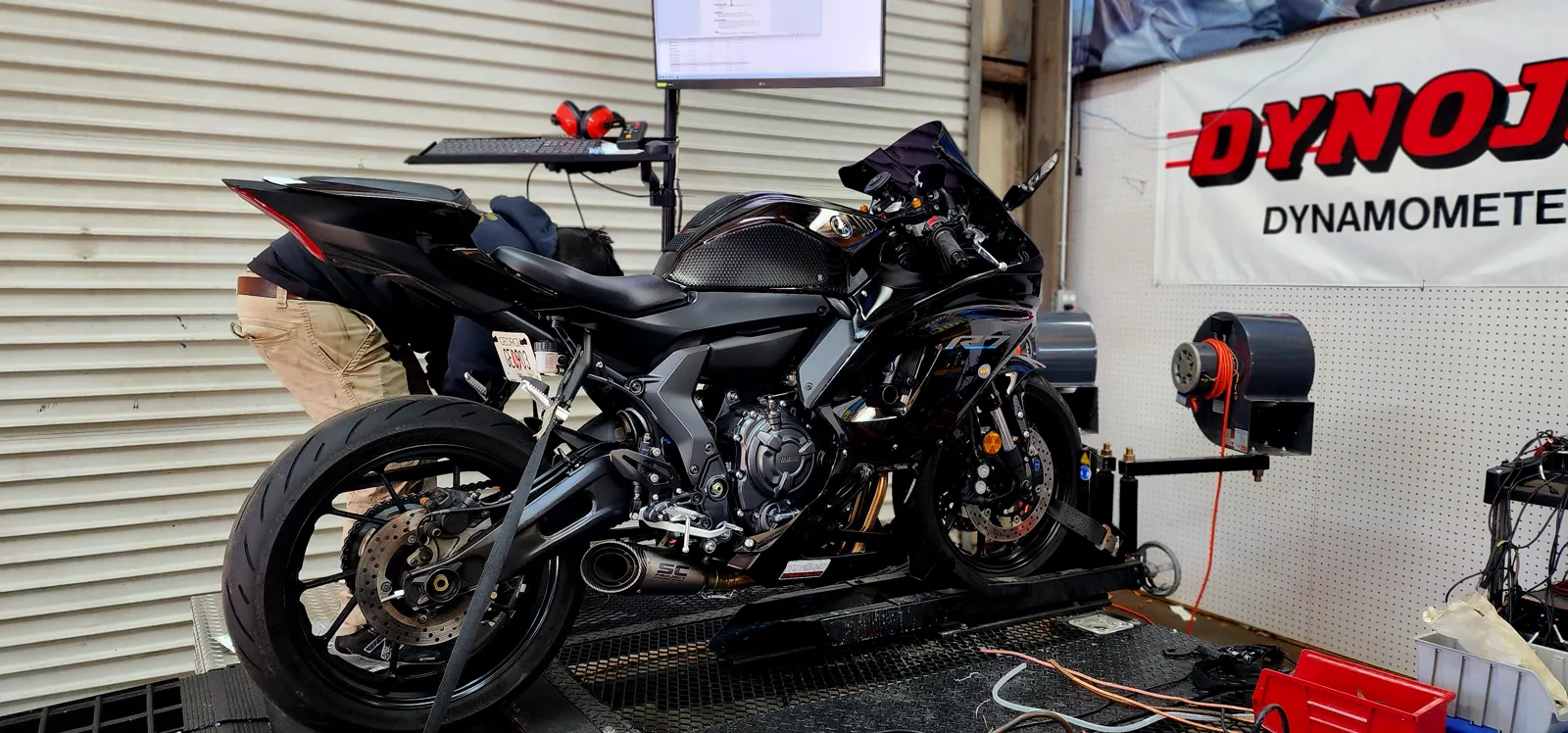
The dyno also reads your air-fuel mix. That’s the ratio of air to gas going into the engine. Get that ratio right and the bike feels awake. Get it wrong and you feel it in the throttle every single day, even if you can’t quite name what’s off.
Lean, rich, and why your bike feels the way it does
You’ve probably heard the words lean and rich. They’re simpler than they sound. Lean means too much air and not enough fuel. The engine runs hot, the throttle feels snatchy, and it pops on the way down from speed. Rich means the opposite, too much fuel. Then the bike feels sloppy and lazy, fouls its plugs, and drinks more gas than it should.
Most stock bikes run a little lean from the factory. Why? Emissions rules. The factory has to build one tune that passes those rules and works from Georgia heat to mountain cold, for every rider, everywhere. That’s a tall order. So they play it safe and leave a little on the table.
IN PLAIN WORDS
A dyno tune doesn’t add magic. It just finishes a job the factory started with one hand tied behind its back.
The honest answer, up front
Most riders want the bottom line, so here it is. If your bike is bone stock, you ride it easy, and it feels fine to you, then leaving it stock is a perfectly good choice. You won’t hurt a thing. Plenty of the friends we’ve helped ride happy on the factory tune for years.
That’s the common version. The real story is a little different.
Because the moment you change how the engine breathes, stock stops being the safe pick. Add a full exhaust, swap the intake, or fit a bigger kit, and the factory tune no longer matches your bike. Now the fueling is guessing. That’s when a dyno tune stops being a nice-to-have and becomes the thing that makes those new parts actually work.
What changes the answer
So the real question isn’t dyno versus stock in general. It’s dyno versus stock for your bike. A few things tip the scale, and they’re easy to spot.
- Bolt-on parts. A new pipe, air filter, or tuner-friendly kit means the factory tune is now wrong for your setup.
- How you ride. Long relaxed miles ask less of the tune. Hard roll-ons and spirited riding ask a lot more.
- How it feels now. Flat spots, surging at steady speed, popping on decel, and extra heat are the bike asking for help.
- Your goals. Chasing a smoother, crisper feel is a great reason. Chasing a number you read online is not.
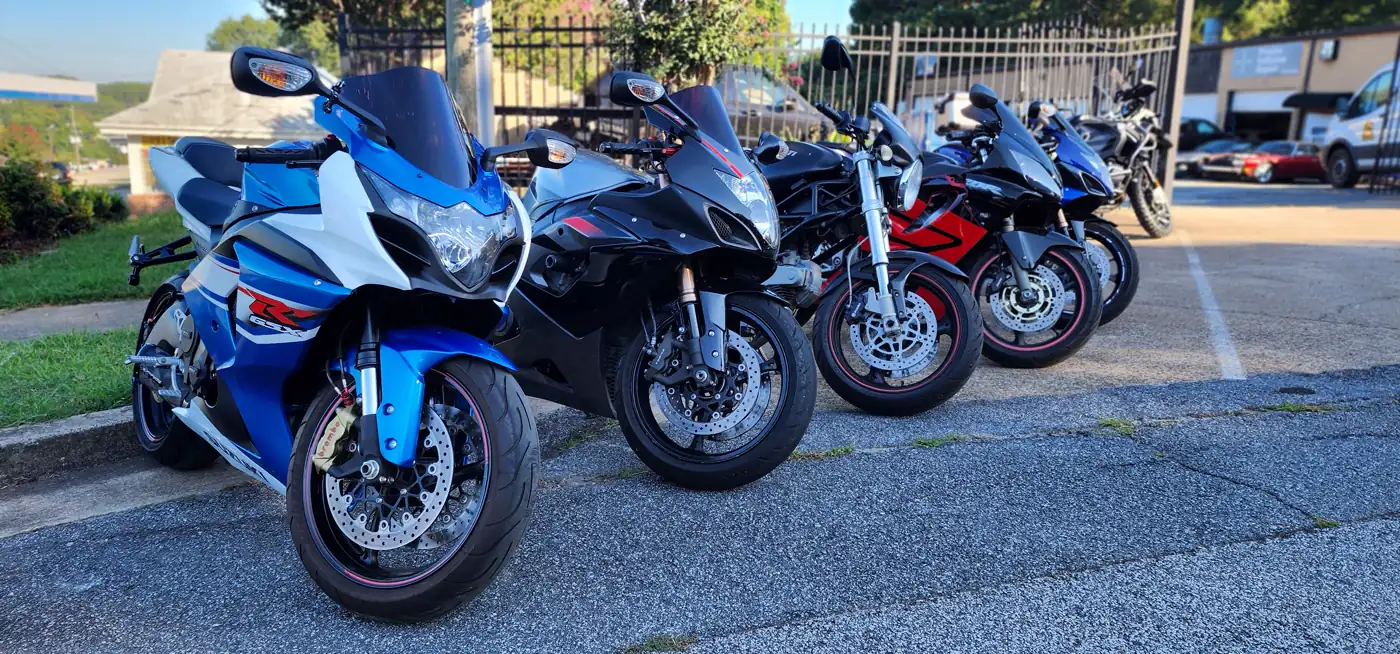
Notice what’s not on that list. Bragging rights. We’re not here to sell you a made-up horsepower figure, and we’ll never quote a number we didn’t see on the screen. A good tune is about how the bike behaves in your hand, not a slip of paper you wave at your buddies. Though we get it, the paper is fun too.
What a tune actually changes in how it feels
Let’s talk about the part you’ll notice. A proper tune smooths the throttle, so a small twist gives a smooth push instead of a jump. It cleans up the low end, so the bike pulls from down low without stumbling. On top of that, it kills the flat spots in the middle. And it often runs the engine a touch cooler, which your legs will thank you for in a Georgia July.
It also makes roll-on power feel honest. You crack the throttle at speed and the bike answers right now, not half a second later. That’s the feeling riders describe as the bike finally waking up. Nothing wild. Just right.
Our approach, and why in-house matters
Here’s where we come in. A lot of the multi-line dealers around Cobb Parkway will sell you parts and even a tuner box, but the real custom mapping happens somewhere else, on someone else’s schedule. We keep the whole job under one roof. Our dyno lives here, and so does the person reading it.
We work with both ECU flashing and Power Commander setups. On some bikes we flash the bike’s own computer to change the fueling and timing. On others we add a Power Commander that trims the fuel on the fly. Either way, we make real runs, read your air-fuel curve, and adjust until the whole rev range is clean. Then we hand you back a bike that fits you.
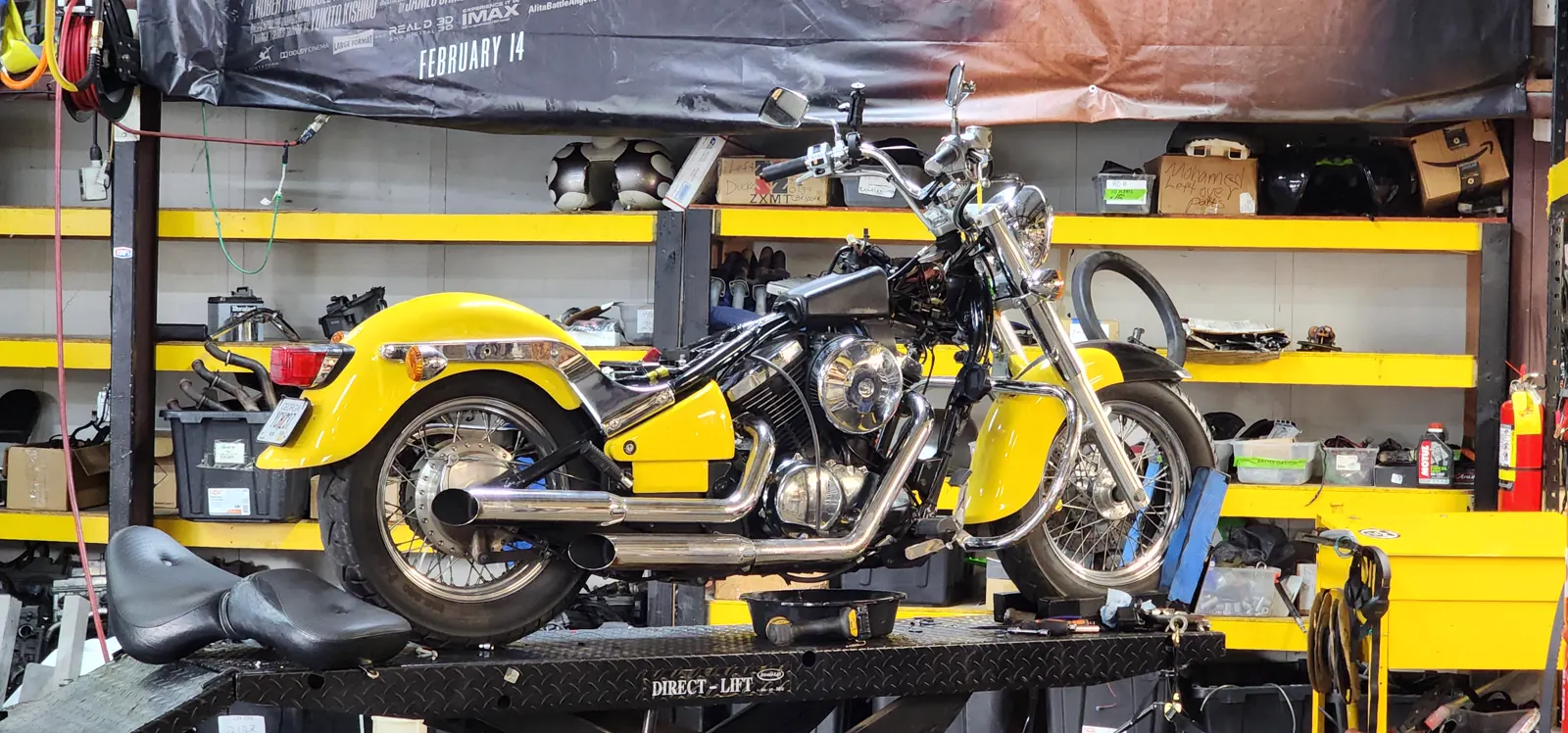
This is also why the shop matters as much as the machine. A dyno in the wrong hands just makes noise. If you want the long version of what separates a good shop, we wrote that up too. The gear is only as good as the person watching the screen and knowing exactly when to stop.
Tuning is one piece of what we take care of here, and it usually rides alongside fresh plugs, a fluid check, and a look at your chain and tires. If you like reading how a job comes together before you book it, here’s how we handle that job from start to finish. We’d rather you show up sure than sold.
The math shifts a little by town, too. We wrote up the Roswell side of things for riders up that way, and the same logic holds here in Fayette County. Same service, slightly different drive.
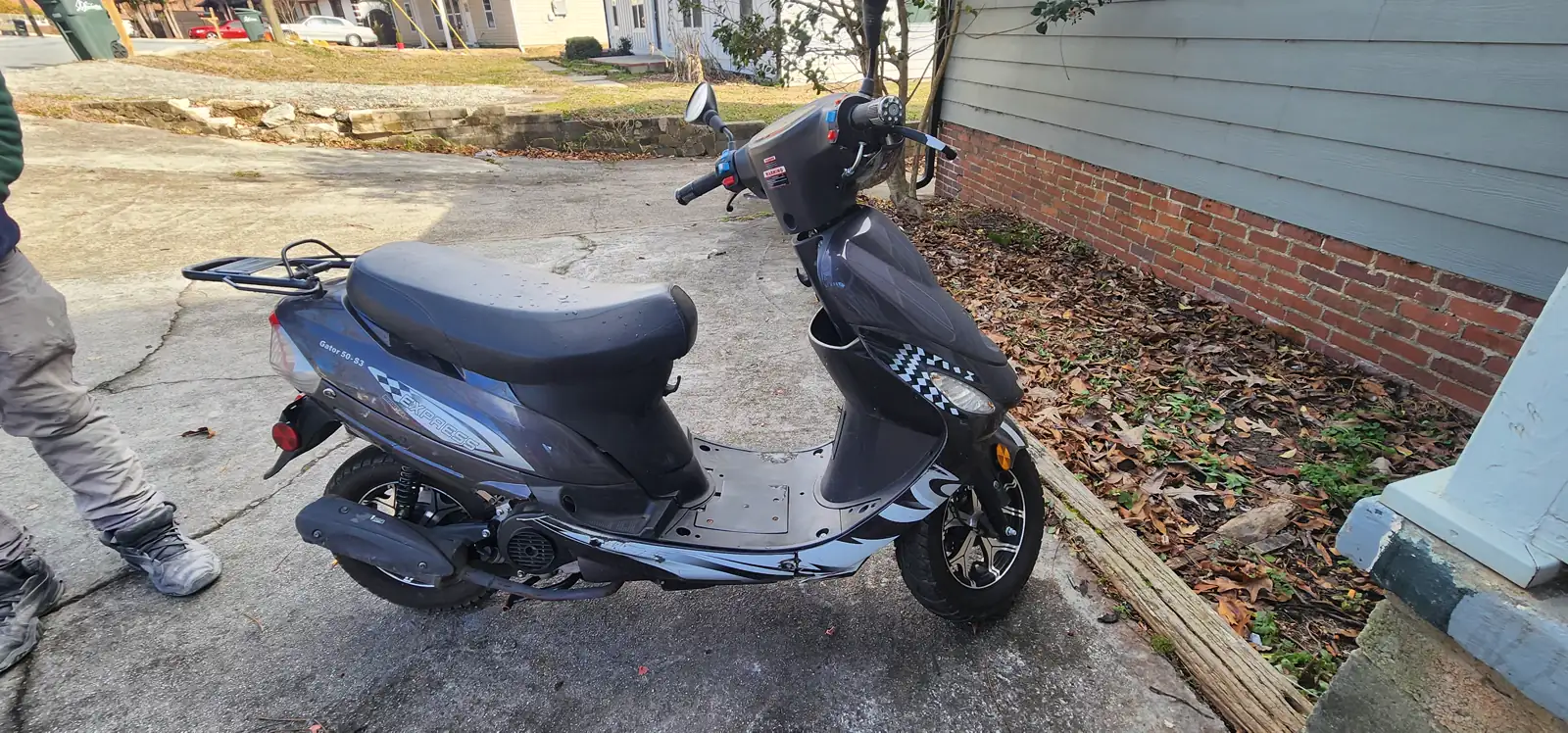
And it’s not just big touring bikes, either. We’ve read the air-fuel on everything from heavy baggers down to little commuters. Even a 50cc scooter runs cleaner when the fueling’s right, so nothing that rolls through the door is too small to help.
The Peachtree City piece
Now for the local part, because PTC is its own kind of place. Bikes here are garage-kept and cared for. They roll out of two- and three-car garages in Aberdeen, one of the original villages, and out of the newer streets around Whitfield Farms and Whitfield Run. Up in Kedron, near the shops by Lake Kedron, it’s the same story. These are hobby bikes, ridden for the joy of it, not beaten to work and back.
That’s really the heart of the dyno vs stock Peachtree City question. A low-mileage, well-kept bike is the perfect candidate for a tune, because you’re going to keep it a long time and you’ll feel every improvement. When your bike is a treasured thing and not just a tool, running it a little rich or lean for years is a small shame. You bought something nice. It should run its best.

There’s also the roads. Peachtree City was built on purpose without a straight grid, so you get long sweeping streets instead. Those curvilinear internal streets have limited sight lines, heavy tree canopy, and dappled light and shadow that hides bumps and wet leaves on the shaded curves. On roads like that, a crisp, predictable throttle isn’t a toy. Instead, it’s how you stay smooth when the light’s playing tricks and a patch of shade is still holding moisture.
One rider off one of those curvilinear internal streets put it better than we could. He told us his bike used to lurch coming out of the shady corners near his house, and after the tune it just flowed. Same road. Same bike. Different day, because the fueling finally matched the moment.
And when you point the bike somewhere bigger, the tune really earns its keep. The run down to Pine Mountain, FDR State Park, and Callaway Gardens is the classic escape from the south metro, about an hour south along the GA-190 ridge road. That’s a long day of steady throttle and roll-ons through the hills. A bike that’s tuned right is a bike that’s easy all day and leaves you fresh at the overlook.
The right answer isn't the same for every bike. It's the right one for yours.
But sometimes stock wins, and we'll say so
We promised a real recommendation, so here’s the fair other side. If your bike is dead stock, you ride mellow local miles, and the throttle already feels smooth to you, then keep your money and just ride. There’s no shame in a factory tune that’s doing its job. We’ll tell you that to your face rather than sell you a run you don’t need.
Stock also wins when a bike is showroom-fresh and still under a warranty you care about, or when you’re about to sell it and won’t be the one enjoying the change. In those cases, leave it be. The best tune is the one that fits your plan, and sometimes your plan is simply to ride what you’ve got.
Getting the bike to us
You already know there’s no motorcycle shop inside the PTC city limits, so every rider here drives out for good work anyway. Getting to us is a planned trip up GA-74 and the interstates into East Cobb, roughly 48 to 56 miles and around an hour to an hour and a half depending on traffic. That’s an estimate off the map, not a stopwatch, so give yourself a cushion.
Because it’s a real drive, we treat transport as a normal part of the job, not an apology. Many friends we’ve helped have us pick up and drop off, so their bike leaves the garage and comes back tuned without them ever fighting the interstate. If you’d rather ride it up and make a day of it, that works fine too.
For straight factory service and warranty work, a full Harley dealer like Great South Harley-Davidson at 185 Highway 16 E in Newnan, about twenty-five minutes west, is a solid stop. Where we’re different is the custom mapping and the in-house dyno time, reading your bike and dialing it in rather than loading a one-size file. Different jobs, and it’s perfectly fine to use both.
The bottom line
So, dyno or stock? When you weigh dyno vs stock Peachtree City riders really only need to check a few boxes. Stay stock if your bike is unchanged, you ride easy, and it feels right. Get it tuned if you’ve added parts, if you feel flat spots or heat, or if you just want the bike to run its honest best on those shady curves and the long haul south. That’s the whole decision, and now it’s yours to make with clear eyes.
Before your next ride, whatever you choose, keep your license current and your skills sharp with the Georgia Motorcycle Safety Program, and give your rubber a look, since Dunlop’s technical resources make it easy to check your pressures and tread. A tuned engine and tired tires don’t mix. Ride smart, and let the tune handle the rest.
Questions Peachtree City riders ask us
What's the real difference between a dyno tune and staying stock?
Stock is the one-size tune the factory loads for every bike, everywhere, so it plays it safe and usually runs a bit lean. A dyno tune measures your bike on the roller and adjusts the fueling to fit it exactly. In short, stock is a good guess and a dyno tune is a real read.
Does my bike change the answer?
It absolutely does. A bone-stock bike ridden easy is a fine candidate for leaving alone. But the second you add an exhaust, intake, or a bigger kit, the factory tune no longer matches your setup, and a dyno tune is what makes those parts work right.
Is a tune worth it if my bike is completely stock?
Sometimes yes, sometimes no. If your throttle already feels smooth and you ride mellow miles, you can happily stay stock. If you feel flat spots, surging, popping on decel, or extra heat, a tune smooths all of that out, even on a stock bike.
Which one do you actually recommend?
We won’t fence-sit. If you’ve changed anything about how the engine breathes, or the bike feels rough anywhere in the rev range, get it tuned. If it’s stock and it feels great to you, keep your money and ride. We’ll tell you the honest answer for your bike, not the one that sells a run.
Which should I pick if I just want a smoother ride?
Go with the tune. Smoothing the throttle, cleaning up the low end, and killing flat spots is exactly what a dyno tune does best. You don’t need any wild goals for it to be worth it, just the wish for the bike to feel right in your hand.
We tune and service bikes for riders all across the south metro, and Peachtree City sits right in the middle of it. That includes friends coming from Fayetteville and Tyrone, over from Newnan and Senoia, and up from Sharpsburg, Brooks, and little Woolsey. We also see plenty of riders from Union City, Fairburn, and Palmetto to the west, plus Jonesboro and Riverdale to the east. Wherever you park it, we’ll help you decide whether your bike wants a tune or is happy as it is.
STILL WEIGHING IT? LET'S TALK
You don’t have to decide alone at nine at night. Tell us your bike, your mods, and how it feels right now, and we’ll give you a straight read on whether a dyno tune is worth it or your Peachtree City ride is fine as-is. Text us anytime and we’ll sort out the drive from there, pickup included if you’d rather not fight the interstate.
470-460-9883Diaz Motorcycles and Service, LLC · 847 Barnes Mill Road, Marietta, GA 30062