Dyno Shop Peachtree City: How to Choose the Right One
A plain-English guide to what a dyno really does, and how to pick the shop that does it right.
Still, it’s a cool fall morning and your garage door is up. Plus, Coffee is going cold on the bench. Meanwhile, you thumb the starter on the bike you baby all year, and it catches, then stumbles. It coughs down low. It surges when you crack the throttle. Of course, Something is off, and you can’t quite name it. If you’ve started hunting for a dyno shop Peachtree City riders can actually trust, you already know the itch that brought you out here this morning.
In fact, here’s the good news, and we’ll lead with it because you deserve to feel better fast. For example, that stumble is almost always fixable, and it’s rarely something scary. Even so, a bike that runs rough at idle or hesitates off the line is usually just breathing and burning fuel in a way it wasn’t set up for. The fix has a name. It’s called tuning. Once you understand what a tune really does, picking the right shop gets a whole lot simpler.
Start with the symptoms your bike is showing
Before you compare shops, it helps to read your own bike first. What’s more, Riders describe the same handful of complaints to us over and over. None of them mean the bike is ruined. Each one is a clue about how the engine is mixing air and fuel. Walk through the list below and see how many of these sound like your morning in the garage.
- Rough or lumpy idle, like the bike can’t decide whether to stay running
- A flat spot or hesitation when you roll on the throttle from low rpm
- Popping and banging in the exhaust when you let off to slow down
- Running hot, with more engine heat on your legs than a bike that age should make
- Surging at a steady cruise, where the speed gently pulses on its own
- Poor fuel range, or a strong gas smell after a short ride
- A new pipe or air filter went on, and the bike has felt weird ever since
What each symptom is really telling you
Now the fun part, where the mystery turns into plain English. Every one of those symptoms comes down to two words you’ll hear a lot: lean and rich. That’s just the ratio of air to fuel your engine is burning. Get the mix right and the bike feels alive. Get it wrong in either direction and you get the exact complaints above. So let’s break down what those two words mean for you.
Lean vs. rich, without the jargon
A lean bike is burning too much air for the fuel it’s getting. Lean engines run hot, pop on the way down off the throttle, and often hesitate or surge because there just isn’t enough fuel to keep things smooth. A rich bike is the opposite, with too much fuel for the air. Rich engines foul plugs, smell like gas, waste your range, and can idle lumpy or feel a little lazy. Neither one means your engine is hurt. It just means the fueling needs to be dialed in.
So why does a good bike drift lean or rich in the first place? Usually it’s a change. Maybe you bolted on a louder exhaust, which moves more air. Maybe you swapped the air filter or opened up the airbox. Even the weather plays a part, since a cold fall snap and Georgia’s summer heat are very different air. On top of that, a lot of bikes ship from the factory a touch lean to pass emissions. The engine didn’t break. Its recipe just stopped matching the parts and the air it actually has.
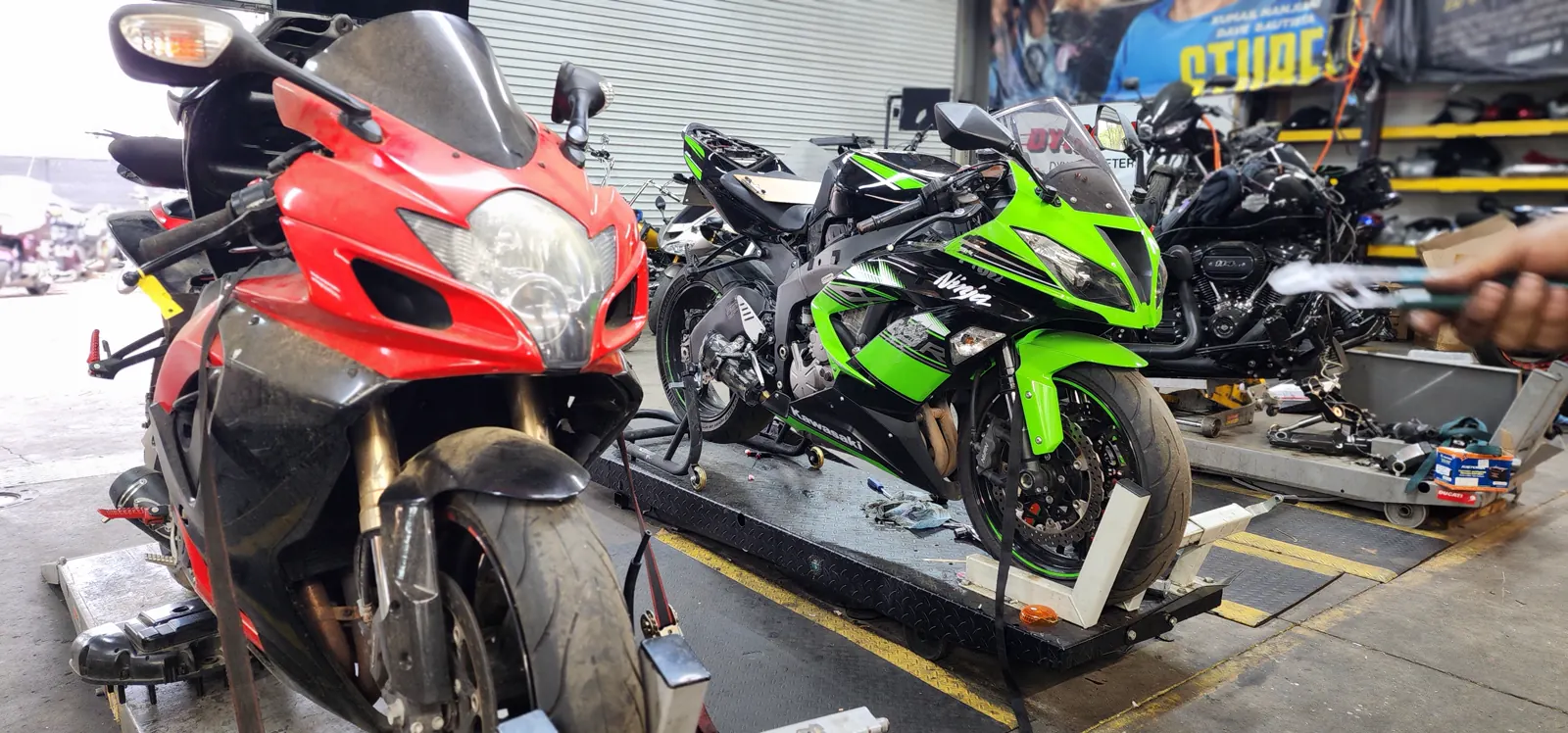
The internet will tell you one thing. The bikes tell us another. Search any forum and you’ll find a hundred confident opinions about the right fuel map for your exact model. But your bike isn’t a forum thread. It has its own exhaust, its own filter, its own miles, and it lives in your climate. The only honest way to know what it actually wants is to measure it. That’s where a dyno earns its keep, so let’s look at what one really does.
What a dyno actually measures
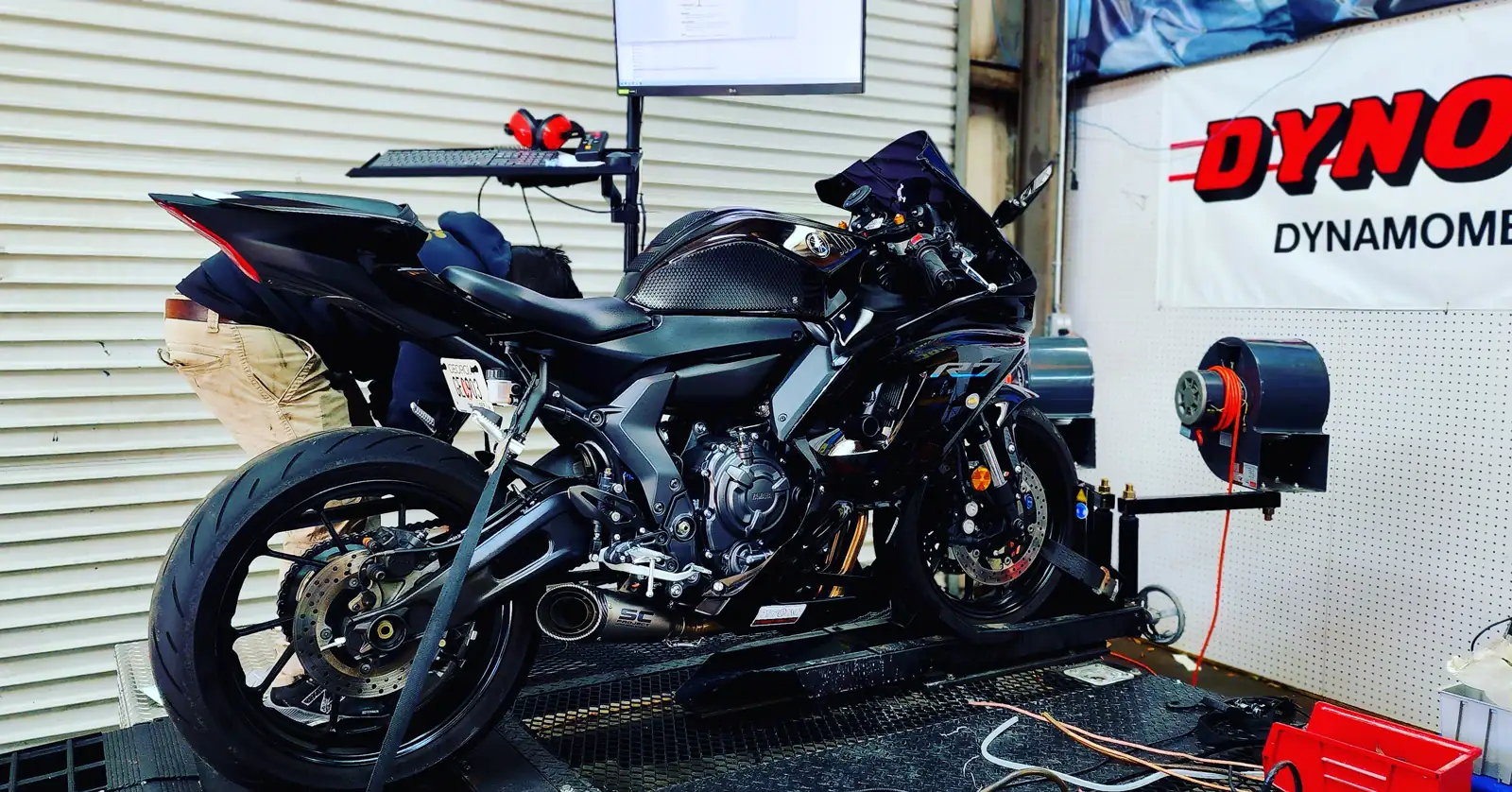
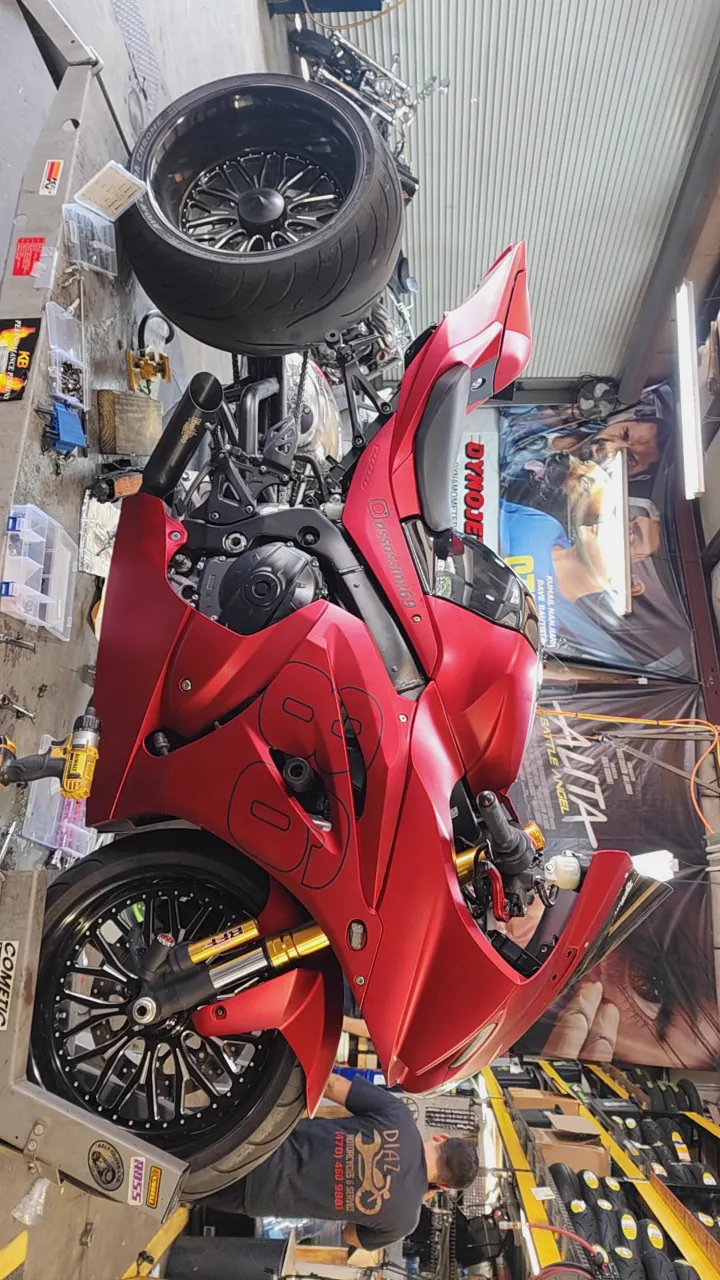
A dyno is a machine that lets your bike run hard while it stays put. The rear wheel spins a big drum, and the bike thinks it’s out on the road. While it runs, sensors read what’s really happening. They show how much power the engine is making across the rev range, and, just as important, exactly how rich or lean it is at every throttle position and every rpm. A sniffer in the exhaust reads the air-fuel mix live, in real time.
Think of it like a blood test for your engine. Instead of guessing, we get a live readout of where the fueling is off. Too lean at a quarter throttle? We can see it. Too rich right where you cruise? It’s right there on the screen. Because the bike is strapped down and safe, we can chase those problem spots without anyone riding at redline out on the road. If you want the deeper version of how those readings turn into a finished map, here’s the full rundown on it.
What actually happens when you bring a bike in
Here’s how a tune goes, start to finish, so nothing feels like a black box. First we talk. We ask what the bike is doing, what parts you’ve added, and how you ride, whether that’s calm weekend loops or spirited runs. Then we strap it down, warm it up, and make baseline pulls to see where it stands right now. From there we adjust the fueling and pull again. We keep repeating until the air-fuel line is smooth and the bike responds clean everywhere you actually use it.
On a bike that supports it, this is custom work, not a one-size map pulled off a shelf. The map gets built around your exact bike on the day, so the work we do in house is set up for your machine. The point is simple. Nothing gets guessed, everything gets measured, and you leave with a bike tuned for what you actually own instead of some average one.
Flash or Power Commander?
You’ll hear both terms, so here’s the difference in one breath. An ECU flash rewrites the fueling on the bike’s own computer, which is clean and built in when your model supports it. A Power Commander is a small add-on box that adjusts the fuel signal, handy on bikes that don’t take a flash or when you want piggyback control. Both get you to the same place, which is a map made for your bike. Which one we reach for depends on your machine, not on habit.
How long it takes, and why that's a good sign
A proper tune is not a five-minute job, and honestly, you want it that way. Plan on the better part of a day for a full custom session, and sometimes a bit more if the bike needs other work handled first. Good shops won’t rush the pulls, because rushing is exactly how you miss a lean spot. So if a shop quotes you a suspiciously quick turnaround, it’s fair to ask what’s really included. Careful beats fast every single time your engine’s health is on the line.
Since Peachtree City doesn’t have a motorcycle shop inside the city limits, you’re already used to planning service around a drive, and that works in your favor here. A tune is a plan-ahead job anyway. Drop the bike, run your errands, and pick up a machine that feels new. Plenty of riders over in Alpharetta do the exact same thing, and if you like comparing notes across towns, that’s worth a look.
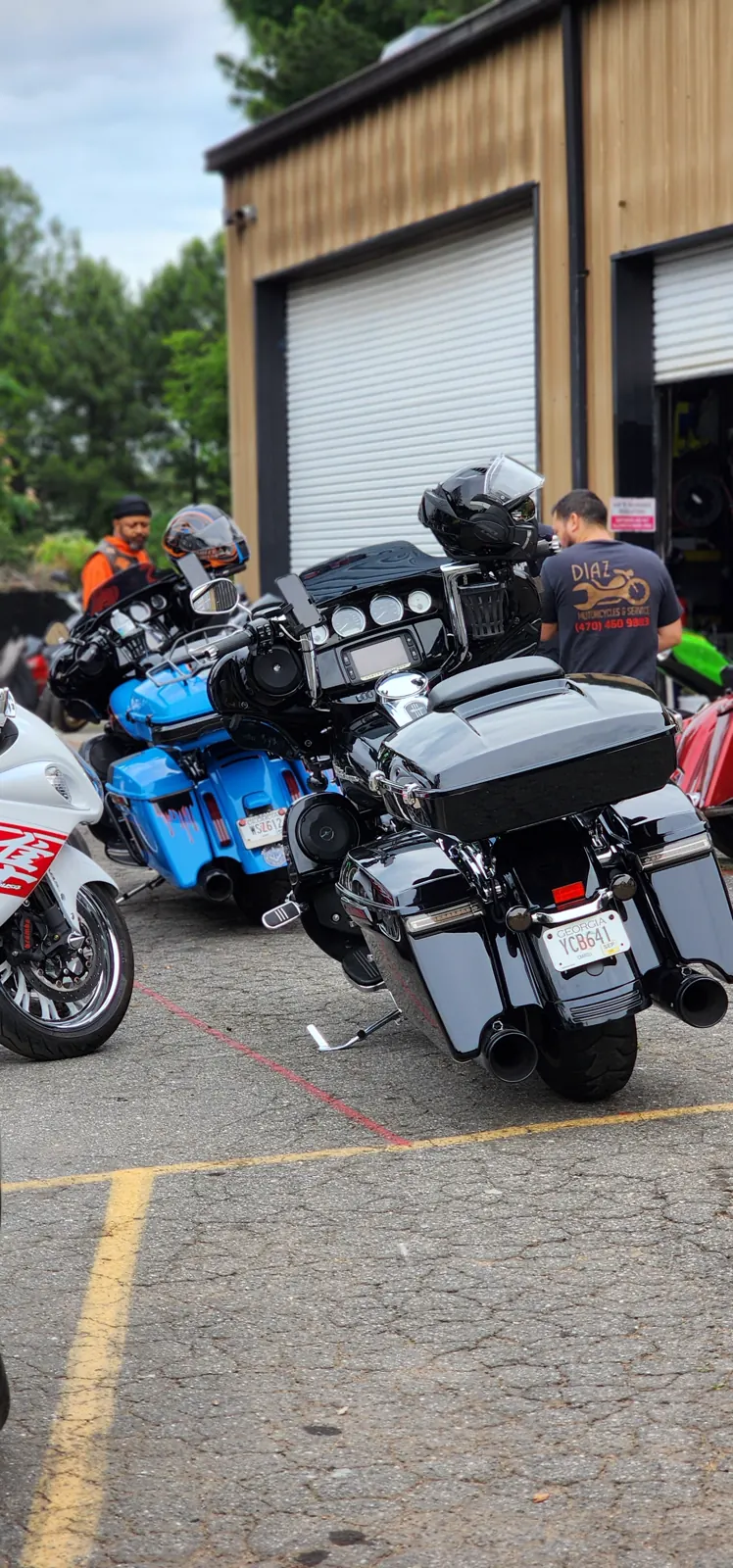
A quick story, because it makes this concrete. A rider brought us a big touring bagger after adding a new exhaust. It ran hot on his legs and popped on every downhill. He’d read online that his model always runs fine stock, so he figured he was stuck with it. On the dyno, the readout showed it running lean right where he cruised, which is the exact fingerprint of that new pipe. We built a map around his bike, and the popping went quiet while the heat backed off. Same bike, same parts, just fed correctly at last.
Reading the local map before you pick a shop
Now let’s talk about choosing, since that’s really why you’re here. Peachtree City is its own kind of place. Folks orient by village, not by compass, so a bike over in Aberdeen, one of the original-era villages, and a bike out in Wilksmoor, the newest village toward the Coweta side, might both be looking for the same answer. Ride up around Lake Kedron on the north end, or roll through the established streets of Interlochen, and you’ll notice the same thing in a lot of garages. Clean, low-mileage bikes that get babied and deserve careful work.
Your closest options tend to run west. Cycle City Power Sports in Newnan, about twenty-five minutes out toward Coweta, is a solid multi-line Honda, Kawasaki, Suzuki and Yamaha dealer, and dealers are genuinely good at a lot of things. So the honest question isn’t whether a shop is good in general. It’s whether they do real, measured, custom tuning on a dyno in house, or send that part out. Plenty of good shops don’t have a dyno at all, and that’s perfectly fine. It just means custom mapping isn’t their specialty.
That’s the gap worth understanding. A lot of the roads you actually ride, like the standard run out of town on 74 south toward Senoia and the Coweta line, put real load on the engine, the same kind of load a dyno recreates safely indoors. On that congested north-south spine locals just call 74, running up toward Tyrone, Fairburn and I-85, a bike tuned to pull clean from low rpm simply makes daily riding nicer. If you’re curious what that service looks like for a Peachtree City bike, we broke down what that service actually involves.
The real checklist for judging a dyno shop
So here’s a fair, simple checklist you can run on any dyno shop Peachtree City riders are weighing, ours included. None of this is about badges or bragging. It’s about whether the work is measured, and whether it’s done for your specific bike.
- Do they have a dyno on site, and do they tune on it themselves rather than sending it out?
- Do they build a custom map for your bike, with an ECU flash or a Power Commander, instead of loading a generic file?
- Will they show you the before-and-after graph and explain what changed in plain words?
- Do they work on your brand, and have they tuned bikes like yours before?
- Are they upfront about timing, and do they refuse to rush the pulls?
- Do they treat a clean, cared-for bike with the care it clearly deserves?
If a shop checks those boxes, distance matters less than you’d think. Yes, we’re up in East Cobb, about an hour up the road depending on traffic, and no route naturally sends a Peachtree City rider toward Cobb County. But a tune is a planned errand anyway, and plenty of folks build the trip around it. Given the film crews that have made this area a backlot, from The Walking Dead and Drop Dead Diva to Megalopolis, you’re clearly a town that’s comfortable with people traveling in to do specialized work well. A bike is no different.
How the bike feels when it's finally right
Let’s land on the part that makes all of this worth it, because you should finish here knowing the payoff. A well-tuned bike starts clean and settles into a steady idle. The flat spot disappears, so the throttle feels connected from the first crack of your wrist. It runs cooler on your legs in stop-and-go. The decel popping quiets down. On a fall morning, the best riding season we get around here, the bike just does what you ask. No stumble. So No surge. No guessing.
That’s the whole point of finding the right dyno shop Peachtree City riders can lean on. It’s not big talk, just a bike that behaves. Whether you ride a Harley bagger, a metric tourer, a sportbike, or a project you’ve babied for years, the process stays the same. Measure, map, confirm, done. If you ever want to sanity-check any of this against the rules of the road, the folks at the American Motorcyclist Association and the road info from Georgia DOT are both easy places to start.
Questions Peachtree City riders ask us
How do I pick a good dyno shop?
Look for a shop that owns a dyno and tunes on it in house, not one that sends the work out. Ask if they build a custom map for your exact bike instead of loading a generic file. A good shop will also show you the before-and-after graph and explain it in plain words. If all three are true, you’re in the right place.
Should I go to a dealer or an independent shop?
Both can be great, so it comes down to the job. Dealers are strong on warranty work and stocking parts for the brands they carry. For real custom tuning, the thing that matters is whether the shop has a dyno and does the mapping themselves. Some dealers do, and some send it out, so it’s always fair to just ask.
What should I ask a shop before I book a tune?
Ask if the dyno is on site and who runs it. Ask whether they’ll use an ECU flash or a Power Commander for your model, and why. Ask to see a sample before-and-after graph. Finally, ask how long the session takes, since a careful tune needs the better part of a day and a rushed one worries us.
Do you work on all brands?
We tune a wide range, from Harley baggers and metric touring bikes to sportbikes and custom builds. Peachtree City garages tend to hold premium touring and cruiser bikes, and those are right in our wheelhouse. If you’re not sure whether we cover your specific model, just text us the year and make and we’ll tell you straight.
How far do you serve, and is Peachtree City too far?
Not at all. We’re up in East Cobb, about an hour up the road depending on traffic, and a tune is a plan-ahead job anyway. Since there’s no motorcycle shop inside the Peachtree City limits, you’re already used to a drive for service. Many riders build the trip around errands and pick up a bike that feels brand new.
Will a tune fix popping, running hot, and a flat spot?
Very often, yes. Those three are classic signs of fueling that’s off, usually lean, especially after a new exhaust or filter. On the dyno we can see exactly where it’s happening and correct it. Neither symptom means your engine is hurt, so it’s an easy problem to feel good about fixing.
We tune bikes for riders all across the south metro, so Peachtree City is right in our regular circle. That includes neighbors in Fayetteville, Tyrone, and Newnan, plus the quieter roads around Senoia, Sharpsburg, Brooks, and Woolsey. We also see plenty of riders coming from Union City, Fairburn, and Palmetto on the north side, along with folks over in Jonesboro and Riverdale. Wherever you park it, if your bike stumbles, pops, or runs hot, the dyno gives us the same clear answer.
READY WHEN YOUR BIKE IS
If your Peachtree City bike stumbles off the line, pops on the way down, or runs hotter than it should, that’s a tune waiting to happen, and the fix is a good one. Text us the year, make, and what it’s doing, and we’ll tell you honestly whether a dyno session is the answer. Plan the drive around an errand, drop it off, and pick up a bike that finally does what your wrist asks.
470-460-9883Diaz Motorcycles and Service, LLC · 847 Barnes Mill Road, Marietta, GA 30062