Overdue Service Powder Springs — What to Check
The small sounds and soft levers that tell you a bike is due, and what a real service actually covers.
After that, there’s a sound a bike makes when it has gone too long between visits. Also a dry tick from the chain at parking lot speed. Even so, a front lever that pulls a half inch farther than it used to. Instead a cold start that coughs, catches, then settles into an idle that hunts up and down like it’s thinking something over. None of it screams at you. That’s the tricky part. Besides those quiet signals are what riders mean by overdue service Powder Springs bikes need, and they almost always show up well before anything actually breaks.
The short answer, in plain words
Overdue does not mean broken. Actually it means your bike is running on parts and fluids that have already done their job. Oil gone thin and dark. That’s why a chain with dry links and one tight spot. Brake fluid that pulled in moisture and softened the lever. Tires with hard, glazed centers from sitting still. Any one of those is small by itself. Stacked together, they change how the bike stops, turns and holds a line, and your hands feel that change long before your eyes catch it.
Here’s the upbeat part: this is the easy end of the repair world. A stretched chain costs you a chain. A stretched chain you rode all summer costs you a chain, a front sprocket, a rear sprocket and sometimes a chewed-up case cover. Brakes work the same way. Fresh pads are a quick afternoon on the lift. Pads worn down to the backing plate take the rotor with them. We would much rather see your bike early and hand it back the same week.
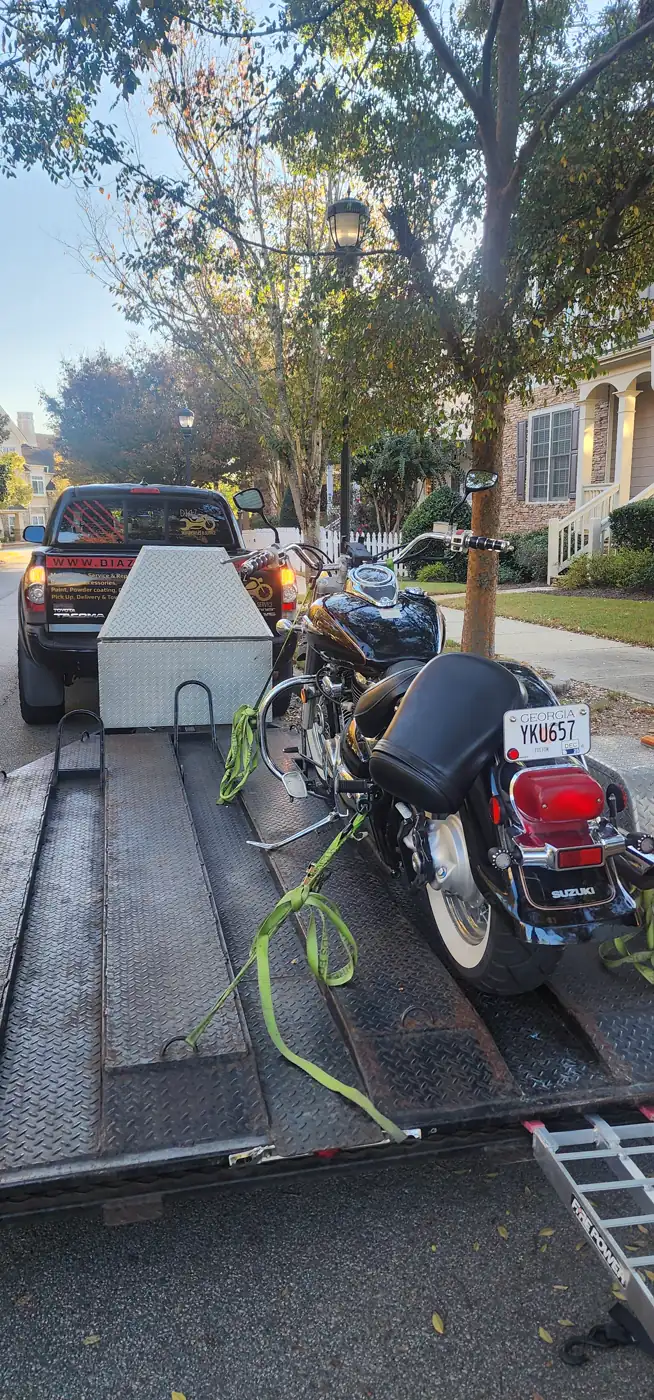
So when is it still safe to ride? If the bike starts clean, idles steady, stops straight and the tires hold air overnight, ride it over. If the front lever comes back near the bar, if you can feel a tight spot in the chain through the pegs, if a sidewall shows cracks or the tread has picked up a nail, or if you smell hot brake or raw fuel at a red light, that’s a trailer day. No one has ever regretted trailering a bike. Plenty of folks have regretted the other choice.
What actually drives the work out here
West Cobb riding is a weekend habit, not a commute. Georgia bans lane splitting and lane filtering, so a rider stuck on Interstate 20 gains nothing at all over the car sitting next to him. I-20 runs roughly eight to ten miles south of town by way of C.H. James Parkway and Thornton Road, and it’s the route to Atlanta, not the route to fun. So most bikes around here don’t build steady miles. They sit for weeks, then cover a couple hundred in one Saturday.
That burst pattern is harder on a machine than daily use. Fuel goes stale in the tank. Batteries drain down a little at a time. Tires develop flat spots where the weight rests. Fork seals dry out. Then the first warm weekend lands and the bike gets asked to do a full day’s work with none of the warm-up.
Garages help and hurt at the same time. Most homes here are single-family with a two-car garage, so the bike lives indoors beside the truck, out of the weather. That’s wonderful for paint and chrome. It does nothing for the fluids sealed up inside the engine, which keep aging whether the wheels turn or not. If you want the fuller picture, we lay out the work we do in house and why the sitting months count as much as the riding ones.
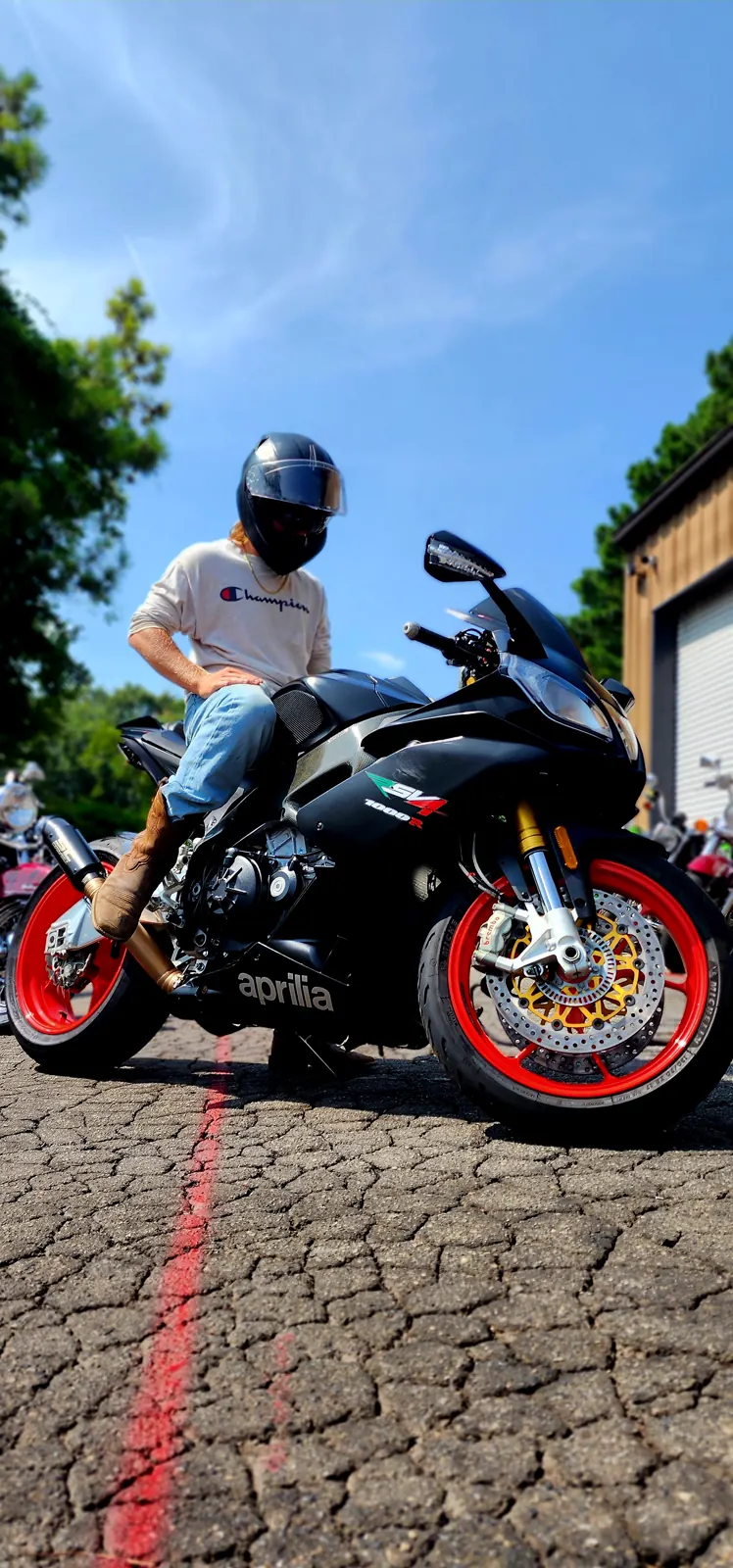
What we check when a bike comes in overdue
A service is not a mystery box. It’s a list, and you deserve to see the list before you hand over your keys. Here’s what we put hands on when a bike rolls in behind schedule.
- Oil and filter, plus a real look at what came out. Metal flake or a burnt smell tells us more than an odometer ever will.
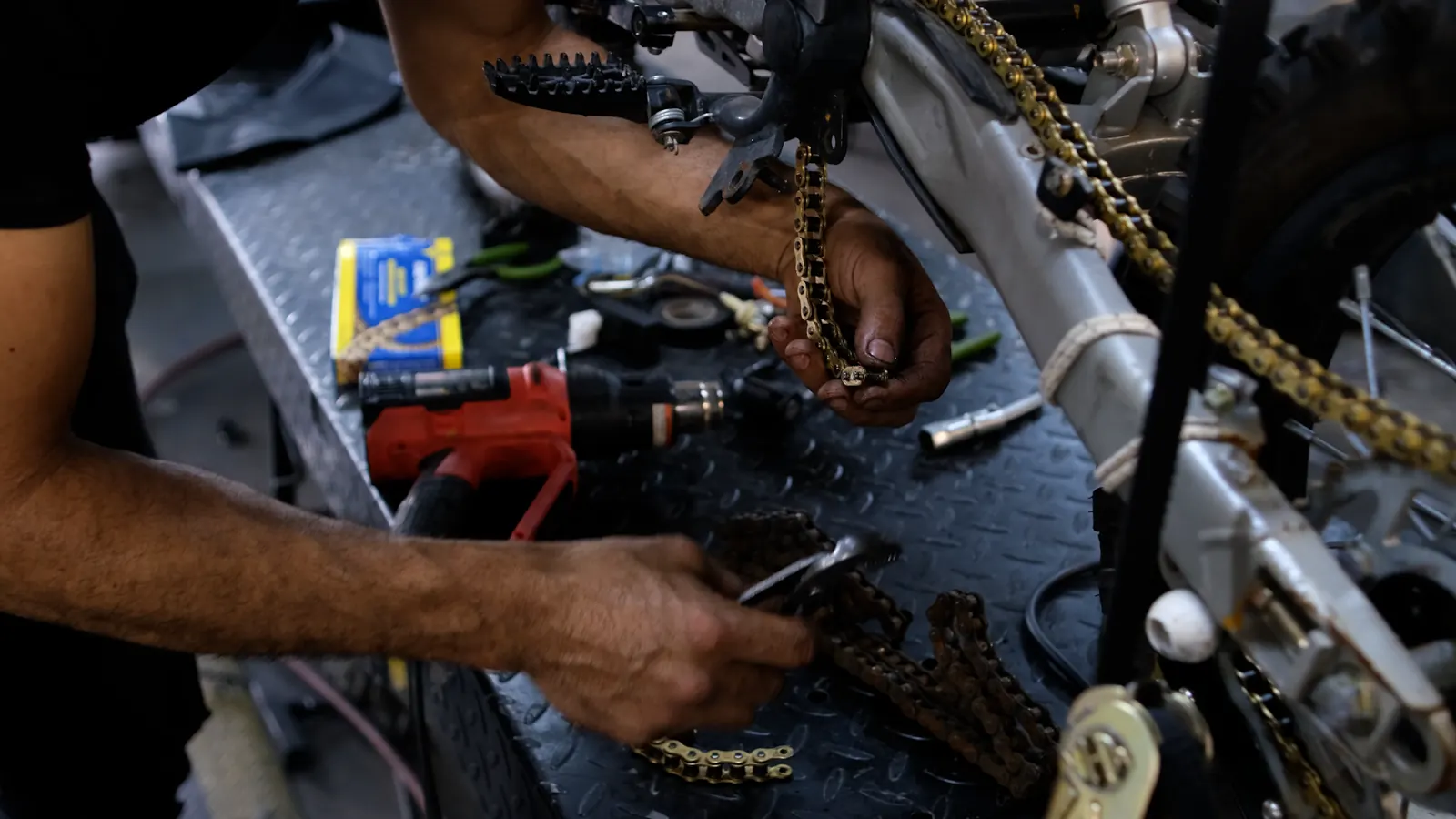
- Chain and sprockets: slack, tight spots, side wear on the teeth, and whether the O-rings are still sealing.
- Brake pads, rotor thickness and fluid color. Clear fluid is happy fluid. Coffee-colored fluid has been working too long.
- Tires, front to back: tread depth, the date code on the sidewall, cracking, cupping up front and squaring off in the rear.
- Battery voltage under load, then charging output at idle and again at speed.
- Air filter, spark plugs and the whole fuel path, especially on a bike that slept through winter.
- Cables, levers, bearings and fasteners. Loose bolts are cheap to snug and expensive to ignore.
- Lights, horn and switchgear, because a dead taillight is the simplest thing on this list and the one nobody spots from the saddle.
The timing on this matters more than the fix does. Nearly every large repair we see started life as a small one that waited a season. A chain that wanted adjusting became a chain that wanted replacing, then took both sprockets down with it. A weeping fork seal became a fork seal plus a coated brake pad plus a rotor that needed cleaning. The parts didn’t get more complicated. They just got more numerous, and the bike sat in our bay longer than anybody wanted.
We won’t hand you a mileage number here, and you should raise an eyebrow at anyone who does. Your owner’s manual sets the intervals for your exact model, and they shift by engine, by year and sometimes by how hard you ride. What we can tell you is that the calendar counts too. A bike that barely moved in two years is still due, because oil, brake fluid and rubber all age whether or not the wheels ever turned. Tire makers publish plenty on that; Dunlop’s technical resources cover date codes and wear patterns in more detail than most riders expect.
QUICK GARAGE TEST
Roll the bike a foot at a time and squeeze the chain at each stop. If the slack changes as it rotates, you have a tight spot. That’s a five-minute check that catches an expensive problem early.
Mistakes worth skipping
Most riders who fall behind aren’t careless. They’re busy, and the bike kept starting, so it kept getting bumped. The trouble is that a few common shortcuts turn a simple catch-up into a real repair. If you’re deciding where to take it, we’ve written up what separates a good shop from one that just swaps parts, and the same thinking applies to what you do at home.
- Adding oil instead of changing it. Topping off fixes the level and does nothing for the additives that already wore out.
- Chain lube as a substitute for chain adjustment. Lube is a moisturizer, not a fix, and it can hide a tight spot.
- Judging tires by tread alone. Rubber hardens with age, so a tire can look fine and still slide like a hockey puck on a cold morning.
- Trickle-starting a stored bike every few weeks. Short runs never get the oil hot enough to burn off moisture, so you’re adding wear without the benefit.
- Bleeding brakes but reusing the old fluid in the reservoir. You just circulated the problem.
- Chasing a noise by ear on the internet. Sounds travel strangely through a frame, and a chain tick and a cam tick fool experienced people all the time.
Then there’s the diagnosis question. Riders often walk in convinced they have an engine problem when they have a chain problem, or convinced they have a chain problem when a wheel bearing is quietly doing the talking. That’s a normal mix-up, not a failure on your part. When a symptom turns out to be something deeper than routine upkeep, we explain how we handle that job before we touch a wrench, and you decide from there.
What this looks like around Powder Springs
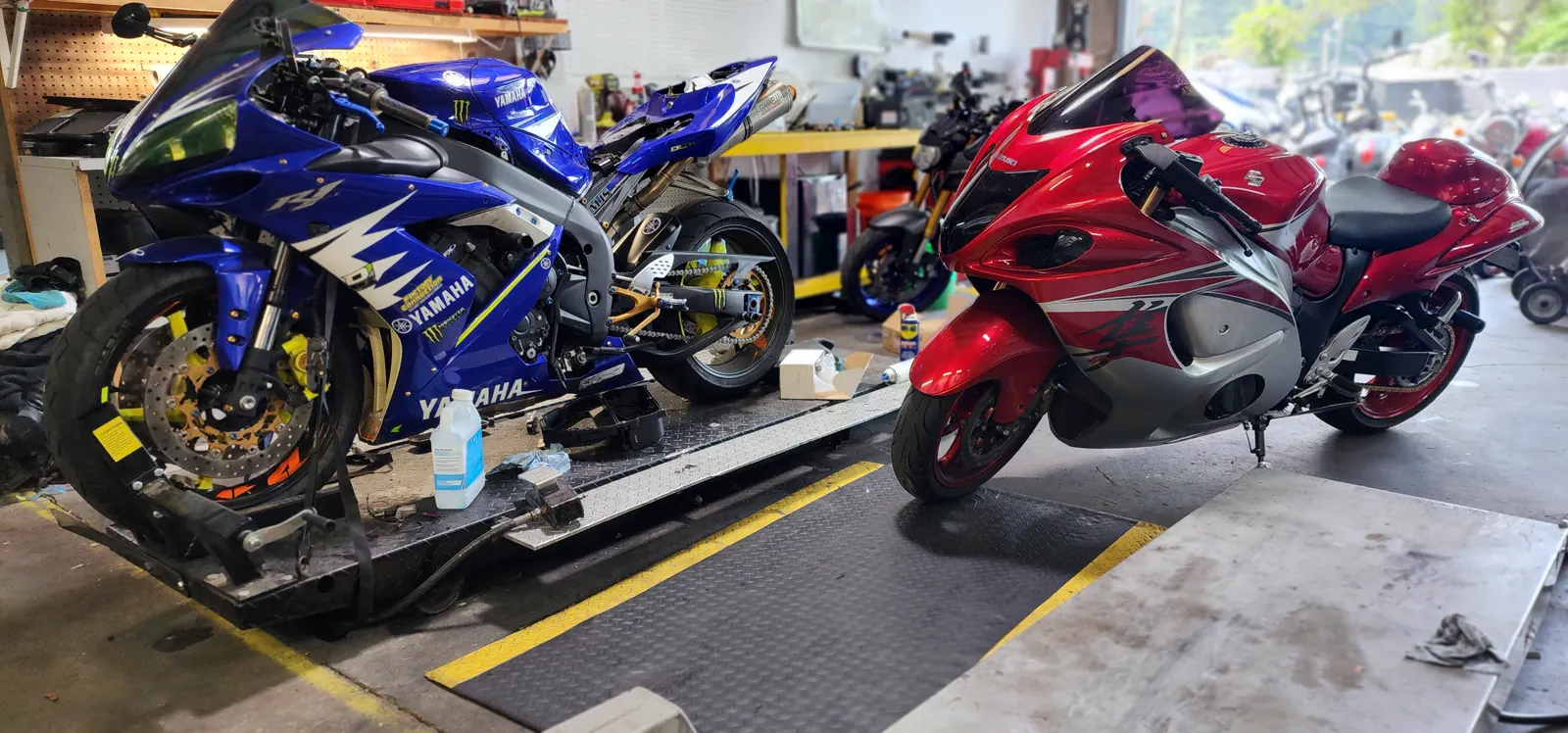
There’s no dealership inside the city limits and no large independent full-service shop either, so riders here work with a thin layer of small independents and mobile mechanics or they make a short drive. That gap gets wider for specialist work like tuning, restoration and paint, which nobody local really offers. It also means a lot of bikes go longer between real inspections than their owners intended, and catching up on overdue service Powder Springs style usually means one visit that handles several small things at once.
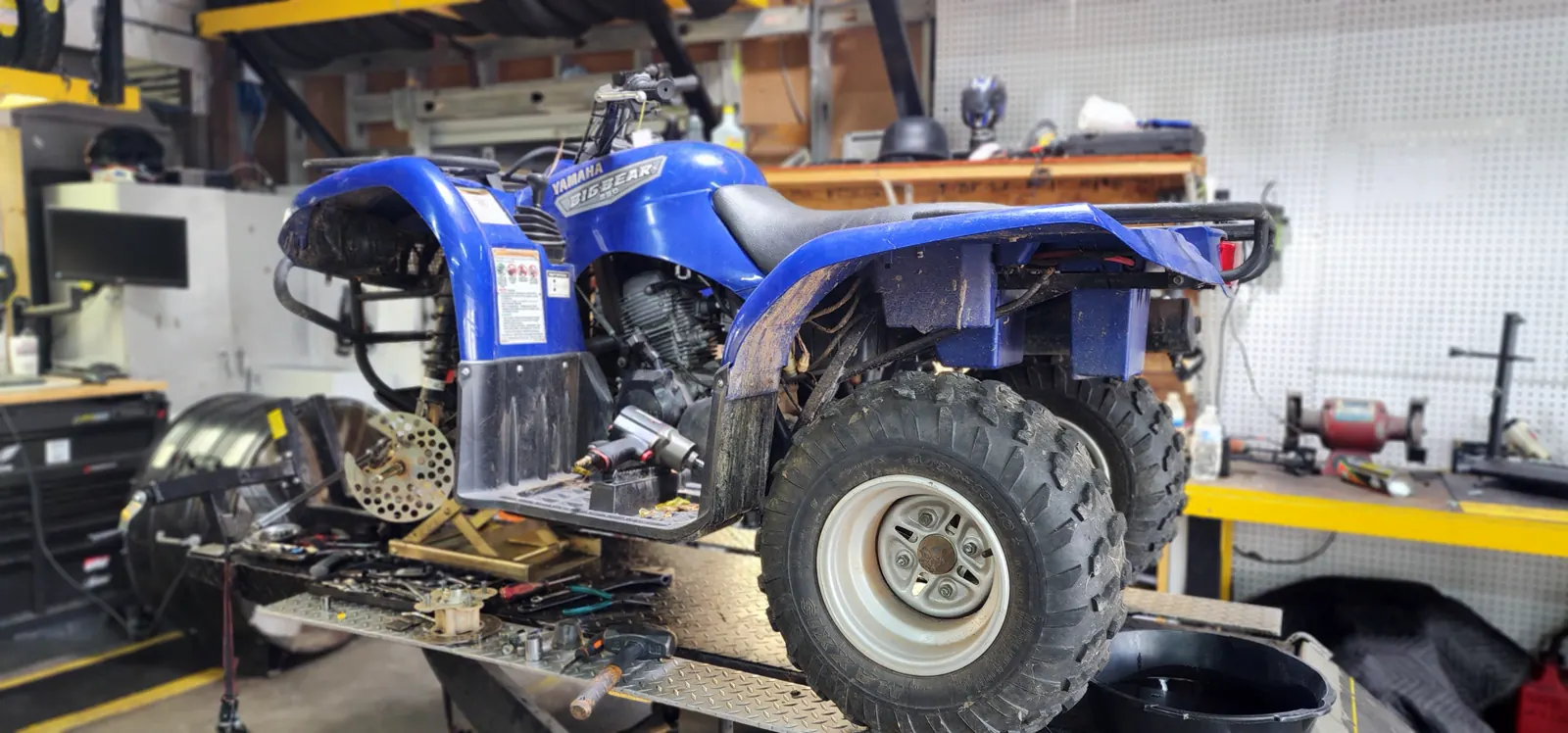
The other thing we see constantly is the long-parked project bike. High garage ownership across this part of Cobb produces an unusual number of machines that went quiet three or four years ago behind a lawn mower and a stack of storage bins. Those aren’t lost causes. They’re mostly fuel systems, batteries, tires and fluids, in that order, and they wake up better than people expect.
A bike came in from Amberton with exactly this. The owner described a ticking noise that got louder with speed and swore the engine was going. He’d already priced out worst-case scenarios in his head and hadn’t slept great about it. On the lift, the chain had two tight spots and the rear sprocket teeth had hooked over like little ocean waves. Chain, both sprockets, fresh oil, a brake fluid flush while it was up there. He rode it home the next afternoon and texted us that it felt like a different motorcycle.
We hear the same story from The Hermitage and from Worthington Oaks, just with different bikes attached to it. Baggers and cruisers dominate the garages out here, sportbikes show up more with younger riders closer to the interstate corridors, and adventure bikes keep gaining ground because north Georgia gravel is right there. Different machines, same pattern underneath.
If you know where the Seven Springs Museum sits at 4355 Marietta Street, in the Queen Anne-style Bodiford House with free admission at the door, you know the older heart of town we’re describing. Same with a Friday night at Walter H. Cantrell Stadium behind McEachern High School, where twelve thousand seats fill up and half the county seems to be there. This is a community that keeps things and maintains them, and bikes get treated the same way.
Road surface matters here too. The arterials that riders actually use, Macland and Florence and Hopkins and Brownsville, carry heavy school and construction traffic all week. That shows up as edge break, patched utility cuts and gravel washed into the intersections after a hard rain. Worn tires and soft suspension feel every bit of it. Cobb County DOT handles pothole work reactively, so a report through SeeClickFix or a call to the Maintenance Work Desk at (770) 528-1600 is two minutes well spent.
Sometimes the honest answer is that your issue isn’t service at all. If a bike is genuinely a suspension case and nothing more, there’s a specialist for that about thirty miles north, Traxxion Dynamics at 261 Rope Mill Pkwy in Woodstock, and we’ll tell you so. When it is service, we’re roughly fifteen to eighteen miles from town, an easy run up Powder Springs Road or Macland Road into Marietta, then east on Roswell Road to Barnes Mill Road. Riders in other metro towns deal with the same seasonal pattern, and we covered the Peachtree City side of things if you want to see how consistent it is.
What you get back
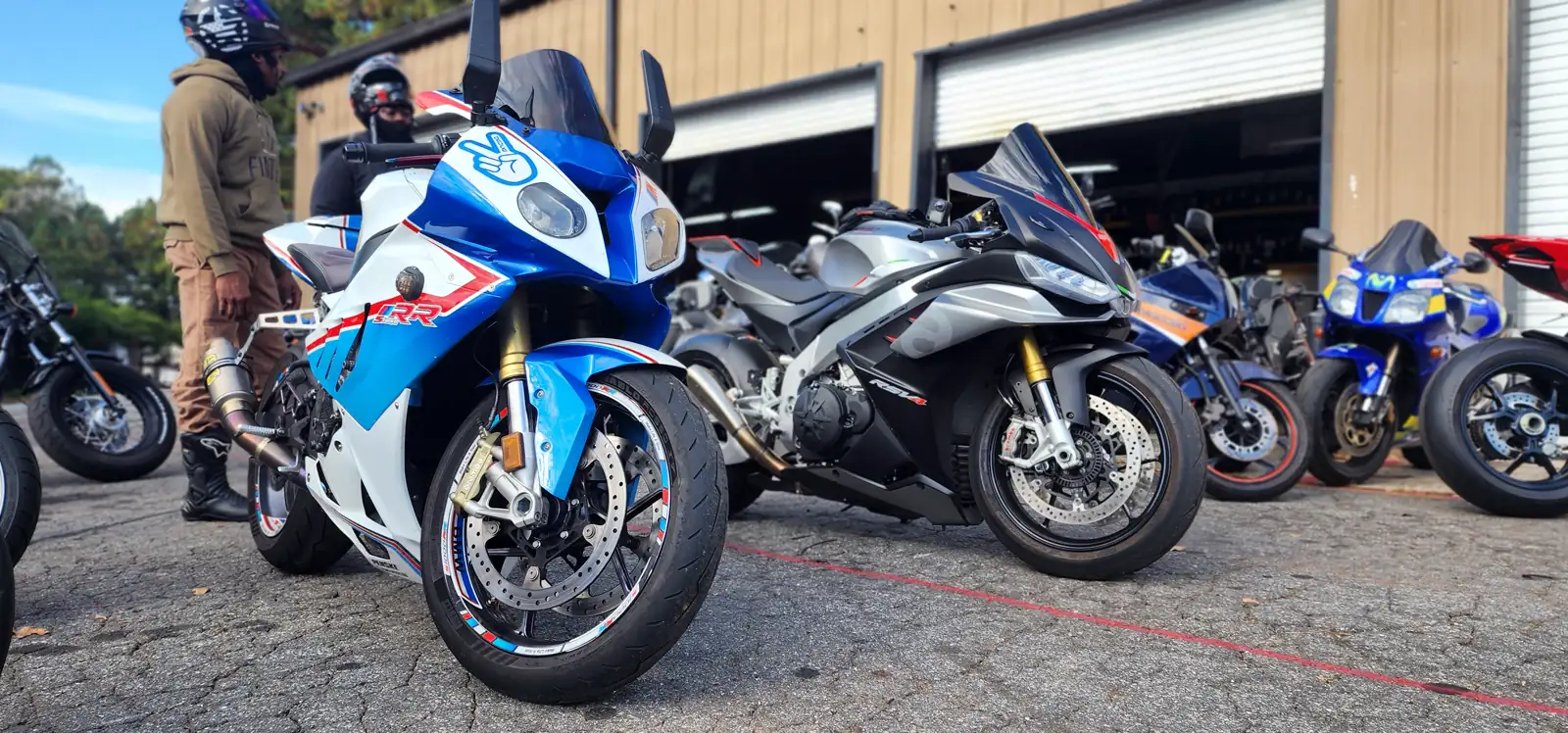
A caught-up bike feels obvious in the first block. The chain goes quiet. What’s more, the lever firms up and stops in a predictable spot. The idle sits where it belongs instead of wandering. You stop listening for the noise, and once you stop listening for the noise, you start actually enjoying the ride again. That’s the whole point of the exercise.
It also opens the good stuff back up. SR 60 up to Suches, then Wolf Pen Gap Road onto SR 180, the Georgia Triangle out of Stonepile Gap, sits about an hour and a half to two and a half hours away and eats a full day in the best way. That is not a ride you want to begin on a chain with a tight spot and brake fluid the color of sweet tea. If you’re getting back on after a long layoff, a refresher like the MSF Basic RiderCourse pairs nicely with a freshly sorted machine.
Small things caught early stay small things. That's the entire secret.
Questions Powder Springs riders ask us
What actually causes these symptoms?
Usually time and sitting, not abuse. Oil thins and loses its additives, brake fluid absorbs moisture, chains stretch unevenly and rubber hardens with age. A bike that sits in a garage all winter ages in every one of those ways without adding a single mile.
Can I handle any of this myself?
Plenty of it, yes. Chain cleaning and adjustment, air filter swaps, battery tending and tire pressure checks are all reasonable home jobs with basic tools. Brake systems, fork seals and anything involving engine internals are worth handing to someone with a lift and the right measuring tools, since a small error there is not a small error.
Will it get worse if I keep riding?
Almost always, and usually faster than people expect. Wear items are connected, so a tired chain wears sprockets, worn pads score rotors and a weak battery makes the charging system work overtime. Riding on it turns a one-part job into a three-part job.
How urgent is it, really?
That depends on which symptom you have. Dark oil and a dusty air filter are book-an-appointment problems. A spongy front brake, a chain with a visible tight spot, a cracked sidewall or fuel smell at a stop are stop-riding problems. When in doubt, trailer it and sleep well.
What happens if I just ignore it?
Nothing dramatic on day one, which is exactly why it’s easy to put off. Over a season, though, the bike loses braking distance, tire grip and drivetrain smoothness together, and the repair list grows on its own. The good news is that catching up is very doable at almost any stage.
How do I know when my bike is due?
Your owner’s manual sets the intervals for your specific model, and that’s the number to trust rather than any figure a shop quotes off the top of its head. Beyond that, watch the calendar as well as the odometer. If it has been a long time since anything was changed, it’s due even if the miles say otherwise.
Diaz Motorcycles works with riders across west Cobb and the surrounding metro, starting right here in Marietta and reaching out to Powder Springs, Austell, Mableton and Smyrna. We regularly see bikes come in from Hiram, Dallas and Clarkdale, along with Kennesaw to the north and Fair Oaks just down the road. Riders from Douglasville, Lithia Springs and Villa Rica make the trip too, usually because they want one shop that handles routine service, real diagnosis and specialty work under the same roof instead of splitting the bike between three places.
BRING IT IN BEFORE IT GETS LOUD
If your bike is making a sound you don’t like or the lever feels different than it did last season, text us and describe it in your own words. We’ll tell you straight whether it’s fine to ride over from Powder Springs or whether it’s worth a trailer, and we’ll give you the list before we start. No pressure, no mystery, just a bike you trust again.
470-460-9883Diaz Motorcycles and Service, LLC · 847 Barnes Mill Road, Marietta, GA 30062