Overdue Motorcycle Service Woodstock — Why It Happens
Bikes rarely announce that they're behind. They drift, quietly, and a good rider adapts without ever noticing.
As a result there’s a belief that lives in a lot of garages: a bike will tell you when it needs work. On the other hand It’ll tick, or drip, or cough at a light, and that’s your signal to book something. So it’s a comforting idea, and it’s backwards. Bikes usually go quiet before they get loud. A little slower to fire up. At the same time a little rough through second. A little lazy at the lever. Still, Riders adapt to every bit of that without noticing they’re doing it, and nearly every overdue motorcycle service Woodstock riders bring us started exactly that way, with nobody doing anything wrong.
The myth, and where it came from
Cars taught us this. A car is loud about neglect. Plus, it flashes a light on the dash, throws a code, chimes at you about a door that’s already closed. Meanwhile, Plenty of motorcycles do none of that. Of course, a carbureted cruiser from the nineties has no opinion about the last time its oil was changed, and even a modern adventure bike with a full color dash only watches a handful of things. In fact, the rest is on you and your shop.
So here’s the flip. Your bike isn’t a smoke alarm. For example, it’s more like the friend who never complains, which sounds wonderful until you realize they’ll carry something around for months without mentioning it. Even so, By the time a bike gets loud about a problem, the small easy version of that repair is already behind you.
The good news is that drift is easy to catch once you know what you’re feeling for. No lift, no scan tool, no torque wrench. Just a few honest minutes in the driveway and a willingness to notice what you’ve been working around.
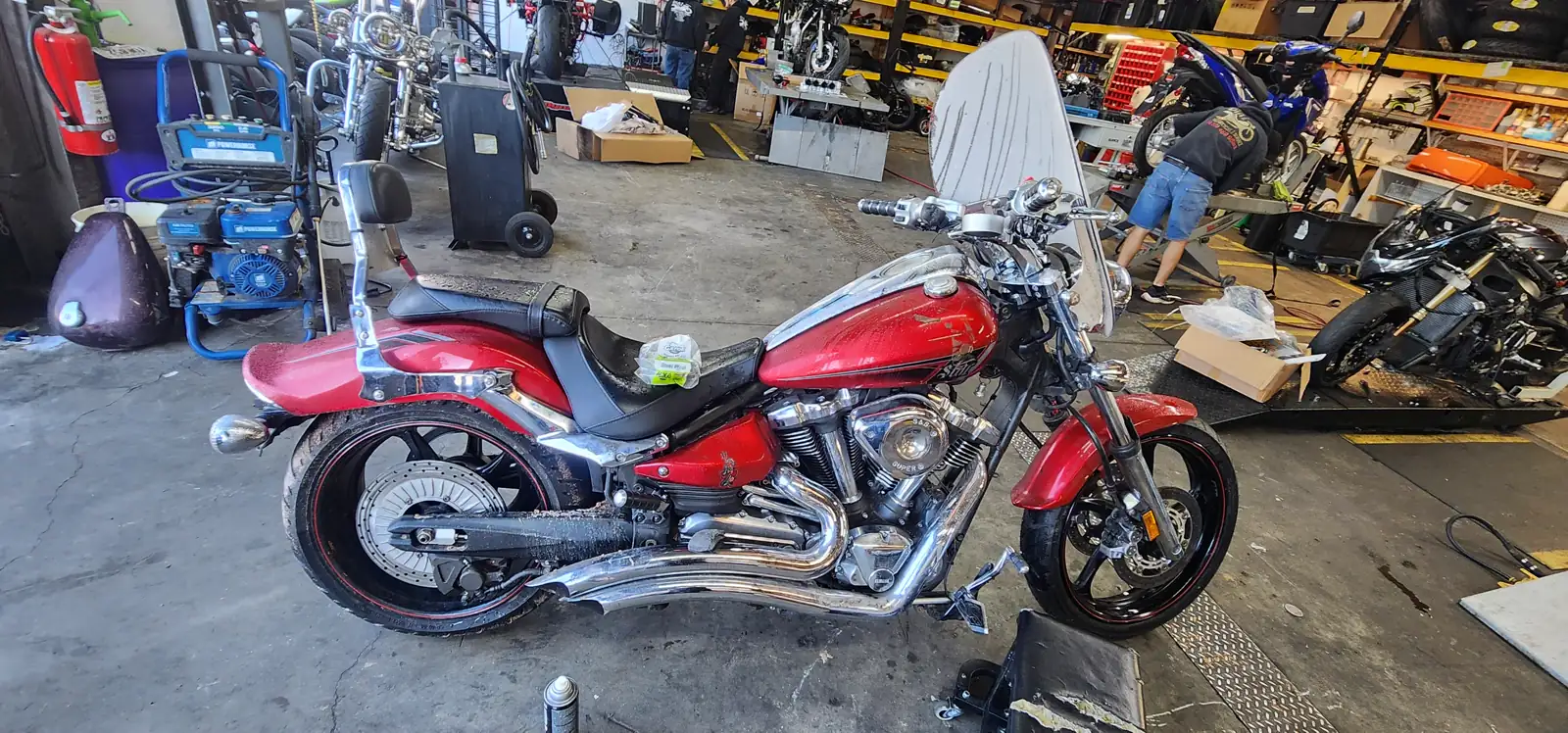
What behind actually feels like from the saddle
Start with the first thirty seconds of a ride, because that’s where a bike is most honest. Cold, unhurried, nothing masked by heat or speed yet. Here’s what riders describe to us over and over.
- The starter cranks a beat longer than it used to, especially on a cool morning
- First gear engages with a clunk you can feel through your boot
- The chain ticks dry at low speed, and the slack changes as you roll the bike forward
- The front brake bites later in the lever pull than it did last year
- The bike smells faintly hot at a stoplight when it never used to
- Second and third feel flat, like the engine is pulling through syrup
No single item on that list means something is broken. Together, though, they mean the bike has drifted. Nothing failed, nothing snapped. The machine just slid a few degrees from where it was set, one small item at a time, while you kept riding it beautifully.
The usual causes, most common first
Old oil sits at number one, and it isn’t close. Oil doesn’t only get dirty. It thins out and loses the additives that keep a gearbox happy, which is why bikes that share oil between the engine and the transmission announce it first with clunky shifts. We won’t print a mileage number here, because the right one lives in your owner’s manual and it changes with the model, the year, and how hard you ride. That book is the boss. We just follow it.
Chain and sprockets come second. A chain that’s dry or unevenly adjusted will tick, snatch on and off throttle, and slowly chew its sprockets into little shark fins. It’s the easiest item here to stay ahead of and the most expensive to ignore, which is a rough deal for something that asks five minutes of attention.
Brake fluid lands third and it’s the sneakiest. Fluid pulls in moisture over time, moisture softens the lever, and the bite point starts wandering. You compensate by pulling a little harder. That’s the whole problem: you adapt faster than the brakes fade, so it never feels like an event.
Tires are fourth, and around here they’re often aged out before they’re worn out. A bike that sits through a wet winter and then gets ridden hard across two mountain weekends can show plenty of tread while the rubber has gone hard and squared off. Grip you can see isn’t the same as grip you can use.
After that comes the short list. A tired battery. An air filter that’s gray instead of white. Sticky cables, coolant that’s never been touched, valve clearances on a bike with real miles, and fork oil that turned to coffee somewhere around the last presidential election. Suspension is its own conversation, and Cherokee County riders tend to be ahead on that one.
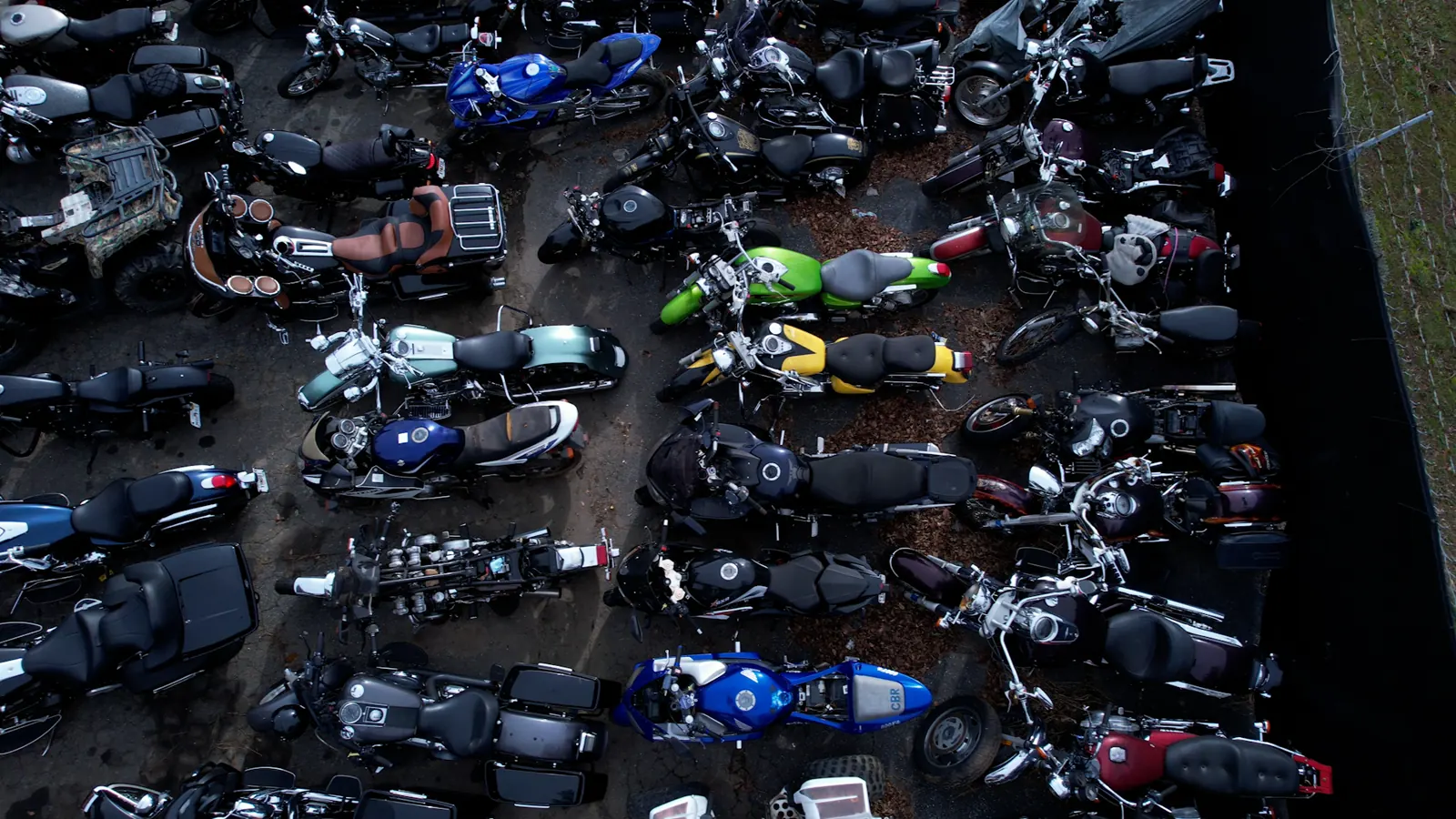
Now, the part nobody mentions until you’re already paying for it. Small problems don’t stay small, and they don’t stay alone either. They recruit. A dry chain eats sprockets. Worn sprockets load bearings that were never meant to take that. Thin oil that should have been changed two seasons ago turns a routine top-end into a much longer week on the bench. One overdue item is a service appointment. Four overdue items that have spent a year feeding each other is a project, and that’s what changes the total far more than the price of any single part.
When it's safe to ride, and when it isn't
Riders ask this first, so we’ll answer it plainly rather than burying it. Some symptoms mean book an appointment this month. Some mean don’t start the bike.
| What you're noticing | What to do about it |
|---|---|
| Notchy shifting, engine feels flat | Ride it gently, book service soon |
| Chain ticks, slack varies as you roll the bike | Short local trips only, no highway, no mountains |
| Brake lever goes soft or pulls toward the bar | Don't ride it, trailer it |
| Tires cracked, glazed, or squared off | Don't ride it, that grip isn't coming back |
| Coolant smell, an oil drip, or a temp warning | Shut it down and call, don't chase it home |
| Wobble, weave, or a clunk from the front end | Don't ride it, trailer it |
THE HONEST LINE
Anything touching brakes, tires, or steering is a trailer, not a gamble. Nearly everything else on this page just needs an appointment.
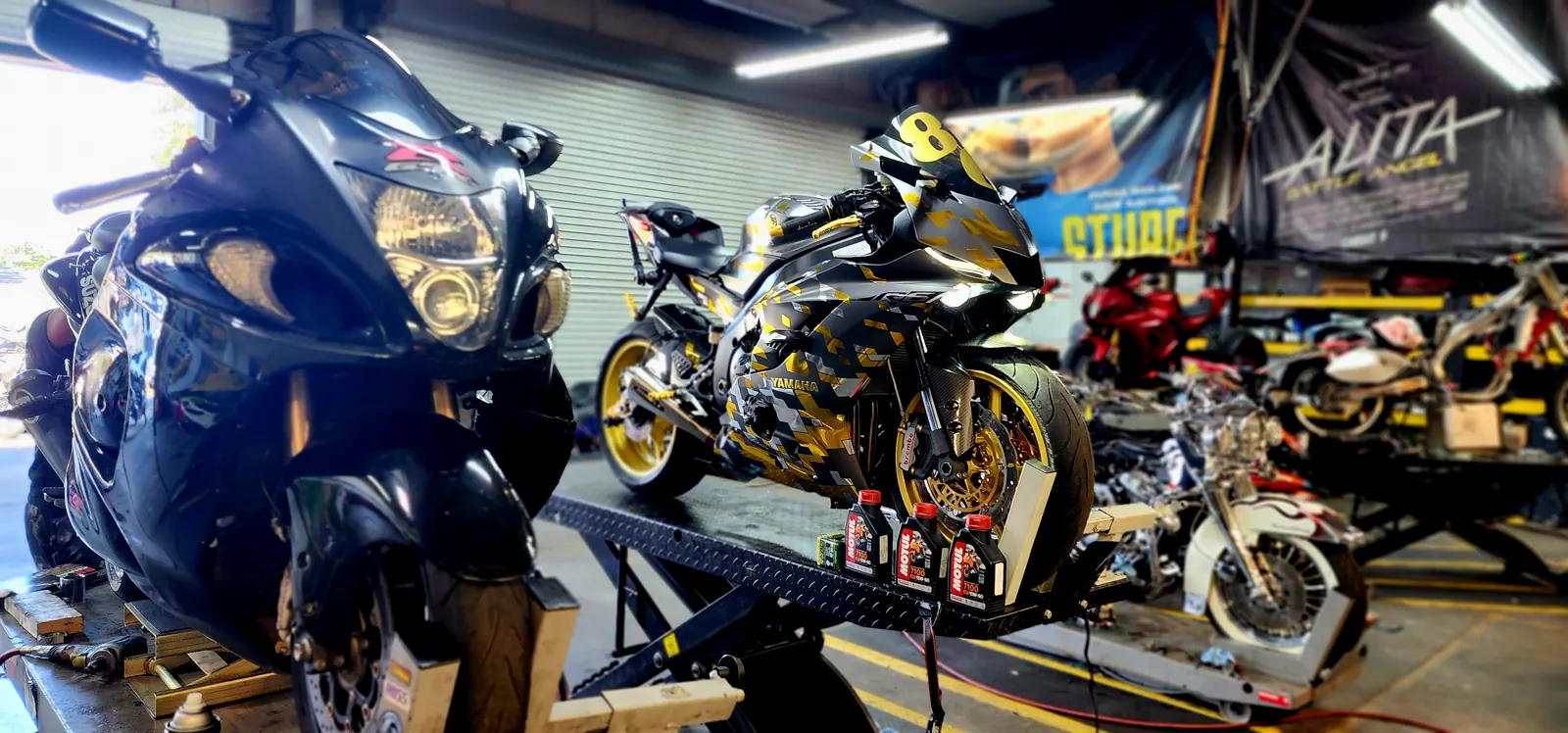
What a service actually includes, in plain words
Service is a vague word, and vague words are where trust goes to die. So here’s the real list, the one that happens on the lift.
- Oil and filter, drained warm so the old stuff actually leaves the engine
- Chain cleaned, adjusted to spec and lubed, or the belt and final drive checked on bikes that use them
- Brakes off the bike: pad thickness measured, rotors checked for lip and warp, fluid tested and flushed when it’s due
- Tires: pressure, tread depth, date codes, and a close look at the sidewalls
- Air filter inspected and replaced when it’s done breathing
- Every fluid checked, including coolant, clutch, fork oil condition, and final drive on shaft bikes
- Fasteners and controls: axle nuts, caliper bolts, levers, cables, throttle free play
- Battery load tested and the charging system checked, because a good battery on a bad stator is a tow waiting to happen
- A road test, because some things only ever show up at speed
That’s a full service. What yours needs depends on the bike, the miles, and what the manual says, and we’ll always tell you which items can wait a season and which ones can’t, in that order. If you’d rather see the whole menu laid out first, here’s everything we cover.
How to tell a good shop from a busy one
Woodstock riders research. You read reviews, compare shops, ask questions with real part names in them, and you’ve absolutely looked us up before calling. So here’s the scorecard we’d want you to use on us.
- They ask what the bike is doing before they quote anything
- They tell you what can wait, because a shop where everything is urgent is reading a checklist, not your bike
- They show you the old parts, or at least a photo of them
- They work on your brand and your bike’s age, not just the last ten model years of one badge
- They put the road test findings in writing
- They’d rather explain than impress
The same rule holds for bigger work. If a shop starts talking about a tune, they should be able to explain what a dyno run measures and why your bike would benefit, in words you can repeat to a friend. Dynojet’s dyno center covers the basics well, and we’ve written up what the work covers so none of it is a mystery box.
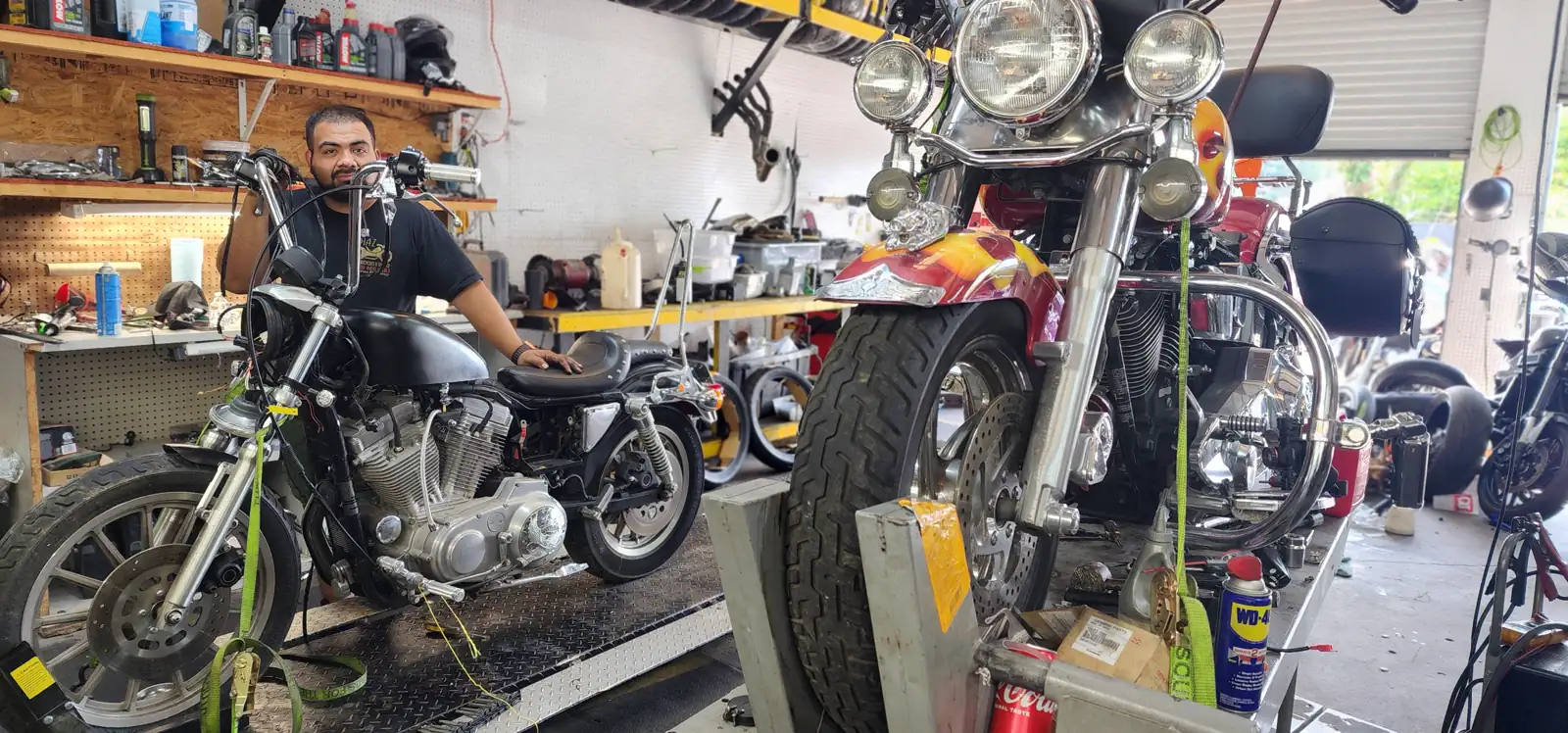
Why Woodstock bikes fall behind
Woodstock is Cherokee County, and it’s the most motorcycle-serious town in our radius. Towne Lake alone holds close to 5,700 single-family homes, most with two and three car garages, so the average bike here sleeps indoors beside a workbench and a trickle charger. Newer streets in Woodstock Knoll, including the Overlook section, look much the same, and so do the older county-named neighborhoods where long-owned bikes live: Cherokee Bluffs, Cherokee Forest, Cherokee Hills and Cherokee Springs.
Here’s the trap hiding inside all that care. Garaged bikes don’t rot, they hibernate. Riding around here is recreational rather than practical, since Georgia’s helmet law is universal, lane splitting and filtering are illegal, and nobody has ever enjoyed I-575 southbound at eight in the morning on two wheels. So bikes sit idle for weeks, then get asked for a hard mountain run in a single weekend. That pattern hides wear beautifully: perfectly fine idling down Towne Lake Parkway on a Thursday, then asked to deliver everything on Saturday.
That’s the real engine behind overdue motorcycle service Woodstock sees so much of. Not neglect, and not carelessness. Just a riding calendar with big empty gaps in it, and a machine that measures its life in hours rather than in weekends.
The roads add their own tax. Construction entrances track gravel and mud onto pavement along Ridgewalk, Towne Lake Parkway and the SR 92 corridor, and that grit ends up in your chain and on your rotors. Roads like Wiley Bridge, Trickum and Neese still carry country geometry, with blind crests, off-camber curves, gravel driveways and deer that have not read a single traffic law. North of town, GA 60 and SR 180 wash gravel into corners, stay damp in the shade, and vanish under pine straw every fall.
There’s genuine motorcycle knowledge in this town, which is part of why we enjoy riders from here. Traxxion Dynamics builds suspension on Rope Mill Parkway and ships it nationwide, so the technical bar in a local parking-lot conversation runs high. The 1912 Louisville and Nashville depot downtown hasn’t seen a passenger train since 1949, and the bikes parked near it on a Saturday belong to people who know exactly what they’re sitting on. RideNow Powersports on Riverstone Parkway in Canton handles the volume dealership side, useful if you ride one of their brands. We’re the other kind of shop: all brands, all ages, including the bike nobody else wants to look up. From Woodstock we’re twenty-five to thirty-five minutes, I-575 south to I-75 south, then east on Roswell Road to Barnes Mill Road, with Bells Ferry Road south as the surface route.
And then there’s the part that’s just about riding again. Nobody catches a bike up for the paperwork. You do it so that when you point the front wheel north and end up on GA 52 past Fort Mountain State Park, with the mountain horizon opening at the Cohutta Overlook and mellow curves running out ahead of you for miles, the only thing on your mind is the road. A bike you trust disappears underneath you. That’s the point of every item on that list.
What it feels like once you're caught up
Friends we’ve helped tend to report the same three things. The bike starts like it means it. Shifts land instead of clunking. And the brakes arrive right where the lever says they will, which does more for confidence in a fast corner than any part you can bolt on.
A caught-up bike doesn't feel new. It feels like yours again.
If you’re already behind, winter is quietly on your side. From late November through February most bikes around here stay parked anyway, and that’s the right window for deeper work: engine jobs, suspension rebuilds, restoration, custom paint, full teardowns. Downtime you weren’t using costs you nothing but patience.
One more thing worth saying. Machines aren’t the only thing that goes soft over a winter, since riders get rusty too, and a refresher through MSF rider courses pairs beautifully with a bike that’s finally current.
So that’s the whole story minus the mystery. It happens quietly, it starts with oil and chains and fluid rather than disasters, and it’s almost always sorted in one visit if you come before the parts start recruiting each other. Riders one county over hit the same wall, which is what Alpharetta riders run into too. Bring us the symptom. We’ll find the cause and hand the bike back feeling like the one you bought.
Questions Woodstock riders ask us
Could my symptom be something other than overdue service?
Absolutely, and that’s why we ride the bike before we quote anything. A clunky shift is usually old oil, but it can also be a clutch basket, a bent shift fork, or a cable that’s stretched. The symptom points us in a direction. The inspection tells us the actual answer.
Is it safe to ride while I wait for an appointment?
It depends entirely on which system is complaining. Flat power, notchy shifting, or a slightly dirty air filter are fine for gentle local riding. Anything involving brakes, tires, or the front end is a hard no, and we’d much rather you trailer it in than test that theory on Towne Lake Parkway.
What actually causes a bike to fall behind here?
Mostly the riding pattern rather than the rider. Bikes in Cherokee County sit garaged for weeks, then take a hard mountain run in one weekend, and that stop-start rhythm hides wear better than daily riding ever would. Grit tracked onto the roads from construction entrances does the rest of the damage to chains and brakes.
Can I handle any of this myself?
Plenty of it, and a lot of Woodstock riders already do. Chain cleaning, adjustment, lube, air filter checks, tire pressure, and battery tending are all genuinely doable with a workbench and an afternoon. Brake fluid flushes, valve clearances, fork oil, and anything with a torque spec you can’t verify are worth handing off.
How do I know when service is due if I've lost track of the miles?
Your owner’s manual sets the intervals, not a rule of thumb from the internet, and not us. Bring the bike in and we’ll read its condition directly: oil color, chain wear, pad thickness, fluid moisture content, and tire date codes tell the story regardless of what the odometer says.
Will it get worse if I leave it another season?
Usually yes, and rarely in a straight line. Wear items tend to take other parts with them, so a dry chain becomes a sprocket job, then a bearing job. Catching it now almost always means a shorter list, less downtime, and a bike you can trust on a mountain weekend.
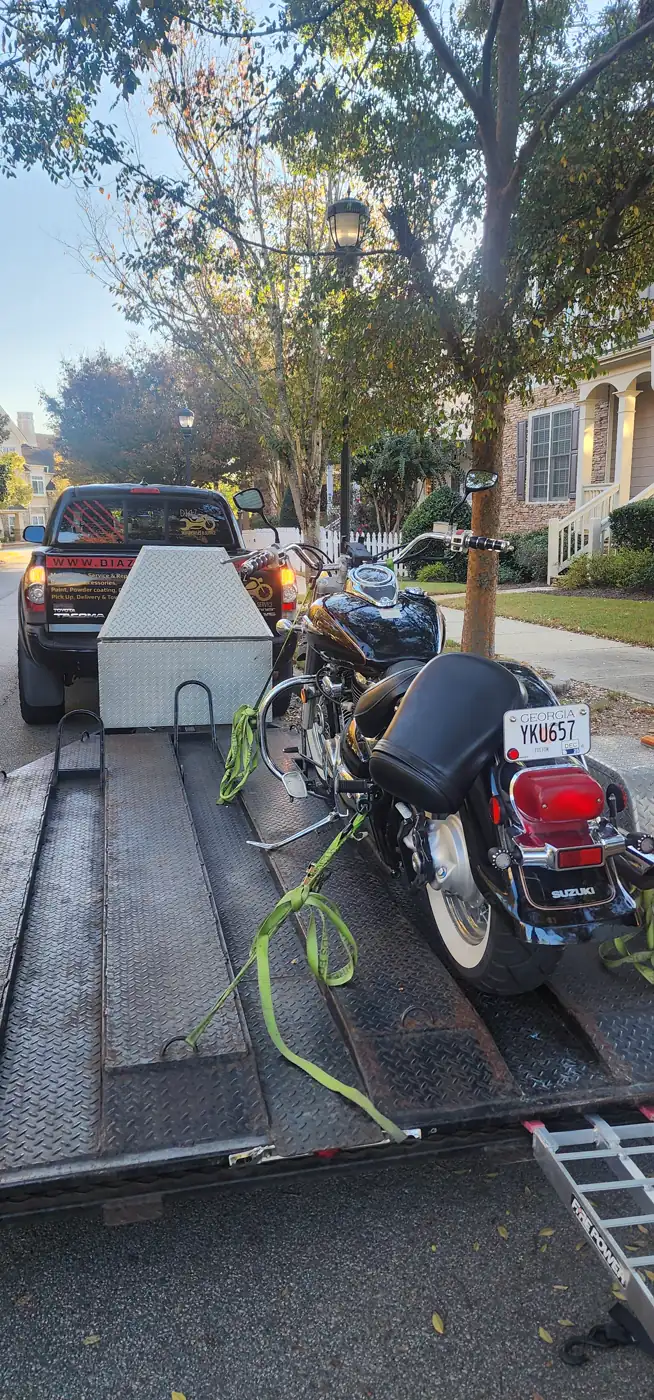
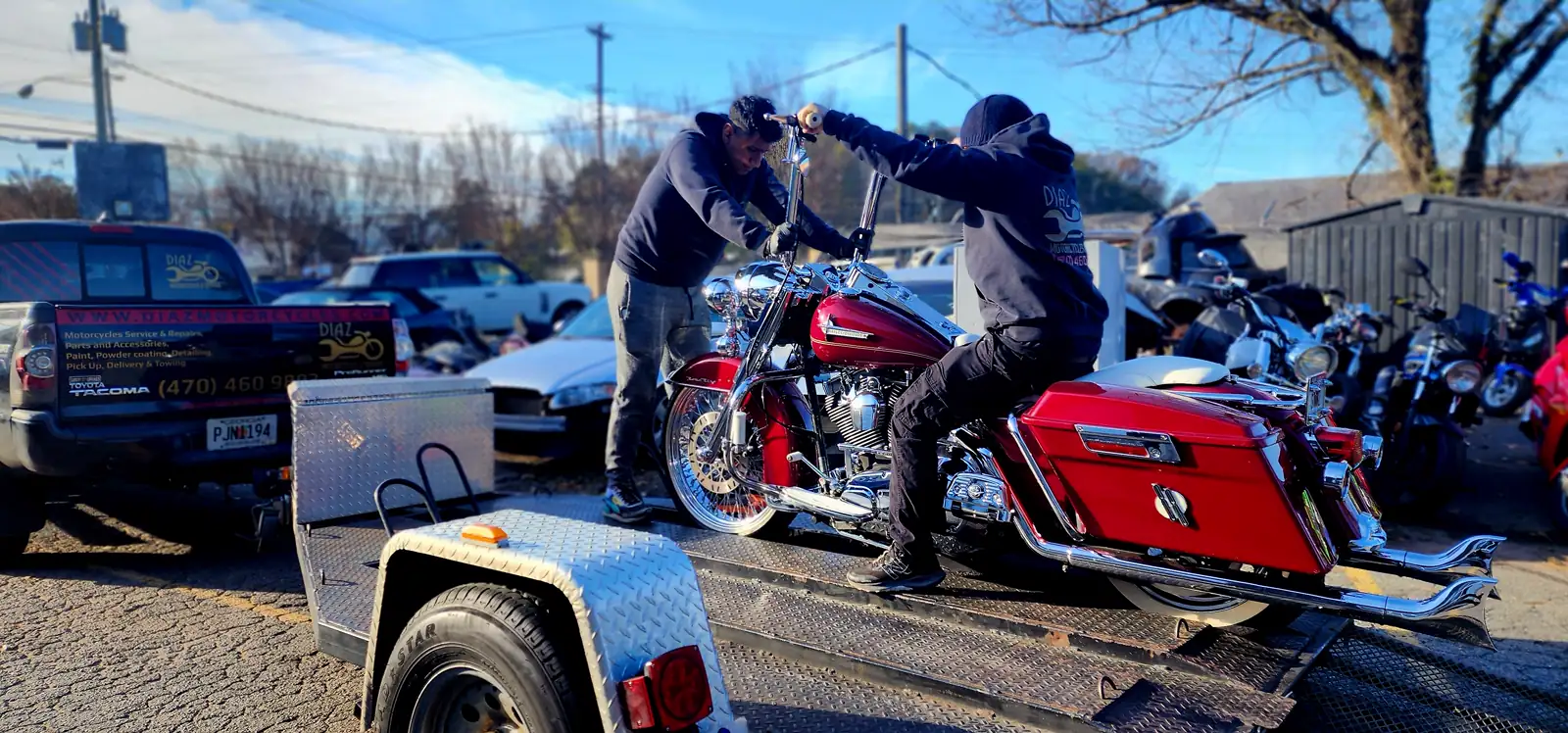
We look after riders across Cherokee and Cobb and well beyond both, so the ride to us is short from just about anywhere on this side of metro Atlanta. Woodstock and Towne Lake riders come down I-575 or take Bells Ferry when traffic is being difficult, and folks in Canton, Holly Springs and Ball Ground make the same run from a little further north. Acworth, Kennesaw and Cartersville riders come in from the west, while Roswell, East Cobb, Alpharetta and Milton riders cut across from the east. Marietta is home for us, and pickup, delivery and out-of-state transport are all on the table when a bike can’t make the trip on its own wheels.
BRING US THE SYMPTOM
Tell us what your bike is doing and we’ll tell you what it means, without the guessing. Woodstock riders get a straight inspection, an honest list sorted into what needs doing now and what can comfortably wait a season, and a bike that feels current again before the next mountain weekend. Call or text us, or roll it down I-575 and let’s take a look together.
470-460-9883Diaz Motorcycles and Service, LLC · 847 Barnes Mill Road, Marietta, GA 30062