Dyno Tuning Cost Woodstock: What Actually Makes One Tune Bigger Than Another
A plain-English look at what a dyno measures, what a tune changes, and why the honest answer never comes over the phone.
In fact, that said, a rider out in Towne Lake called us last spring with a number stuck in his head. Another shop had looked at his bike for maybe four minutes, said a flat figure across the counter, and sent him on his way. The number wasn’t outrageous. For example, it just didn’t line up with anything anybody had actually checked. After that, that’s the part that nagged at him, and honestly, it should. When folks ask about dyno tuning cost Woodstock riders are usually asking something deeper than a price. What’s more, they’re asking what makes one tune a small job and another a big one, and how they’d even know the difference.
So let’s take it apart in plain words, the way we’d explain it standing next to your bike. So and Better yet, No jargon walls, and no talking down to you either. If you ride hard enough to want a tune, you already understand more than most people give you credit for.
The problem with a number that arrives too fast
A tune isn’t one thing. Still, it’s a family of jobs that share a name. Plus, On one end, a bike is bone stock, healthy, and just needs its fueling smoothed out. Of course, on the other end, a bike has a full exhaust, a different air filter, a cam, maybe a big-bore kit, and a wiring harness somebody already poked at with a test light. Then again, those two bikes cannot possibly take the same amount of time, and any shop that treats them the same is either guessing high on everybody or eating the difference on the hard ones.
Guessing high is the common one, because it’s safer for the shop. It’s just not fair to the rider whose bike was in great shape to begin with. So when we talk about dyno tuning cost Woodstock riders should expect the conversation to start with their specific bike, not a chart on the wall.
What a dyno actually measures
Strip away the noise and a dyno is a very fancy treadmill for your rear wheel. The bike gets strapped down, the front wheel goes into a chock, and the rear tire sits on a heavy steel drum. When you roll the throttle on, your engine has to spin that drum up. The dyno knows exactly how heavy the drum is and exactly how fast it’s speeding up, and from those two facts it works out how much force your engine is making at every single point in the rev range.
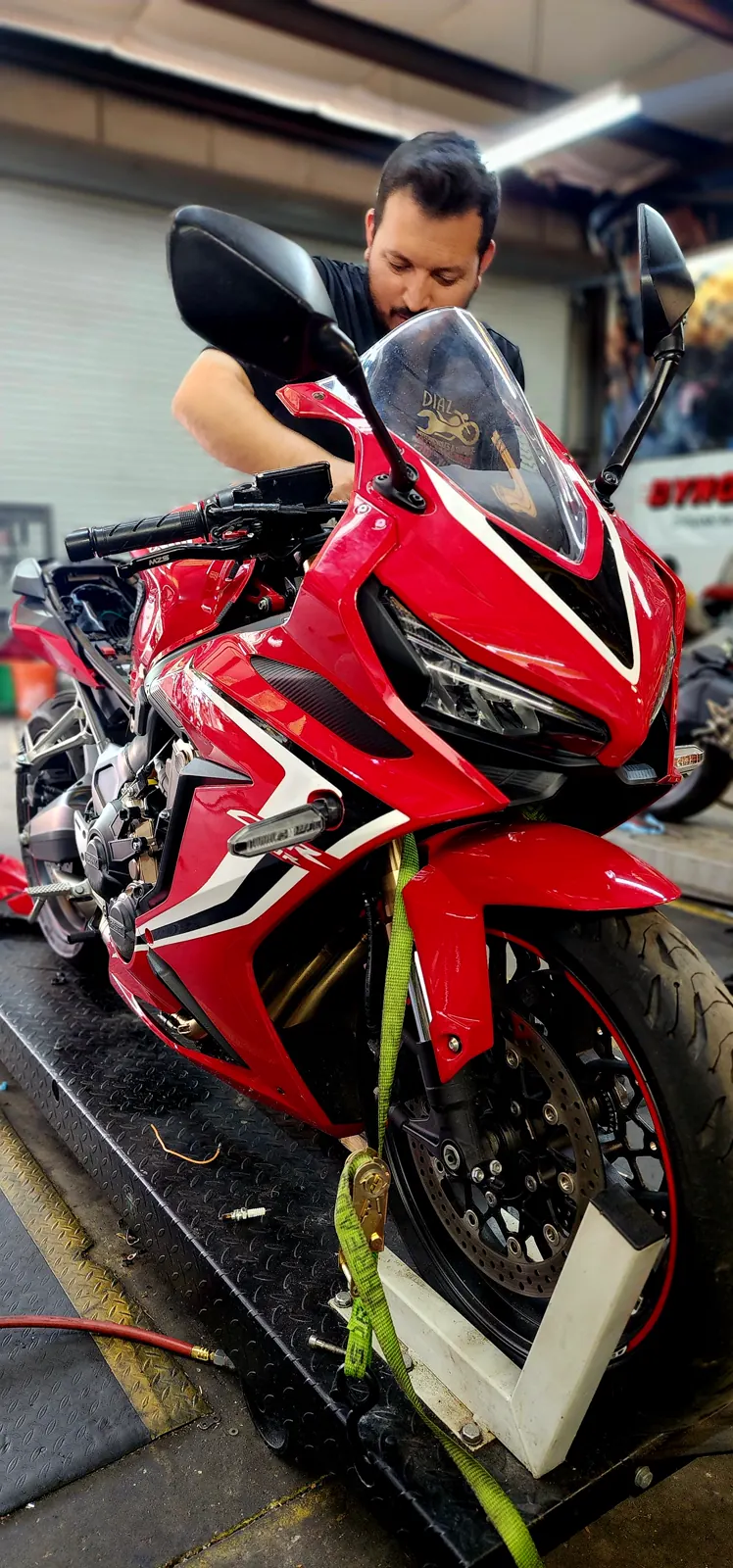
That’s where a power curve comes from. It isn’t a single number tattooed on the bike. It’s a line that rises and dips across the rev range, and the shape of that line is what a rider actually feels. A flat spot at four thousand RPM is a dip in it. A surge that makes the bike lunge in traffic is a spike.
The other half comes from a sniffer in the exhaust, which reads the air-fuel ratio at every point on that same curve. Power tells us what the engine did. The exhaust reading tells us why. You need both, which is why a road test alone can’t replace a dyno session — though we still road test everything anyway.
Lean, rich, and why your bike ended up that way
Your engine wants a certain amount of air mixed with a certain amount of fuel. Too much air for the fuel and we call it lean. Too much fuel for the air and we call it rich. Neither one is a moral failing. They’re just ratios.
Lean runs hot. A lean bike often pings under load, gets snatchy at small throttle openings, and turns your right leg into a rotisserie chicken in stop-and-go traffic. Rich runs lazy. A rich bike fouls plugs, smells strong, feels doughy off the bottom, and drinks fuel like it’s a personality trait. Good news either way, though, because both are fixable and neither means your engine is hurt.
Here’s the thing most riders never get told: your bike probably left the factory a little off on purpose. Manufacturers have to meet emissions rules and noise limits worldwide, so the factory map is a compromise built for a test lab, not for a July afternoon on Bells Ferry Road. Then somebody adds a slip-on. Then an air filter. Every one of those changes moves the air side of the equation while the fuel side sits there unchanged, following instructions written for parts the bike no longer has.
How we figure out what your bike needs
Before anything gets mapped, the bike gets checked. This part isn’t glamorous and it’s the part that saves people the most grief. A tune is a set of instructions for a healthy engine. Hand those instructions to a sick one and you’ve just written very precise directions to the wrong address.
- We talk to you first. What does it do, when, what changed recently, and how do you want the bike to feel.
- Health check. Valve clearance history, plugs, air filter, throttle bodies, oil condition, and a look for exhaust leaks that would fool the sniffer.
- We read what’s already in there, because some bikes have been flashed before by someone else, and we’d rather know up front than find out at redline.
- Baseline pulls, so we can see the honest starting shape of the curve and the air-fuel reading underneath it.
- Mapping. Small changes, another pull, read the data, repeat. That’s the slow part, and where the time really goes.
- Road test on real pavement, then a final check, because a bike that’s perfect on the drum should be perfect in a crosswind too.
Here’s where it gets interesting — and where most advice online falls apart. Forum wisdom loves to talk about tunes like they’re a product you buy off a shelf. In practice, a tune is almost entirely labor. The parts side is usually modest: a flash needs no parts at all, and a piggyback controller like a Power Commander is a known box with a known price tag. What varies enormously is how long the bike takes to get right, and that depends on your specific machine on that specific day.
Labor, parts, and access — what really moves the needle
Access is the quiet driver. On some bikes the ECU sits under the seat and you’re plugged in inside two minutes. On others it lives beneath the tank, behind the airbox, or under bodywork that has to come off in a specific order. Fairings on a modern sportbike come off with a lot of small fasteners, and putting them back without a rattle takes real care. That’s time, and time is most of the bill.
Then there’s how far the bike has already wandered from stock. A bike with a slip-on and a filter is a short conversation. A bike with a full system, an aggressive cam, and a different injector is a longer one, because more of the map has to move and each change has to be verified. If you’re still weighing whether to modify at all, we broke down the tradeoffs between them in a separate post.
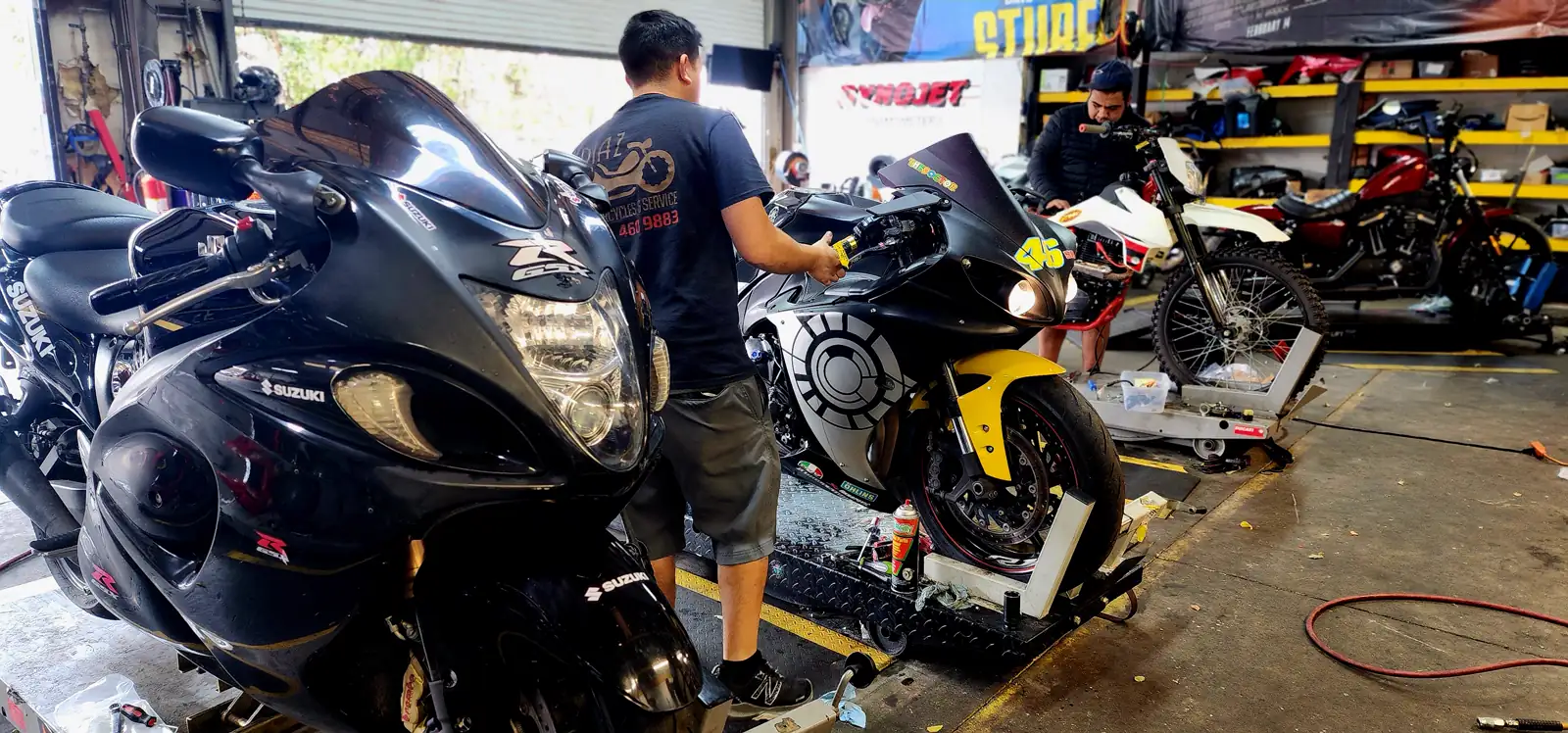
Condition matters too. Tired plugs, a filter clogged from pollen season, or a slightly leaking exhaust gasket will hand us garbage data until they’re sorted. We’d rather fix the small thing than map around it, because mapping around a fault just hides it until it grows up. Method matters as well: a flash changes the bike’s own brain, while a piggyback sits between the brain and the injectors and edits the message on its way through. We’ll tell you which one your bike wants and why.
Number of pulls matters too, and it’s not a fixed figure. We wrote up what that service actually involves for the long version. Short version: enough pulls to get it right, and not one for show.
Why we won't quote a tune sight-unseen
Because the honest answer to “what will it cost” is “let me look at your bike,” and we’d rather say that than say something comfortable that turns out wrong. A phone quote is really a guess about six things we can’t see: what’s been done to the bike, what shape it’s in, how it’s wired, how the bodywork comes apart, whether anyone tuned it before, and what you actually want out of it.
WHAT WE DO INSTEAD
Bring the bike by. We look, we listen to it run, we ask questions, and you leave with a real number and a real plan before anybody picks up a tool. If we find something that changes the picture, you hear about it before we touch it — not on the invoice.
Riders around here tend to appreciate that approach, because Cherokee County riders do their homework. You can see it in the questions we get asked. Nobody’s asking whether it’ll make the bike faster. They’re asking what the sniffer said at part throttle. Have a look at everything we cover if you like reading ahead before you call, which, let’s be honest, you probably do.
What Woodstock riding does to a tune
Where you ride shapes what a good map looks like. Woodstock sits with I-575 as a direct on-ramp to the north Georgia mountains, so a whole lot of local bikes spend their lives in two modes: idle for weeks, then a hard mountain day with long climbs, tight corners and steady heat. Fueling that’s merely acceptable will show itself on the third hour of that kind of day, usually as a snatchy throttle right when you want the bike to be smooth.
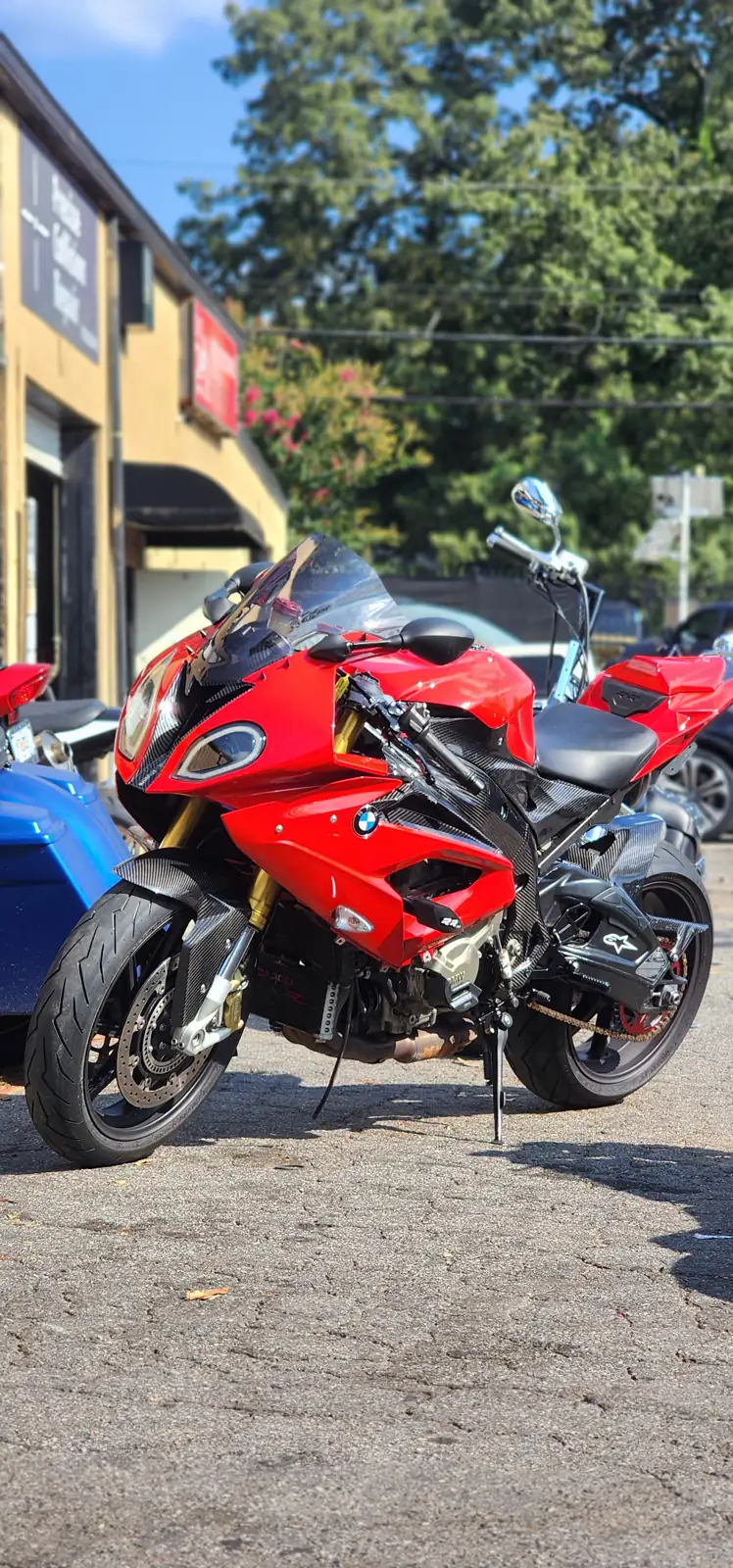
Then there are the roads closer to home. Trickum Road, Wiley Bridge Road and Neese Road still carry country-road geometry — blind crests, off-camber curves, gravel at the driveways — while suburban traffic keeps climbing. Add Arnold Mill and Bells Ferry and you get a riding diet that leans hard on low-speed throttle control. A bike that hesitates then jumps is genuinely annoying there, and it’s exactly what a proper tune cleans up. Runs out toward Lake Allatoona pile on the miles, meanwhile, and construction along the Ridgewalk corridor keeps tracking grit onto pavement — one more reason to want smooth power instead of a light switch.
The garage situation matters more than you’d think. Towne Lake’s nearly 5,700 homes were built in an era of two- and three-car garages, and neighborhoods like Wyngate came with the workbench space to match. The newer Ridgewalk communities — Glenhaven, Magnolias, Meridian, Montclair and Ridgewalk Landing — follow the same pattern. That’s why so many riders here do their own oil and chain work and hand off the specialist jobs. You’ve got the tools. What you don’t have is a dyno in the third bay.
Getting to us is easy: roughly fifteen to nineteen miles, twenty-five to thirty-five minutes down I-575 to I-75, then east on Roswell Road to Barnes Mill Road. If the interstate’s being the interstate, Bells Ferry Road south into north Cobb works fine. For scale, Killer Creek Harley-Davidson in Roswell sits about eighteen to twenty-two miles the other way. And if you’d rather celebrate a finished tune close to home, Reformation Brewery is walking distance from downtown Woodstock, free weekend tours and a trolley stop included.
What changes once it's sorted
Here’s what changes once it’s actually sorted. The first thing riders notice usually isn’t power at all. It’s manners. The throttle stops snatching at small openings. The bike pulls cleanly from low RPM instead of stumbling and catching up. Heat drops in traffic. The surge that made slow U-turns awkward just goes away, and the engine feels like it’s answering you rather than arguing.
A good tune doesn't make your bike a different bike. It makes it the bike it was supposed to be.
Power comes along with all that, and you’ll feel it, but the curve gets smoother rather than spikier. Smooth is what makes a bike easy to ride fast and pleasant to ride slow. Riders in other towns get the same result from the same process, and you can see how this plays out in Powder Springs for a slightly different mix of bikes and roads.
One last practical note. Keep your paperwork straight while you’re at it — the Georgia Department of Revenue handles registration and title questions, and the American Motorcyclist Association is a solid place to keep up with rider issues statewide. Neither one will tune your bike, sadly, but both beat guessing.
So if that quote you got somewhere else didn’t sit right, trust that instinct. You weren’t being difficult. You just wanted somebody to look at your actual bike before naming a number, which is the least a shop can do.
Questions Woodstock riders ask us
What happens if you find something else once the bike is here?
You hear about it before we do anything. We stop, show you what we found, explain whether it affects the tune or not, and let you decide. Some findings are small and we’d fix them anyway. Others change the plan, and you should be the one making that call.
How do I avoid surprises?
Bring the bike in and let us look before anything is scheduled. Tell us everything that’s been done to it, even the parts you’re not proud of. Once we’ve seen it and heard it run, we can give you a real plan with a real number, and surprises mostly stop existing.
What makes one tuning job bigger than another?
Three things, mostly. How far the bike is from stock, how hard it is to reach the parts we need to touch, and what condition the engine is in when it arrives. A healthy bike with a slip-on is a short job. A heavily modified bike with fairings to remove and prior tuning work in the ECU takes considerably longer.
Why can't you just quote it over the phone?
Because a phone quote is a guess about things we can’t see. We don’t know what’s been fitted, what’s been flashed before, or what condition the engine is in. We’d rather spend a few minutes with the bike and tell you something true than say something convenient and revise it later.
What's included in the work?
An inspection, a baseline dyno run, the mapping itself across as many pulls as it takes, a road test on real pavement, and a walk-through of the before-and-after data with you. You leave knowing what your bike does at every point in the rev range, not just that it feels nicer.
Will a tune hurt my engine or void everything?
A correct tune generally makes an engine happier, because it stops the bike running hot and lean under load. Warranty questions depend on your brand and what’s being changed, so ask us and ask your dealer before you commit. We’ll tell you honestly if we think your bike is better left alone.
We look after riders across the north metro from our shop in Marietta, and Woodstock folks make the run down regularly. That includes neighbors up in Canton, Holly Springs, Ball Ground and the Towne Lake area, plus riders coming over from Acworth, Kennesaw and Cartersville on the west side. East Cobb riders are practically around the corner, and we see plenty of bikes from Roswell, Alpharetta and Milton making the trip across too. If you ride in north Georgia and you want somebody to look at the actual bike before naming a number, the drive is worth it.
BRING THE BIKE, GET A REAL NUMBER
If you’re in Woodstock and you’ve been sitting on a quote that didn’t feel right, roll the bike down and let us look at it. We’ll check it over, tell you what your engine is actually doing, and lay out what a proper tune would involve before anybody touches a tool. Text or call us and we’ll find a time that works around your riding season.
470-460-9883Diaz Motorcycles and Service, LLC · 847 Barnes Mill Road, Marietta, GA 30062