Best Motorcycle Service Canton — What to Look For
How to judge a shop, what a real service actually includes, and why the small stuff is the cheap stuff.
It started as a tick. Even so, one small sound from the chain, only at low speed, only when the bike was cold. So he turned the music up in his helmet and rode on. Three weeks later the tick had turned into a clatter, and the sprocket teeth had gone from square to shark fins. That is usually how a rider ends up hunting for the best motorcycle service Canton will vouch for. Not because something blew up. Because a small thing got loud.
The short answer, before anything else
What’s more, a good shop does three things well. It tells you what it found. In fact, it tells you what it fixed. After that, it tells you what can wait until next time. Everything else is decoration. If you can call a shop, describe a noise, and get a straight answer instead of a shrug, you’re already close. The bike is the easy part. Trust is the part that takes work.
Judging a shop from the outside is hard, though, because most of the work happens where you can’t see it. So use the things you can check. Ask who actually turns the wrenches and how long they’ve been doing it. For example, ask whether the shop will show you the old parts. Ask what happens if the noise comes back next week. Shops that do careful work like being asked those questions. It’s the fastest way to sort a place out without knowing a torque spec from a tire iron. Word of mouth does the rest, and around here the best motorcycle service Canton talks about usually got named in a neighborhood group post, not an ad.
There’s also the version of this where a bike has been quiet about its problem for a long stretch. Deferred service is sneaky that way, and we broke down what usually causes it in a separate post, because it’s rarely one big act of neglect. It’s a season of small skips stacked on top of each other.
What actually drives the work around here
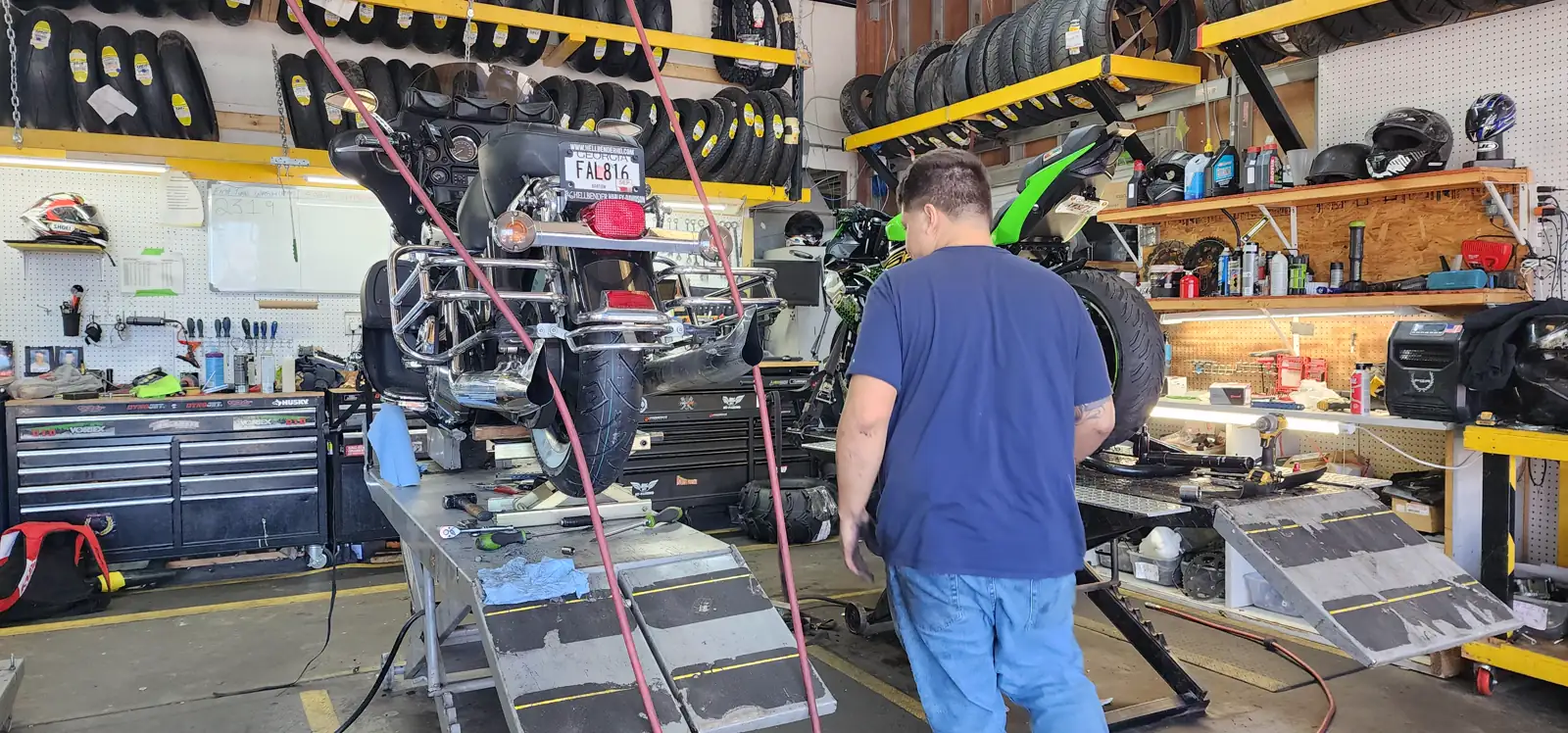
Roads shape a service bill more than riding style does. I-575 is the spine of life in Cherokee County, and it carries heavy truck and construction traffic. Grooved pavement, expansion joints, tar-snake patches — your suspension eats all of it. Head west on GA-20 or out onto the rural two-lanes like Univeter, East Cherokee, Sam Nelson and Little Refuge, and the mix changes to chip seal and gravel wash off the shoulders. Winter freeze-thaw on the north-county and mountain approach roads breaks up the edges, so potholes peak from February into April.
New subdivisions add their own flavor: site mud, spilled gravel and steel plates on collector roads. None of that is a crisis. It just means chains, brake pads, fork seals and tires wear faster here than they would on a smooth suburban loop, and a shop that knows the area will look at those parts first. Georgia DOT keeps a running list of work zones, which makes decent Saturday planning and a decent hint about where the grit is coming from.
Then there’s the other half of the story: bikes that sit. Garages are everywhere in this county, and plenty of them hold a bike that only comes out when the weather is perfect. Long storage in an unheated garage does quiet damage — ethanol varnish in carbs and injectors, a battery that gave up in January, flat spots on tires, brake fluid gone the color of sweet tea. Every March we meet a few bikes with exactly that resume. They’re all fixable. They’re just not one-hour fixable.
Riding culture here is shaped by geography more than anything else. This is the last real services town before GA-5 turns into GA-515 and points you at Jasper, Ellijay and Blue Ridge. On a good Saturday in April or October, GA-5 north is a parade of bikes. Some riders live here because the mountains start a half hour away. Others keep a garage-stored cruiser or bagger and put a couple thousand easy miles on it a year. Those two riders need very different service, and a shop should be able to tell which one you are within about three questions.
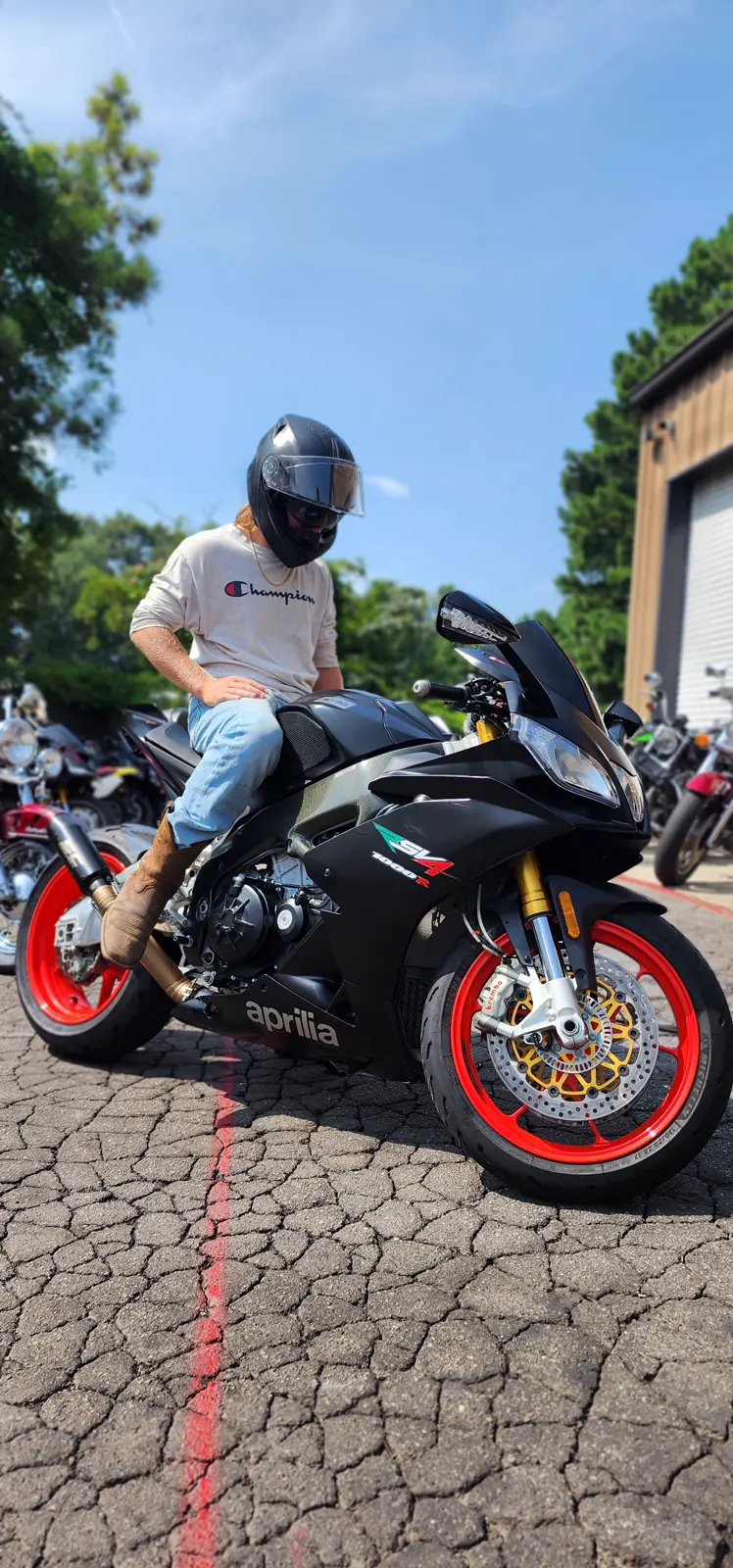
This is the point where a lot of riders make the wrong call. They pick a shop based on who can take the bike soonest. Speed feels like service when you’re staring at a parked bike and a clear forecast. But the fast slot usually means a fast look, and a fast look is how a stretched chain gets lubed instead of replaced. Waiting three days for the right hands beats waiting three weeks for the second repair of the same part.
What a real service actually includes
Here’s the plain-words version, with no mystery to it. A service is a set of checks plus a set of replacements. The checks are things we look at, measure or test. The replacements are the parts built to wear out on purpose, so the costly parts stay fine. That’s the whole idea behind the work we do in house, whether the bike is a dual-sport or a full dresser.
- Oil and filter — level, condition, and a look at what’s stuck to the drain plug magnet, because metal tells stories
- Chain and sprockets — slack, alignment, tight spots, and whether the teeth still look like teeth
- Brakes — pad thickness front and rear, rotor condition, and fluid that should be honey colored instead of brown
- Tires — tread depth, age, pressure, and flat spots from a long winter nap
- Coolant, air filter and spark plugs — humble parts that quietly steal power and fuel economy
- Controls and cables — lever feel, throttle return, clutch free play
- Fasteners and bearings — steering head, wheel bearings, axle and caliper hardware checked to spec
- Lights, battery and charging output — the stuff that strands people at the far end of a mountain run
How often? Your owner’s manual sets that, not us and not the internet. Every bike has its own schedule, and the manual is the one source written by the people who built the engine. What we will do is tell you where your bike actually sits against that schedule. A bike that spent two years in a garage and a bike that ran twisties all summer can show the same number on the odometer and still need completely different work.
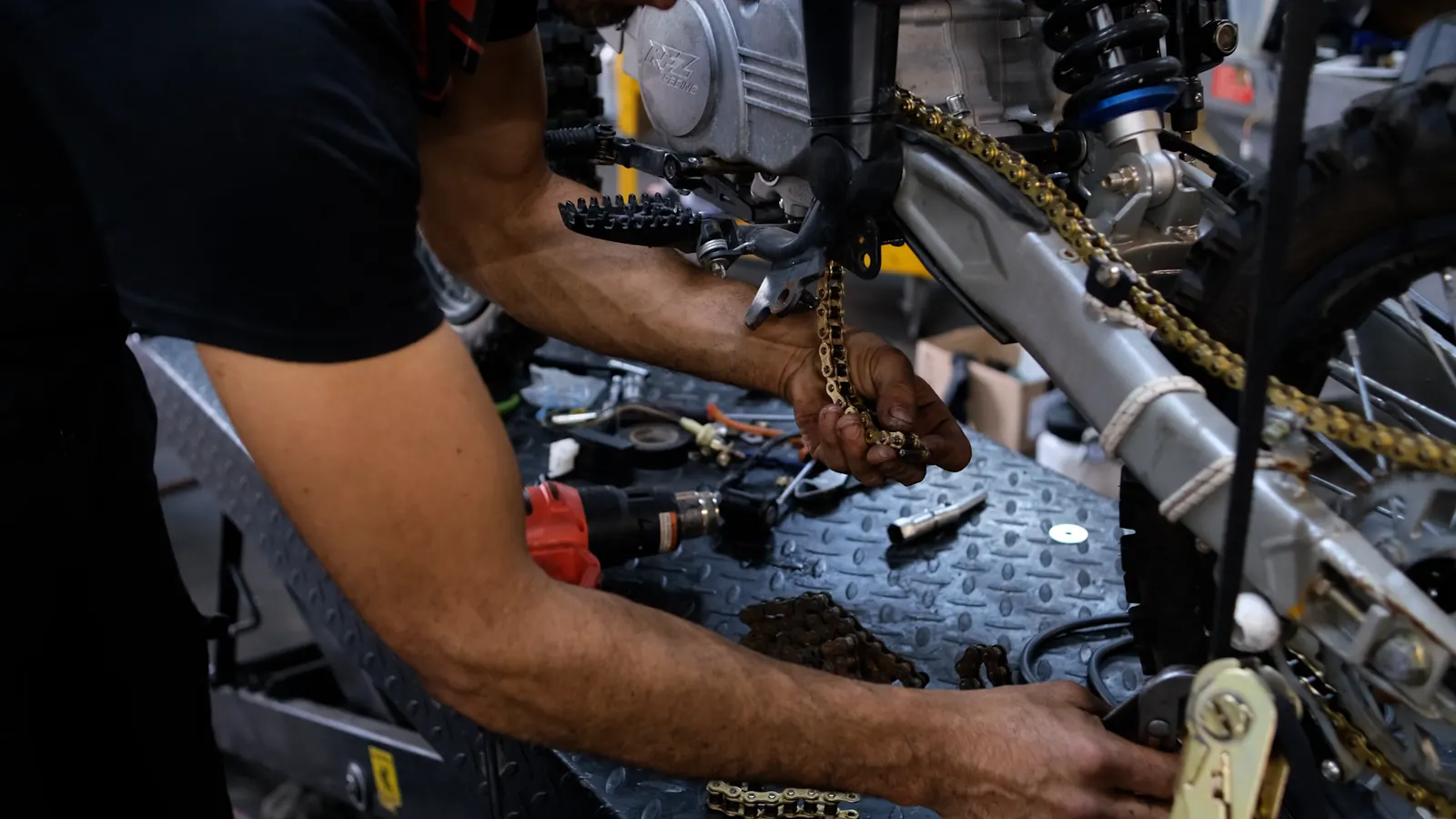
Two honest people can also disagree about what’s urgent. That’s fine. The fix is showing you. We’ll hand you the old chain, set the worn pad next to a new one, and let your eyes do the deciding. Nobody has ever argued with a worn sprocket sitting on a bench.
Mistakes worth skipping
None of these are dumb. They’re just easy to make, and they tend to double the work later.
- Chasing the soonest appointment instead of the right one
- Topping off a fluid instead of finding out why it went down
- Lubing a chain that has already stretched past adjustment
- Buying tires on sticker alone when the bike lives on chip seal and mountain corners
- Skipping fall prep, then blaming the battery in March
- Changing three things at once, so nobody knows which one fixed it
The best repair advice we give is boring: change one thing, then ride it. Also, keep your records. A folder of service history makes the next shop faster, makes a future buyer trust you, and makes you look like a genius when somebody asks what oil is in there. And if you ride enough to care about road policy and rider advocacy, the American Motorcyclist Association is a good corner of the sport to plug into.
The Canton part of this
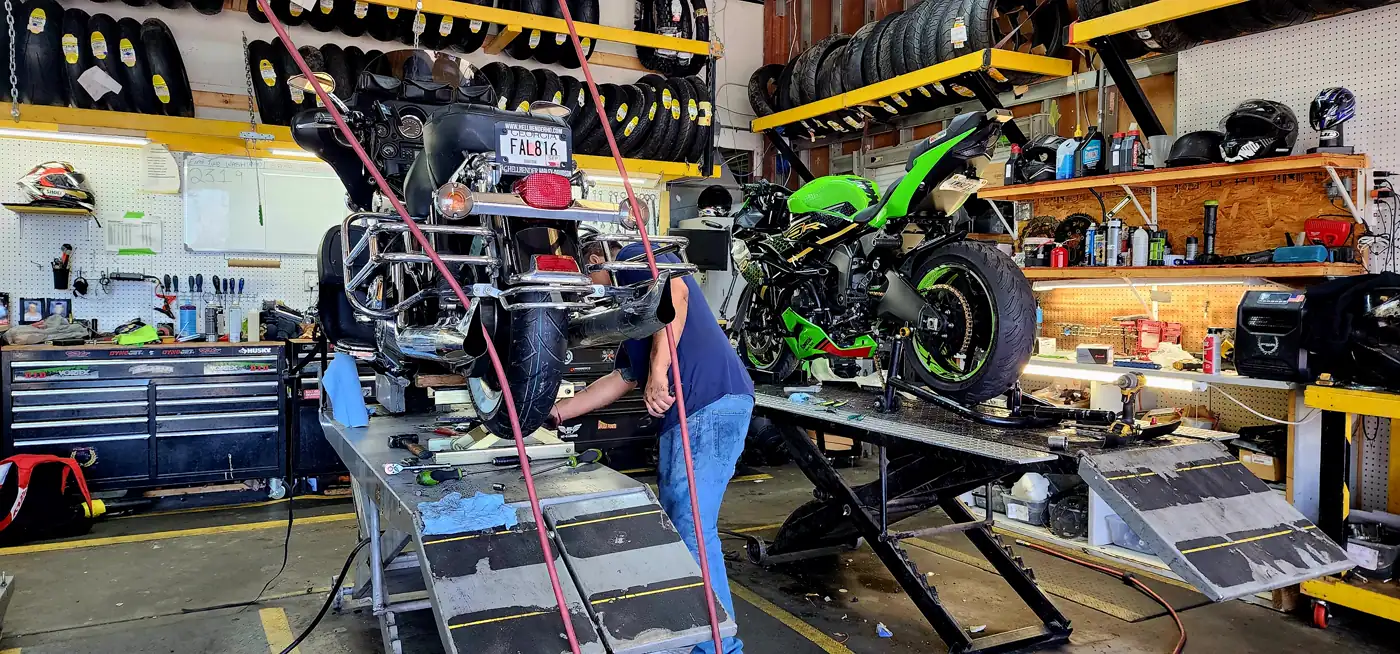
Where you live in town changes the conversation more than you’d guess. Around BridgeMill, with its golf course, aquatic center and tennis courts, the bikes we see are often clean, low-mile and garage-kept, which sounds easy and isn’t — those are exactly the machines that need fuel system and brake fluid attention rather than a hard-mile teardown. Over in Orange Shoals, the established-subdivision crowd tends to ride more and ask sharper questions. And Hickory Flat, tucked into the southeast side in 30115, carries its own identity apart from downtown, with a rider mix that leans toward weekend miles squeezed between family schedules.
Here’s the thing we wish every rider knew a season earlier. The bike doesn’t care how nice your neighborhood is. It cares about hours, heat cycles and how long it sat still. A machine parked from October to March is not resting. It’s slowly turning fuel into varnish and brake fluid into a science project. Ten minutes of prep in the fall saves a whole shop visit in the spring.
Downtown gives you a good excuse to actually ride. The Mill on Etowah, the old cotton mill redone along the river, has restaurants, a brewery, the Cotton Mill Exchange makers’ market and an events green, which makes it an easy short-hop destination when you want to scrub in fresh tires without committing to a whole day. Heritage Park connects by trail over to Etowah River Park, so there’s real ground to stretch your legs on. Most of the practical stuff, though, sits along GA-5 and Riverstone Parkway, where the retail district lives and where you’ll end up shopping for gear, tires or a helmet anyway.
You do have options, and we’ll say plainly that options are good. Bartow Powersports, also known as Suzuki of Bartow County, sits over in Cartersville at 1 Powersports Circle, roughly a half hour west, and plenty of riders are happy there. Dealers are genuinely strong on warranty work, factory bulletins and parts for the brands they carry. Where an independent tends to earn its keep is the work a volume shop doesn’t prioritize — performance tuning, paint and restoration. If fueling and throttle response are what you feel on a mountain road, what the work covers is worth a look before you book anything.
The reward for all this is a good day out. Run north on GA-5 until it becomes GA-515, keep going, and eventually you’re on GA-52 over Fort Mountain, the Ellijay-to-Chatsworth run, somewhere between an hour and an hour and a half from town. That road will tell you the truth about your brakes and tires in about six corners. Riders in other towns hit the same wall for their own reasons, and if you’re curious, what Newnan riders run into looks a lot like this with different scenery.
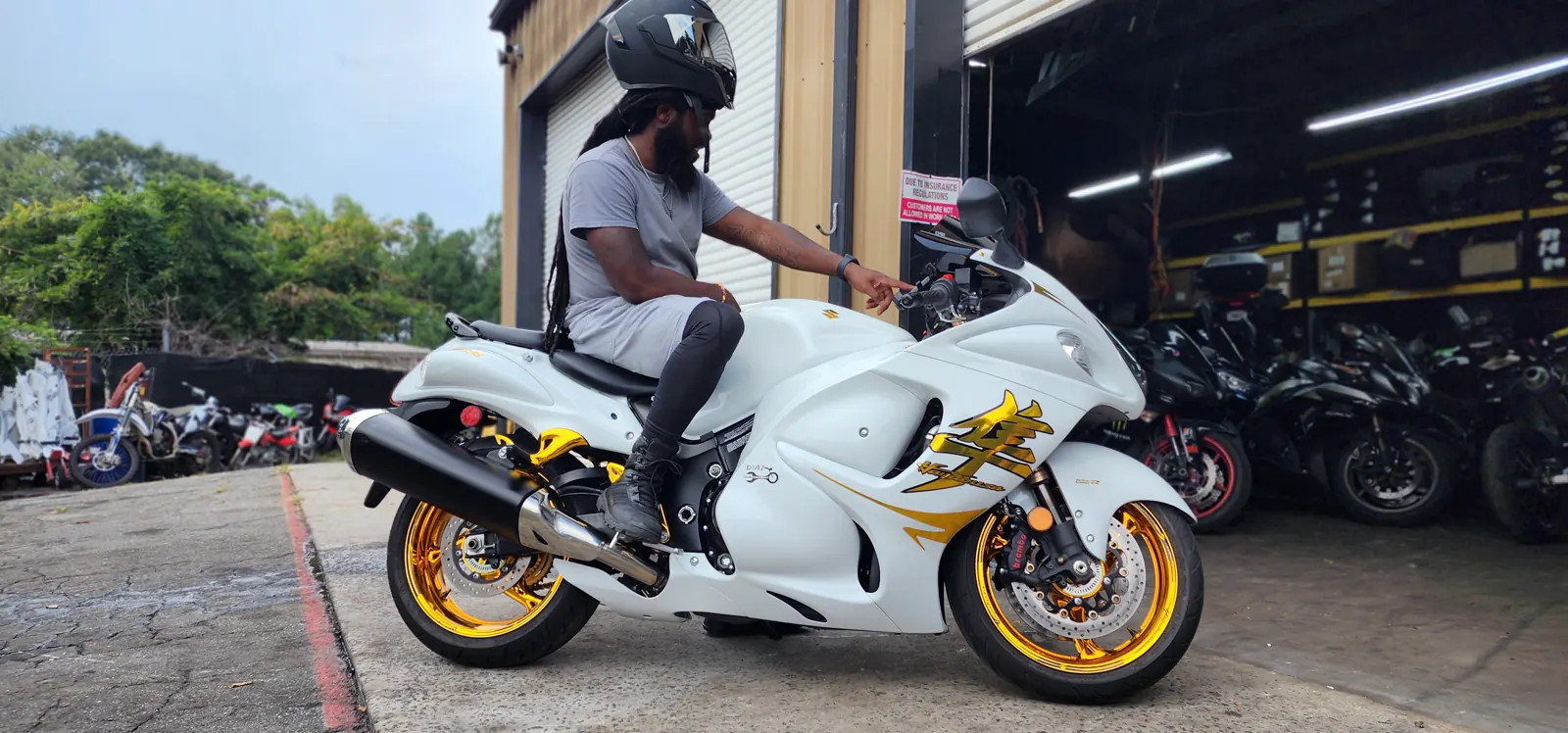
What good looks like when you get the bike back
You should leave with three things. A plain-language summary of what was done. The parts that came off, if you want them. And a short list of what to watch next time. No lecture, no mystery line items. Then you ride it, and the bike feels tighter than it did — quieter chain, firmer lever, steadier throttle. That’s the feeling we’re chasing. Not a perfect machine. A predictable one.
Small things are cheap to fix. Loud things are not.
Getting to us from town isn’t a big ask either. Most folks run down I-575 toward Barrett Parkway or GA-92, then cut east through East Cobb — call it a half hour, give or take whatever 575 is doing that morning. Around here, driving thirty minutes for something good is just a Tuesday.
BEFORE YOU BOOK
Write down the sound, when it happens, and what makes it worse. Cold or hot, coasting or under power, front or rear. Two sentences of good notes can save an hour of diagnosis.
So when you’re sorting out the best motorcycle service Canton has on offer, set the star ratings aside for a minute and listen to how a shop talks to you. Clear beats clever. Honest beats fast. A shop that tells you something can wait is the same shop that will tell you when it can’t, and that’s the whole relationship in one sentence.
Questions Canton riders ask us
What makes your shop different?
We show our work. You get the old parts, a plain-language summary, and a short list of what can wait until next time. We also do the things a high-volume shop tends to push down the list, like dyno tuning, ECU flash work, paint and restoration. Nothing fancy about it — we just like riders leaving with a clear head.
How do I pick a good shop?
Call and describe a symptom, then listen to the answer. A good shop asks follow-up questions before quoting anything. Ask who does the wrenching, how long they’ve been at it, and whether they’ll save your old parts. If the answers are specific and unhurried, that’s your shop.
Dealer or independent — which is better?
Both have a lane, honestly. Dealers are strong on warranty claims, factory bulletins and stocked parts for the brands they sell, which matters a lot on a newer bike. Independents usually go deeper on tuning, older machines, custom work and mixed-brand garages. Pick based on what your bike needs this month, not on loyalty.
What should I ask before I hand over my keys?
Ask four things. What will you check, what will you replace, what are you leaving alone, and what happens if the problem comes back. A shop that answers all four without hedging is telling you how it operates. That conversation takes five minutes and saves a lot of guessing later.
How often does my bike need service?
Your owner’s manual sets the schedule, and that’s the source we go by — every model is different, so we won’t make up a mileage number. What changes things is how the bike lives. Long storage, mountain miles and gritty back roads all move real-world wear ahead of the book, so we check the bike against the schedule rather than the other way around.
Do you work on all brands?
Just about. Cruisers, baggers, sportbikes, ADV and dual-sport bikes, plus vintage and restoration projects come through the doors regularly. If your machine is unusual enough that we’d be guessing, we’ll tell you straight instead of learning on your bike.
We take care of riders all over the northwest metro and up into the foothills. That means Canton and the neighbors right around it — Woodstock, Holly Springs, Ball Ground, Waleska, Free Home and Nelson — along with folks coming down from Jasper when the mountain roads finally dry out. Heading the other direction, we see plenty of bikes from Acworth, Cartersville and Kennesaw, and a steady stream from Marietta and Alpharetta. If you’re within about an hour of the shop, you’re in our neighborhood.
BRING US THE SMALL NOISE
If something on your bike changed and you can’t quite name it, that’s the perfect time to call. Text or ring us, tell us what you’re hearing, and we’ll tell you straight whether it’s a quick look or a real job. Canton riders make the run down I-575 to us all the time, and most of them come back because we told them what could wait.
470-460-9883Diaz Motorcycles and Service, LLC · 847 Barnes Mill Road, Marietta, GA 30062