Motorcycle Service Cost Sandy Springs Riders Can Actually Plan For
What's really behind the number on a service quote, explained in plain words, with no guessing.
A rider called us last spring holding a quote that landed like a dropped wrench on concrete. He’d owned that bike nine years. On the other hand He’d never seen a number like that for something he thought was routine, and nobody at the counter had walked him through what the work even meant. So that’s the honest starting point for almost every conversation about service cost Sandy Springs riders are trying to make sense of. Still, the number itself isn’t really the mystery. What sits behind it is.
Here’s the twist. He wasn’t getting taken. Plus, the figure was in the right neighborhood for the job. Meanwhile, what bothered him was the silence around it. Of course, he got a total and a shrug. In fact, Nine years of ownership, and his first real conversation about his own engine was a text message with a number in it. If we could fix one thing about this trade, that would be it.
The number is never the whole story
For example, two shops can look at the same bike, quote two different totals, and both be telling the truth. The gap usually isn’t greed. It’s what each shop counted. Even so, one may have included fluids, gaskets, and the little hardware that always snaps on the way out. The other may have quoted the headline task and left the rest to show up later as a surprise. Same bike, same job, two very different pieces of paper.
So the useful question isn’t who’s cheaper. It’s what’s actually in there. Once you know that, comparing shops gets simple, and you stop feeling like you’re guessing at a language nobody taught you.
Parts, labor, and the thing nobody mentions
Parts are the easy half. A filter is a filter. A set of pads is a set of pads. You can look those up, and a good shop will show you exactly what’s going on your bike and tell you why that brand and not the other one on the shelf.
Labor is where two jobs split apart. Labor isn’t a mystery tax. It’s time. Real hours, hands on your bike, from someone who has done that exact job before and knows where the hidden bolt lives. And the biggest driver of those hours usually isn’t the repair itself. It’s access.
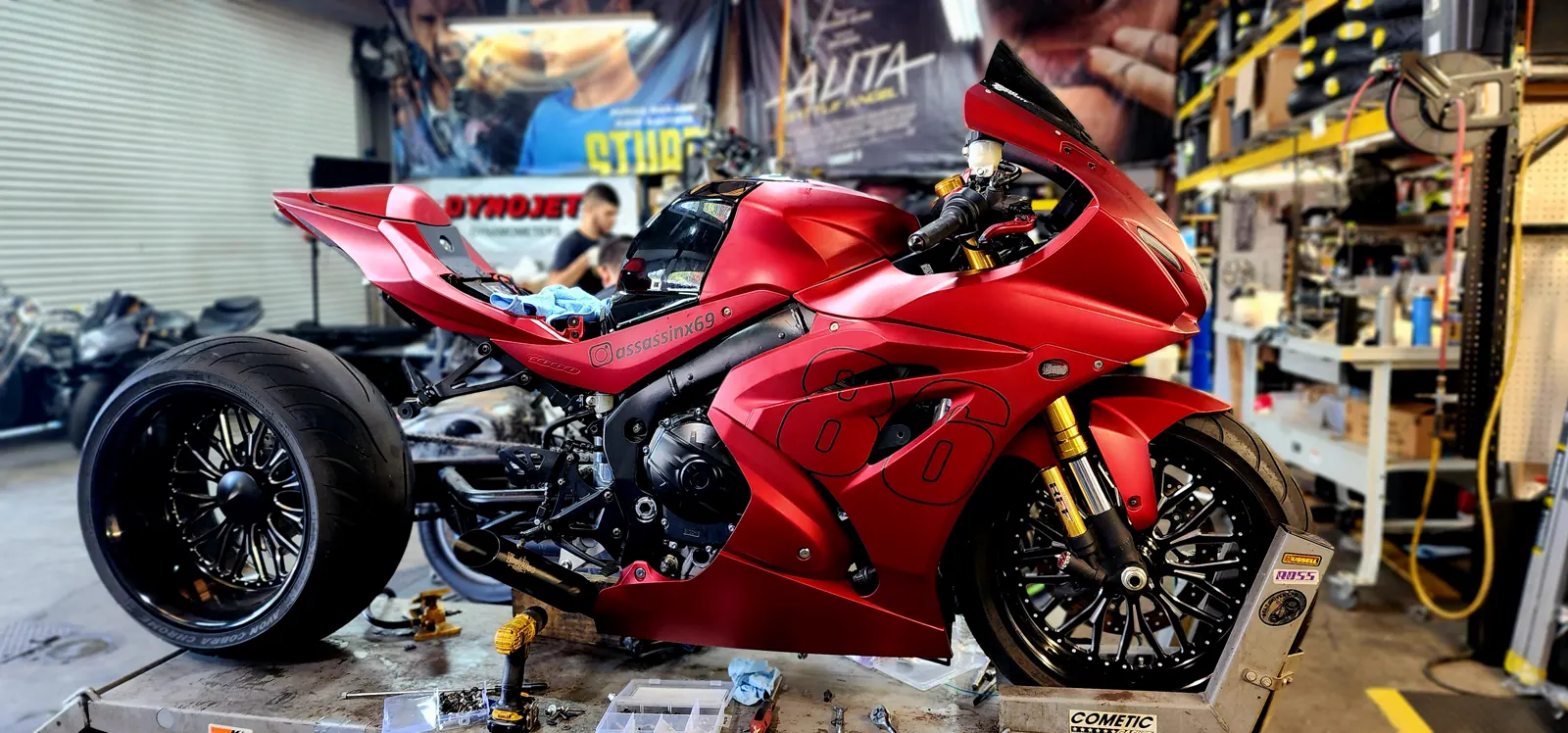
Access means how much has to come off before the real work can even start. On a naked bike with a tank that lifts in a minute, a plug swap can be a short morning. On a full-fairing sportbike, those same plugs sit under bodywork, a tank, an airbox and a nest of wiring, all of which has to come off and go back on without a single rattle. The plugs cost what plugs cost. The path to them is what changed.
Same repair, two bikes, and a completely different amount of work just to reach it.
Condition stacks on top of that. A bike that lived in a dry garage comes apart politely. A bike that sat under a cover through a wet Georgia winter fights back, because rust turns a five-minute fastener into a twenty-minute negotiation. Fork seals on an adventure bike read differently than fork seals on a cruiser, and we’ve written before about how we handle that job when a front end has to come all the way down.
| Usually a smaller job | Usually a bigger job |
|---|---|
| Parts sit out in the open | Bodywork, tank or airbox comes off first |
| Nothing seized, nothing rounded | Rusted hardware and stripped threads |
| One system, one visit | Several systems stacked in one visit |
| Bike stored dry and ridden often | Bike sat outside through a wet winter |
| Records exist and match the manual | No records and unknown history |
How we look at a bike before we say a word about the number
We do this in a set order every time, because guessing helps nobody. Here’s the whole thing, start to finish.
- We talk to you first. What it’s doing, when it started, what changed, how you ride it. You know your bike better than any diagnostic screen does.
- We put it on the lift and go over it cold. Chain and sprockets, tire tread and date codes, pad thickness, fluid color, fasteners, cables, bearings, anything weeping.
- We check your owner’s manual. The manufacturer sets your service intervals, not us and not a forum post, so we work to what the book says for your model and year.
- We road test when it’s safe to. Some noises only show up with weight on the bike and heat in the engine.
- We call you with what we found, what we’d do today, what can wait a season, and what we’d honestly leave alone.
- You approve before a wrench moves on anything new. No surprises added quietly at the end.
That call in the middle is the important part. It’s also the step shops skip when they’re slammed, which is why riders end up ambushed by a total they never agreed to.
Small now, or big later
There’s a version of this that’s cheap and a version that isn’t. Same part, same bike, different day. A chain that gets adjusted and lubed on schedule is a quick visit. That same chain, ignored for a season, starts chewing sprocket teeth into little shark fins, and now you’re buying a chain, two sprockets, and the labor to fit all three. Wait longer and it can take a countershaft seal with it. The chain never got more expensive. The list around it did.
Brakes work the same way. Pads swapped while there’s material left are routine. Pads run down to the backing plate score the rotor, and rotors are not a small part. That’s really what people are asking about when they ask about service cost Sandy Springs shops quote them. They want to know how a number gets built.
So the cheapest thing you can do is call early about something small. Not exciting. Very effective. These are the ones worth a text before they grow:
- A chain that needs adjusting more often than it used to
- A brake lever that sits a little further out than it did last month
- A wet ring of oil on a fork tube after you wash the bike
- A cold start that takes longer than it did in spring
- Tire edges wearing in scallops instead of evenly
- A battery that turns the engine over slower every week
Why an honest shop won't quote it sight unseen
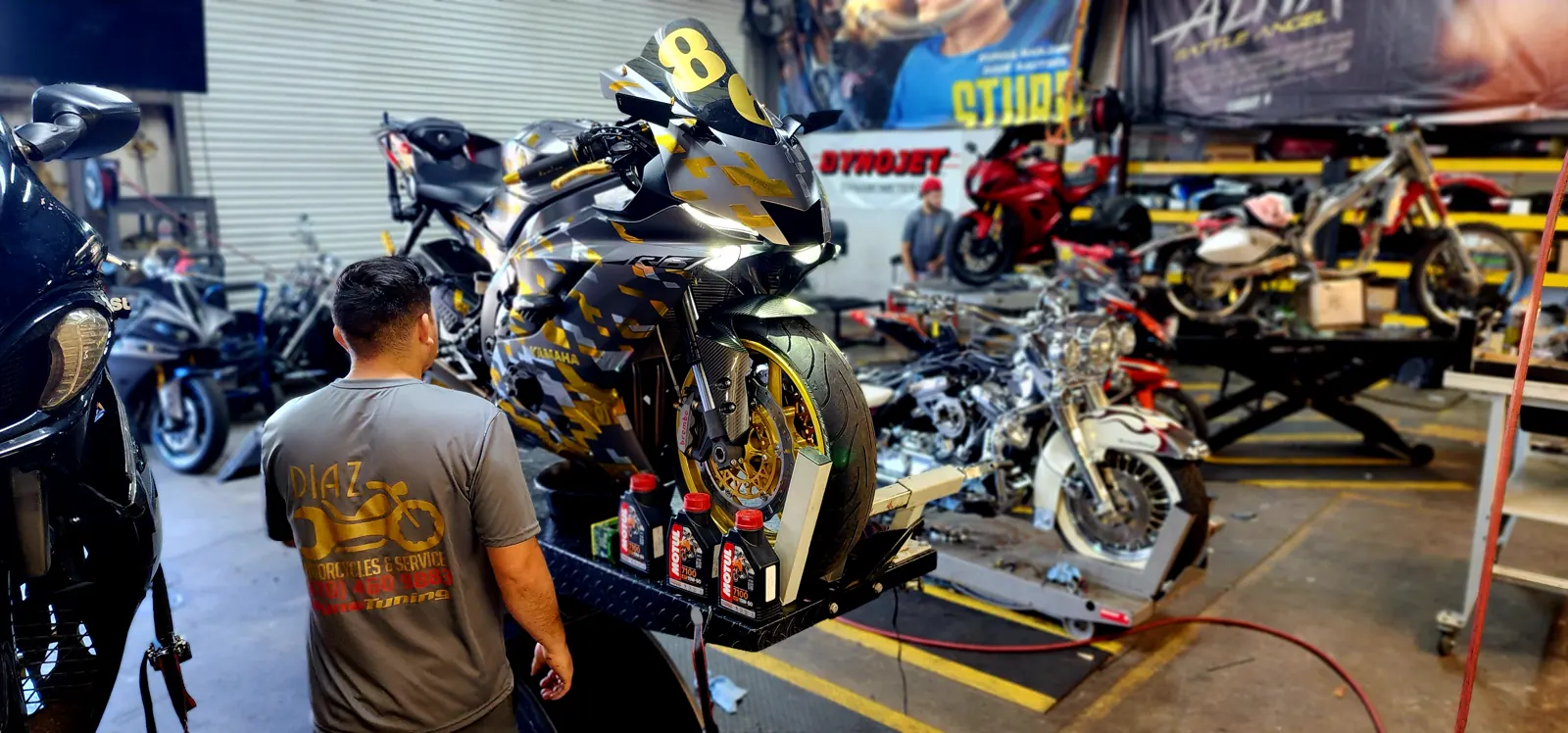
We get asked for a firm total over the phone every week, and we understand why. Nobody wants to load a bike and then find out. But a number given before anyone has seen your bike is either a guess or a hook, and neither one is worth much to you. Two bikes of the same model and year can be in wildly different shape depending on how they were stored and who touched them last.
What we can do over the phone is real, though. We’ll tell you what that job normally includes, what usually drives the hours up or down, what we’ll be checking, and roughly how long we’d need the bike. Then we look at it and we call you with the actual picture. Dealership counters and independents handle this differently, and it’s worth understanding the tradeoffs between them before you pick a lane.
WHAT WE WILL TELL YOU UP FRONT
What the job normally includes, what we’re inspecting, how long we usually need the bike, and a promise that nothing gets added without a phone call first. That part isn’t conditional.
If you want a wider view, we broke down how this plays out in Atlanta, where the same job can look different depending on shop type and how a bike has been kept.
What this looks like from Sandy Springs
Sandy Springs has an unusual problem for a city with this many good bikes in it. There’s no motorcycle shop inside the city limits, so riders here are already driving somewhere for service no matter what they decide. That’s the real starting point, and it’s worth saying plainly instead of pretending otherwise.
We see the whole spread. Families over in Riverside near the river, where a bike shares the garage with a minivan and two kayaks. Wooded lots in Lost Forest with a garage-kept tourer that comes out on good weekends. Established streets in Overton Hills with a mid-size commuter that runs to Perimeter Center and back. Then there are the Pill Hill folks, riding in to the hospital campuses around Peachtree-Dunwoody and Johnson Ferry because bike parking there is genuinely easy, and the people who work at UPS or Cox and just like arriving in a better mood.
The roads shape the work too. Roswell Road and Hammond Drive carry heavy traffic on aging pavement full of utility-cut patches, seams and manhole lips, which is a rough menu for a stiff sportbike. Abernathy Road runs east and west past Mercedes-Benz USA at Barfield Road, and the long construction footprint where GA-400 meets I-285 keeps throwing lane shifts, tar snakes and steel plates at you. Bent rims, wheel damage and knocked-out alignment aren’t rare here. They’re a season.
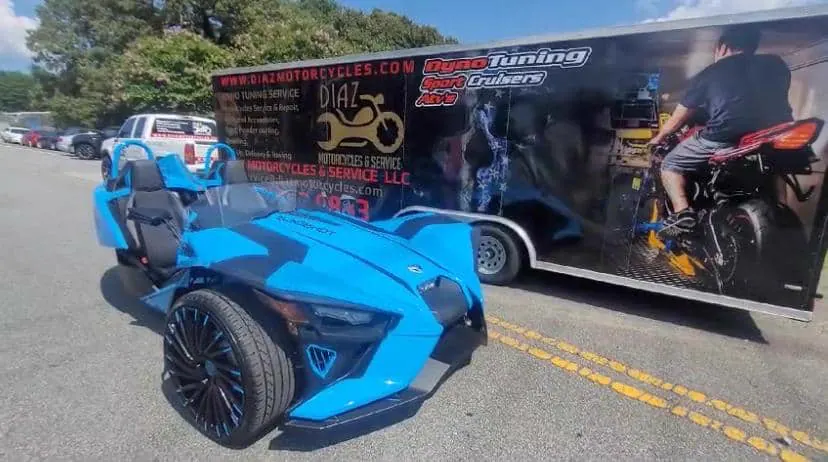
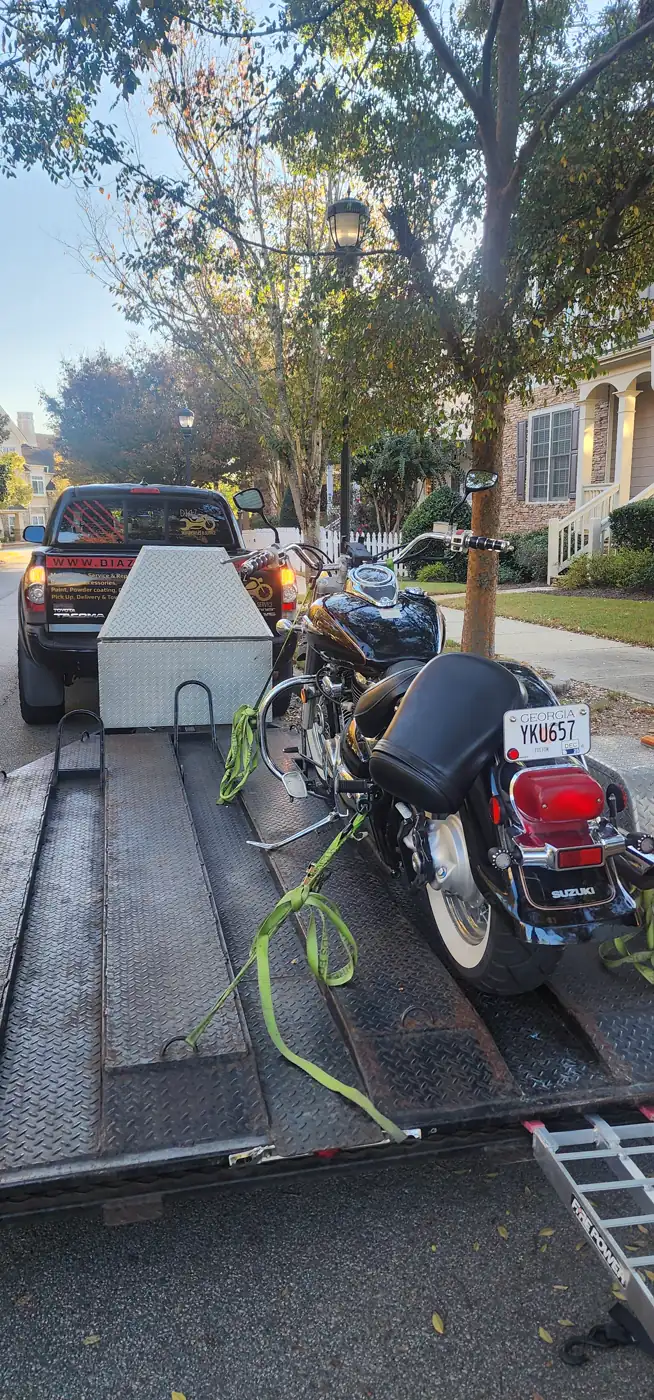
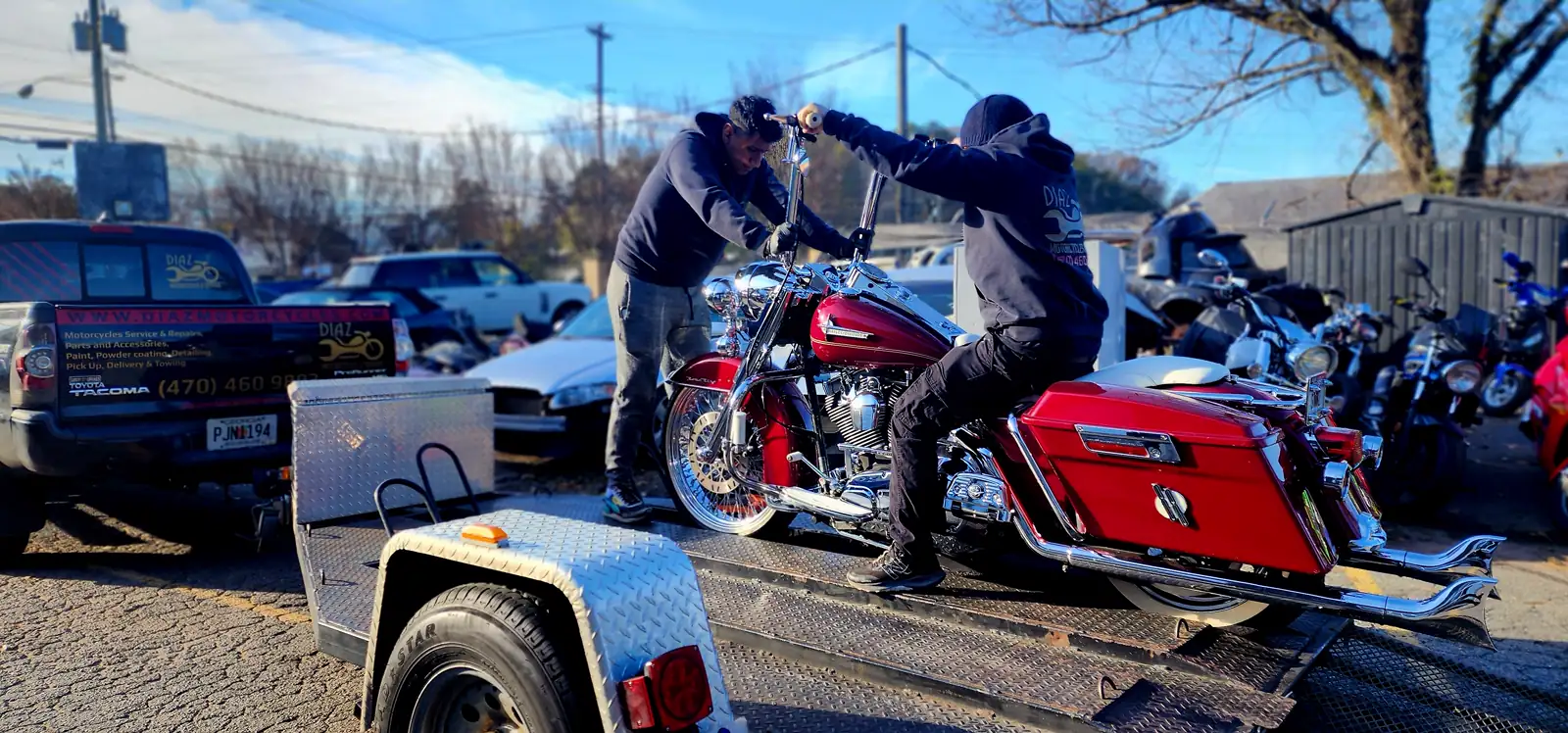
Storage is the other half of it. A huge share of housing here is rental, spread across dozens of apartment complexes, and plenty of those older properties have surface lots and carports with no outlet anywhere near a parking space. No outlet means no battery tender. No tender means a flat battery every March, moisture trapped under a cover, ethanol-soured fuel, and sun-baked plastics. If your HOA also frowns on wrenching in the lot, you’re stuck. That’s exactly why pickup and delivery is a real product for us here and not a fancy add-on. We come get the bike, do the work, and bring it back.
Getting to us is easier than people expect. It’s roughly eight to eleven miles, usually eighteen to twenty-eight minutes on Johnson Ferry Road heading west across the Chattahoochee into East Cobb, with no need to touch I-285. From the Riverside and Powers Ferry side it’s often under fifteen minutes. If your weekend ends with a walk at Powers Island, you already know that stretch of river.
There’s a Harley franchise about eight to twelve miles north up GA-400 in Roswell, Killer Creek, and it’s a fine place for what it is. It’s a brand shop, though, with dealership pricing and a brand-locked parts counter. If you ride a Ducati, a Triumph, a KTM, a BMW or an older Honda that’s been waiting in a basement since the seventies, that’s a different conversation and a different bench.
Something worth knowing before you book anywhere
Something worth knowing before you book anywhere: the questions you ask on the phone tell you more than the number does. Ask what’s included. As a result ask whether they’ll call before adding anything. Ask who’s actually turning the wrenches and whether they’ve done your model before. Ask what they do if they find something else while they’re in there. A shop that answers those calmly and in detail is telling you a lot, and riders around here already know that detail beats adjectives every time.
It helps to keep your paperwork tidy too. Registration and title questions run through the Georgia Department of Revenue, and the American Motorcyclist Association is a good broader resource for riders. Keep your service records in one folder. The next buyer will thank you.
What good service actually feels like
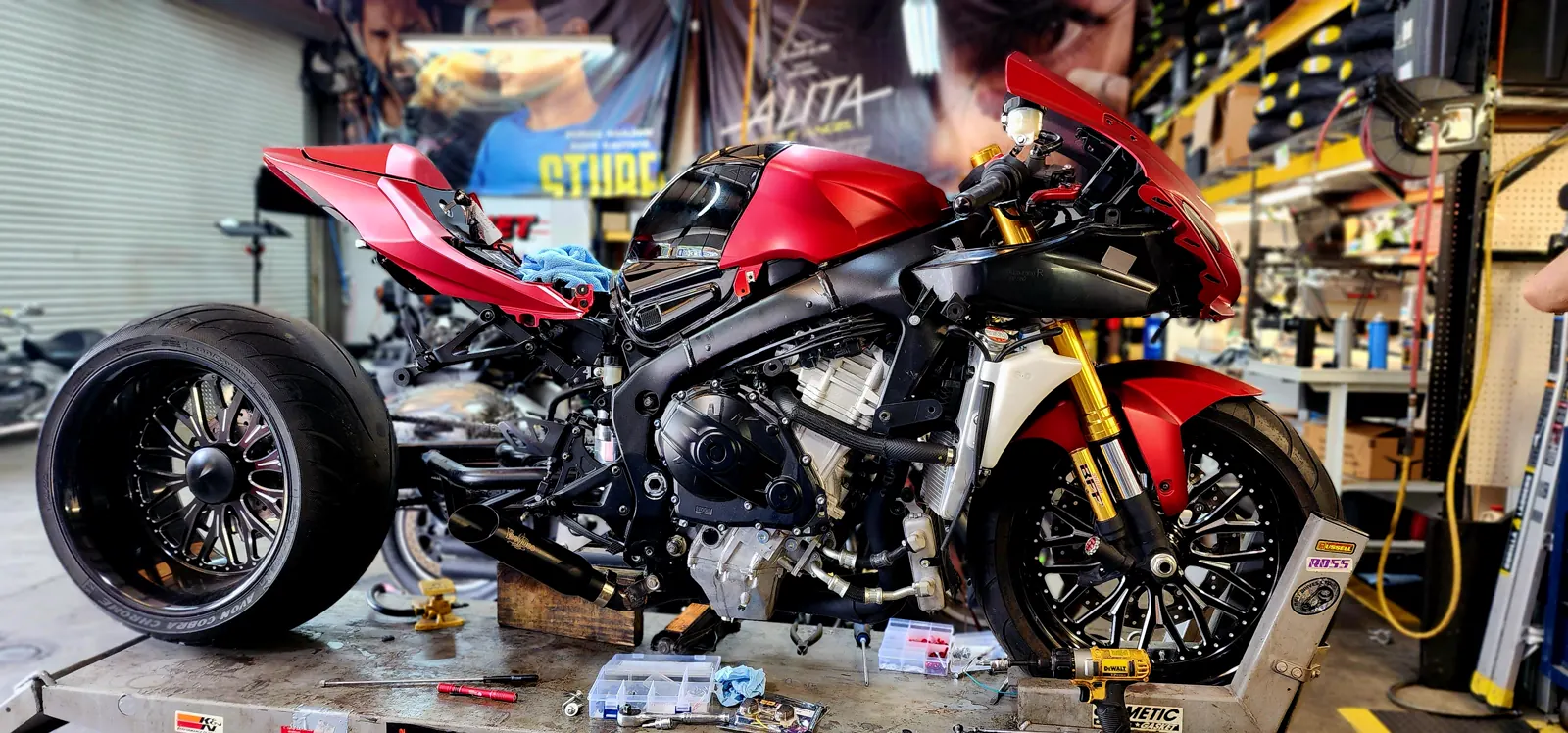
The goal isn’t a cheap invoice. The goal is a bike you trust on a morning when you’ve got somewhere to be. It’s brakes that bite the same every time, a chain that stays quiet, tires with tread and a date code you’re not embarrassed about, and no little voice in your head at seventy asking what that noise was.
That’s what makes the good rides good. Riding season here runs roughly March through November, and the stubborn among us keep going on those bright fifty-five degree winter days. When you finally point the bike north for the Suches Loop, the US-19, GA-60 and GA-180 triangle that plenty of people call the best thirty-five miles of riding in the state, you want your whole attention on the corners. Not on a rattle you’ve been ignoring since June.
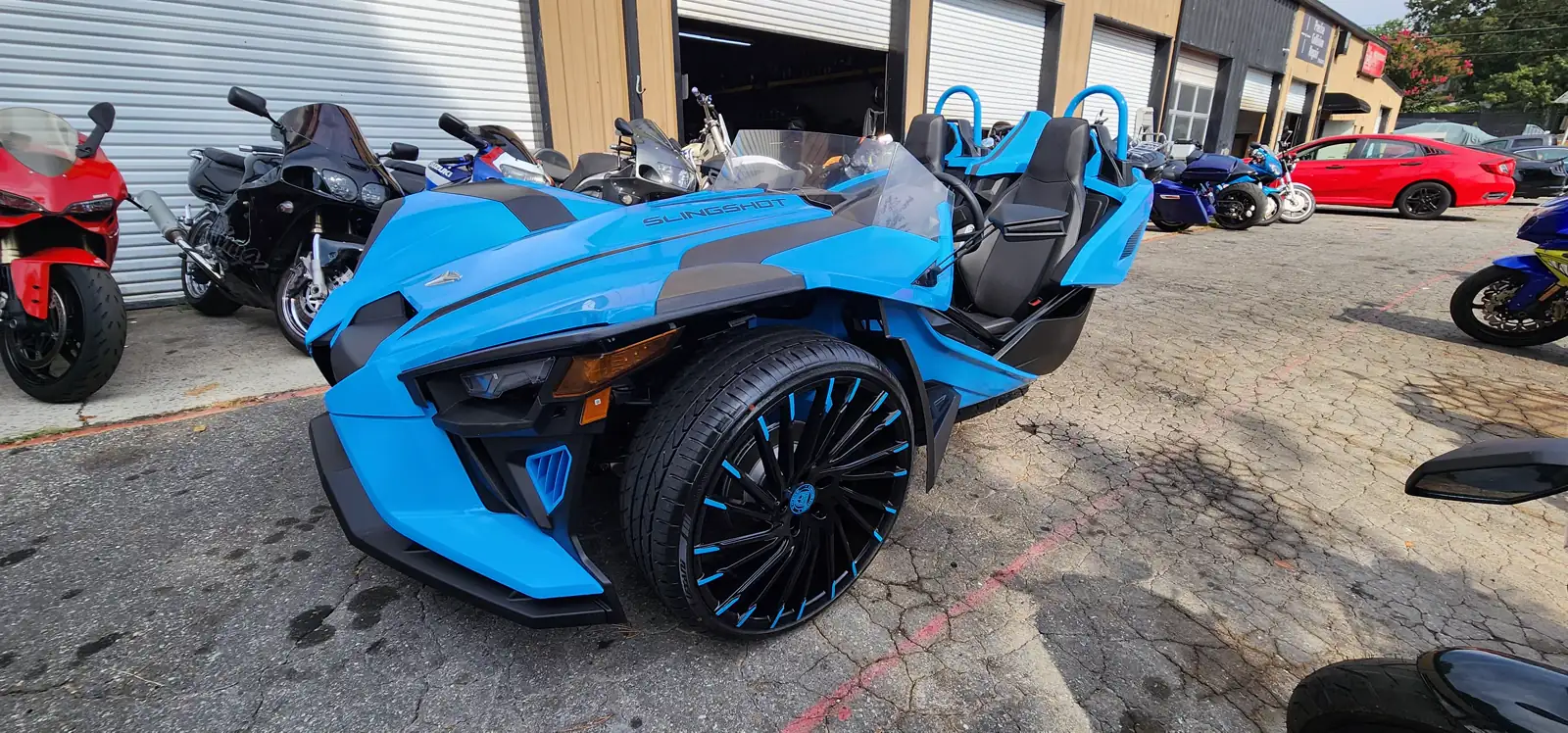
So if you’re sitting on a quote that doesn’t sit right, bring it to us and we’ll talk it through with you, line by line, whether or not you book. You can also see what happens in our bays before deciding anything. No pressure, no upsell theater, no numbers invented on the spot. Understanding the service cost Sandy Springs riders get quoted shouldn’t take a decoder ring.
You deserve to understand your own bike. That’s the whole point here, and it’s how we’d want to be treated.
Questions Sandy Springs riders ask us
What happens if you find something else while you're in there?
We stop and call you. We’ll tell you what we found, whether it’s urgent or can wait a season, and what it would take to sort it. Nothing gets added to your bill without you saying yes first. That rule doesn’t bend when the shop gets busy.
How do I avoid surprises?
Ask for the job in writing, including fluids, gaskets and small hardware, not just the headline task. Tell us anything odd you’ve noticed, even if it sounds silly. Bring your records if you have them. Most surprises come from unknown history, so the more we know up front, the fewer there are.
What makes one job bigger than another?
Access and condition, almost always. If parts have to come off before the real work starts, that’s more hours. If fasteners are rusted or threads are stripped from a past repair, that’s more hours too. The part itself is often the smaller half of the story.
Why can't you quote it over the phone?
Because a number given before anyone has seen your bike is a guess, and a guess helps nobody. We’ll gladly tell you what the job normally includes, what drives the hours, and how long we’d need the bike. Then we look at it and give you the real picture.
What's included in a routine service?
Typically an oil and filter change, a chain and sprocket check with adjustment and lube, brake pad and fluid inspection, tire pressure, tread and date codes, air filter, coolant, cables, lights and a fastener check. We work to your owner’s manual, since the manufacturer sets the intervals for your specific model and year.
Can you pick my bike up if I don't have a garage?
Yes, and plenty of Sandy Springs riders use that. Between apartment lots, carports and condo decks, a lot of folks here have nowhere to work and no outlet for a tender. We bring the trailer, take the bike, do the work and deliver it back to you.
We take care of riders from Sandy Springs and all around the top end, including Roswell, Dunwoody, Brookhaven and Chamblee to the east, Buckhead and Atlanta to the south, and Alpharetta up the GA-400 corridor. Coming west across the Chattahoochee, we’re right there for East Cobb, Vinings, Smyrna and Marietta, and we regularly see bikes from Doraville too. If you’re not sure whether you’re in range, just ask us, because the trailer travels farther than most people assume.
SEND US THE QUOTE
Got a service quote for your bike that doesn’t sit right? Text us a photo of it along with your year, make and model, and we’ll walk you through what’s in it and what’s missing, no strings attached. Sandy Springs riders are only about eight to eleven miles away on Johnson Ferry Road, or we’ll bring the trailer to you if your parking situation makes that easier.
470-460-9883Diaz Motorcycles and Service, LLC · 847 Barnes Mill Road, Marietta, GA 30062