Overdue Motorcycle Service Dallas, GA — What to Check First
The symptoms a long-owned bike gives you before anything expensive happens, and what they actually mean.
You know this bike. Also you know the sound it makes on a cold morning, the spot where the seat has worn shiny, the turn signal you nudge twice before it blinks. Instead two years in or twelve, you stop looking at the bike and simply ride it. Then one Saturday the front brake lever comes back further than it used to, the chain sings a note it never sang before, and you are hearing the first quiet symptoms of an overdue motorcycle service Dallas, GA riders rarely plan for.
Good news first. Besides a bike that talks to you is a bike that still likes you. Actually those small changes are early warnings, and early is the cheap version of every repair story. The other version is where nobody listens for two seasons and the bike gets louder.
The myth: if it starts and stops, it must be fine
The most common thing we hear from riders in Paulding County is that the bike runs great, so nothing needs doing. Honestly, we get it. But most of what wears out on a motorcycle has nothing to do with whether it starts. Oil gets tired quietly. Brake fluid pulls moisture out of the air without mentioning it. A chain stretches a millimeter at a time, and nobody notices a millimeter.
Here is the part that surprises people. Miles are not the only clock. Time runs its own, and it runs hardest on machines that live indoors and get ridden a little. That describes Paulding perfectly: big garages, good bikes, not enough free Saturdays.
The reality: what overdue actually feels like from the saddle
Nobody walks in and announces that their brake fluid has absorbed moisture. They say the lever feels squishy. So here is the honest translation, in the language riders really use.
- The front lever travels further before it firms up, and the fluid looks like weak tea instead of pale straw.
- Cold starts take a beat longer, and the idle wanders for the first minute.
- The chain makes a dry ticking rasp at low speed, with gray grit packed around the sprocket.
- The throttle feels soft or lumpy down low, below about three thousand rpm.
- Tires still look new, but the rubber feels hard and thin cracks show in the tread grooves.
- Something ticks at idle that used to be quieter.
Any single one of those is ordinary wear. Two or three at once is a bike asking for a full going-over instead of a patch. A going-over is one planned afternoon. Even so, a patch becomes three separate trips.
The likely causes, most common first
Old oil sits at the top nearly every time. It does not just get dirty. It gets diluted by fuel, cooked by heat, and its additives wear out whether the bike moves or not. Your owner’s manual sets the interval here, not us and not a forum argument. Manufacturers publish a mileage figure and a time figure, and whichever arrives first counts. On a low-mileage garage bike, time almost always wins.
Chain and sprockets come next. Paulding is a construction county, so gravel spill, mud tracking and fresh utility cuts are normal on Cedarcrest Road, Bill Carruth Parkway and the collectors feeding new subdivisions. A dry chain scoops all of that up and turns it into grinding paste. You get tight spots, hooked sprocket teeth, and a rasp like sand in a coffee grinder. If yours is already noisy, this is how we handle that job once cleaning stops helping.
Third is brake fluid. It drinks water straight out of the air through the lines and the reservoir vent, which lowers the boiling point and softens lever feel. Dark fluid is not an opinion, it is a swap. Rear systems are usually worse, since that reservoir sits lower and gets ignored longer.
Fuel is fourth, the classic problem on a bike that covers fifteen hundred miles a year. Gas left standing turns to varnish, and varnish loves tiny passages: pilot circuits, injector tips, pump screens. The bike still runs. It just runs like it is annoyed with you.
Then come tires and the battery. Rubber ages by date, not tread depth, and a four-digit code on the sidewall gives the week and year it was built. Batteries die slowly and then all at once, and a slow crank is the polite warning shot.
Last, air filter, spark plugs and valve clearance. A clogged filter makes the throttle lazy, worn plugs make cold starts rough, and clearance drifts until you hear a tick at idle. The manual sets that inspection interval too, and it differs by model, so nobody should quote you a mileage number off the top of their head.
When it is safe to ride, and when it truly is not
Here’s the question we’d ask if you were standing in the shop. Not what is wrong with it — when did it change? A lever that has felt soft since you bought the bike is a different conversation than a lever that went soft three rides ago. Riders who have owned the same machine for years answer that better than they think.
- Fine to ride short and gentle, then get it booked: slow cold starts, a mild chain rasp with slack in spec, a lazy throttle down low, or a steady tick that has not changed in weeks.
- Same category: brake fluid gone amber while the lever still hits a firm stop in the same place every time.
PARK IT AND TEXT US
A lever that pulls to the bar or never finds a firm stop. What’s more, a chain with a kinked link, a hard tight spot, or sprocket teeth gone pointy. A tire showing cord or with sidewall cracks you can catch a fingernail in. A fork seal dripping oil onto the brake rotor. Any wobble that shows up at one specific speed. None of those are ride-it-in problems, and there is no shame in a trailer.
The actual process, start to finish
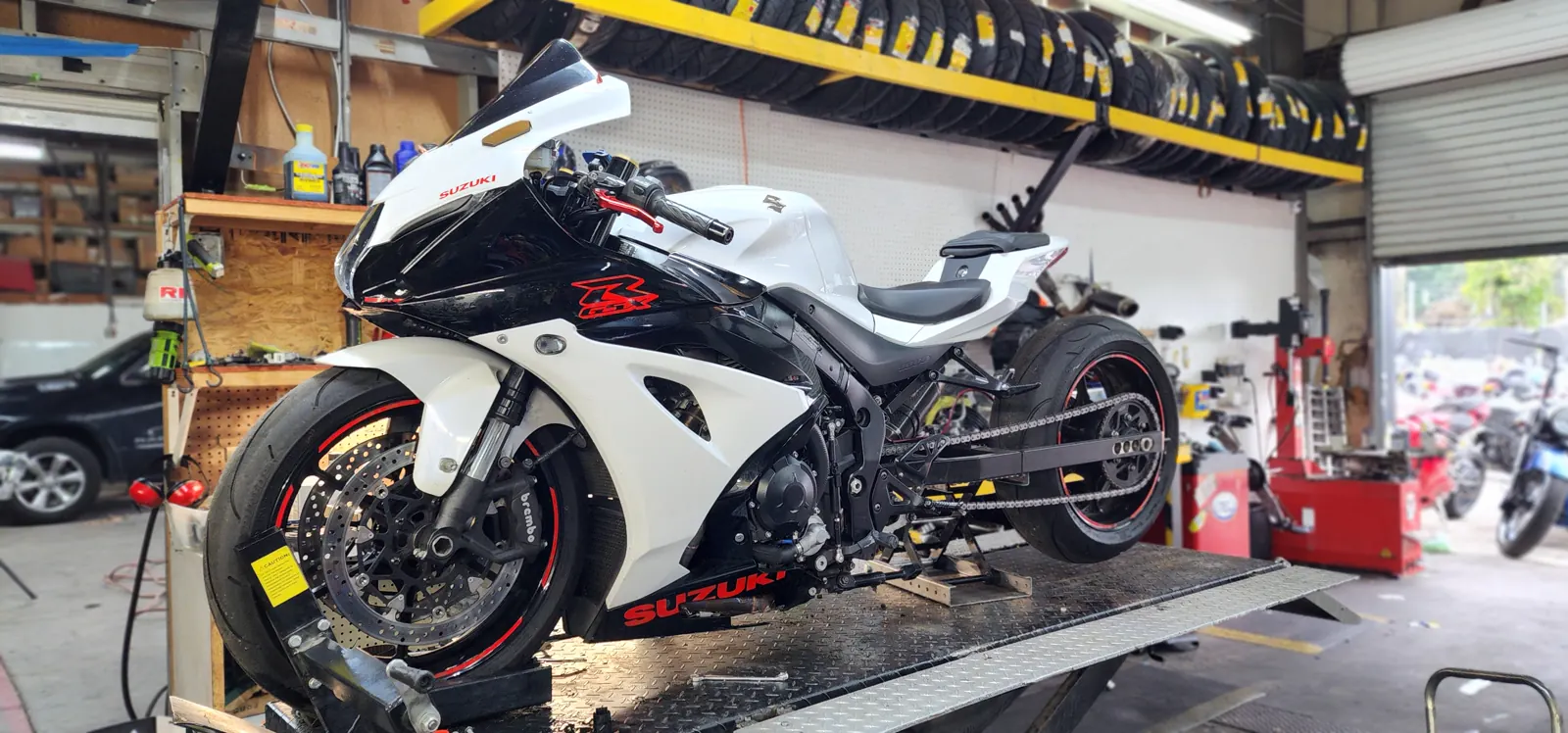
A real service is not a mystery ritual. It is a checklist, run in order, by someone who runs it every day. Here is what a full one looks like.
- Talk first. Symptoms, mileage, last known service, how the bike is stored, and what you want out of it this season.
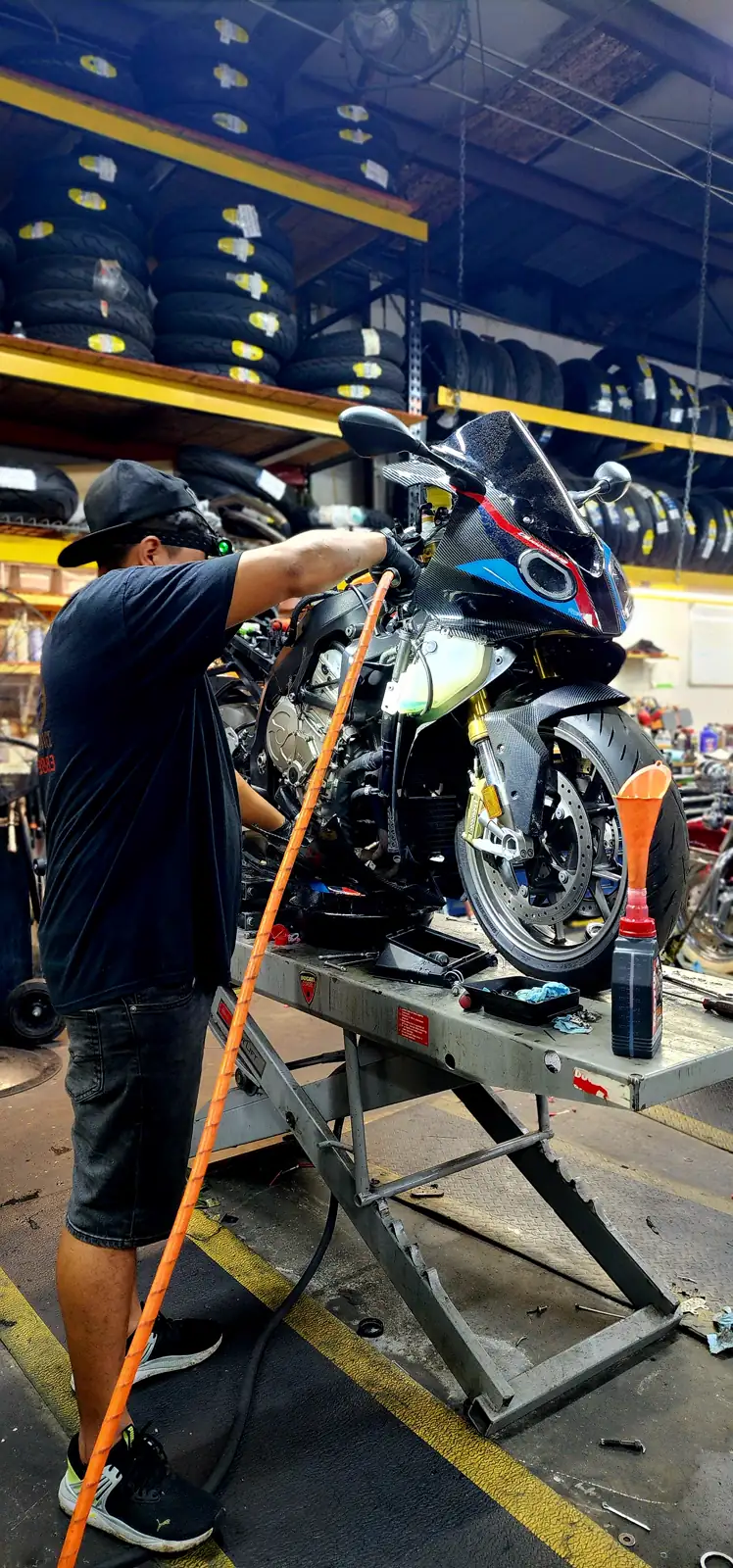
- Bike on the lift, wheels off the ground, then a baseline walkaround: tire date codes and pressures, chain slack, pad thickness, fluid colors, every light and switch.
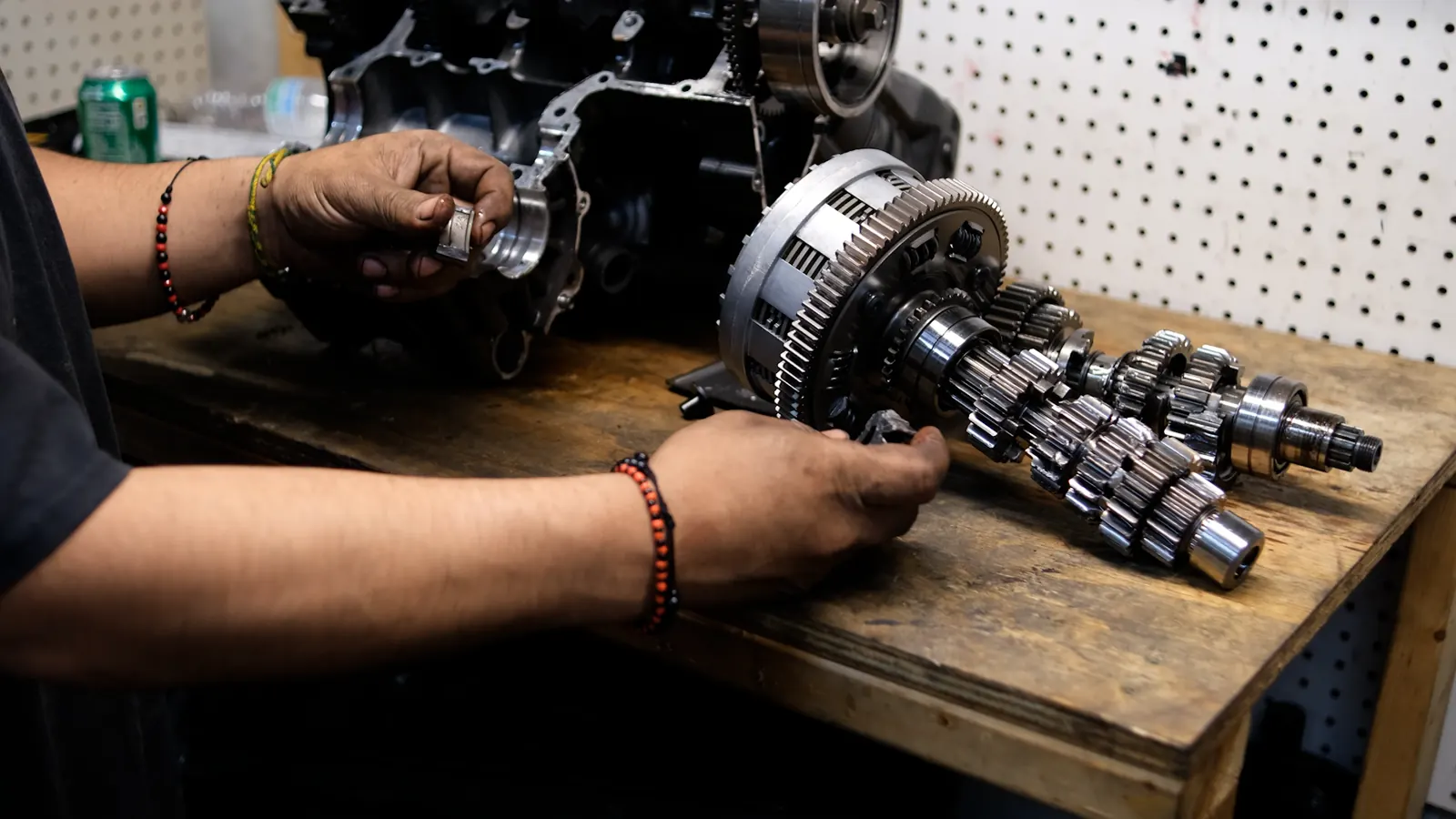
- Oil and filter. Drained warm so it carries the junk out with it, new crush washer, correct spec oil, drain plug torqued instead of gorilla-tightened.
- Chain service. Clean it, measure stretch across a set number of links, inspect sprocket teeth, adjust to spec, lube and wipe the excess.
- Brakes. Pads measured, rotor thickness checked against minimum, caliper pins cleaned and greased, fluid replaced and bled if it has gone dark.
- Air filter, spark plugs, battery tested under load rather than at rest, coolant condition, and final drive checked whether it is chain, belt or shaft.
- Fasteners and controls. Axle nuts, pinch bolts, caliper bolts, steering head play, wheel bearings, cable free play, lever and pedal adjustment.
- Test ride, then a written list split three ways: what is good, what to watch, and what needs doing now.
That last step is the one riders remember. A list separating now from later lets you decide instead of guess. If you want the longer look at what happens in our bays, it is all laid out there.
How to tell a good shop from a shop that is merely busy
Ask a few questions and you will know fast. A good shop calls or texts before adding anything to the job. They keep the old parts and show you the wear instead of describing it. After that, they write down what they checked and did not need to touch, too. They also say the words your manual sets that interval without flinching, since guessing is how people end up doing a valve check twice. We wrote out more on what separates a good shop if you want the full checklist before handing over your keys.
One more thing matters out here more than most places. Paulding riders build things for a living, and the trades crowd is a big share of the bikes we see. Plenty of you change your own oil in a garage with better lighting than half the shops in the metro. We are not offended by that. Bring us the work that needs a lift, a torque spec and a tool you would use twice, and keep the rest for Sunday.
The Dallas, GA part nobody else will say out loud
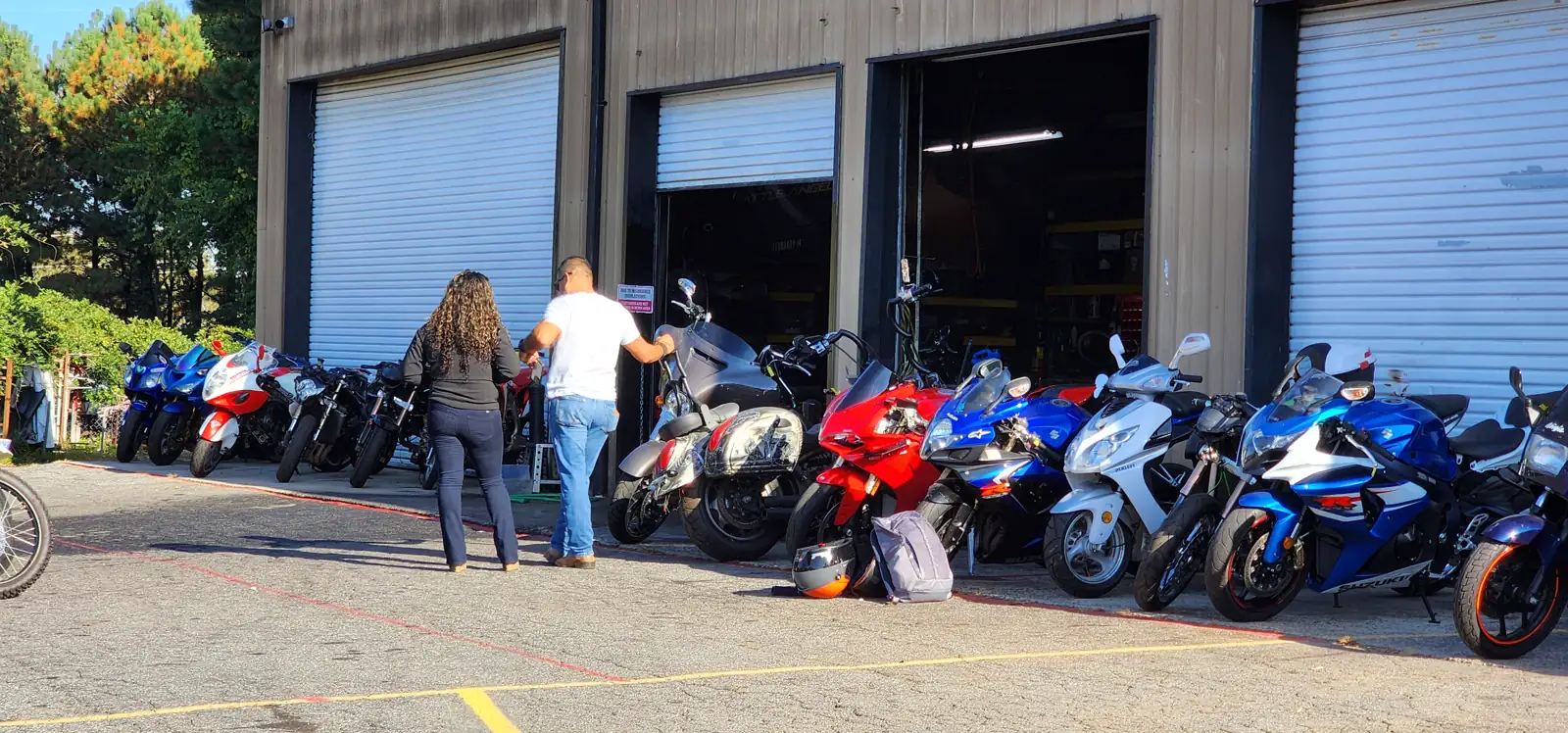
This is where Dallas, GA is genuinely different from other towns. We sit roughly twenty-four to twenty-eight miles from you, call it forty to fifty minutes on GA-120 and Charles Hardy Parkway running east on Dallas Highway through West Cobb, or out on 278 to the East-West Connector when traffic has other plans. Those are estimates off road geography, not stopwatch numbers. And no, we do not expect you to make that drive for an oil change. Nobody should.
Batching is what works instead. Around here almost nobody minds forty minutes, since three quarters of working Paulding residents commute out of the county every morning anyway. What people hate is a wasted trip. So we schedule by text, send updates by text, and build the visit around everything the bike needs at once. An overdue motorcycle service Dallas, GA owners keep postponing is usually just one trip nobody had time to make.
The county reality is simple. Paulding has around one hundred ninety-four thousand residents and no full-line motorcycle dealership, no dyno, no in-house paint booth and no restoration specialist. Xtreme Cycles of Dallas on East Memorial Drive handles Harley-Davidson work Tuesday through Saturday, and for quick jobs close to home that is a sensible call. For bigger work, riders drive somewhere regardless. If you have wondered what a dyno actually measures, Dynojet’s dyno center explains it well.
Storage is the other local wrinkle. Bikes here live in garages, which is great for paint and terrible for honesty, because a garage bike looks showroom fresh while its fuel varnishes, its battery sulfates and its tires age out. We see beautiful machines from Seven Hills, where the thirteen-acre amenity park and ten tennis courts keep everyone busy on the mornings the bike wanted to be ridden. Same story from Oakleigh Pointe in the East Paulding school district and The Retreat at Naturewalk at Seven Hills: spotless, and five years past a brake fluid change.
Riding-wise, you already have the good stuff. GA-61 runs north and south through town toward Cartersville and Villa Rica, and the rural two-lanes past Sheffield Wildlife Management Area are the roads people move here for. If you work at Wellstar Paulding Medical Center on Jimmy Lee Smith Parkway in Hiram, or anywhere with a real schedule, that bike sits five days for every one it moves. That ratio is why time-based service exists.
What all of this looks like six months from now
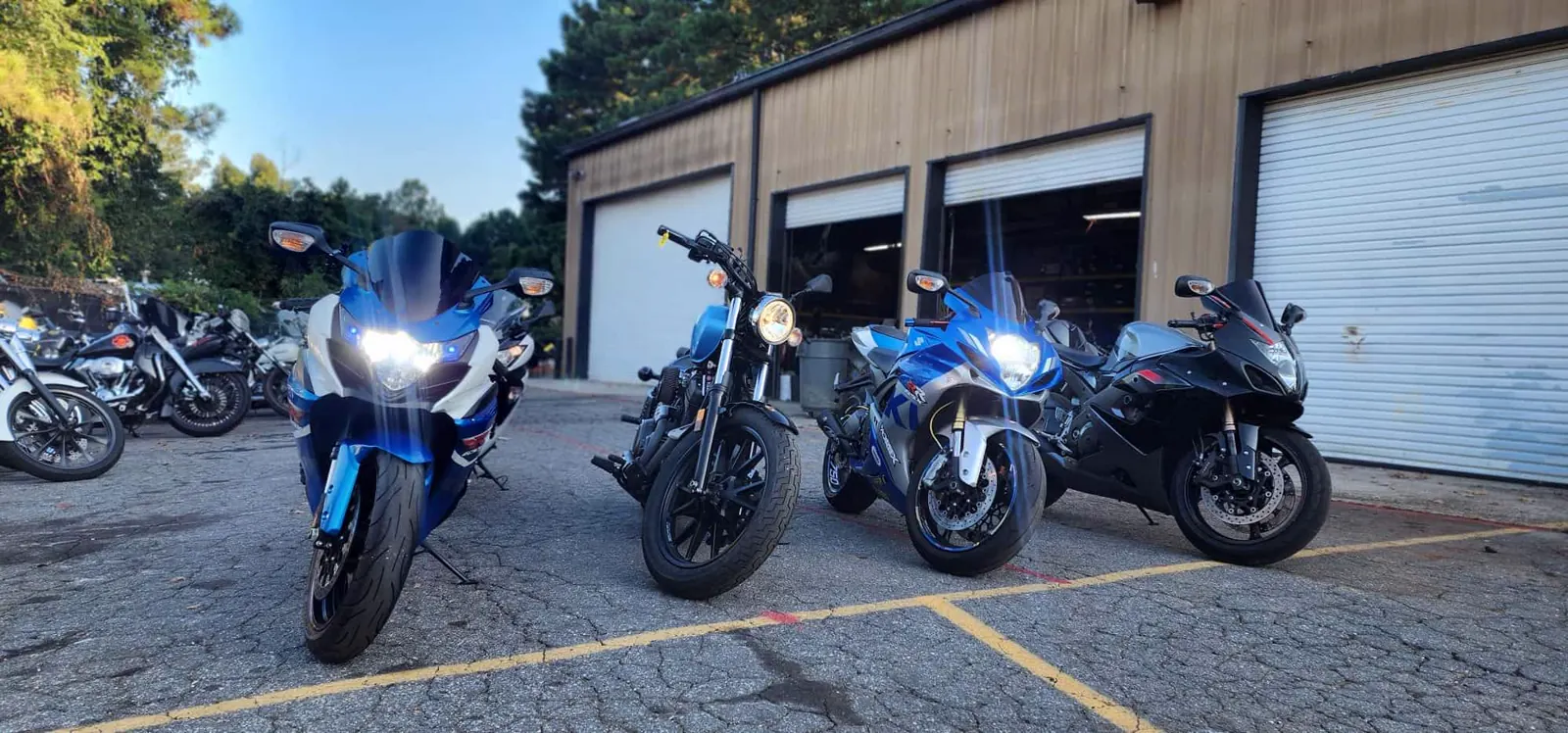
Picture the last weekend in October. Fall color is peaking in northwest Georgia and you point the bike at the Johns Mountain to Cloudland Canyon run, about seventy-two miles across GA-136, Armuchee Road, Pocket Road and Floyd Springs Road, then up the Lookout Mountain Scenic Highway with its tight hairpins and ridge-top views. That is a day worth preparing for. It is also a day a soft lever and a hard old tire would spoil completely.
Sorted in September beats stranded in October, every single year.
So handle it before the good weather lands. September and October are the best riding of the year around Paulding, and that is when everyone remembers their bike at once. Riders closer in face the same list with a shorter drive, which is why we gave the East Cobb side of things its own piece. To keep your skills level with a freshly sorted machine, MSF rider courses are a fine excuse to spend a morning getting sharper.
None of this is complicated. A bike you have owned for years is worth keeping, and keeping one comes down to hearing small changes and acting while they are small. Get the list, sort the now items, plan the later ones. Then go ride the thing you paid for.
Questions Dallas, GA riders ask us
What actually causes a bike to fall behind on service?
Usually time rather than miles. Oil additives break down, brake fluid absorbs moisture, fuel varnishes and tires harden whether the bike moves or not. A garage-kept bike ridden a few weekends a year ages on the calendar, and the calendar does not care how clean the paint looks.
Can I do this stuff myself?
A lot of it, yes, and plenty of Paulding riders already do. Oil, filters, chain cleaning and adjustment, air filters and battery care are all fair game with a manual and a torque wrench. Brake bleeding, valve clearance, tire mounting and anything needing a lift are the jobs most people hand off, because the tooling outweighs the labor.
Will it get worse if I keep riding it?
Some things sit still and some accelerate fast. A slightly dirty air filter will wait. A dry, gritty chain eats sprockets, and once those hook you are buying the whole set. Hard old tires and dark brake fluid both worsen quietly, which is what makes them worth handling on your schedule instead of theirs.
How urgent is this really?
It depends on the symptom. A lazy throttle or a slow cold start is a book-it-this-month thing. A lever with no firm stop, a fork seal dripping onto a rotor, cord showing on a tire or a kinked chain link is a stop-riding-now thing. When in doubt, text us a short video with sound and we will tell you straight which pile it belongs in.
What happens if I just ignore it?
Mostly the repair grows. Chain neglect turns into chain and sprockets. Old fluid turns into caliper work. Varnished fuel turns into injector or carburetor cleaning. It is rarely dramatic and almost always more work than the version you would have done six months earlier, which is the whole argument for catching it early.
Do I have to bring the bike over if it is not safe to ride?
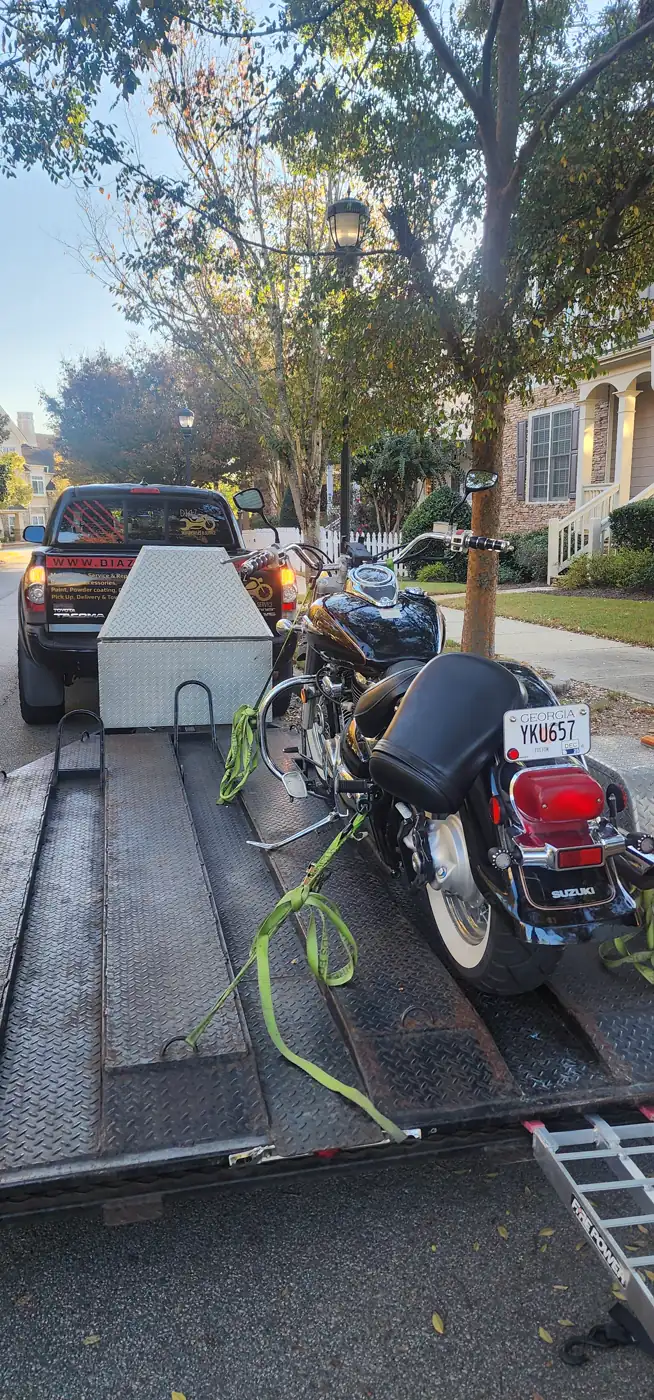
No. Text us first and we will talk through options for getting it here, whether that is a trailer, a friend with a truck, or timing the visit around something you already have planned in Cobb. We would much rather sort logistics in a few messages than have anyone ride a bike they are unsure about across the county.
We work on bikes from all over the western arc of metro Atlanta, starting with Dallas, GA and the rest of Paulding County. Riders come to us from Hiram and Powder Springs, from Acworth and Kennesaw up north, and from Douglasville out to the southwest. We see plenty of machines from Cartersville and Villa Rica, along with riders heading in from Rockmart, Taylorsville, Braswell and Yorkville. Marietta is home, so if you already drive east on Dallas Highway for work, the shop is barely a detour.
TEXT US AND WE WILL SORT THE LIST
If your bike in Dallas, GA has started saying something new, send us a text with what you are hearing or feeling and roughly when it started. We will tell you whether it is a ride-it-easy situation or a park-it one, and we will build the visit around everything the bike needs at once so the drive over from Paulding is worth making. Scheduling, updates and the final list all come by text, so you never have to sit on hold from a job site.
470-460-9883Diaz Motorcycles and Service, LLC · 847 Barnes Mill Road, Marietta, GA 30062