Overdue Service East Cobb — What to Check
The bikes we see most aren't broken. They're just behind, and behind is easy to fix.
Actually the bike that rolls through our door most often isn’t wrecked. It isn’t a project. That’s why it’s a clean, garage-kept machine with low miles, and the rider says almost the same sentence every time: it just doesn’t feel right anymore. The brake lever went soft. After that, the chain sings a note it didn’t sing last fall. Either way that’s what overdue service East Cobb riders actually deal with — not a breakdown on the side of the road, but a good bike quietly drifting out of tune while it sat.
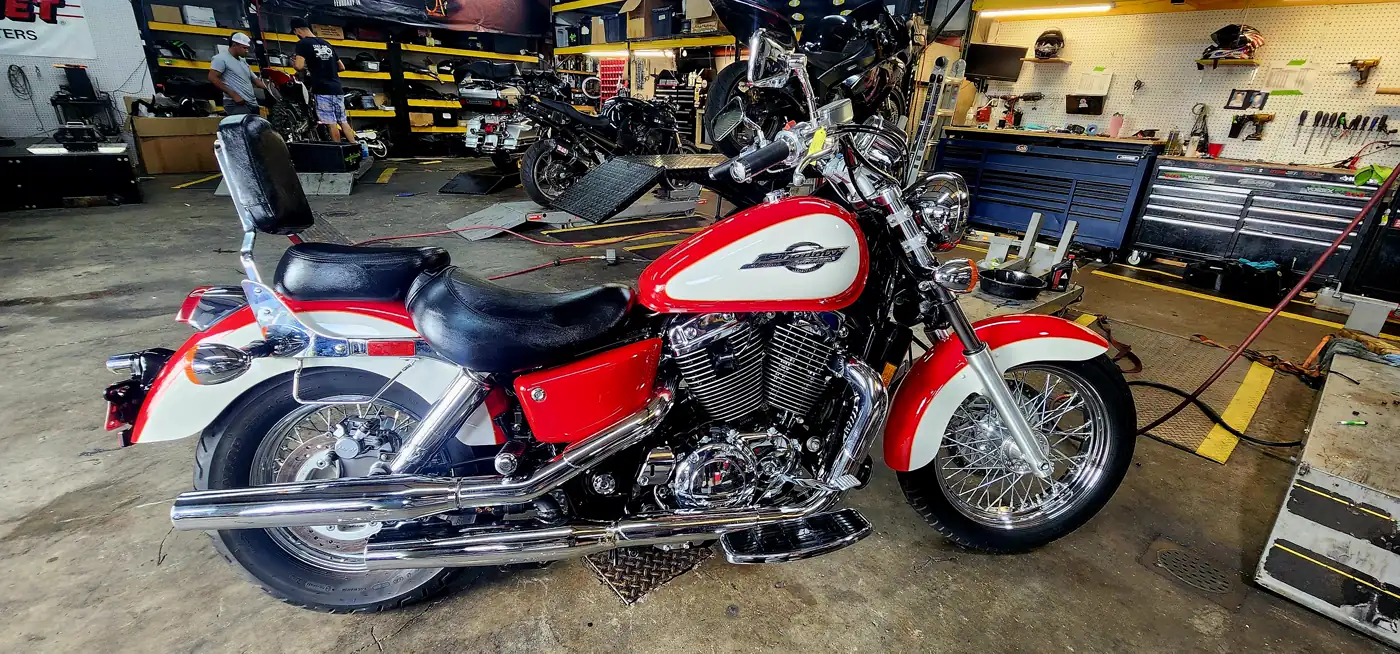
In short we’re a shop right here in East Cobb, and we see that same pattern week after week. At the same time Bikes around here don’t get used up. They wait. As a result most live under a cover in a two-car garage, come out Saturday morning, run over to Marietta Square for dinner, and go back to sleep. On the other hand Low miles look wonderful on a title. They’re surprisingly rough on rubber, fluid and fuel.
The myth: low miles means low wear
So here’s the belief we bump into most. If the odometer barely moved, nothing changed. That feels logical enough. Not quite true, though. Still, a motorcycle is full of parts that age on a calendar instead of a trip meter. Plus, Rubber, oil, brake fluid and gasoline all keep changing whether the wheels turn or not.
So a rider in Indian Hills with a five-year-old bagger and barely any miles can end up with the same tired brakes as a guy who rides every single weekend. One wore his out. The other let his sit still. Meanwhile, Same soft lever, two completely different stories. Of course, your bike has no idea it’s parked. It only knows that time keeps moving.
Miles wear a bike out. Time does too. It's just quieter about it.
The reality: what sitting really does
Let’s walk through it in plain words, most common first. None of this is scary. Almost all of it is cheap and quick when you catch it early, which is the whole point of this post.
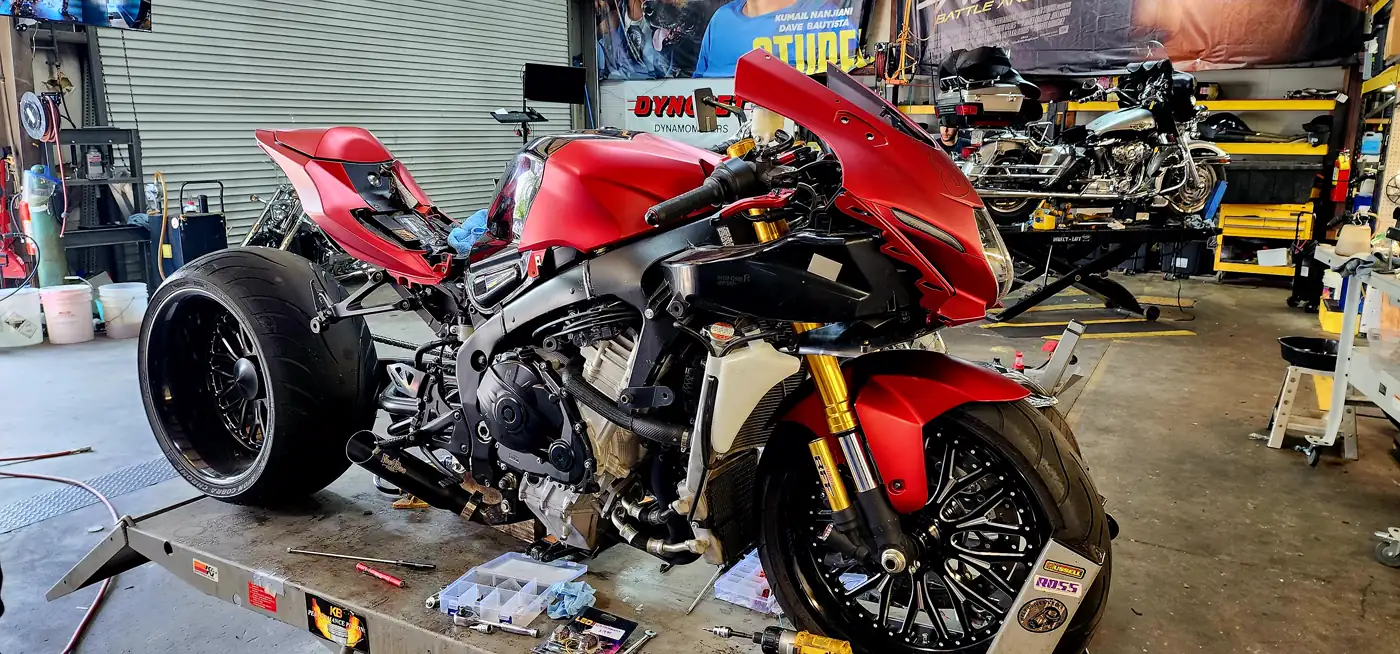
- Fuel goes stale and leaves varnish behind, so the bike cranks a long time and stumbles right off idle.
- The battery drains a little at a time, then sulfates, and one morning you get a click instead of a crank.
- Brake fluid pulls in moisture, turns dark, and the lever goes long and mushy.
- Tires lose air, take a flat spot and dry out at the sidewall while the tread still looks brand new.
- The chain dries out, gets a tight spot, and starts making noise that speeds up with the wheel.
- Critters decide a warm airbox or a quiet exhaust tip is a lovely place to raise a family.
Every one of those has a symptom you can feel from the saddle. A hard start on a cool morning. Even so, a lever that pulls almost to the grip. A shimmy at parking-lot speed that smooths out once you’re rolling. A tick that keeps time with the rear wheel instead of the engine. Riders usually describe all of this as “it feels off,” and that phrase is more useful than it sounds. You know your bike. You noticed. That’s the hard part done.
Now match the feeling to the cause, most likely first. Hard starting and a rough idle after a long sit is almost always fuel, then the battery. A soft lever is old fluid first, air in the line second, and worn pads third. Low-speed wobble is usually tire pressure or a flat spot, then a loose chain, then head bearings. Chain noise is dry links first, then adjustment, then a worn sprocket. That order isn’t a guess. It’s just what our motorcycle maintenance services turn up over and over on bikes that spent more time on the kickstand than on the road.
When it's fine to ride and when it isn't
We want you sure about this part, so we’ll be blunt. Some symptoms mean book it soon. Others mean leave it in the garage and call us.
- Ride it, gently, and get it in soon: hard starting, a stumble off idle, a slightly noisy chain, a small weep at a fork seal, a mirror that won’t stay put.
- Ride it only as far as the shop: a battery that needs a jump every time, a dry chain that’s still adjusted right, tires low on air but holding air.
- Don’t ride it at all: a brake lever or pedal that sinks toward the grip or the floorboard, a tire with a bulge or visible cord, a chain with a tight spot or a hooked sprocket, or any fluid on a wheel, rotor or tire.
That last group sounds heavy. It really isn’t. Every item on it is a normal job we do constantly, and a bike with a soft lever on Monday is usually back on the road that week. The only thing that turns a small item into a big one is riding it hard while it’s talking to you.
Something changes once you know what to look for. The bike stops being a mystery box with an engine in it. You start hearing the chain before it starts costing you a sprocket. You feel the lever go a hair longer and you already know why. Riders who reach that point stop dreading the shop, because they’re walking in with information instead of a shrug.
What a real service actually includes
First, the honest part about intervals. We’re not going to print a mileage number here, because your owner’s manual sets it and every model is different. A liquid-cooled sport bike, an air-cooled twin and a big touring rig are on three separate schedules. Open the manual, or bring it with you, and we’ll build the visit around what your manufacturer actually asks for.
Here’s what a proper service looks like from the inside, start to finish.
- We talk first. How long has it sat, what changed, what does it sound like, where do you ride it.
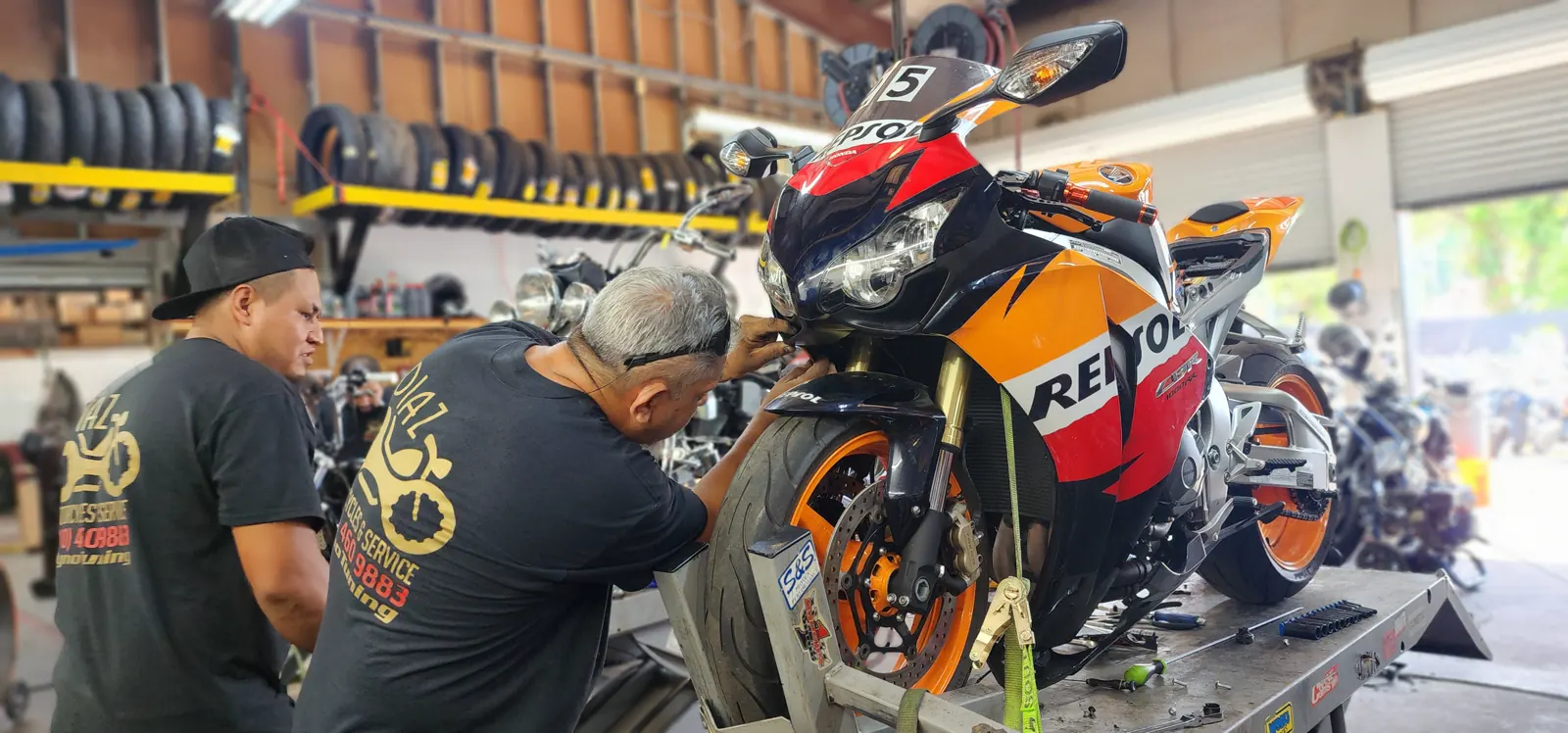
- The bike goes on the lift and both wheels come off the ground so we can spin, wiggle and listen.
- Fluids get checked and changed as needed — engine oil and filter, brake and clutch fluid, coolant, final drive.
- Chain and sprockets get cleaned, measured for stretch, lubed and set to the right slack, or the belt and drive get inspected.
- Brakes come apart far enough to see pad thickness, rotor wear and whether the caliper pistons still move freely.
- Tires get date codes, pressure, tread depth and a hard look at the sidewalls for cracking and flat spots.
- Electrical gets a load test on the battery, a charging output check, and a pass over every light and switch.
- Cables, levers, bearings, fasteners and the airbox get checked, then somebody rides it, because a bike tells the truth at road speed and nowhere else.
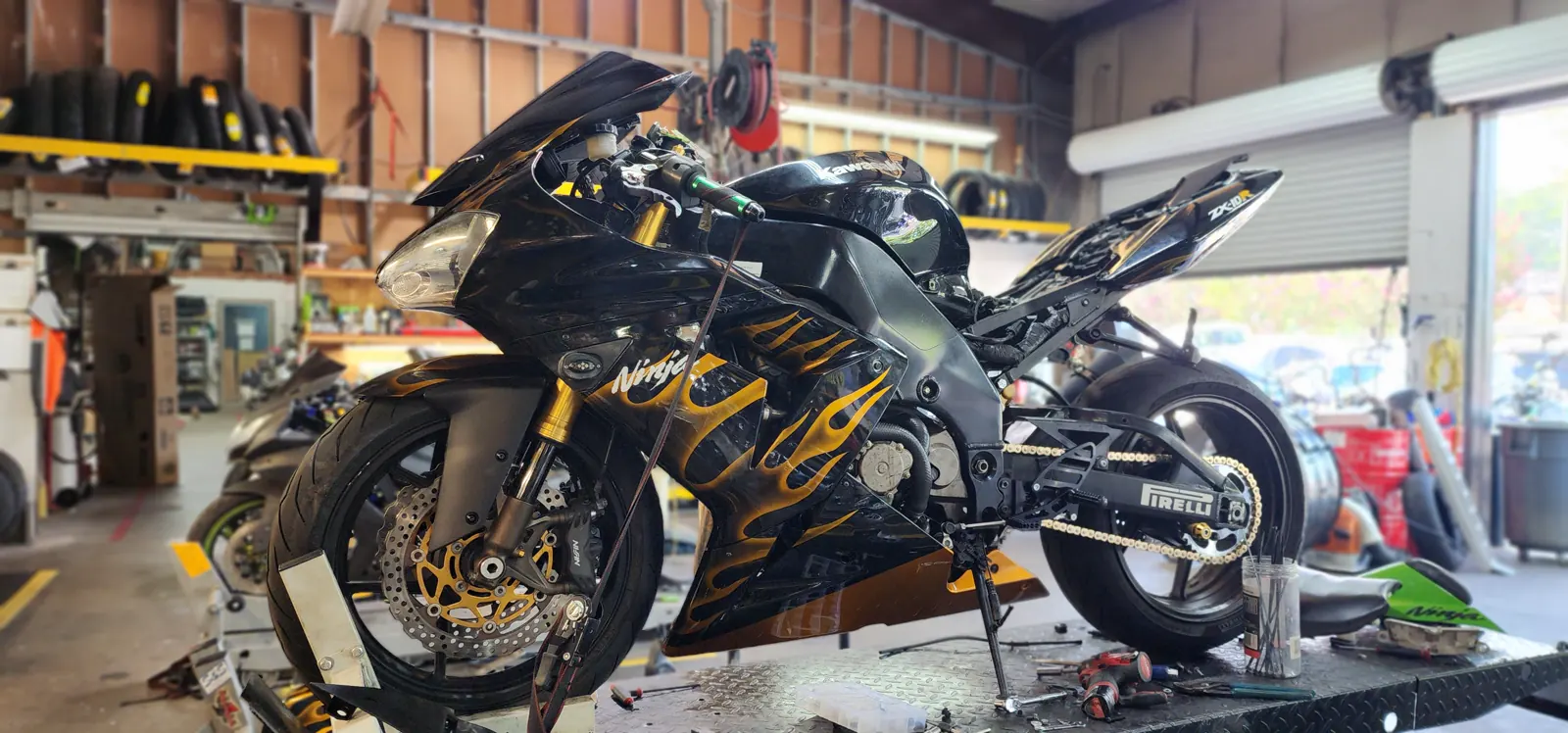
After that you get a plain-language write-up: what we found, what we fixed, what can wait a season, and what we’d want to see again next time. Nothing gets done without a yes from you first. If a bigger item shows up mid-service, we stop and text you a photo, and that’s also exactly how we handle that job when a service turns into a repair.
THE SHORT VERSION
Small stuff caught early stays small stuff. A dry chain is a bottle of lube. A dry chain ridden all summer is a chain, a front sprocket and a rear sprocket.
How to tell a good shop from a fast one
Now for the part that has nothing to do with parts at all. Two shops can do the same list of tasks and give you two completely different experiences. The difference is almost never the tools. It’s whether anybody explains anything.
Riders around here research. Folks ask what oil we’re using, what pads went on, and why we picked one thing over another. That’s a good instinct, and a shop worth your time answers plainly instead of getting cagey. We wrote a whole piece on what separates a good shop from a place that just moves bikes through a bay.
- They ask about your riding before they quote anything.
- What’s more, they show you the worn part instead of describing it.
- They tell you what can wait, not just what can be sold.
- They give you a timeline and then actually hit it.
- They’re comfortable saying “we’d rather not guess, let’s test it.”
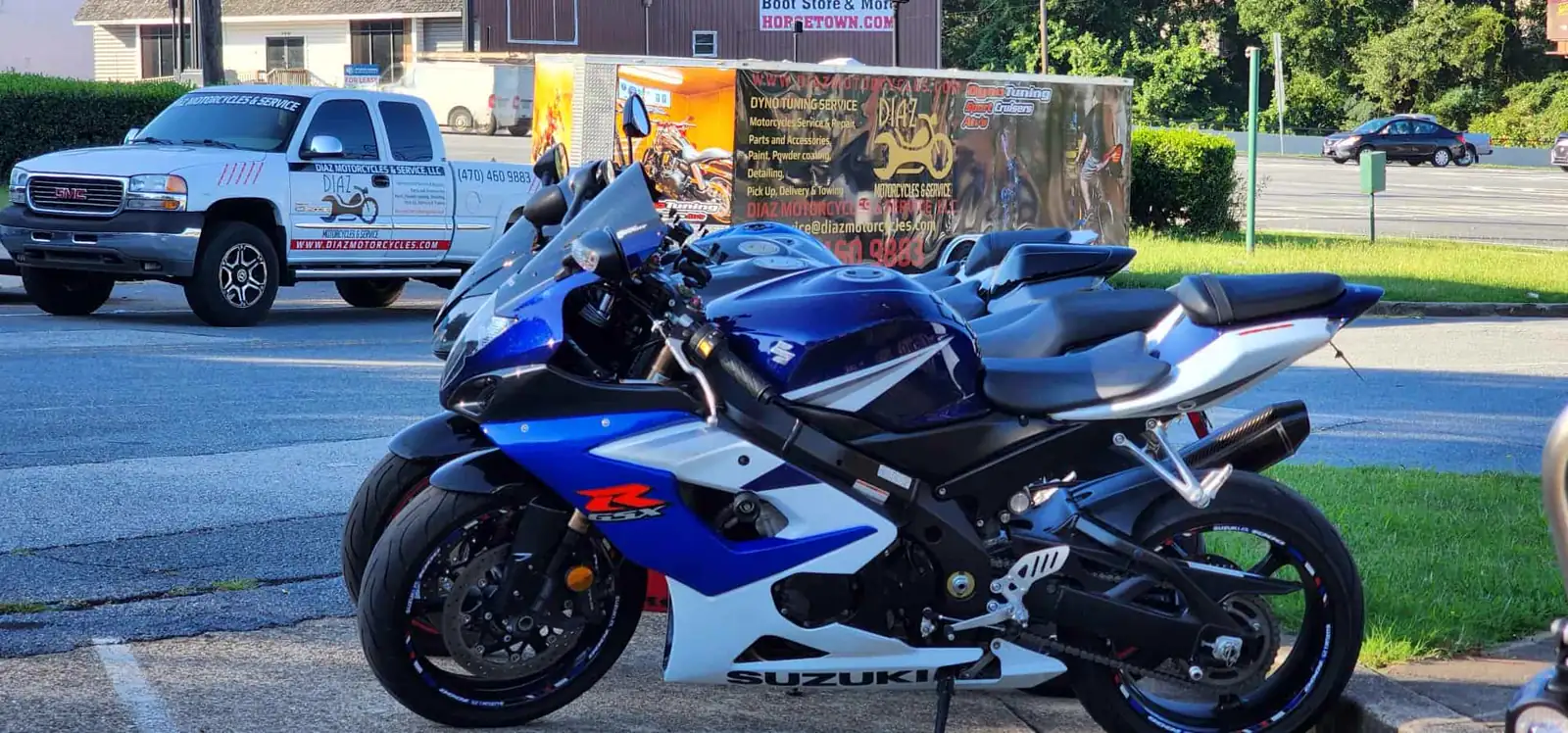
That last one matters more than people expect. Some symptoms are guessable, and some need a measurement. If a bike runs rough after a pipe or filter swap, the fix isn’t a hunch, it’s data — the same reason places like Dynojet’s dyno center exist. And if the bike checks out fine but something still feels wrong in a corner, the honest answer is seat time, which is why we point riders toward MSF rider courses.
Why this hits East Cobb bikes especially hard
Almost every overdue service East Cobb job we take in starts the same way, because this is a garage-kept, weekend-and-toy town. Two- and three-car garages are standard on these lots, so bikes stay dry, clean and safe. Wonderful for paint. Less wonderful for batteries, fuel, tires and brake seals, all of which would rather be used than admired.
The roads add their own flavor. Cobb DOT has publicly flagged East Piedmont Road for resurfacing work, and plenty of the older subdivision streets and creek-crossing arterials still have patched sections, sunken utility cuts and steep dips at the creek bottoms. Ride those on flat-spotted tires and a loose chain and the bike feels nervous in a way that has nothing to do with you. The heavy tree canopy doesn’t help either, since it holds wet leaves, acorns and pine straw in the shade long after everything else has dried.
Then there’s the sitting-still problem in reverse. Georgia doesn’t allow lane splitting and there’s no interstate cutting through, so the few riders who do commute grind up signal-heavy arterials with the clutch, the brakes and the cooling system doing all the work. Everybody else? Their bikes nap. A rider in Canton Hills and a neighbor over in Holly Springs Crossing can both have beautiful machines with the exact same sleepy-battery, stale-gas symptoms, and it isn’t neglect. It’s just how life goes when the bike is the third vehicle.
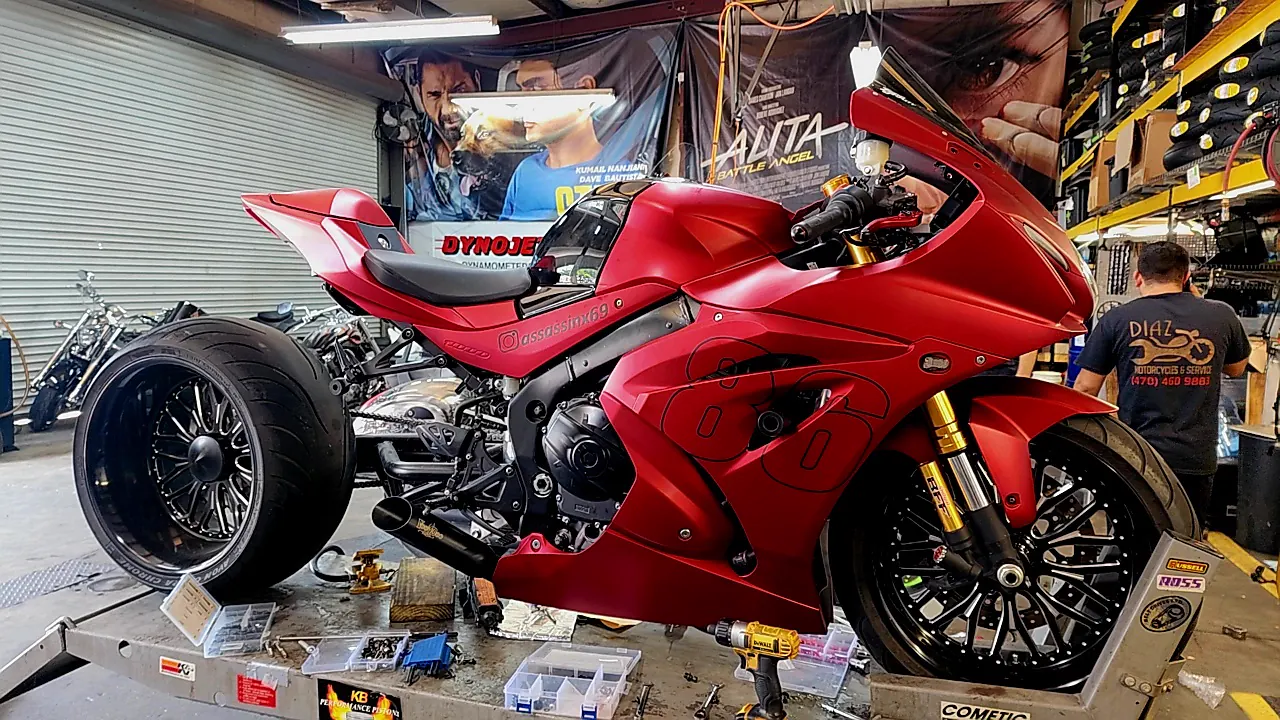
Getting service handled here has always meant leaving the community, since there’s no motorcycle dealership inside East Cobb at all. Every one sits out on Cobb Parkway or South Cobb Drive, like Indian Motorcycle of Marietta at 1750 Cobb Pkwy S, which runs Tuesday through Saturday and closes Sunday and Monday — the two days a lot of riders are actually free. We’re at 847 Barnes Mill Road, off Roswell Road, well under fifteen minutes from most of East Cobb and closer than the drive to Indian Hills Country Club is for half the neighborhood.
Timing matters too. September and October bring the best riding weather of the year, and that’s when the phone lights up with pre-trip service before Suches, Blue Ridge and Wolf Pen Gap runs. The closer stuff deserves a checked-over bike as well. That hour-away loop from Emerson past Red Top Mountain and Lake Allatoona toward Canton runs about fifty-three miles of sweepers, twisties and real elevation change, and it’s no place to discover your brake fluid is older than your riding jacket.
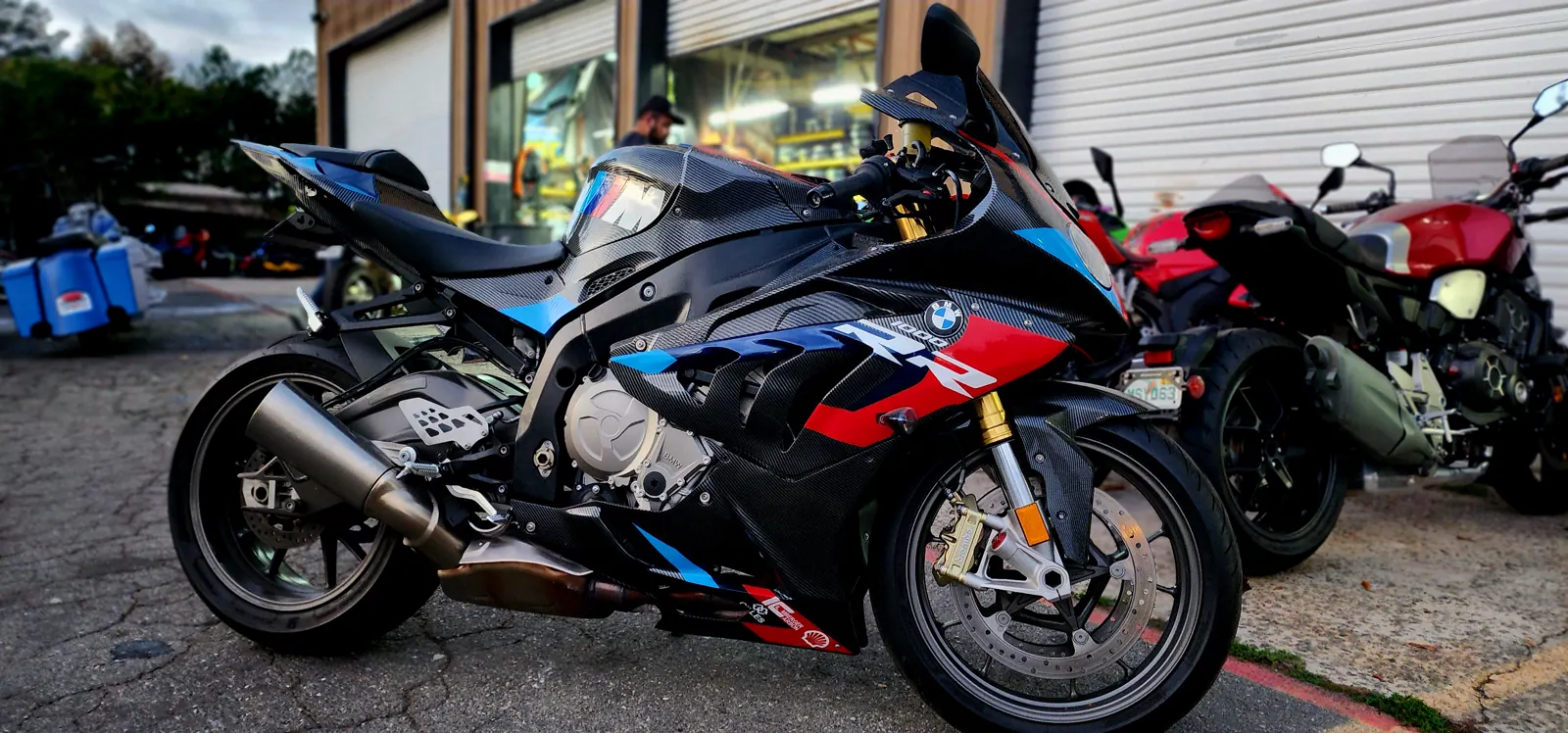
What being caught up actually feels like
Here’s the outcome we’re after. You throw a leg over, hit the button, and it lights right up. The lever comes back firm at the same spot every time. Also the chain is quiet. The bike turns in when you ask and holds a line without arguing. Nothing squeaks, nothing shimmies, and you stop half-listening for a noise the whole ride.
That’s control, and it’s mostly bookkeeping. Know what your manual asks for. Instead Know which three or four things you can check yourself in a driveway. Know who to text when something feels different. Riders in other markets deal with the exact same pattern for the exact same reasons, and we walked through the Newnan side of things in its own post if you want to compare notes.
If your bike’s been sitting and you’re not sure where it stands, don’t stress about it. Text us what you’re hearing, and we’ll tell you straight whether it’s a ride-it-in situation or a we’ll-come-get-it situation. An overdue service East Cobb rider drops off Tuesday is usually back out by the weekend. Behind is fine. Besides Behind is normal. Behind is a Tuesday.
Questions East Cobb riders ask us
What actually causes a bike to go out of service so fast when I barely ride it?
Time, not miles. Fuel goes stale, batteries self-drain, brake fluid absorbs moisture, and rubber dries out whether the bike moves or not. A garage-kept bike is protected from weather and theft, but it’s still aging on a calendar. That’s why low-mileage bikes so often show up with the same worn items as high-mileage ones.
What happens if I just ignore it for another season?
Usually the small item turns into a bigger one that takes longer to fix. A dry chain wears its sprockets. Old brake fluid cooks the seals. Stale fuel that could have been drained becomes a carb or injector cleaning. Nothing here is a disaster, but waiting almost always trades a quick visit for a longer one.
How do you find the cause instead of guessing?
We start with your description, because you’re the one who felt it. Then the bike goes on the lift with both wheels free so we can spin, listen and check play. From there it’s measurement — pad thickness, chain stretch, tire date codes, battery load, charging output. If it’s still unclear at that point, we ride it, since some things only show up at road speed.
Could my symptom be something else entirely?
Often, yes, and that’s exactly why we check instead of assume. A soft lever can be old fluid, trapped air or worn pads. A low-speed wobble can be tire pressure, a flat spot, chain slack or head bearings. We work through the likely causes in order, cheapest and most common first, and we tell you what we ruled out along the way.
Is it safe to ride while I wait for an appointment?
Depends on the symptom. Hard starting, a small stumble or a slightly noisy chain are fine to ride gently on the way in. A sinking brake lever, a tire with a bulge or visible cord, a chain with a tight spot, or fluid on a wheel or rotor means don’t ride it. When in doubt, text us a photo and a short description and we’ll tell you honestly.
Do I need to know my service interval before I call?
It helps, but it isn’t required. Your owner’s manual sets the interval for your specific model, so bring it or snap a picture of the maintenance page. If you don’t have it, tell us the year, model and roughly how long the bike has sat, and we’ll build the visit from there.
We ride out of East Cobb and take care of riders all over the north metro. That means Marietta and the rest of Cobb, plus Kennesaw, Acworth, Smyrna and Vinings, and a quick hop over the river to Roswell, Sandy Springs, Dunwoody and Alpharetta. We see plenty of bikes from Woodstock and Canton coming back from north Georgia runs, and riders from all across Atlanta who’d rather deal with a shop that texts them back. If you’re anywhere in that circle, you’re close enough.
TEXT US WHAT IT'S DOING
If your bike has been sitting and something feels off, you don’t have to figure it out alone. Text us what you’re hearing, and we’ll tell you whether it’s safe to ride in or whether we should come get it. We’re in East Cobb at 847 Barnes Mill Road, just off Roswell Road, which puts us a few minutes from home for most of the community. No hold music, no runaround — just a straight answer and a bike you trust again.
470-460-9883Diaz Motorcycles and Service, LLC · 847 Barnes Mill Road, Marietta, GA 30062