Transport Company Powder Springs — Rider's Guide
How to judge a motorcycle transport shop before your bike ever leaves the garage.
That’s why the quote came in over the phone, and something about it just didn’t sit right. It was a flat number, said fast, with no questions asked about the bike, the driveway, or whether the thing even ran. That gut feeling is worth trusting. If you’re hunting for a transport company Powder Springs riders can actually count on, the first thing to know is this: a good hauler asks more questions than they answer up front.
We hear this story a lot. A friend has a bike stuck in the garage, or one they just bought two states away, and the prices they get bounce all over the place. So let’s slow down and talk about how moving a motorcycle actually works, and how you tell the careful outfits from the ones just chasing a booking.
The problem: a quote alone tells you almost nothing
A price with no context is a coin flip. Moving a motorcycle isn’t like shipping a box. Bikes tip, plastic cracks, and paint scratches if a strap sits wrong. A quote that skips all of that comes from someone who hasn’t pictured your bike on their trailer yet. And when nobody pictures the job, the job goes sideways.
Here in West Cobb, most bikes live indoors. Homeownership runs high, the housing is single-family with two-car garages, and the bike usually sits next to the truck. So the machine we’re moving is often clean, cared for, and worth real money to the person who owns it. That raises the stakes. A dinged tank on a garage-kept Road King stings a lot more than a scuff on a beater.
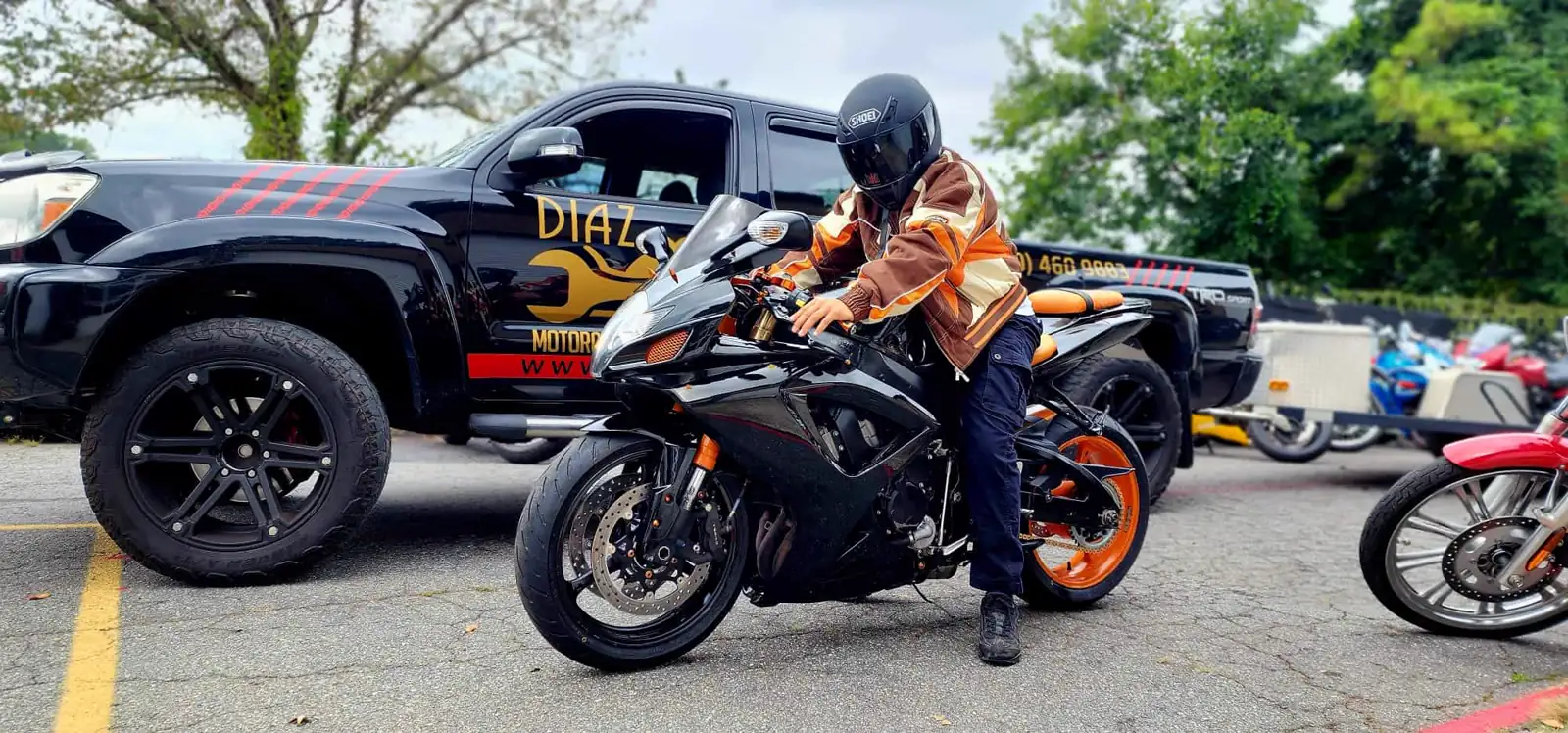
There’s a second problem hiding under the first. A lot of the advice online is written for cross-country freight brokers, not for the guy who needs a non-running Softail pulled out of Echo Mill on a Saturday. So people read the wrong playbook and end up comparing the wrong things.
Why the quotes come out so scattered
Prices swing because the work swings. A running bike that rolls straight onto a trailer is one job. Also a seized project bike with flat tires that has to be winched is another job entirely. If you want a fair look at how the work adds up, it starts with the bike’s condition, the distance, and how easy it is to reach where it sits.
Distance matters more than folks expect. Powder Springs has no motorcycle dealership and no big independent full-service shop inside the city. That leaves a thin layer of small operators against the dealers sitting twelve to twenty miles out. So when you call around, you’re often talking to people who have to drive a while just to reach you. That drive is real, and an honest shop bakes it into the plan instead of hiding it.
Access changes things too. A bike parked flat on a concrete pad is easy. Instead a bike wedged behind a lawnmower at the back of the garage, down a gravel slope, is not. None of that stops a crew that plans for it. But a shop that never asks about your driveway is a shop that gets surprised on load day, and surprises cost time.
What a scattered quote is really telling you
- A number given in ten seconds means nobody looked at your bike yet.
- Besides a price with no talk of tie-downs means nobody’s thinking about your paint.
- A hauler who won’t say open or enclosed hasn’t decided how to protect the machine.
- A shop that dodges the ‘is it running’ question is guessing, and guesses go wrong on load day.
Here’s where it gets interesting — and where most advice online falls apart. Either way the cheapest quote and the safest move are almost never the same call, and the gap between them is exactly the part nobody explains. So let’s get into the part that actually protects your bike: how it gets tied down, and what open versus enclosed really means for you.
How a bike gets moved without a scratch
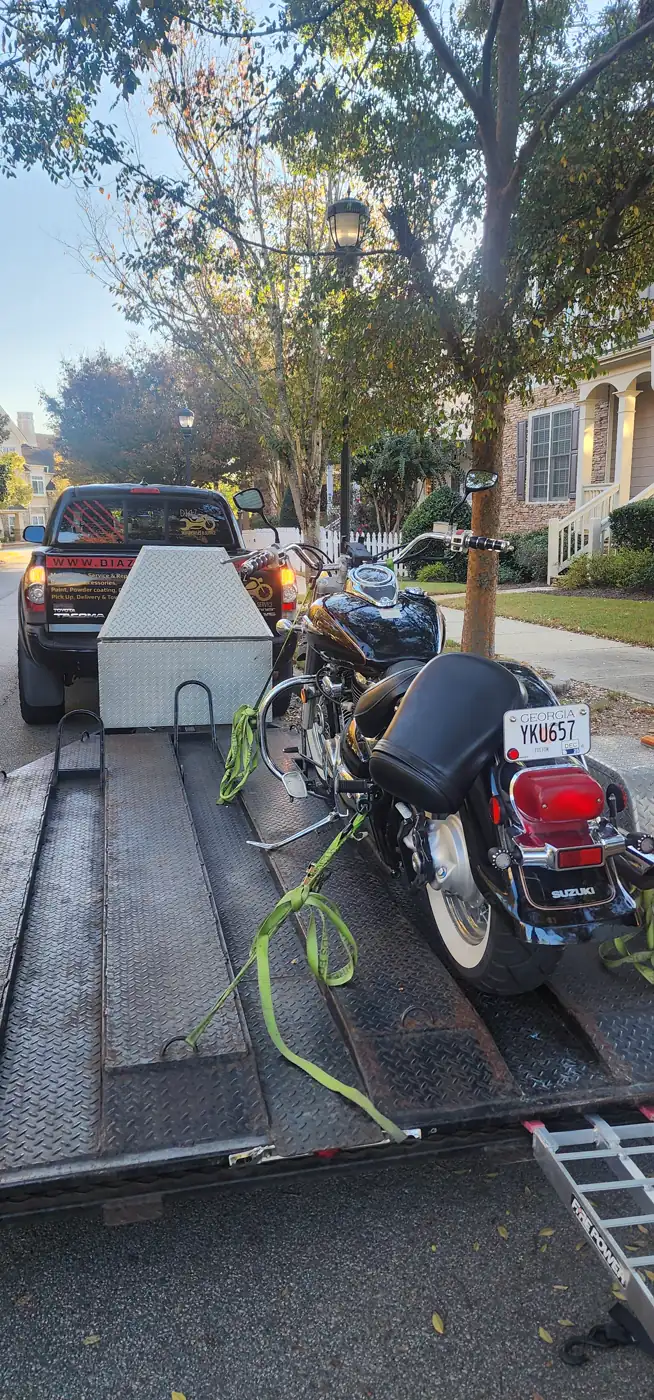
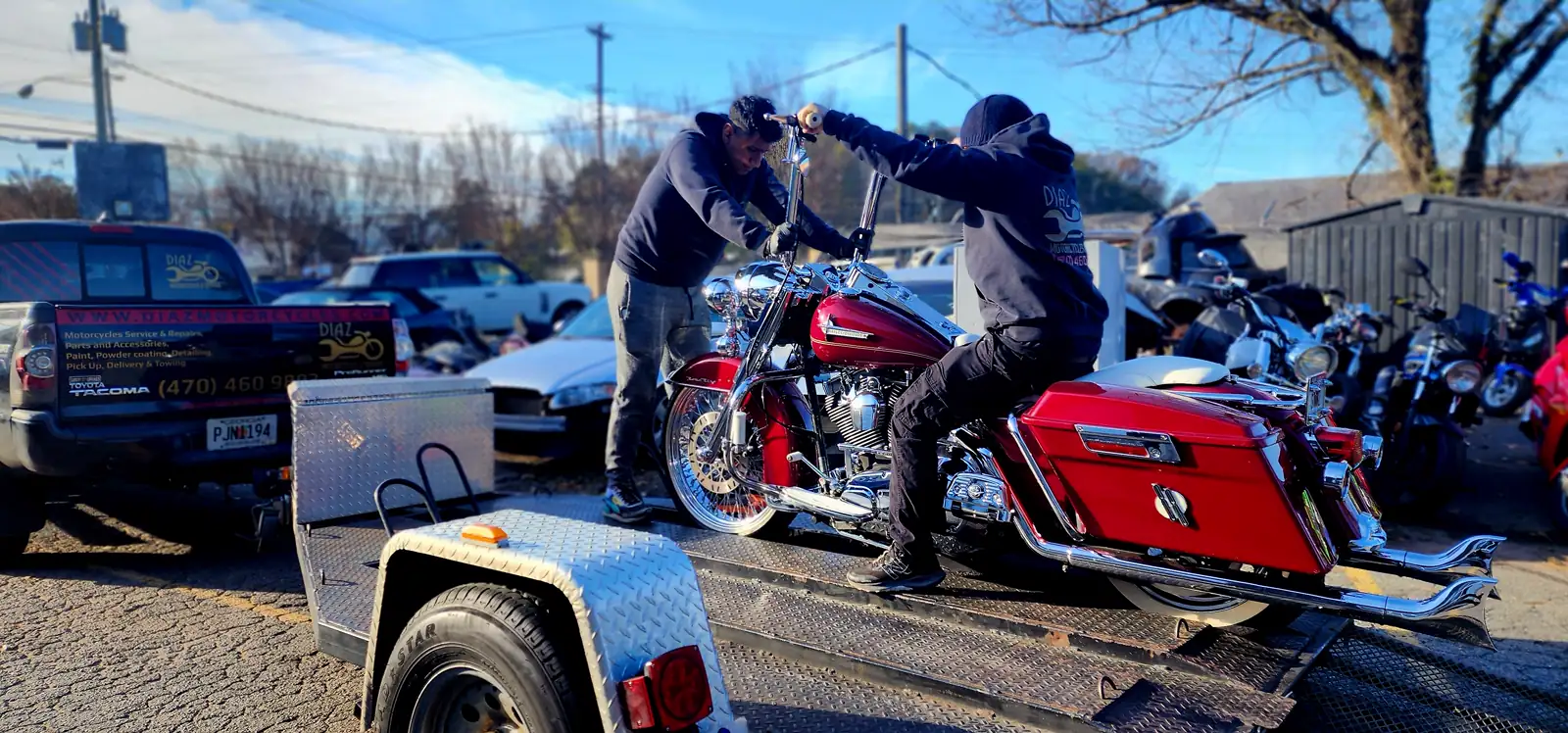
A motorcycle rides on a trailer standing up, held by its wheels and its suspension. It does not lie on its side, and it does not just lean on a kickstand and hope. In short the front wheel drops into a chock, which is a cradle that grips the tire and holds the bike upright on its own. From there, soft straps go over the handlebars or the frame, and the bike gets pulled down evenly on both sides.
That last part is the whole trick. You compress the suspension a little and keep the tension balanced left to right. Too loose and the bike wobbles; too tight on one side and you’re bending forks and marking bars. A careful crew uses soft loops so the straps never bite paint, then checks the tension again after the first few miles. Simple stuff, done right, every time.
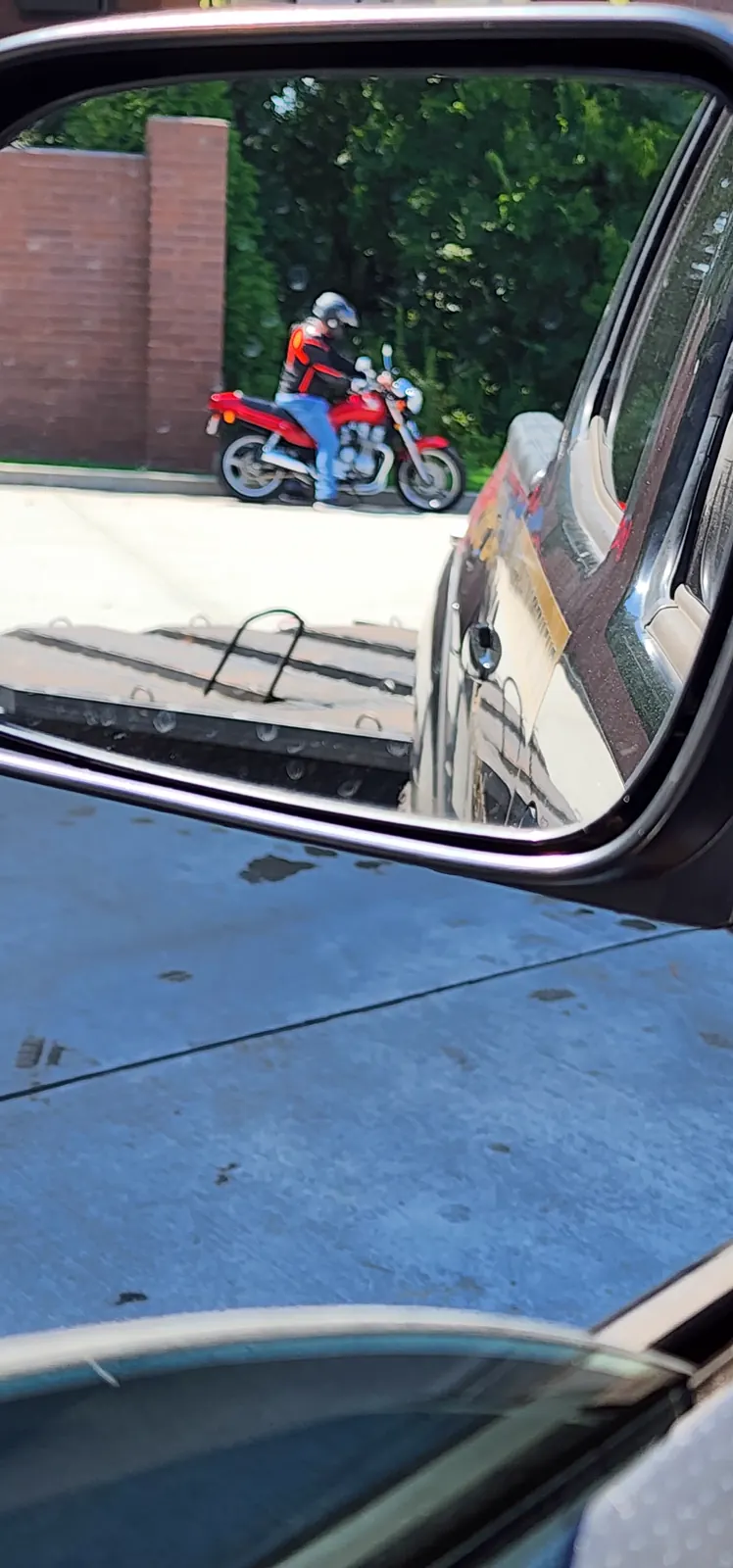
Open or enclosed is the next fork in the road. Open trailers are lighter, quicker to load, and perfectly fine for most short local hops in good weather; the bike picks up road grime, but that washes off. Enclosed is the choice when the weather’s ugly, the bike is showroom-clean, or the trip is long. Neither one is ‘better’ in a vacuum. At the same time the right pick depends on your bike and your day.
A trailer holds the bike. The plan holds your peace of mind.
The paperwork that quietly protects you
This is the part that separates a real transport company Powder Springs owners can lean on from a guy with a trailer and a phone. Before the bike moves, there should be a written condition report. Photos of every side. Notes on the scratches and chips that are already there, so nobody argues about them later. A signed handoff at pickup and again at drop-off. That paper trail isn’t red tape. It’s how both of us stay honest, and it’s how you sleep fine while your bike is on the road.
If a hauler shrugs at documentation, that’s your answer. Good shops want the photos as much as you do. We’ve never once regretted taking too many pictures.
How we size up a move before we ever load it
When someone calls us, we ask a short list of plain questions. Does it run and roll? Where does it sit, and can a trailer get close? Any flats, leaks, or dropped bikes we should know about? Where’s it going, and by when? Those answers tell us the trailer, the straps, the crew, and the time. It’s the same logic we use for the wrench work; you can see what happens in our bays once a bike lands with us.
For a non-running bike, honestly, this is where ‘we come get it’ beats everything else you could do. You can’t ride a bike that won’t start. You shouldn’t push a heavy bagger down the street by yourself. And renting a truck, finding a ramp, and wrestling a dead machine up it alone is how driveways get dented and backs get tweaked. Letting a crew with the right gear handle it is the easy button, and it exists for a reason.
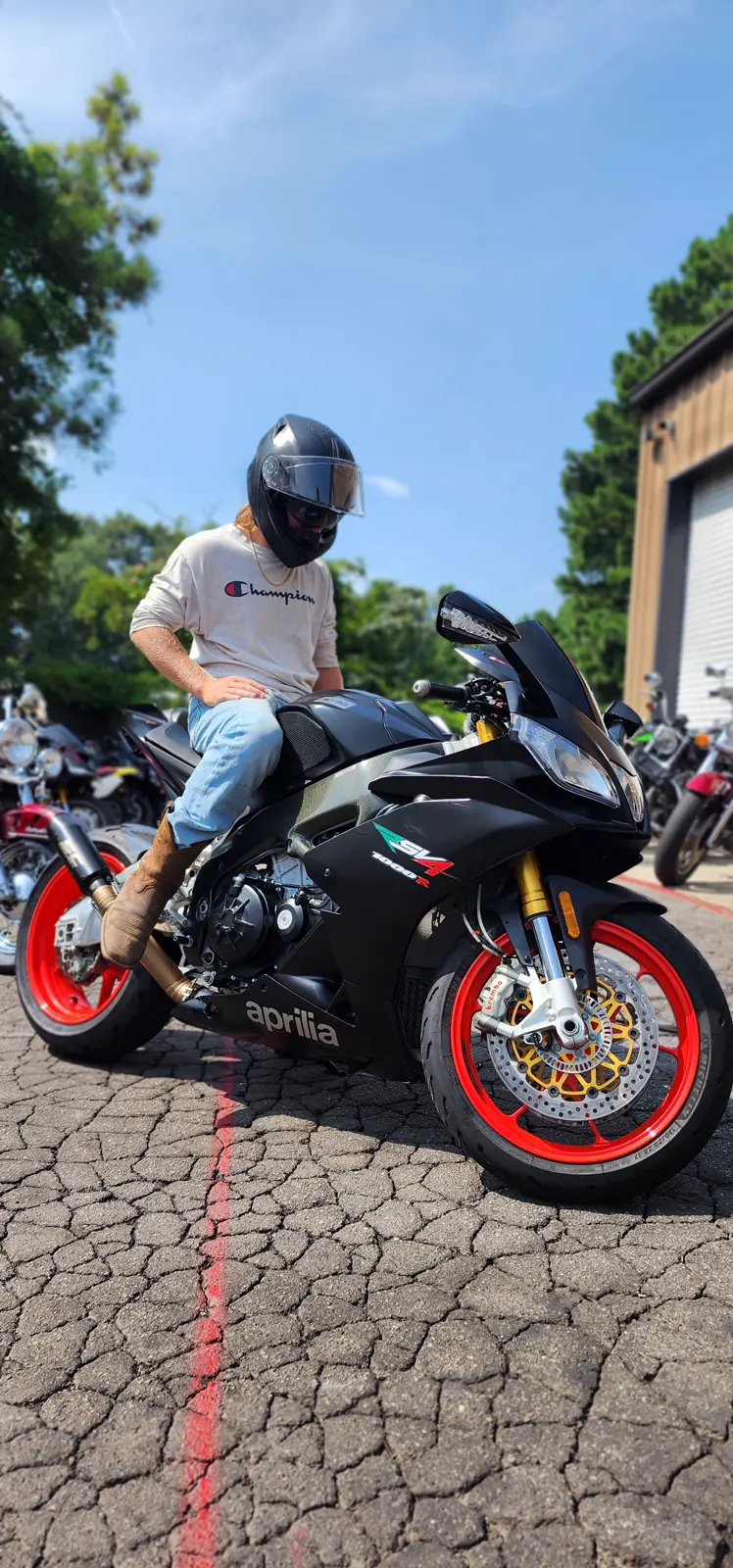
As a result the same thinking covers the bike bought out of state, the one you inherited, or the estate machine that’s been parked for years. A vintage project doesn’t need to run to come home. It just needs a careful load and a plan. There’s something genuinely good about seeing an old bike get a second life instead of a tarp.
Choosing a shop: real criteria, not a gut guess
You’re comparing options, so here’s a fair scorecard you can use on anybody, us included. None of it is about slick talk. It’s about whether the crew has actually thought the job through.
- Do they ask about the bike’s condition before quoting? Careful movers do.
- Do they explain the tie-down method in plain words? Vague answers are a red flag.
- Will they tell you open or enclosed and why? A pro has an opinion for your bike.
- Do they document condition with photos and a signed handoff? That protects you.
- Are they clear about reaching your driveway and the drive itself? Honesty here saves the day.
- Do they work across brands, or only one? Independents keep more doors open for you.
That last point is worth sitting with. On the other hand the nearest big alternatives are dealerships, and dealerships do good work within their lane. Hellbender Harley-Davidson over on S Cobb Dr in Marietta, the shop that used to be Earl Small’s, is a solid brand house about fourteen to sixteen miles northeast. If you ride a Harley and want the dealer experience, that’s a fair option and we’d never talk you out of it.
But dealers are brand-focused by design, and spring waits can stretch out for weeks. An independent works across cruisers, sportbikes, ADV bikes, and vintage machines under one roof. So if your garage has a metric cruiser next to a project bike next to your kid’s sportbike, one shop can help with all of it. Different tool for a different job.
West Cobb context: distance is the whole point
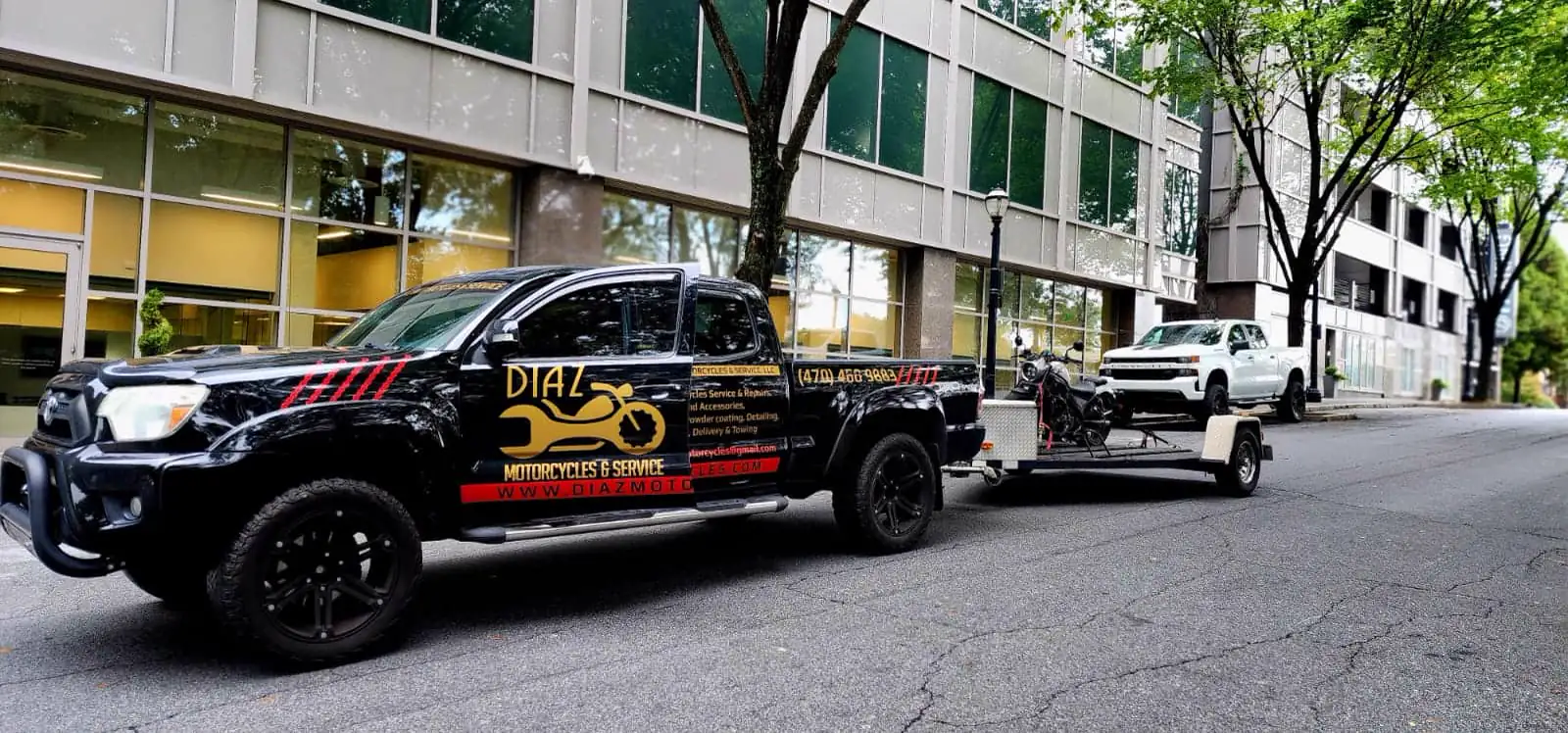
Powder Springs sits far enough from the shops that transport isn’t a luxury here, it’s the practical move. From most of the city, our shop is about fifteen to eighteen miles out, roughly thirty to forty minutes running northeast on Powder Springs Road or Macland Road (GA 360) toward Marietta, then east toward Barnes Mill Road. Macland is the main west Cobb connector, and it carries heavy school and construction traffic, so those minutes are estimates that shift with the day.
That distance is exactly why pickup and delivery matters so much out this way. Riding a healthy bike over is easy on a good day; the Dallas Highway (GA 120) west spin toward Dallas and Hiram is a fine warm-up before you point it toward Marietta. But a bike that won’t run can’t make that trip at all. And that’s the whole pitch: when the machine’s stuck, we come to it.
Neighborhoods across the city fit the same pattern. Whether the bike’s parked in Echo Mill, tucked in an established garage over in Peach Plantation, or sitting behind one of the higher-end addresses in The Hermitage, the drive to us is the same short northeast hop. So the pickup is really the deciding factor, not the ZIP code. This is a seasonal-riding town, too. Bikes here sit through winter, and spring wake-up is the busy season, which is often when a dead battery turns a ride into a tow.
There’s a landmark note worth making, because folks new to hauling get this backwards. So the Silver Comet Trail and its Powder Springs Trailhead are a huge part of local life, one of the busiest spots on that 59-mile rail-trail, but it’s for bikes with pedals and folks on foot, not motorcycles. So when we talk transport routes, we mean the roads, not the trail. And if you grew up around here, McEachern High School and the crowd at Walter H. Cantrell Stadium on a Friday night are a better map of the community than any GPS pin.
Here’s what changes once it’s actually sorted. Still, the bike that’s been dead weight in your garage for a season becomes a project we can move, look at, and bring back to life. No renting a truck. Actually No dropping it in the driveway. No favor you owe your buddy with the trailer. If it turns out the bike needs tuning after transport, you can read up on what that service actually involves and decide from there. One call handles the hard part.
NEW TO RIDING?
If a family member’s bike just landed in your garage and you’re thinking of riding it yourself, take a real class first. Plus, the MSF Basic RiderCourse is the gold standard, and the NHTSA crash data makes a strong case for gearing up and training up before your first mile.
The outcome you're actually after
When it’s done well, transport is boring, and boring is the goal. The bike leaves standing up, arrives standing up, and the only difference is the address. You get photos, a signed handoff, and a machine that’s ready for the next step. That’s the quiet win we’re chasing every time a friend’s bike rolls up the ramp.
So when that first quote lands and doesn’t feel right, you don’t have to just take it or leave it. You can ask the questions on the scorecard and listen for real answers. A crew that talks straight about condition, tie-downs, trailers, and paperwork is a crew that’s already protecting your bike before it moves. And this is the same care we bring to everything, whether it’s a local pickup or a longer haul, the way you’d see it play out in how this plays out in Canton.
That’s the whole point of thinking it through. You end up with a bike that’s home, a hauler you’d call again, and one less thing sitting dead in the garage. And honestly, that spot where the stuck bike used to be feels pretty good.
Questions Powder Springs riders ask us
How do I know a transport quote is honest?
An honest quote starts with questions about your bike, not a number. Whoever’s moving it should ask if it runs and rolls, where it sits, and whether a trailer can reach it. If those questions never come up, the quote is a guess. A careful crew explains the plan before they explain the price.
What makes an independent hauler different from a dealer?
An independent works across brands under one roof, so cruisers, sportbikes, ADV bikes, and vintage projects all get handled the same day. Dealers do strong work within their own brand and lane, which is a fair choice if you ride that make. The difference is flexibility. If your garage has more than one kind of bike, an independent keeps more options open.
How do I pick a good motorcycle transport shop?
Use a short scorecard. Do they ask about condition before quoting, explain the tie-down method in plain words, tell you open versus enclosed and why, and document everything with photos and a signed handoff? A shop that hits all four is thinking about your bike. A shop that dodges them is thinking about the booking.
Should I move a non-running bike myself?
You can, but it’s the hard way. A dead bagger is heavy, ramps are steep, and wrestling it alone is how driveways get dented. A crew with a chock, soft straps, and a winch does it in minutes without drama. For a bike that won’t start, letting someone come get it is genuinely the easy button.
What should I ask before I book a pickup?
Ask how they secure the bike, whether they’ll run open or enclosed for your machine, and how they document condition. Then tell them the truth about your driveway and whether the bike runs. The more you share up front, the more accurate the plan and the smoother load day goes.
Is my bike safe on an open trailer for a short haul?
For most short local trips in decent weather, yes. Open trailers load fast and hold the bike upright in a wheel chock with balanced straps. Your bike picks up a little road grime, which washes right off. Enclosed is the pick for ugly weather, a showroom-clean bike, or a long trip. The right choice depends on your bike and the day.
We run pickup and delivery across West Cobb and well beyond it, so a stuck bike is never really stuck. Besides Powder Springs, we regularly help friends in Marietta, Austell, Hiram, Dallas, Mableton, and Douglasville, along with riders over in Kennesaw, Smyrna, Lithia Springs, Villa Rica, Clarkdale, and Fair Oaks. If your bike sits inside that circle and won’t make the ride to us, that’s exactly what the trailer is for.
STUCK BIKE IN POWDER SPRINGS? WE'LL COME GET IT
If a bike’s parked dead in your Powder Springs garage, bought out of state, or just needs a careful ride to the shop, text us and we’ll set up a pickup that keeps your paint and your peace of mind intact. Tell us if it runs, where it sits, and where it’s headed. We’ll bring the chock, the straps, and the plan.
470-460-9883Diaz Motorcycles and Service, LLC · 847 Barnes Mill Road, Marietta, GA 30062