Enclosed vs Open Transport Roswell: How to Choose
Two ways to move a bike, one honest recommendation, and the situation where the pricier option actually earns its keep.
We’ll say the thing most shops won’t. About nine out of ten bikes we move ride perfectly fine on an open trailer, and paying extra for a box on wheels does nothing for them. That’s the honest starting point for anyone weighing enclosed vs open transport Roswell, and it’s the exact part a lot of folks selling the upgrade like to skip right over.
So let’s do this the way a buddy would, not the way a sales sheet would. We’ll lay out both options fair and square, tell you who each one is genuinely right for, and give you a real pick with the reasoning behind it. Then we’ll name the one situation where the other choice clearly wins, because it exists and pretending it doesn’t would just be dishonest.
What you're really asking
When someone calls us about moving a bike, the question sounds like “enclosed or open?” But underneath it, they’re usually asking something simpler: will my motorcycle show up the way it left? That’s the real worry, and it’s a good one. A trailer is not a place you want surprises.
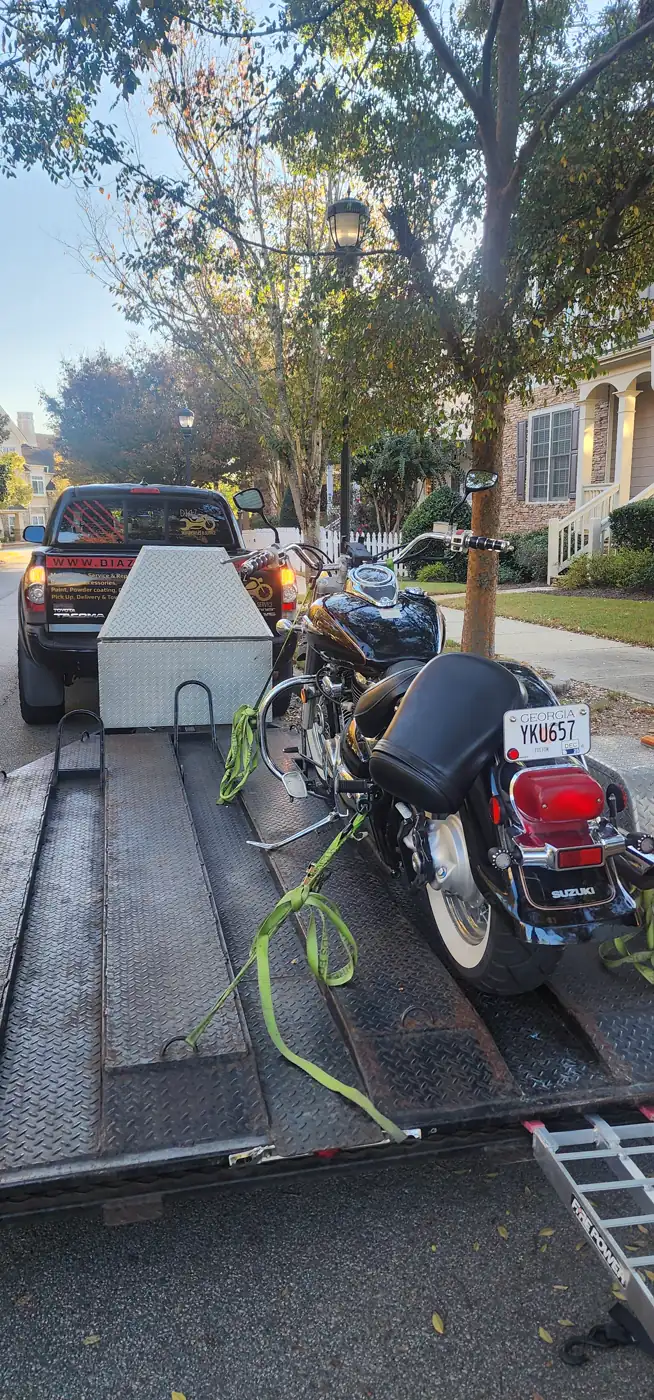
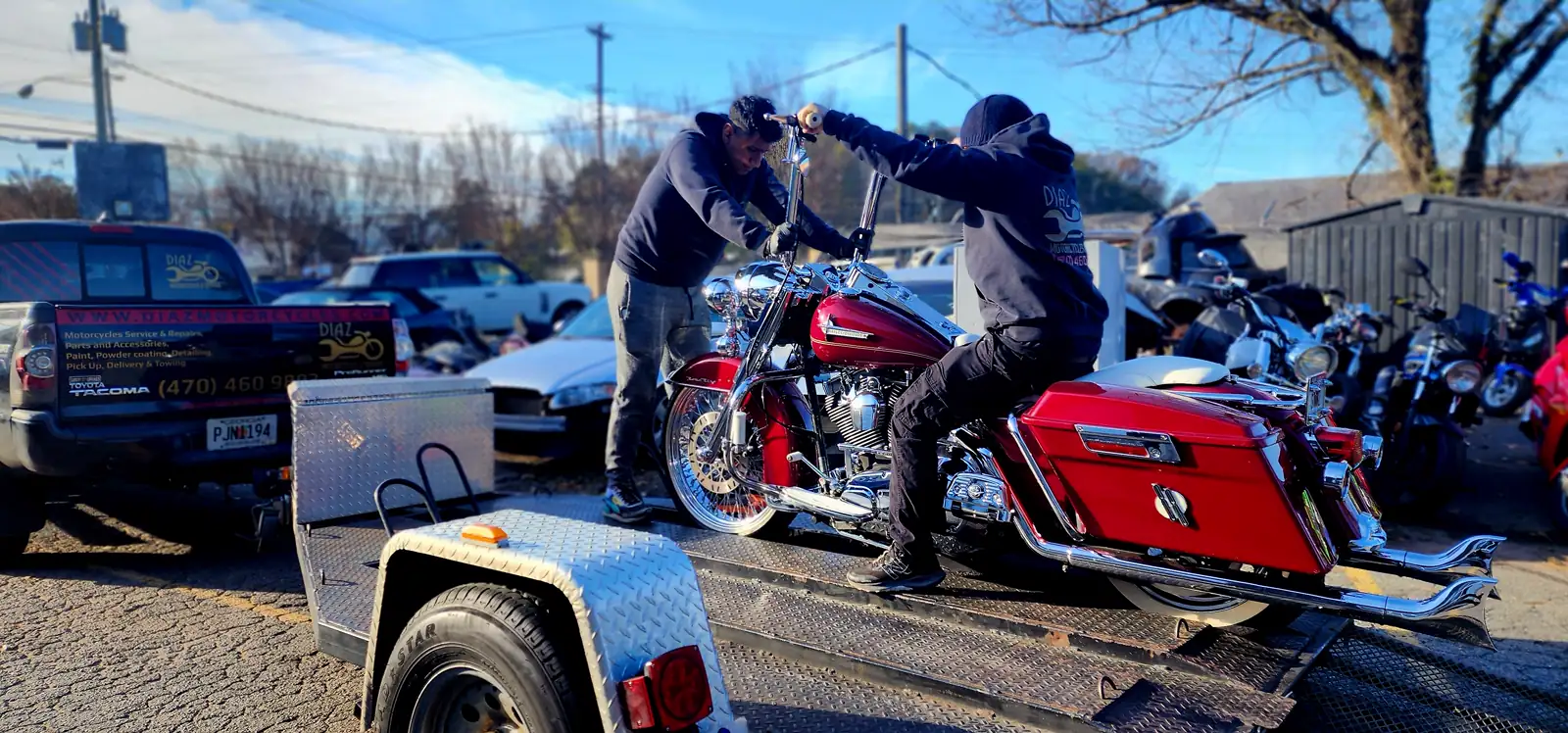
Open transport means your bike rides on a flat deck, strapped down in the open air, out where you can see it. Enclosed transport means it rides inside a covered box, hidden from the road, the weather, and everybody’s eyes. Both get your bike from point A to point B. The difference is what happens to it along the way, and how much of that difference your specific bike actually cares about.
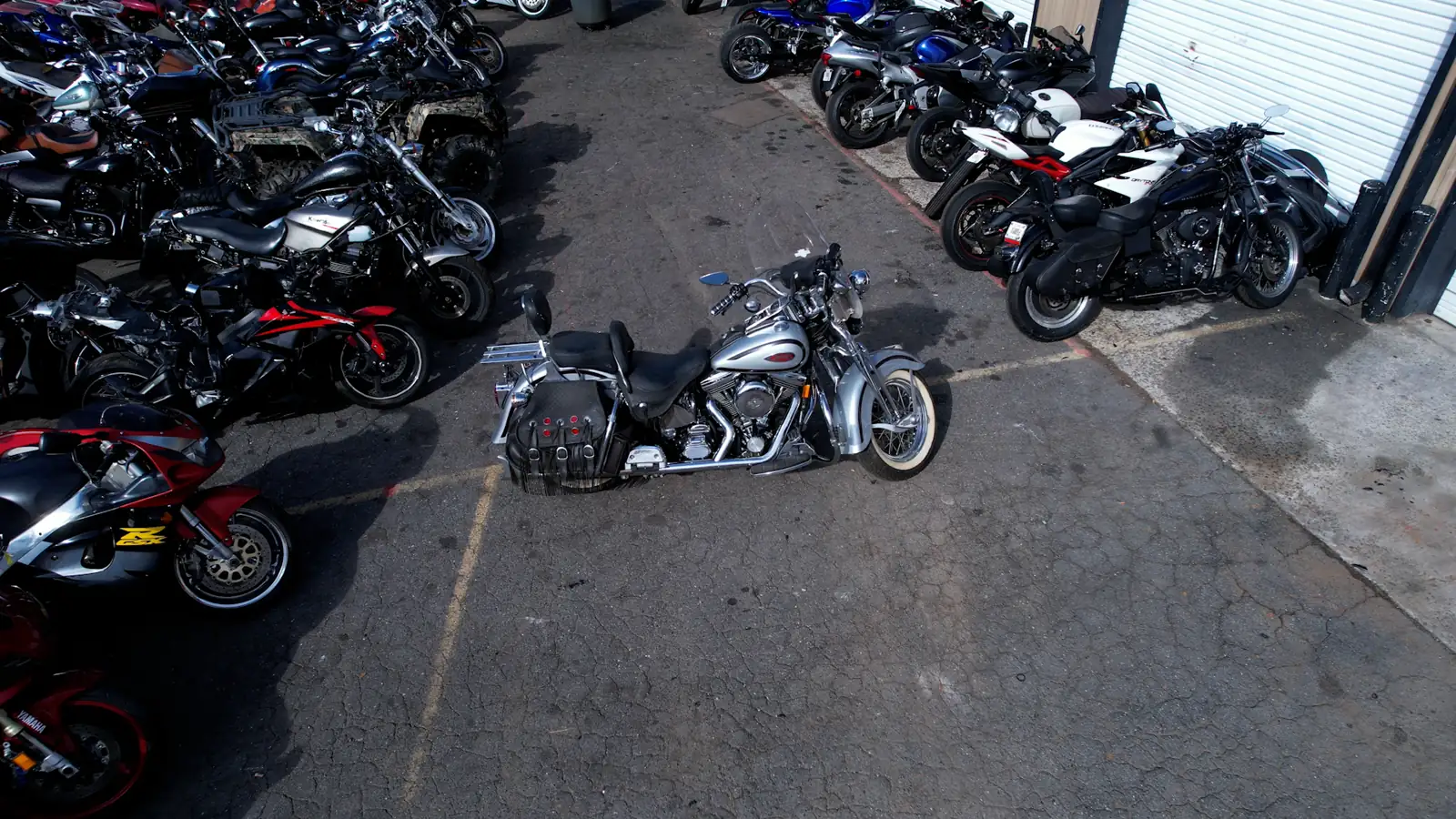
Here’s a helpful way to frame it. Open transport is like driving your bike to the shop in the rain. Nothing bad happens, it just gets a little dirty. Enclosed transport is like putting it in a garage for the trip. Nicer, sure, but a clean daily rider does not need a garage to survive a two-hour tow across metro Atlanta.
The honest answer: open transport is right for most bikes
For the everyday cruiser, the commuter sportbike, the touring rig you actually ride hard, open transport is the smart call. It’s faster to book, it costs less, and the bike arrives fine. We strap it down properly, it rides in the open for a couple hours, and it shows up ready to roll. If your bike already lives outside under a cover in the East Roswell townhome lots, a short open haul is nothing it hasn’t seen.
Open trailers also load and unload quicker, which matters more than people think. If a bike won’t start, a flat open deck with a ramp is the easiest thing in the world to winch it onto. There’s room to work, room to steer, and nothing overhead to fight. When we’re grabbing a dead bike out of a garage, open is almost always the move, and it’s part of why “we come get it” beats every other option for a stuck bike. If you want the backstory on those dead-battery and no-crank calls, we wrote up what usually causes it so you can see how common it really is.
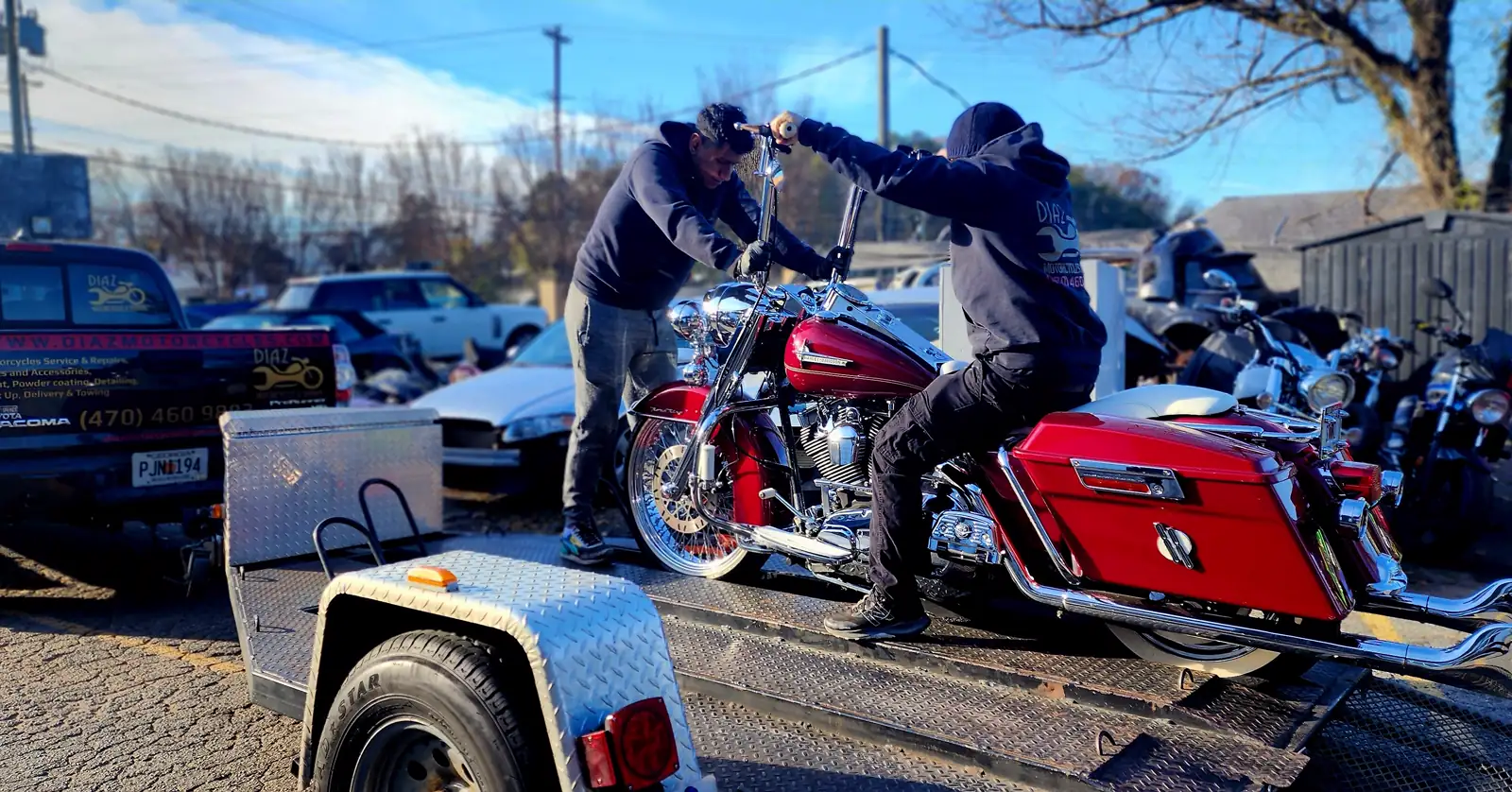
The knock on open transport is real but small. Your bike sees road grime, maybe a little rain, and the occasional bug. On a working motorcycle that gets ridden through Georgia summers anyway, that’s a car wash you’d give it regardless. So for the bulk of riders reading this, our recommendation is simple and unglamorous: book open, save the difference, ride the bike.
Most bikes don't need a box. They need to get there in one piece, and open does that every day.
Now, the part nobody mentions until you’re already paying for it. The upgrade to enclosed is not really about damage protection on a normal ride. Straps and tie-downs do that job on any trailer. What you’re actually buying with enclosed transport is protection from the weather and from being seen, plus a softer ride for parts that hate vibration. That’s it. Understand that, and the decision stops feeling like a gamble and starts feeling like a checklist.
What changes the answer: when enclosed wins
There’s a clear line where we stop nudging you toward open and start recommending enclosed without hesitation. It comes down to the bike, the distance, and how much the finish matters to you. Here’s where the box earns its keep.
- Fresh paint or show-quality chrome. If a bike just left our booth or you’re hauling a concours restoration, road grime and stone chips are the enemy. Enclosed keeps it spotless.
- Long-distance shipping. A quick tow across the river is one thing. A multi-state haul in changing weather is another. The longer the road, the more the cover pays off.
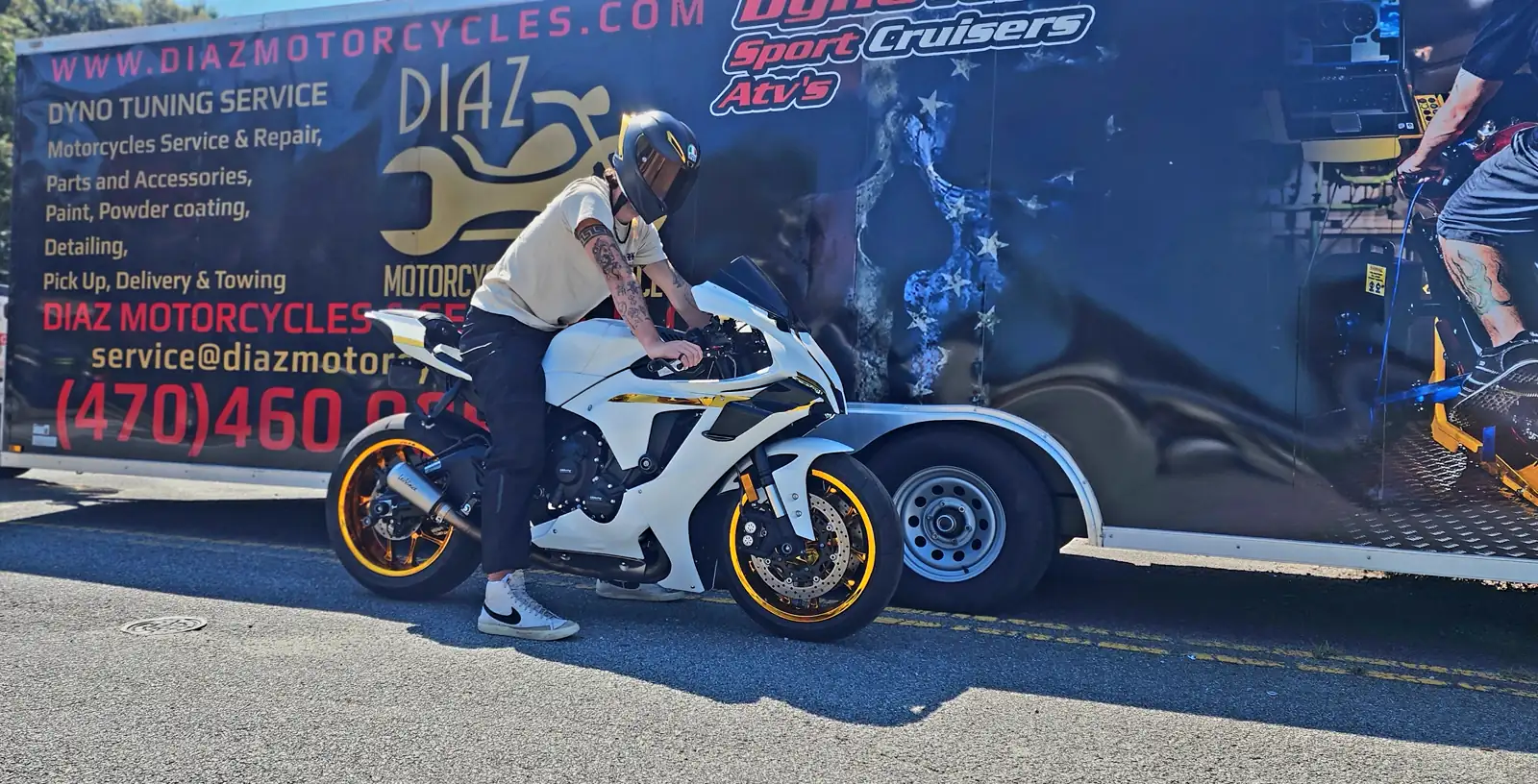
- Rare, vintage, or European exotica. Older Italian bikes and collector machines have finishes and parts you can’t just reorder. Enclosed is cheap insurance on something irreplaceable.
- Total discretion. Some owners simply don’t want the bike visible from the highway. A closed trailer handles that quietly.
- A very sensitive electrical or fuel setup where you’d rather no weather touch it at all.
Notice what’s not on that list: your regular Road King, your GS commuter, your track-day sportbike. Those don’t need enclosed for a metro haul, and we’ll tell you so even though the upgrade would pad the ticket. That’s the whole point of talking to a shop instead of a booking form. The situation where enclosed wins is real, but it’s a minority of bikes, and you deserve to know which side of the line yours sits on.
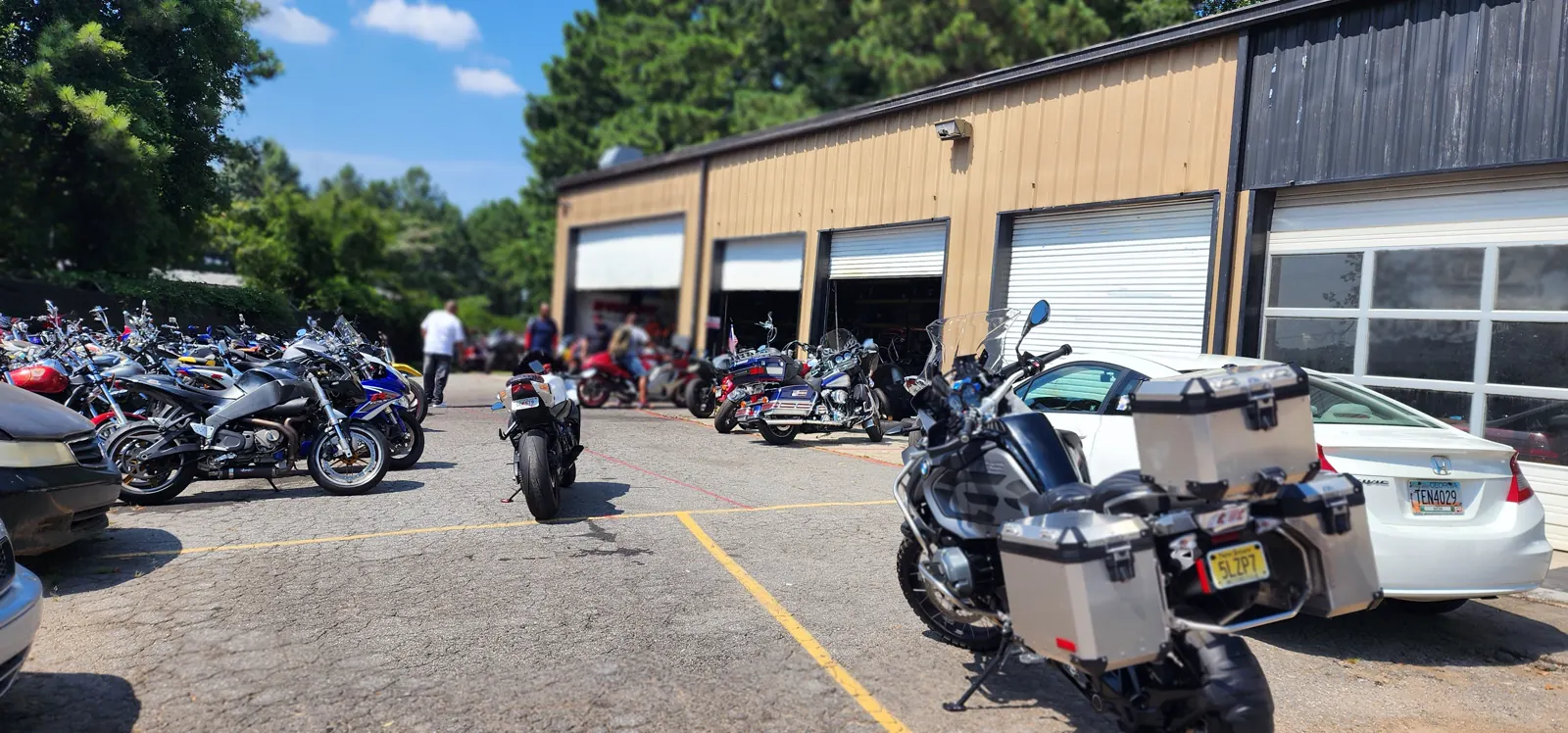
If you’re cross-shopping this same call in a different town, the tradeoffs shake out about the same. We laid out what Woodstock riders run into, and you’ll notice the logic doesn’t change with the ZIP code. The bike and the distance decide it, not where you happen to park.
How the work actually gets done
Both options live or die on one thing: how the bike is tied down. A perfect enclosed trailer with sloppy straps will hurt a bike worse than an open deck done right. So this is where you should really be paying attention, no matter which trailer shows up.
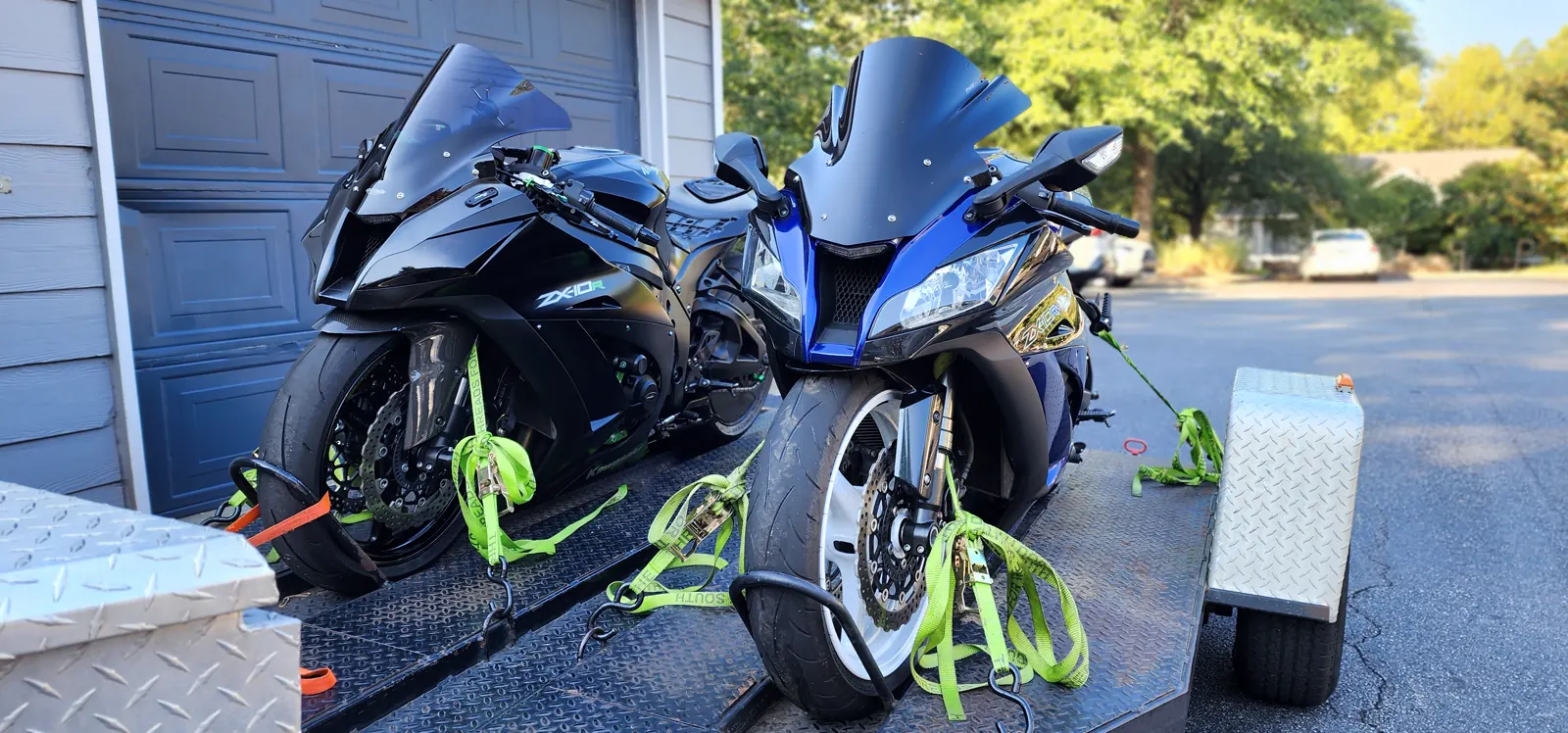
We tie down with soft loops around solid points, never around brake lines or plastic. The front gets compressed into the fork just enough to load the suspension, so the bike can’t bounce and go slack. Two points up front, two at the rear, and a chock or wheel cradle so it can’t roll. Ratchet straps get set snug, checked once the bike settles, and checked again before we pull out. It’s boring, it’s methodical, and boring is exactly what you want moving a motorcycle.
Then there’s the paperwork, and this part protects you, not us. Before a wheel turns, we note the bike’s condition, snap photos, and log any existing scuffs or dings. You get that record, and it means there’s never a “was that there before?” argument at drop-off. For a bike bought out of state, an inherited machine you’ve never seen in person, or a post-accident pickup, that documentation is the quiet thing that keeps everyone honest. It’s the same care we’d want for our own bikes, and it’s baked into how our crew approaches it on every job, open or enclosed.
WHAT PROTECTS THE OWNER
Condition photos before loading, soft ties on solid mounts, a chock so the bike can’t roll, and a written record you keep. Do those four things and the trailer type becomes the small decision it should be.
One more honest note. If you’re moving a bike because it’s stranded or won’t run, transport isn’t the finish line, it’s step one of getting it fixed. Once it’s on our lift, what the work covers is a separate conversation, and we keep it just as straight as this one. New riders sorting all this out for the first time can also lean on the Georgia Motorcycle Safety Program for the basics of owning and moving a bike in this state.
The Roswell picture
Here’s why transport matters so much on your side of the river specifically. Roswell has real geography working against a quick shop run. There are only two crossings into East Cobb, the Roswell Road / GA 120 bridge and the Johnson Ferry Road bridge, and both funnel every rider through the same pinch points. When those bridges back up, a fifteen-minute hop turns into a slog, and riding a bike that’s already acting up across a crowded span is the last thing you want.
The riding around here doesn’t make bikes any gentler, either. Locals chase evening loops down Willeo Road past the Chattahoochee Nature Center, that tight tree-lined river stretch that’s perfect for a post-service shakedown and rough on tires and suspension over time. Roswell’s got active repaving underway on named streets around the historic district, and those fresh utility-cut seams and lingering rough patches are exactly what bends a rim or knocks a bike out of alignment. When that happens miles from home, you don’t ride it in. You call for a pickup.
Roswell riders also tend to know their stuff. With Alpharetta Highway lined by dealers and shops, folks here have seen what a service department feels like, and they can smell an upsell from across the lot. Cycle Gear Roswell over on Alpharetta Highway is a fine stop for gear, tires, and the monthly bike night, and it’s part of what makes this a sharp, educated crowd. That’s honestly our favorite kind of customer, because when we say “you don’t need enclosed for this,” they get why we’d bother saying it.
And it’s not a long trip to us. From Historic Roswell and Canton Street, we’re basically one road west, over the Chattahoochee into East Cobb, closer than a lot of Atlanta. Whether your bike lives in an established Martin’s Landing garage near that 53-acre lake, on a bigger lot out in Horseshoe Bend, or over in the Lake Charles Estates area, the pickup is short and the same either way. We come to the garage, you don’t wrestle a sick bike across town, done.
And then there’s the part that’s just about riding again. Because when the transport is handled and the work is done, the reward is a bike you can point back down Willeo Road or across the Vickery Creek Covered Bridge district toward the river without a second thought. The whole reason to sweat the tie-downs and the trailer choice is so that last part feels effortless. That’s the outcome we’re actually chasing here.
The Chattahoochee River National Recreation Area wraps Roswell on three sides, with the Vickery Creek, Island Ford, and Gold Branch units all touching town, and those river roads are half the reason people ride here at all. Get your bike home right and you get all of that back. Weigh the same tire and grip questions with Dunlop’s technical resources if you want to nerd out on the details, but the transport call itself really is this simple.
So, which one?
Here’s the clean version. Pick open for almost everything: daily riders, cruisers, commuters, any bike that gets ridden in real weather anyway. Pick enclosed when the finish is precious, the road is long, or the bike is rare enough that you’d lose sleep over a stone chip. If you can’t tell which bucket you’re in, that’s a two-minute phone call, and we won’t upsell you into a box your bike doesn’t need. Clear head, right choice, bike home safe. That’s the whole job.
Questions Roswell riders ask us
Is the enclosed upgrade worth it?
For most bikes, no. Straps protect against damage on any trailer, so the upgrade mainly buys weather and visibility protection. It’s worth it for fresh paint, rare or vintage machines, and long-distance hauls. For a daily rider on a metro tow, open does the job.
Which one should I pick for a normal cruiser or sportbike?
Open transport, without hesitation. A Road King, a GS commuter, or a track-day sportbike arrives perfectly fine on an open deck. You save the difference and the bike is ready to ride. We’ll tell you the same thing on the phone.
What's the real difference between the two?
Open means your bike rides on a flat deck in the open air. Enclosed means it rides inside a covered box, hidden from road grime, weather, and view. Both get it there safely. The cover only matters when the finish or the distance calls for it.
Which keeps my bike in better shape long term?
They’re equal on a normal haul, because the tie-down job matters far more than the trailer type. Enclosed pulls ahead only over long distances or on show-quality finishes where road exposure adds up. For a bike you actually ride, open transport won’t hurt it.
Which is right for my kind of riding around Roswell?
If you ride hard on the river roads and commute your bike, open transport fits your life and your machine. If you own a collector piece or something with fresh custom paint, enclosed is the safer call. Tell us the bike and we’ll point you the right way.
My bike won't start. Does that change anything?
It actually favors open transport. A flat deck with a ramp is the easiest thing to winch a dead bike onto, with room to steer and push. We come to your garage, load it, and document its condition before we pull out. Then we sort the fix once it’s on the lift.
We pick up and deliver all over North Fulton and East Cobb, so a short hop from Roswell is nothing new for us. We run regularly to Alpharetta, Milton, Johns Creek, and Crabapple on the north side, across the river into East Cobb and Marietta, and down through Sandy Springs, Dunwoody, and Mountain Park. We also cover Woodstock, Kennesaw, and the wider Atlanta metro when a bike needs to come home. If your bike is stuck, we’ll come get it.
STUCK BIKE IN ROSWELL? WE'LL COME GET IT
Whether it’s a dead battery in a Roswell garage, a bike bought out of state, or a fresh restoration that needs the covered treatment, we’ll pick the right trailer and pick it up. Text us the bike and where it’s sitting, and we’ll tell you straight whether open or enclosed makes sense for your ride.
470-460-9883Diaz Motorcycles and Service, LLC · 847 Barnes Mill Road, Marietta, GA 30062