Motorcycle Pickup Sandy Springs — Why It Happens
The bike that won't run isn't stuck where it sits. Here's how a bike really gets moved, and what protects you along the way.
Most riders believe a bike that won’t start is stuck right where it sits. Fix it enough to limp it in, they figure, or wrestle a rented truck and a fistful of straps on their own. That belief quietly eats whole riding seasons. Here’s the flip: a motorcycle pickup Sandy Springs riders count on is a normal, planned, everyday thing, and the bike almost never has to move under its own power for it to happen.
We hear the same worry all the time from friends we’ve helped. They think calling for a pickup means something went badly wrong, or that it’s some last-resort move that costs a fortune and risks the bike. None of that is true. So let’s clear the air, one plain step at a time, until the whole thing feels obvious instead of scary.
The myth: a bike has to ride to the shop
On the other hand the old idea goes like this. Your motorcycle is a thing you ride, so getting it serviced means riding it to service. If it won’t run, you’re stuck. And if you’re stuck, the only options are a sketchy roadside fix or a friend with a truck who owes you a favor.
That story made sense back when a bike shop sat on every other corner. It doesn’t hold up here. Sandy Springs is a high-income city full of good bikes with almost nowhere close to take them, because there’s no motorcycle dealership or dedicated repair shop inside the city limits. Riders here are already driving somewhere for real work. The myth assumes a world that doesn’t exist on this side of the river anymore.
The reality: the bike stays put and we come to it
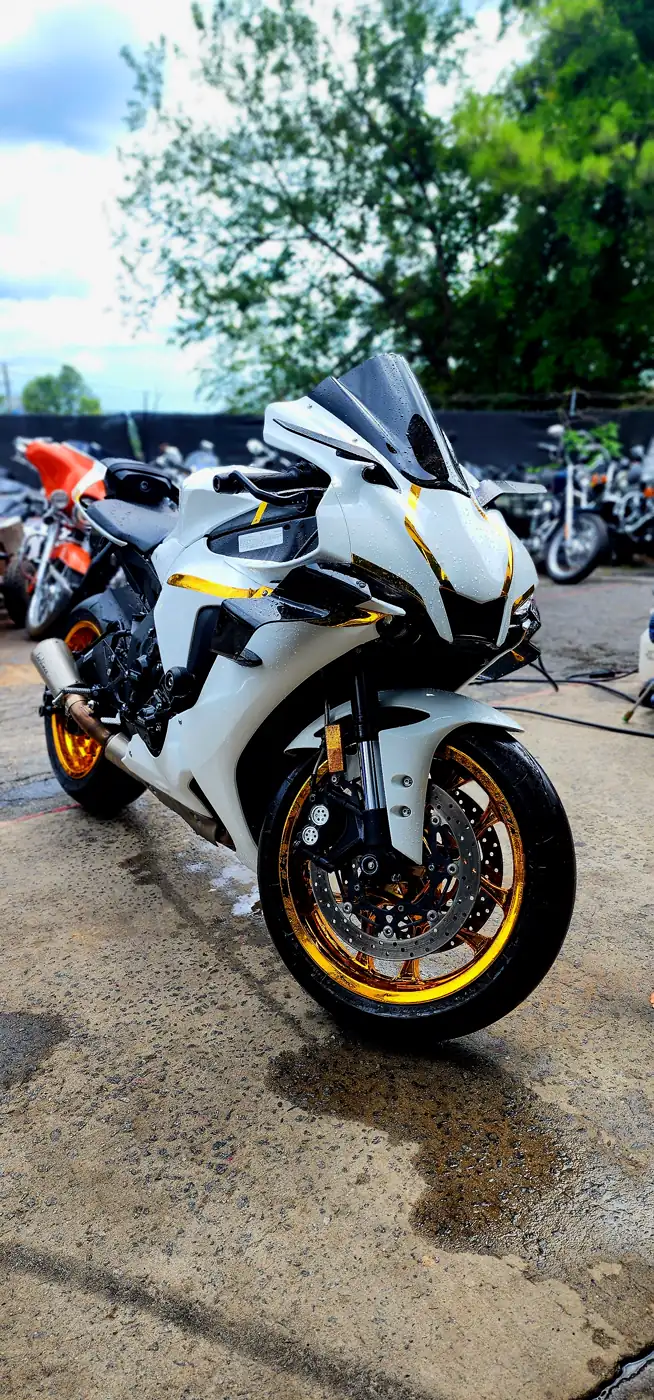
Here’s what actually happens. You send a photo and an address. We load a trailer, drive out, and roll your motorcycle up a ramp whether it starts or not. A dead battery, a seized top end, a flat tire, a bike that hasn’t turned over since last fall — none of that changes the plan. The engine’s job that day is to sit still and be carried. You don’t have to jump it, bleed the brakes, or even air up the tires first. If it rolls at all, we can chock it and strap it; if it doesn’t roll, we still have ways to get it up the ramp. Your only job is to point at the bike and unlock the gate.
That matters more here than in most places. Roughly half of the occupied housing in Sandy Springs is rental, and the mayor has cited more than 60% of the housing stock as rental across 96 apartment complexes. A huge share of riders store their bikes under a carport, in a condo deck, on the street, or in a surface lot with no outlet for a battery tender. Spring rolls around and the batteries are flat, the fuel has gone stale, and there’s no legal way to do the work on-site anyway. Pickup isn’t a luxury in that world. It’s the whole point.
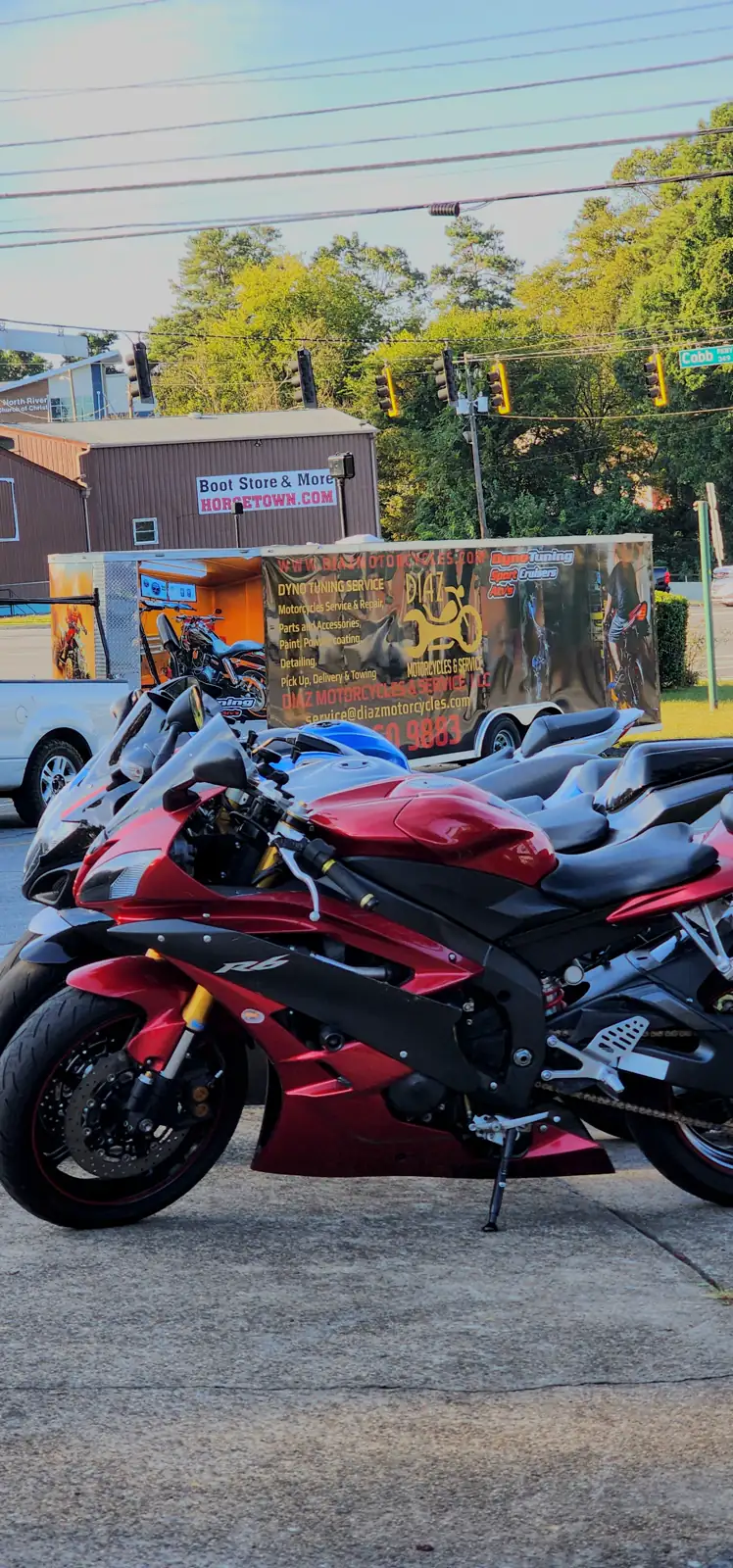
How a pickup actually works, front to back
People picture chaos — a bike wobbling on a trailer, straps everywhere, fingers crossed. The real process is calm and boring, which is exactly what you want. Boring is safe. Here’s the order it goes in.
- You text a couple of photos and the address. We confirm the bike, the access, and a window that works for you.
- We arrive with a trailer and a loading ramp. The bike goes up the ramp slowly, in gear or in neutral depending on what it needs.
- So the front wheel settles into a wheel chock so it can’t roll or flop side to side.
- Soft ties or a handlebar harness go on first, then ratchet straps pull the front suspension down a few inches so the bike sits loaded and locked.
- We add rear straps so nothing can shift on a hard stop, walk around it once, and re-check every strap before we move.
- We text you when it’s on the trailer and again when it lands safely in our bay.
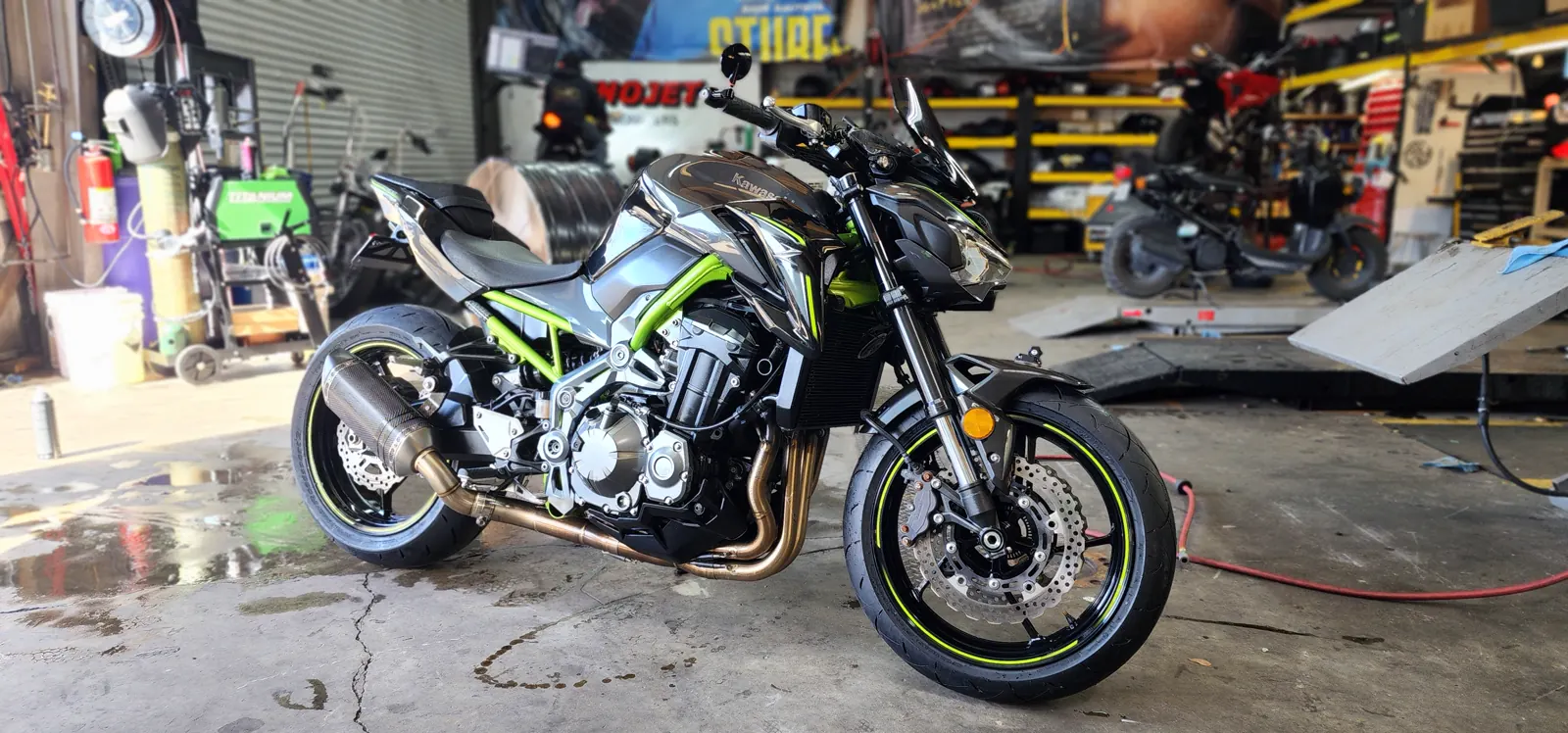
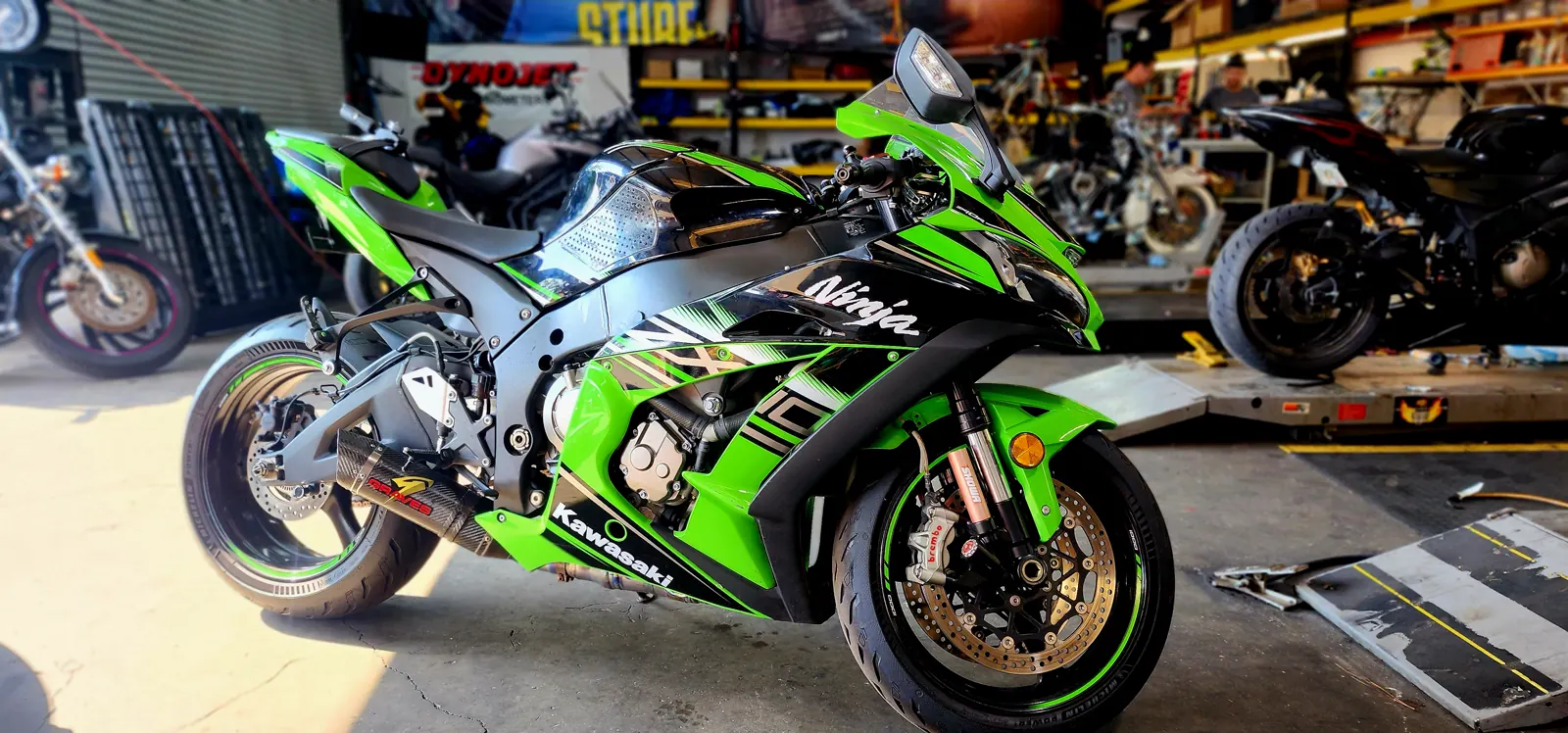
Notice what the straps do. Compressing the front forks a little means the bike is held down by its own suspension, not just by tension on a bar. Bumps get soaked up instead of yanking the straps loose. That single detail is the difference between a bike that rides quietly for an hour and a bike that’s dancing around back there. If you want to see the other end of the trip, this is roughly what happens in our bays once the wheels come off the trailer.
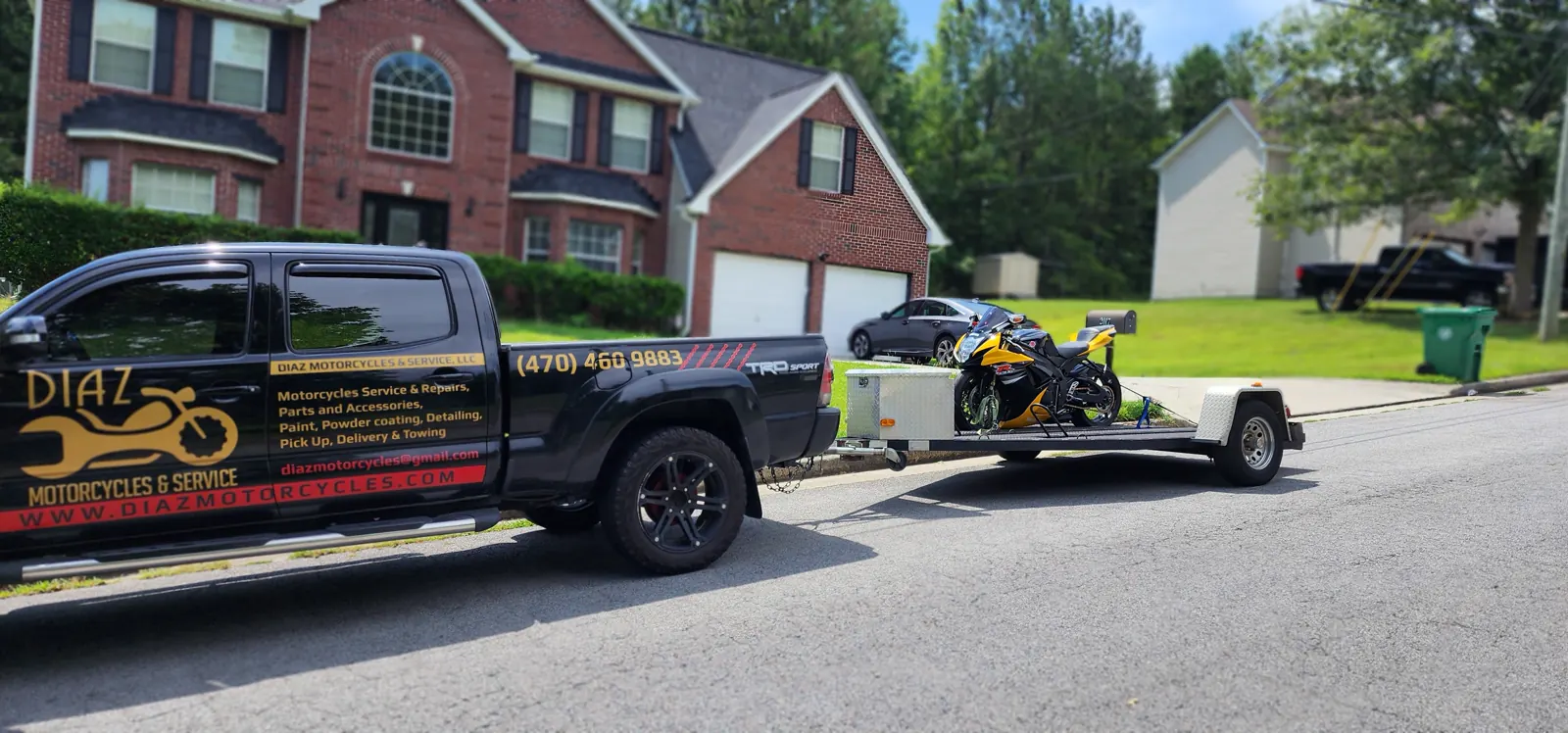
This is the point where a lot of riders make the wrong call. They decide the DIY route is close enough, borrow a pickup with no chock, and stack a few cargo straps over the seat. The bike survives the driveway, then the first pothole on Roswell Road sends it leaning. Aging pavement, utility-cut patches, seams, and manhole lips are a real hazard set around here, and a bike that isn’t tied down properly finds every one of them. Doing it right the first time is cheaper than doing it twice.
Open vs. enclosed, and which one you want
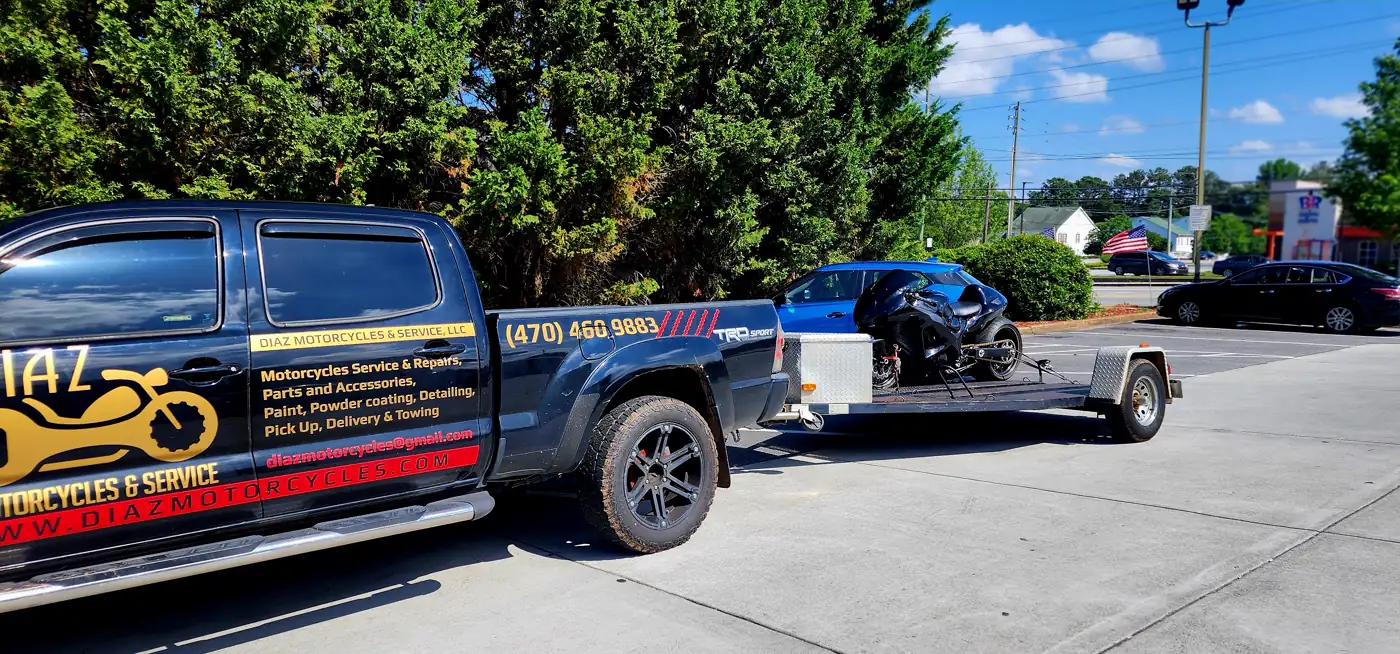
There are two ways a motorcycle rides across town or across the country, and the choice is simpler than most people think. Open trailer means your bike sits in the air where you can see it. It’s quick, it’s easy to load, and it’s perfect for a short local hop. Weather and road grime are the trade-off, but for a run from your driveway into East Cobb, that trade-off is basically nothing.
Enclosed trailer means the bike travels inside four walls. No rain, no rock chips, no eyes from the road. That’s the one you want for a long-distance move, a bike you just bought out of state, an inherited machine coming home, or a fresh paint job you’re not about to sandblast on the interstate. For a garage-kept touring bike or a premium cruiser from the north-side neighborhoods, enclosed is peace of mind on wheels.
The paperwork that actually protects you
Here’s the part nobody talks about until they wish they had. Before we roll, we walk the bike with you or with a set of clear photos and write down its condition — every existing scratch, every ding, the mileage, the fuel level. That condition report is your protection. It means there’s no argument later about what was already there, because it’s all written down and time-stamped before a single strap goes on. A good transport isn’t just careful hands. It’s a paper trail that has your back.
How to tell a good transport shop from a bad one
Riders here are credential-driven and skeptical of the cheapest option, and that instinct is exactly right. Detail beats adjectives. When someone’s coming to load your bike, watch for the small signs that they’ve done this a thousand times instead of talking you into it. A few things to look for:
- They ask for photos and specifics before they quote — access, terrain, whether the bike rolls or steers.
- At the same time they show up with a proper wheel chock and soft ties, not a milk crate and a prayer.
- They write down the bike’s condition before they touch a strap.
- As a result they text you at load and at drop-off, so you’re never wondering where your motorcycle is.
- They can explain, in plain words, why the forks get compressed and why the front wheel gets chocked.
- They talk about the repair or tuning honestly once the bike’s in — for a sense of what the work covers, they’ll walk you through it before anything starts.
An honest shop will also tell you when transport is the wrong tool. Sometimes the fix is small enough that we handle it at pickup and the trailer heads home empty. That kind of straight talk is the whole reason people trust detail over a slick pitch. It’s also why so many riders read Google reviews line by line before they ever call — and we’d rather earn that read than dodge it.
Why Sandy Springs riders lean on this
Sandy Springs is its own city, incorporated in 2005, and it’s built like one — Mercedes-Benz USA runs its U.S. headquarters right here where Abernathy Road meets Barfield Road, a landmark building in its own right. Families cluster in Riverside near the river and its charter schools, riverfront homes line River Shore Estates, and townhome owners fill communities like Trillium. Plenty of those riders can walk their kids to the sculptures and playground at Abernathy Greenway Linear Park, the 6.6-acre Playable Art Park, and still have nowhere within the city limits to take a bike that quit.
Geography is on your side, though. From most of Sandy Springs we’re only 8 to 11 miles out, usually 18 to 28 minutes via Johnson Ferry Road heading west across the Chattahoochee into East Cobb — and that route skips I-285 entirely, so the top-end traffic on the Perimeter never touches your day. From the Riverside and Powers Ferry side it’s under 15 minutes. Compared to the guessing game of an independent listing like Atlanta Motorcycle Works showing up under both Roswell and Marietta, a short, predictable pickup is an easy call.
Here’s the thing we wish every rider knew a season earlier. Fall, from September into early November, is the best riding of the year, and it’s peak leaf-season for the north Georgia mountain runs. If the plan is to carve up something like Wolf Pen Gap Road on GA-180 — Georgia’s curviest road, all blind corners and steep grades — the time to get the bike inspected and sorted is late summer, not the morning of. The riders who book a pickup in August are the ones actually riding in October. Still, the ones who wait are staring at a dead battery while the leaves turn.
The outcome: no more guessing
Strip away the myth and the picture gets simple. A motorcycle pickup in Sandy Springs isn’t a crisis, isn’t a gamble, and isn’t a favor you have to beg for. It’s a text, a trailer, a chock, a few straps done right, and a written record that protects your bike from door to bay. Whether it’s a dead battery in a condo deck, a bike you inherited, or a machine you bought two states away, the move is the same and the outcome is the same: your motorcycle shows up where it needs to be, in the shape it left in.
If you want the numbers side of it, we’ve broken down what changes the total in a separate piece, and you can see what Gainesville riders run into when a bike strands them farther out. Before you ride again, a fresh set of skills never hurts either — the free lessons and refreshers in the MSF rider courses pair nicely with a bike that’s been properly sorted. And if performance is the goal, a session on Dynojet’s dyno center is a lot easier to book when your bike arrives by trailer instead of on a tow strap.
THE SHORT VERSION
Your bike doesn’t have to run for us to move it. We come get it, tie it down right, write down its condition first, and text you at both ends. That’s the whole thing.
The bike that won't start isn't stuck. It's just waiting on a trailer.
Questions Sandy Springs riders ask us
Could my problem be something other than the bike itself?
Often, yes. A no-start after winter is usually a flat battery or stale fuel, not a dead engine, and both are easy fixes once the bike is in front of us. That’s part of why we look it over at pickup — sometimes the trailer heads home empty because the fix was small.
Is it safe to ride a bike that's been sitting all season instead of hauling it?
Not until it’s checked. Old fuel, low tire pressure, and a weak battery can all leave you stranded a mile from home, and worn brakes after a long sit are a real risk. If there’s any doubt, let us bring it in on the trailer and go over it first. Riding a questionable bike to save one short haul isn’t worth it.
What actually causes a bike to end up needing a pickup?
Usually storage, not a mechanical disaster. A ton of riders here park under carports, in surface lots, or in condo decks with no outlet for a battery tender, so batteries die, fuel degrades, and covers trap moisture. None of that means the bike is in trouble. It just means it needs a lift to the shop.
Can I move the bike myself with a rented truck?
You can, but it’s easy to get wrong without a wheel chock and proper soft ties. A bike held down by its own compressed suspension rides safely; one strapped loosely over the seat can lean into the first bump. Aging pavement and pothole repairs around town punish a bad tie-down. If you’re not set up for it, let us handle the loading.
Will the problem get worse if I just leave the bike sitting?
Usually a little, yes. Fuel keeps degrading, a flat battery can sulfate, and moisture under a cover works on the metal and plastics over time. The good news is none of that is dramatic if you act in a season rather than a year. A quick pickup and a once-over stops the slow slide.
Do you handle long-distance and out-of-state bikes too?
We do. A short local pickup rides fine on an open trailer, but a bike bought out of state, an inherited machine, or a fresh paint job travels enclosed, out of the weather. Either way we write down its condition before we load, so what leaves is exactly what arrives.
We come get bikes all over the north metro, not just Sandy Springs. That includes Roswell, Dunwoody, and Brookhaven to the east, Buckhead and Atlanta to the south, and Vinings and Smyrna toward the river. Head north and we’re regularly running pickups in Alpharetta, Chamblee, and Doraville, and of course all through East Cobb and our home base of Marietta. If your bike is parked and won’t budge, we can usually reach it the same week.
TEXT US — WE'LL COME GET IT
If your motorcycle is sitting in a Sandy Springs garage, condo deck, or surface lot and it won’t start, don’t sweat it. Send us a couple of photos and the address, and we’ll bring the trailer, load it safely, and text you at both ends. The bike doesn’t have to run — that’s our job to worry about. You just have to reach out.
470-460-9883Diaz Motorcycles and Service, LLC · 847 Barnes Mill Road, Marietta, GA 30062