Motorcycle Dyno Tuning Gainesville — Straight Answers
A dyno tells the truth about your bike. Here's what it measures, why bikes run lean or rich, and what a real tune actually changes.
Plus, here’s something plenty of shops won’t say out loud. Meanwhile, Bolting a loud pipe and a shiny filter onto your bike can make it run worse than the day it rolled off the line. Not always. But often enough that we bring it up before you spend a thing. Of course, that plain little truth is where motorcycle dyno tuning Gainesville riders ask us about really starts, and it’s where every good conversation should begin.
What you're really asking when you ask about a dyno
When you call and ask about a dyno, you’re usually not asking about a machine at all. You’re asking a simpler thing. In fact, Will this money make my bike better, or am I about to get sold something I don’t need? For example, that’s a fair question, and you deserve a straight answer before anyone touches a wrench. So we’ll skip the sales pitch and just tell you how it works, the same way we’d explain it to a friend leaning on the counter.
Even so, a dyno is a big rolling drum that your bike sits on. What’s more, you strap the bike down, spin the rear wheel against that drum, and the machine reads how much power the engine actually makes. Not the number on a brochure. After that, not what your buddy swears his made. The real number, from your bike, on that day, with your exhaust, your miles, your air filter, and the air we’re all breathing right now.
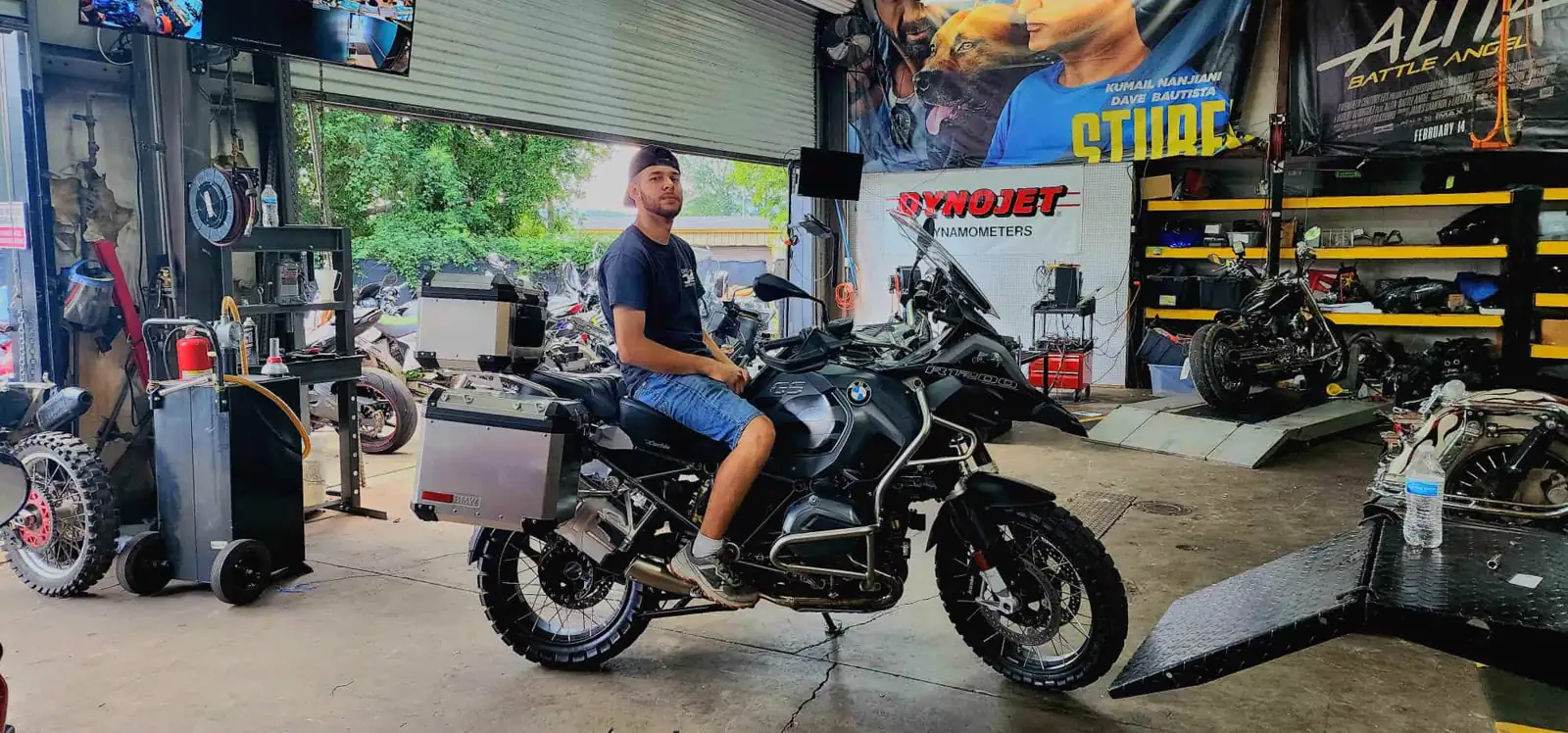
Think of it like the scale at the doctor’s office. The scale doesn’t fix anything on its own. It just tells the truth so you and the doc can make a smart plan. A dyno does the exact same job for your engine. It shows us where the power is strong, where it sags, and where the bike is working too hard for no reward. Once we can see the truth, the guesswork disappears, and that’s a good feeling for everybody.
The honest answer — what a dyno really measures
A dyno measures two big things at once. The first is power across the whole rev range, from a lazy roll-on off idle to a full pull at the top. Still, the second is the air-fuel mix your engine is burning at every one of those points along the way. That second one is the part most riders never hear about at a parts counter, and honestly, it’s the part that matters most for how your bike feels in your hand.
Your engine wants a certain balance of air and fuel to run happy. Too much fuel for the air it’s getting, and we call that running rich. Too little fuel for the air, and that’s running lean. Both of them feel wrong once you know the signs, and both of them leave real power sitting on the table where you can’t use it.
Rich, lean, and why your bike feels off
A bike running rich feels lazy and kind of wet. It might foul plugs, smell like a gas can, and drink more fuel than it should. A bike running lean feels hot and snappy at first, then it surges, pops on decel, and runs hotter than it has any business running. Neither one is a happy engine. And here’s the honest part most folks never get told: plenty of bikes leave the factory a touch lean on purpose, to pass emissions rules, not because it’s the best way for the bike to ride out here on real roads.
So if your bike stumbles off idle, gets warm in traffic, or backfires when you roll off the throttle coming into a corner, it isn’t broken and it isn’t your fault. It’s just running someone else’s compromise. The good news is that all of that lives in the tune, not the metal, which means it’s fixable without tearing the engine apart. Once you hear that, the whole thing stops feeling scary and starts feeling like a to-do list.
This is the point where a lot of riders make the wrong call. They feel the flat spot, hear a friend say just throw a tuner on it, and buy a part off the internet with a generic map already loaded inside. A generic map is a guess. It was built for a bike that isn’t yours, in weather that isn’t ours, at an elevation that isn’t Gainesville’s. Sometimes that guess helps a little. Sometimes it makes the lean spot worse and now you’ve paid for a headache. There’s a better path, and it starts with actually looking at your bike first.
What a real tune actually changes
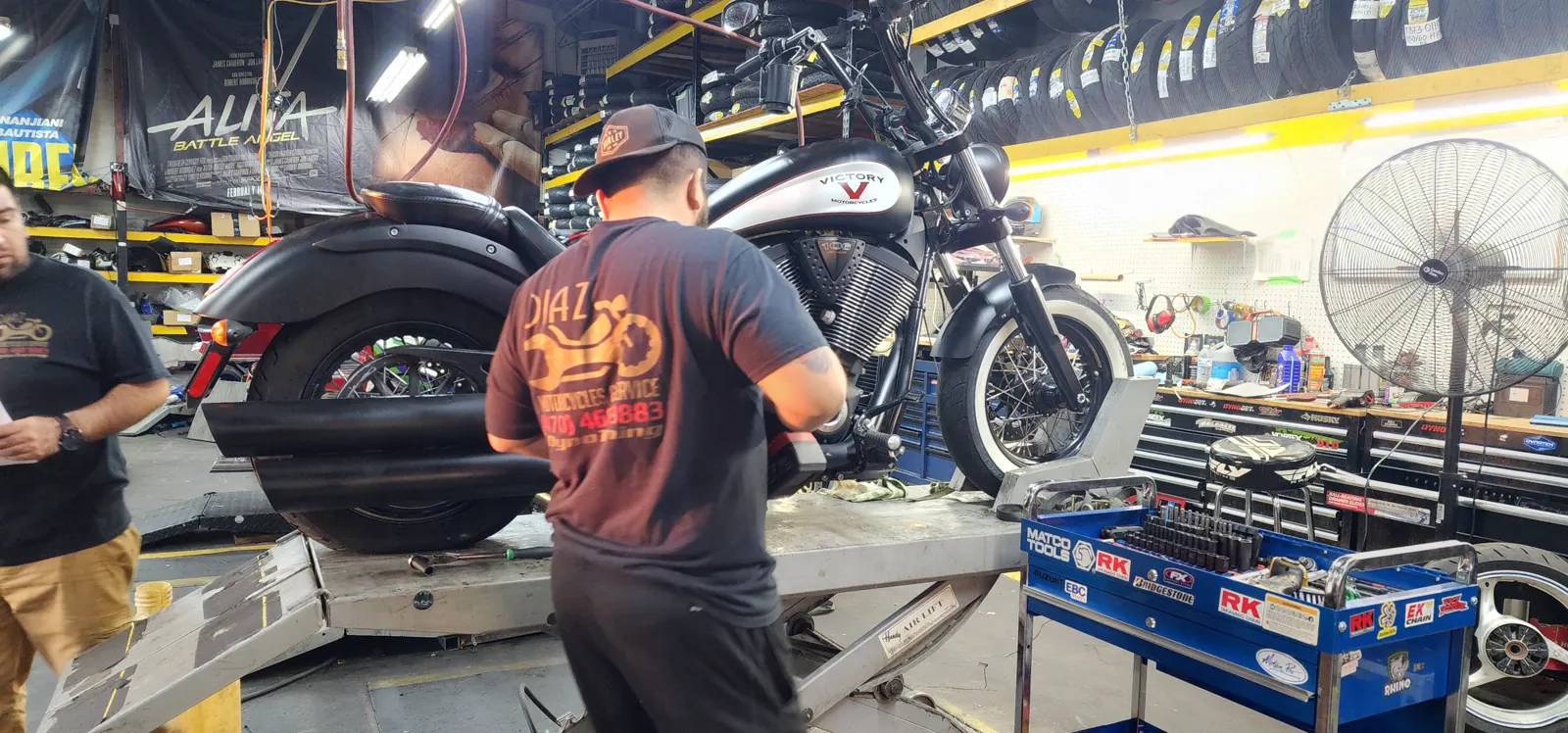
So what does a real tune change? Not the metal. We aren’t swapping your engine or drilling anything out. We’re changing the instructions your engine already follows. Every modern bike has a small computer, the ECU, that decides how much fuel to add and exactly when to light the spark. A tune rewrites those instructions so they fit your exact bike instead of a factory average built for a million bikes at once.
We do that in one of two ways, depending on what you ride. On a lot of bikes we can flash the ECU directly, which means we rewrite the factory computer itself. On others we add a piggyback unit like a Power Commander that trims the fuel and timing on top of the stock brain. Both roads lead to the same place: a fuel map built for your bike, your mods, and your air, instead of a one-size-fits-all guess. Which path is right for you is something we sort out after we see the bike, never before.
A few things move the target, and it’s only fair that you know them up front. Your exhaust, your intake, your fuel, your miles, even the season all shift what the engine needs. If you want the full picture on what changes the total, we lay it out plainly so nothing sneaks up on you. We’d rather over-explain than have you feel surprised, because a surprised customer is one we didn’t take good enough care of.
How we diagnose before we quote
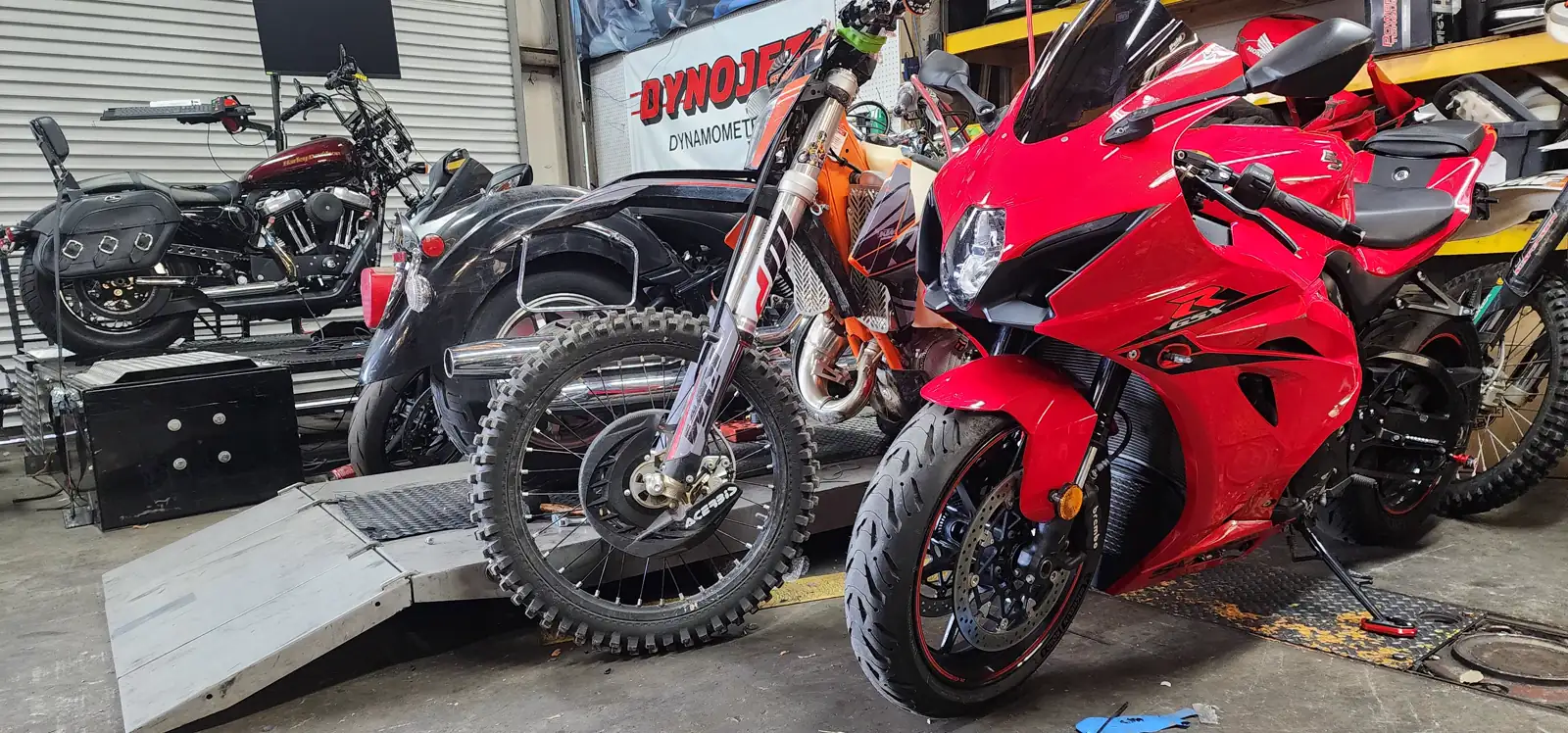
Here’s how we actually work, and it’s different from the parts-counter approach on purpose. We don’t quote a tune sight unseen. First we talk. What do you ride, what have you changed on it, and what is it doing that bugs you? Then we put the bike on the dyno and take a baseline pull. That baseline is the honest starting line. It tells us the truth about where your bike sits right now, rich or lean, strong or soft, before anyone promises you anything.
Only after we’ve seen that do we tell you what your bike needs, and just as important, what it doesn’t. Sometimes the answer is a full custom map. Sometimes it’s a small fix and a clean bill of health. We’d honestly rather send you home with a real you’re-fine than sell you work you don’t need, because that’s the kind of shop we’d want to bring our own bikes to. A good name travels faster than any ad ever could, and out here word of mouth is everything.
Most multi-line dealers around here can sell you a part off the shelf. Far fewer can build a custom map in-house, on their own dyno, and hand you a printout that shows the before and the after side by side. That’s the real reason riders point their trucks toward Marietta in the first place. If you’d like to see everything what we take care of here, it’s all laid out in one spot so you know exactly what you’re driving down for.
BEFORE WE QUOTE
Every tune starts with a baseline dyno pull. We show you where your bike really is before we say one word about the work it needs. No baseline, no guessing.
Why Northeast Georgia riders make the trip
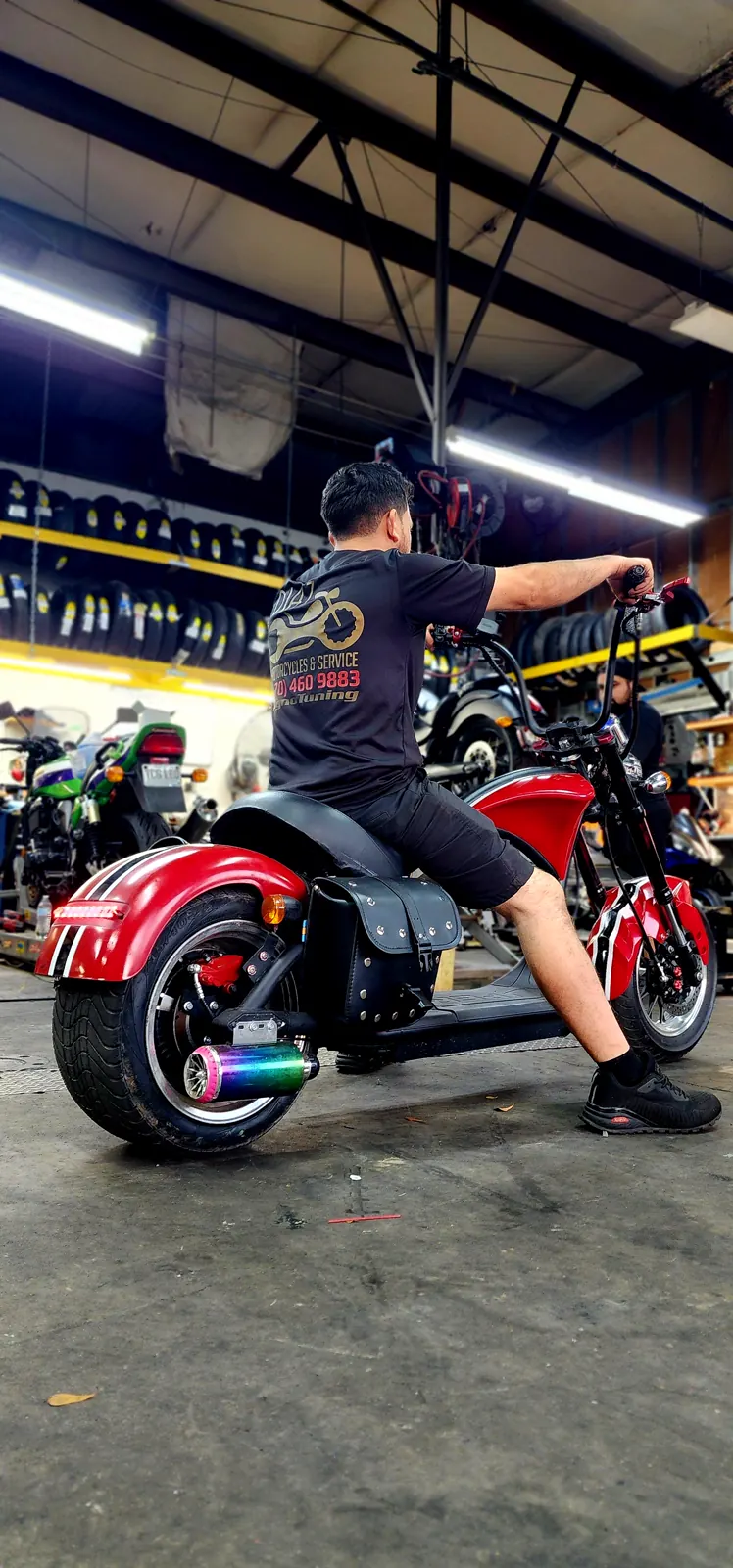
Here’s the thing we wish every rider knew a season earlier. The bikes that gain the most from a real tune are the ones getting ridden hard on real roads, and Hall County has plenty of those. You sit right at the mouth of the North Georgia mountains. Folks down in Atlanta drive a full hour just to ride the roads you get to on a lazy Saturday morning. That kind of riding rewards a crisp, honest throttle and punishes a lean surge in a corner.
That mix shapes what rolls through our door. Lots of touring and cruiser bikes built to eat mountain miles. A fair number of sportbikes set up for track days, since Michelin Raceway Road Atlanta sits just down the road in Braselton. A quick, easy loop on GA-53 around the north end of Lake Lanier is exactly the kind of ride where a clean pull earns its keep, and a stumble off idle ruins the fun. That’s why motorcycle dyno tuning Gainesville riders come to us for is really about feel, not just a number on a page.
Getting to us is a real question, so we’ll answer it honestly instead of dodging it. From the Green Street District with its grand old homes, or from Brenau Point over near Brenau University, you’re looking at roughly 55 to 62 miles and somewhere around 65 to 85 minutes, give or take. That’s estimated from the map, not clocked with a stopwatch, so treat it as a ballpark. You can take the lake route through Cumming or run down the interstate, and if you’d rather not trailer it yourself, ask about pickup and delivery.
Speaking of that interstate, I-985 is part of why some bikes show up running rough in the first place. Where US-23 rolls north and becomes GA-365, it’s fast, heavily trucked with poultry and freight, and prone to debris and blown retreads scattered across the lanes. A bike that gulps grit through a tired filter and runs a hair lean is a bike that’s overdue for a look. We can’t do a thing about the road, but we can make sure your engine is breathing and fueling right for the beating it takes on it.
We also know Gainesville is its own place, not an Atlanta suburb, and we’d never treat it like one. You’ve got your own downtown around the Square on Main Street, your own Art Walk every April, your own schools in the University of North Georgia Gainesville campus and Lanier Technical College. A trip to Marietta is always a deliberate one out here, so we work to make it worth the drive, printout in hand and no fluff attached.
Lake life and bike life overlap around here, too. Plenty of homes out on the premium lakefront near Sidney on Lanier and Stratford on Lanier keep a boat in the water and a cruiser in the garage at the same time. And keeping your regular dealer is completely fine by us. If you bought a pre-owned bike from a shop like Gainesville Cycles a few minutes from downtown, keep them for what they do best. Just bring us the one thing they can’t do on-site: the custom map that makes your bike feel like yours.
What changes in how the bike feels
So what do you actually get for all of this? Sure, the dyno sheet will show real gains, and we’ll never make a number up. But the bigger prize is how the bike feels the moment you twist the throttle. A good tune smooths the power so there’s no dead spot off idle. It pulls clean through the middle instead of stumbling or hunting. And it runs cooler, because it’s finally fueling right instead of starving for gas in the lean spots.
Friends we’ve helped tell us the same thing over and over. The bike feels like it finally does exactly what their wrist asks. No surge, no popping, no jerk in the slow corners. Just a clean, honest pull from bottom to top. Most of them say the first ride home felt like a brand-new bike, and the funny part is they didn’t change a single hard part to get there. They just gave the engine the right instructions for once.
If you’re curious how this plays out somewhere else, here’s what Alpharetta riders run into, and if you want the deeper why-it-matters version, this piece on what the work covers walks you through it step by step. Both come down to the same simple idea. A tune built for your exact bike beats a factory guess every single time, and it isn’t close.
One last honest note about paperwork, because we’d rather you hear it from us. If your tune is part of a bigger build with other changes, keep your records tidy. The Georgia Department of Revenue handles the title and registration side of things, and for factory service specs a lot of us lean on the official Harley-Davidson service information. We keep clean notes on every pull we do, so your bike’s story stays clear no matter who works on it next.
A generic map is a guess. A real tune is built for your bike, your roads, and your air.
Questions Gainesville riders ask us
What if my bike needs more work than expected?
We find that out on the baseline pull, before any real work starts. If the dyno shows a problem the tune alone can’t fix, we stop and call you with a plain-English explanation and your options. You always decide what happens next. We never keep going and surprise you at the counter.
What does a dyno tuning service actually include?
It starts with a talk about your bike and your mods, then a baseline dyno pull to see where you really stand. From there we build a custom fuel and timing map, either by flashing your ECU or by dialing in a piggyback unit like a Power Commander. You leave with a before-and-after printout and a bike that feels the way it should.
How long does a custom tune take?
Most tunes are a same-day or next-day job once your bike is on the dyno, depending on how much dialing-in it needs and what else is on the bench. If we spot something that needs parts or extra attention, we’ll tell you the honest timeline up front. We’d rather give you a real answer than a hopeful one.
Do you tune my brand of bike?
We work across most street and dirt brands, from Harley and Victory cruisers to sportbikes, adventure bikes, and dirt bikes. If we can read your ECU or fit a piggyback unit, we can usually build you a map. Send us your year, make, and model in a text and we’ll tell you straight whether it’s a fit.
Do I need an appointment, or can I just drop by?
An appointment is best, since the dyno is often booked and we want real time to do it right. Text us your bike and what it’s doing, and we’ll get you on the calendar. If you’re driving down from Hall County, ask about pickup and delivery so you don’t have to trailer it yourself.
Is it worth the drive from Gainesville for a tune?
For an oil change, no, and we’d never pretend otherwise. For a real custom map on an in-house dyno, most riders tell us it was. Very few shops in Northeast Georgia do custom mapping and ECU flashing in-house, which is exactly why folks make the deliberate trip to Marietta.
We tune bikes for riders all across Hall County and Northeast Georgia, so you’re covered whether you’re rolling in from Oakwood, Flowery Branch, or Braselton near the track. Plenty of our friends come from Buford, Sugar Hill, and Cumming on the south and west sides of the lake, while the mountain-leaning crowd heads down from Clermont, Lula, Chestnut Mountain, and Murrayville. We also see riders out of Talmo and the Dahlonega area who want a custom map their local dealer can’t build on-site. Wherever you keep your bike, bring us the thing they can’t do.
TEXT US ABOUT YOUR TUNE
Ready for straight answers on motorcycle dyno tuning? Gainesville riders, send us a quick text with your year, make, model, and whatever the bike is doing that bugs you. We’ll tell you honestly whether a tune is worth it, book you a dyno slot, and sort out pickup and delivery so the drive to Marietta is the easy part. No pressure, no sales pitch, just a plan built for your bike.
470-460-9883Diaz Motorcycles and Service, LLC · 847 Barnes Mill Road, Marietta, GA 30062