Motorcycle Dyno Tuning Alpharetta — What to Expect
A plain-words guide to what a dyno really measures, why bikes run lean or rich, and how a tune changes the way yours feels.
It’s late. In short the garage is dark, the bike’s tucked away, and you’re on the couch scrolling your phone. At the same time you type the question you’d never ask out loud at a dealership: does my bike really need a tune, or is that just something shops upsell? As a result that’s an honest question, and it deserves an honest answer. If you’ve been searching motorcycle dyno tuning Alpharetta and quietly wondering whether it’s worth the trouble, you already know your bike could feel better than it does.
Good news right up front. On the other hand you don’t need to be a gearhead to make a smart call on this. That’s why you just need someone to explain what a dyno actually does in plain words, without the sales pitch. So let’s do that, buddy to buddy.
What you're really asking
When a rider asks about a tune, they’re rarely asking about numbers on a chart. So they’re asking a simpler thing: why does my bike feel a little off, and can that be fixed? Maybe it stumbles a touch coming off idle. Instead Maybe it runs hot sitting in stop-and-go traffic. Maybe it just doesn’t pull the way it did the day you rode it home. You feel that stuff in your right wrist, not in a spreadsheet.
All of that is normal to wonder about, and all of it is fixable. A tune isn’t magic, and it isn’t a scam either. It’s just getting your engine’s brain and your engine’s body on the same page. Once that clicks, the whole thing stops feeling mysterious and starts feeling like a decision you’re fully in charge of.
The honest answer: what a dyno actually measures
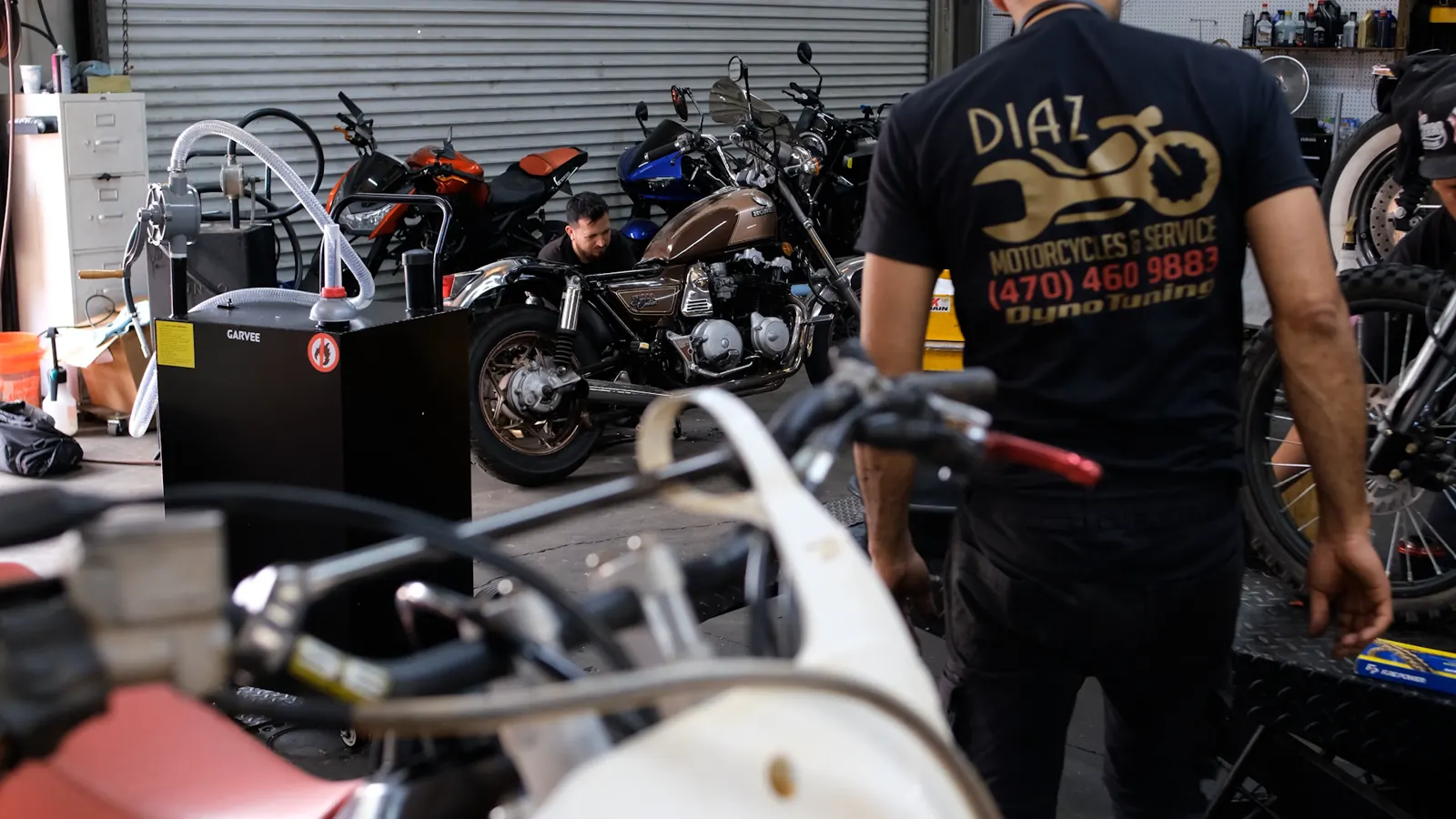
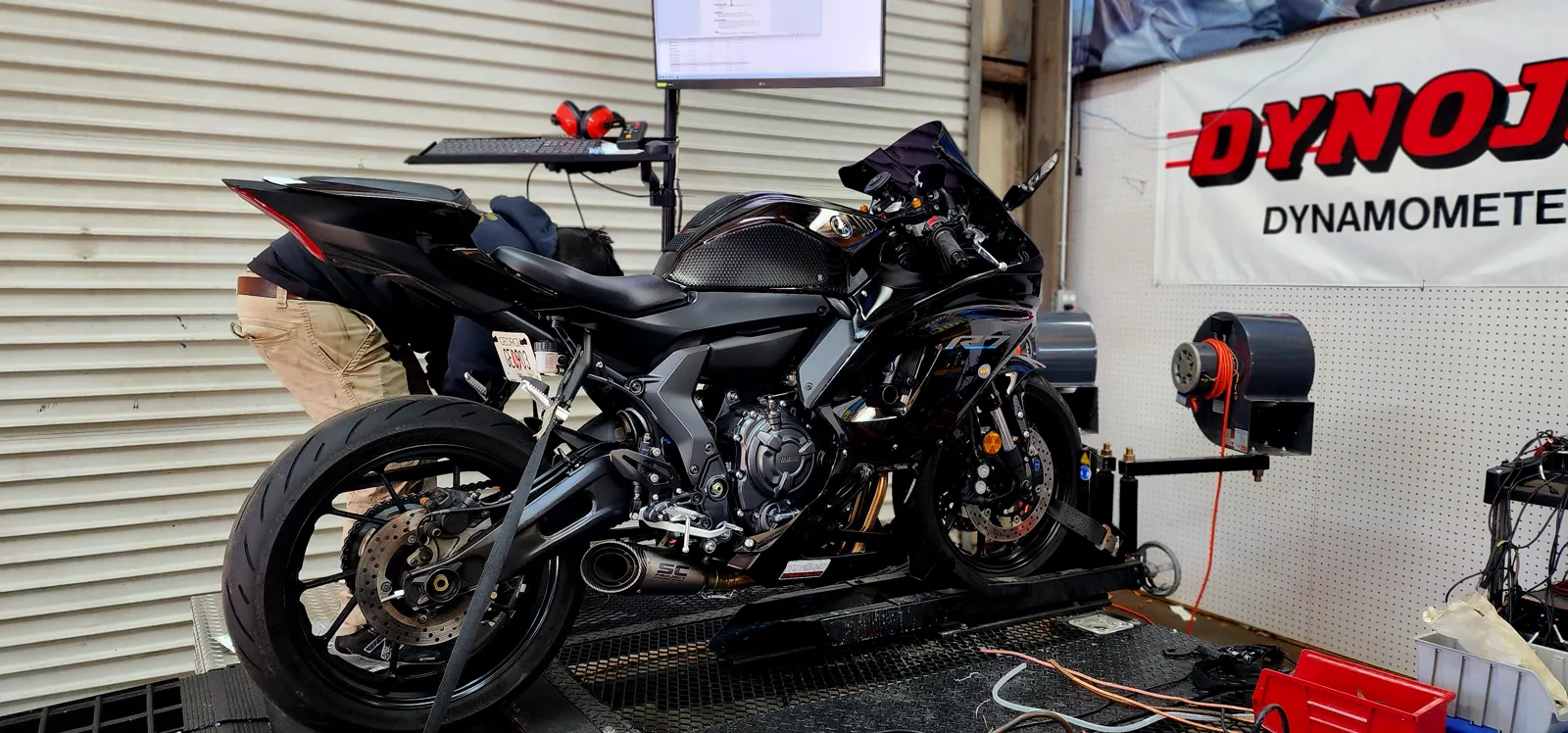
A dyno is a machine your bike rides on while standing still. The rear wheel spins a big steel drum, and sensors read exactly what the engine is doing under real load. Think of it like a treadmill for your motorcycle, except this treadmill is taking notes the entire time.
While the bike runs, we watch two things closely. First, how much power the engine makes across the whole rev range, from low rpm all the way to the top. Second, and this is the big one, the air-fuel ratio. That’s the mix of air and gas your engine burns at every moment. We read it straight out of the exhaust with a sensor, so it’s measured, not guessed.
Every engine wants a certain balance of air and fuel. When there’s too much air and not enough gas, we call that running lean. When there’s too much gas and not enough air, that’s running rich. A lean bike often runs hot, pops on deceleration, and feels snatchy when you crack the throttle. A rich bike can feel lazy, foul its plugs, and drink fuel. Neither one is the end of the world, and both show up clear as day on the dyno.
What a tune actually changes
So what does a tune change? Not the metal. We’re not cutting anything open. We’re adjusting the instructions your engine follows, which is the map in its computer that decides how much fuel to add and when to fire the spark. On a lot of modern bikes we do that with an ECU flash, which rewrites the factory settings directly. On others we add a piggyback unit like a Power Commander that fine-tunes the fuel on top of stock.
Why would the factory get it wrong in the first place? They didn’t, exactly. The factory tune has to pass strict emissions rules and work for every bike sold everywhere, from sea level to the mountains. That means it plays it safe and leaves comfort on the table. The moment you bolt on a slip-on exhaust or a high-flow air filter, the old map no longer matches your bike. Custom mapping is how we make those instructions fit your actual machine. If you like reading up on your own bike’s factory specs first, the Harley-Davidson service information portal is a solid place to start.
Here’s what you feel afterward, and this is the part that matters most. The stumble off idle smooths out. Besides the throttle answers the instant you ask it to. The heat in traffic usually drops, because the engine stops running so lean. Cruising gets calmer and the surging at a steady speed goes away. It’s less about some big, scary power spike and more about the bike finally feeling like it’s breathing easy.
A tune doesn't add magic. It just gets your engine's brain and body speaking the same language.
That’s the common version. The real story is a little different. No two bikes read the same on the dyno, even two identical models parked side by side. One has ten thousand more miles on it. Actually one has a clogged filter the owner forgot about. One got a cheap exhaust installed a little crooked. A real tune isn’t pulling a file off a shelf and loading it up. It’s reading your bike, on that drum, on that day, and building the map around what the sensors actually say.
Our approach, and how we quote it
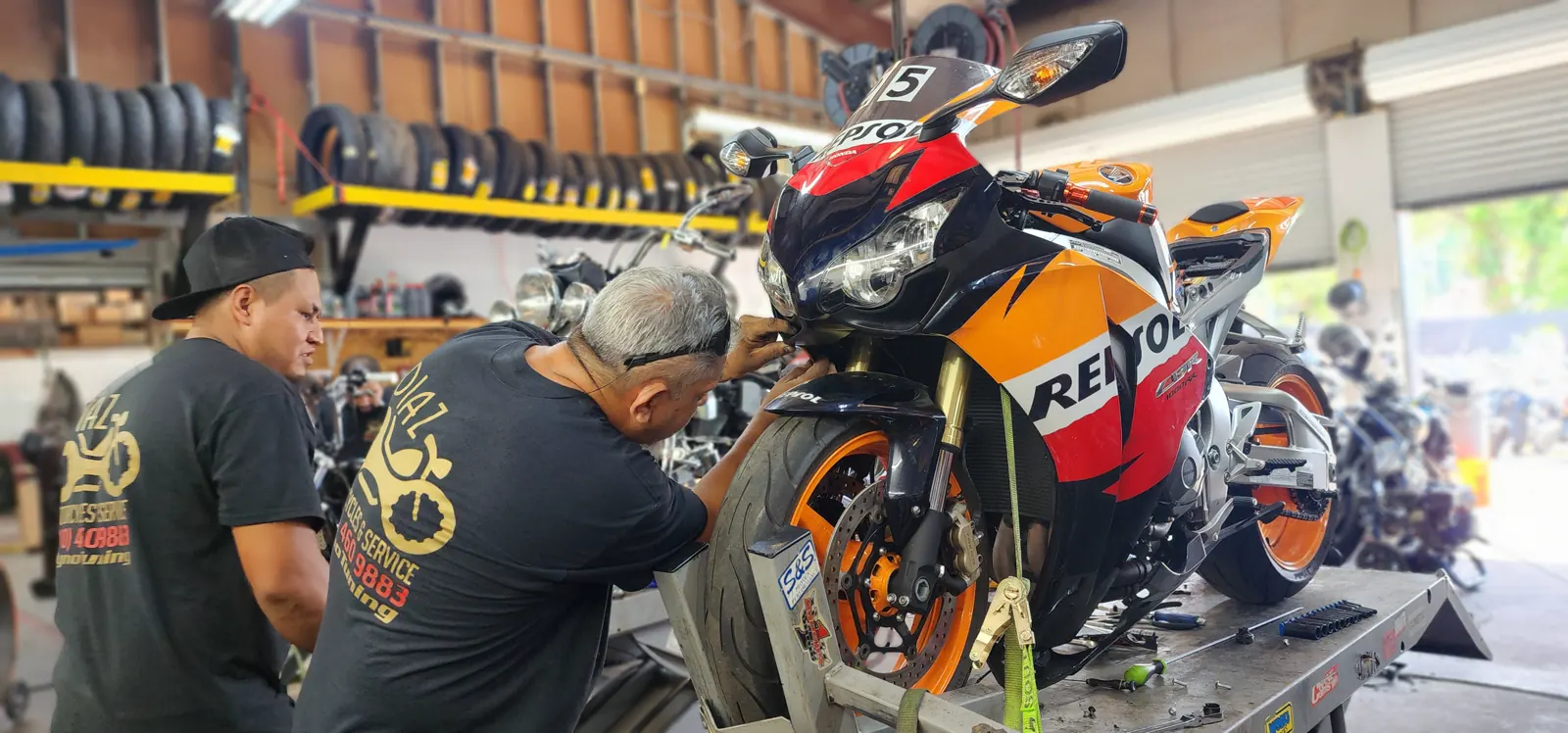
Now the part you actually came here for: how do you hire someone without getting surprised? Simple. We look before we quote. Around Cobb Parkway you’ll find plenty of multi-line dealers, but most of them don’t do real custom mapping in-house. They ship it out or skip it entirely. We keep our own Dynojet dyno right on the floor, so the person reading your bike is the same person turning the wrench on it.
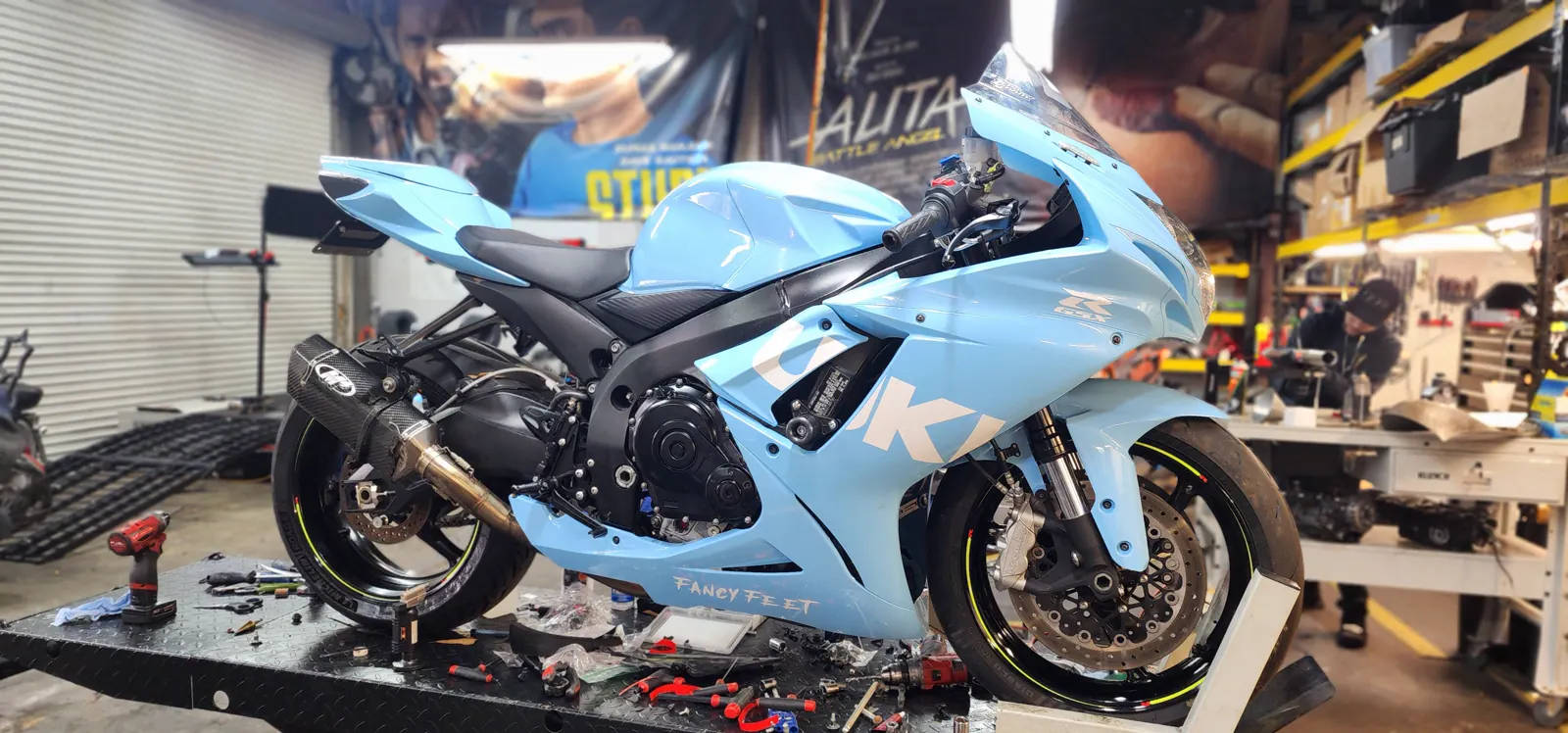
Before we hand you a number, we put eyes on the bike. We check what’s already been done to it, look for the easy stuff first, and make sure a tune is even the right answer. Sometimes the real fix is a dirty sensor, not a full remap, and we’d rather tell you that than sell you something you don’t need. When we do quote, we itemize it, explain each line, and hold the number. If you want to see what separates a good shop from a parts-swapper, we spell it out plainly.
And if something turns up mid-job, say a vacuum leak that would throw the whole map off, we stop and call you first. No mystery charges show up at pickup. You approve the path before we take a single step down it. That’s how our crew approaches it on every bike that rolls in, and it’s exactly how we handle that job whether it’s a heavy bagger or a track-day sportbike.
HOW TO START
Text us a couple photos of your bike and a quick note on what feels off. We’ll tell you honestly whether a tune is the right move before you commit to anything.
What Alpharetta riders bring us
We see a lot of Alpharetta bikes, and they tell a story. This is a destination-riding town, not a commuter one. Folks here buy bikes for the weekend and keep them in three-car garages inside the swim-and-tennis subdivisions. A single garage out in Windward, the 3,400-acre master plan built around Lake Windward that anchors the whole city, might hold a tourer, a sportbike, and something vintage all at once.
Because those bikes sit through the week, they get parked more than they get ridden. Riders up in the gated stretch of White Columns Country Club, which carries an Alpharetta mailing address even though it sits just over in Milton, or in the new townhomes down at Atley near downtown, tend to ride hardest once fall arrives. September and October are the big months, when leaf season pulls everyone toward the mountains and the shaded back roads get slick with wet leaves.

And when Alpharetta riders go, they go north. The North Georgia Triangle, the Dahlonega, Suches and Blairsville loop that Rider Magazine put on the map, is the local proving ground. That’s exactly the kind of riding where a good tune earns its keep, because tight elevation changes and endless throttle transitions are where a lean, snatchy bike wears you right out. A bike that responds cleanly makes a long mountain day feel a whole lot shorter. That’s the kind of motorcycle dyno tuning Alpharetta riders actually want.
One rider off GA 400 put it better than we could. He lives near Exit 11 Windward, works down the 400 corridor, and rides on weekends. He told us his bike didn’t feel broken, it felt tired. After a proper session on the dyno, he said it felt like someone finally woke it up. That’s the whole point. Most folks locate themselves on 400 by their exit anyway, whether that’s Exit 9 Haynes Bridge, Exit 10 Old Milton, or 11 up at Windward, and getting to a shop that keeps a dyno in-house is worth the short ride.
Getting to us is an easy weekend errand. It’s roughly 18 to 22 miles, thirty to forty minutes when traffic’s light and longer at rush hour or on a show night when the Ameris Bank Amphitheatre out on Encore Parkway lets out. You’ll roll past the North Point corridor, the old mall site off GA 400 Exit 9 that’s being rebuilt into something new. Most riders take Old Milton over to GA 9 south through Roswell, then GA 120 west into East Cobb. If you’re already heading down for the monthly Bike Night that Cycle Gear Roswell hosts, we’re just a short hop past that.
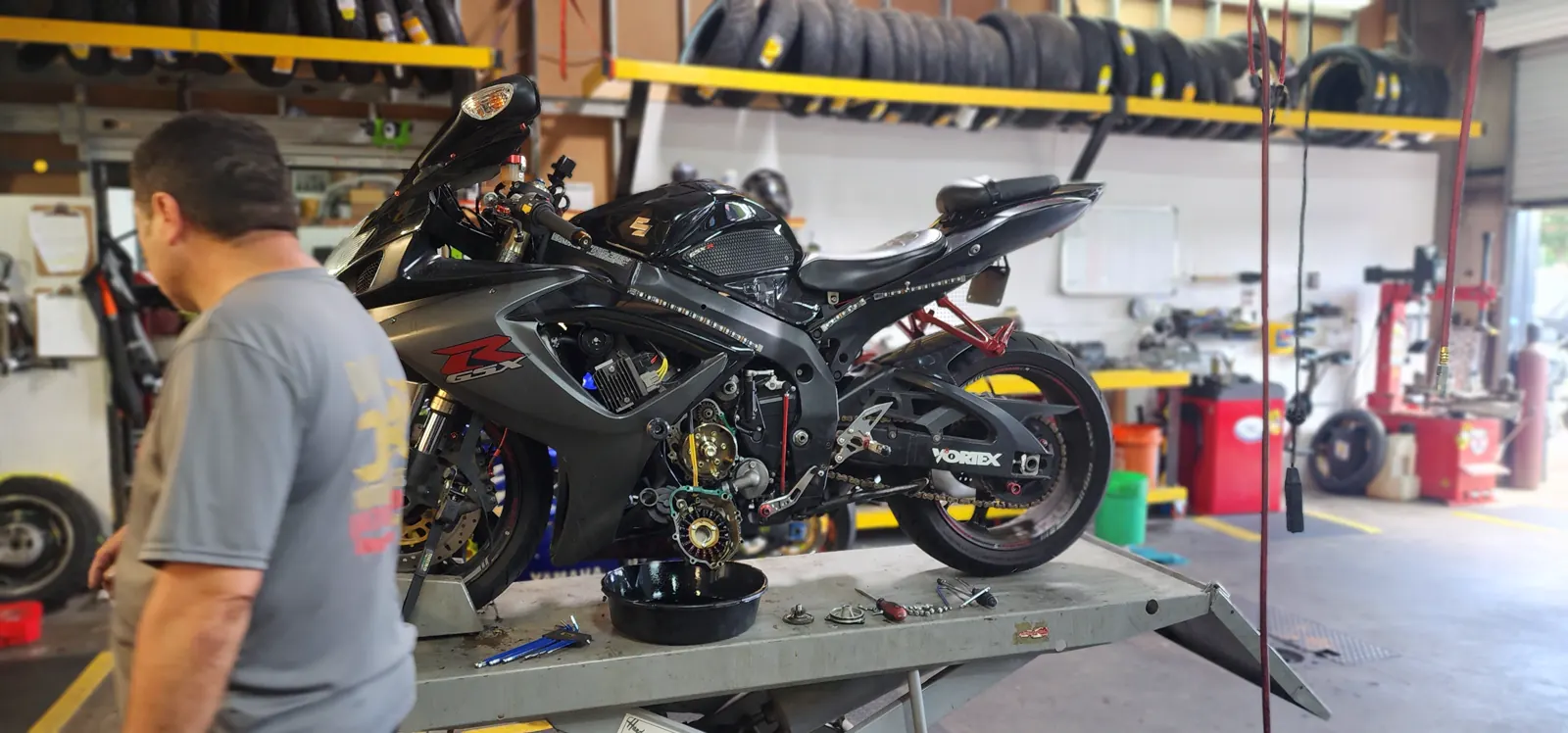
We tune bikes from all over metro Atlanta, so this isn’t only an Alpharetta thing. If you’re farther south, we’ve written up the Peachtree City side of things too. Same dyno, same honest read, wherever you happen to ride in from. And if you’re sorting out a title or a tag on a bike you just bought, the Georgia Department of Revenue handles that side of it.
One thing we hear a lot from riders in this part of town: they’ve got the money for the bike, but they hate feeling taken. That’s fair, and we respect it. It’s why we don’t play games with the quote. We give you a number, we walk you through the reasons behind it, and we hold it. If a slip-on you bought last year is choking the airflow, we’ll show you on the screen instead of just telling you. Seeing your own air-fuel line straighten out after a tune is honestly the fun part of the whole job.
Where this leaves you
Here’s where you land after all this. You don’t have to guess anymore. Either way you know a dyno measures real power and the air-fuel mix. You know lean and rich are just balance problems with clear fixes. You know a tune adjusts instructions, not hardware. That’s plenty to walk in with your head up and ask the right questions, and it’s the reason we spent this long explaining it instead of just pointing at a price sheet.
There’s also no pressure to decide today. A tune is the kind of thing you do once and enjoy for years, so take your time. Read up, talk to riding buddies, compare shops all you want. When you’re ready, we’ll be here with the dyno warmed up and a straight answer waiting. That’s the calm, no-rush way we like to do it.
Booking motorcycle dyno tuning Alpharetta doesn’t have to be a leap of faith. Text us a couple photos of your bike and tell us what feels off. We’ll tell you honestly whether a tune is the move, what it’ll involve, and what to expect, all before you commit to anything. You stay in the driver’s seat the whole way, which is right where you belong.
Questions Alpharetta riders ask us
How do I get a quote?
Text us a few photos of your bike and a quick note on what feels off. We’ll tell you what we think it needs and give you an itemized quote before any work starts. If we need to see it in person first, we’ll say so up front. No surprises show up at pickup.
Do you work on older bikes?
Absolutely. Plenty of the bikes we tune are vintage machines and restoration projects, not just this year’s models. Older bikes sometimes run a piggyback unit like a Power Commander instead of an ECU flash, and we’ll tell you which path fits yours. We love a bike with some history to it.
What if it needs more than expected?
We stop and call you first. If we find something mid-job, like a vacuum leak or a worn sensor that would throw off the map, we explain it and let you decide. Nothing gets added to your bill without your okay. You approve every step.
What does the service include?
A dyno session includes running your bike on the drum, reading power and the air-fuel ratio across the rev range, and building a custom map for your exact setup. Then we verify the result with another pull to confirm it feels and reads right. You leave knowing the tune was measured, not guessed.
How long does it take?
Most tunes wrap up in a day, and simpler jobs can be quicker. If your bike needs prep work first, like a filter or a fresh set of plugs, we’ll factor that into the timeline when we quote. We’ll give you a realistic window before we start so you can plan your weekend around it.
Is a tune worth it if my bike feels fine?
If it truly feels great, you may not need one yet. But if you’ve added an exhaust or an air filter, or the bike runs hot and snatchy, a tune usually helps a lot. We’ll read it honestly and tell you either way. We’d rather send you home happy than sell you something you don’t need.
Diaz Motorcycles tunes and services bikes for riders all across North Fulton and Cobb. Beyond Alpharetta, we regularly help friends riding in from Roswell, Milton, Johns Creek, and Crabapple, plus Sandy Springs, Dunwoody, and Duluth on the east side. Cumming, Suwanee, and Woodstock riders make the trip too, and our home turf runs right through East Cobb and Marietta. Wherever you park your bike, our in-house dyno is a short weekend ride away.
READY WHEN YOU ARE
You don’t have to guess whether your bike needs a tune. Text us a couple photos and tell us what feels off, and we’ll give you a straight answer plus an itemized quote before anything happens. Alpharetta riders keep coming back because we look before we quote and hold the number we give you. Let’s get your bike breathing easy.
470-460-9883Diaz Motorcycles and Service, LLC · 847 Barnes Mill Road, Marietta, GA 30062