Enclosed vs Open Transport in Lawrenceville: How to Choose
Two ways to move a bike, one honest recommendation, and the one situation where the other choice wins.
It usually starts small. In short a rider stands in his driveway off Old Norcross Road, holding his phone up to a bike he hasn’t even ridden yet, staring at a tie-down strap he isn’t sure he trusts. At the same time that one nagging worry — will it get here clean — is what sends most folks down the rabbit hole. As a result the whole debate over enclosed vs open transport Lawrenceville riders keep bringing to us really boils down to that little feeling in your gut.
So let’s settle it in plain terms. You’ve got a bike to move. Maybe it won’t run. After that, Maybe you bought it two states away. Maybe it was your uncle’s and now it’s yours. Either way, you’re not riding it home, and now you’re choosing between an open trailer and an enclosed one. We move bikes every week, and we’ll give you the same straight answer we’d give a buddy.
The short answer for most riders
For the everyday bike getting moved across the metro, open transport is the right call. It’s how the vast majority of bikes travel, it’s how ours travel most days, and a strapped-down bike on a good open trailer arrives just fine. The frame stays put, the wheels stay chocked, and a light coat of road dust wipes right off. If your bike is a solid rider — a used sportbike, a cruiser, a project you’re hauling in for work — open is the smart, simple pick.
Enclosed transport is the upgrade, and it earns its keep in a narrow set of cases. Think fresh paint that hasn’t fully cured. Also Think a rare or collector bike you’d lose sleep over. Think a long haul where weather is a real question, or a first-of-its-kind build you can’t easily replace. In those spots, four walls and a roof buy you peace of mind that’s worth having. Everywhere else, it’s paying for protection your bike doesn’t actually need.
Open is right for most bikes. Enclosed is right for the bike you'd hate to explain to yourself.
What actually drives the decision
The choice isn’t really about open versus enclosed. It’s about your bike and your distance. Once you sort those two things, the answer picks itself. So instead of guessing, walk through what a mover is actually weighing when a bike goes on a trailer.
First, the bike’s value and how replaceable it is. A common used bike has parts on every shelf in Georgia. Instead a rare European build or a one-off custom does not. The harder a bike is to replace, the more enclosed starts to make sense. Second, exposure time. A quick hop across town barely counts. Besides a multi-day run down an interstate in changing weather stacks up hours of wind, sun, and the odd storm.
Third, the bike’s condition. A running bike sits solid and takes a strap well. Actually a bike that won’t run needs more care getting loaded, and if yours quit on you out of nowhere, it helps to know what usually causes it before you ever call anyone. A dead battery and a seized caliper are very different problems, and both change how we load. Fourth, your own nerves. Some riders genuinely sleep better knowing their bike was behind closed doors, and that’s a fair reason all by itself.
When you line those four up, a pattern shows. Short distance plus a normal bike equals open, every time. Long distance plus a special bike leans enclosed. Most of the calls we get from Gwinnett land squarely in the first bucket, which is why open is our default and why it should probably be yours too.
What we check before a bike ever moves
This is the point where a lot of riders make the wrong call. They pick a transport style and stop thinking, when the thing that actually protects the bike is the loading, not the roof over it. A bike on an open trailer that’s tied down right beats a bike in an enclosed trailer that’s tied down lazy. So here’s what a proper load looks like, and it’s the same whether the trailer has walls or not.
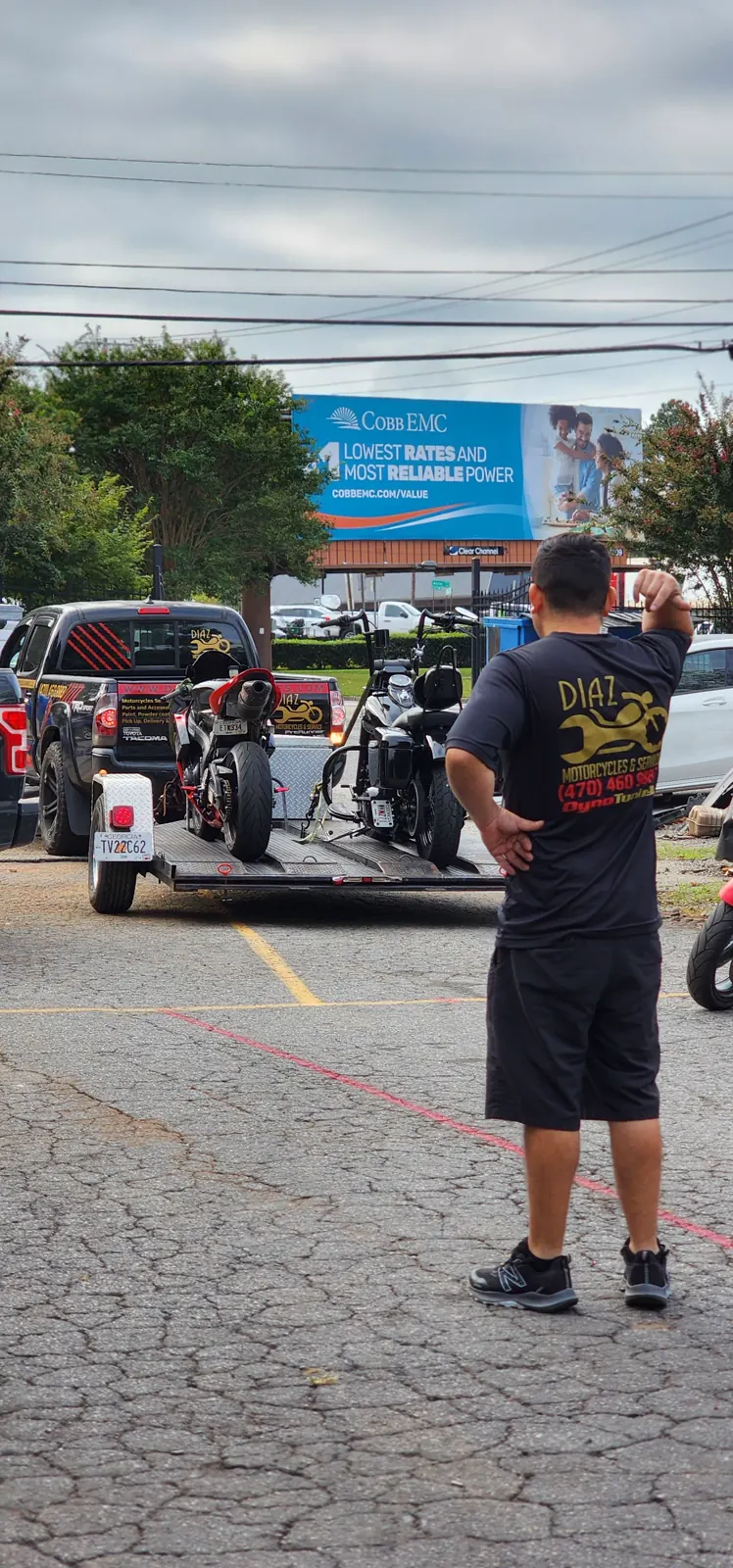
We chock the front wheel so it can’t roll or twist. That’s why we run soft ties or bar straps to spread the pull and keep hard hooks off your paint and levers. We compress the front suspension a little so the bike can’t bounce loose over a bump, but never so hard it fights the fork seals. Then we check every point, walk away, and check again before the truck moves. It’s boring on purpose. Boring is what gets your bike home without a mark.
- Front wheel chocked and locked so it can’t pivot
- Soft straps at spread points, no hooks touching paint or levers
- Front end compressed just enough to stay seated, not enough to stress seals
- Every strap re-checked after the first few minutes of settling
- Mirrors, bags, and loose bits secured or pulled before loading
If you want the deeper version of how we handle a bike from your driveway to the shop, the work we do in house covers pickup, tie-down, and the drive back in one place. And if you like knowing exactly what happens once a bike is on the trailer, this write-up on what the work covers walks through it start to finish. None of it changes based on the enclosed vs open transport Lawrenceville question. The care is the same on either trailer. That’s the part riders miss.
Mistakes that cost riders more than they think
A few honest ones we see over and over, none of them the rider’s fault, all of them easy to dodge once you know them. Naming them isn’t a lecture. It’s the fastest way to get you to a clear-headed choice.
Mistake one, paying for enclosed when open would’ve been perfect. A used bike going twenty minutes across town does not need a climate-controlled box. That money is better spent on the bike itself. Mistake two, going open with fresh paint or a soft clear coat that’s still curing. Wind-blown grit and a new finish are not friends. That’s a classic enclosed situation, and skipping it there is the one place open genuinely loses.
Mistake three, skipping the paperwork. This is the quiet one that bites hardest. Before your bike loads, there should be a written condition report — photos of every panel, notes on existing scuffs, mileage, the works. That single sheet is what protects you if anything ever gets questioned later. Any mover who won’t document your bike before it moves is telling you something. We photograph everything, hand you a copy, and photograph it again on delivery. It’s cheap insurance for both of us.
Mistake four, assuming every mover ties down the same. They don’t. Straps wear out, chocks get skipped, and a rushed load is how a bike shifts. Ask how they secure it. If the answer is vague, keep shopping. You want the person who talks about soft ties and compression points without you prompting, because that person has done it a thousand times.
Mistake five, waiting until the bike is already halfway loaded to ask questions. By then you’re committed and rushed, which is the worst headspace for a good decision. Sort the open-or-enclosed call and the paperwork before pickup day, and the whole thing turns calm. A little planning up front beats a lot of worry later, and it’s the difference between watching your bike leave and wondering, versus watching it leave and knowing.
THE PAPERWORK RULE
Photos and a signed condition report before the bike loads, again on delivery. If a mover skips this step, that’s your answer right there.
Getting a bike to and from Lawrenceville
Now the honest part, because Gwinnett riders deserve it straight. We’re in Marietta, and Lawrenceville sits a real distance out — roughly 33 to 38 miles, and depending on traffic that’s often 45 to 70 minutes each way. That’s not a quick hop, and we’re not going to pretend it is. You’re OTP, we’re across the metro, and that gap is exactly why pickup and delivery is the whole point for you. You don’t make the drive. We do.
Here’s the thing we wish every rider knew a season earlier. The distance that feels like a dealbreaker is actually the reason to call us instead of wrestling a trailer yourself. A rider in Collins Hill Heights doesn’t need to borrow a truck, rent a chock, and thread cross-metro traffic on a Saturday. Neither does someone over in the Chandler Park and Chandler Woods pocket, or up in the nicer streets around Gates Mill, Glynwater, and Highland Manor. We come to the driveway. Either way we load it right. We bring it back.
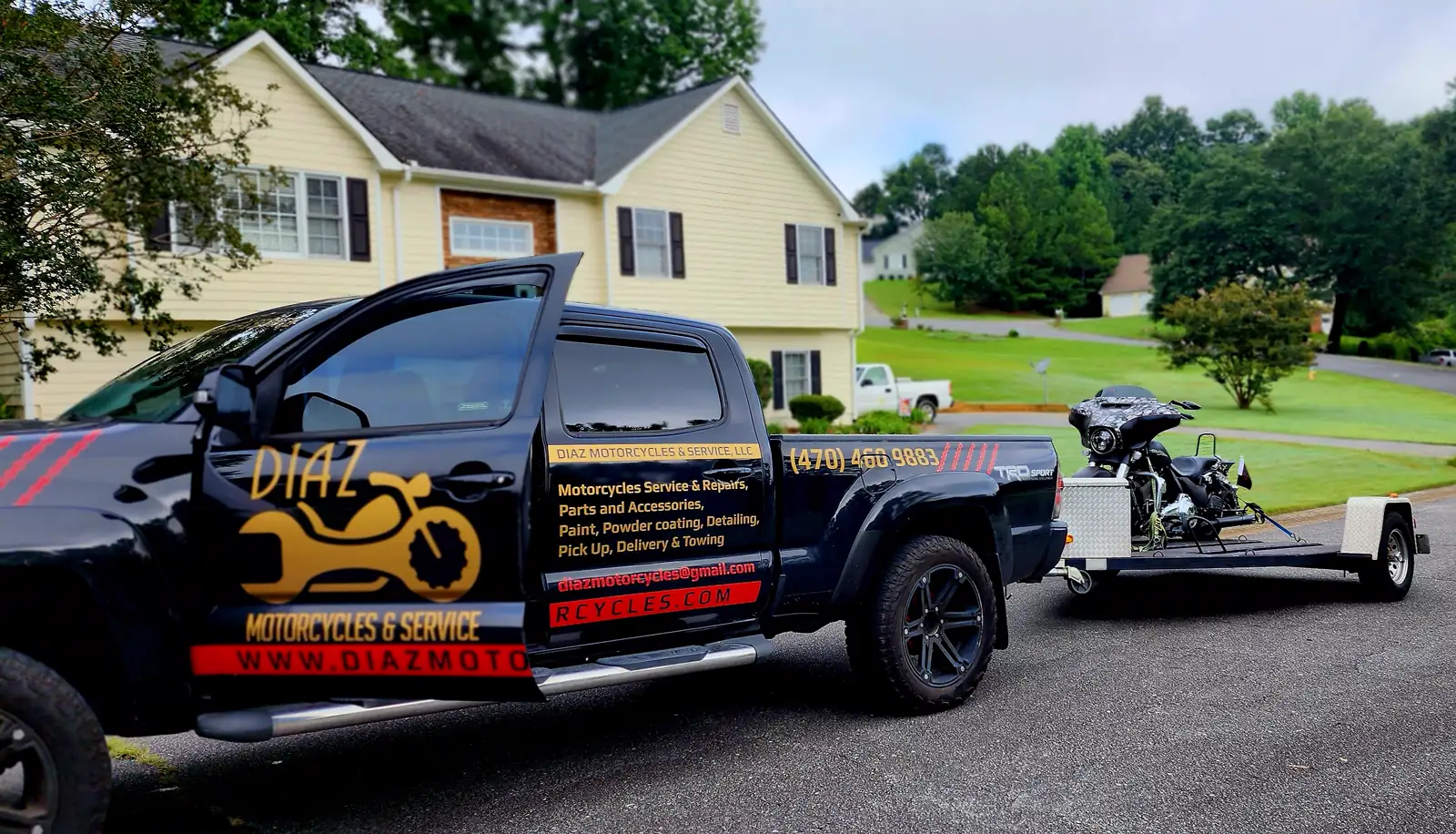
There’s a road reason too. Around Lawrenceville, Old Norcross Road and Five Forks Trickum Road are older county connectors, and freeze-thaw plus heavy truck traffic leaves them stitched with potholes and pavement seams. Trailering a bike over that yourself, on straps you’re not sure of, is how a load shifts. A proper chock and soft-tie setup shrugs it off. That’s the difference between doing it and doing it right.
And Gwinnett riders do ride. Head northeast on GA-124, the Braselton Highway, and in about 30 to 35 minutes you’re near Michelin Raceway Road Atlanta in Braselton, which runs motorcycle track days. Track riders in particular love open transport for the daily bike and enclosed for the race build they’ve poured a winter into. If you’ve been meaning to sharpen your street skills before a track day, MSF rider courses are a great place to start, and for the Harley crowd, the official Harley-Davidson service information is worth a bookmark when you’re chasing a spec.
You’re not short on local wrenches, either — a shop like Polini Motorsports over on Swanson Drive handles repairs and custom work for street and dirt bikes. What a busy Lawrenceville shop doesn’t always have on hand is a truck and trailer sitting ready to fetch a dead bike. That’s the slot we fill. And this same open-versus-enclosed call plays out all over OTP, so if you want a second angle, here’s what Roswell riders run into with the exact same decision.
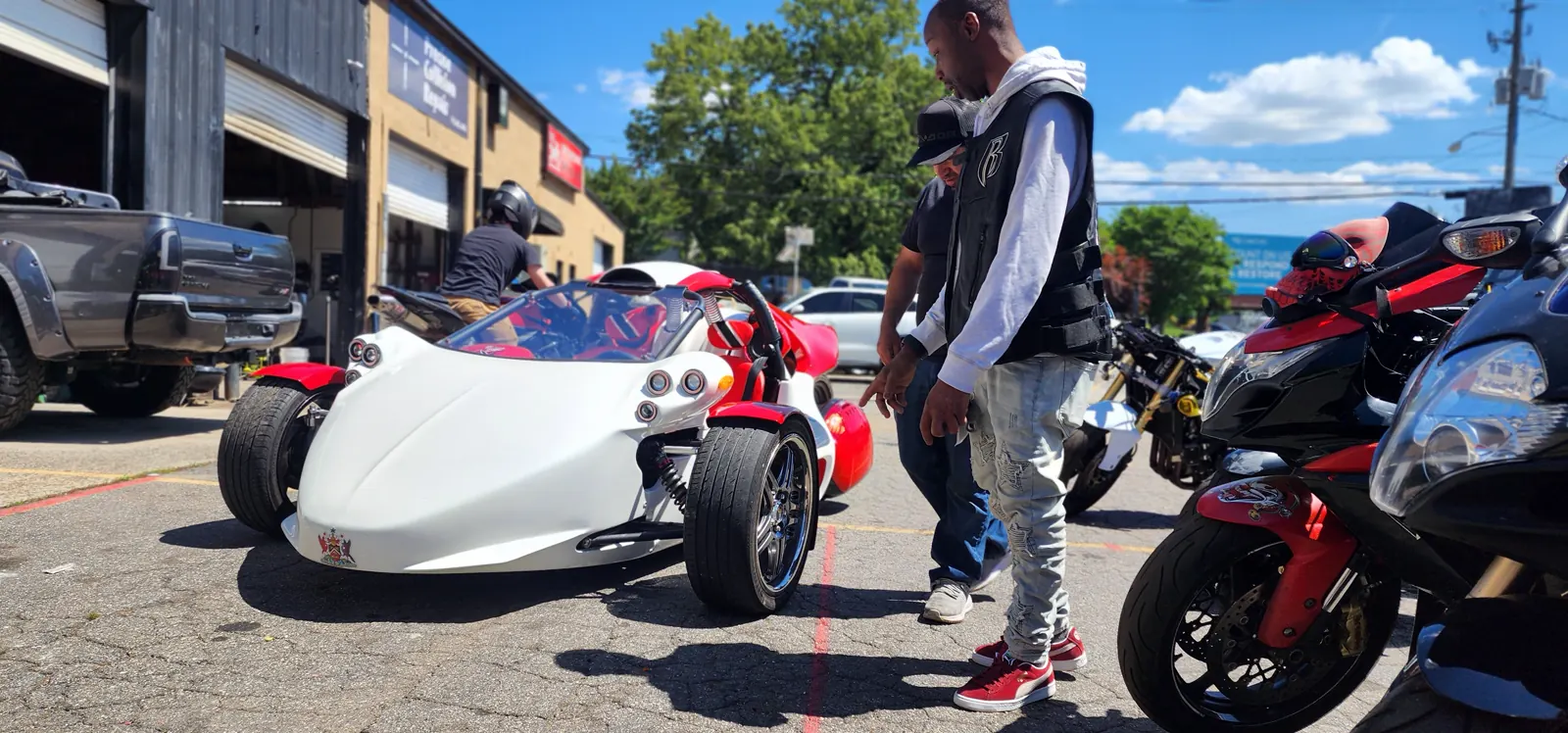
None of this depends on where you sit in Lawrenceville. Whether your bike waits near Rhodes Jordan Park with its fishing lake and open acreage, or closer in by the Aurora Theatre and the Lawrenceville Arts Center downtown, the pickup works the same. We plan the route, we come get it, and you get your Saturday back.
So, which one is right for you?
Here’s the clean version you can actually use. Pick open transport if your bike runs or rolls fine, the paint is cured, and it’s a normal machine you could replace. That’s most bikes and most riders. Pick enclosed if the bike is rare, freshly painted, worth an emotional fortune, or heading a long way through unpredictable weather. That’s the narrower, real case where the extra protection pays off.
| If your bike is… | Go with… |
|---|---|
| A used or everyday rider, short haul | Open |
| A project or non-runner going to the shop | Open |
| Fresh paint or curing clear coat | Enclosed |
| Rare, collector, or one-off custom | Enclosed |
| A long-distance move in iffy weather | Enclosed |
| A track daily-driver you'd replace easily | Open |
Both are good options. Neither is a trap. The mistake is overthinking it or, worse, overpaying for protection your bike never needed. Sort your bike into the right row, and the choice stops being stressful. That clear-headed feeling is the whole goal here, and it’s a lot cheaper than a sleepless week of second-guessing.
When you’re ready, the move itself is the easy part. We’re the truck that comes to Lawrenceville so you never have to become one for a day.
Questions Lawrenceville riders ask us
Is enclosed transport worth the upgrade?
For most bikes, no. A used or everyday bike going across the metro rides open and arrives clean. The upgrade earns its keep only when the bike is rare, freshly painted, or heading a long way through changing weather. Match it to your bike, not to nerves alone.
Which one should I pick if I'm not sure?
Default to open. It’s how most bikes travel and how ours travel most days. Only reach for enclosed if your bike is hard to replace, has curing paint, or faces a long weather-exposed haul. When in doubt, open is the safe and sensible pick.
What's the real difference between open and enclosed?
Open means the bike rides strapped on an exposed trailer, so it sees wind and road dust that wipes off. Enclosed means walls and a roof shield it from all of that. The tie-down and care are identical either way — the only difference is exposure to the elements.
Which one keeps my bike in better shape long term?
Neither hurts a bike when it’s loaded right. A properly chocked and soft-tied bike arrives the same on either trailer. Enclosed only matters when the finish is delicate or the trip is long. For a normal bike on a normal move, both leave it exactly as it left.
Which is right for my kind of riding?
If you ride a common street or sportbike and mostly move it around the metro, open fits your life. If you keep a rare build, a track-only machine, or something with fresh paint, enclosed is worth it for those trips. Many riders use open for the daily bike and enclosed for the special one.
Do you really come all the way to Lawrenceville?
Yes, every week. We’re in Marietta, so it’s roughly 33 to 38 miles and often 45 to 70 minutes each way, and that distance is exactly why pickup and delivery is the point. You stay home, we handle the driveway pickup, the tie-down, and the drive.
We roll out to Lawrenceville and all across Gwinnett and the east metro, so if you’re in Duluth, Suwanee, or Snellville, we’ll come to you. The same goes for riders in Grayson, Dacula, and Lilburn, plus Buford and Norcross up the corridor. We also cover Loganville, Sugar Hill, Tucker, and Stone Mountain, and if your town borders any of those, just ask and we’ll sort out the pickup.
WE COME GET IT IN LAWRENCEVILLE
Skip the borrowed truck and the strap you’re not sure about. Whether it’s a runner, a project, or a bike you just bought sight-unseen, we’ll drive to your Lawrenceville driveway, load it the right way, and bring it back safe. Text us the bike and your address and we’ll set up a pickup that fits your week.
470-460-9883Diaz Motorcycles and Service, LLC · 847 Barnes Mill Road, Marietta, GA 30062