Stranded Motorcycle Pickup Lawrenceville — What to Check
Had your bike for years and one morning it just won't run? Here's what to check first, and how we come get it.
You’ve had that bike longer than a lot of things in your life. Fifteen years, maybe twenty. Even so, you know the exact sound it makes on a cold start, and you know it’s worth keeping. So when it finally won’t fire one morning, you don’t want a stranger with a flatbed and a hook. What’s more, you want a stranded motorcycle pickup Lawrenceville riders trust — someone who treats a long-loved machine like it still matters, because it does.
Here’s the good news up front. After that, a bike that won’t run is almost never a bike that’s done. Also most of the time it’s a small, boring, fixable thing. The trick is getting it to a shop without hurting it or hurting yourself in the process. That’s the whole reason pickup and delivery exists, and it’s the reason we’re writing this. Let’s walk through what’s probably wrong, when you can safely ride, and how a bike gets from your garage in Lawrenceville to our bench in Marietta in one piece.
The myth that costs people their bikes
There’s an old idea floating around that a stalled bike is a problem you either solve in your own driveway or hand over to a scrap hauler. Either you’re a wrench who can fix anything, or your bike is junk. That’s the myth, and it’s wrong. Plenty of good bikes get given up on because the owner thought the only options were a full home repair or a tow-truck guy who’s never strapped a motorcycle in his life.
The other half of the myth is worse. Some folks figure they’ll just ride it to the shop even though it’s acting up. A bike that dies at a light on US-78 / GA-316 east toward Athens is a very different animal than a car that stalls. You’ve got two wheels, no cage, and traffic that flat-out will not expect you. Limping a sick machine down a fast four-lane to save a pickup fee is a trade nobody should make.
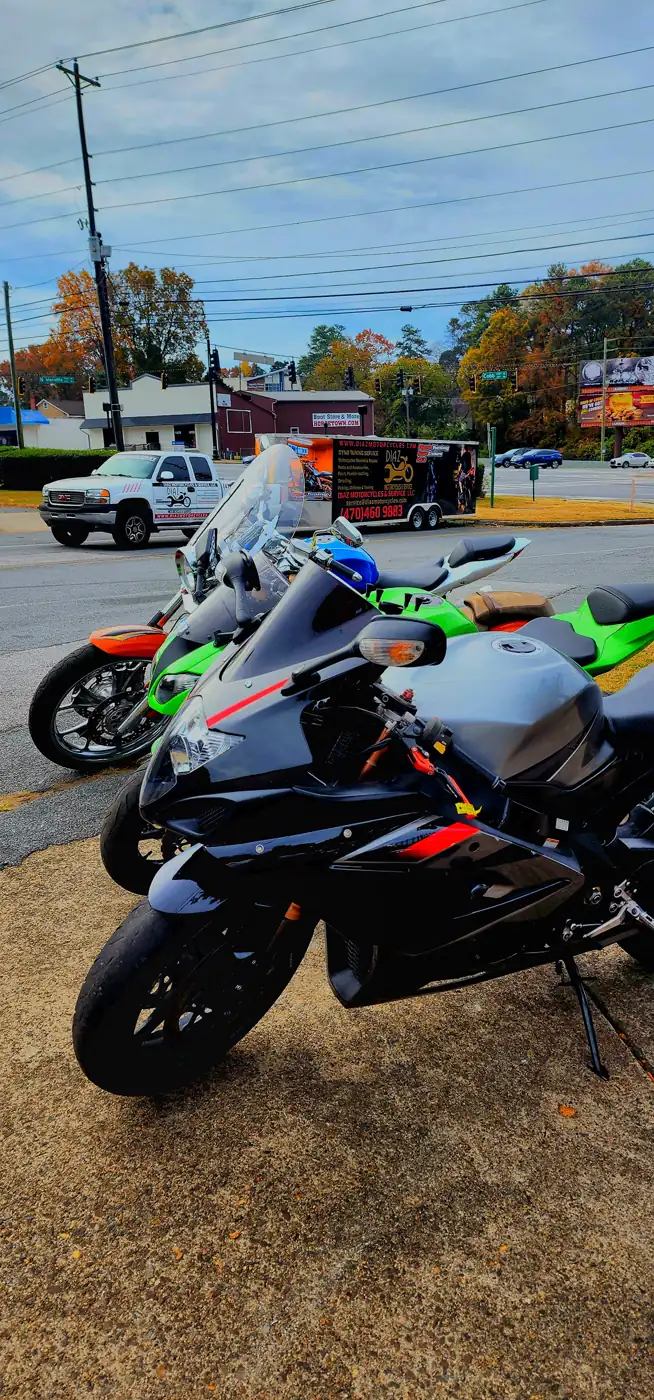
The reality: a stranded bike is usually a five-cent fix
Now for the part that should make you feel better. When a bike that ran fine for years suddenly won’t start, the cause is usually near the top of a short list. We’ll go most-common first, because that’s how the odds actually stack up.
The number one reason, by a mile, is the battery. Bikes sit more than cars do, and a battery that hasn’t been on a tender slowly gives up. If your dash lights are dim, your starter clicks instead of cranks, or the horn sounds tired, you’ve probably found it. The second usual suspect is fuel. Old gas goes stale, especially the ethanol blend most of us pump, and it gums up carbs and clogs injectors after a long sit. Third is the simple stuff that hides in plain sight — a blown fuse, a loose battery terminal, a kickstand safety switch, or a kill switch someone bumped.
- Dead or weak battery — dim lights, clicking, slow crank (the top cause after a bike sits)
- Stale or bad fuel — hard starts, sputtering, no start after months parked
- Blown fuse or loose terminal — everything’s dead with no warning
- Safety switches — kickstand down, kill switch flipped, clutch not pulled
- Fouled plugs or a fuel-pump that won’t prime on older bikes
See the pattern? None of those means your bike is finished. Every one of them is a normal repair we do all week long. The reason we still say bring it in — instead of chasing it in the driveway — is timing. And the timing on this matters more than the fix does.
The timing on this matters more than the fix does.
Here’s what we mean. A weak battery that gets ridden hard can leave you dead on the shoulder of GA-316 at the worst possible spot. Stale fuel forced through the system can turn a simple carb clean into a bigger job. Catch it early, hand it off before you make it worse, and the repair stays small. Push a struggling bike because you didn’t want to call, and a five-cent fix can grow teeth. If you want to keep a bike you’ve loved for years, the smart move is to stop riding it the moment it’s clearly not right.
How the pickup actually works
This is where most people relax, because it’s simpler than they feared. You call or text, tell us where the bike is and roughly what it’s doing, and we schedule a pickup. We bring the truck and trailer to you — your garage, your apartment lot, the side of the road, wherever it stopped. You don’t have to get it running to hand it over. That’s the entire point. If you want to see the full menu of what we take care of here, it’s all laid out on our transport page, but the short version is this: a dead bike is a normal Tuesday for us.
- We roll the bike up the ramp gently — no dragging, no forcing a locked wheel
- Front wheel goes into a chock so it can’t wander side to side
- Soft straps loop the triple tree or bars, then compress the front suspension a touch to lock it
- Rear gets secured too, so nothing shifts on a bump
- We snap a few photos of the bike as loaded, before we ever pull away
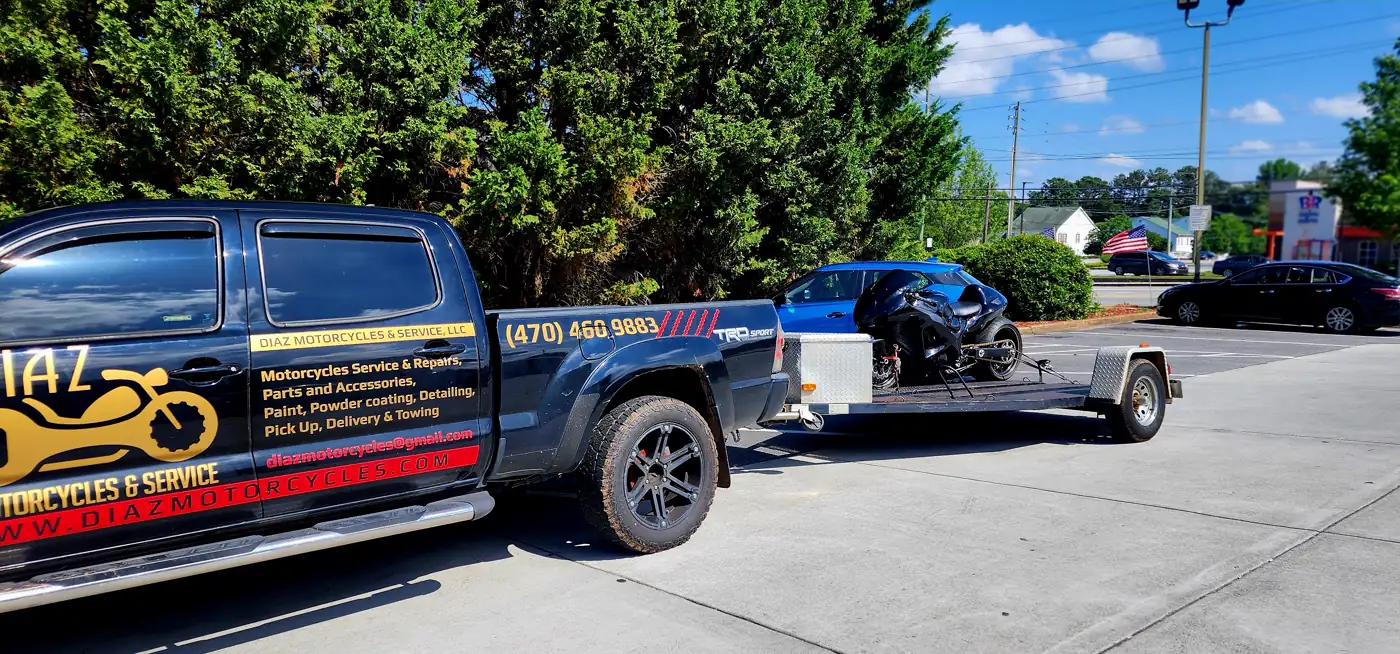
You’ll also hear people ask about open versus enclosed trailers. For a hop across the metro, an open trailer is perfectly fine — it’s fast, it’s easy to load, and your bike is only exposed for the length of the drive. Enclosed makes more sense for a long-distance haul, a fresh paint job, or a restored classic you don’t want touched by weather or road grit. Both are safe when the tie-down is done right. The trailer is just the box; the strap work is what protects your bike.
One more piece people skip until it burns them: the paperwork. A good hauler documents the bike’s condition before it leaves and again when it arrives. Photos of any existing scratches, mileage, mirrors, the works. That record protects you and it protects us, and it means there’s never a guessing game about how the bike showed up. For a short local move it takes two minutes; for anything longer or higher-value, it’s the difference between a clean handoff and a headache.
WHEN NOT TO RIDE
If the bike stalls at speed, loses lights, drags a brake, leaks fuel, or feels wrong in the steering — don’t ride it, not even a few blocks. Those are the ones that turn into a crash story. Park it, call for pickup, and let us bring the trailer.
How to tell a good shop from a guy with a truck
Anybody can rent a trailer. What separates a good shop from a stranger who hauls the occasional bike is a handful of habits you can spot before you ever hand over the keys. If you want the deeper breakdown, we wrote a whole piece on what separates a good shop, but here’s the quick checklist you can use on the phone.
- They use soft straps and a wheel chock — never a hook through your wheel or a chain over the tank
- They photograph the bike loaded, before the drive
- They know the difference between a triple-tree tie-down and yanking on your bars
- They’re a repair shop first, so the bike lands somewhere that can actually fix it
- Their reviews are recent and there are a lot of them
That last one matters more in Lawrenceville than almost anywhere. Gwinnett is a big, busy, spread-out county, and word of mouth doesn’t reach every corner of it. So riders lean on Google reviews — the volume of them and how fresh they are. A shop with a long, recent trail of happy owners has earned that the hard way, one careful pickup at a time. If you’re on the other side of the metro, we broke down the Woodstock side of things separately, and the same rules apply there.
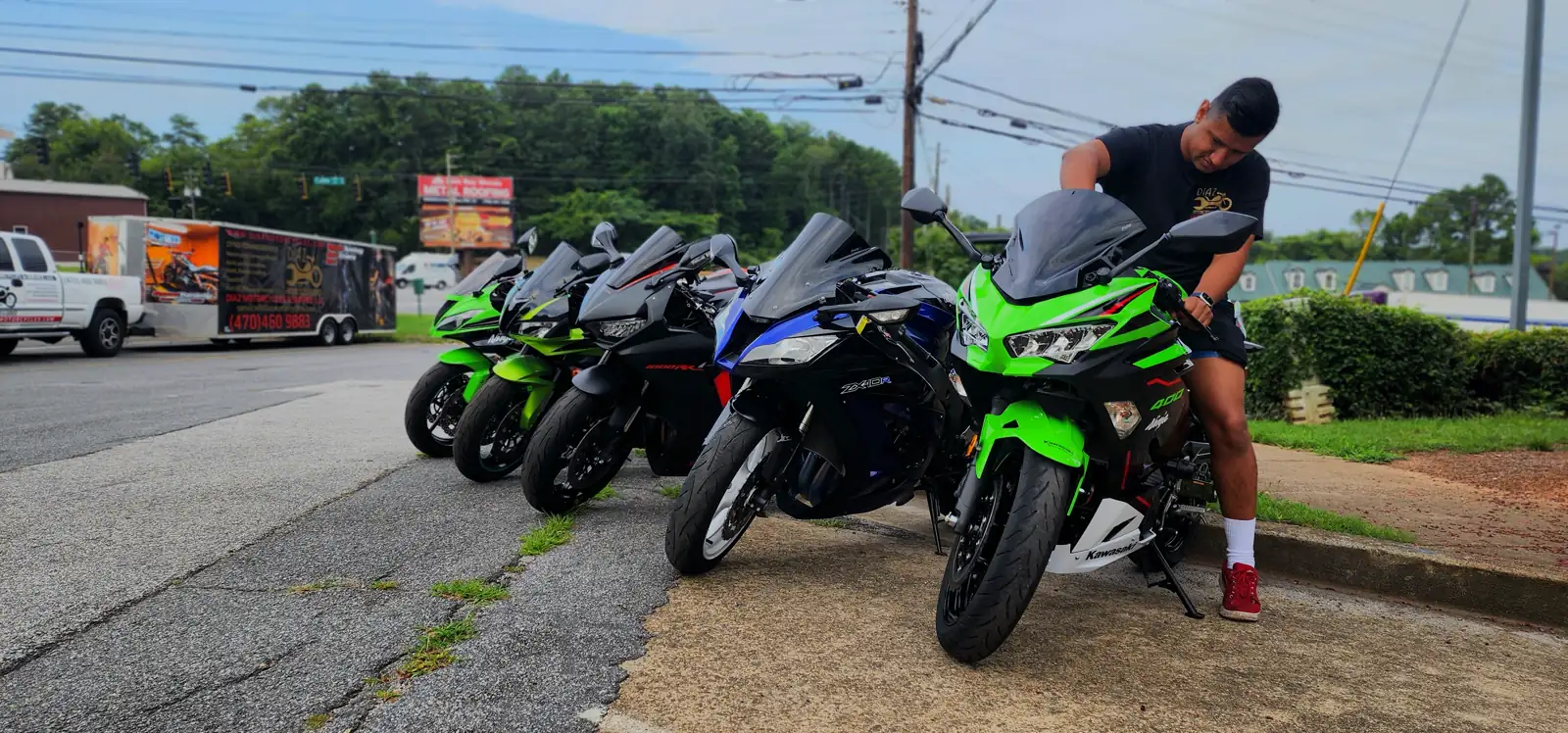
There’s a safety habit worth mentioning too. If your bike’s been down a while and you’re getting back into riding it, brushing up your skills is never a bad call — the MSF rider courses are a solid tune-up for the rider, not just the machine. A confident rider on a sorted bike is the whole goal here.
Why Lawrenceville riders call us for this
Let’s be straight about the distance, because pretending otherwise helps nobody. Our shop sits in Marietta, and Lawrenceville is a real drive — roughly a cross-metro trip, whether you take GA-120 (Duluth Highway) west through Duluth and Roswell with no interstate, or loop the highways around. That’s not close. But that distance is exactly why pickup is the whole pitch, not a side service. You shouldn’t have to solve the transport puzzle yourself. Coming to get it is the value — you make one call, and the bike shows up on our bench without you touching a trailer.
A bike came in from Collins Hill Heights with exactly this. Long-time owner, garage-kept sportbike, ran great for years, then sat one winter and wouldn’t wake up in the spring. He was sure it was something expensive. It was a dead battery and a tank of tired fuel — home by the weekend, running like the day he bought it. That’s the story far more often than the scary version, especially with bikes that lived their whole lives in one of the county’s near-universal attached two-car garages. Garage-kept bikes age gracefully, and they restore beautifully.
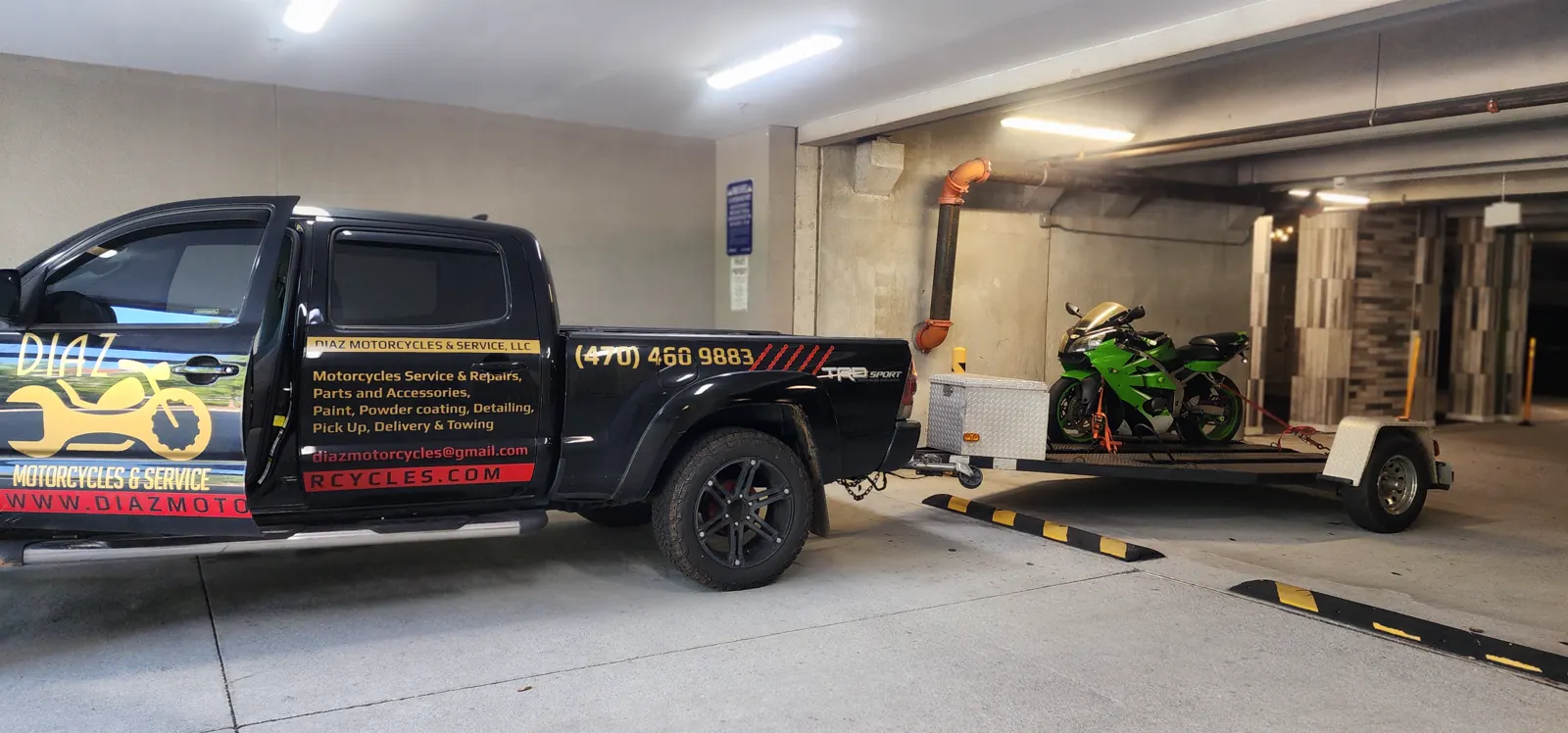
We get calls from all over town. Newer builds out on the east side toward the Alcovy River — the Alcovy Falls, Reserve, Springs and Landing pockets — tend to be younger riders on modified sportbikes. The mid-market cluster near the historic core, around Heritage Station, Commons, Park and Square, runs the whole range. A stranded motorcycle pickup Lawrenceville owners can rely on has to work for all of them, from a first-year rider to a graybeard who’s kept the same machine for two decades.
Gwinnett is also one of the state’s densest sportbike scenes, and a lot of those bikes wear a slip-on or a full exhaust. That’s great fun, but a bike that’s been opened up and never re-mapped often runs lean — which shows up as poor starting, hot running and stumbles low in the rev range. There’s nowhere local to sort that out properly, and it’s the kind of work a real dyno session settles for good, the way Dynojet’s dyno center lays out. When we pick a modified bike up, we can haul it and fix the mapping in one trip instead of two.
What you're left with
Here’s the feeling we want you to walk away with. A bike that won’t run isn’t a loss. It’s a phone call. You keep the machine you’ve spent years getting to know, and somebody else handles the heavy, awkward, risky part of getting it fixed. No wrestling a dead bike up a ramp. No white-knuckle ride to the shop hoping it doesn’t die on GA-316. Just a truck in your driveway and your bike coming back to life.
Lawrenceville’s got real character to it — the 1885 Gwinnett Historic Courthouse anchoring the downtown Square, the Lawrenceville Lawn with its amphitheater and dog park and those free Beats on the Streets summer nights. It’s a town people put down roots in, and the bikes here often stay in the family a long time. That’s exactly the kind of machine worth saving, and exactly the kind we love getting back on the road.
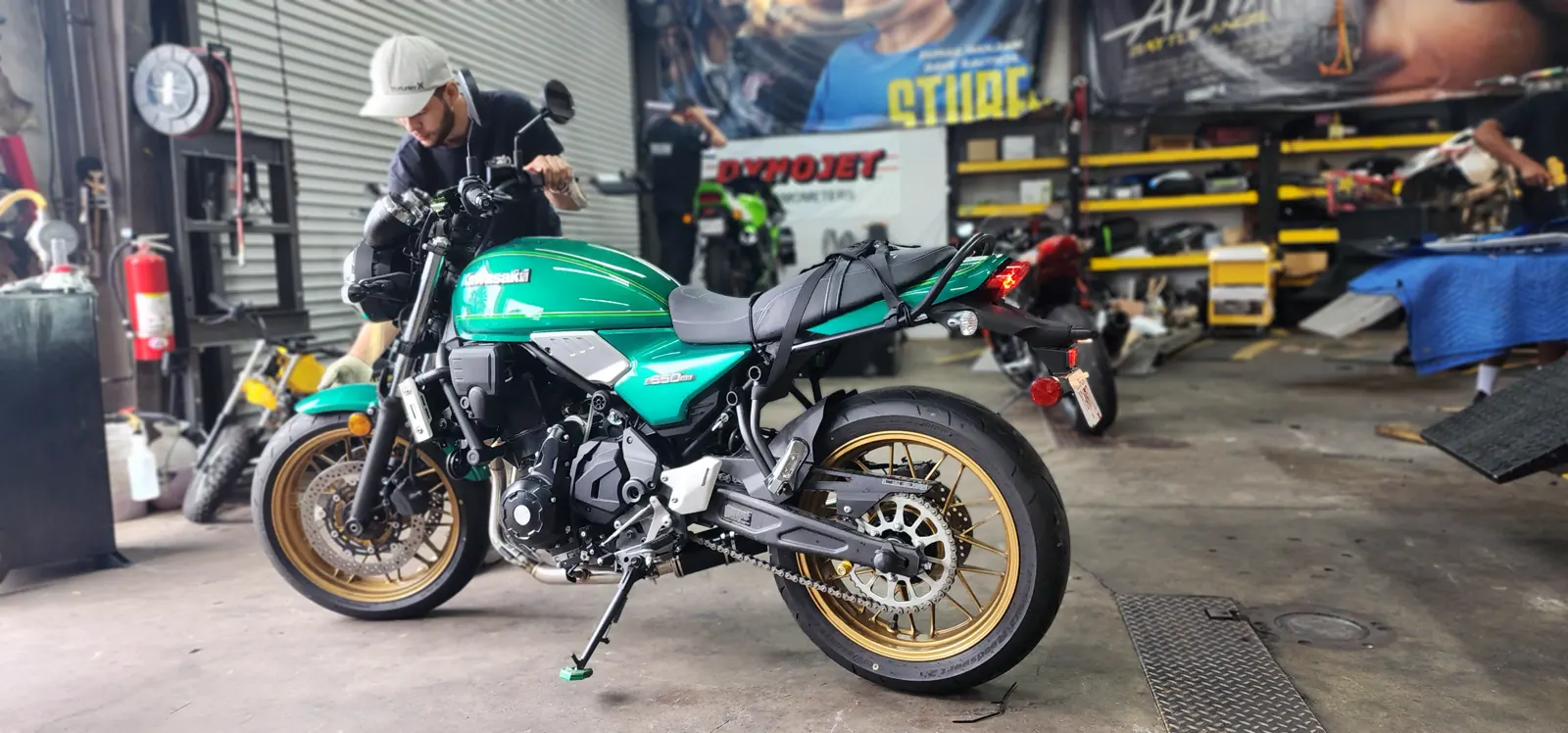
If you’re weighing whether it’s even worth the drive from Gwinnett, we’d say let the bike answer that. A machine you’ve loved for years earns the trip. And if your ride’s on the south side instead, our friends over that way know how we handle that job too — same care, same straps, same clean handoff. Wherever the bike’s parked, the process doesn’t change.
So check the battery, sniff the fuel, glance at the fuses. If it’s a quick win, great — you saved yourself a call. If it’s not, or if the bike feels unsafe to move, don’t force it. Park it, reach out, and we’ll bring the trailer to you. Keeping a good bike alive is the easiest thing in the world once someone else carries the weight.
A dead bike isn't a loss. It's a phone call.
Questions Lawrenceville riders ask us
What actually causes a bike to strand you like this?
After a bike sits, the top cause is a dead or weak battery, followed by stale fuel gumming up the carbs or injectors. Loose terminals, blown fuses, and tripped safety switches round out the list. The good part is that every one of those is a normal, quick repair — not a sign the bike is done.
Can I just fix it myself in the driveway?
Sometimes, yes. A battery on a tender, a bumped kill switch, or a loose terminal are all things a handy owner can sort out. But if it needs stale fuel drained, a carb cleaned, or a fuel system flushed, that’s where a bench and the right tools save you time and grief. When in doubt, let us pick it up rather than force it.
Will it get worse if I keep trying to start it?
It can. Cranking a bike over and over on a weak battery, or forcing bad fuel through the system, can turn a small job into a bigger one. Fouled plugs and a strained starter are common results. Catch it early and the fix stays cheap and quick, which is the whole reason we say hand it off before you make it worse.
How urgent is a pickup, really?
If the bike simply won’t start in your garage, there’s no rush — schedule a pickup whenever it suits you. If it stalled out on the road, lost its lights, or feels unsafe to move, treat it as urgent and don’t ride it. We’ll bring the truck and trailer to wherever it stopped.
What happens if I just ignore it and let it sit?
A bike left dead for months usually gets harder to revive, not easier. The battery dies fully, fuel varnishes, and moisture creeps in — and here in Gwinnett winter humidity is the real threat, not the cold. The sooner it’s looked at, the smaller the job. A bike you love is worth not leaving to rot in the corner.
Is Lawrenceville too far for you to come get my bike?
It’s a cross-metro drive, and we won’t pretend it’s around the corner. But pickup and delivery is exactly why the distance doesn’t land on you. You make one call, we bring the trailer, and your bike arrives on our Marietta bench without you touching a ramp or a strap.
We run pickup and delivery all across the north and east metro, so a Lawrenceville call is right in our lane. That means we regularly haul bikes home from Duluth, Suwanee, and Snellville, along with Grayson, Dacula, and Lilburn. Riders in Buford, Norcross, and Loganville lean on us too, and we’re just as happy to roll out to Sugar Hill, Tucker, or Stone Mountain. Wherever your bike stopped, we’ll come get it.
STRANDED IN LAWRENCEVILLE? WE'LL COME GET IT.
Don’t wrestle a dead bike up a ramp or risk riding a sick one across town. Text us where your bike is parked in Lawrenceville and roughly what it’s doing, and we’ll schedule a pickup, bring the truck and trailer to you, and get your machine back on the road. One call is all it takes.
470-460-9883Diaz Motorcycles and Service, LLC · 847 Barnes Mill Road, Marietta, GA 30062