Custom Paint Cost Marietta — What You Really Pay For
In-house custom paint, an honest process, and the real reasons one job costs more than another.
You’ve got more than one bike in the garage. Meanwhile, the bagger for long weekend runs, a lighter sportbike for quick loops, maybe an old project that’s sat half-apart for two years. Each one has its own shop, its own guy, its own text thread you scroll back through to find. So the day you start dreaming about a real custom paint job, one question jumps ahead of all the rest. That’s the honest start of every talk about custom paint cost Marietta riders have with us, and it deserves a straight answer instead of a runaround.
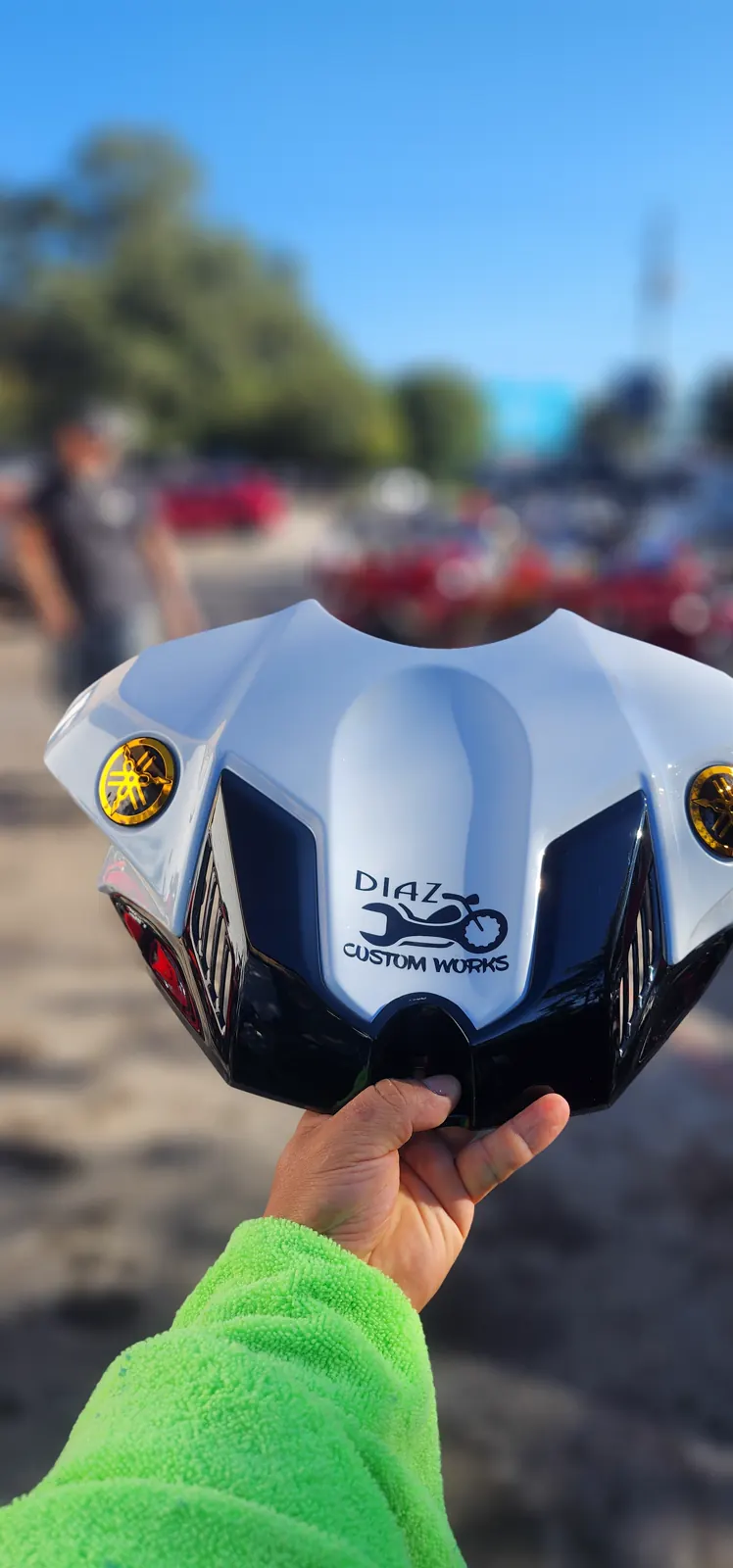
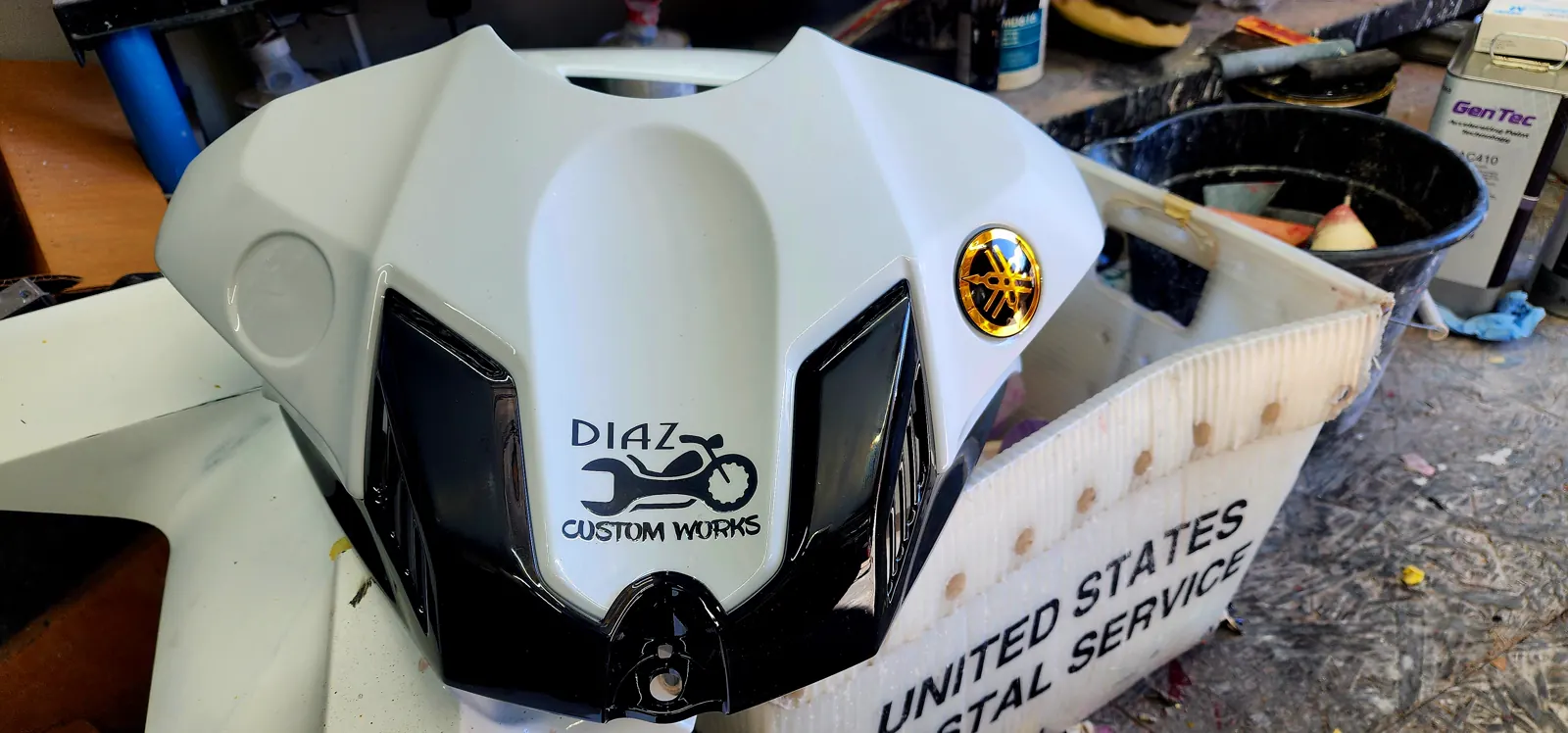
Here’s the good news up front. A custom paint job is the most personal thing you’ll ever do to a bike, and it doesn’t have to be a mystery. We paint in-house, in our own booth, under the Diaz Custom Works name. Because the work happens under our own roof, we can tell you exactly what drives the number and why. No middleman, no shipping your tank across town, no guessing.
What you're really asking when you ask the price
When you ask what a custom job costs, you’re really asking two things at once. First, how big is this job. Second, can you trust the shop quoting it. Both matter. A tank with a simple color change is a different animal than a full airbrushed mural spread across the tank, fenders and side covers. Still, a lot of folks lump those together in their head, then get sticker-shocked when the two turn out to be miles apart.
So let’s split them. The scope is the work itself: how many panels, how wild the design, how much bodywork hides under the old paint. The trust is whether the shop will look you in the eye and explain it. You want both. A cheap number from someone who won’t show you their booth is no bargain at all. If you want the deeper version, we wrote up what separates a good shop in its own post.
Think of it like asking what a tattoo costs. A small line-work piece and a full back mural aren’t the same question, even though both are just ink. Paint works the same way. Once you know which one you’re actually after, the number stops feeling scary and starts to make plain sense. That’s the whole reason we slow down and ask what you’re picturing before we talk anything else.
The honest answer: why we won't quote it blind
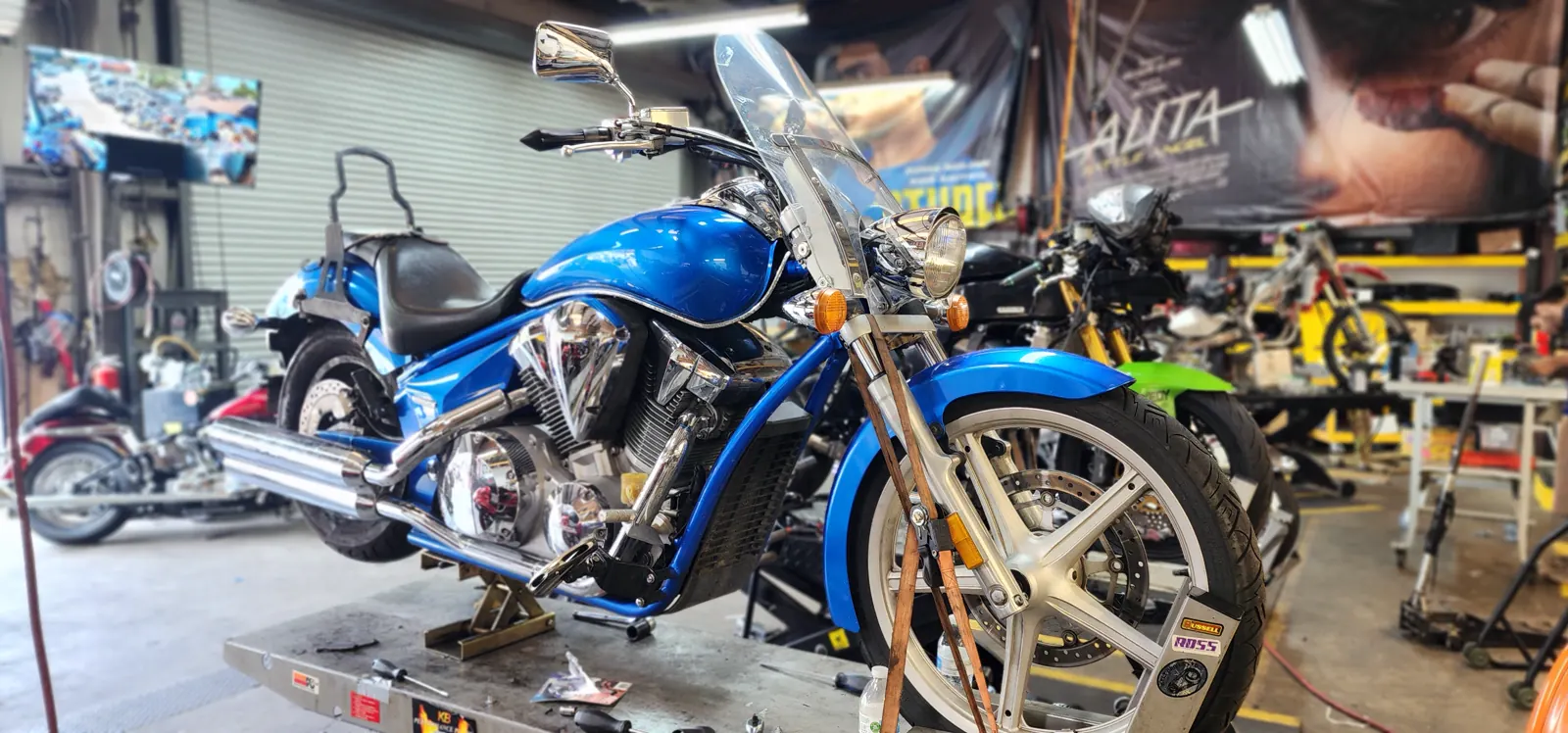
Here’s the part some shops won’t say out loud. A real custom job can’t be quoted sight-unseen, and anyone who fires a firm number at you over the phone is guessing. We’d rather see the bike first.
Why? Because old paint is a liar. It hides things. A tank that looks clean in your driveway can have a filled dent, a spot of sneaky rust, or three earlier paint jobs stacked underneath. We don’t know until it’s under the lights and the panels are off. Once we see it, we can talk real numbers. Before that, we’d just be making them up, and we don’t do that to friends we’ve helped.
None of this is about making the job sound bigger than it is. Just the opposite. When you understand why we look first, the price stops feeling like a mystery and starts feeling like a plan you’re actually part of. You’ll see the same dents we see. You’ll hear why one panel adds time and another barely does. By the end, nothing about the number is a surprise.
SEE THE BIKE FIRST
A phone quote for custom paint is a guess dressed up as a number. Bring the bike by, let us pull the panels, and the real answer shows up fast.
The timing on this matters more than the fix does. Paint isn’t a same-day job you rush between two other cars. Instead, it’s a chain of steps, and each one has to fully cure before the next can go on. Skip the wait and the whole finish fails months later. So when we say a real custom job takes time, we’re protecting the money you’re about to spend, not padding a bill.
What actually changes the number
Most people think paint is about the color. It isn’t, not mostly. The single biggest thing that changes your job is what’s living under the old finish. Prep and bodywork eat more hours than the fun part ever will, and that surprises almost everybody the first time.
- How many panels get painted — one tank versus tank, fenders, fairing and covers together
- The condition underneath — dents, rust, filler and old stacked paint all add prep time
- The design — a flat color change is quick, while candy, metallic, flake, pinstriping or a full airbrushed mural is slow, careful hand work
- Whether we’re matching existing paint on a repair, which is fussier than painting the whole bike one shade
- The finish you want — deep candy over a metallic base takes more coats than a single solid color
See the pattern? Parts barely move the needle. Labor is the whole story. A can of quality paint costs what it costs, but the hours of sanding, filling, masking, spraying and wet-sanding between coats are where a custom job actually lives. That stays true whether it’s a big touring bagger or a little cafe racer.
Matching a repair deserves its own mention, since it trips people up. You’d think fixing one small panel would be the cheap, easy option. Often it’s the exact opposite. Blending a fresh red into a ten-year-old red means reading how the old paint has faded in the sun, then feathering the new color out so no hard edge ever shows. Painting a whole bike one new shade is, funny enough, more forgiving. So the small job isn’t always the small job.
Parts barely move the needle. On a custom job, the labor is the whole story.
How our crew does it, start to finish
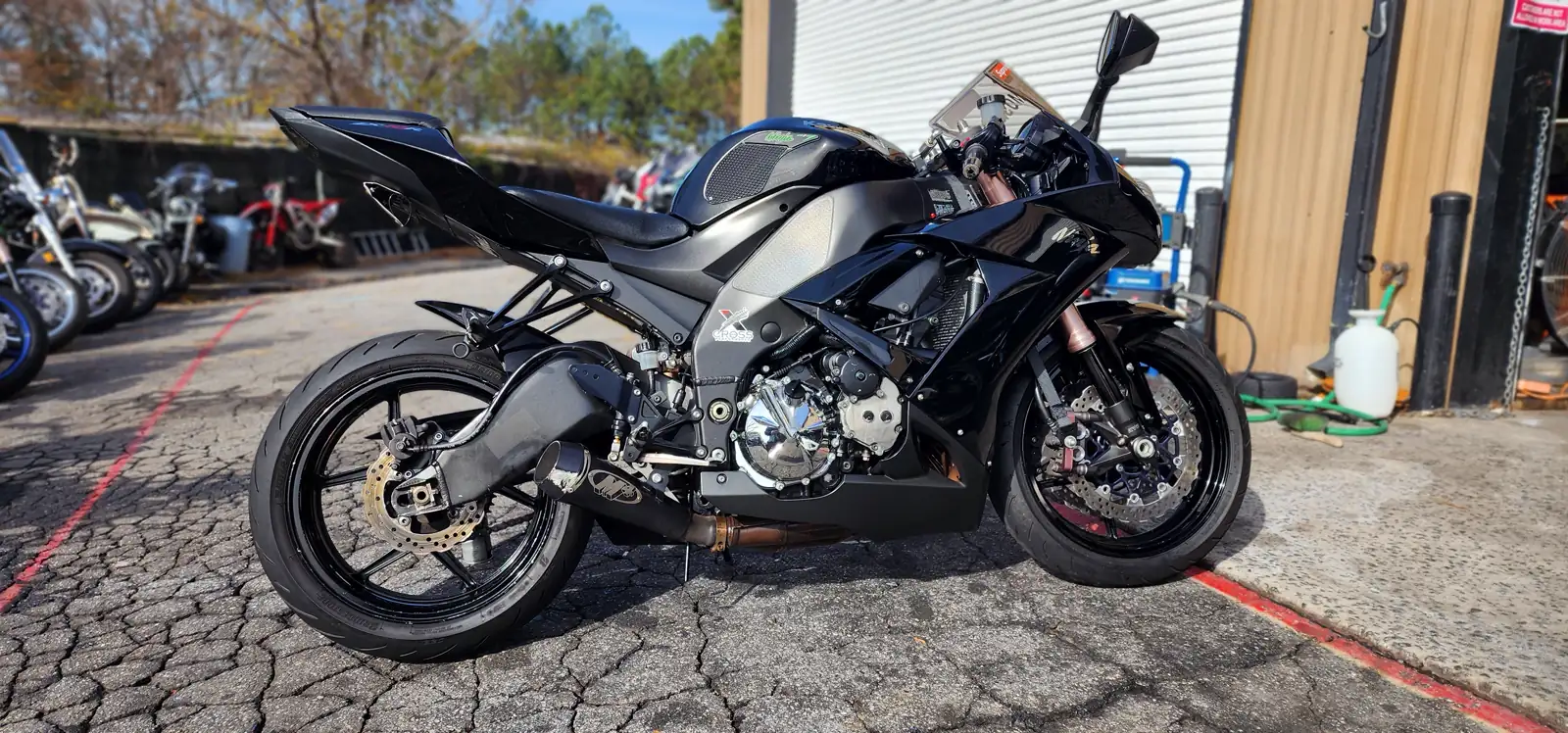
Let’s walk the actual process, because knowing it makes the timeline make sense. Here’s how our crew approaches it from bare metal to the final buff.
- Teardown and inspection — panels come off, and we find every dent and rust spot the old paint was hiding
- Bodywork — dents worked out, filler shaped, everything sanded dead flat so light doesn’t catch a single ripple
- Primer — a sealing coat that gives the color something to grip
- Base coat — your color goes down in thin, even layers, whether that’s a solid, a candy or a metallic
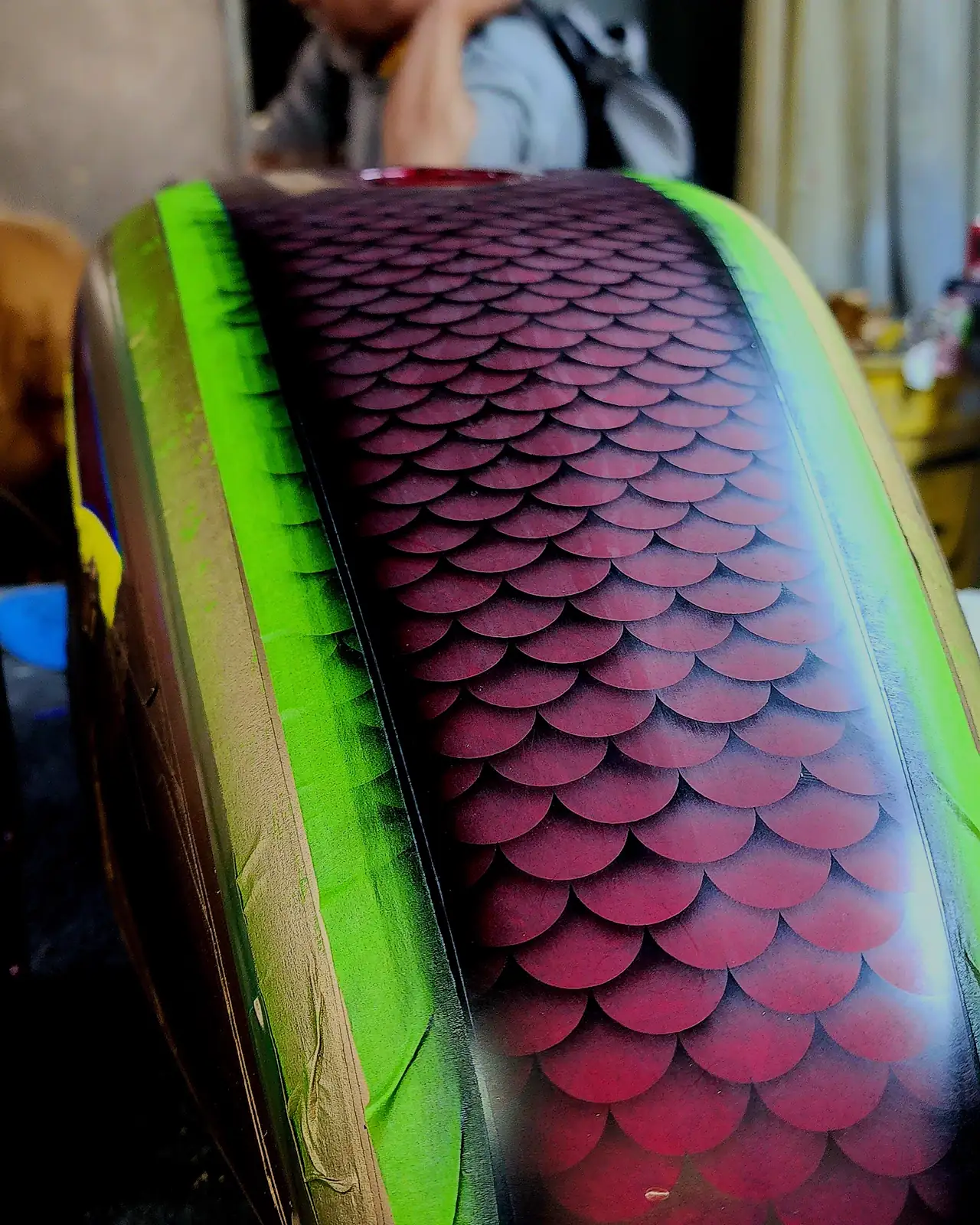
- Artwork — airbrushed graphics, murals, pinstriping and flake get laid in by hand at this stage
- Clear coat — several coats of clear seal and protect the color and give that deep, wet gloss
- Wet-sand and buff — we level the clear and polish it until the surface reads like glass
- Reassembly — panels go back on the bike, aligned and double-checked
Two terms are worth knowing here. The base coat is the color you see. The clear coat is the armor over it. All that depth, that liquid shine you could almost dip a hand into, comes from clear laid over base and then polished. A rushed clear coat is exactly why cheap paint looks flat and hazes out inside a year. Ours doesn’t, because we let it cure on its own schedule.
Where the hours really go
If you watched us work, the spraying part would surprise you. It’s actually the quick bit. The long stretches are the ones nobody bothers to photograph: blocking a panel dead flat with a sanding board, taping off razor-clean lines for a two-tone, then wiping every speck of dust away before the color goes down. One stray fiber trapped under clear coat means starting a whole section over. That patience is the real difference between paint that looks deep and paint that looks slapped on. It’s slow on purpose, and you feel it every time the sun hits the finished bike.
A little local context
We’re about three miles from Marietta Square, an easy eight to twelve minutes out Roswell Road, which runs east right off the Square. So dropping a bike off is quick whether you’re rolling in from Barrett Heights along the Barrett corridor or from one of the newer streets over in Barrett Preserve on the Barrett Parkway side. No point inside the city is more than about twenty minutes from our door.
We paint bikes for riders all over town. There’s the vintage crowd near the old part of the city, folks who park by the Marietta History Center up in the Kennesaw House on the Square, and riders who keep their bikes near the quiet blocks around the Marietta National Cemetery. The kind of bike doesn’t scare us, either. A candy bagger that runs out Old US-41 and Stilesboro Road on a Sunday gets the same care as a naked sportbike. Marietta rides a genuinely broad mix, and groups like the Motorcycle Industry Council track just how wide that world has gotten.
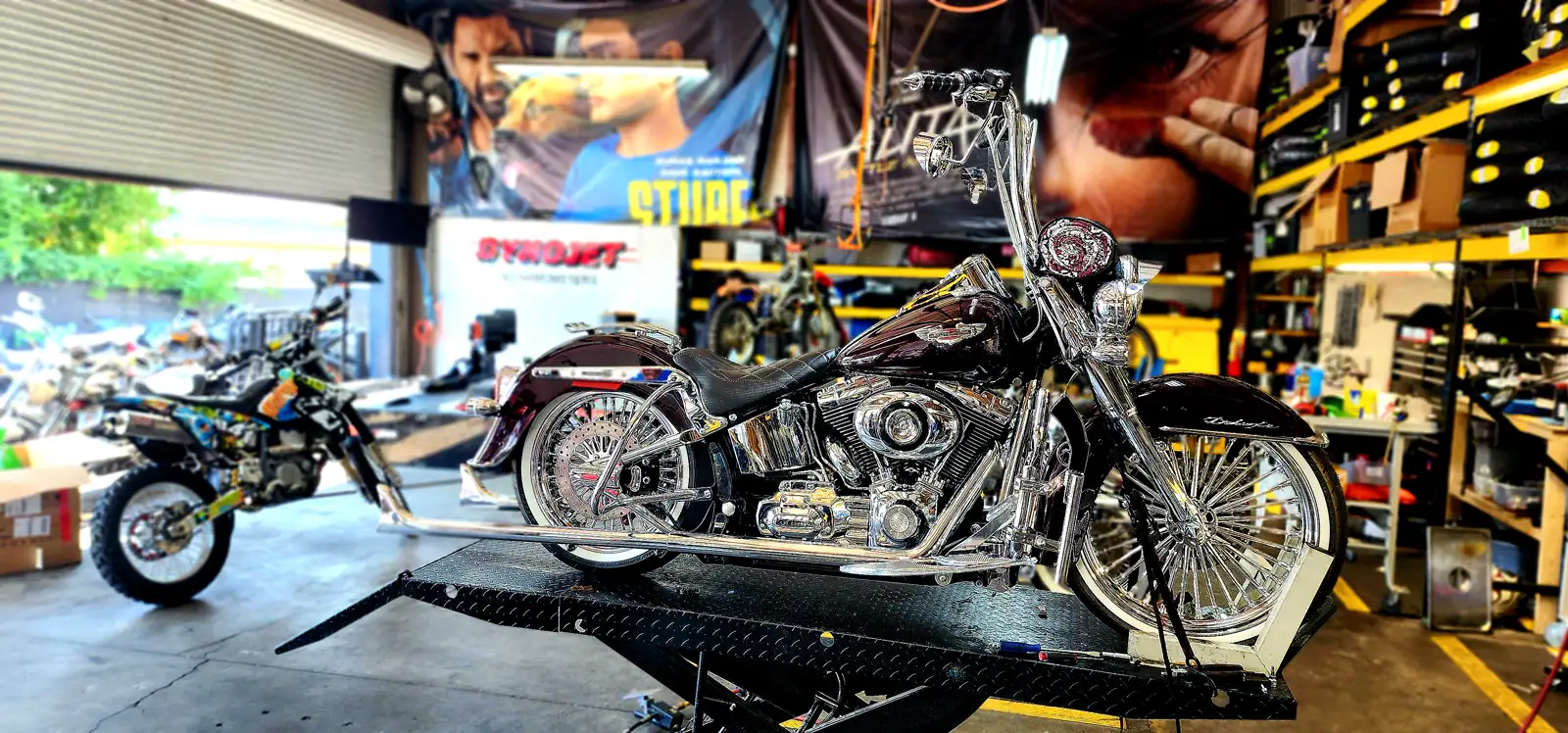
A bike came in from Whitlock with exactly this. It’s the little historic pocket tucked between downtown and the conference center, and the owner had a tank he loved and a scraped fender he hated. He didn’t want the whole bike repainted. Instead, he wanted the fender to vanish into the paint that was already there. That’s a match job, and it’s one of the fussiest things we do, because your eye catches a mismatched red from clear across a parking lot. We nailed it. You can’t find the repair now, and that’s the entire point.
There are other shops around, and we respect the good ones. The Motor Cycle Shop on Shallowford Road over on the northeast side is an independent, and independents keep this town honest. What sets us apart isn’t a knock on anybody. Rather, it’s that we do the paint ourselves in our own booth instead of shipping your tank out and marking it up. And if you’re closer to the west side, we also broke down the Powder Springs side of things in a separate post.
What you walk away with
So what do you actually get? A finish with real depth. Flake that lights up the second sun hits it. A candy that shifts as you walk around the bike. Edges so clean you’d swear the color grew there instead of being sprayed on. Best of all, the quiet pride of rolling up somewhere and knowing nobody else on earth has that exact bike.
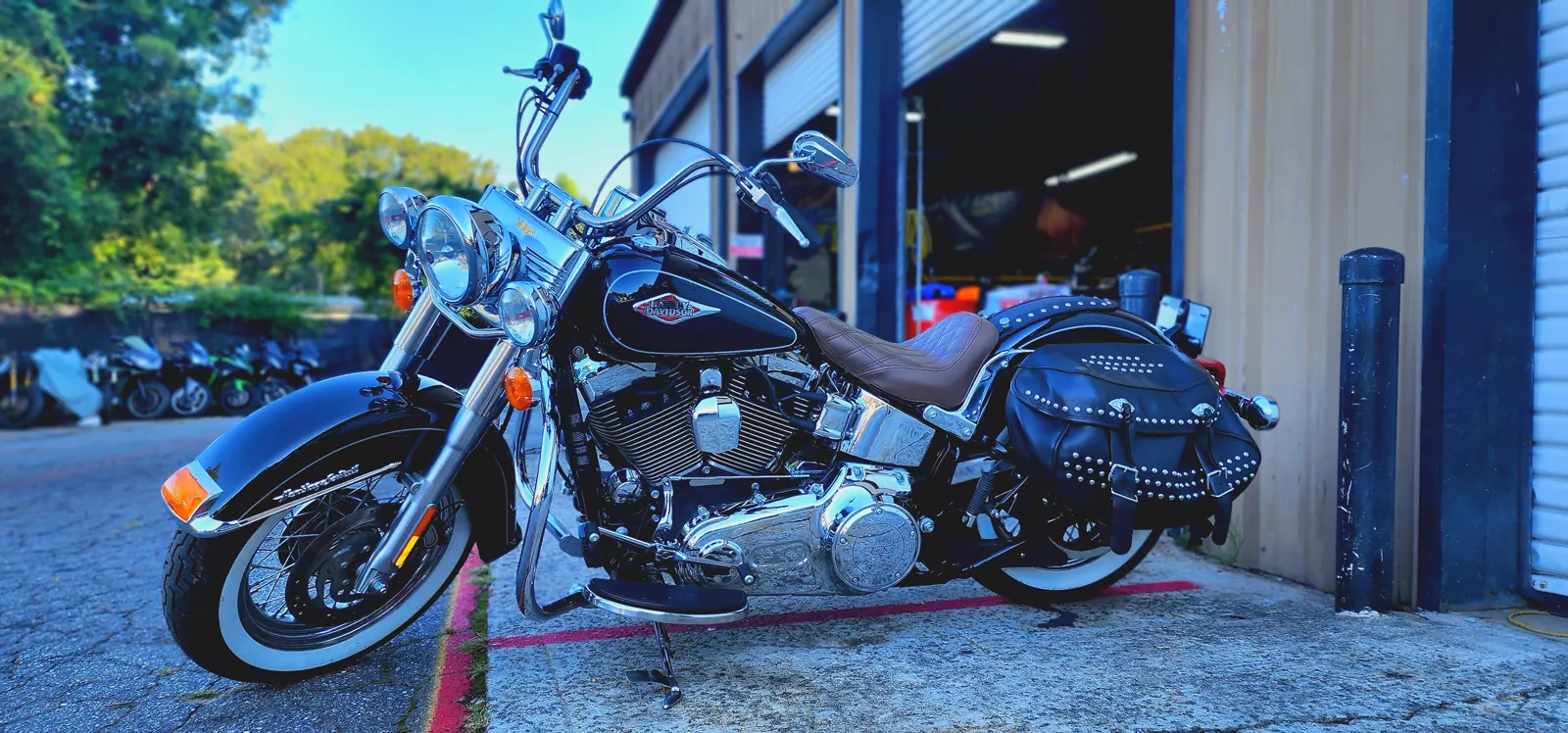
Riders tell us the same thing after a pickup, too. They walk in expecting a nice paint job, and instead they stand there turning the bike in the light, catching the flake shift and grinning like the day they first bought it. That grin is the feeling we’re really after. The finish is the product, sure, but the pride you ride off with is the actual point.
That’s the thing about custom paint. It isn’t a repair you forget about the next week. Instead, it’s the first thing you see every morning when the garage door goes up, and the thing other riders circle back to at a red light. A custom job also means the mechanical side gets a fresh look while the panels are off, and that’s part of how we handle that job from start to finish.
Getting the custom paint cost Marietta owners worry about out in the open early is how you end up loving the result instead of second-guessing it. Come by, let us see the bike, and we’ll tell you straight what it takes. Then you get to enjoy the fun part: picking the color.
Questions Marietta riders ask us
Why can't you just quote it over the phone?
Because old paint hides dents, rust and layers of earlier work we can’t see until the panels come off. Any firm phone number would be a guess. Bring the bike by, let us look, and we’ll give you an honest answer instead of a fantasy one.
What's included in a custom paint job?
The whole chain: teardown, bodywork, primer, base color, any airbrushed artwork or pinstriping, clear coat, wet-sanding, buffing and reassembly. It all happens in our own booth under the Diaz Custom Works name. Nothing gets shipped out to a third shop.
How long does a custom job take?
It depends on the work. Each coat has to fully cure before the next goes on, so a simple color change moves faster than a full airbrushed mural. We’d rather give it the time it needs than rush a clear coat that hazes out later. We’ll walk you through a realistic timeline once we see the bike.
Is it mostly parts or mostly labor?
Mostly labor, by a mile. Quality paint costs what it costs, but the hours of sanding, filling, masking, spraying and wet-sanding are what really drive a custom job. That’s why prep and bodywork matter more than most folks expect.
Does the type of bike change the work?
It changes the scope more than the skill. A bagger with a tank, fenders, fairing and side covers is more panels than a bare-bones cafe racer, so it’s more work. Otherwise a sportbike and a cruiser get the same careful process from us.
Can you match a repair to my existing paint?
Yes, and it’s one of the fussiest things we do well. Matching a scraped fender to a factory or custom color takes a trained eye, because a mismatch shows from across a lot. When it’s right, you can’t find the repair at all.
We paint and wrench for riders all over the northwest metro, not just inside the Marietta city limits. That means friends over in East Cobb, up in Kennesaw and Acworth, and across the way in Smyrna and Vinings. We see plenty of bikes rolling in from Powder Springs, Mableton and Austell on the west side, plus Woodstock to the north. And if you’re coming down from Roswell, Sandy Springs or out from Dallas, the run to our booth is an easy one.
LET'S TALK ABOUT YOUR PAINT
Ready to make your bike the only one like it in Marietta? Bring it by our shop, about three miles off the Square on Roswell Road, and let us pull the panels and give you a straight answer. No phone-quote guesswork, no shipping your tank across town. Just honest custom paint done in our own booth, by people who ride.
470-460-9883Diaz Motorcycles and Service, LLC · 847 Barnes Mill Road, Marietta, GA 30062