Faded Paint Powder Springs — What to Check
That dull, chalky tank isn't a mystery. Here's what causes it, when it's safe to ride, and how a real shop brings the color back.
You’ve probably got more than one bike in the garage, and a system for each one. Even so, the newer bike goes to the dealer for anything under warranty. What’s more, the older one goes to a buddy who’s good with a wrench, or a mobile guy who swings by. Then the tank on your favorite goes chalky and dull in the sun, and suddenly none of your usual people cover it. After that, Consider this your plain-English guide to faded paint Powder Springs riders see every summer, and to figuring out what actually happened to that finish.
What you're really asking
Fading sneaks up on you. Also you park the bike after a stretch of good weekend rides, and one morning the tank just looks tired. Instead Deep red has gone a little pink at the edges. The gloss reads cloudy instead of wet. Besides run your hand across it and it feels dry, almost powdery, and a clean rag comes back with a faint haze of color on it. Black bikes drift toward a dull charcoal or gray. Candy and metallic finishes lose their spark first, because the color lives in stacked layers, and the top layers take the beating.
Here’s what makes it frustrating for a lot of riders around here. You already have your lanes sorted. The dealer handles warranty stuff, a friend handles oil changes, and everything hums along. But faded paint doesn’t fit either lane. It isn’t a warranty job, and it isn’t a driveway job either. So the tank sits, the fade creeps worse, and the bike you’re proudest of quietly becomes the one you stop pulling out. That’s a real shame, because paint is the most personal thing you’ll ever do to a machine.
The honest answer — what fading actually is
Paint isn’t one thing. On most bikes it’s a stack: primer for grip, a base coat that carries the color, and a clear coat on top that’s basically the armor. The clear is what shines, and the clear is what the sun eats first. UV light slowly breaks that top layer down. Once the clear thins out or picks up tiny micro-cracks, the color underneath gets exposed and starts to oxidize. That oxidation is the chalky feel. That’s the haze you left on your rag.
So what’s actually behind it? Usually a few things stacked together rather than one villain:
- Sun and heat — Georgia summers are brutal on a tank, and a bike parked in the sun cooks all day long.
- Oxidation — once the clear coat thins, air and moisture start working on the color layer beneath it.
- Harsh cleaners or the wrong wax — some products strip a little clear every single time you use them.
- Bird droppings and bug guts left on too long — they’re acidic and they etch right into the clear.
- Age and thin factory clear — plenty of stock finishes are thinner than riders expect from the start.
Now for the good news, and it genuinely matters. Faded paint Powder Springs riders worry about is almost always a cosmetic problem, which means your bike is safe to ride. Fading won’t touch your brakes, your tires, or your engine. The one time to look closer is when the clear coat is actually peeling and you can see bare metal on a steel tank, because bare metal invites rust, and rust hiding under paint is a bigger repair than plain fade. A bike that sat all winter is also worth a quick once-over before that first spring ride — Michelin’s motorcycle tire resources are a solid place to see what a season of sitting does to rubber. But dull and chalky on its own? Go ride.
Here’s the question we’d ask if you were standing in the shop. How deep does the fade actually go? Because that answer changes everything about the fix. Sometimes the color layer is perfectly fine and the clear coat is just tired. Sometimes the fade runs all the way down through the color itself. You often can’t tell from the driveway, and that’s completely okay — part of our job is telling you which one you’ve got before anybody talks about work.
What changes the answer
If the clear coat is only lightly oxidized, we might not need to repaint at all. A careful machine polish can cut through that dead top layer and pull the gloss right back out of it. That’s the best-case morning, and it’s faster and easier on you. But if the clear has truly failed, or the color has faded unevenly across the panel, polishing won’t save it. At that point you’re looking at refinishing the tank or the panel. And the tricky part, the part that separates a clean job from an obvious one, is matching.
Matching a repair to existing paint is one of the hardest things in this whole trade. Age changes color. A ten-year-old red simply isn’t the paint-code red anymore, so we don’t just spray the code and cross our fingers. We mix, we spray a test card, and we check it in daylight and again under the shop lights, because color reads differently in each one. Get it wrong and the repair screams at you. Get it right and you genuinely cannot find the seam. We walked through that same challenge on the Alpharetta side of things, since the sun does identical work to a tank no matter which suburb it’s parked in.
How we do it — the real process, in plain words
Here’s the part most people don’t expect. The spraying is maybe the smallest slice of a real paint job. The work that decides whether a finish lasts happens long before any color hits the gun. That prep-first mindset runs through everything on our bench, and you can see the full range of what our team handles when a bike comes in for color. The steps look like this:
- Strip and inspect — panels and tank come off, and we hunt for dents, old filler, past repairs and any hidden rust.
- Bodywork — dents get worked out, chips filled, and everything sanded flat and true. This is the slow part, and it can’t be rushed.
- Primer — a grip layer that gives the color something solid to hold onto.
- Base coat — the color itself, laid down in thin even passes. Candy and metallic go on in extra layers to build real depth.
- Clear coat — the armor and the shine, then wet-sanded and buffed until it reads like glass.
- Cure and reassemble — paint needs time to fully harden before those parts go back on the bike.
You can see why a real custom job takes time. Each layer has to flash and cure before the next one goes down. Rush the clear over base that isn’t ready, and you trap solvents underneath — that finish will fail early and you’ll be back. When friends we’ve helped ask how long the whole thing takes, the honest answer is that it depends on the work. A single scuffed panel is quick. A full candy repaint with airbrushed graphics is a different animal entirely. We’d rather tell you it depends than promise a date we’d have to break.
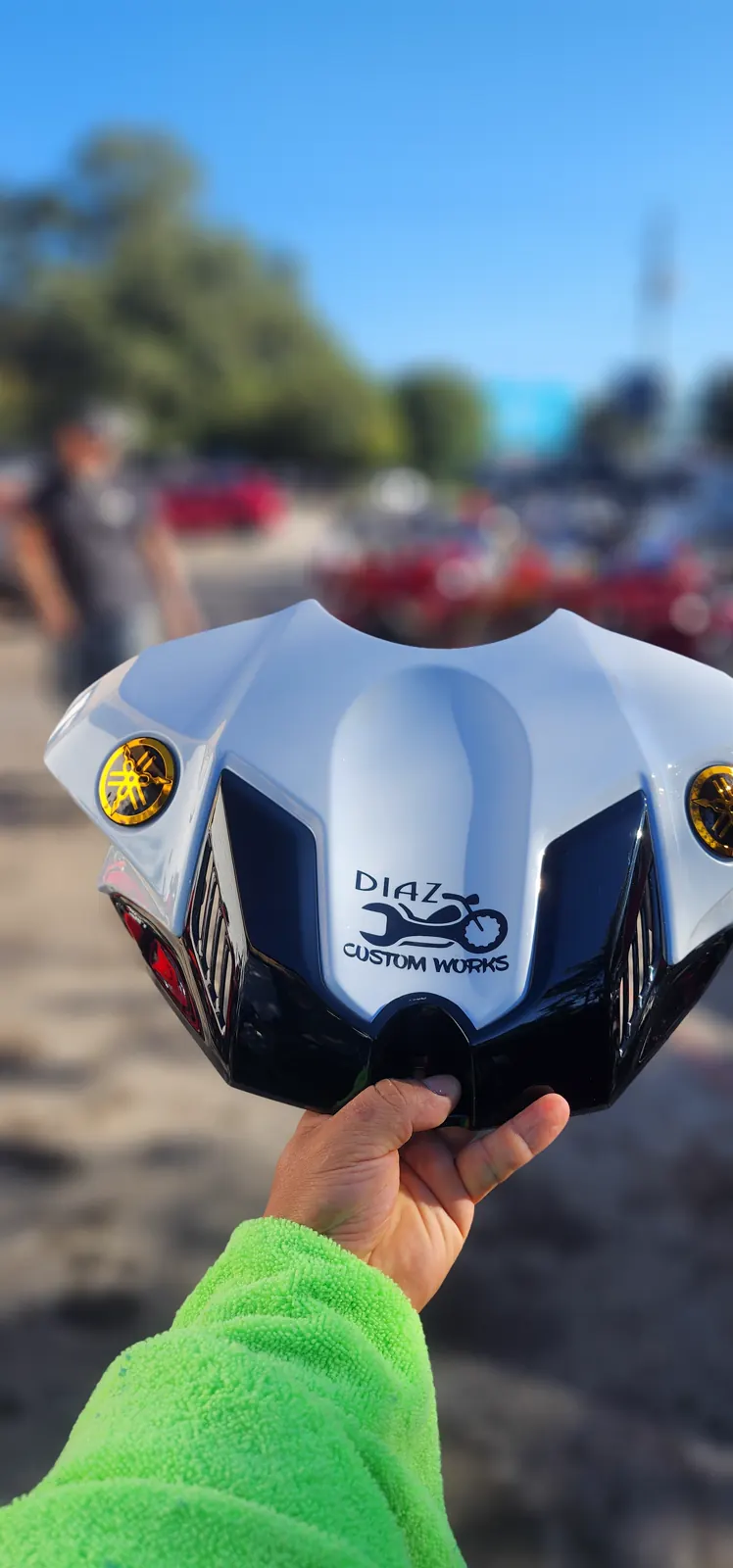
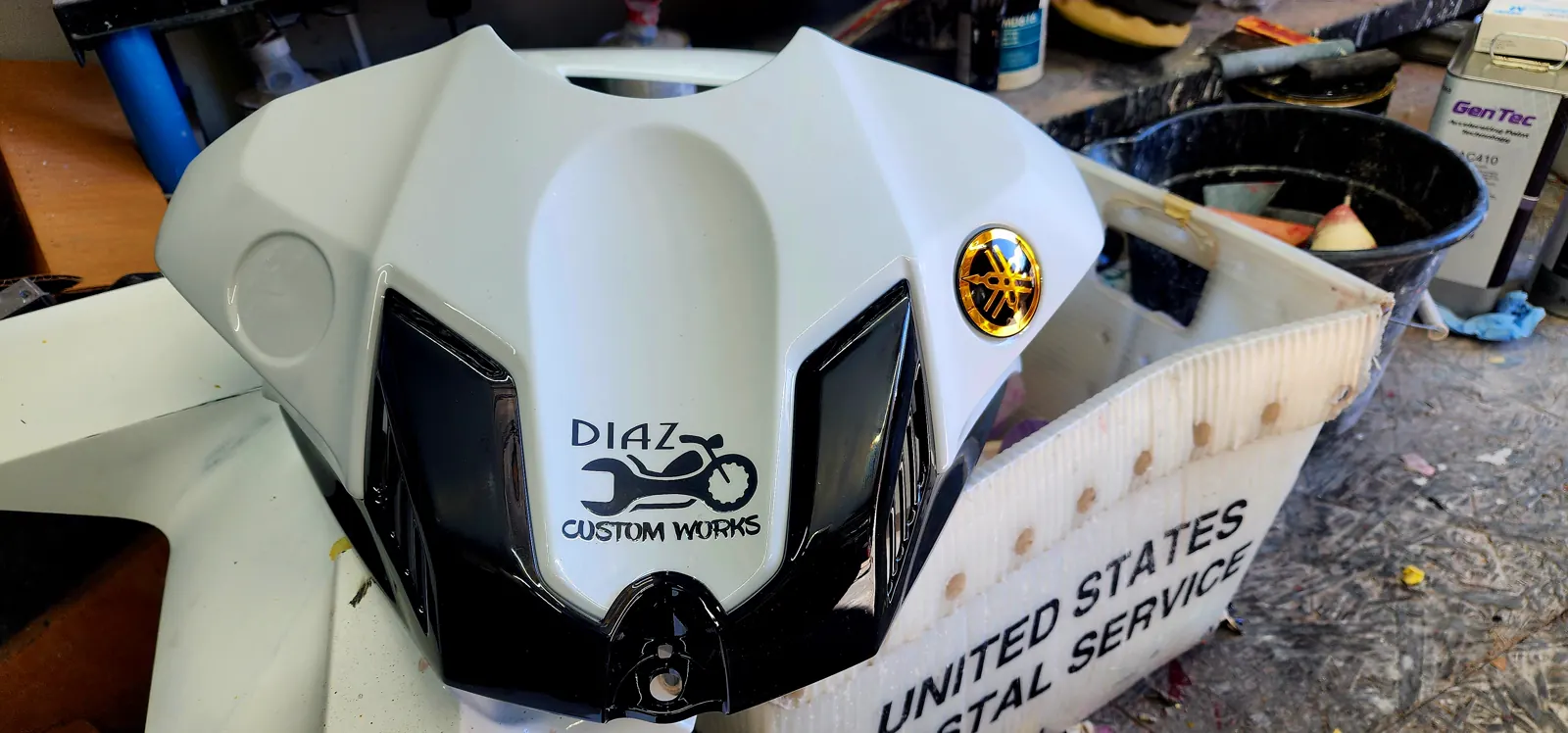
Since the panels are already off and the booth is already warm, plenty of riders use a fade repair as the excuse to finally build the bike they’ve always pictured. That’s where Diaz Custom Works comes in. We paint in house, in our own booth, which is rarer than you’d think around metro Atlanta — most shops send their paint out, or don’t offer it at all. Under one roof we do full custom color changes, airbrushed graphics and murals, candy and metallic finishes, hand pinstriping, and fairing and tank refinishing.
A custom paint job is the most personal thing a rider does to a bike. Get it right and it stops being just transportation.
Not every fade job stays a paint job, either. Once a bike is up on our bench with the tins off, riders often start asking about the engine while they’re already here. If you’ve ever been curious whether a tune is worth the money, we laid out how we handle that job in a separate post, so you can weigh it with zero pressure.
Powder Springs sits a fair stretch from any real paint shop, and that’s the honest catch. There’s no motorcycle dealership inside the city, and no big independent full-service shop within the limits either, so specialist work like custom paint has meant a drive for years. The closest dealer counter for parts is RideNow Powersports Canton, up at 645 Riverstone Parkway, and that’s roughly 35 miles north — a long haul just to talk about a tank.
What makes the local job different
This is where Powder Springs is genuinely different from other towns. The distance used to be the entire problem. A bike that won’t fire up after a winter in the garage can’t ride itself to Marietta, and nobody wants to trailer a tank across the county. But we run local pickup and delivery, and for paint work it’s even simpler, because we can grab just the tank and the panels. You keep the rolling chassis right there in your garage. We take only the parts that need color. That kills the distance objection completely.
It fits how folks actually ride out here, too. West Cobb is garage country. Faded paint Powder Springs riders deal with usually starts in the garage, not on the road — most bikes live indoors next to the truck in a two-car garage, in family subdivisions like Echo Mill with its swim and tennis, along the established streets of Stonebridge at Mud Creek, or among the newer homes going up in Croftside, currently the busiest listing community in the city. Bikes here get ridden on weekends, not commuted, so they sit. And a bike sitting in a hot garage or a sunny driveway is exactly what fades a tank over the years.
When you do pull it out, the good runs are close. Powder Springs Road, the Marietta-Powder Springs Road, is the direct northeast link toward Marietta Square. Point the bike the other way and GA 61 toward Dallas and Villa Rica gives you a rural two-lane run that forms part of the Quad County Figure 8 route. Ride into town and you’ll roll past the Seven Springs Museum at 4355 Marietta Street, tucked inside the old Queen Anne-style Bodiford House with free admission if you ever feel like stopping. A fresh, deep finish makes every one of those rides feel a little sweeter.
TANK AND PANELS ONLY
For paint work you don’t have to give up the whole bike. We’ll pick up just the tank and body panels right here in Powder Springs, refinish them at the shop, and bring them back when they’re cured. Your bike stays home the entire time.
One more local note worth knowing. West Cobb’s arterials like Macland and Florence take a beating from construction and school traffic, with edge break and patched utility cuts that fling grit onto a fresh finish. A quick rinse after a gritty ride goes a long way toward protecting new clear. For the bigger road picture across the state, Georgia DOT keeps project and condition info public.
The payoff
Here’s the part that makes all the prep worth it. A tank that’s been done right doesn’t just look clean — it looks deep. Candy finishes glow like there’s light coming from inside them. Metallic flake catches the sun and shifts as you walk around the bike. The clear sits so wet and smooth it reads like a sheet of glass laid over the color. You’ll catch yourself glancing back at it in the garage before you shut the door. That look, that little pride bump, is the whole point.
So if you’ve been living with a dull, tired tank, take a breath — this is a fixable problem, and often an easy one. Keep riding the bike in the meantime. When you’re ready, we’ll tell you straight whether it needs a polish or a full repaint, and we’ll match the color so nobody can find the seam. And if you want to dig into what separates a good shop from a cheap spray job before you decide anything, we broke down what separates a good shop too.
Questions Powder Springs riders ask us
What causes motorcycle paint to fade in the first place?
Mostly sun and time. UV light breaks down the clear coat on top, and once that armor thins out, the color layer underneath oxidizes and goes chalky. Harsh cleaners, the wrong wax, and bug guts or bird droppings left on too long all speed it up. Heat from a bike parked in the sun does the rest.
Can I fix faded paint myself?
Sometimes, if it’s light. A careful hand polish or machine polish can cut through mild oxidation and bring gloss back on a finish that’s only surface-tired. But if the clear coat has actually failed or the color has faded unevenly, polishing won’t do it, and pushing too hard can burn through what’s left. When you’re not sure how deep it goes, it’s worth having someone look before you buff.
Will faded paint keep getting worse if I leave it?
Usually, yes, but slowly. Once the clear coat is compromised, the color underneath is exposed to sun and moisture, so it tends to keep dulling season after season. Catching it while it’s still just surface haze means a polish might be all you need. Let it go long enough and you’re into refinishing instead.
How urgent is it, really?
For your safety, not urgent at all — faded paint is cosmetic and your bike is safe to ride. The one thing that raises the priority is bare metal showing through peeling clear on a steel tank, because that can start rust, and rust under paint is a bigger job than fade. Short of that, ride it and plan the fix when it suits you.
What happens if I just ignore it?
Nothing dangerous. The bike still runs and rides fine. Over time the finish keeps dulling and the color reads flatter, which mostly costs you pride and a little resale value. If the clear ever peels down to metal, though, that’s the moment to act before corrosion sets in.
Do I have to bring the whole bike in for paint work?
No. For refinishing we can pick up just the tank and body panels here in Powder Springs, do the work in our booth, and return them cured and ready to bolt on. Your rolling chassis stays in your garage the whole time, which takes the distance out of the decision entirely.
We take care of riders across the west side of Cobb and out into Paulding and Douglas, so Powder Springs sits right in the heart of our run. That includes Marietta just up the road, along with Austell, Mableton, Smyrna and Fair Oaks to the east, Hiram and Dallas to the northwest, and Douglasville, Lithia Springs, Villa Rica and Clarkdale as you head south and west. If you’re anywhere in that stretch and your tank has gone dull, our local pickup for a tank and panels reaches you.
LET'S BRING THAT TANK BACK
If a faded tank has your favorite bike stuck in the garage in Powder Springs, text us a few photos and we’ll tell you honestly whether it needs a polish or a repaint. We’ll pick up just the tank and panels, paint them in our own booth, and bring them back matched so you can’t find the seam. Text Diaz Motorcycles today and let’s talk color.
470-460-9883Diaz Motorcycles and Service, LLC · 847 Barnes Mill Road, Marietta, GA 30062