Faded Motorcycle Paint Lawrenceville — What to Check
Chalky tank, dull color, and a quiet 9pm question. Here's what's really going on, and why it's almost always an easy call.
It’s late. What’s more, the bike sits in the garage, the light is low, and you keep walking back to stare at the tank. It used to pop. Now it looks tired, almost chalky, like somebody breathed fog across it. So you pull out your phone and type the thing you’ve been chewing on all week. If you’ve been searching faded motorcycle paint Lawrenceville and just want a straight answer, you’re in the right spot. Let’s walk through what you’re actually looking at.
Here’s the thing most riders won’t say out loud. You’re not really asking why the paint faded. You’re asking two quieter questions underneath that one. Is my bike okay? And did I do something wrong? Good news on both counts. Fade is common, it’s rarely your fault, and it almost never means the bike is hurt underneath. Take a breath. You’re already ahead just by looking closely.
What you're really seeing
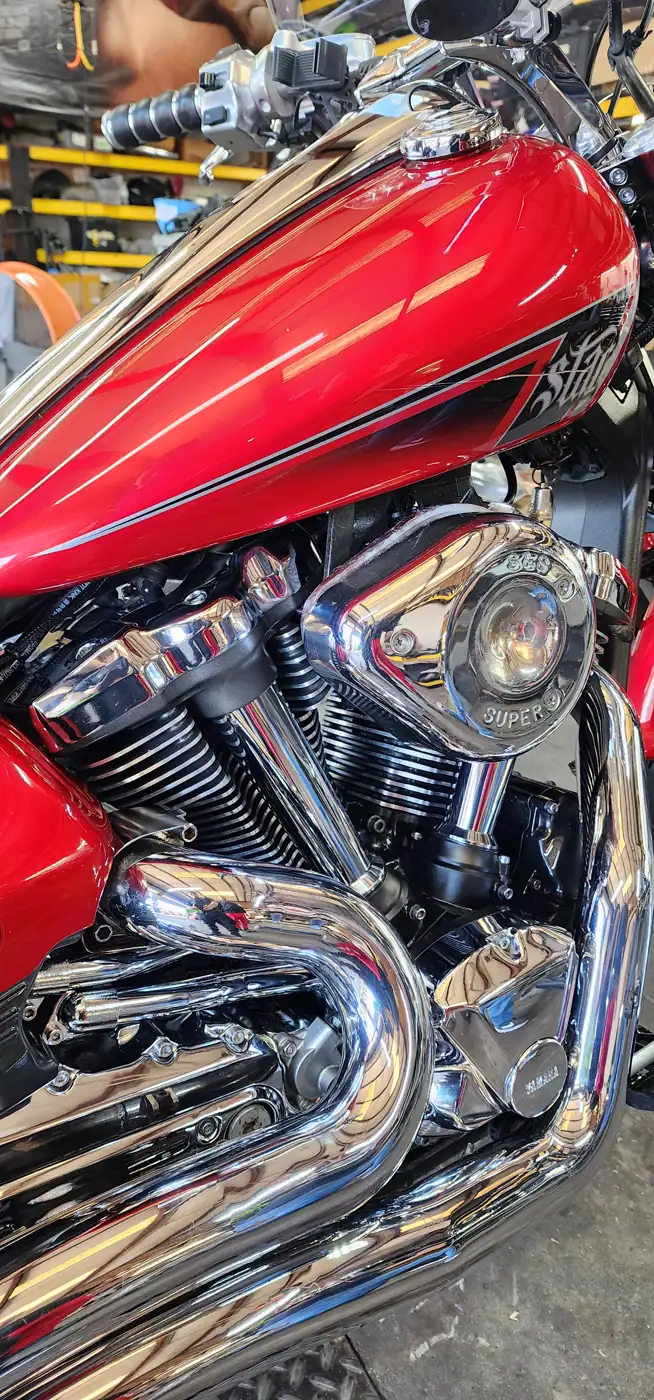
Fade doesn’t show up all at once. It creeps. First the color loses its punch in bright light. Then the surface goes a little flat, like somebody turned the shine down a notch. Reds fade first and worst, drifting toward pink or a dull orange. Blacks go gray and cloudy. On some tanks you’ll spot a chalky film that wipes right onto your rag when you clean it. That chalk is a clue, and we’ll circle back to it in a minute.
You’ll notice it most in two spots: the top of the tank and the top of the fenders. That’s no accident. Those are the surfaces that stare straight up at the sky all day, so they soak up the most sun. Meanwhile the sides of the bike usually still look decent, which is exactly why the fade sneaks up on you. You catch it from the saddle one afternoon and wonder how long it’s been happening.
The honest answer: what causes faded motorcycle paint
Let’s name the causes, most common first. None of these are exotic, and none of them mean you neglected your bike. This is just what weather and time do to a finish.
- Sun, first and worst. Ultraviolet light slowly breaks down the clear coat over the years. That chalky film? That’s the clear coat giving up its very top layer. Bikes that live outside, or under a thin carport in a neighborhood like Collins Hill Heights, take the hardest beating.
- A thin or worn clear coat. Clear is the shield that sits over your color. When it’s thin, aged, or got sprayed light from the factory, the color underneath has almost nothing protecting it from the sun.
- Rough washing. Dry rags, gritty towels, and harsh cleaners leave thousands of tiny scratches called swirls. On their own they’re invisible, but together they scatter light and quietly steal the gloss.
- Age and budget paint. Older bodywork and cheaper reproduction panels simply don’t hold color as long. Plenty of the 1980s and 90s bikes rolling out of Dogwood Forest, Hunters Ridge, Hunters Cove and Hunters Creek wear those years right on the tank.
- Chemicals and fuel. Spilled gas, bug spray, and strong degreasers can stain or dull a finish fast, especially where fuel drips down the side of the tank on a warm day.
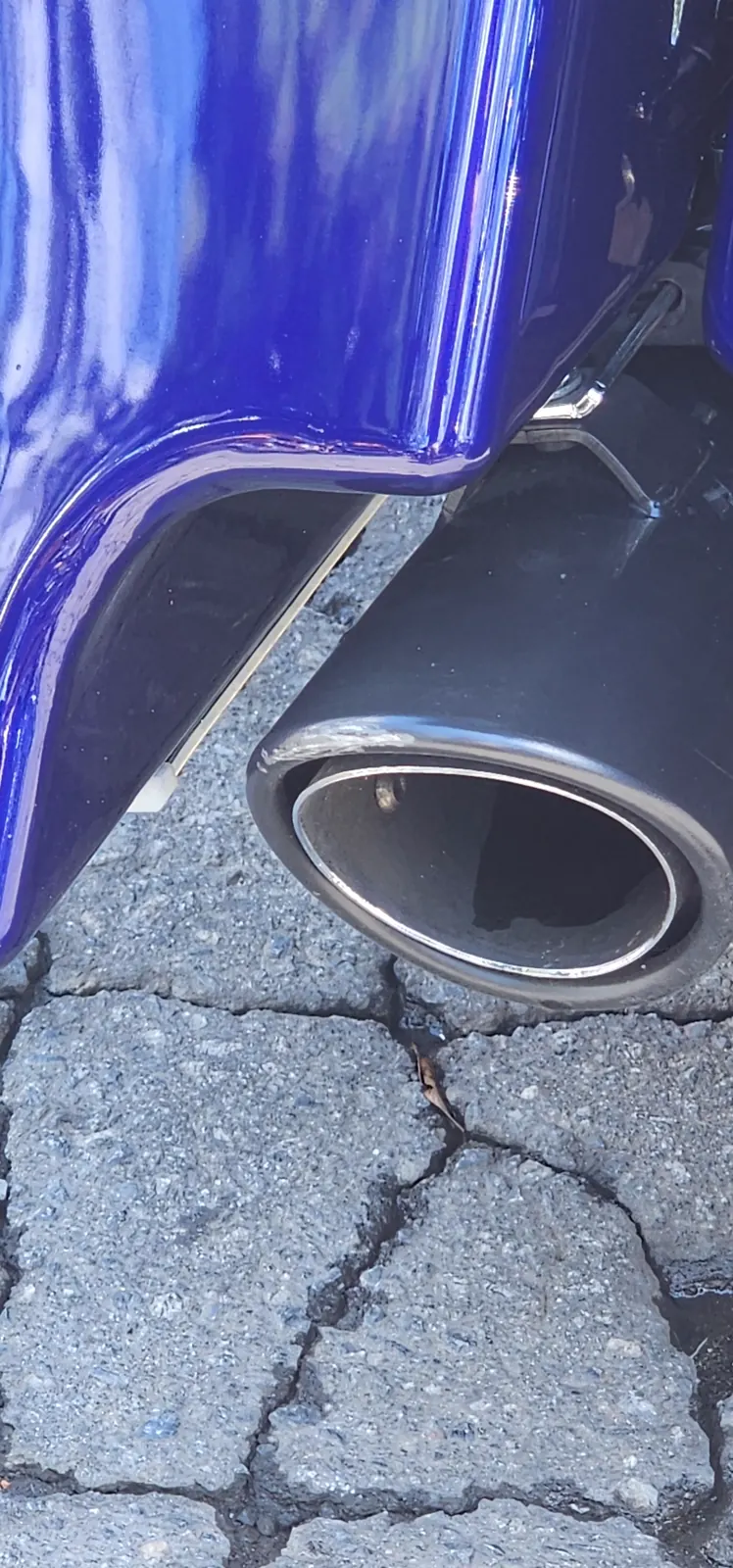
That’s the common version. The real story is a little different. Fade is rarely one single cause. It’s almost always a stack of them working together. The sun softens the clear, a few rough washes scratch it, a couple of Georgia summers bake it with heat cycles, and one day the color looks a decade older than the bike does. There’s no single villain here. It’s just time and weather teaming up on you. And honestly, that’s good news, because it means the fix is about rebuilding the finish the right way, not hunting down one mistake you made.
When it's safe to ride, and when to pay attention
Straight answer: faded paint is cosmetic. If the surface is just dull or chalky, your bike is completely safe to ride. Go run it hard on US-78 and GA-316 east toward Athens all weekend if the mood strikes. Fade doesn’t touch your brakes, your tires, or your engine. It’s a looks problem, not a safety one.
Here’s the line to watch, though. When the clear coat starts peeling, lifting at the edges, or cracking, that’s a different animal. Once bare metal or primer is showing through, moisture can get in and rust or corrosion can start creeping under the paint. That’s still not a danger to you on the road, but it is the bike quietly getting worse while you wait. Catch it at that stage and it’s an easy repair. Ignore it for a season or two and the job only grows.
QUICK 10-SECOND CHECK
Run your bare palm across the top of the tank. Smooth but dull means cosmetic fade, so ride easy. Rough, flaking, or you can feel bare metal or a raised edge means it’s time to get it looked at.
What actually changes it, and why it takes time
Fixing faded paint isn’t a spray-and-go job. The work that matters most happens before any color ever leaves the gun. There are really two roads here, and which one you’re on depends entirely on how far the fade has gone.
Sometimes the color is still fine and only the clear coat has oxidized on top. In that case, a proper machine polish can cut back that dead layer and bring the gloss roaring back. It’s like sanding off the cloudy skin to find the good paint waiting underneath. But when the fade has eaten through the clear and into the color itself, polishing won’t save it. Then it’s a repaint, and a repaint is where the real craft lives.
A real repaint runs base coat, then clear coat, in that order. The base carries your color. The clear is the deep, glassy shield that gives a finish its wet look and does all the protecting for years to come. But neither one lasts if the prep underneath is rushed. Stripping, sanding, straightening any dings, cleaning off every trace of oil, laying primer, and letting each stage cure on its own clock is the boring part nobody photographs. It’s also the part that decides whether your paint still looks great three summers from now. That’s why a good custom job can’t be rushed, and why real shops won’t quote you a job in weeks like it’s an oil change. It depends on the work in front of them.
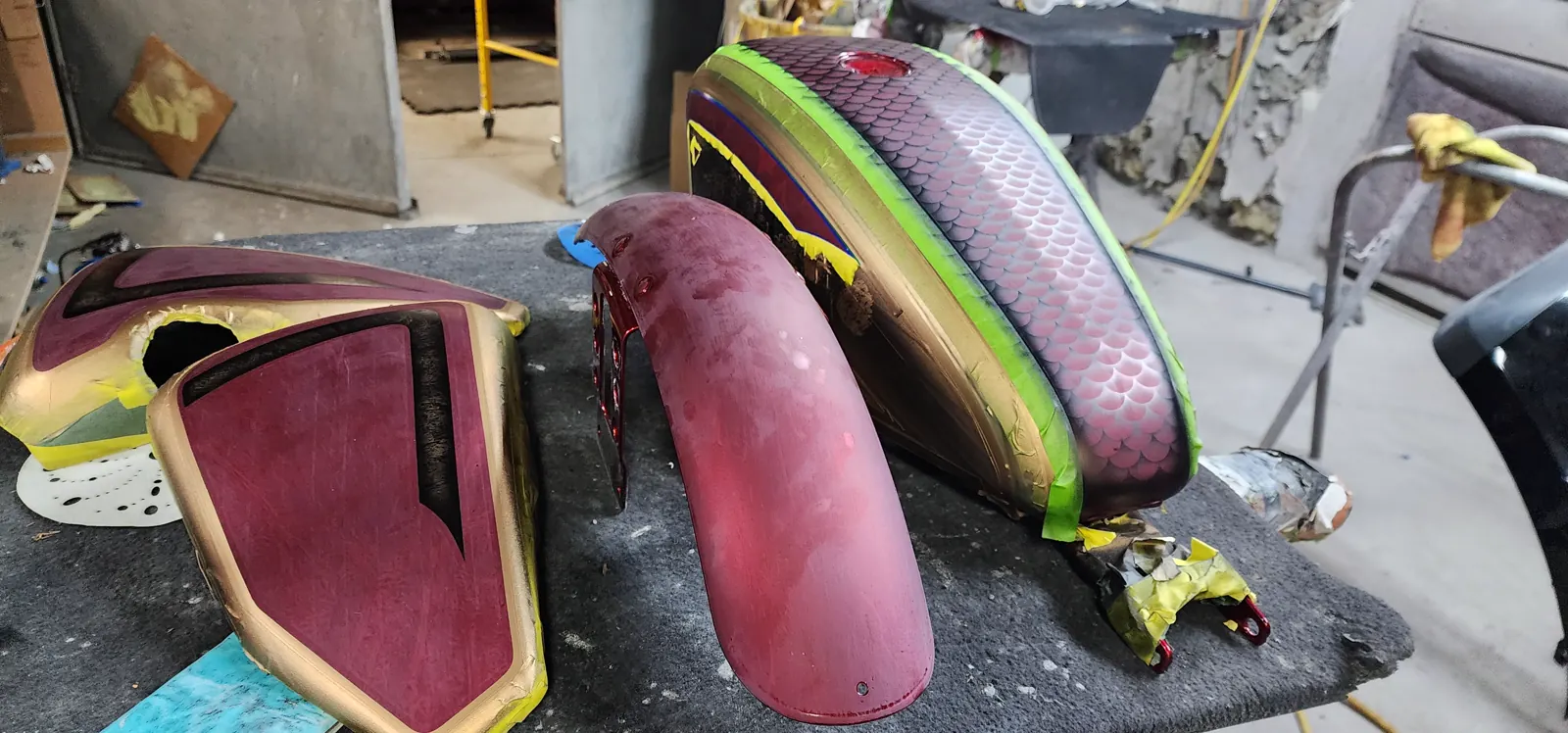
Prep is what separates a good shop from a fast one. Anyone can lay a coat of color and make it look shiny for a photo. Making it last through Georgia sun and years of rides is about the sanding, the cleaning, the primer, and the patience. This whole process is the heart of what we take care of here, and it starts with an honest look at your finish before anyone talks paint.
Our approach, step by step
When a faded bike comes to us, we don’t guess. We walk it in a good light and figure out which road you’re on. Then the plan is simple and it’s yours to approve before we touch anything.
- Inspect the finish up close and tell you the truth: polish territory, or repaint territory.
- If it’s just tired clear, machine-polish it back to gloss and save you the bigger job.
- If it needs paint, strip and prep the bodywork, straighten anything bent, and prime.
- Lay the base coat for color, whether you’re matching the original or changing it entirely.
- Build the clear coat for depth and protection, then let it cure on its own schedule.
- Reassemble, check every panel in the light, and hand it back looking like the day it was new, or better.
One thing riders love: you don’t have to haul the whole bike over for paint work. Plenty of the time you can pull just the tank and the panels and hand off those pieces, or we come get the bike. Either way, matching a repair to your existing paint or changing the color completely follows the same careful path. If you’re weighing a full color change or a custom design, here’s how we handle that job from the first look to the last coat.
Local context: yes, we know it's a drive
Let’s be real about geography. You’re OTP, sitting somewhere around 33 to 38 miles out from the shop, and depending on how 316 and the interstate are moving, that’s usually a 45 to 70 minute trip. That’s a genuine haul, and we’d never ask you to make it for a wash and wax. For custom paint, though, the math flips. There simply isn’t an in-house paint booth anywhere in Gwinnett to begin with, so this is a drive most riders can’t skip no matter what.
Frazier’s Harley-Davidson over in Buford anchors the cruiser side of the market about twenty minutes from you, and it’s a solid dealer. But full custom color, airbrushed graphics, candy and metallic finishes, and pinstriping done in a real booth is a different service than most shops around here offer at all. That’s the gap. Gwinnett riders love to make a bike their own, then find there’s nowhere close to home to actually do the paint.
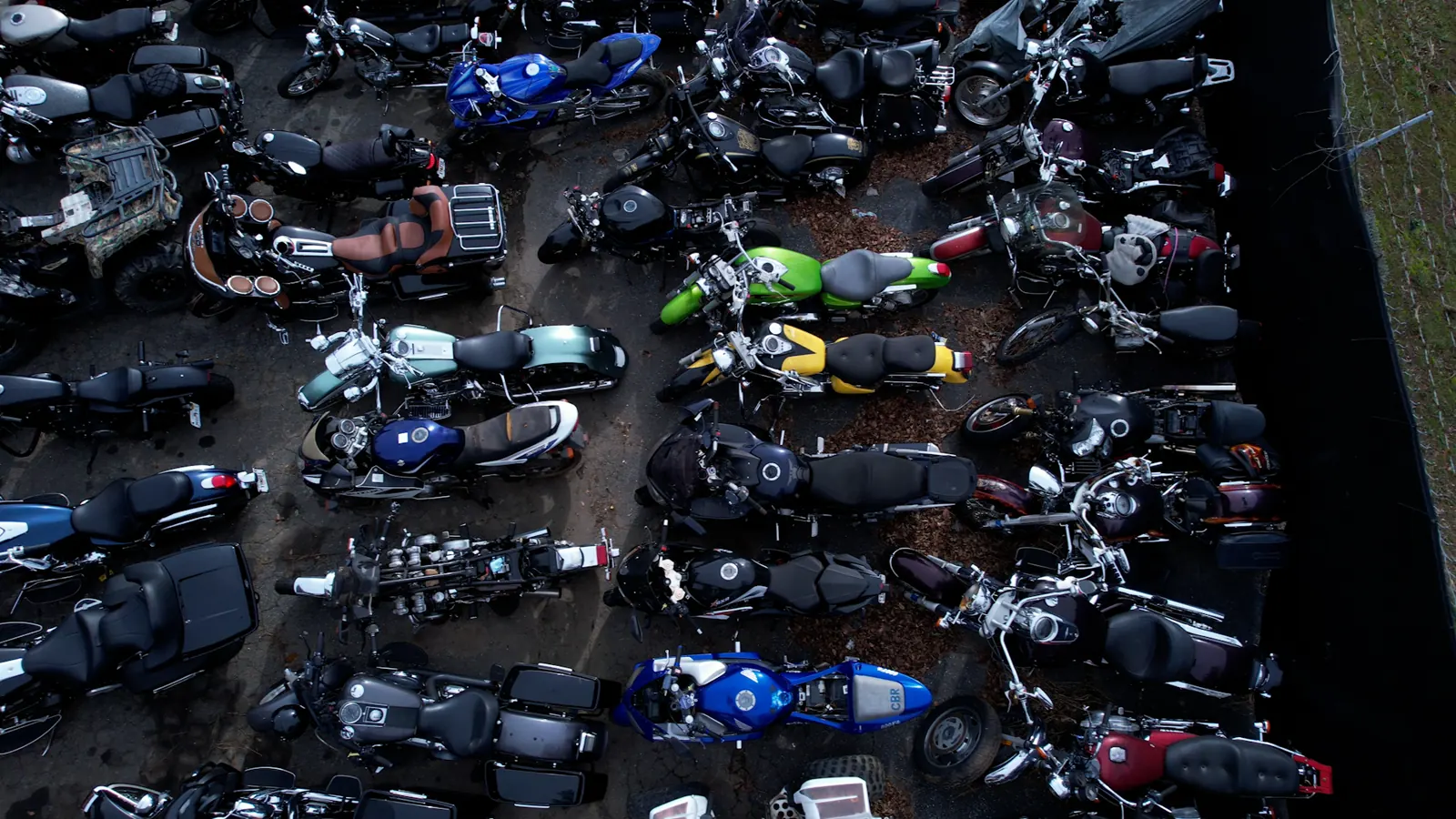
So we solve the distance for you. We’ll bring the bike to your door when it’s finished, or run a pickup, or take just the tank and panels off your hands so you keep riding while the paint happens. We’ve helped friends all across the county, from the Fountain Lakes, Fountain Glen and Fountain Cove streets to riders who thread past the University of Georgia Gwinnett campus on the daily commute. One friend who parks near Rhodes Jordan Park on weekends handed us a chalky red tank and got back a candy finish deep enough to swim in. Point is, the drive stops being your problem the moment you call.
None of this is unique to Lawrenceville, either. If you want to see how this same faded motorcycle paint Lawrenceville story plays out closer to the city, we broke down the Atlanta side of things in its own post. And if you’re comparing shops, it’s worth knowing what separates a good shop from a quick one before you hand over your bike.
One rider off GA-316 (University Parkway) put it better than we could. He’d been driving past that dull tank in his garage for two years, half-annoyed and half-used to it.
I stopped seeing a faded tank. I started seeing my next paint job.
Where this leaves you
Here’s where you land after all that. You know what fade actually is now. Even so, you know it’s usually the sun plus time ganging up, not some mistake on your end. You know when it’s safe to ride, which is nearly always, and you know the one warning sign, peeling or bare metal, that says get it looked at soon. That’s control. That’s the whole point of reading this far.
While you’ve got the bike on a stand looking it over, give the tires a quick once-over too. Michelin’s motorcycle tire resources are a plain-English place to start if you’re not sure what you’re looking at. And since Gwinnett is forever widening something, a peek at Georgia DOT for lane shifts and construction on 316 can keep a gravel-spray off your fresh paint on the ride home.
A custom paint job is the most personal thing a rider ever does to a bike. It’s your color, your story, sitting right there in the light for everyone at the next ride-out to notice. Fade doesn’t get to end that story. It just means it’s time for the next chapter, and that part is genuinely fun.
Questions Lawrenceville riders ask us
What actually causes faded motorcycle paint?
The sun is the biggest culprit by far. Ultraviolet light slowly breaks down the clear coat over the years, which leaves that chalky, dull look on top. Thin factory clear, rough washing that scratches the surface, age, and spilled fuel or chemicals all pile on top of that. It’s almost never just one cause working alone.
Is it safe to ride with faded paint?
Yes. Plain fade is purely cosmetic and doesn’t touch your brakes, tires, or engine, so ride it all you want. The one time to pay attention is when the clear coat starts peeling or cracking and bare metal shows through. That’s still safe for you, but moisture can start rust under the paint, so get it looked at before it spreads.
What happens if I just ignore it?
If it stays a dull finish, honestly, nothing bad happens except the looks. But if the clear coat has failed and metal is exposed, ignoring it lets corrosion creep in underneath. A small touch-up today can turn into a bigger repaint later. Catching it early always keeps the job smaller.
How do you find the real cause?
We look at the bike in good light and read the surface. Where the fade sits, whether the clear is peeling or just cloudy, and how the color has shifted all tell the story. That inspection is how we decide whether a machine polish will save it or whether it needs fresh paint. We tell you straight before any work starts.
Could my dull tank be something other than fade?
Sometimes, yes. What looks like fade can actually be heavy swirl marks from rough washing, a layer of baked-on grime and old wax, or oxidation on just the top clear layer. Those often polish right out. That’s exactly why we inspect first instead of assuming every dull tank needs a full repaint.
Do I have to bring my whole bike over from Lawrenceville?
Not at all. You can pull just the tank and panels and hand off those pieces, or we’ll arrange pickup and delivery for the whole bike. Since you’re a solid drive out and there’s no paint booth in Gwinnett anyway, we make the distance our problem, not yours.
We paint for riders all across Gwinnett and the eastern metro, so distance is never the reason to settle for a faded tank. Along with Lawrenceville, we regularly help friends in Duluth, Suwanee, and Snellville, out toward Grayson, Dacula, and Loganville, and over through Lilburn, Norcross, and Tucker. We also cover Buford and Sugar Hill up north and Stone Mountain to the southwest. Wherever you are, pickup and delivery keeps the drive off your plate.
LET'S BRING THAT COLOR BACK
If your tank’s gone dull and you’re in Lawrenceville, text us a couple of photos in good light and we’ll tell you straight: polish or repaint. Then we’ll set up pickup or grab just the tank and panels, so you barely notice the drive. Your bike, your color, done right in a real booth. Text us when you’re ready to talk paint.
470-460-9883Diaz Motorcycles and Service, LLC · 847 Barnes Mill Road, Marietta, GA 30062