Chrome Pitting East Cobb Riders Can Stop Before It Spreads
Those tiny rusty freckles in your chrome have a cause, a fix, and an honest answer about when it's safe to ride.
You’ve owned this motorcycle for a long time. Maybe you bought it new and watched the odometer crawl. Maybe it sat in a friend’s garage until you gave it a home. Either way, the chrome used to shine back at you like a clean mirror, and lately it just doesn’t. Look close and you’ll spot tiny rusty freckles in the metal, little craters that catch the light all wrong. That’s chrome pitting, and chrome pitting East Cobb riders run into more often than they’d ever guess. Good news first: you caught it, and catching it early is half the battle.
The myth we hear the most
Let’s clear up the big one. Most folks think chrome is a thick, tough shell that laughs at rust. It isn’t. Chrome is a whisper-thin layer, thinner than a sheet of paper, plated over nickel and steel underneath. It looks bulletproof because it’s so shiny. But the moment that thin layer gets a scratch, a chip, or a weak spot, moisture sneaks under it and the metal below starts to rust. As that rust grows, it pushes up and out, and you get those little pits.
The second myth is just as common. Plenty of riders believe a good polish will make pitting vanish. Polishing does help a haze or a light stain, sure. Pits are a different animal, though. A pit is a tiny hole where metal is already gone, so no amount of rubbing fills it back in. That’s why the real fix depends on how deep it goes, and why guessing at home can make things worse instead of better.
What chrome pitting really is
Think of chrome plating like clear coat over paint, only shinier and much thinner. Underneath sits a bright nickel layer, and under that, the bare steel of your part. Water is the enemy here. When water finds a pinhole or a nicked edge, it works its way down to the steel, and rust begins. Rust takes up more room than clean metal, so it swells and breaks the chrome apart from the inside. Each little eruption is one pit. Left alone, the pits link up and the whole part turns rough and cloudy.
Chrome doesn't rust from the top down. It rusts from the inside out.
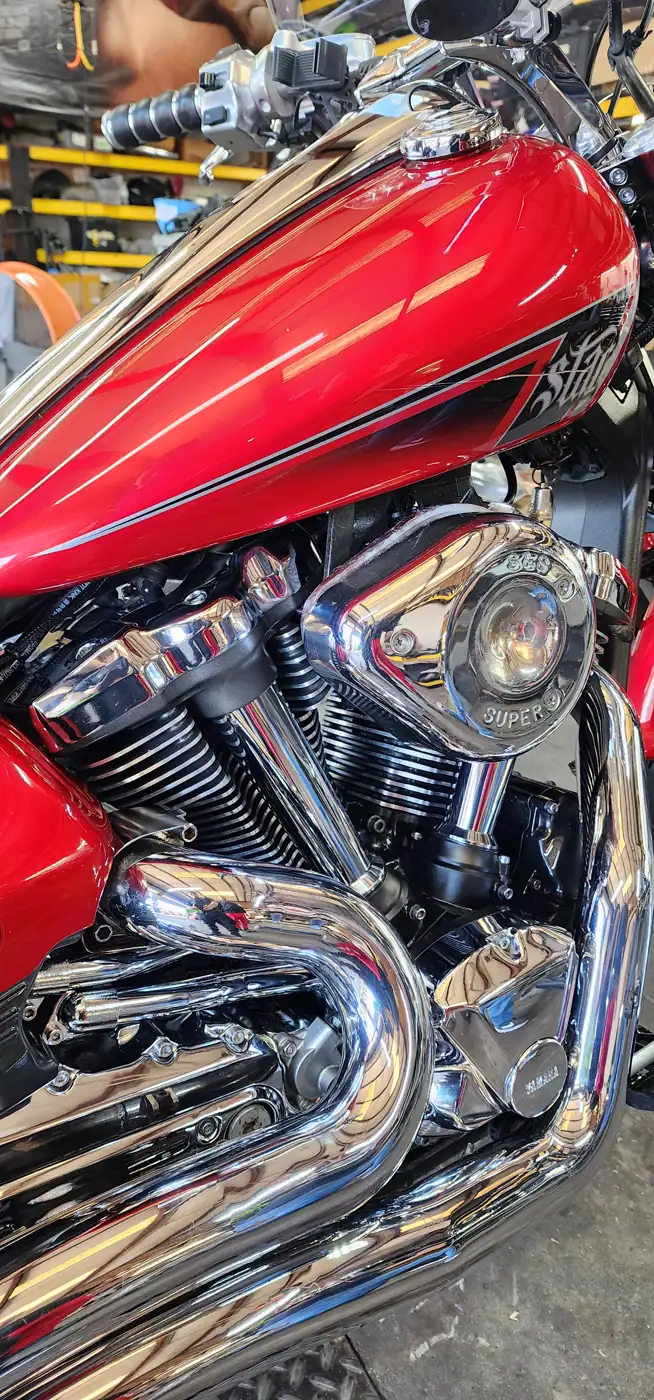
You’ll usually spot it first on the parts that face weather and heat. Exhaust pipes are a classic, since heat and moisture take turns on them all season. Handlebars, fender rails, spoked wheels, mirror stems, and shiny engine covers are all common trouble spots. Even the shiny bolt heads and fasteners can freckle if they sit wet long enough. One area deserves extra attention, though, and that’s your fork tubes.
So is it safe to ride?
Here’s the honest answer. Most chrome pitting is purely cosmetic. A freckled exhaust tip or a pitted fender bracket won’t stop you from riding safely, and you can enjoy your Saturday loop without a second thought. So on the whole, yes, go ride it.
There’s one big exception, and it’s those fork tubes. The shiny tubes slide in and out through a rubber seal every time you hit a bump. If the chrome there pits, the rough spots act like sandpaper and chew up that seal. Then fork oil can leak down onto your brake, and now we’ve got a real safety problem instead of a looks problem. So if you see pitting on the fork tubes, on brake parts, or anywhere the chrome slides or grips, park it and get it checked before your next ride. Everywhere else, ride and enjoy while you plan the fix.
How we actually fix it
Here’s the question we’d ask if you were standing in the shop, coffee in hand: how deep does it go? That one answer decides everything. So we start by cleaning the part all the way down and looking hard, sometimes raking a light across the surface to throw a shadow into every pit. Once we know the depth, the path splits into three.
- Light surface rust and haze. We clean, decontaminate, polish, and seal. The chrome comes right back, bright and deep.
- Moderate pitting. We do careful hand work with fine polish and rust remover to stop the corrosion and knock down the worst spots, then seal so it can’t keep spreading. It looks far better, though a pit that deep never fully disappears.
- Deep pitting. The honest answer is re-chroming. The part gets stripped, the steel repaired, and the chrome re-plated. It comes back like new, but it’s a bigger job with more time in it.
We’ll always tell you which bucket your bike falls in before we touch it. No surprises. If a quick clean and seal will do the trick, that’s exactly what we’ll say. If it needs more, you’ll hear the why behind it, because we know East Cobb riders like to understand the plan before they nod yes.
A real detail is more than a wash
Stopping pitting is really part of a bigger habit, and that habit is proper detailing. A wash just gets the loose dirt off. Even so, a real detail goes deeper. We polish chrome until you could read a license plate in it, correct swirl marks and light scratches in the paint, clean the wheels and the engine bay, care for leather and vinyl, and pull off baked-on bugs, tar, and stubborn water spots. Then we seal the whole bike so the next mess wipes away easy. If you want the full menu, everything we cover lives on one page.
A lot of riders ask about ceramic coating, so let’s be straight about it. A ceramic coating is a liquid that hardens into a clear, slick shield over your paint and metal. It makes water bead up and roll off, it makes washing quicker, and it helps guard against pollen acid and hard-water spots. Now here’s what it isn’t: it’s not a force field. A ceramic coating won’t stop a rock chip or a careless key scratch, and it lasts for years, depending on how you care for it, not forever. Used right, though, a coated tank feels like cool glass under your palm, and the shine has real depth to it.
Sometimes a part is too far gone to save, or a rider decides that if we’re in there anyway, they’d love a fresh look. That’s where custom paint comes in, and how we handle that job is a whole story of its own. Chrome and paint work beautifully together, and a pitted part can become the excuse for the color you’ve always wanted.
How to spot a good detail shop
Not every place that advertises detailing will treat your chrome right. So how do you pick? Here’s what separates a good shop from a quick buff-and-go, and it’s worth knowing before you hand over the keys.
- They look before they promise. A depth check comes first, not a price.
- They tell you honestly which of the three buckets your part is in.
- They’ll name the products and rust removers they use, and why.
- They protect what they can’t fully fix, sealing so the pitting can’t creep.
- They never oversell ceramic coating as scratch-proof or permanent.
Riders in East Cobb do their homework, and honestly, they should. Ask a shop what it uses and why. A clear answer builds trust, while a shrug tells you plenty on its own. And if you’re wrestling with the same issue just across the county line, the story runs much the same on the Douglasville side of things.
Why East Cobb chrome pits faster
This is where East Cobb is genuinely different from other towns. Our bikes are mostly garage-kept toys, ridden on Saturday mornings and parked the rest of the week. That sounds safe, and against theft it truly is. But a bike that sits is a bike that quietly fights moisture, and our little corner of Cobb County piles on.
Start with the trees. East Cobb sits under a heavy canopy, and all that shade holds damp air long after the rest of the county has dried out. Then comes the pollen. From late February into May, our tree pollen goes wild, with counts often climbing past 1,500 grains in the air. That yellow dust is mildly acidic, and when it settles on warm chrome and paint and nobody wipes it off, it slowly eats at the finish. Add Georgia humidity, summer heat, and hard water straight from the hose, and you’ve got a recipe for pits. That’s why chrome pitting East Cobb bikes fill our bay every spring.
We see it all over the map. A rider in Chimney Springs keeps a bagger under the mature trees near the neighborhood lake and walking trails, and the same shade that makes the yard so pretty keeps the chrome damp for hours. Bikes tucked in Highland Ridge and Canton Hills sit out the whole pollen season and show freckles by summer. Someone rolling home from a round at Indian Hills Country Club parks a warm engine in a shaded garage, and the finish never gets a chance to fully dry. Even the roads play a part, since the leafy low spots near the old Sewell Mill ruins hold wet leaves and grit, and a torn-up stretch like East Piedmont Road flings road grime up onto your lower chrome.
The payoff you can see and feel
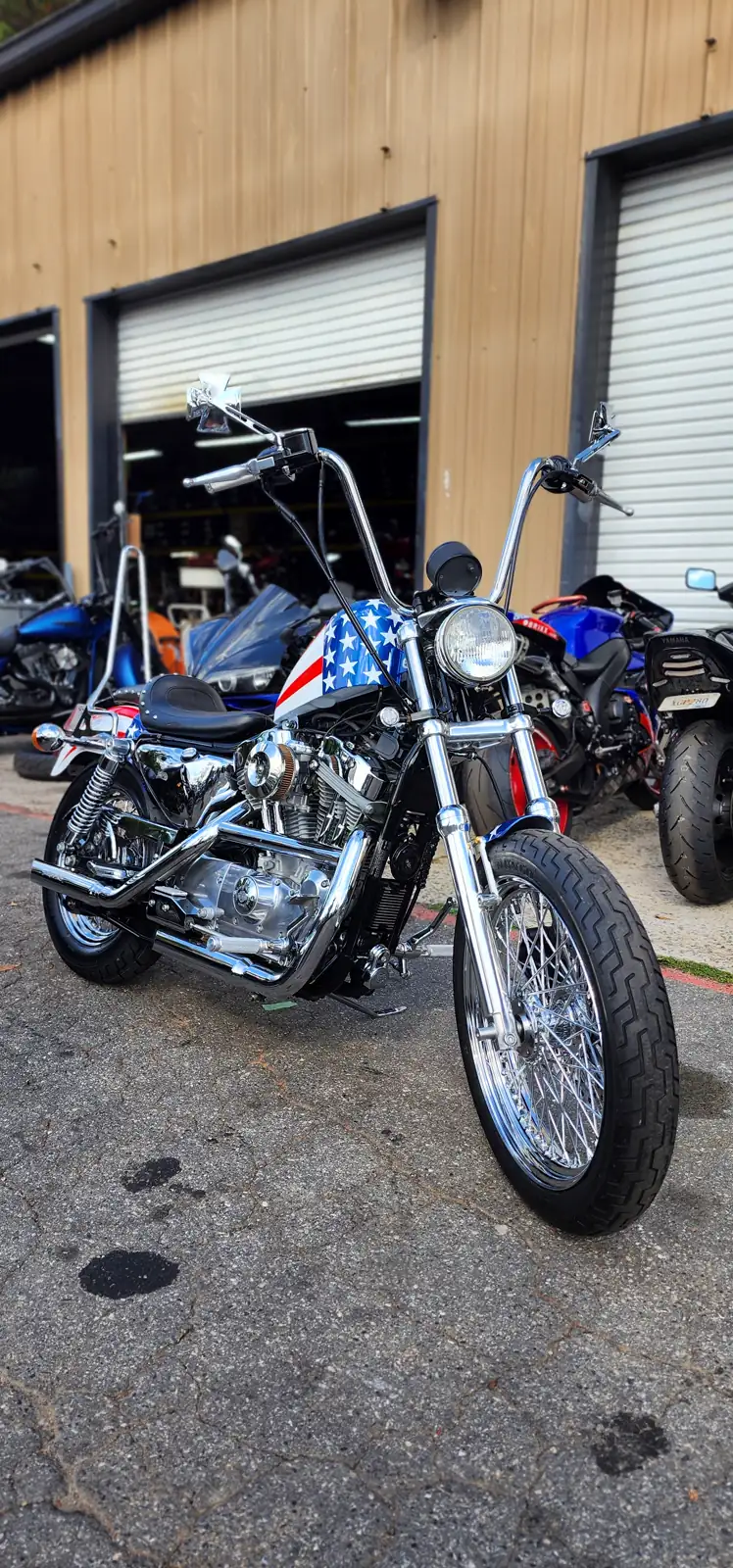
Here’s the part that should make you smile. Chrome that’s been cleaned, corrected, and sealed doesn’t just look okay. It looks better than the day the bike rolled off the showroom floor. The shine has depth to it. You can see your own reflection in the tank. Run a hand along it, and it feels slick and cool, almost like glass. People stop you at the gas pump to ask what you did. That reaction never gets old, and it’s a big part of why we love this work.
That shine isn’t only about pride, though pride alone is plenty. A clean, protected bike also holds its resale value, because the next owner sees years of care instead of neglect. Better still, a bike you’re proud of is a bike you actually ride. A shiny, sorted machine begs to be taken out, whether you’re sharpening your skills with MSF rider courses or just meeting friends for coffee.
So go book that ride. Point it north toward the sweepers and elevation of the Red Top Mountain, Lake Allatoona, and Canton loop, a roughly 53-mile stretch about an hour out that riders around here love. Grab dinner on Marietta Square after. If you feel like talking shop with other riders first, Hellbender Harley-Davidson has been a motorcycle spot on South Cobb Drive since 1986, about a half hour from the East Cobb core. Then bring the bike to us and let the finish match the fun.
Detailing is only one thing we do under this roof, by the way. We also tune on the dyno, in the same spirit as Dynojet’s dyno center, flash ECUs, and build engines. So the bike that finally looks its best can run its best too.
RIGHT IN EAST COBB
You don’t have to cross the county to fix this. Our shop is right here in East Cobb, at 847 Barnes Mill Road off Roswell Road, and nothing in the community is more than about 20 minutes away. Most competing service bays sit 15 to 25 minutes out and close a couple of days a week. We’re the full-service shop actually inside the neighborhood.
Questions East Cobb riders ask us
What actually causes chrome pitting?
Moisture reaching the steel under the thin chrome layer. Once water finds a scratch or a weak spot, the metal below rusts, swells, and breaks the chrome from the inside. Here in East Cobb, tree shade, spring pollen, humidity, and hard water all speed it up, especially on a bike that sits between weekend rides.
Can I fix chrome pitting myself?
A light haze or surface stain, maybe, with a gentle polish. Real pits are different, since the metal is already gone and no polish fills it back in. Harsh home rust removers can scratch the good chrome and make things worse, so deep pitting is a job for the shop, where re-chroming is the true fix.
Will chrome pitting get worse if I leave it?
Yes. Rust spreads once it starts, and small pits link up into rough, cloudy patches over time. The good news is that a proper clean and seal stops the corrosion in its tracks, which is why catching it early saves you the bigger job later.
How urgent is it, really?
Most pitting is cosmetic, so you can keep riding and enjoy your bike. The exception is chrome that slides or grips, like fork tubes and brake parts. Pitting there can tear a seal or affect braking, so that kind gets checked before your next ride, not after.
What happens if I just ignore it?
It keeps spreading, the part may eventually need re-chroming or replacing, and your resale value slips because the bike reads as neglected. None of that is an emergency, but all of it is avoidable, and the sooner we seal it, the less it costs you in the end.
Does ceramic coating stop pitting?
It helps a lot by keeping water and pollen off the metal and making the bike easy to rinse clean. It is not scratch-proof, though, and it lasts for years depending on care, not forever. Think of it as strong prevention and easier upkeep, not a permanent shield.
Our shop sits right inside East Cobb, and we’re an easy ride for the whole area. We regularly help friends from Marietta, Roswell, and Sandy Springs, along with Kennesaw, Woodstock, and Smyrna. Riders roll in from Vinings, Alpharetta, and Dunwoody too, plus Canton and Acworth to the north and Atlanta down south. Wherever you keep your bike, if the chrome’s gone freckly, we’d love to bring the shine back.
BRING THE SHINE BACK IN EAST COBB
Caught some chrome pitting on your pride and joy? Don’t sweat it, and don’t cross the county to sort it out. We’re right here in East Cobb, ready to check the depth, tell you straight what it needs, and seal it so it stops spreading. Text or call Diaz Motorcycles today, and let’s get that finish looking better than showroom new.
470-460-9883Diaz Motorcycles and Service, LLC · 847 Barnes Mill Road, Marietta, GA 30062