Dyno Tuning East Cobb — Honest Pricing
What a dyno really measures, why your bike feels lumpy, and how we figure it out before we ever quote you.
Three weeks in, he still didn’t trust it. In fact, his old bike had been a friendly thing. Twist, go, done. This one hunted. For example, it surged a little off idle, went flat right where it should have pulled hard, then woke up higher in the rev range like somebody hit a switch. He kept blaming himself for it. After that, Wrong gear, cold hands, rusty right wrist. Then a friend told him to quit guessing and go find real dyno tuning East Cobb riders already use, and the whole mystery turned into a chart he could read.
What’s more, that story is the most common one we hear. So and Better yet, Somebody moves up from a small commuter to a big twin, a liter sportbike, or a loaded ADV, and the new machine has habits the old one never had. Nothing is broken. The bike is simply telling you something in a language you haven’t learned yet. Our job is to translate it, then fix the part that’s actually wrong. If you’re new to a bike and quietly wondering whether it’s you or the machine, this post is written for you.
What a dyno actually measures
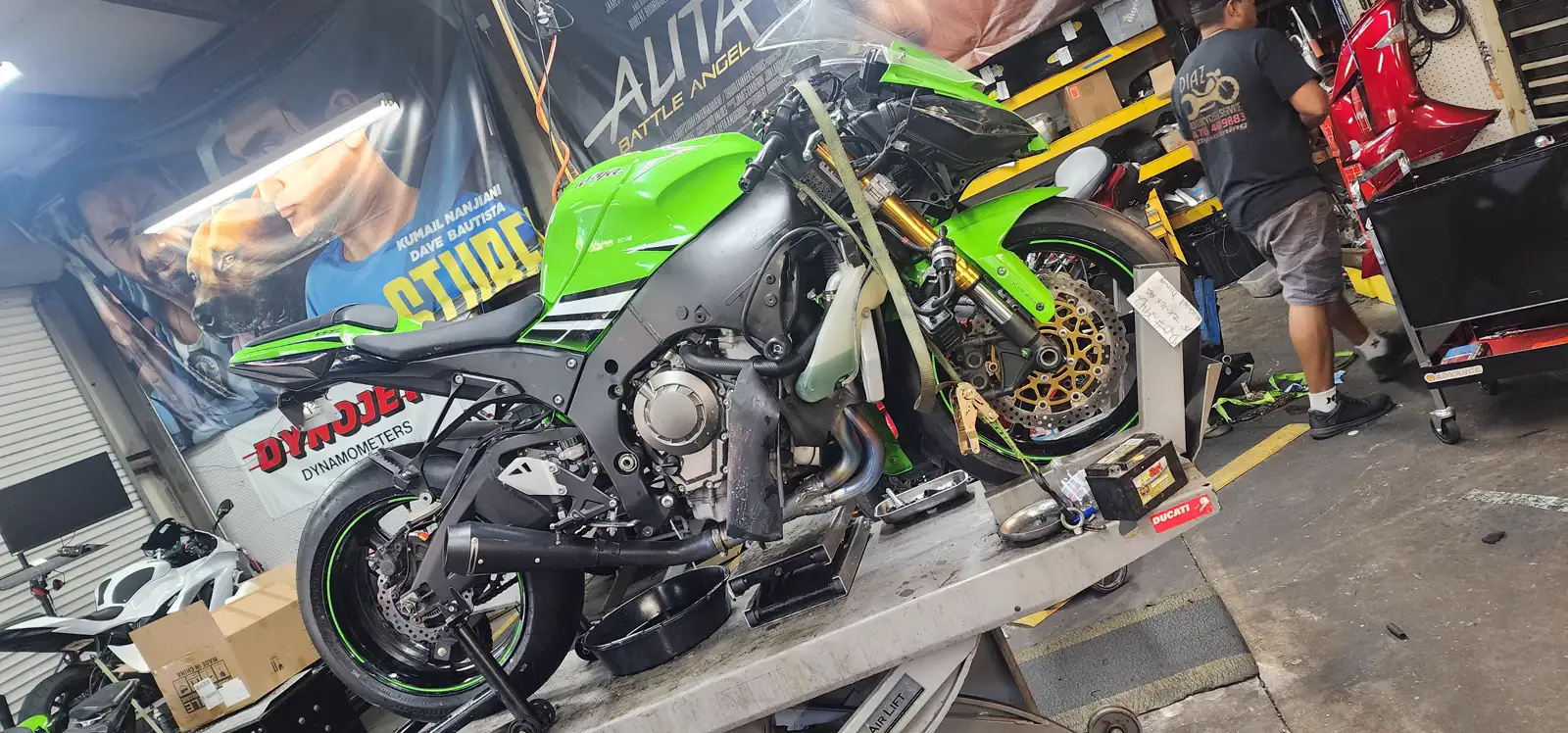
A dyno is a heavy roller in the floor. We strap the bike down, the rear tire sits on that roller, and you run the bike through the gears while it stays still. The roller pushes back. Because we know exactly how heavy the roller is and exactly how fast the bike spins it up, the computer can work out how much force the engine is making at every single rpm. That’s it. No magic, no mind reading. It’s a scale for effort instead of weight.
At the same time, a sniffer sits in the exhaust and reads what’s coming out the back. That tells us the mix of fuel and air the engine is burning at every point. So we end up with two pictures laid over each other: how hard the bike is pulling, and what it’s eating while it pulls. When one of those looks ugly, the other usually explains why. That pairing is the whole reason a dyno beats a test ride around the block.
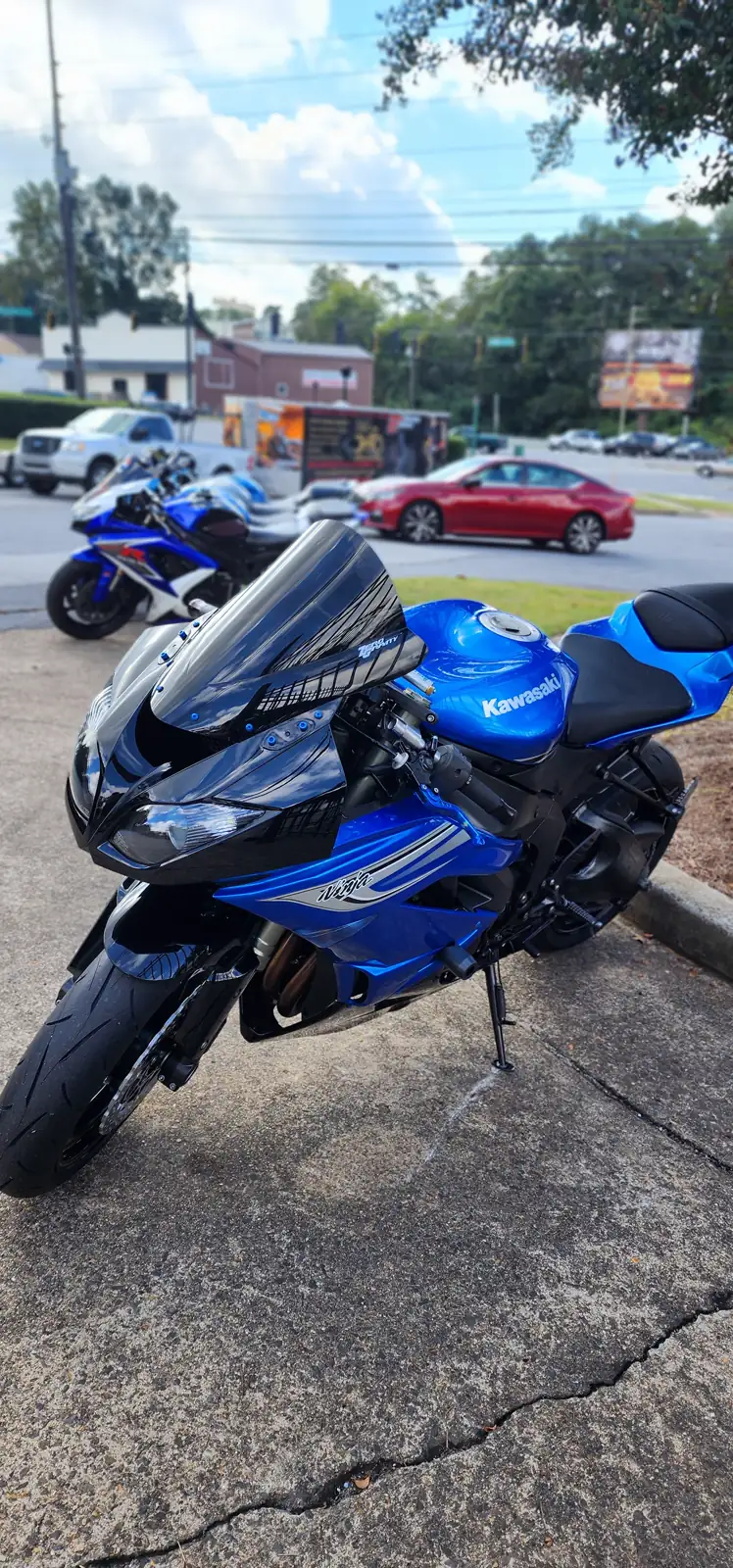
Here’s the part people don’t expect. A dyno is a diagnostic tool first and a bragging tool second. Plenty of bikes come in for a tune and leave with a repair instead, because the graph showed a dying coil, a sticky valve, or an intake leak nobody could hear over traffic. We’d rather find that on the roller than have you find it halfway up a mountain road.
Lean, rich, and why your bike got weird
Every engine wants a certain amount of fuel for the air it’s swallowing. Too little fuel for the air is called lean. Too much is called rich. Lean makes a bike run hot, surge at steady throttle, pop on the way down, and feel like it’s holding its breath in the middle of the rev range. Rich makes it feel soggy and lazy, fouls plugs, and turns your gas mileage into a rumor. Neither one means your bike is junk. It just means the recipe is off.
So how does the recipe get off? Sometimes it left the factory that way on purpose. Emissions and noise rules push manufacturers to run lean in the exact places you spend the most time, which is why so many bone-stock bikes have a flat spot right where you’d like a little push. Other times you changed something. A slip-on pipe, a fresh air filter, a different sprocket, a new set of ram-air ducts, and now the engine breathes differently than the factory numbers assume.
- Surging or hunting at a steady cruise, especially in the middle gears
- A flat spot that shows up at the same rpm every time
- Heat coming off the engine that feels stronger than it used to
- Snatchy, on-off throttle that makes slow speed riding a chore
- Popping and crackling on deceleration that got louder after an exhaust swap
- Fuel mileage that dropped without any change in how you ride
There’s another cause we see constantly around here, and it has nothing to do with parts. East Cobb bikes sit. Garages are the norm on these lots, which is great for rust and terrible for fuel. Gas goes stale, deposits build in tiny passages, and the bike comes out of winter running a little differently than it went in. A bike that sat all season can behave exactly like a bike with a bad tune, and the fix is completely different.
Here’s where it gets interesting — and where most advice online falls apart. Forum answers love to hand you a map file that somebody else uploaded for a bike that shares your model name. That file was built for a different exhaust, a different air filter, a different altitude, and a different set of worn parts. Georgia summer air is thick and wet. A file made in a dry climate simply doesn’t fit here. Copying somebody else’s homework is how a healthy engine gets a reputation it doesn’t deserve.
Your options, in plain words
Once we know what the bike is doing, there are really three roads. Each one fits a different rider, and none of them is automatically the right answer. We’ll tell you which one we’d pick if it were our bike sitting in our own garage, and we’ll tell you why.
ECU flashing
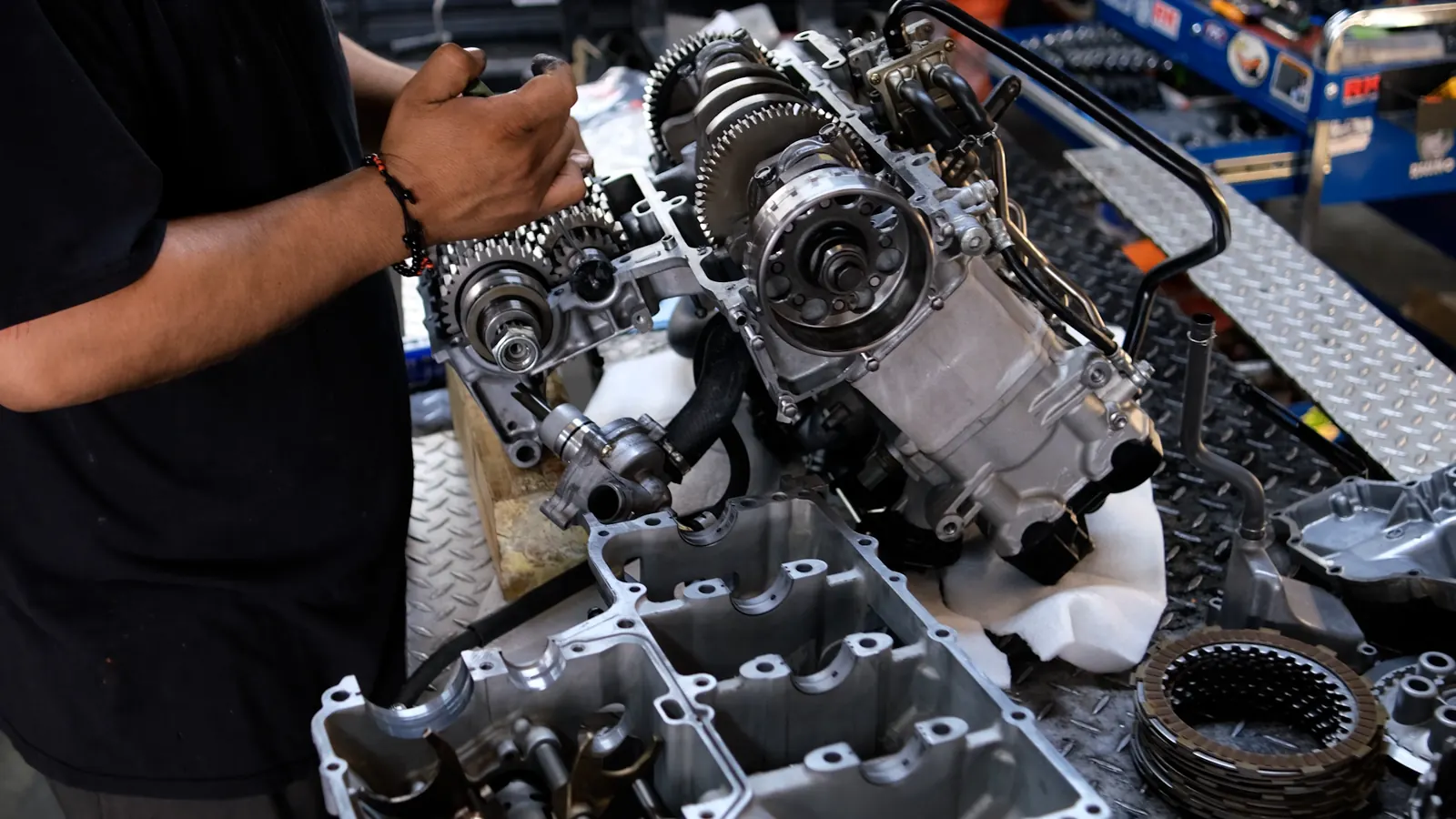
Your bike’s brain came with instructions written at the factory. Flashing rewrites those instructions directly. It’s the cleanest option on most modern bikes because nothing extra gets bolted on and nothing extra can come unplugged on the road. Flashing also lets us reach settings a piggyback box can’t touch, like throttle response and certain rev and speed limits, depending on the model.
A Power Commander or similar fuel controller
This is a small box that sits between the brain and the injectors and edits the fuel signal as it passes through. Think of it as a translator standing next to somebody who’s mumbling. It’s a great answer on bikes with locked factory computers, on older fuel-injected machines, and on bikes where a rider wants to keep everything reversible for resale. It’s also easy to move to your next bike in some cases.
Leaving it stock and fixing something else
Plenty of bikes don’t need a tune at all. They need a valve adjustment, clean injectors, a proper air filter, or a battery that isn’t hanging on by a thread. We’ll say that out loud even though it’s the smallest ticket in the building. If you’re weighing a tune against staying factory, we broke down the tradeoffs between them in a separate post so you can read it with coffee instead of over a service counter.
How we diagnose before we quote
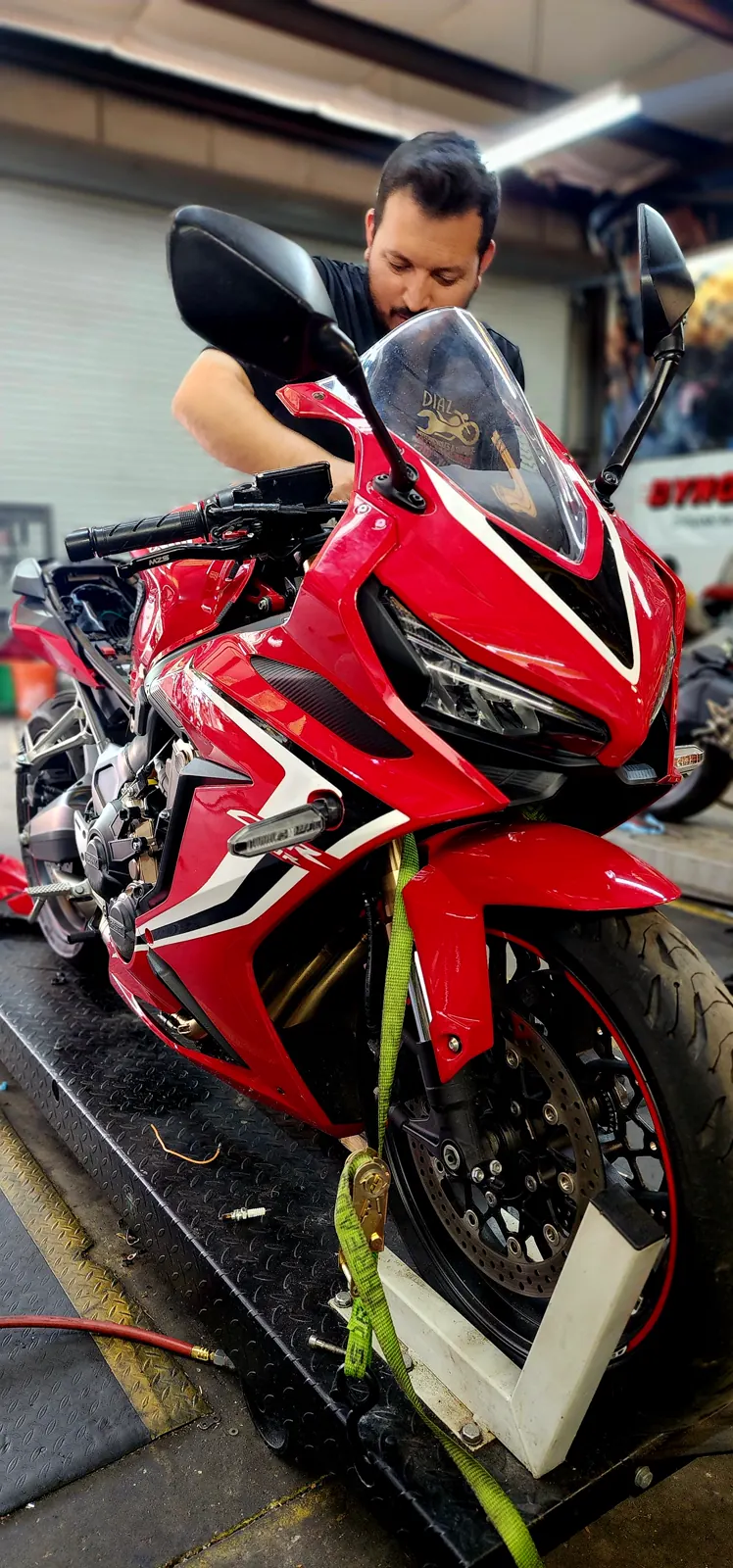
Honest pricing on dyno tuning East Cobb riders can plan around starts with one rule: we won’t hand you a number for work we haven’t looked at. That’s the short version. The longer version is that a tune quote depends on what the bike actually needs, and we can’t know that from a phone call. So we start with a baseline run and a conversation, and the quote comes after, in plain language, with the reasoning attached. If something we find changes the plan, you hear about it before we touch anything.
- You tell us how it feels and where. Rpm, gear, hot or cold, and what changed recently.
- We check the boring stuff first: plugs, filter, battery, chain, tire pressure, and any codes stored in the computer.
- That said, we make a baseline pull and read both the pull and the exhaust mixture together.
- We show you the graph and point at the ugly part, then explain what’s causing it.
- We lay out the options with a real recommendation, not a menu you have to guess at.
- You decide. Then we tune, verify with more pulls, and go back over anything that still looks off.
A proper tune isn’t one pull and a handshake, either. It’s a series of runs where we change something, confirm it helped, and keep going until the graph is smooth and the mixture is safe everywhere you actually ride. We wrote up what that service actually involves if you want the step-by-step before you commit.
TEXT US INSTEAD
You don’t have to sit on hold for a service writer. Text the shop, tell us the bike and what it’s doing, and a person who works on bikes will answer you. Photos and short videos help more than you’d think.
Here's what changes once it's actually sorted
The first thing riders notice isn’t a number. It’s that the bike stopped arguing. Roll on gently and it goes gently. Roll on hard and it goes hard. The step that used to appear at one specific rpm is gone, so you quit riding around it without realizing you were. Slow speed work in a parking lot gets easy, because the throttle finally does small things when you ask for small things.
Heat usually drops too, which matters more here than people expect. Georgia doesn’t allow lane splitting, and East Cobb has no interstate running through it, so anybody sitting in traffic on Johnson Ferry or Roswell Road is cooking slowly at every light. A bike with a sane mixture takes that a lot better. Your left hand notices as well, since a smoother engine means less clutch feathering to keep things civil.
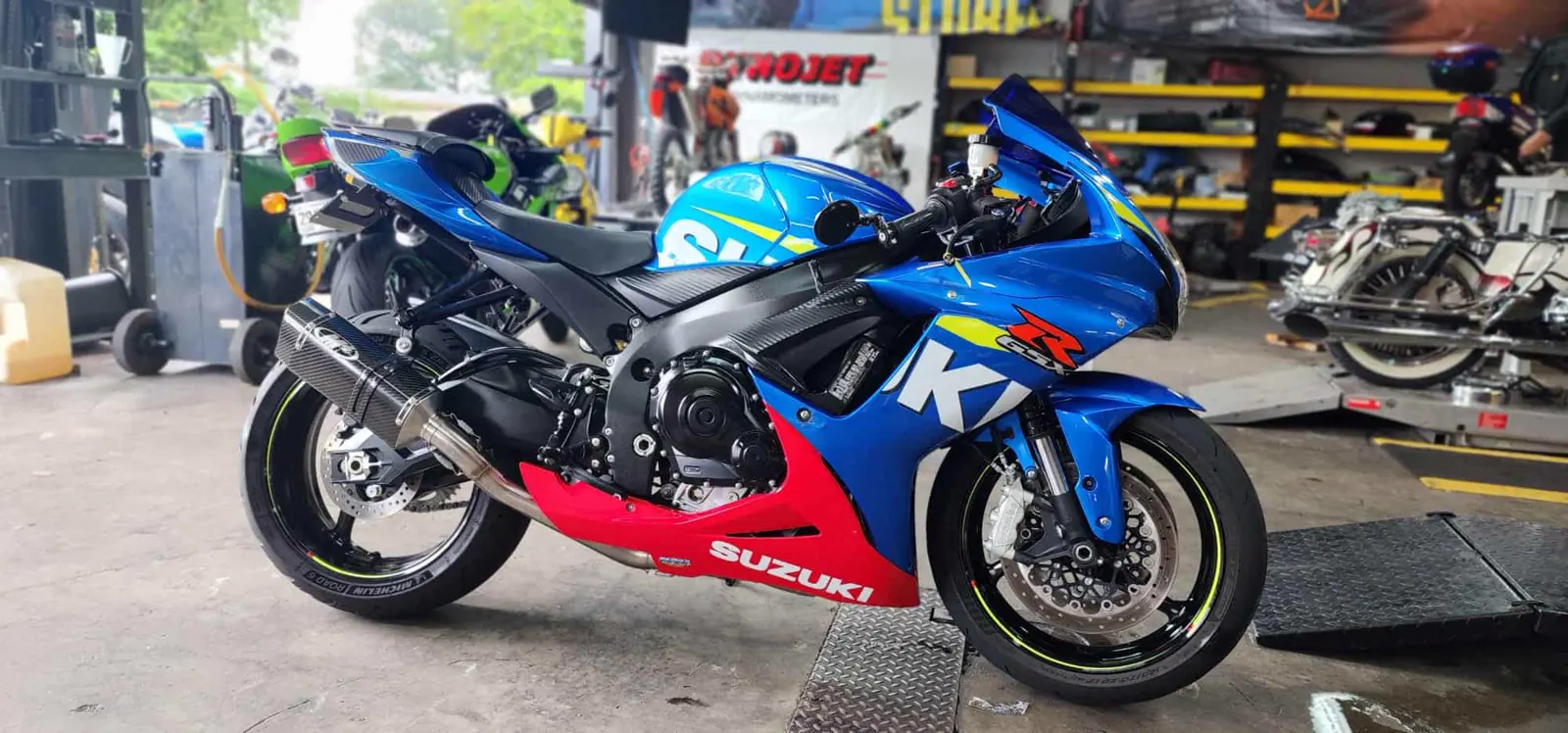
A good tune doesn't make your bike louder. It makes it easier to trust.
Older bikes, odd brands, and the paperwork question
We work on older machines. Air-cooled Japanese bikes, British classics, early fuel injection that predates half our tools, carbureted stuff that needs jets and needles instead of a laptop. Carbs can absolutely be dyno tuned, and honestly it’s some of the most satisfying work we do. If your bike is titled, tagged, and legal per the Georgia Department of Revenue, we can put it on the roller.
Brand isn’t a wall either. Harley baggers, Indians, Gold Wings, BMW GS and RT bikes, Ducatis, KTMs, and every flavor of Japanese sportbike come through the door. Different platforms want different approaches, so we keep factory service data on hand, including Harley-Davidson service information, rather than guessing at torque specs. If you’re curious how the same work looks in a bigger market, here’s how this plays out in Atlanta.
Why having this in East Cobb matters
There’s no motorcycle dealership inside East Cobb. Every one of them sits out on Cobb Parkway or South Cobb Drive, including Mountain Motorsports Marietta at 780 Cobb Pkwy S, which carries a long list of brands and is closed Sunday and Monday. That’s fine if your schedule is flexible. It’s rough if your riding time is Saturday morning and your free time to drop off a bike is the day after. We’re at 847 Barnes Mill Road, right in the community, and how our crew approaches it starts with the fact that you can get here and back before your coffee cools.
From the big wooded lots of Indian Hills it’s a short hop, whether you’re coming from a morning at Indian Hills Country Club or just backing out of the garage. Ashebrook riders in the Walton district and Highland Ridge folks over in Lassiter are looking at a handful of miles, not a county crossing. If you’d rather ride than drive, the run past Sope Creek Trail and its old stone paper mill ruins is a genuinely pretty way to get here. Watch the patched sections and sunken cuts on the older creek-crossing streets, and give East Piedmont Road a little respect where Cobb DOT has flagged resurfacing work.
September and October are the best riding weeks of the year around here, and that’s when the Suches, Blue Ridge and Wolf Pen Gap trips fill up calendars. It’s also when the roughly 53-mile Red Top Mountain run out toward Lake Allatoona and Canton is at its best, with sweepers, twisties and real elevation change about an hour from your driveway. A bike that’s been sorted takes those roads the way you hoped it would when you bought it. Get it on the roller before the good weather, not during it, and the season belongs to you.
Questions East Cobb riders ask us
Do you work on older bikes?
Yes, and we like them. Air-cooled Japanese machines, British classics, and carbureted bikes all get dyno time here. Carbs are tuned with jets, needles and mixture screws instead of a laptop, and the roller shows us the results the same way it does on a modern bike. Older machines sometimes need a mechanical fix first, and we’ll tell you if that’s the case.
What if my bike needs more than expected?
You hear about it before we do the work. If a baseline pull turns up a bad coil, an intake leak, or a valve that’s out of spec, we stop and call or text you with what we found and what it means. Nothing extra gets done without your okay. Sorting the mechanical issue usually makes the tune better anyway.
What does a dyno tuning service include?
It starts with a health check of the basics, then a baseline pull that records both power and the fuel-to-air mixture. From there we adjust the map, whether that’s an ECU flash or a fuel controller, and run the bike again to confirm the change helped. You leave with a smooth graph, an explanation of what we changed, and a clear picture of how the bike behaves everywhere you ride.
How long does it take?
Most tunes are a same-day or next-day job once the bike is on the schedule. Time on the roller depends on how much the bike fights us and whether we find something mechanical along the way. If we need to keep it longer, we’ll tell you up front rather than letting the day quietly slip. We know your time matters more than the wait.
Do you work on my brand?
Almost certainly. Harley, Indian, Honda, Yamaha, Kawasaki, Suzuki, BMW, Ducati, KTM and Triumph all come through regularly, along with plenty of bikes that don’t fit a neat category. Different platforms want different tuning approaches, so we work from factory service data instead of guesswork. Text us your year, make and model and we’ll confirm.
Will a tune void my warranty?
It depends on the bike and the change, so ask us before you decide. Some fuel controllers are fully reversible and leave no trace, which is why plenty of riders under warranty pick that route. An ECU flash is a bigger commitment on some platforms. We’ll walk you through what applies to your exact model before anything gets written.
We’re based in East Cobb and ride out to plenty of neighbors. Riders come to us from Marietta, Roswell, Sandy Springs and Kennesaw, plus Woodstock and Canton to the north when the mountain roads start calling. Smyrna and Vinings folks make the short hop down, and we see regulars from Alpharetta and Dunwoody who’d rather cross a county line than sit at a dealership counter. Atlanta riders come up when they want a shop that will actually explain the graph. Acworth rounds out the usual crowd, especially before a Lake Allatoona weekend.
TEXT US AND WE'LL TALK BIKES
If your bike has a habit you can’t explain, don’t keep guessing at it. Text Diaz Motorcycles, tell us what it’s doing and where in the rev range it does it, and a real technician will answer you. We’re right here in East Cobb at 847 Barnes Mill Road, so you can drop it off, get home, and be back on the road before the good riding weather runs out.
470-460-9883Diaz Motorcycles and Service, LLC · 847 Barnes Mill Road, Marietta, GA 30062