Motorcycle Chrome Pitting Canton — How to Fix It
Those little brown freckles on your forks and pipes aren't permanent. Here's what causes them and how we bring the chrome back.
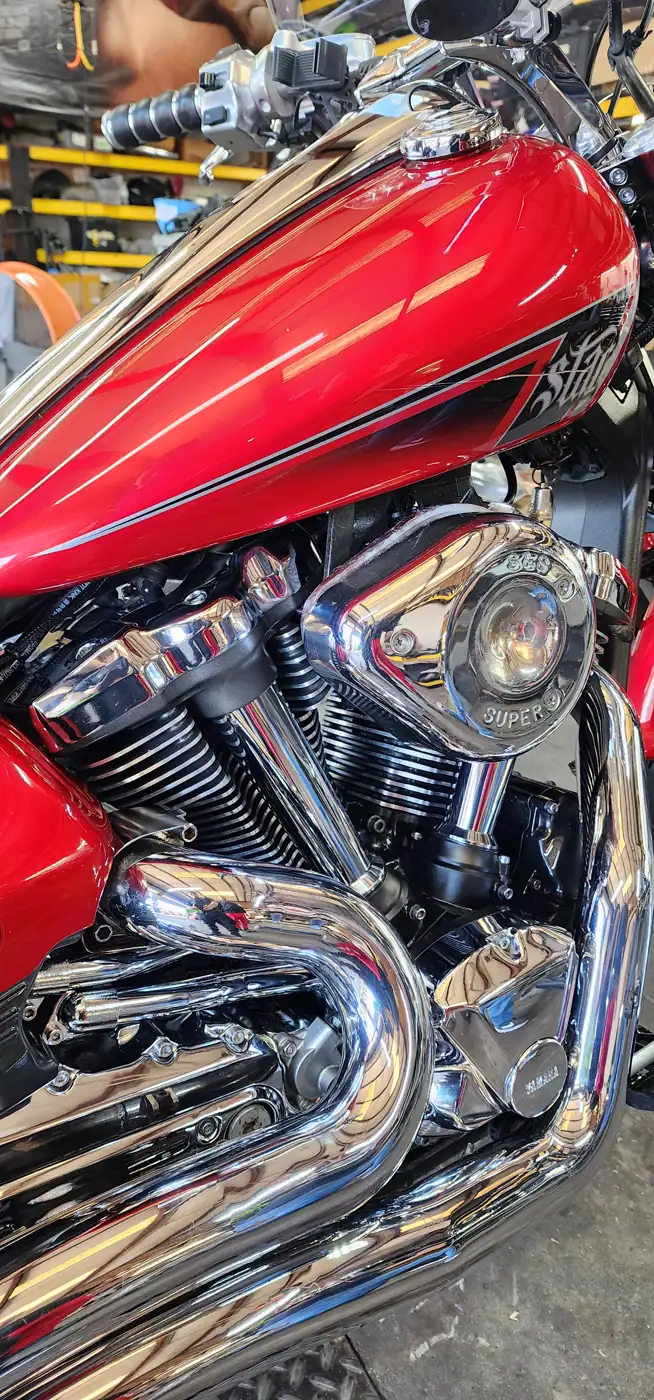
Plus, take a close look at the chrome on your bike right now. Meanwhile, See those tiny brown or orange freckles creeping in near the fork legs, the exhaust, or the handlebars? Of course, Leave them alone for one more month and those specks spread into rough patches. In fact, Give it a full season and the mirror-shine is gone. That slow creep has a name. For example, Motorcycle chrome pitting Canton riders see it every spring, and it never backs off on its own. Here’s the good part, though: caught early, most of it comes right back.
It usually starts small. Even so, you wheel the bike out on a sunny Saturday, tilt your head, and the chrome that used to throw back a clean reflection looks a little cloudy. You run a thumb over it and feel grit where the metal used to be glass-smooth. Maybe there’s a faint orange halo around a bolt head. None of it stops the bike from running, so the ride still happens. That’s exactly why it gets ignored, and that’s exactly the problem.
The frustrating thing is how quiet it stays until it isn’t. Chrome doesn’t fail all at once like a battery. It fades in slow motion, one damp night at a time, so your eye adjusts and you stop noticing. Then a friend leans over at a gas stop, points at your pipes, and asks what happened. That’s usually the moment riders call us. Nothing about the bike changed overnight, but a small thing finally got loud enough to hear.
What pitting actually looks like
Pitting is corrosion pushing up from under the chrome. Chrome is a thin, hard shell over steel. Once moisture sneaks past a nick or a pinhole, the steel beneath starts to rust, and that rust lifts and breaks the shiny layer above it. So the freckles you see on top are really a signal of something happening underneath. Think of it like a small leak in a roof: the stain on the ceiling is the last part to show up. Here’s the short list of what riders notice first, most common at the top.
- Tiny brown or orange spots, like freckles, on forks, exhaust, or spokes
- Rough patches you can catch with a fingernail where the metal was once slick
- Cloudy, hazy chrome that won’t shine up no matter how hard you polish
- Small bubbles or blisters under the surface that pop into flakes
- White or green crust around bolts, fittings, and cable ends
| What you see | What it means | What we do |
|---|---|---|
| Brown or orange freckles | Rust starting under the chrome | Clean and polish it back |
| Rough patches you can feel | The shell is breaking open | Cut it back, then seal |
| Cloudy, dull chrome | Fine surface corrosion | Hand-polish to a shine |
| Crust around bolts | Moisture trapped at fittings | Clean, treat, and protect |
| Deep craters | Rust reached the bare steel | Honest call: repair or replate |
What each sign is telling you
Most pitting around here traces back to one thing: water that sat too long. Georgia humidity is relentless. You wash the bike, park it wet, and the water sneaks into every seam overnight. Add our sticky summer air and the metal barely gets a chance to dry out. That’s cause number one, and it’s also the easiest one to beat, which is a nice place to start.
Bug guts and bird droppings come next. They’re acidic. Left baking on chrome after a run down GA-20 toward Lake Allatoona, they eat little craters into the finish within days. Road grime and the fine mineral film off wet pavement pile on from there. Dunlop’s technical resources are a good reminder of how much a bike picks up from the road, and your chrome takes that same beating mile after mile.
Hard water is the sneaky one. The tap water here leaves mineral spots when it dries on metal, and those spots hold moisture against the chrome like a tiny wet sponge. Storing the bike wet in an unheated garage pulls the same trick from the inside. And if anyone’s ever gone after light rust with steel wool or a harsh polish, that scratches the shell and opens even more doors for water. Gentle wins with chrome. Aggressive loses every time.
Age plays in too. Older bikes and budget parts came with thinner plating from the factory, so they pit sooner than a newer machine. That’s why a vintage project pulled out of a barn shows spots that a two-year-old bagger won’t. None of that is your fault, and all of it is fixable, so don’t take it personally.
Most people stop reading here. They figure the bike still runs fine, so the freckles can wait for some rainy day that never comes. That’s the expensive mistake.
What happens when you bring it in
Here’s the part that turns worry into a plan. Sorting out the motorcycle chrome pitting Canton riders bring us always starts the same way: a close look and an honest answer. When a bike lands on our lift, we feel every chrome surface by hand. We’re grouping the pitting into three buckets, which are surface haze, light pits, and deep pits that have gone all the way through to the steel. Where your part lands decides everything that follows.
Surface haze and light pitting are the happy cases. We clean the part down, cut the corrosion back with a fine chrome polish and patient hand work, and bring the reflection right back up. On a lot of bikes, chrome you’d already written off turns into chrome you can see your face in again. That slick, cool, glassy feel returns under your fingers, and honestly, it’s the best part of the job.
We won’t rush that part or hand you a made-up finish time on the phone, because chrome work goes at the pace the metal allows. Some pieces come around fast. Others need a second pass and a little more elbow grease before the depth comes back. What we can promise is that you’ll know where things stand before we start, and we’ll match the effort to what the bike actually needs instead of what pads a ticket. That’s the whole idea behind an independent shop.
Deeper pits call for an honest conversation. Once rust has eaten a real crater, no polish on earth fills it back in. We can clean it, stop the spread, and make it look far better than it did, but a truly deep-pitted part sometimes needs re-plating or a replacement to be flawless again. We’ll tell you straight which camp your part is in, and we’ll never push work a good polish would have handled. If you want to see the full menu, take a look at the work we do in house.
The last step is protection, and it matters as much as the polish. Freshly polished chrome is wide open to the very next rainstorm. So we seal it, which makes water bead up and roll off instead of soaking in. Wax and ceramic both do this in their own way, and we walk you through the tradeoffs between them so you pick what actually fits how you ride.
Is it safe to ride with pitted chrome?
Short answer: usually, yes. Pitting is mostly a looks problem, and a few freckles on a fork leg won’t stop you from enjoying a Saturday run. So don’t panic and load the bike on a trailer over some brown spots. There is a line, though, and you should know exactly where it sits.
It stops being just cosmetic when rust moves off the chrome and into something that holds the bike together. Rust creeping into wheel spokes, brake hardware, or an exhaust that’s rotting through is a real safety issue, not a shine issue. If a spoke looks crusty or a bracket is flaking apart, get it checked before your next long ride. And when you’re rebuilding road confidence, the habits from an MSF Basic RiderCourse pair nicely with a bike you know is mechanically sound.
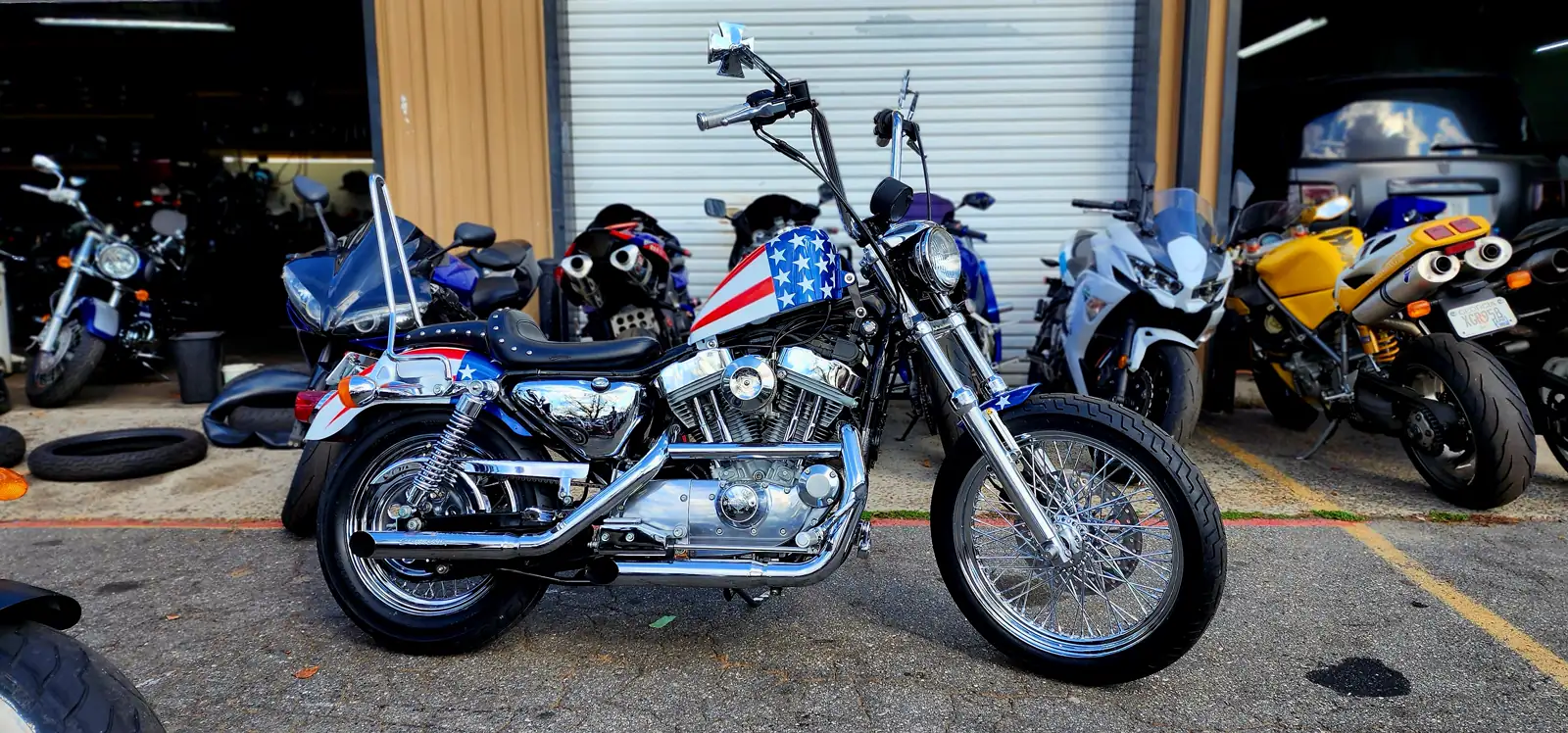
Why Canton chrome takes a beating
This town sits at the gateway to the North Georgia mountains, and that shapes how bikes here get used. On a good weekend the roads north fill with cruisers and baggers headed straight for the hills. All that saddle time is great for the soul and rough on the finish. Long mountain runs simply mean more weather, more bug strikes, and more road film per mile than a quick loop around the block ever could.
Think about the routes. The road up to Lake Arrowhead off GA-140 and GA-108 is a longtime rider favorite, and it’s loaded with the kind of grit and moisture that feeds pitting. A causeway cruise across Lake Allatoona on GA-20 wraps your chrome in damp lake air. Push farther and a full day on GA-52 over Fort Mountain, the classic Ellijay-to-Chatsworth run, is an hour and a half of mountain weather doing its thing to your bike. Every one of those perfect days leaves a little something behind.
Where the bike sleeps matters too. Most riders here store in a garage, which is a genuine help. Newer homes out in River Green along the Etowah River come with room to keep a project bike, and the active-adult crowd over in Soleil Laurel Canyon plus the families at Haynes Crossing mostly park inside. Even so, an unheated garage still swings warm and cold, and that swing pulls damp air onto cool metal. A bike that sits all winter can freckle up by March even parked indoors, which surprises a lot of folks.
The one real hitch out here is distance. Our shop is a good drive from Canton, roughly 22 to 26 miles, usually 30 to 40 minutes down I-575 to Barrett Parkway or GA-92 and then east through East Cobb. Canton folks drive for just about everything, so that’s rarely a dealbreaker. Still, you shouldn’t have to burn a whole Saturday on it. That’s why we’ll pick the bike up and bring it back once the chrome is right. There’s a powersports dealer over in Cartersville, Bartow Powersports, about 30 to 35 minutes west if you need parts, but detail-level chrome work and an honest sorting of pits is a different job than a quick counter visit.
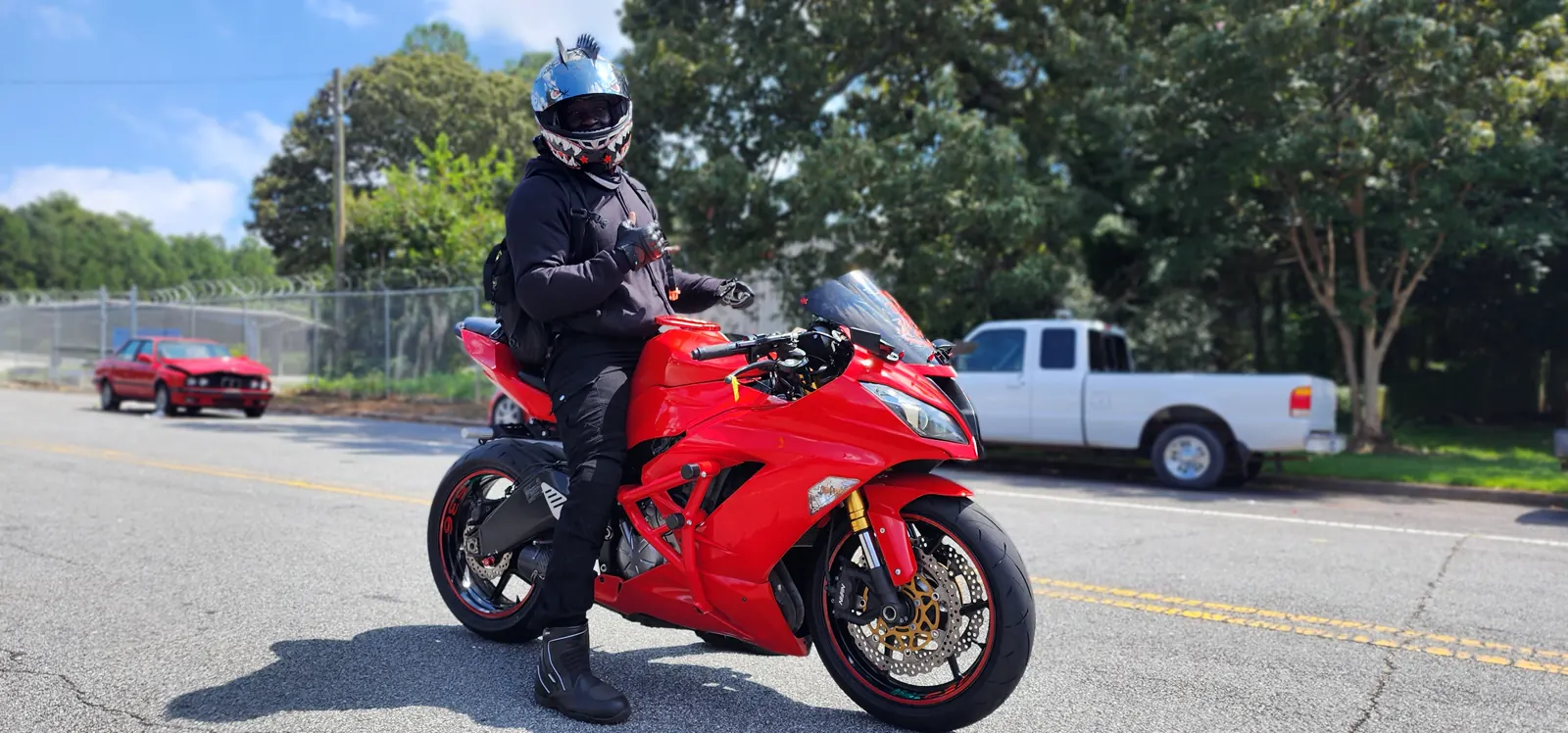
Keeping the shine once it's back
The last piece is the one people underestimate: keeping chrome healthy is mostly about small habits, not big effort. Dry the bike after you wash it. Get bugs and droppings off the same day they land. Seal the chrome and refresh that seal now and then. Do those few things and pitting has almost nowhere left to start.
- Rinse and hand-dry after every wash, and after any wet ride
- Wipe bug guts and droppings off the day they land, before they bite in
- Keep a fresh sealant on the chrome and top it up through the season
- Store the bike dry, and throw a breathable cover over it for winter
Here’s the payoff, and it’s a good one. A bike with its chrome sorted and sealed doesn’t just look okay. It looks better than the day it rolled off the showroom floor, because now it’s protected in a way the factory never bothered with. It holds its resale value better. And it feels good every single time you walk into the garage and catch that reflection. That’s the part no spec sheet mentions and every rider feels in their chest.
You came in worried about a few brown specks, and you’re leaving with a plan. That’s the whole point of this. For the bigger picture on the service side, here’s what that service actually involves, and if you’re curious how the same corrosion story unfolds elsewhere in the metro, we’ve written up how this plays out in Sandy Springs too.
Caught early, pitted chrome comes back. Sealed after, it stays gone.
Questions Canton riders ask us
Can I fix chrome pitting myself at home?
Light haze and small freckles, yes. Use a proper chrome polish and a soft cloth, and go gently in small circles. Skip steel wool and harsh abrasives, since those scratch the shell and make things worse. Deep pits that have reached the steel are a shop job, because polish can’t rebuild metal that’s already gone.
Will the pitting keep spreading if I do nothing?
Yes. Rust doesn’t stop on its own, and our humidity keeps feeding it. Left alone, a few spots turn into rough patches and then into craters over a season or two. The good news is that cleaning it up and sealing it shuts the process down, so once it’s handled it stays handled.
How urgent is this, really?
It’s not a drop-everything emergency, but sooner is always easier and cheaper on effort. Light pitting polishes right out. Wait too long and the same part may need re-plating or replacing to look right again. Handling it early keeps you in the simple, quick lane.
What happens if I just ignore it?
The freckles grow into pits, the shine goes flat for good, and eventually the rust can spread to spokes, fasteners, and exhaust parts. At that point it’s a mechanical concern, not just a looks concern. It also drags down resale value, since buyers read tired chrome as a neglected bike.
How do you figure out what caused it?
We look at where the spots cluster and ask a few questions about how you wash and store the bike. Chrome near the ground and around fittings usually points to trapped moisture and road film. Even patches across a whole surface often mean hard-water spots or a bike that sat wet. Finding the cause is how we keep it from coming back.
Is it safe to ride while I wait to get it fixed?
For plain cosmetic pitting, yes, go enjoy the ride. The exception is rust that’s reached spokes, brake hardware, or a rotting exhaust, which needs a look before your next long trip. When in doubt, send us a photo and we’ll tell you whether it can wait.
We look after riders all across Cherokee County and the corners of Bartow and Pickens that touch it. That means Canton first, plus Woodstock, Holly Springs, and Ball Ground close by, along with Waleska and Free Home out toward the lake country. We regularly see bikes from Acworth, Kennesaw, and Cartersville to the west, from Jasper and Nelson up the mountain corridor, and from Marietta and Alpharetta down the interstate. If you ride the North Georgia roads, your chrome faces the same weather, and we’re glad to help.
CHROME BACK, WORRY GONE
Ready to stop watching those freckles spread across your favorite bike? Text us a couple of photos of your chrome and we’ll tell you straight whether it polishes right out or needs a little more. We pick up and deliver across Canton, so you never have to trade a riding Saturday for the drive. Send a message and let’s get your shine back.
470-460-9883Diaz Motorcycles and Service, LLC · 847 Barnes Mill Road, Marietta, GA 30062