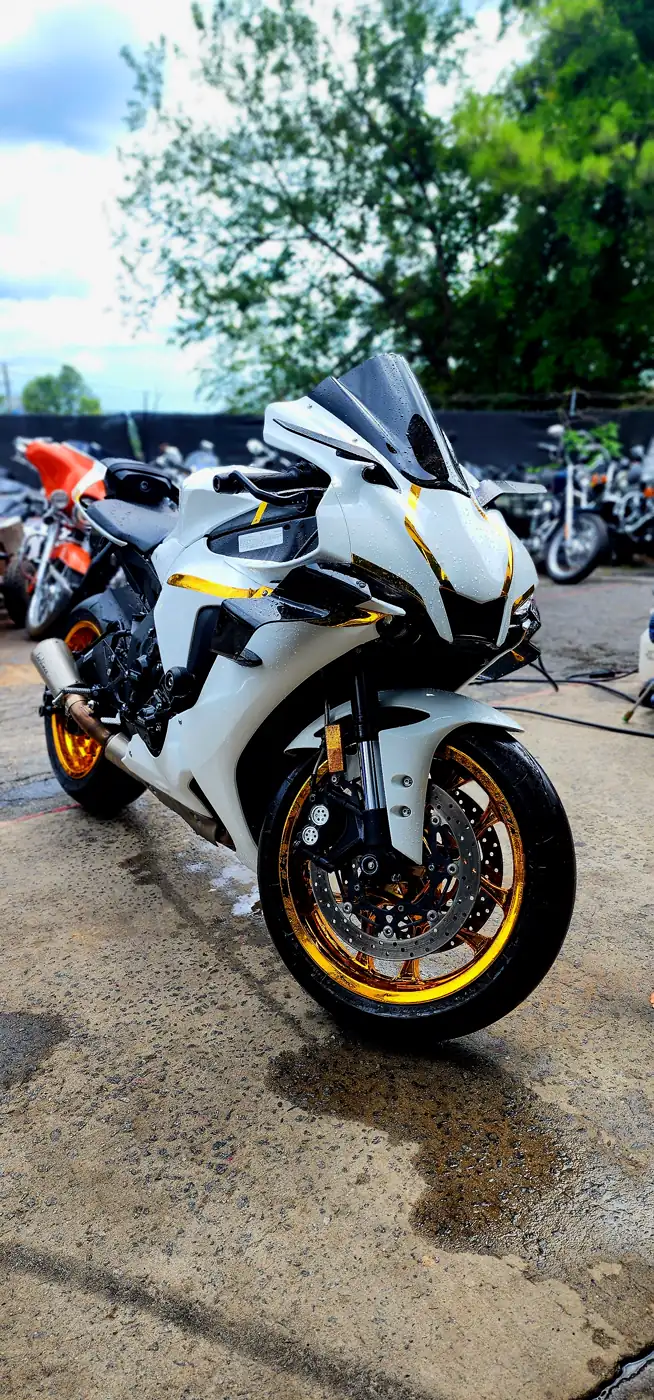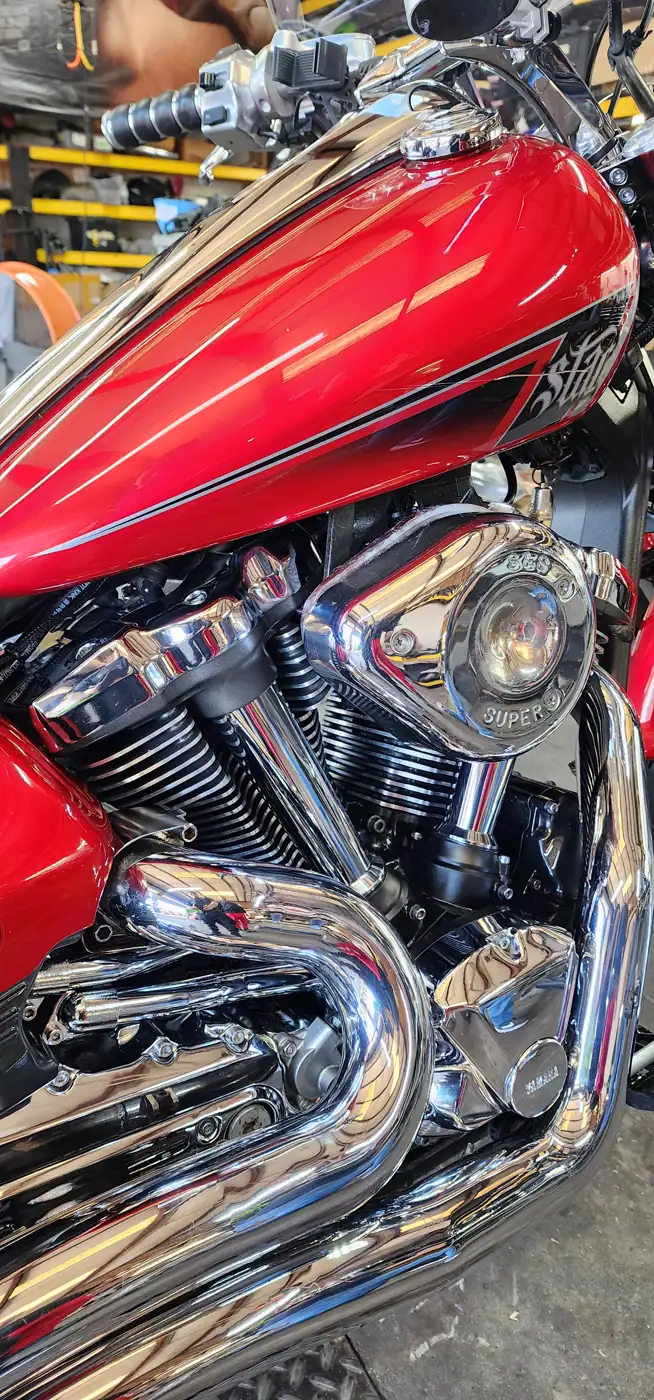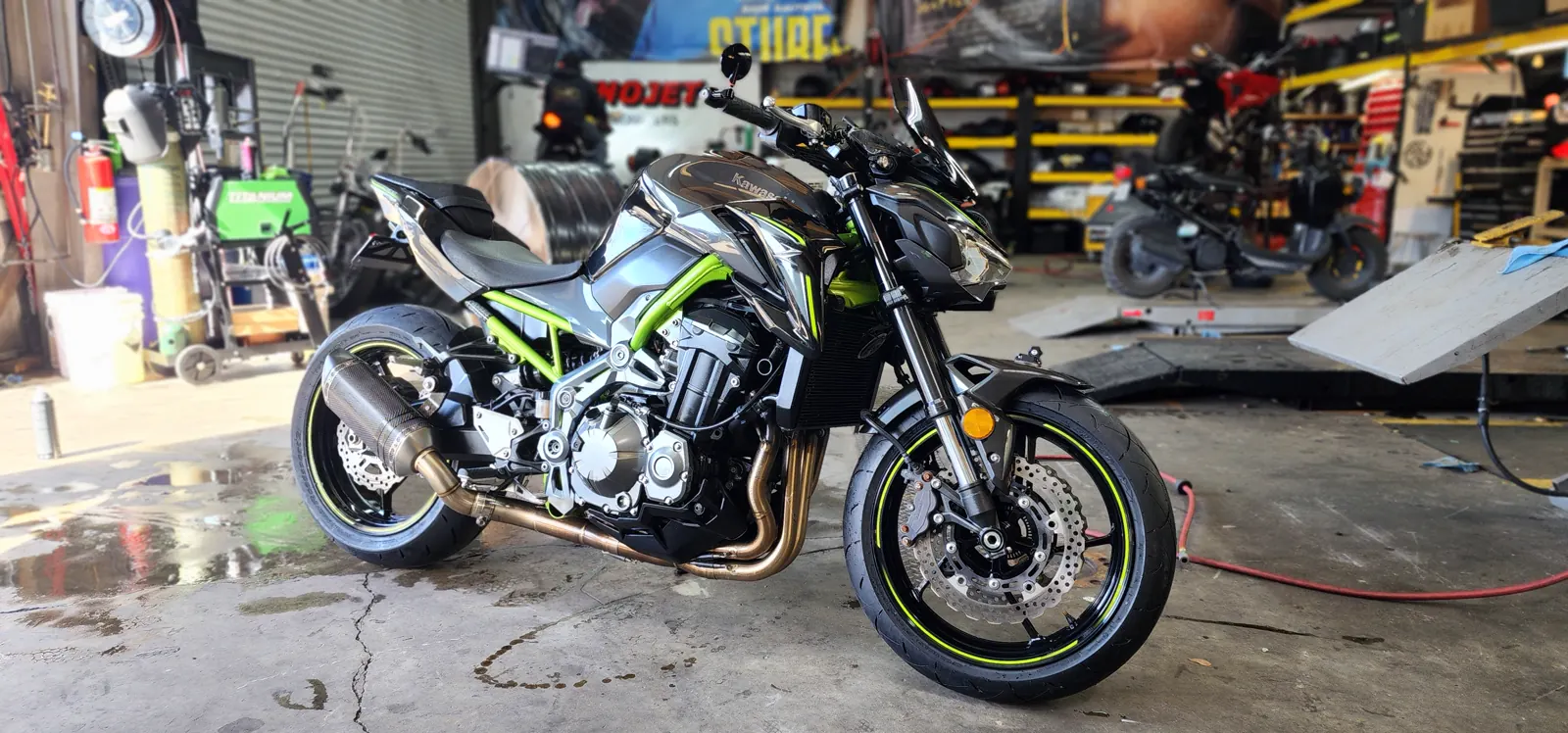
Motorcycle Chrome Pitting Alpharetta — Causes & Fixes
That freckled, cloudy chrome you spotted mid-ride is fixable — here's what's really happening and how we bring the shine back.
Either way you’re twenty minutes into a perfect Sunday loop, engine humming, when the sun swings around and catches your front end. Besides the chrome that used to throw back a clean mirror image now looks freckled, dull, a little sandy. In short that gut-drop moment is how most riders meet the problem, and it’s the reason motorcycle chrome pitting Alpharetta owners search for answers the same weekend they spot it.
At the same time Chrome is meant to be smooth glass laid over steel. When it pits, tiny craters open up in that shiny layer, and up close it can look like a scatter of rust freckles or a haze you can feel with a fingertip. Let’s get the good news out first: most of the time this is purely cosmetic, and even when it runs deeper, there’s a clear road back to a finish you’re proud of.
What you're actually seeing and feeling
Run a clean finger across healthy chrome and it feels like ice. Do the same over pitted chrome and you’ll catch tiny snags, almost like fine sandpaper. In bright light the surface flips from mirror to matte in patches. Some riders notice rust-colored specks first, while others just see the reflection go fuzzy, as if the chrome fogged up and won’t wipe clear.
These spots love certain places. Fork tubes, exhaust headers, wheel rims, handlebars, and even the little bolt heads tend to show it early. Those parts take the most heat, road spray, and weather, so they wear first. A quick wipe won’t budge real pitting either, and that’s usually the exact moment a rider starts hunting for what went wrong.
Why chrome pits — most common first
Moisture is the number-one villain, and Georgia hands it out for free. Our humid summers keep a thin film of damp on metal even inside a closed garage. Toss in the famous spring pollen, which is mildly acidic, plus hard tap water that dries into mineral spots, and you’ve got a slow, steady attack on the chrome’s surface.
- Trapped moisture and humidity that never fully dries, especially on a bike that sits for weeks between rides
- Pollen film in spring and bird droppings, both acidic enough to eat at the finish over time
- Hard-water spots left behind when a bike air-dries in the sun after a wash
- Road grime, brake dust, and any salt tracked up from winter road treatments
- Tiny stone chips that break the chrome and let moisture reach the steel underneath
- Age and thin factory plating, which simply wears where hands and heat land most
Notice the pattern here. Every one of those causes ends the same way — water or acid reaches the steel under the chrome, and steel rusts. Actually the shiny layer itself doesn’t corrode. Instead, the metal beneath pushes up through weak spots, lifting and cracking that mirror finish into the little pits you’re seeing.
Season matters too, and it helps to know your enemy by the calendar. Late-March pollen coats everything in a yellow-green film that holds moisture against the metal. Summer humidity keeps it damp for months. Then one quick rain on a dusty bike bakes hard-water spots on in the afternoon heat. None of it looks dramatic on any single day, which is exactly why pitting sneaks up on good, careful owners.
Hard water deserves its own callout, because it fools a lot of riders. You wash the bike, feel great about it, and let the sun dry the beads where they sit. Those beads carry minerals, and when the water evaporates, the minerals stay behind as chalky spots. Left alone, that residue traps moisture in the same place day after day. Over a summer, a spot that started as a harmless water mark can turn into the beginning of a pit. That’s why the fix is simple — dry the chrome by hand right after a wash — but nobody thinks to until they’ve seen where the shortcut leads.
The internet will tell you one thing. The bikes tell us another.
Search around online and you’ll read that pitted chrome is ruined for good, or that some magic spray fixes anything. Neither is true. We see chrome roll through the shop every week, and the story written on the actual metal is far more hopeful. Light pitting polishes out beautifully. Medium pitting cleans up and gets sealed so it stops spreading. Only the deep, long-neglected stuff needs replating — and even that brings a part back to showroom shine.
How we figure out how bad it is
Before anyone touches a polishing wheel, we read the part. The whole goal is to separate surface haze from real craters, and cosmetic pitting from the kind that actually affects how your bike works. It’s a quick, honest look, and we’ll show you exactly what we find rather than leaving you guessing.
- We clean the area first, so we’re judging chrome and not old dirt or wax
- We check with strong light and touch, tilting the part until pits cast tiny shadows
- We test a small spot with the mildest polish to see how much shine returns
- We look for exposed steel or active rust, which changes the plan entirely
- We flag any pitting on working surfaces like fork tubes, since those affect seals
That last step is the important one for safety, and we’ll circle back to it in a minute. For most parts, though, this check tells us within minutes whether you’re looking at a simple polish, a deeper correction, or a full replate. No mystery, no upsell.
What the fix actually involves
The fix scales to the damage, and we always start with the gentlest option that works. Nobody needs a big job when a small one does the trick. Once the chrome looks right again, we seal it so our Georgia weather has a much harder time getting back in.
- Light haze and freckling: a dedicated chrome cleaner and careful hand polishing bring the mirror back, then a protectant locks it in
- Moderate pitting: machine polishing levels the surface, lifts the rust freckles, and restores real depth before sealing
- Deep pitting with exposed steel: the part gets stripped and replated, which is the true reset for chrome that’s past polishing
After any of those, a good sealant is what keeps you out of our bay next spring. Think of it as a raincoat for your chrome. It won’t make the metal bulletproof, but it slows moisture, sheds pollen, and turns wash-day into a two-minute wipe. That’s the same care that goes into a full detail, and if you’re curious about what that service actually involves, we spell it out plainly.
One question comes up almost every time: will polishing thin out my chrome? On a light job, no — we’re clearing haze and lifting freckles, not grinding metal. Heavier correction takes a touch more, which is why we test that small spot first and match the effort to the damage. If a part is too far gone to save, we’ll tell you straight and talk replating instead of chasing a shine that isn’t coming back. Honesty saves everyone a wasted afternoon.
SAFE TO RIDE?
Cosmetic pitting on a chrome trim, exhaust tip, or bolt head won’t stop you — it’s a looks problem, not a safety one. Pitting on the shiny fork tubes is different, though. Rough spots there can tear fork seals and cause leaks, so that’s worth a check before your next big loop.
So when is it truly time to park it? If you spot pitting or scoring on the polished fork tubes and you see oil weeping down the lower legs, that’s your cue to stop and get it looked at. Leaking forks change how the bike handles and how it stops. Everything else on the chrome front can happily wait for a calm weekend and a proper fix.
We hear the same worry from riders over in East Cobb, where the humidity does the exact same thing to a garage-kept bike. Good news: the fix is identical. Whether it’s a cruiser’s fenders or a sportbike’s forks, the approach stays honest — clean, assess, correct the least amount needed, then protect.
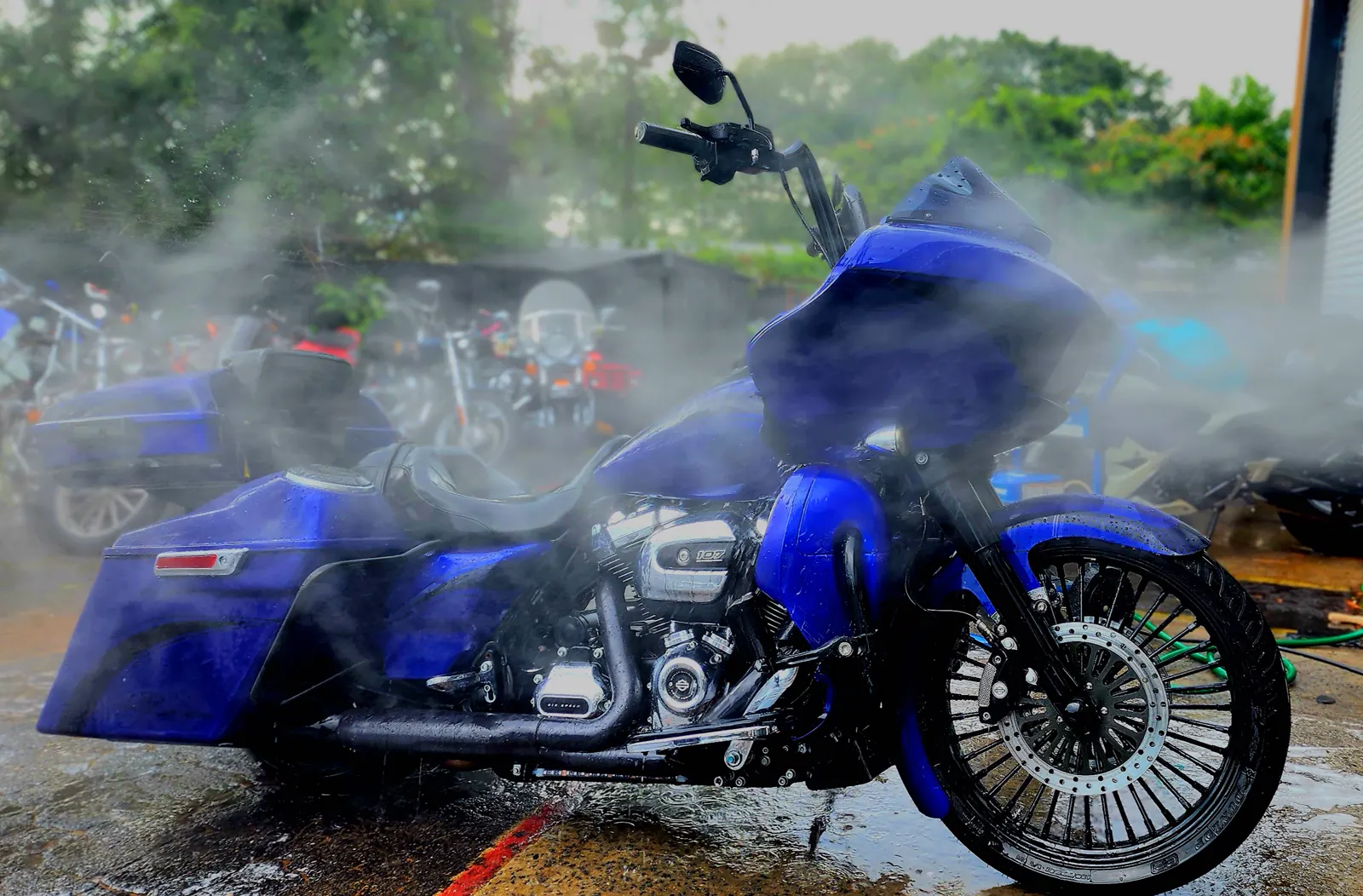
A quick story, because it makes this concrete. A friend of ours keeps a blue bagger in a spotless three-car garage and babies the thing. Last spring he called sure the chrome was toast, freckled all down the forks and headers after the bike sat through a wet winter. He was already pricing new parts in his head. We cleaned it up, tested one small spot, and the mirror came right back. A morning of polishing and sealing later, he rode out grinning, and that chrome still looks sharp today.
The Alpharetta angle
Alpharetta is a destination-riding town far more than a commuting one. Bikes here get bought for weekend fun and kept clean in big garages, so a little pitting stings extra when you take real pride in the machine. The catch is that a garaged bike still breathes our humidity, and one that sits for months between rides can pit quietly while nobody’s watching.
We see it right across the map. A tourer parked at The Manor Golf & Country Club, where the lots run close to an acre around the Tom Watson course, pits the same as a vintage project in the equestrian streets of Blue Valley or a first bike in the newer craftsman homes of Kensley. Big garage or small, humidity never checks the address.
The riding here is worth protecting your chrome for. Locals gather down at Alpharetta City Center and Brooke Street Park, then point their bikes north on McGinnis Ferry Road toward Forsyth County or up to the North Georgia Triangle, the Dahlonega-Suches-Blairsville loop that Rider Magazine put on the map. Those miles are more fun when your skills are sharp, and a refresher through MSF rider courses never hurts before a big mountain day.
North Fulton is dealer-rich, too. Mountain Motorsports over on Alpharetta Highway in Roswell carries a wall of brands, and independents like G&G Cycles of Roswell handle repair and tires. What’s thinner on the ground is a shop that fixes chrome and finish the right way. We sit down in East Cobb, a straight-enough run down GA 9 through Roswell and over on GA 120 — and since that’s a real 30 to 40 minutes on a good day, we can pick your bike up and drop it back so you never lose a riding weekend.
Chrome is just one part of keeping a bike sharp. If you want the full menu, everything we cover lives on one page. Plenty of the same riders who bring us pitted chrome also ask about power, so if a dyno session is on your mind, we put together the full rundown on it for Alpharetta owners — the same way serious tuners lean on Dynojet’s dyno center to measure real numbers.
Where this leaves you
Take a breath, because the ending here is a happy one. The truth about motorcycle chrome pitting Alpharetta riders rarely hear is that most of it polishes right out. Freckled chrome looks scary and reads even worse online, but on the actual metal it’s usually a morning’s work from a mirror again. Catch it early and it polishes. Catch it late and it replates. Either way, you end up with chrome you can see your face in and a sealant that holds through another Georgia summer.
Freckled chrome isn't the end of your bike's good looks — it's the start of a good weekend project.
Questions Alpharetta riders ask us
Is it safe to ride with pitted chrome?
In most cases, yes. Pitting on trim, exhaust tips, and bolt heads is cosmetic and won’t affect how the bike rides. The one exception is the fork tubes — if those are pitted and leaking oil, park it and get it checked, because it can affect handling and braking.
What actually causes chrome to pit?
Moisture is the top cause, and Georgia’s humidity keeps metal damp even in a garage. Spring pollen and bird droppings are mildly acidic, hard water leaves mineral spots, and stone chips let water reach the steel underneath. The steel rusts, and that pushes up through the chrome.
Can I fix chrome pitting myself?
Light haze and freckling often come back with a dedicated chrome cleaner, gentle hand polishing, and a sealant. Deeper pitting with rough craters or exposed steel usually needs machine polishing or replating, which is where we come in. When in doubt, start gentle and stop if it isn’t improving.
Will it get worse if I ignore it?
Slowly, yes. Pitting is corrosion, and corrosion keeps working as long as moisture can reach the steel. The fix is easy, though: clean it up and seal it, and you stop the spread while making the shine last much longer.
How urgent is this really?
For cosmetic chrome, it’s not urgent — schedule it for a weekend and enjoy your riding season. If the pitting is on your fork tubes and you see oil leaking, treat that as a soon job rather than a someday one.
Can you pick up my bike in Alpharetta?
We can. Since we’re down in East Cobb and there’s no direct freeway, we offer pickup and delivery so you don’t lose a riding day driving your bike over and back. Just text us your neighborhood and we’ll set a time.
We look after riders all across North Fulton and the northern suburbs, so Alpharetta owners sit right in our lane. From Roswell and Milton to Johns Creek and Sandy Springs, plus Cumming, Duluth, Woodstock, and Suwanee, we keep chrome and paint sharp for folks who take pride in their bikes. Closer to home in East Cobb, Dunwoody, Crabapple, and Marietta, the same humidity does the same work on your finish — and the same fix brings it back.
GET THAT SHINE BACK
Spotted pitting on your chrome and want a straight answer? Text us a photo and your Alpharetta neighborhood, and we’ll tell you whether it polishes out or needs more, then set up pickup so you never lose a riding weekend. No pressure, just an honest look and a finish you’ll be proud to park in the garage.
470-460-9883Diaz Motorcycles and Service, LLC · 847 Barnes Mill Road, Marietta, GA 30062