Motorcycle Chrome Pitting Dallas — What to Check
That cloudy, rough haze on your pipes has a cause, a fix, and a clear answer on whether it's safe to ride.
Even so, Roll our bay doors open on a normal week and one thing shows up more than almost anything else. What’s more, a gorgeous bike pulls in, the paint is clean, but the pipes that used to shine like a mirror have gone dull and rough. After that, the owner drags a thumb across the exhaust and feels sandpaper where glass used to be. Also this is the kind of motorcycle chrome pitting Dallas riders bring us all the time, and here’s the good news right up front: you noticed it, and noticing early is more than half the battle.
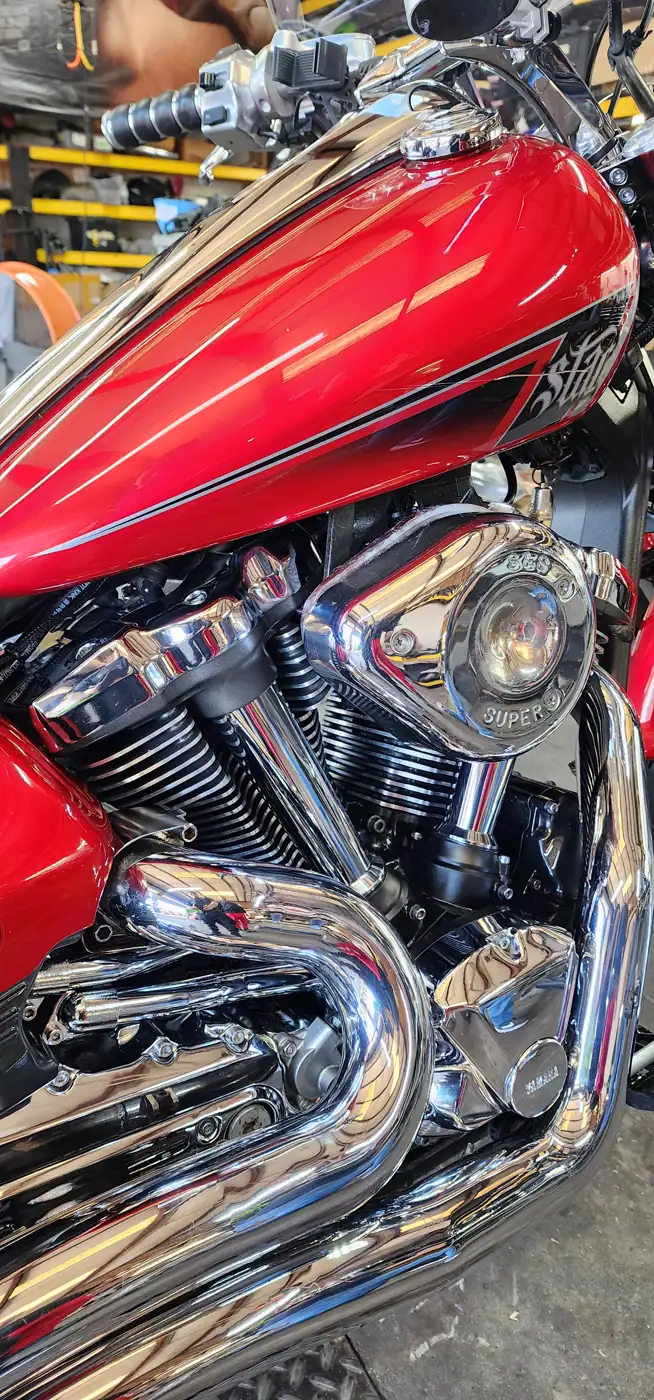
Chrome pitting rarely announces itself. Instead it starts as a faint cloudiness, a spot on the exhaust or the fork lowers that just won’t buff clean with a rag. Besides look closer and you’ll see tiny freckles, little brown or orange specks no bigger than a pinhead. Actually run a finger over them and the surface feels gritty instead of smooth. Most riders catch it in the same place first: pipes, handlebar risers, mirror stems, and the shiny bits that sit low and take the most road spray.
The Myth We Have To Bust First
Here’s what almost everyone believes when they first see those spots. They figure the chrome is ruined, the part is trash, and the only fix is a new pipe or a full re-chrome. That belief keeps a lot of good riders from ever asking about it, because they assume the answer is bad news. So the bike just sits, the spots spread, and a small problem grows while nobody touches it.
Most of the time, that belief is wrong. Light chrome pitting caught early is very often something we can polish back and protect, no new parts needed. The part looks tired, sure, but the damage lives right at the surface. Once you understand what’s actually going on under that haze, the whole thing stops feeling scary and starts feeling like a to-do list.
What's Actually Happening To Your Chrome
Chrome isn’t solid metal. It’s a thin plated shell, thinner than a sheet of paper, laid over steel underneath. That shell is what gives you the mirror shine. Trouble starts when moisture finds a way through a tiny pore or a chip in that shell and reaches the steel below. The steel rusts, the rust swells up, and it pushes tiny craters out through the chrome. Those craters are the pits you feel with your thumb.
So what lets the moisture in? Usually it’s a pile-up of small, everyday things rather than one big event. In Georgia especially, the weather does much of the heavy lifting behind the motorcycle chrome pitting Dallas riders battle every summer. Here are the usual suspects, most common first.
- Humidity and time. Damp air sits on the metal, day after day, and slowly works into every little pore.
- Pollen and road grime left on the surface. That yellow spring dust traps moisture against the chrome and holds it there.
- Hard-water spots. Wash the bike, let it dry in the sun, and the minerals in the water bake on and eat at the shine.
- Bug guts and tar. Both are acidic, and left long enough they etch right into the finish.
- Road salt from the rare icy week. It’s uncommon here, but it’s brutal when it lands.
- Chips and scratches that expose bare steel underneath, giving rust a front door.
- Thin aftermarket plating. Some budget chrome is barely there and gives up fast.
That’s the common version. The real story is a little different, and it’s the part that actually decides your fix. Not all pitting is the same. There’s shallow pitting that only touched the top and hasn’t reached deep, and there’s deep pitting where rust has broken all the way through the chrome layer and settled into the steel. They look similar from three feet away. Up close, and under the right light, they tell two very different stories.
Shallow pitting is the friendly kind. We can decontaminate the surface, hand-polish the chrome, stop the rust in its tracks, and seal it so it stays put. Deep pitting is more honest work. Once the chrome shell is truly breached, no polish on earth fills that crater back in, and the only true cure is re-plating by a specialist. A good shop tells you which one you’ve got before you spend a dime, not after.
Is It Safe To Ride Like This?
Let’s answer the question that’s really on your mind. For the vast majority of chrome pitting, the answer is a happy one: yes, ride it. Cosmetic pitting on your pipes, your risers, or your trim is ugly, but it isn’t dangerous, and it won’t leave you stranded. Keep enjoying your Saturday mornings while you plan the fix.
There’s one big exception, and it matters. When pitting shows up on your fork tubes, the smooth shiny legs the front end slides on, that’s no longer just a looks problem. Those rough pits act like tiny blades every time the fork moves, and they can shred your fork seals and start a leak. A rusted-through exhaust is the other one to watch. So if the pitting sits on a working, moving surface, get it looked at before your next long ride rather than after.
QUICK RULE
Pitting on trim, pipes, and bars? Cosmetic — keep riding while you plan. Pitting on fork tubes or a rusting exhaust? Get it checked before your next long ride, because those are working parts, not just shiny ones.
A Wash Versus A Real Detail
Here’s where a lot of confusion lives. A wash and a detail are not the same job, and the difference is exactly why pitting sneaks up on people. Washing rinses off the loose dirt you can see. A real detail goes after the stuff you can’t: the bonded grime, the baked-on water spots, and the very early corrosion hiding in the chrome before it ever becomes a visible pit. One keeps the bike tidy. The other actually protects the metal.
So what does treating pitted chrome actually involve? It starts with an honest look under good light to sort shallow from deep. From there, we clean and decontaminate, hand-polish the chrome with the right compound, neutralize any active rust, and finish with a sealant that makes moisture work much harder to get back in. That last step is part of everything what we take care of here covers, and it’s worth understanding. A sealant or ceramic coating makes the metal slicker and far easier to keep clean, but it’s no force field. It won’t reverse pitting that already happened, and it isn’t scratch-proof.
- Assess under strong light to tell shallow pitting from deep.
- Wash and decontaminate to strip everything bonded to the surface.
- Hand-polish the chrome with the correct compound for the job.
- Stop any active rust so it can’t keep spreading underneath.
- Seal or coat the metal so moisture has a harder path back in.
- Set a simple upkeep habit so it stays looking right.
How To Tell A Good Shop From A Guy With A Buffer
Not everyone who owns a polisher should touch your chrome. The wrong hands can burn the finish, mask deep pitting with a shine that fades in a month, or sell you a coating your bike never needed. If you want the short version of what separates a good shop, it comes down to honesty before effort. A real pro shows you the difference between shallow and deep pitting on your own bike, tells you plainly when re-plating is the only true answer, and never promises a coating will make chrome bulletproof.
A few other tells are easy to spot. Good shops explain what they’re doing and why, they don’t upsell work you can handle in your own garage, and they’re clear about what’s cosmetic versus what needs real repair. It’s the same standard we’d want on any job, whether that’s chrome here or the Lawrenceville side of things. And when a bike needs something a detailer can’t give it, like a proper tune on Dynojet’s dyno center, an honest shop points you there instead of pretending.
Chrome, Georgia Weather, And Dallas Roads
Now for the local piece, because where you ride and store your bike matters a lot here. Around Dallas, GA in Paulding County, most bikes live in a garage, which is great for keeping them dry. Folks out in Bentwater, with its golf-course setting, or on the mature, tree-lined streets of Cedar Mill tend to have the room to keep a bike properly. The catch is that a garage isn’t a magic shield. Our Georgia humidity still creeps in, and a bike ridden only a couple thousand miles a year can quietly grow pits while it sits.
Then there’s what you ride through. A run east on Macland Road toward West Cobb and Powder Springs coats your chrome in road film and traffic grime. Weekend routes out past the Sheffield Wildlife Management Area, or a bigger day trip up the ridges from Johns Mountain to Cloudland Canyon, throw bugs and tar at your pipes for hours. Add in Georgia’s heavy spring pollen and the hard water most of us wash with, and you’ve got the exact recipe that feeds pitting. Riders over in the East Paulding area, where older subdivisions mix with newer builds, see the same pattern no matter the neighborhood.
One rider off Macland Road put it better than we could. He told us he’d rather ride than spend his Saturday hunched over a fender with a rag, especially when the weather’s right for a trip to the Paulding Meadows Arts & Crafts Festival instead. That’s fair. It’s also why the drive doesn’t have to be your problem, since we can pick the bike up and bring it back, and there’s a clear rundown of how we handle that job so a fix never costs you a riding day.
Catch it early and pitting is a to-do item, not a tragedy.
Paulding is a busy, spread-out county, and it’s underserved for real motorcycle work. There’s a solid full-service option in Xtreme Cycles of Dallas over on East Memorial Drive, yet when it comes to deep detailing and chrome restoration, most riders here are used to driving a while to get it done right. Since a wasted trip bugs people far more than the miles do, we make the trip disappear. You keep your Saturday, and we bring back a bike that shines.
You're More In Control Than You Think
Here’s the feeling we want you to leave with. Chrome pitting isn’t a mystery, and it isn’t a death sentence for your bike. You know the symptom now, you know the causes behind the motorcycle chrome pitting Dallas riders deal with, and you know the difference between the cosmetic kind you can ride on and the fork-tube kind that needs attention first. That knowledge is the whole game, because a rider who understands the problem gets to make the call instead of guessing.
Keep the bike clean, dry it after a wet ride, and deal with early spots before they dig in, and your chrome can stay bright for years. While you’re keeping the machine sharp, it never hurts to keep the rider sharp too; the MSF rider courses are a great way to do exactly that. Your bike should make you proud every time you thumb the starter, and getting there is more doable than it looked when you first spotted that haze.
Questions Dallas riders ask us
What causes motorcycle chrome pitting?
Moisture reaching the steel under the thin chrome layer is the root cause. In Georgia, humidity, spring pollen, hard-water spots, and acidic bug guts do most of the work. Chips that expose bare metal and thin aftermarket plating speed it up. Left on the surface, all of it slowly eats through the shine.
What happens if I just ignore it?
It spreads. Shallow pitting that a polish could have fixed keeps working deeper until the rust breaks all the way through the chrome. At that point the surface can’t be polished smooth again and only re-plating brings it back. Catching it early keeps the fix simple, so it’s worth acting while the spots are still small.
How do you find the cause on my bike?
We look at the affected metal under strong light, feel the texture, and check where the pitting sits. Location tells us a lot, since fork tubes, low pipes, and trim each fail for different reasons. From there we can tell shallow from deep and explain exactly what your bike needs before any work begins.
Could it be something other than pitting?
Often, yes, and that’s good news. What looks like pitting is sometimes just baked-on hard-water spots, a tar film, or surface haze that polishes right off. True pitting has actual craters you can feel. We check first so you never pay for restoration when a good detail was all it needed.
Is it safe to ride with pitted chrome?
Cosmetic pitting on pipes, bars, and trim is safe, so keep riding while you plan the fix. The exception is pitting on fork tubes or a rusting exhaust, which are working parts. Rough fork tubes can tear seals and cause leaks, so have those checked before your next long ride.
Can pitted chrome be fixed or does it need replacing?
It depends on depth. Shallow pitting caught early can usually be polished, stabilized, and sealed with no new parts. Deep pitting that has broken through the chrome needs re-plating by a specialist. We’ll tell you honestly which camp your bike is in before you commit to anything.
We take care of riders all across the western arc of metro Atlanta. From Hiram and Powder Springs on the Cobb side to Acworth and Kennesaw up north, we keep chrome bright and finishes deep. Douglasville riders roll our way, and so do folks from Cartersville and Villa Rica when they want the job done right. Marietta is home base, while the rural west side sends us bikes from Rockmart, Taylorsville, Braswell, and Yorkville too. If you’re within a reasonable drive, we can usually come to you.
STOP THE PITTING BEFORE IT SPREADS
Spotted that cloudy, gritty haze on your chrome in Dallas? Text us a photo and we’ll tell you straight whether it’s a quick polish or something deeper. We can pick the bike up in Dallas and bring it back shining, so a fix never eats a riding day. Send a message today and let’s get your chrome looking like a mirror again.
470-460-9883Diaz Motorcycles and Service, LLC · 847 Barnes Mill Road, Marietta, GA 30062