Best Motorcycle Transport Dallas — A Rider's Guide
When a bike won't ride to the shop, the smart move is to let the shop come to the bike. Here's how to pick who does it right.
The first cold morning with a new-to-you bike teaches you things fast. Also the clutch grabs a little higher than you expected. The tank sits wider between your knees. You learn its habits one ride at a time, and most of them you learn out on the quiet two-lanes before the traffic wakes up. Then one Saturday it does something it has never done before, and you are standing over it in the driveway trying to guess what changed. That is the moment most people go looking for the best motorcycle transport Dallas riders can actually count on, because the bike is not going to ride itself to a shop.
Plenty of Paulding County riders know that feeling. Maybe you bought your first big cruiser, or somebody in the family handed one down. You have spent a few months getting used to how it wants to be ridden. A bike out of Seven Hills, or a quieter subdivision like Fieldcrest, gets babied in a nice garage all week and stretched out on Saturday. Then it sits. And sitting, it turns out, is where the trouble starts.
It usually starts in the driveway
Here is how the story tends to go. A rider new to this kind of bike learns its personality slowly. The choke wants a minute. The battery likes a tender. Little by little you start to trust it. Then one morning it cranks, coughs, and quits, and no amount of guessing brings it back. You are not a bad owner. The bike just told you something, and it told you in the only language it has.
For most weekend riders here, the good stuff is west of town. Those rural two-lanes toward Yorkville, Braswell and the Polk line run low on traffic, high on rolling curves, and easy on the nerves at seven in the morning. That is where a new rider builds confidence. It is also a long way from a lift and a set of tools when the bike decides it is done for the day.
What's really going on
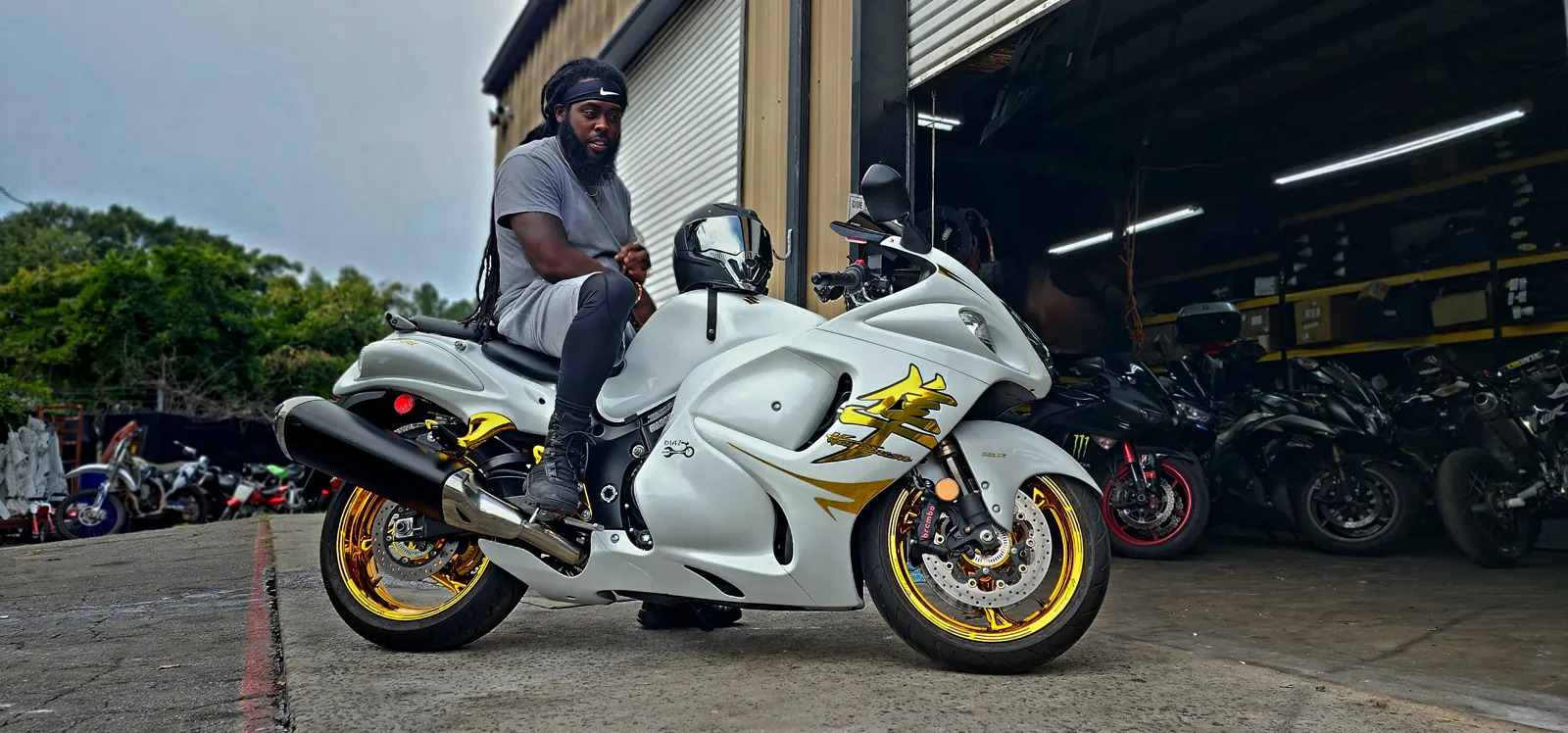
Most of the time the cause is boring, and boring is good news. Bikes around here are garage-kept and lightly ridden, maybe fifteen hundred miles in a year. That sounds gentle. To a motorcycle, it is rough. Fuel turns to varnish. The battery gives up. Tires dry-rot while the tread still looks brand new, and brake fluid nobody has touched in years quietly goes bad. None of that means the bike is finished. It means the bike needs a shop.
So the real question is not what is wrong. The real question is how you get a bike that won’t run from a Paulding driveway to a lift. Our shop sits east in Marietta, roughly 24 to 28 miles away, usually 40 to 50 minutes down GA-120 and Charles Hardy Parkway to Dallas Highway through West Cobb. That is a fine drive in a truck. It is a bad idea on a bike that already quit once, which is exactly why pickup and delivery matters. When people look for the best motorcycle transport Dallas has, what they really want is a way to skip that gamble.
Your real options
You have a few honest choices, and none of them are wrong. You can load it yourself if you own a trailer and a second set of hands, though a heavy bagger is a lot to wrestle up a ramp alone. You can head toward a nearby shop’s route — Southeast Motorcycle over on Spring Street in Douglasville sits about 35 to 40 minutes south, and plenty of folks go that way. Or you can have someone come to you and skip the whole ordeal. Each option trades money for time and risk in a different way, so the right pick depends on what you have on hand and how far the bike has to go.
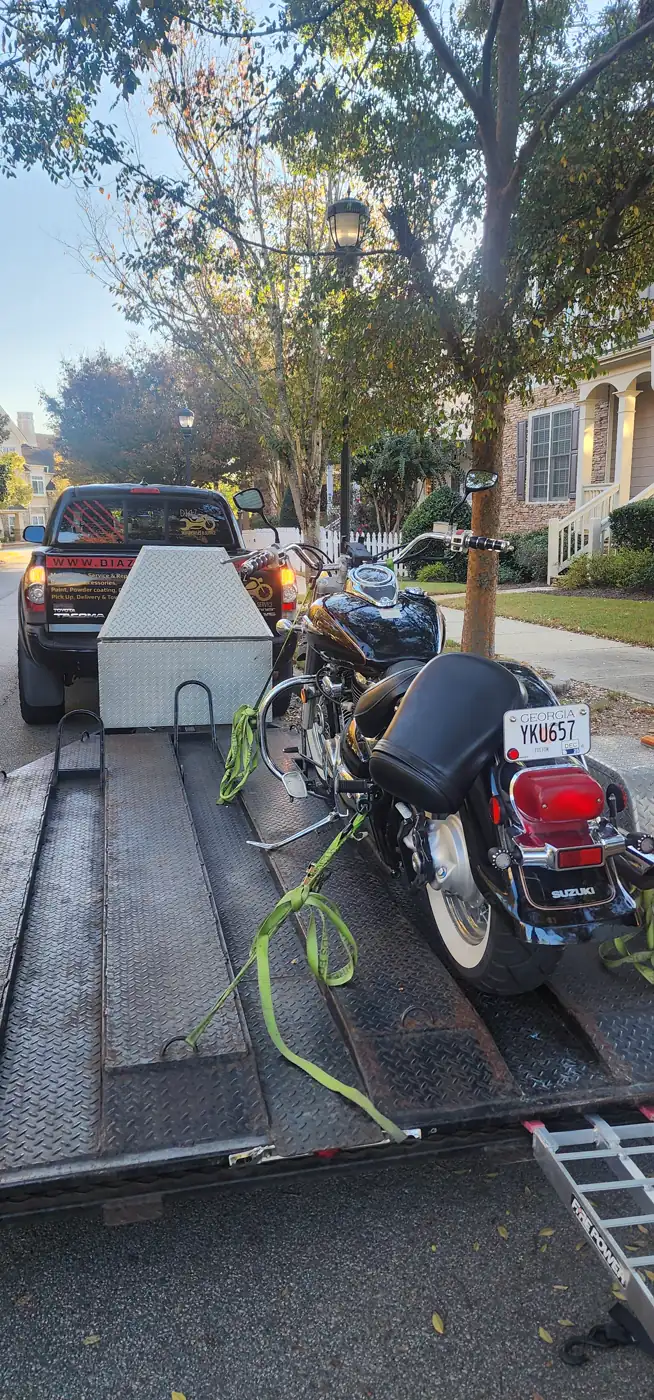
If you have never watched a bike get loaded, it is calmer than it looks. The front wheel rolls into a chock and locks upright. Soft straps loop around solid parts of the frame or the lower triple clamp, never the plastic and never the handlebars alone. Ratchet straps come down at even angles so the forks compress a little and stay that way the whole ride. That gentle squeeze on the suspension is the whole trick — it keeps the bike planted through every bump and stop. A good hauler checks the straps again after the first few miles, because they always settle a touch once the load shifts. Done right, the bike does not move an inch between your driveway and the lift. Done wrong, you find out on the interstate, and nobody wants that lesson.
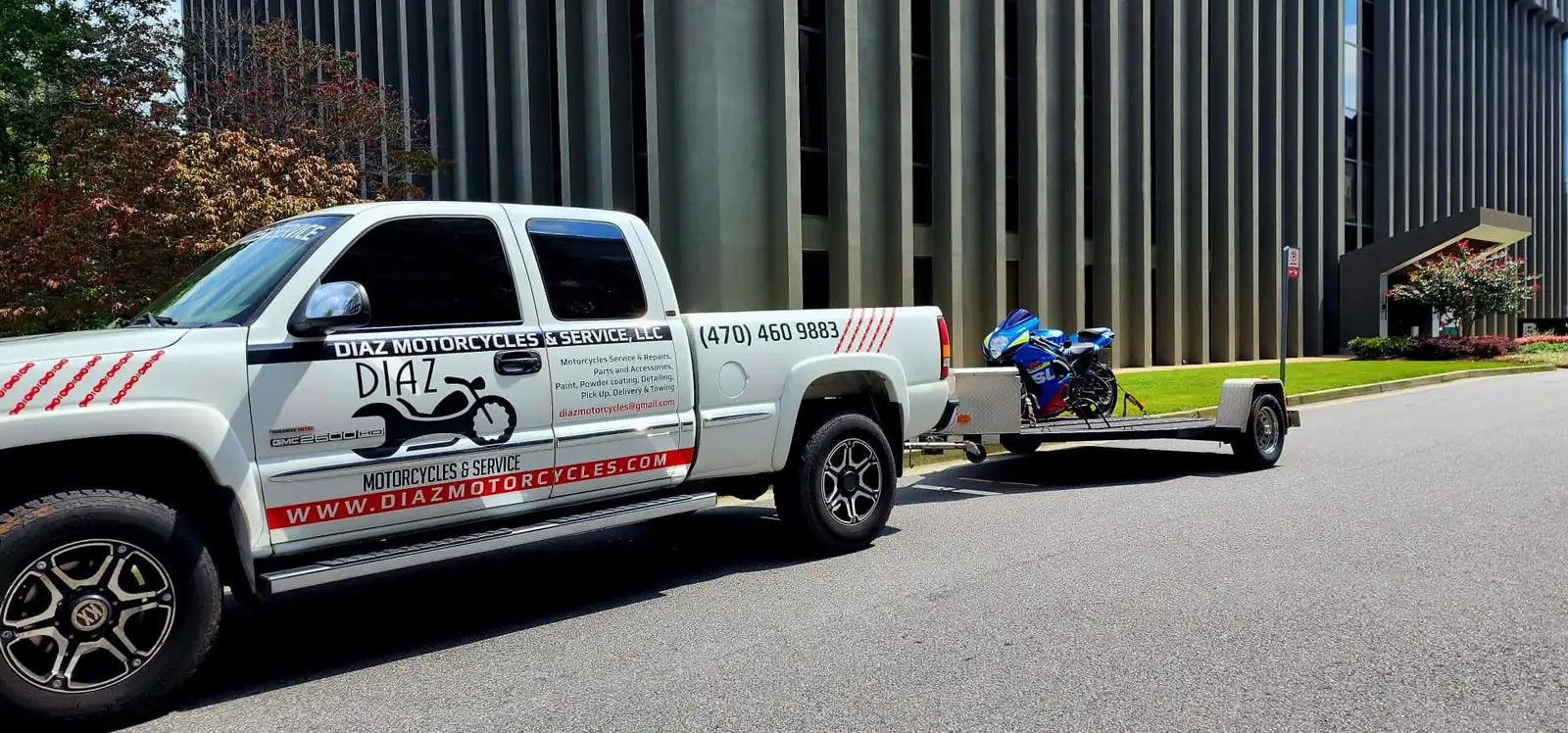
Open and enclosed trailers both work, and the choice is simpler than the internet makes it. Open decks load quick and haul easy, which is perfect for a short hop across the county line. Enclosed haulers cost more and earn it on long trips, bad weather, or a show bike you do not want touched by road grime. For a run from Paulding into Marietta, an open deck with proper straps is usually all a bike needs. If you want the money side laid out plainly, here is how the work adds up.
There's a version of this that's cheap and a version that isn't.
There’s a version of this that’s cheap and a version that isn’t, and paperwork is where the difference hides. Before a wheel ever moves, someone should walk the bike with you and note every scratch, every ding, the mileage, the fuel level. Photos help. That record protects you and it protects the hauler, so nobody is arguing later about a mark that was always there. A shop that skips this step is telling you something about how the rest will go.
How we decide what's right for your bike
We do not sell people what they can do themselves. This is a county full of big garages and folks who work with their hands all week, so a lot of riders here fix plenty on their own. When you call, we ask what the bike is doing, how long it sat, and whether it moved under its own power last time out. Sometimes the answer is a battery you can handle in your own garage with a cheap tender and an afternoon. Sometimes it is varnished fuel and gummed carbs that really do need to come in. Either way, we would rather tell you the truth over the phone than book a trip you did not need. A shop that respects your wrenching earns the calls you cannot handle yourself.
Once a bike is here, what we take care of here runs from a dead battery all the way to a full tune. We can put a bike on a dyno to see what it is really making — the crew at Dynojet’s dyno center explains that side better than we can in a paragraph. Paulding has no dyno of its own, no full-line dealer, no in-house paint booth. That gap is the whole reason the drive east exists.
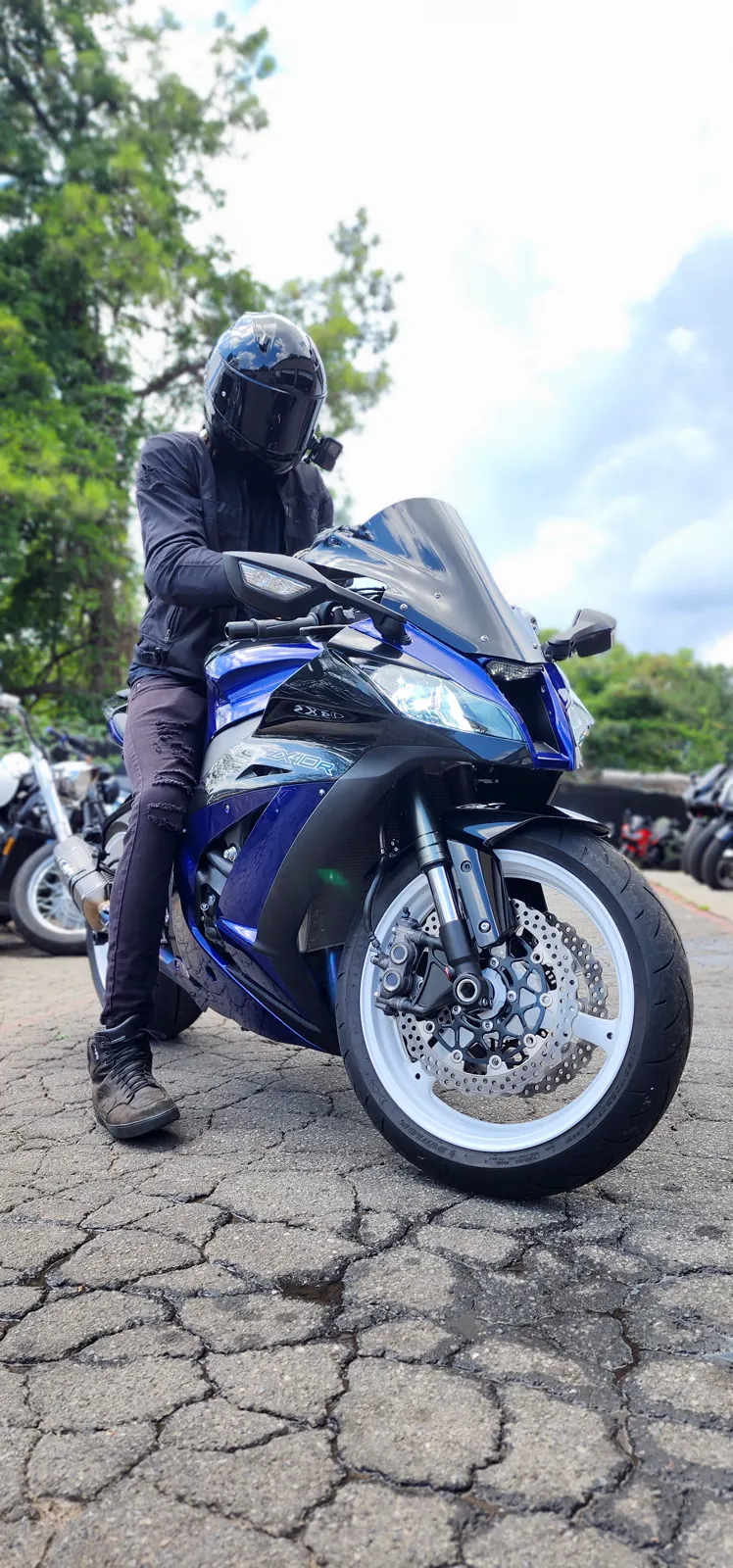
If you are weighing shops, judge them on a few plain things. Do they explain the problem in words you understand? Do they hand you a written record before they haul your bike? Will they tell you when a job is something you could do yourself? A dealer and an independent can both do great work, and neither one is automatically better. What matters is whether they treat your bike and your time like they respect both.
Dealers have their place. Warranty work, brand-specific tools, and factory parts are real advantages, and if your bike is under warranty a dealer visit often makes sense. Independents like us tend to win on the older bikes, the odd builds, and the honest conversation about what is worth fixing. Paulding riders mostly affiliate with the Harley stores over in Cartersville and Lithia Springs anyway, so it is rarely dealer or nothing. Really, the question is who fits this particular bike, today.
What it feels like after
Here is the part people forget to expect. The relief is not just about the bike running again. It is about the Saturday you get back. The bike comes home, you thumb the starter, and it settles into that idle you had already learned to trust. Soon you are back out on GA-61 heading north toward Cartersville, or looping the west-side two-lanes toward Braswell, or chasing the long way around to High Shoals Falls on the Quad County Figure Eight. Nothing about the machine feels foreign anymore.
That is what a good handoff buys you. You stop babysitting a problem and go back to being a rider. A friend we helped out of a subdivision like Pine Ridge Estates put it simply — he had quit riding because he was scared the bike would strand him again, and once it was sorted, he stopped thinking about it at all. That is the goal every time. A bike you trust is a bike you actually ride, and a bike you dread is a bike that sits under a cover collecting dust. The whole point was never the repair. It was getting your weekends back, and the riding that comes with them.
Something worth knowing before you book anywhere.
Something worth knowing before you book anywhere: the smoothest transport jobs are the ones where the shop and the rider talked first. A five-minute call about what the bike is doing saves an argument at the trailer. It also means the hauler shows up with the right straps and the right plan instead of figuring it out in your driveway. If you want the step-by-step before you call, this covers what that service actually involves.
The honest case for a shop 40 minutes east
Let’s be straight about the drive, because pretending 40 minutes is nothing would insult a county that knows commutes. Most Paulding workers already point east into Cobb every morning on Dallas Highway — the same road that runs almost to our door. So a bike drop is often on the way, not a special trip. And when we come get it, the distance stops being your problem and becomes ours. That is the actual pitch, and it is an honest one.
Paulding is one of the least-served large counties in the metro for motorcycle work. No dyno, no full-line dealer, no advertised transport — even in the county seat right by the Paulding County Courthouse, riders have long had to leave the county for real service. We just make the leaving easy. It works the same in other suburbs too; here is how this plays out in Roswell if you are curious. And if you ever wonder why we push clean tires and honest maintenance so hard, the IIHS motorcycle research makes the case better than any sales pitch could.
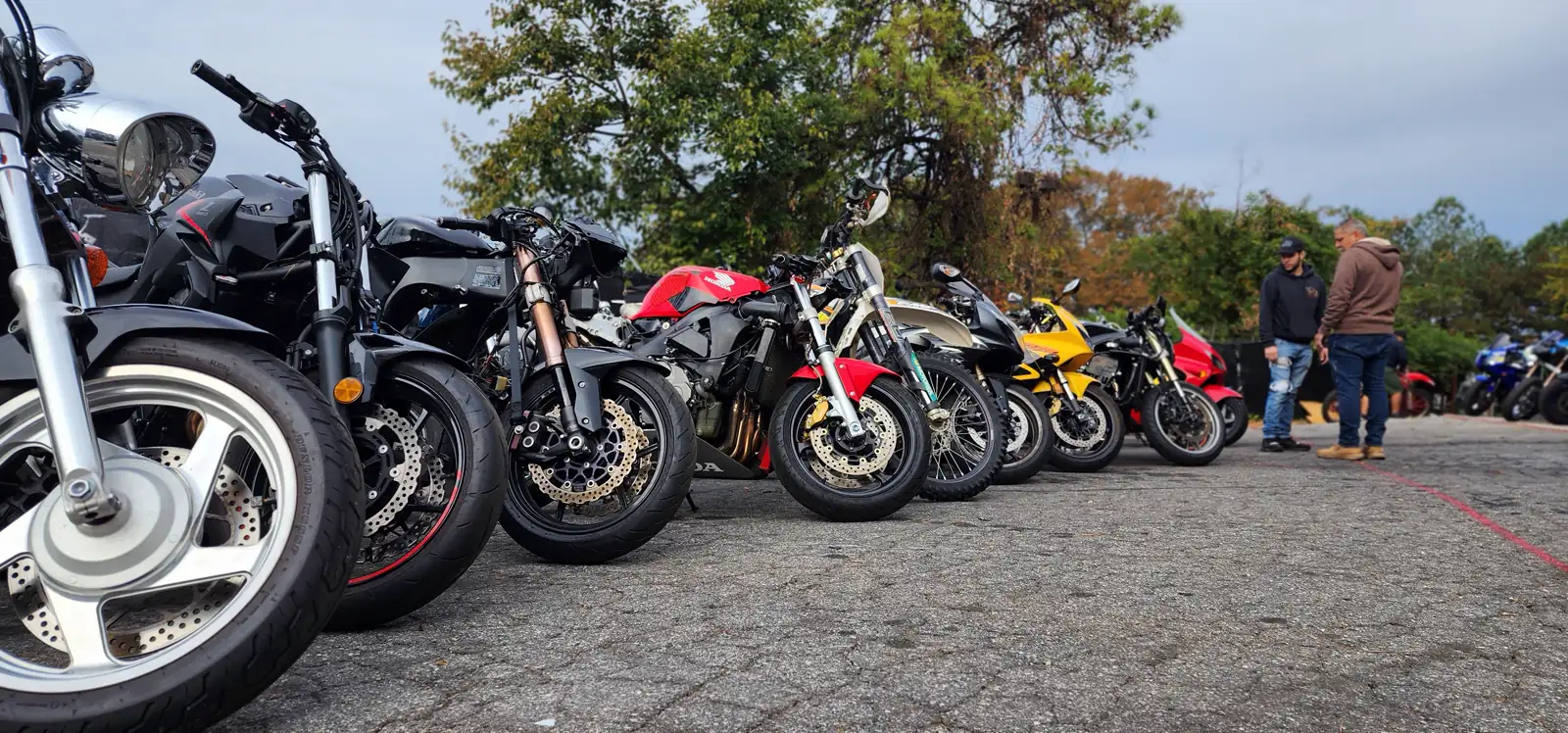
So the best motorcycle transport Dallas riders can lean on is not a fancy truck or a slick website. It is a shop that picks up the phone, tells you the truth, straps your bike like it owns it, and hands you back your Saturday. Everything else is just details. That, in the end, is all it ever needed to be, and it is exactly what we set out to be every time the phone rings.
Questions Dallas riders ask us
How do I know the diagnosis is right?
Ask the shop to explain the problem in plain words and show you what they found. A straight answer names the actual part and why it failed, not just a big invoice. If a garage cannot tell you the cause in a sentence you understand, that is your sign to ask more questions before anything gets done.
What makes your approach different?
We come get the bike, so the 40-minute drive stops being your problem. We also tell you when a job is something you could handle in your own garage. Paulding is full of hands-on riders, and we would rather earn your trust than book a trip you did not need.
How do I pick a good shop?
Judge them on a few plain things. Do they explain the work clearly, hand you a written record before hauling your bike, and treat your time like it matters? Skill matters, but honesty is what tells you who to trust the second time.
Should I go with a dealer or an independent?
Both can do great work, so it depends on the bike. A dealer makes sense for warranty jobs and brand-specific tools. An independent like us tends to win on older bikes, custom builds, and honest talk about what is actually worth fixing.
What should I ask a shop before I book transport?
Ask how they strap the bike, whether they use open or enclosed, and if they document the bike’s condition before it moves. A good hauler answers all three without hesitating. That written record is what protects you if a mark shows up later.
My bike won't run at all — can you still pick it up?
Yes. A bike that will not start is the most common reason people call, and it loads onto the trailer the same way a running one does. We roll it into a chock, strap it down, and bring it in so you never have to risk riding something that already quit.
We run pickup and delivery all across the western arc of metro Atlanta. From Hiram and Powder Springs to Acworth and Kennesaw, and out through Douglasville, Cartersville and Villa Rica, we make the drive so you do not have to. Marietta is home base, and we regularly reach Rockmart, Taylorsville, Braswell and Yorkville for riders whose bikes cannot make the trip on their own. If you are on the west side of the metro and your bike won’t run, we can come to you.
LET US COME GET IT
If your bike won’t start, sat too long, or just needs a set of trained hands, you do not have to figure out the trailer yourself. We handle motorcycle transport for Dallas and all of Paulding County — we pick it up, strap it safe, fix it right, and bring it back running. Give us a call and tell us what the bike is doing. The drive is on us.
470-460-9883Diaz Motorcycles and Service, LLC · 847 Barnes Mill Road, Marietta, GA 30062