Best Dyno Tuning Gainesville — What to Look For
How a dyno reads your motor, why a bike runs lean or rich, and how to pick a shop you can trust.
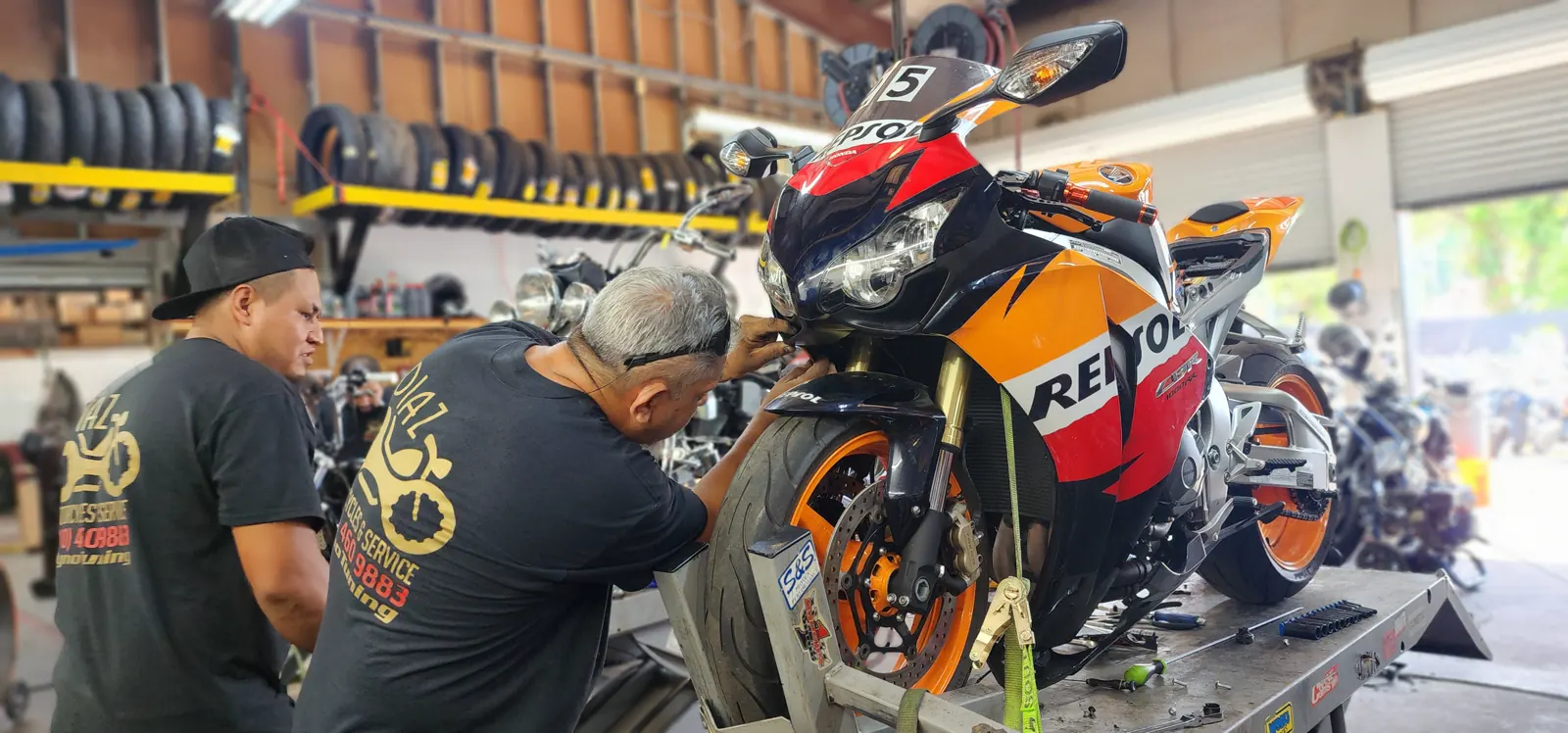
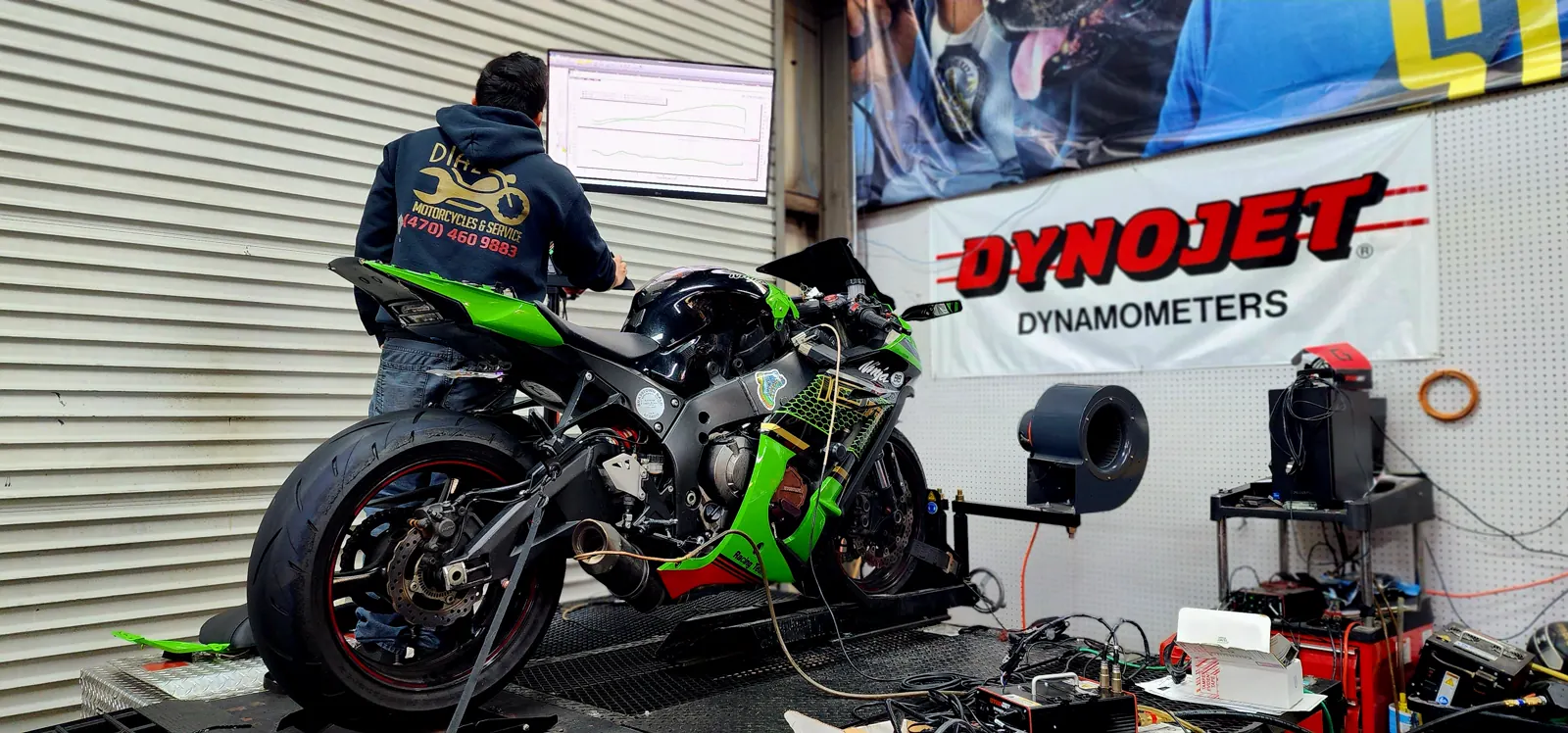
In fact, Walk into our shop on a regular weekday and there’s a good chance you’ll see a bike strapped down on the dyno. For example, a big fan roars in front of the wheel. Even so, a sensor line runs from the exhaust back to a laptop. What’s more, the engine spins up, the whole room fills with sound, and a line climbs across the screen that tells us the plain truth about that motor. After that, that picture is what people are really after when they search for the best dyno tuning Gainesville has within reach, and it helps to understand it before you hand your bike to anyone.
The short answer: a real dyno, and someone who can read it
Let’s cut right to it. Also a tuning shop worth your time needs three things working together. Instead First, a dyno that gets used every week, not one parked in a corner under a stack of tires. Besides Second, a person who can read what that dyno is saying. Actually Third, the tools to change the bike based on what they see. Line all three up and you get a tune built for your motor, your exhaust, your riding, and the fuel in your tank. Miss one and you’re paying for a guess.
Almost any shop can bolt on a pipe or drop in a new filter. Far fewer can measure what that change did and then correct for it. That gap is the real thing you’re shopping for when you’re after the best dyno tuning Gainesville has to offer. So when you compare places, ask one plain question: do you tune on the dyno, in house, and can I see my graph when it’s done? A shop that’s proud of its work will say yes before you even finish the sentence.
ASK THIS FIRST
Do you tune on the dyno, in house, and will you show me the run graph after? The honest answer to that one question tells you almost everything you need to know.
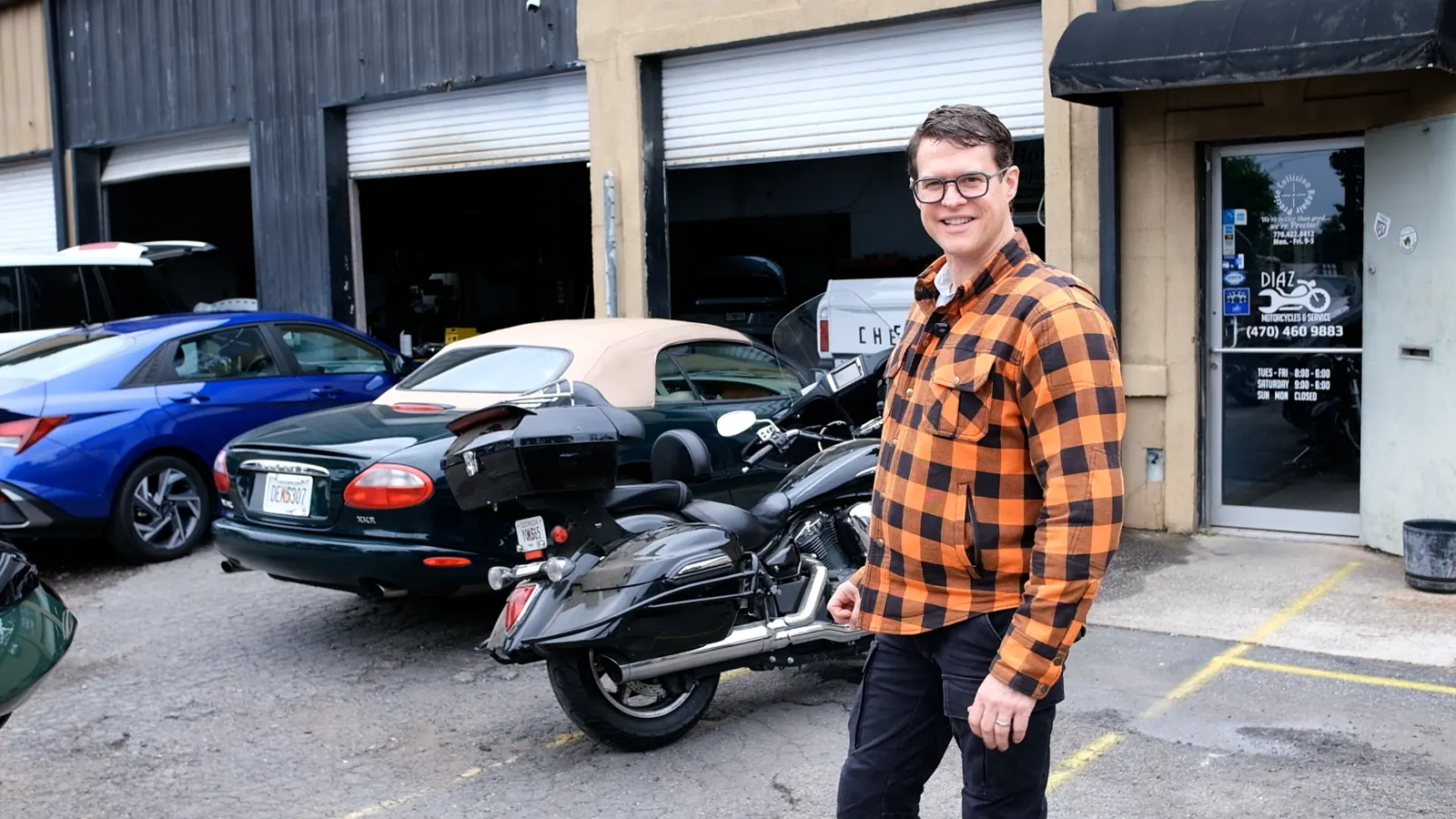
What a dyno actually measures
A dyno is simpler than it sounds. The back wheel sits on a big steel drum. When the engine pulls, it spins that drum, and the machine measures how hard the wheel is working across the whole rev range. That gets drawn as a curve on the screen. A smooth, healthy curve means the motor is breathing well everywhere. A dip or a flat spot, on the other hand, means something’s off in that part of the range, and now we know exactly where to look.
At the same time, a small sensor in the exhaust reads the air-fuel ratio. That’s the balance between air and gas going into the burn. Every engine wants a certain mix at idle, another when you crack the throttle, and another at full pull. The dyno shows us that mix in real time, so instead of guessing how your bike feels, we can see it, number by number, run after run. Then we watch how the two lines move together as we make changes, because a healthy power curve and a clean mix should climb hand in hand. When they don’t, the graph shows us the gap, and the gap is where the work lives.
Why a bike runs lean or rich
Two words come up a lot: lean and rich. Lean means too much air and not enough fuel. The bike may pop on deceleration, run hot, feel snatchy off idle, or surge at a steady cruise. Rich is the other way around, too much fuel for the air. That one can feel soft and lazy, foul a plug, or leave a sooty smell and black tips on the pipe. Neither one is a mystery once the dyno shows the mix.
A lean condition is common after someone adds an exhaust or an intake and never re-tunes for it. If your bike has picked up a stumble or runs hotter than it used to, that’s often the reason, and there’s a whole post on what usually causes it. The good news is simple: once we can see the mix on the graph, we can fix it. That’s the entire point of tuning on a dyno instead of by ear.
Two bikes with the same symptom can need completely different work.
That line matters more than it looks. Say two riders both roll in with a hot-running cruiser. One has a clogged filter starving the motor. The other has an aftermarket pipe that leaned it out. Same symptom, but two very different fixes. Without the dyno and the sensor, you’re just swapping parts and hoping. With them, we let the bike tell us which story is true before we ever touch a wrench.
What we check on every tune
A real tune isn’t only about the map. Before we chase any numbers, we make sure the bike is healthy enough to trust the numbers. A worn plug, a tired air filter, a small intake leak, or a slipping clutch will throw the whole reading off. So we walk the basics first, then we tune. Here’s the short version of what we look at.
- Plugs, filter, and any intake or exhaust leaks that would skew the air-fuel reading
- Throttle bodies or carbs synced so every cylinder pulls together
- Clutch and driveline health, since a slip shows up as a false dip on the graph
- The current map or fuel setup, so we know exactly what we’re starting from
- Your real-world story: how it feels cold, at cruise, and at full throttle
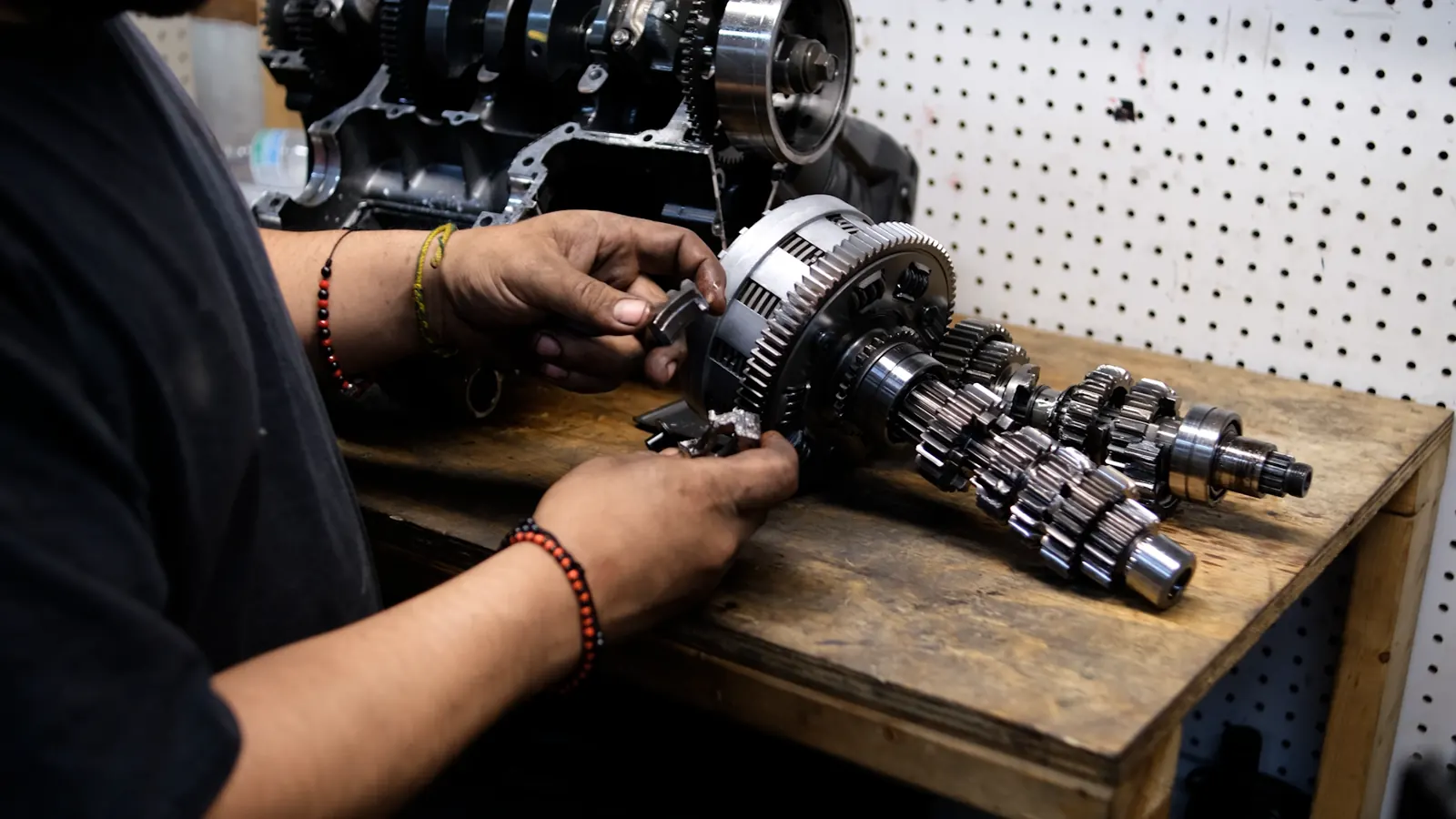
Once the bike’s healthy, we change the tune itself. On many modern bikes that means flashing the ECU, the little computer that decides how much fuel and spark the engine gets. On others we add a Power Commander or a similar box that fine-tunes the fuel on top of the stock brain. Both let us reshape how the bike delivers power. If you want the full list of what we do, it’s all on our dyno page.
Riders notice the change right away. Throttle response gets crisper, the flat spot smooths out, heat often drops, and the bike pulls clean where it used to hesitate. If you’re curious what those gains actually feel like from the saddle, our friends wrote up what the work covers. And every town has its own quirks, so you can also read about what Douglasville riders run into on the other side of the metro.
Mistakes to avoid when picking a shop
Choosing a tuner is a lot like choosing a mechanic you’ll go back to for years. Most shops are honest and do good work, so this isn’t about fear. Rather, it’s about knowing what separates a real dyno tune from a parts swap with a fancy name. A few things are worth watching for.
- A ‘tune’ that’s really just a canned map loaded off a shelf and never verified on a dyno
- No before-and-after graph, or a shop that won’t show you one
- Skipping the health check, then blaming your bike when the numbers look strange
- Promising exact horsepower before they’ve ever seen your motor run
- Treating every bike the same instead of tuning for your pipe, your fuel, and your riding
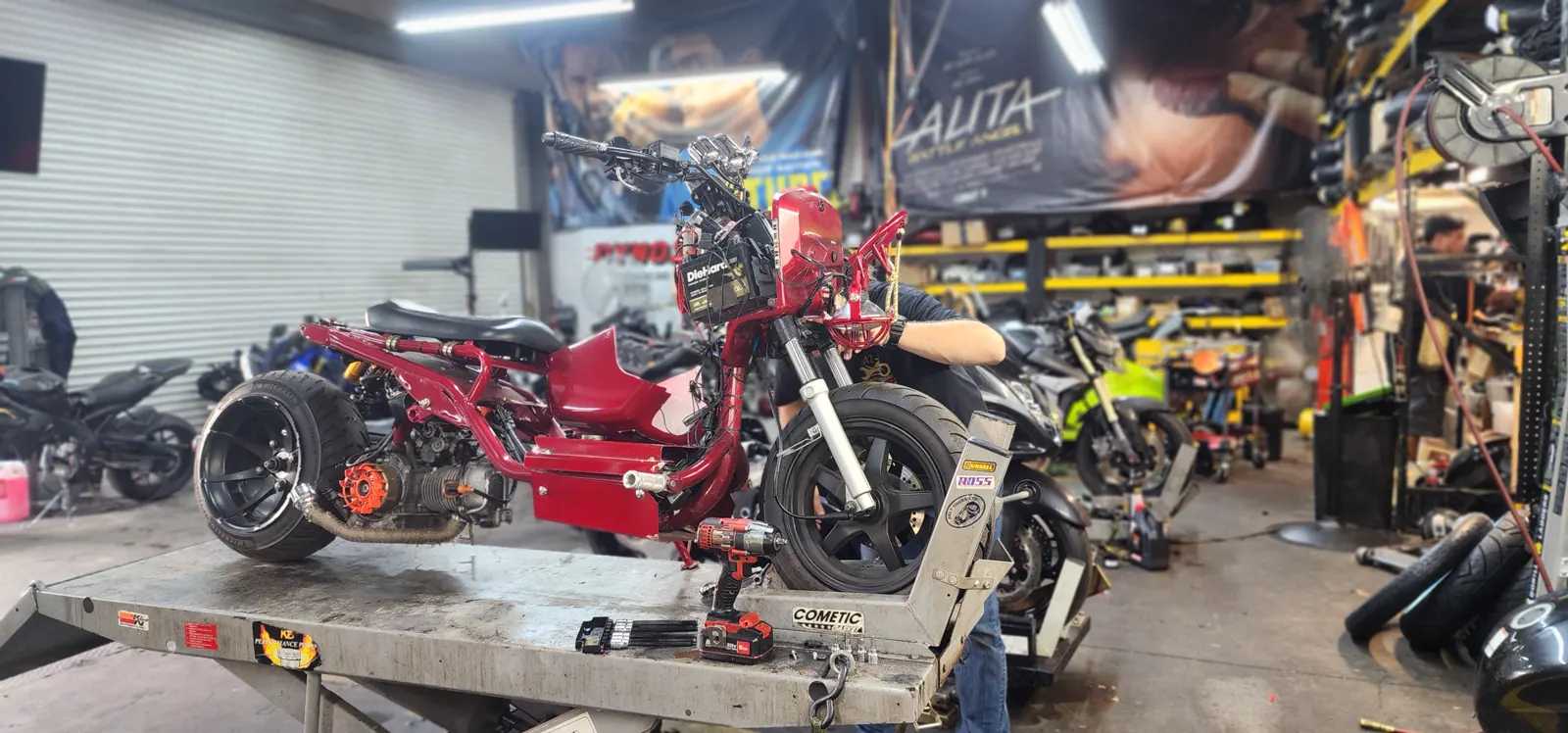
That fourth one is worth a pause. Nobody can promise you a hard power number before your specific bike has spun the drum. Every motor, every pipe, and every batch of fuel is a little different. A trustworthy shop will tell you what they expect to improve, then show you the graph that proves what actually changed. Real numbers come from real runs, never from a brochure.
There’s a practical side too. The roads around here throw a lot at a motor. GA-365 and I-985 run fast and heavy with poultry and freight trucks, so blown retreads and debris are a genuine hazard, and Georgia DOT stays busy on those corridors. Up in the mountains, gravel washes into corners after rain and wet leaves pile up in the fall. A bike that runs clean and predictable gives you more room to react, and a good tune is part of that.
Why Gainesville riders make the trip
Gainesville has never seen itself as an Atlanta suburb, and it’s right not to. This is Hall County, the heart of Northeast Georgia, with its own downtown and its own hospital. You feel it on the Green Street District, the grand old boulevard of antebellum and Victorian homes near Brenau University. You feel it out at Harbour Point, the gated lakefront community on Lake Lanier, and in the big-lot estates of Grey Oak Plantation and Red Oak Plantation. These are folks who take good care of what they own, and that includes the bike in the garage.
It’s a riding town too. On Saturday mornings, locals roll out near River Forks Park on Lake Lanier and point north on GA-60, Thompson Bridge Road, toward Murrayville, Dahlonega and Suches. Others chase US-129 north through Cleveland toward Blairsville, a stretch riders call a roller coaster of turns and elevation. These are the same roads Atlanta riders drive an hour to reach, and they punish a bike that isn’t tuned right.
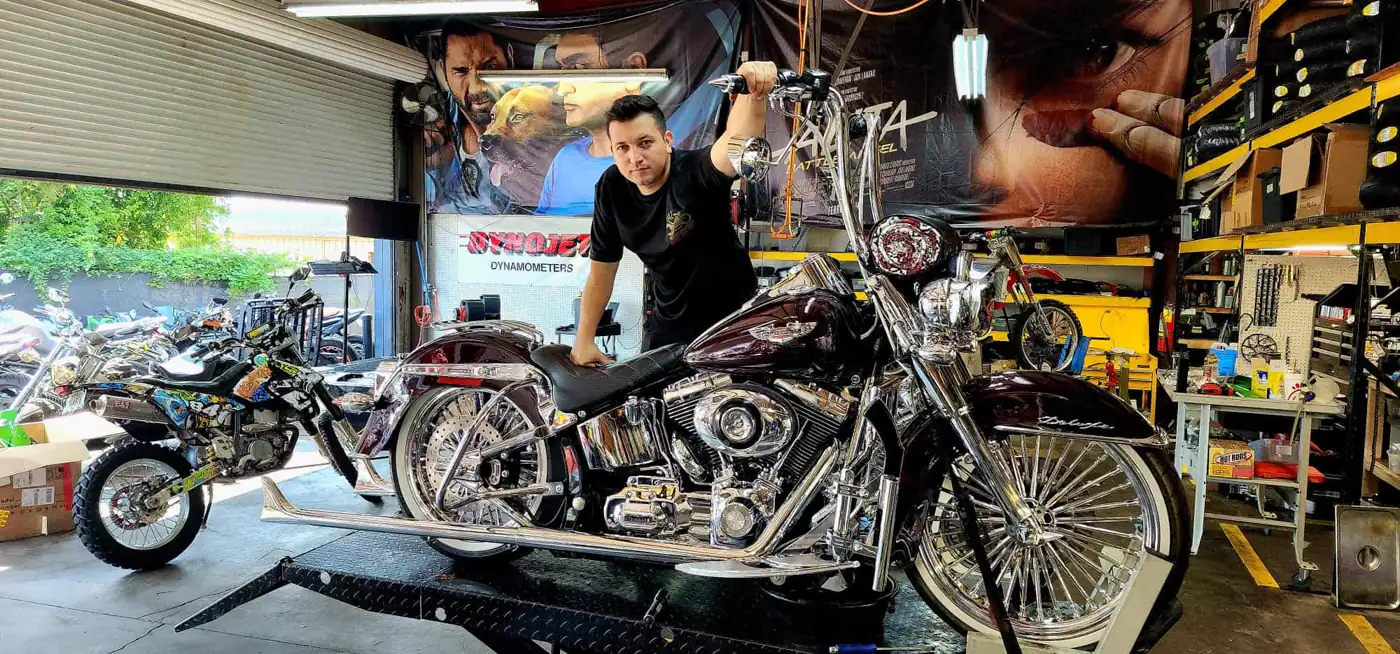
The part that makes it worth it
One more thing, and it's the part riders thank us for later.
A right tune doesn’t just add feel. It also protects the motor. A lean engine runs hot and works harder than it should, and heat is what wears an engine down over the miles. Dial the mix back to where it belongs and the bike runs cooler, smoother, and easier on itself. We also keep your run data on file, so the next time you add a part or come in for service, we’re building on a record instead of starting over. Riders don’t always notice that on day one, but they sure appreciate it a few seasons down the road.
Around here, that kind of care tends to travel by word of mouth. Gainesville is a smaller, more connected place than the intown crowd, so a good tune gets talked about at the coffee shop and the boat ramp long before any ad does. A neighbor with a slip at Harbour Point mentions who dialed in their cruiser, a coworker points you at the shop that finally killed a stubborn flat spot, and that’s how most of our Hall County friends find us. We’d rather earn that kind of trust one clean graph at a time than shout about it.
Yes, we’re in Marietta, and from Gainesville that’s roughly 55 to 62 miles, usually somewhere around 65 to 85 minutes depending on your route, whether you take the lake way through Cumming or the interstate loop. We won’t pretend that’s around the corner. That’s exactly why we pick up and deliver, so distance never decides whether your bike gets the right work. Shops closer to home like Gainesville Cycles do solid pre-owned sales and accessories, and the local dealers cover routine service well. We simply do the dyno, ECU flash, and custom side that’s harder to find in Hall County, the kind of proper performance work groups like the American Motorcyclist Association stand behind.
Here’s the bottom line. A tune isn’t magic and it isn’t a sticker. It’s measurement, then a careful change, then measurement again, until the bike is doing exactly what it should. Find a shop that works that way and shows you the proof, and you’ll never want to go back to guessing.
When your bike finally pulls clean up US-129 with no stumble, no heat soak, and no guessing, that’s the feeling we’re after. That’s what the best dyno tuning Gainesville riders can find should give you: a bike that does exactly what you ask, every single time you twist the throttle. You did your homework, you found the right shop, and the graph on the wall backs it up. That’s a good thing to be proud of.
Questions Gainesville riders ask us
Do you work on all brands?
Yes. We tune and repair Japanese, American, and European bikes, from cruisers and touring rigs to track-focused sportbikes and custom builds. If it has an engine and two wheels, we can put it on the dyno. Just tell us what you ride and what you’ve changed.
How far do you serve?
We work with riders all across Northeast Georgia and Hall County, plus the wider metro. Distance isn’t a wall for us because we handle pickup and delivery. Plenty of our friends have never once driven their bike down themselves.
Can you pick up my bike?
We can. From Gainesville it’s roughly 55 to 62 miles to the shop, usually around 65 to 85 minutes depending on your route, so we come to you. You hand off the keys, we bring it back tuned. That way the drive never decides who does your work.
How do I know the diagnosis is right?
Because we don’t guess. The dyno measures your power across the rev range, and a sensor reads the air-fuel mix in real time. We check the bike’s health first, then show you the graph so you can see what changed. Real numbers come from real runs, not a hunch.
What makes you different?
We run an in-house dyno and do custom mapping, ECU flashing, and Power Commander work right here, which is hard to find around Hall County. Most shops nearby lean toward sales or routine service, and they do that well. We focus on the performance and custom side that takes a dyno to do right.
Will a tune help if my bike already runs okay?
Often, yes. A stock or leftover map rarely matches an aftermarket pipe or filter, so there’s usually smoother throttle and less heat waiting on the table. Even a healthy bike can hide a flat spot the dyno will find. We’ll tell you honestly if a tune won’t do much for your setup.
We take care of riders all over Northeast Georgia and Hall County, and the trip runs both ways with our pickup and delivery. That includes Oakwood, Flowery Branch, and Braselton to the south, along with Buford and Sugar Hill down toward the county line. We also serve Clermont, Lula, and Murrayville to the north, plus Chestnut Mountain and Talmo out toward the country roads. Riders in Dahlonega and Cumming round out the crowd we see most, whether they ride cruisers, touring bikes, or track-day sportbikes.
GET A TUNE THAT PROVES ITSELF
Ready to feel your bike run the way it should? Text Diaz Motorcycles and tell us what you ride and what you’ve changed. We’ll set up a dyno session, show you the graph, and handle pickup and delivery from Gainesville so the drive is never your problem. Your best miles up US-129 start with a tune you can actually see.
470-460-9883Diaz Motorcycles and Service, LLC · 847 Barnes Mill Road, Marietta, GA 30062