Ceramic Coating vs Wax in Peachtree City: The Honest Comparison
What ceramic actually does, where wax still makes sense, and which one is right for your PTC bike in Georgia's heat and humidity.
Every PTC rider who cares about their bike eventually hits the same fork in the road: wax it like grandad did, or spring for a ceramic coating? Both protect paint. Both make it shine. But they are genuinely different products with different jobs, different lifespans, and different price tags. So let’s cut through the hype and get you the honest comparison, because in Georgia’s heat and humidity the right choice actually matters.
Fair warning up front: there’s a lot of nonsense sold about ceramic coating. You’ll hear it called a force field, scratch-proof, bulletproof, permanent. It isn’t any of those things, and any shop that says so is selling you a story. What it actually is happens to be very good — just not magic. Wax, meanwhile, isn’t obsolete. It still has a place. Let’s sort out which is which.
What wax actually is
Wax is the classic. It’s a soft layer you rub onto the paint that fills in tiny imperfections, adds a warm glow, and gives water something to bead on. It’s cheap, it’s easy, and it makes a freshly-waxed tank look genuinely great for a little while. There’s a reason riders have been doing it in the driveway for generations.
The catch is that wax is soft and temporary. Heat melts it, rain washes it, and Georgia gives you plenty of both. On a PTC bike parked through a 90-degree summer, a coat of wax might last a few weeks to a couple of months before it’s basically gone. It’s protection you have to keep reapplying, over and over, all season.
There’s nothing wrong with that if you enjoy it. Plenty of riders find the Sunday wax session relaxing, and a driveway shine day is a fine way to spend an afternoon. Just go in with clear eyes: wax is a short-term product. It’s a fresh coat of paint on a fence, not a new fence. You’ll be back out there with the can before you know it.
What ceramic coating actually is
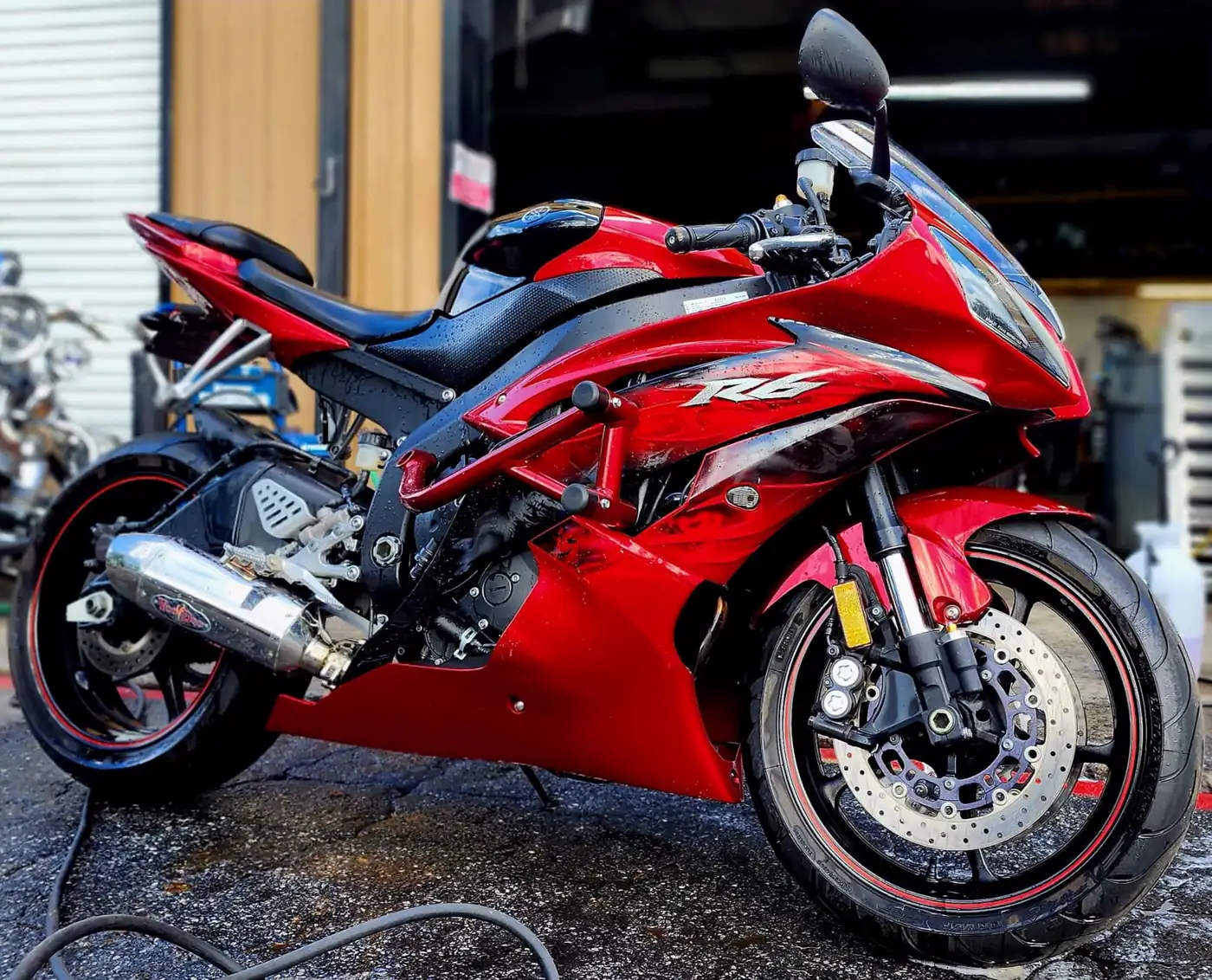
Ceramic coating is a different animal. It’s a liquid that chemically bonds to the clear coat and cures into a hard, slick shell. Run your hand across a freshly coated tank and it feels like glass, almost slippery. Water beads up tight and rolls off instead of sheeting and spotting. Bugs and grime wipe away with far less effort, and the gloss looks wet even parked in the shade.
The big difference is durability. Where wax lasts weeks, a properly applied ceramic coating lasts years with care, not weeks. It doesn’t melt in the heat, it doesn’t rinse off in the rain, and it keeps beading Georgia’s hard water long after wax would have given up. For a bike that lives outside under a cover or gets ridden hard all season, that staying power is a real gift.
WHAT CERAMIC IS NOT
Ceramic is not scratch-proof. It won’t stop a rock chip, and it won’t survive a tip-over any better than bare paint. What it does is defend against sun, water spotting, and light contamination while making every wash faster. Anyone promising bulletproof is selling a story.
The head-to-head, plainly
Enough theory. Here’s how the two stack up on the things that actually matter to a PTC rider, side by side, so you can see the trade at a glance.
- Lifespan — wax lasts weeks to a couple of months; ceramic lasts years with care.
- Upkeep — wax needs constant reapplying; ceramic is set-and-maintain.
- Heat resistance — wax melts in Georgia summers; ceramic shrugs off the heat.
- Water beading — both bead when fresh, but only ceramic keeps beading long-term.
- Ease of cleaning — ceramic makes bugs and grime wipe off with far less scrubbing.
- Up-front cost — wax is cheap; ceramic costs more, but stretched over years it’s often the better value.
- Prep required — ceramic demands corrected paint first; wax will happily hide over swirls (and lock them in).
Look at that last line, because it’s the one that trips people up. Ceramic bonds to whatever it’s laid over. If you coat over dull, swirled paint, you seal those swirls in under a hard layer you now have to strip off to fix. Wax will do the same thing, just temporarily. The lesson is the same either way: correct the paint first, then protect it.
Wax hides. Ceramic protects. Neither one fixes paint — that's what correction is for. Do it in the right order and the results last.
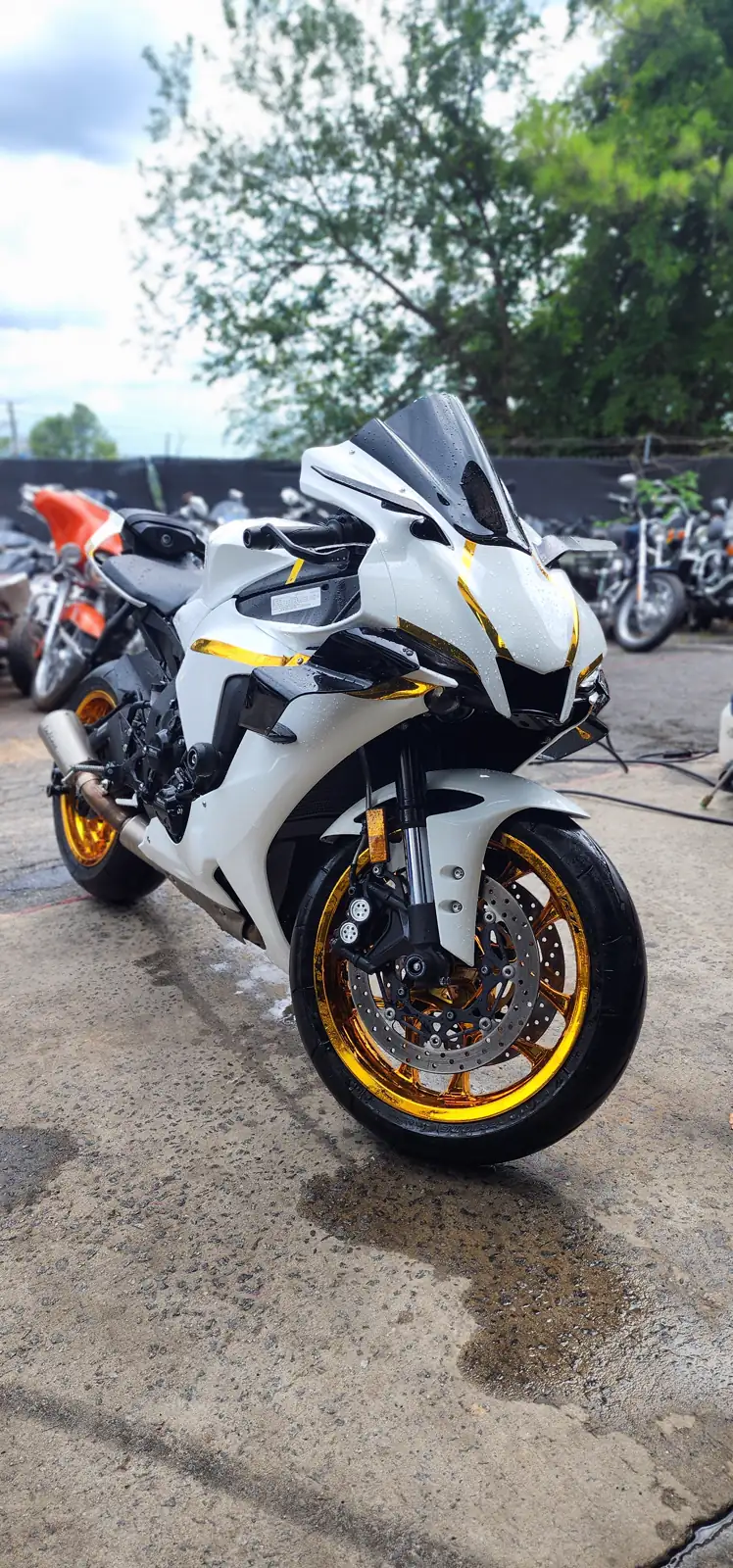
Which one is right for your PTC bike
Now the real question. There’s no single right answer — it depends on your bike and how you use it. Wax makes sense if you enjoy the ritual, you’re happy reapplying often, and the bike is a driveway-shine project you fuss over anyway. Some riders genuinely love the Sunday-afternoon wax habit, and that’s a perfectly good reason to stick with it.
Ceramic makes sense if you’d rather do it once and enjoy the bike, if it’s a machine you care about protecting for the long haul, or if it lives outside part of the time. Given the PTC profile — mostly garage-kept hobby bikes owned by riders who value their time — ceramic is the popular choice around here. It fits a market that would rather ride than reapply wax every three weeks.
There’s also the kind of bike to think about. A show-quality custom or a restored classic you fuss over deserves the long-haul protection of ceramic, especially if you want that finish to still stun three summers from now. A daily beater you don’t baby might be perfectly happy with wax. Match the protection to how much the bike matters to you, and you won’t overspend or under-protect.
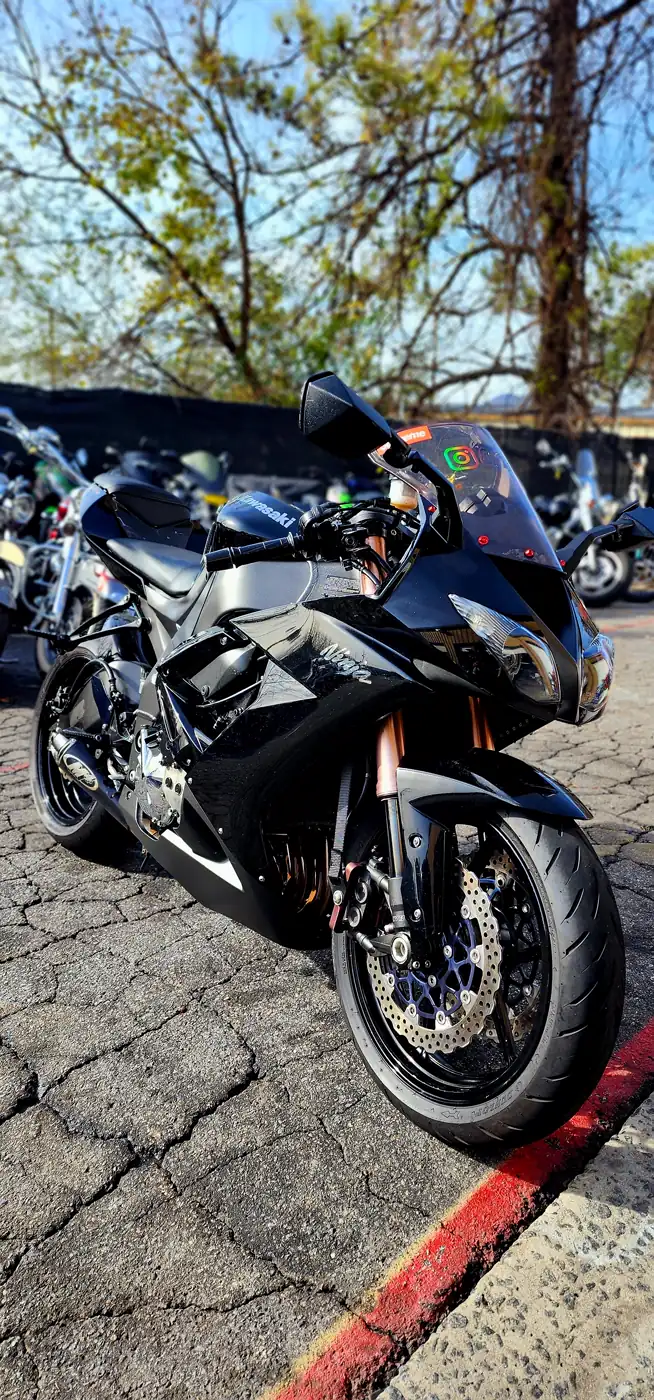
Georgia is the tiebreaker
Here’s what settles it for a lot of PTC riders: our climate. Georgia heat bakes contaminants into paint and melts wax fast. The humidity keeps grime damp and clinging. Spring pollen coats everything in a yellow film that turns mildly acidic when it sits. And our hard water leaves chalky spots every time a bike air-dries in the sun near Lake Peachtree or in a driveway off Robinson Road.
Against all that, wax is a garden hose and ceramic is a raincoat. Wax gives you a few weeks of defense before it surrenders. Ceramic keeps beading and shedding contaminants season after season. In a milder climate the gap would be smaller. In muggy south-metro Georgia, ceramic’s staying power really earns its keep. Chrome benefits from protection the same way, which is why sealing metal matters against humidity-driven chrome pitting too.
The step both options need first
Whatever you choose, the paint has to be right underneath it, and that’s where a real detail comes in. We correct the finish first — machine polishing out the swirls and light scratches, pulling off the etched water spots and bug etching — so the reflection is sharp and the color is deep again. Only then do we protect it, whether that’s a sealant, a wax, or a full ceramic coating.
Skip that order and you waste money. Coating or waxing over dull paint just locks the dullness in. That’s why we look before we quote and correct before we protect. If you want the numbers behind all of it, here’s how detail pricing actually works, coating included.
This is also why comparing a coating price to a wax price isn’t apples to apples. A quality ceramic job includes the correction underneath and the labor to prep, apply, and cure it right. A driveway wax is just the wax. You’re not really buying two versions of the same thing — you’re buying a quick shine or a lasting one, and the price gap reflects that.
CORRECT, THEN PROTECT
Both wax and ceramic go over the paint, not into it. Fix the swirls first with correction, then seal the good finish. Do it backwards and you’ve paid to lock your scratches under a shiny layer. Order is everything.
And you don't have to leave the driveway
Here’s the PTC bonus. Ceramic coating needs controlled conditions and proper cure time, which is exactly what a shop provides and a driveway can’t. Our shop is up in East Cobb, about an hour via GA-74 and I-85 — but you don’t drive at all. We bring a truck to your home in Kedron or Braelinn, take the bike, correct and coat it properly, let it cure, and bring it back ready to ride.
For a city that lives at 15 miles per hour and buys convenience by default, that’s the way to do a coating right. No trailer, no I-285, no lost weekend. So if you’re weighing wax against ceramic, text us a few photos of your bike and how it’s stored, and we’ll tell you honestly which one fits your riding and your paint. Straight answers, then a finish that lasts.
Questions Peachtree City riders ask us
Is ceramic coating really better than wax?
For most PTC bikes, yes — but they do different jobs. Wax is cheap, easy, and temporary, lasting weeks in Georgia heat. Ceramic bonds to the clear coat, resists heat, and lasts years with care. If you’d rather ride than reapply wax every few weeks, ceramic usually wins here.
How long does a ceramic coating actually last?
Years with proper care, not weeks like wax. Exact lifespan depends on how the bike is stored and maintained, so we talk in terms of years depending on care, never a magic permanent number. Anyone promising a forever coating isn’t being straight with you.
Is ceramic coating scratch-proof?
No, and that’s the biggest myth. Ceramic won’t stop a rock chip or survive a tip-over any better than bare paint. What it does is protect against sun, water spotting, and light contamination while making every wash faster. It’s excellent protection, just not a force field.
Can I just coat over my current paint?
You shouldn’t. Ceramic bonds to whatever it’s laid over, so coating dull, swirled paint locks those swirls in under a hard layer you’d have to strip to fix. Correct the paint first, then coat it. Doing it backwards means paying to seal in scratches — always correct, then protect.
Is wax ever the better choice?
Sure. If you enjoy the ritual, don’t mind reapplying often, and fuss over the bike in the driveway anyway, wax is a fine, cheap option. It just doesn’t hold up long in Georgia heat and humidity, so it’s more upkeep. For low-maintenance, long-term protection, ceramic pulls ahead.
Can you coat my bike without me driving to Marietta?
Yes, and coating is the perfect case for it — it needs controlled conditions and cure time a driveway can’t give. We bring a truck to your Peachtree City home, take the bike, correct and coat it properly, let it cure, and return it. No trailer, no I-285, no lost weekend.
We correct and coat bikes for riders across Peachtree City, though our shop sits up in East Cobb. We care for machines in The Peninsula on Lake Peachtree, Glen Clarin, and Wilshire Estates, and humidity fights your finish the same whether you park near The Fred, by Falcon Field, or off Peachtree Parkway. We also reach Tyrone, Fayetteville, Senoia, Sharpsburg, Newnan, and Fairburn, so the whole south-metro side gets corrected and coated right.
TEXT US ABOUT YOUR PAINT
Still torn between wax and ceramic? Text us a few photos of your bike and tell us how it’s stored, and we’ll tell you honestly which one fits your riding and your paint. If you go ceramic, we’ll bring a truck to your Peachtree City driveway, correct and coat it properly, and return it cured and ready. No hype, just a finish that lasts.
470-460-9883Diaz Motorcycles and Service, LLC · 847 Barnes Mill Road, Marietta, GA 30062