Motorcycle Detailing in Peachtree City: What It Costs and What You Actually Get
Honest price ranges for a real detail, what your money buys, and why PTC riders don't have to leave the driveway to get it.
Here’s the honest truth most shops dance around: a detail is not one price, and anybody who blurts a flat number before seeing your bike is guessing. A garage-kept cruiser that lives in Planterra Ridge and a project bike that sat covered for three winters are two completely different jobs. So let’s talk real ranges, what your money actually buys, and why motorcycle detailing Peachtree City riders trust doesn’t have to mean a trip anywhere.
PTC is a funny place to own a bike. Most short trips happen by golf cart at 15 miles per hour, so the motorcycle in your garage isn’t a commuter. It’s the fun one, the weekend one, the one you actually care what it looks like. That changes the whole conversation about detailing. You’re not maintaining an appliance. You’re taking care of something you love.
And because Peachtree City has no motorcycle shop of its own, you already know the drill. Everything bike-related is a drive out of town anyway. The good news is that the drive can be zero when we bring the truck to you. More on that later, because it changes the math on the whole thing.
First, what a detail is not
A wash and a detail get mixed up all the time, and it costs riders money. A wash removes what’s sitting on top of the paint: bug guts, pollen, road film. A detail fixes the surface underneath it. Those are two different jobs, and the second one is the one that keeps a bike looking new for years instead of a single sunny afternoon.
Think of it like this. A wash is a shower. A detail is a haircut, a shave, and a fresh set of clothes. Both leave you cleaner. Only one changes how good you look walking out the door. When you pay for a real detail, you’re paying for correction and protection, not just soap and water.
The honest price ranges
Nobody likes a runaround, so here’s the framework we actually use. A basic wash-and-shine to freshen a well-kept bike sits at the low end. A full detail with paint correction lands in the middle. A full detail plus a ceramic coating sits at the top. The spread between them is real work, not markup, and we’ll show you exactly where your bike falls before you spend a dime.
What moves you up the ladder? The bike’s condition and its size. A stripped-down naked bike has less bodywork to correct than a full Harley bagger with saddlebags, fairing, and a fender full of chrome. A finish with deep swirls and etched water spots takes more correction passes than one that’s been babied. We diagnose first and quote second, because that’s the only honest way to do it.
WHY WE WON'T QUOTE BLIND
A phone quote is either padded high to cover the worst case or lowballed to win the job and then bumped later. Neither is fair to you. Send photos, and we’ll give you a real read instead of a coin flip.
One more thing PTC riders appreciate: we don’t play the discount game. This isn’t a market that wants the cheapest option, and honestly, cheap detailing usually means a rushed wash with a fancy name. You’re paying for careful hands, the right pads, and a shop that won’t cut a step to hit a number. That’s where the value lives.
What your money actually buys
So what are you getting for the middle-tier price? Start with a deep wash and decontamination that pulls off baked-on bugs, brake dust, road tar, and the chalky hard-water film Georgia loves to leave behind. Then a clay treatment so the paint is glass-smooth. That’s before the polishing even starts.
Then comes paint correction, which is the heart of the whole thing. Machine polishing removes a whisper-thin layer of clear coat to level out the swirls and light scratches that scatter light and make paint look dull. When that reflection sharpens back up, the color goes deep and wet-looking again, the way it did on the showroom floor.
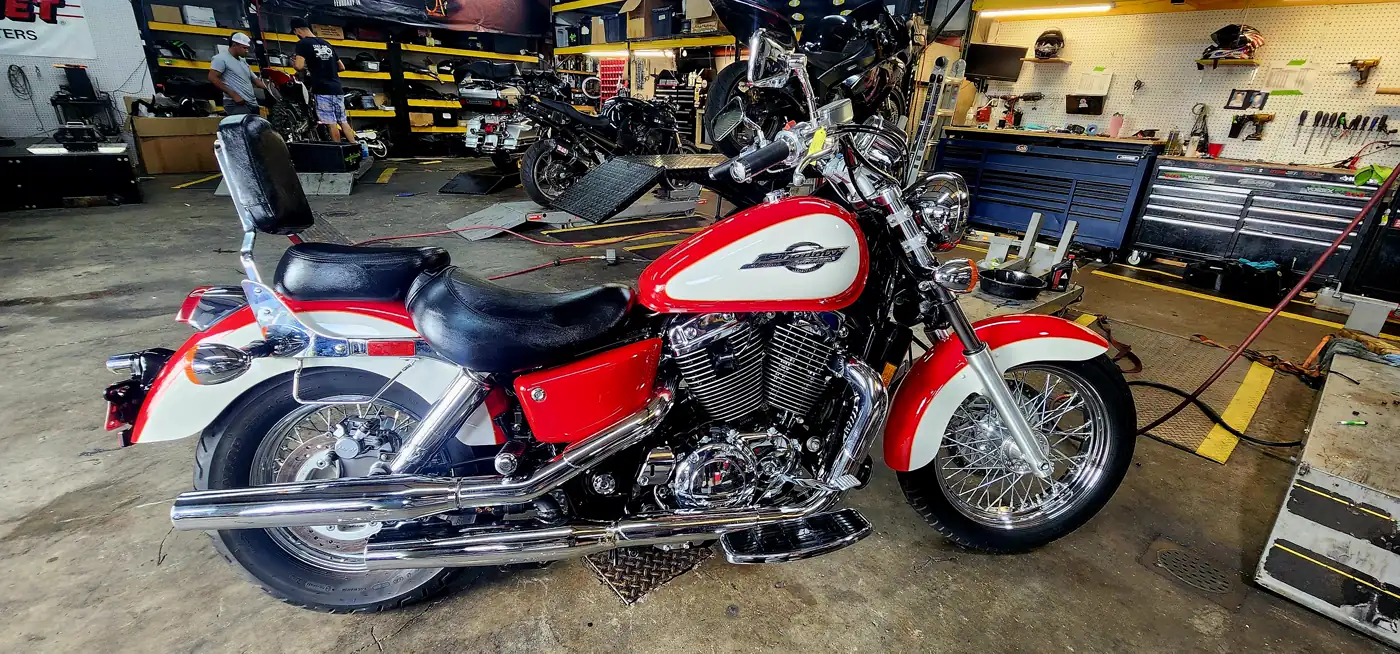
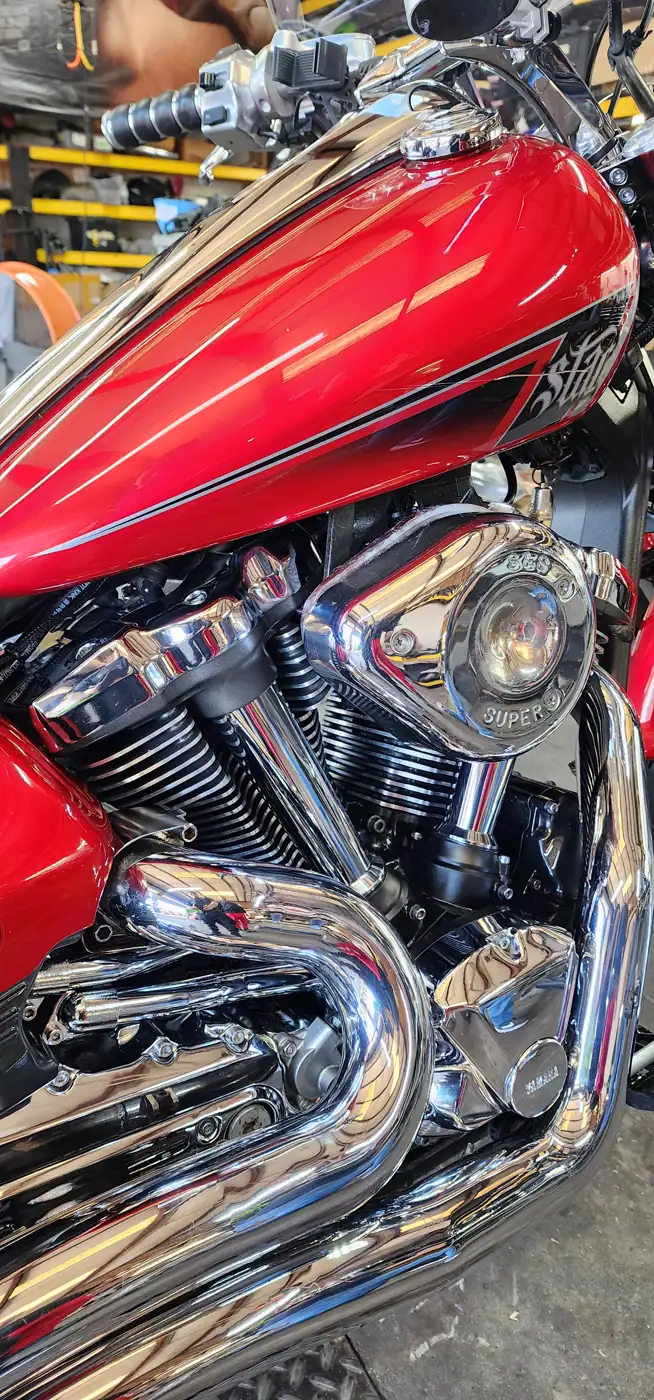
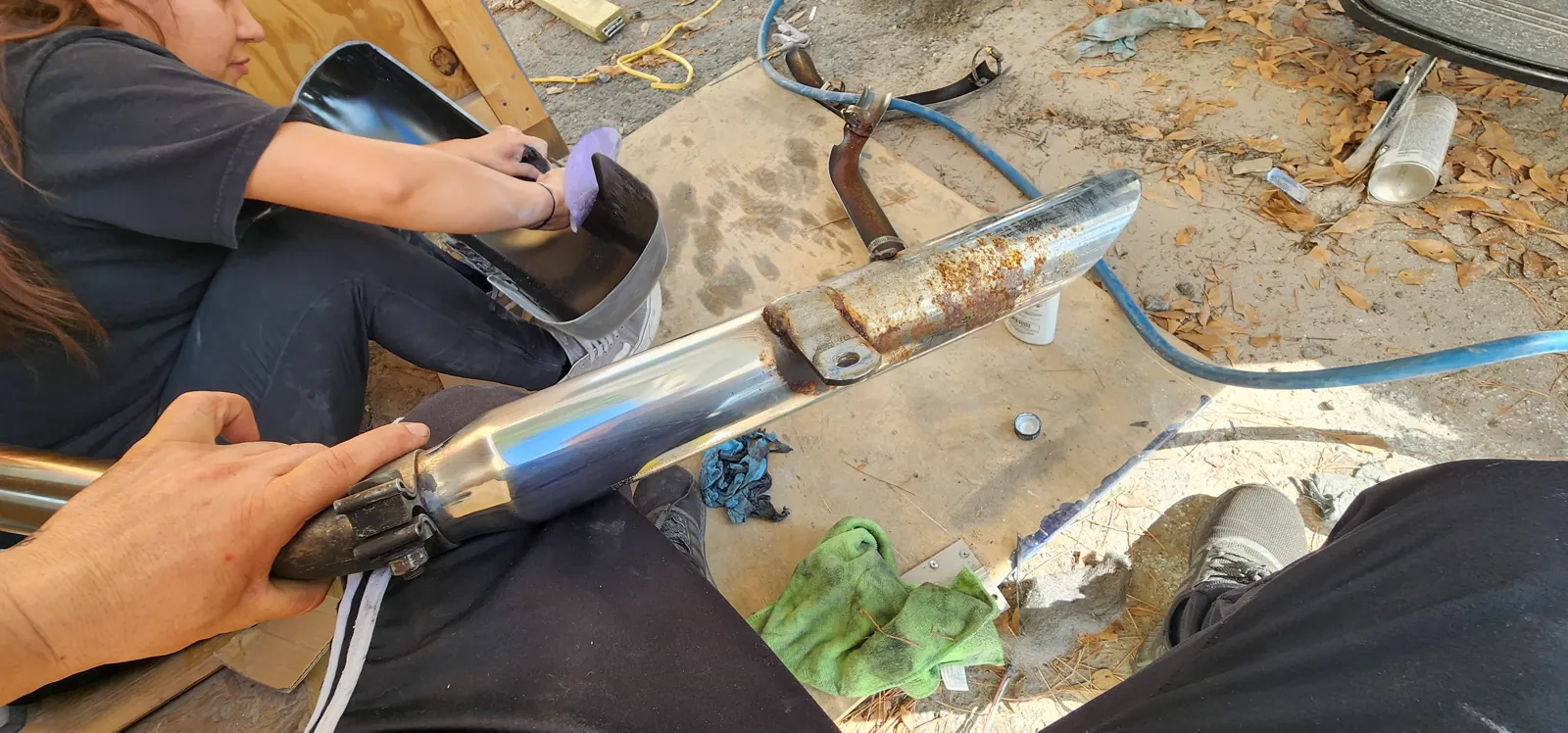
After the paint, we hit the details that make a bike read as one clean piece: chrome polished until you can read a plate in it, wheels cleaned to the spoke faces, the engine bay degreased, and the leather and vinyl fed so the seat stops drying out. Gray, faded plastic and trim gets restored back to black. It’s the difference between a shiny tank bolted to a dusty bike and a machine that looks finished top to bottom.
Georgia weather is the hidden cost
Here’s the part nobody warns you about when you buy the bike. Georgia is hard on a finish, and PTC’s climate quietly runs up the bill if you let it. The heat bakes contaminants into the clear coat. The humidity keeps grime damp and clinging. And every spring, pollen coats everything in that yellow film that turns mildly acidic once it gets wet and sits.
Then there’s our hard water, which leaves chalky spots every single time a bike air-dries in the sun near Lake Peachtree or in a driveway off Crosstown Drive. Those spots aren’t dirt you can rinse away. They’re mineral deposits bonded to the clear coat, so they have to be corrected off, not washed off. Wait too long and a cheap detail becomes an expensive one.
Protecting a finish early is almost always cheaper than rescuing it late. Every season you wait quietly raises the bar for the next detail.
That’s the real reason to detail on a schedule instead of waiting for the paint to look sad. A bike that gets corrected and coated before its first hard summer stays ahead of the damage. A bike that goes three years unprotected needs a lot more correction to bring back, which means a bigger job and a bigger number. The money side rewards the rider who plans ahead.
The convenience math for PTC
Now the part that makes this actually work for Peachtree City. We’re about an hour up GA-74 to I-85 and across I-285 to our East Cobb shop. That’s a real drive, and we’re not going to pretend it isn’t. But you already drive out of town for anything bike-related, because there’s no shop in the city limits. So the question was never how close we are. It’s what you’re driving for.
Better yet, you can drive nowhere. We’ll bring a truck to your driveway in Kedron or Braelinn, load the bike, detail it right, and bring it back. For a market that lives at 15 miles per hour and buys convenience without blinking, that’s not an apology for distance. It’s the whole point. Your time is worth something, and hauling a bike across the metro on a Saturday isn’t how you want to spend it.
TRANSPORT IS A FEATURE
Pickup and delivery to your PTC driveway means you never touch a trailer or fight I-285. Ask about it when you text — most riders here add it without a second thought.
When you fold transport into the math, the whole thing gets simple. You get shop-grade detailing with zero logistics, and the bike comes home looking better than the day you bought it. That’s the trade a lot of PTC riders happily make, and it’s a big piece of how to pick a shop worth the drive.
Where the price actually lands
To keep it plain, here’s what drives your final number, in order of how much it matters. Read this and you’ll understand any detailing quote you ever get, from us or anyone else.
- Condition of the paint — swirls, scratches, and etched water spots take more correction time.
- Size and bodywork — a full bagger with fairings and bags is more surface than a naked bike.
- Chrome and trim load — heavy chrome cruisers need more hand polishing than a plastic-clad sportbike.
- Whether you add a ceramic coating — protection is worth it, but it adds material and cure time.
- Storage history — a garaged bike is faster to bring back than one that lived outside under a cover.
- Transport — optional pickup and delivery to your PTC door, priced as the convenience it is.
Notice that price isn’t random. Every dollar traces back to real work or real convenience. If you understand those six things, you can look at any detail quote and know whether it’s honest. And if a shop won’t explain where their number comes from, that tells you something too. For a deeper walkthrough, here’s the full price breakdown.
The payoff, and how to start
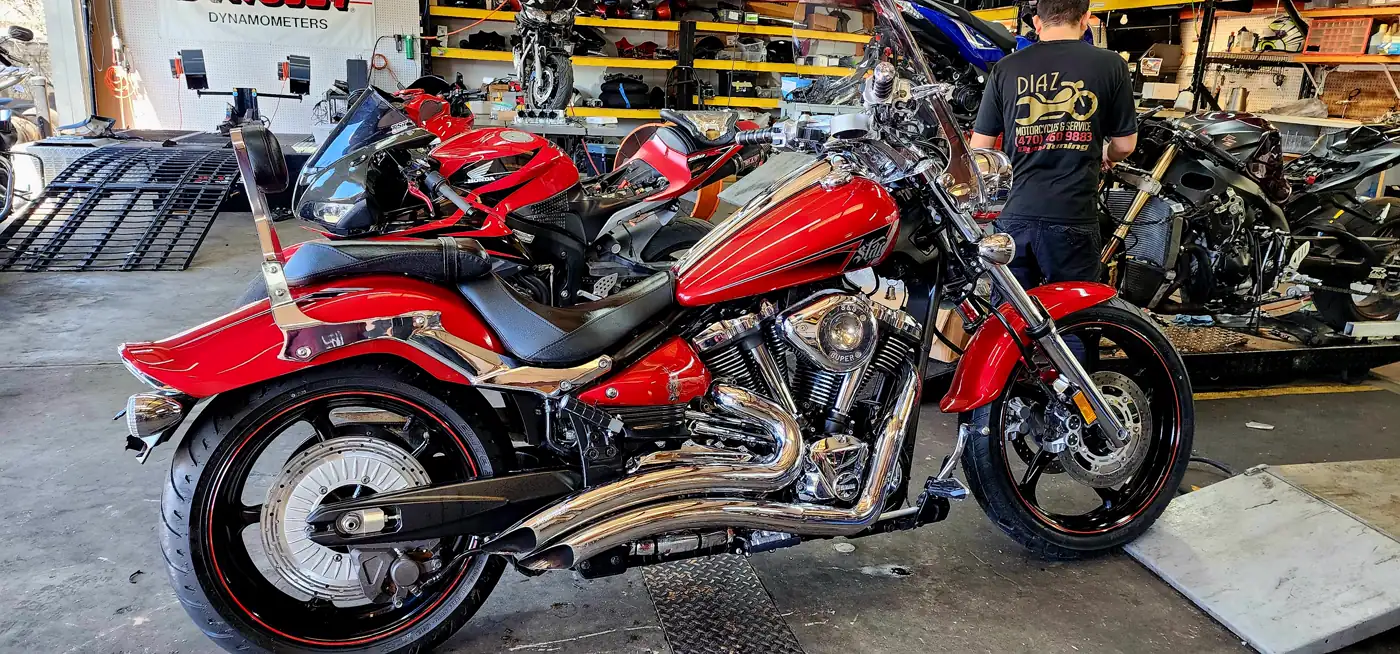
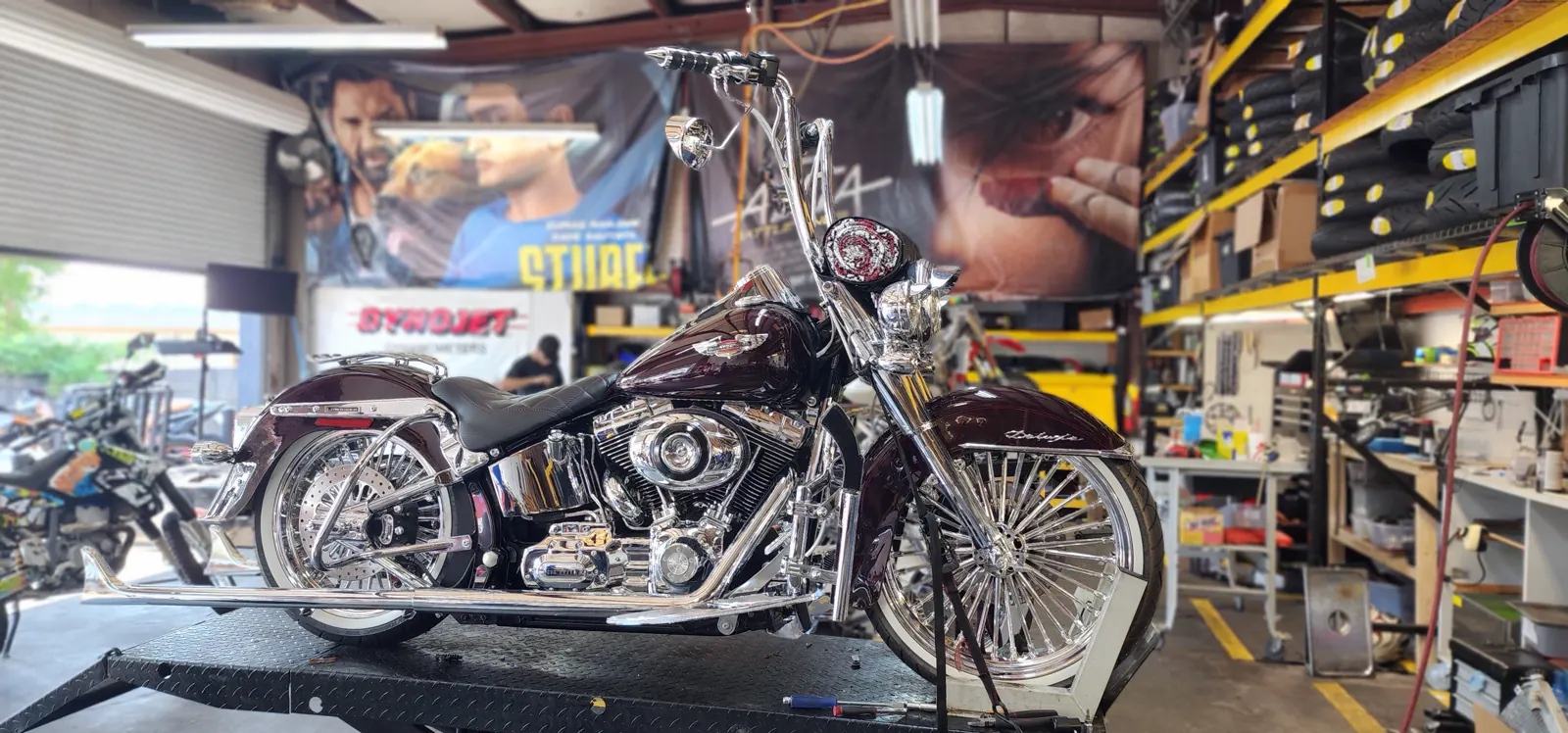
When it all comes together, the payoff is real. A properly detailed bike looks better than the day it left the dealer, because the factory never paint-corrected it for you. The chrome throws a mirror image, the tank has that deep wet gloss, and the seat feels supple instead of stiff. A cared-for finish also protects resale, because a buyer reads a loved bike in about two seconds flat.
So skip the guessing. Text us a couple of photos of your bike, tell us how it’s stored and whether you want us to come get it, and we’ll give you an honest read on what it needs and what it’ll run. No sales script, no padded phone quote, no pressure. Just the straight version, the way PTC riders prefer it.
Questions Peachtree City riders ask us
Why won't you just tell me a price over the phone?
Because a blind quote is either padded high or lowballed to win the job. A garage-kept bike and a bike that sat outside for years are different jobs. Send us a few photos and we’ll give you a real range instead of a guess. It’s faster and fairer for you.
Do I have to drive to Marietta?
No. We bring a truck to your Peachtree City driveway, load the bike, detail it at the shop, and return it. PTC has no motorcycle shop of its own, so you’d be driving out of town anyway — this way you drive nowhere. Most riders here add transport without a second thought.
What's the difference between a wash and a detail?
A wash removes what’s on top of the paint. A detail fixes the surface underneath — correcting swirls and scratches, then protecting the finish. A wash lasts a day. A real detail keeps a bike looking new for years. You’re paying for correction and protection, not just soap.
What makes one detail cost more than another?
Mostly the paint’s condition, the bike’s size and bodywork, how much chrome it carries, and whether you add a ceramic coating. Storage history matters too — a covered outdoor bike needs more correction than a garaged one. We diagnose first, then quote, so you see exactly why.
Is a ceramic coating worth the extra money?
For a garage-kept PTC bike you care about, usually yes. It makes every future wash faster, beads off Georgia’s hard water, and holds a wet-looking gloss even in the shade. It’s not scratch-proof, but it protects against sun, spotting, and light contamination for years with care.
How often should I detail my bike?
A full correct-and-protect detail once, then lighter maintenance details as needed, keeps you ahead of the damage. Waiting until the paint looks dull means more correction and a bigger bill. Protecting early is almost always cheaper than rescuing late in Georgia’s climate.
We detail bikes for riders all over Peachtree City, though our shop sits up in East Cobb. We serve — or bring the truck to — Planterra Ridge, Kedron Hills, and The Peninsula on Lake Peachtree. Whether you’re near The Fred, out by Falcon Field, or just off GA-74, you’re covered. We also reach Tyrone, Fayetteville, Senoia, Sharpsburg, Newnan, and Fairburn, so the whole south-metro side gets shop-grade detailing without the logistics.
TEXT US A PHOTO OF YOUR BIKE
Want the straight version of what your detail will cost and include? Text us a couple of photos, tell us how the bike is stored, and let us know if you’d like us to come get it. We’ll give you an honest read before you spend a thing — and we’ll bring the truck right to your PTC driveway. No sales script, just answers.
470-460-9883Diaz Motorcycles and Service, LLC · 847 Barnes Mill Road, Marietta, GA 30062