Ceramic Coating vs Wax in Lawrenceville: Which One Fits Your Bike?
One is cheap and quick, one is pricey and lasts for years. Here's the honest difference, and how to pick the right protection for how you actually ride in Gwinnett.
You want your bike protected, and someone told you to get it ceramic coated. Someone else swears wax is all you need and the rest is a sales pitch. So who’s right? Both, actually, depending on your bike and how you ride. The ceramic coating vs wax Lawrenceville riders keep arguing about isn’t a good-versus-bad fight. It’s a right-tool-for-the-job call, and once you see the honest differences, the pick gets easy.
The problem is that most explanations either oversell ceramic like it’s a force field or dismiss it like it’s a scam. Neither is true. Wax and ceramic do the same basic job — protect your paint — but they do it for different amounts of time, effort, and money. Let’s lay them side by side in plain words so you can spend your money where it actually helps.
What wax actually does
Wax is the classic. It lays a thin protective layer over your clear coat that adds a warm shine, helps water bead up, and shields the paint from sun and light grime. It’s cheap, it’s fast to apply, and it makes a bike look great the day it goes on. For generations of riders, a good coat of wax before summer was the whole plan, and it worked fine.
The catch is that wax doesn’t last. It wears down with every wash, every rainstorm off 316, and every hot Gwinnett afternoon. Depending on how the bike lives, you’re reapplying every month or two to keep the protection real. Wax is like sunscreen: it works, but only while it’s fresh, and you have to keep putting it back on.
What ceramic coating actually does
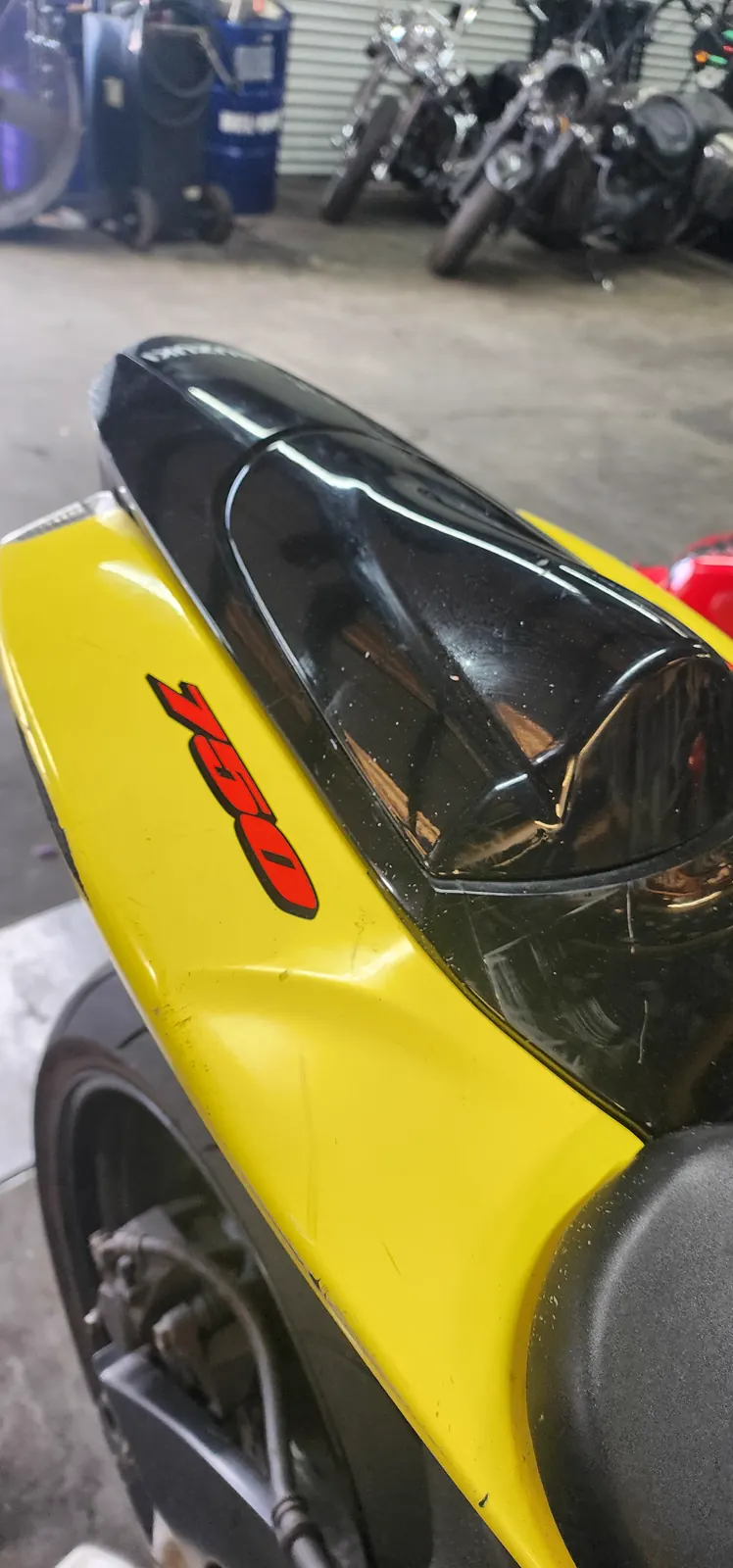
A ceramic coating is a liquid that bonds to the clear coat and cures into a hard, slick shell. Run your hand across a freshly coated tank and it feels like glass, almost slippery. Water beads and rolls off instead of sheeting and spotting. Bugs and grime wipe away with far less effort, and the gloss looks deep and wet even parked in the shade. For a bike that battles Georgia humidity, that easy cleaning is a real gift.
The big difference is how long it holds. Where wax lasts weeks, a ceramic coating lasts years with proper care. It doesn’t wash off with the next rain, and it keeps shrugging off sun, water spots, and light contamination season after season. That durability is exactly why it costs more, and why it’s the choice for riders who don’t want to think about protection every month.
THE HONEST TRUTH
Ceramic coating is not a force field. It won’t stop a rock chip or survive a tip-over. It protects against sun, water spotting, and light grime — and makes every wash easier.
That callout matters because some shops won’t say it out loud. Anyone who promises you a scratch-proof, bulletproof finish is selling you a story. A coating is protection and convenience, not armor. Knowing exactly what it does — and doesn’t do — is how you decide if it’s worth the price for your bike. You deserve straight answers, not a magic number.
Head to head: the real differences
Let’s put them next to each other. On cost, wax wins going in — it’s cheaper up front. On how long it lasts, ceramic wins by a mile. On ease of future washing, ceramic wins again, because grime slides off a slick coating. On shine, both look great fresh, though ceramic holds that deep gloss far longer. On how often you’re back doing it, wax is a monthly habit and ceramic is a multi-year set-and-forget.
- Cost up front: wax is cheaper; ceramic costs more.
- How long it lasts: wax is weeks; ceramic is years with care.
- Future washes: ceramic makes them faster and easier; wax is average.
- Water spotting: ceramic resists it far better — big deal with Gwinnett’s hard water.
- Upkeep: wax is a monthly re-do; ceramic is set-and-forget for seasons.
- What neither does: stop rock chips, tip-overs, or deep scratches.
Notice there’s no line where one is simply better at everything. Wax wins on price and simplicity. Ceramic wins on durability and easy upkeep. The right answer depends entirely on how much you ride, how the bike is stored, and how much hands-on maintenance you actually want to do. That’s the real question, so let’s sort you into the right camp.

Wax is right for you if…
Wax makes sense if your budget is tight right now and you don’t mind a little hands-on care. If you enjoy Sunday-morning garage time, wiping down and re-waxing the bike is part of the fun, not a chore. It’s also a fine call for a garage-kept bike that doesn’t get rained on much, or an older bike where you’re not looking to invest heavily in the finish.
It’s a good starting point too. Plenty of riders wax for a season, decide they’re tired of redoing it every month, and step up to ceramic the next year. There’s no shame in starting with wax. Just go in knowing you’ll be back at it regularly, especially through a humid Gwinnett summer that eats protection faster than a mild climate would.
Ceramic is right for you if…
Ceramic earns its price if your bike lives outside under a cover, sees a lot of miles, or you just don’t want to think about protection all season. It’s the clear pick for anyone fighting Gwinnett’s hard water and humidity, because it resists the chalky water spots that plague a bike air-drying in the sun. If you ride daily, commute on 316, or want a show finish that holds, ceramic pays for itself in saved effort.
It’s also the smart move if you just paid for paint correction or custom paint. Once you’ve spent real money getting the finish perfect, sealing it under a coating protects that investment for years instead of watching it dull again. Correcting paint and then only waxing it is a bit like buying good tires and never checking the pressure. You did the hard part, so protect it properly.
ORDER MATTERS
Correct the paint first, then protect it — with either wax or ceramic. Coat over swirls and you seal them in, then pay to strip it off to fix them. Always correct, then protect.
What about the in-between options?
Wax and ceramic aren’t the only two names you’ll hear, so let’s clear up the middle. A synthetic sealant sits between them: it lasts longer than wax, usually a handful of months, and costs less than a full ceramic. Spray coatings and ceramic-infused waxes are lighter, easier top-ups that boost shine and beading for a while but don’t replace a real coating. They’re fine as maintenance, not as your main protection.
So think of it as a ladder, not a coin flip. Wax on the bottom, sealant in the middle, ceramic on top, with the spray products as quick boosters between full jobs. Where you land depends on your budget and how much upkeep you want. Plenty of Gwinnett riders run a ceramic base and use a spray booster after a wash to keep it slick. There’s no wrong rung as long as the paint was corrected first.
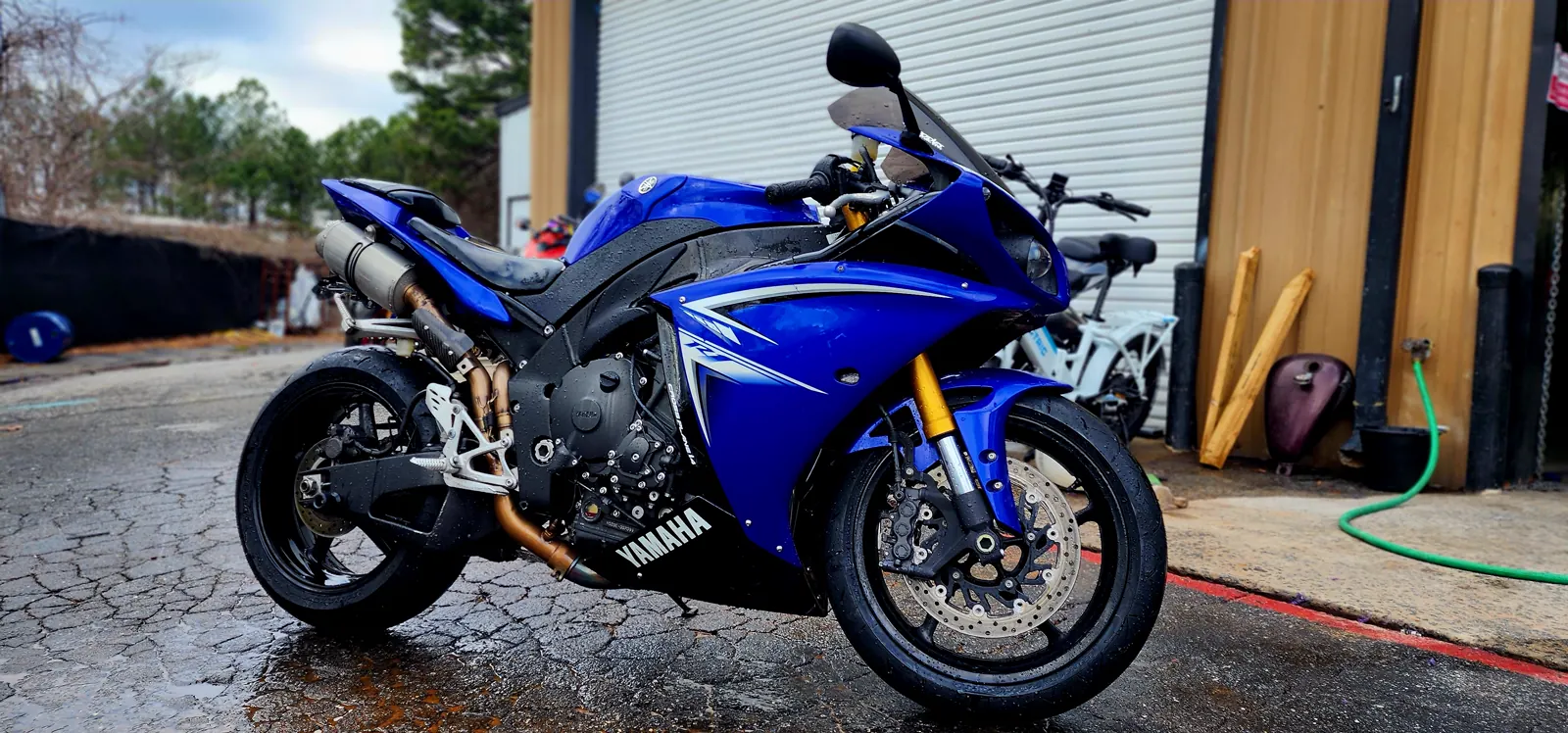
The Georgia factor tips the scale
Here’s the local truth that pushes a lot of Gwinnett riders toward ceramic. Our summers are brutal on a finish: 90-degree heat that bakes contaminants into the clear coat, humidity that keeps grime damp and clinging, spring pollen that coats everything, and hard water that leaves chalky spots every time a bike dries in the sun. Wax gets worn down by all of that fast. Ceramic keeps standing up to it season after season.
Storage tips it too. A bike garaged in Collins Hill that only rides on nice weekends can do fine on wax. A bike parked under a cover at an apartment along the Sugarloaf corridor takes far more sun and moisture, and that’s where ceramic’s durability really earns its keep. Where and how your bike sleeps matters as much as how you ride it.
Wax protects for weeks. Ceramic protects for years. The right one depends on how you ride, not on which is 'better.'
So the honest verdict: there’s no universal winner, only the right fit for your bike. Tight budget, garage-kept, hands-on rider? Wax is fine. Outside storage, high miles, hard-water spots, or a finish you just paid to perfect? Ceramic is the smarter spend. Either way, the paint gets corrected first, then protected — that order never changes.
Not sure which camp you’re in? That’s an easy conversation. Text us a couple of photos of your bike and tell us how it’s stored and how much you ride. We’ll give you a straight recommendation, wax or ceramic, based on your actual situation, not on which one costs more. And with pickup and delivery down the Duluth Highway, the East Cobb drive never lands on you.
Questions Lawrenceville riders ask us
Is ceramic coating really worth the extra money over wax?
It depends on your bike. Ceramic lasts years where wax lasts weeks, resists Gwinnett’s hard-water spots, and makes every wash easier. If your bike lives outside, sees high miles, or you just don’t want to reapply protection monthly, it pays for itself in saved effort. For a garage-kept weekend bike on a tight budget, wax may be plenty.
How long does each one last?
Wax lasts a few weeks to a couple of months and wears down with every wash, rainstorm, and hot afternoon, so you reapply regularly. A ceramic coating lasts years with proper care and keeps shrugging off sun, water spots, and light grime season after season. That durability gap is the main reason ceramic costs more up front.
Will a ceramic coating make my bike scratch-proof?
No, and any shop that says so isn’t being straight with you. A coating protects against sun, water spotting, and light contamination and makes future washes much easier. It won’t stop a rock chip, a deep scratch, or a tip-over. How long it lasts comes down to storage and care, so we talk in years with care, not a fixed number.
Do I need to correct the paint before either one?
Yes, ideally. Both wax and ceramic sit on top of the clear coat, so whatever’s underneath gets sealed in. Coat over swirls and scratches and you lock them in, then have to strip the protection to fix them later. Correct the paint first, then protect it. That order saves you a costly redo.
Which is better for a bike stored outside under a cover?
Ceramic, in most cases. A bike parked outside takes far more sun and moisture, which wears wax down fast and invites hard-water spotting. Ceramic’s durability stands up to that season after season. If your bike lives under a cover at an apartment along the Sugarloaf corridor, ceramic is usually the smarter spend.
Can you tell me which one my bike needs without a trip to Marietta?
Yes. Text us photos and tell us how the bike is stored and how much you ride, and we’ll give you a straight wax-or-ceramic recommendation. If you move forward, we run pickup and delivery across Gwinnett, so we bring a truck to your driveway and you never fight 285 for it.
We protect finishes for riders all over Gwinnett, past downtown Lawrenceville. Bikes come from Collins Hill Heights, Five Forks Manor, and Coopers Pond, plus the Sugarloaf corridor near Arbors at Sugarloaf. Whether you park near the Historic Courthouse on the Square or cruise toward Rhodes Jordan Park, Georgia sun and hard water treat your paint the same. Pickup and delivery along the Duluth Highway keeps the East Cobb drive off your shoulders.
TEXT US AND WE'LL HELP YOU CHOOSE
Wax or ceramic? Text us a couple of photos of your bike and tell us how it’s stored and how much you ride, and we’ll give you a straight recommendation based on your situation, not on which costs more. We run pickup and delivery down the Duluth Highway, so the East Cobb drive is on us. No pressure, no sales script, just the honest right call for your bike.
470-460-9883Diaz Motorcycles and Service, LLC · 847 Barnes Mill Road, Marietta, GA 30062