Motorcycle Chrome Pitting in Lawrenceville: Why It Happens and How to Beat It
Those tiny rust freckles creeping across your chrome aren't bad luck — they're Georgia humidity. Here's why it starts, how to stop it, and when it can be saved.
You wiped your bike down last week, and now there are tiny brown freckles creeping across the chrome. It looks like the metal caught a rash. That’s chrome pitting, and if you ride in Gwinnett, you are not unlucky and you did not do anything wrong. Motorcycle chrome pitting Lawrenceville riders battle every summer is a humidity problem first and a bad-luck problem never. Here’s why it starts, and better, how you beat it.
The good news up front: caught early, pitting is a wash-and-protect situation. Left alone, it eats through the shine and into the metal until polishing can’t bring it back. So the whole game is timing. The sooner you understand what’s happening under those freckles, the cheaper and easier it is to stop. Let’s get into it.
What chrome pitting actually is
Chrome isn’t solid chrome. It’s a thin bright layer plated over steel or pot metal underneath. That bright layer looks solid, but it’s full of microscopic pores you’ll never see with your eyes. Moisture sneaks into those pores, reaches the steel below, and the steel does what steel always does when it meets water and air: it rusts. That rust pushes up through the surface as a tiny pinhole crater, and that crater is a pit.
One pit becomes ten, ten becomes a patch, and a patch becomes a dull, freckled fender. Each pit is a little door that lets in more moisture, so the problem feeds itself and speeds up the longer you leave it. That’s why chrome that looked fine in March can look rough by August. It didn’t happen overnight. It happened one humid night at a time.
Why Georgia humidity is the real villain
Here’s the local truth. Gwinnett summers are 90 degrees and soupy, with afternoon thunderstorms almost every day from June through August. That means your chrome is sitting in warm, wet air for months. Warm, wet air is exactly what moisture needs to work its way into those pores. It’s not the rain that gets you as much as the humidity that never quits between the rain.
It gets worse when the bike can’t dry out. Park a warm bike in a closed garage after a ride and the humidity condenses right onto the cool metal overnight, like the sweat on a glass of sweet tea. A bike stored under a cover outside off Grayson Highway is even more exposed, because the cover traps damp air against the chrome. Georgia doesn’t need to soak your bike to pit it. It just needs to keep it damp.
THE ENEMY
In Georgia, humidity — not cold — is what kills stored chrome. A dry cold bike is fine. A warm damp one is quietly rusting.
Add our hard water to the mix and you’ve got a second attacker. When a bike air-dries in the sun, Gwinnett’s mineral-heavy water leaves chalky spots on the chrome. Those spots hold moisture against the surface and give pitting a head start. So the water that’s supposed to clean your bike can actually help rust it if you let it dry on there. Detailing chrome is as much about how you dry as how you wash.
Where pitting shows up first
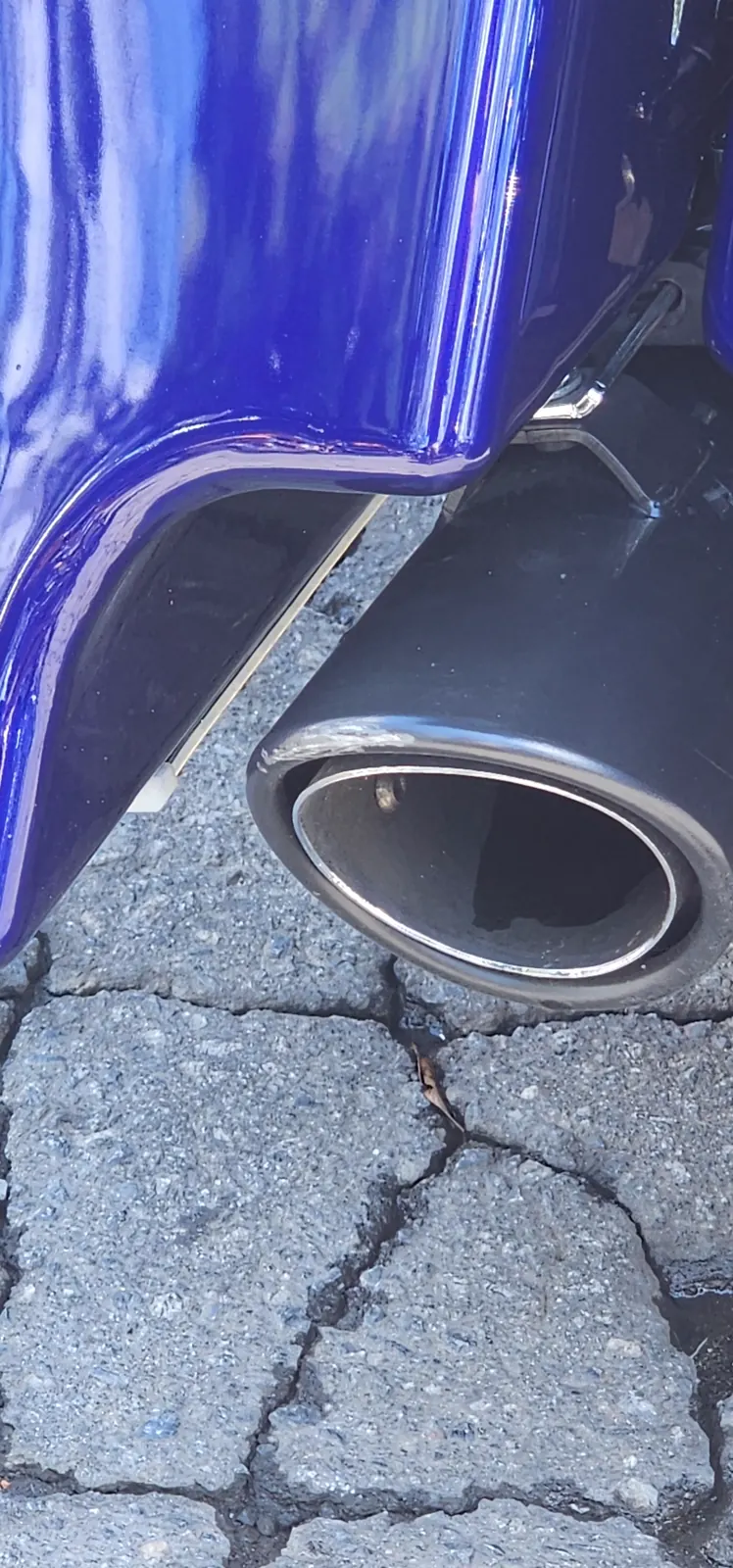
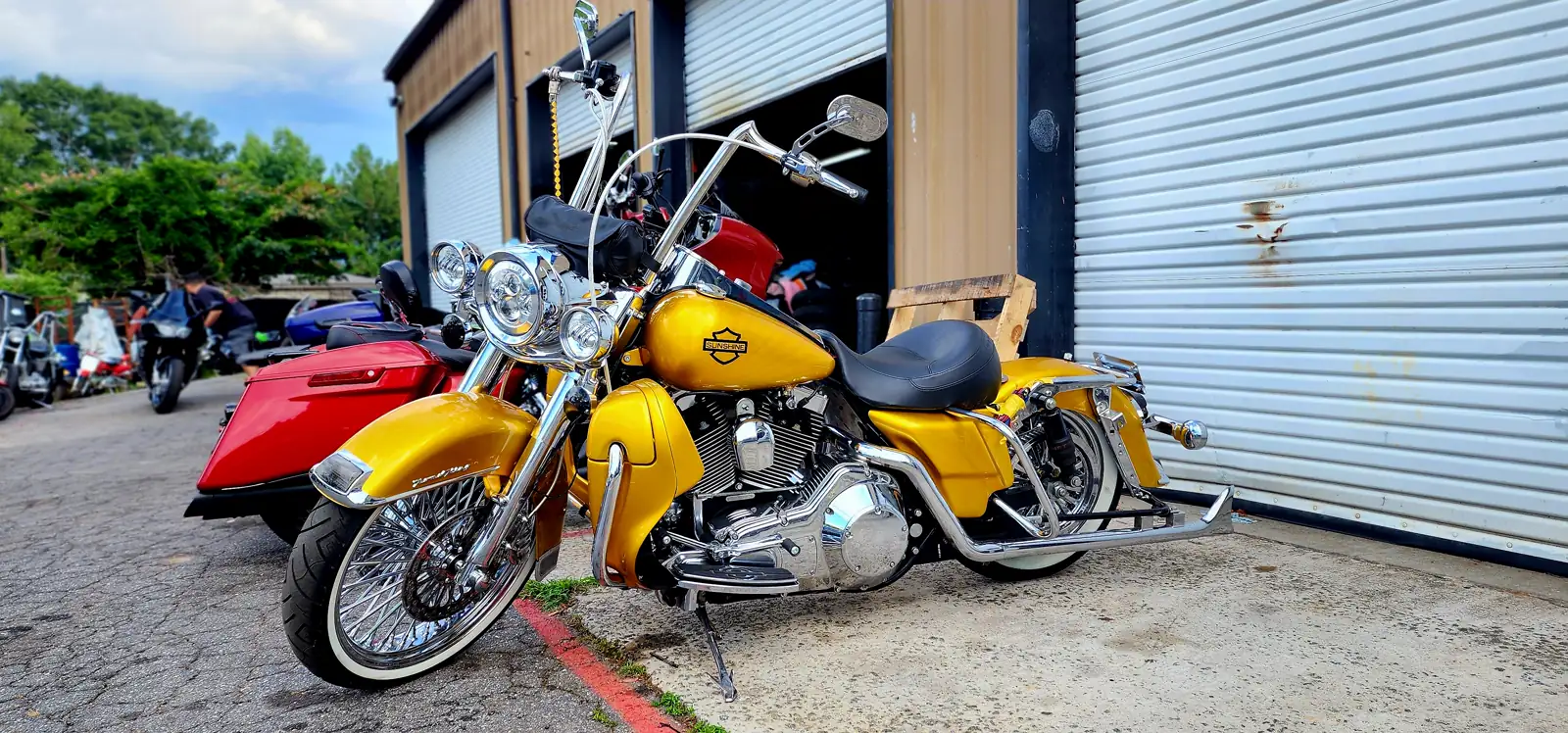
Pitting is predictable, which helps you catch it. It starts low and hidden: exhaust headers and mufflers, the bottoms of fenders, the backs of chrome covers, spoke faces, and anywhere road spray hits and water pools. Those spots stay wet longest and get looked at least. By the time pitting reaches the tank chrome or a headlight bucket you actually notice, it’s usually been working down low for a while.
Exhaust chrome gets a double hit. It heats up on a ride, then cools down and pulls moisture in as it does. Heat cycles plus humidity plus road salt residue equals the classic freckled pipe. If you’re going to inspect one thing on a Gwinnett cruiser, get down and look at the exhaust and the lower chrome. That’s your early-warning system.
How to stop it before it starts
Prevention is cheap and it works. The whole idea is simple: keep moisture out of those pores. That means washing off the grime and hard-water minerals, drying the chrome completely so nothing sits in the pits, and sealing the surface so damp air can’t get in. Do those three things through the summer and your chrome stays bright. Skip them and Georgia does the rest.
- Wash the chrome to lift off grime, brake dust, and hard-water film that hold moisture.
- Dry it completely by hand — never let a bike air-dry in the sun and spot up.
- Polish good chrome to close the surface and pull out the very first light hazing.
- Seal it with a chrome-safe protectant so humidity can’t reach the pores.
- Store it dry — let a warm bike cool before covering, and keep air moving in the garage.
- Inspect the low chrome monthly through summer so you catch freckles while they wipe off.
One more habit that saves chrome: dry the bike before you park it, not just after you wash it. Rode home through an afternoon storm off 316? Wipe the chrome down before it goes in the garage. Two minutes with a towel beats two hours of polishing later. Chrome care in Georgia is less about big jobs and more about not letting water sleep on the metal.
A little garage housekeeping helps too. If your bike sleeps in a closed garage in Collins Hill or Five Forks, keeping some air moving keeps humidity from settling on cool metal overnight. A cheap moisture absorber in a corner does real work through July and August. None of this is fancy or expensive, which is the good part. Beating pitting is mostly small, cheap habits done on time, not one big rescue job done too late.
Can pitted chrome be saved?
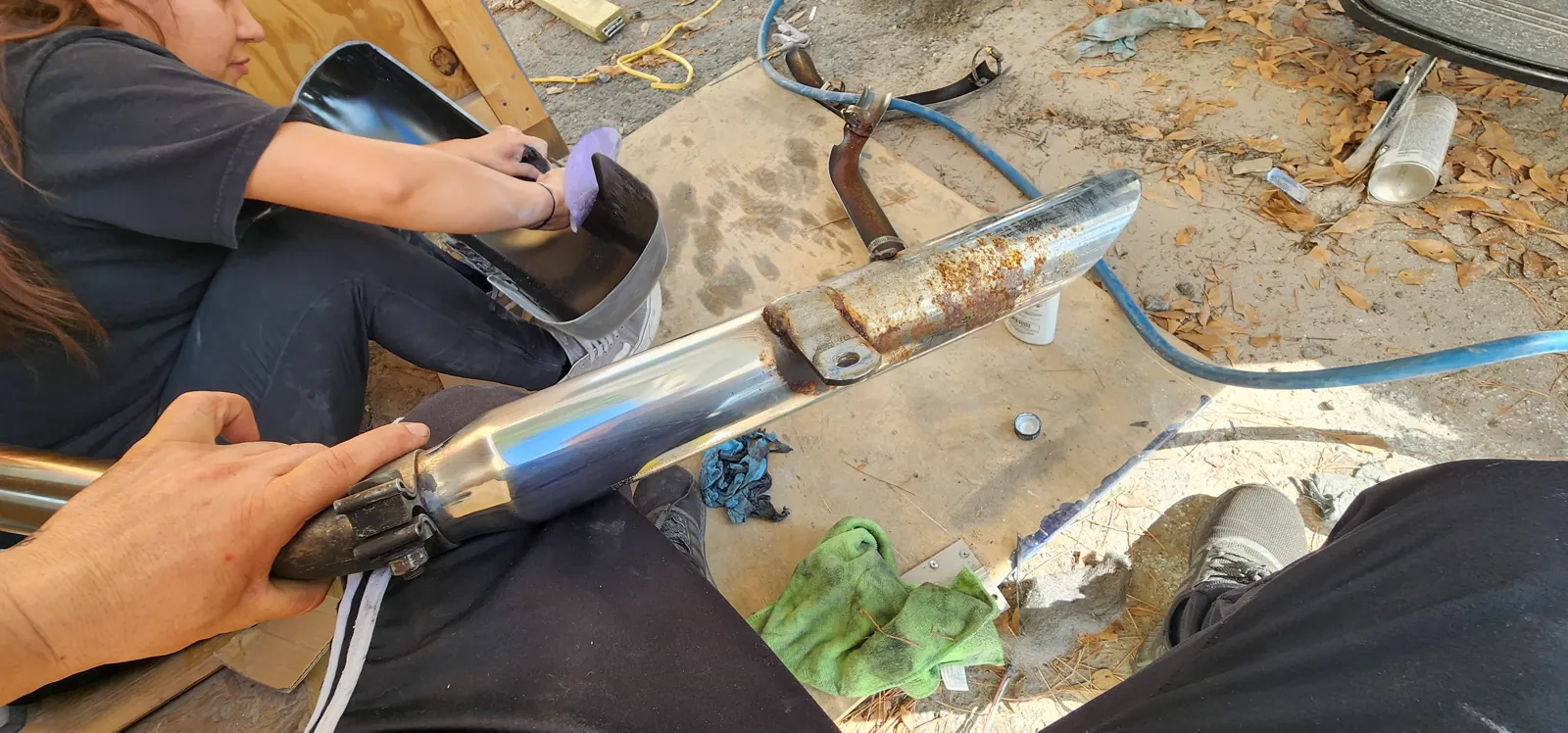
Sometimes yes, sometimes no, and the honest answer depends on how deep it went. Light surface pitting and early hazing can often be polished out by hand and then sealed, and the chrome looks bright again. That’s the best-case call, and it’s why catching it early matters so much. Freckles that still wipe or buff away are freckles you can still win against.
Deep pitting is a harder truth. Once the rust has eaten through the bright layer and craters into the steel, polishing can smooth and slow it but can’t rebuild what’s gone. At that point the real fix is re-chroming or replacing the piece, which is a bigger job. We’ll always tell you straight which camp your chrome is in. We’d rather save it than sell you a redo, but we won’t promise a miracle a buffing pad can’t deliver.
CATCH IT EARLY
Freckles that still wipe or polish off can be saved and sealed. Craters into the steel usually mean re-chroming. The difference is how long you waited.
Keeping chrome bright once it's saved
Bringing chrome back is only half the win. The other half is keeping it that way through the next Georgia summer. Once we polish and seal your chrome, the maintenance is simple: keep it clean, keep it dry, and re-seal it before the humid months. A sealed, cared-for piece resists moisture far longer than bare chrome ever will, so the save actually holds.
Aftermarket chrome and cheaper covers deserve a heads-up too. Not all chrome is plated the same, and some budget pieces pit faster no matter how careful you are, because the plating is thinner to begin with. If a cover or a set of covers keeps freckling season after season despite good care, the metal itself may be the weak link. We’ll tell you honestly when protecting a piece is worth it and when replacing it is the smarter money.
Why the East Cobb drive isn't your problem
You might be thinking chrome work sounds great, but the shop’s in Marietta and you’re not fighting I-285 for it. Fair, and you don’t have to. GA-120, the Duluth Highway, runs one road from Lawrenceville through Duluth and Roswell to us at 847 Barnes Mill Road, but even that’s a trip you shouldn’t have to make for a fender. So we bring the truck to you.
We run pickup and delivery across Gwinnett, from Collins Hill to Five Forks to the Sugarloaf corridor. We grab the bike from your driveway, sort the chrome and the rest of the finish in our bays, and bring it back bright. You never sit on 285, and you never lose a Saturday to a cross-metro round trip. The traffic is our problem, not yours.
Chrome doesn't rust because you were careless. It rusts because Georgia is humid. Beating it is just staying one step ahead of the damp.
So here’s your move. Get down and look at the low chrome on your bike this week, the exhaust and the fender bottoms. If you see freckles that still wipe, you caught it in time, and a wash, polish, and seal will hold it. If you’re not sure how deep it’s gone, that’s exactly what we’re here to read. Text us a few close-up photos and we’ll tell you honestly whether it’s a save or a bigger job, before you spend anything on the wrong fix.
Questions Lawrenceville riders ask us
Why is my chrome pitting when I keep the bike clean?
Because pitting is a moisture problem, not a dirt problem. Chrome has microscopic pores, and Georgia’s humidity works moisture into them until the steel underneath rusts and pushes up as tiny pits. A clean bike that stays damp still pits. The fix is drying the chrome fully and sealing it, not just washing it.
Can pitted chrome be polished back to new?
Light surface pitting and early hazing can often be hand-polished out and sealed, and the chrome looks bright again. Deep pitting that has cratered into the steel can be smoothed and slowed but not rebuilt, so that usually means re-chroming or replacing the piece. We’ll tell you honestly which one your chrome is.
How do I stop chrome pitting through a Gwinnett summer?
Wash off grime and hard-water film, dry the chrome completely instead of letting it air-dry, polish and seal good chrome so humidity can’t reach the pores, and store the bike dry. Wipe the chrome down after a rainy ride before parking. Two minutes with a towel prevents hours of polishing later.
Why does my exhaust chrome pit worse than the rest?
Exhaust chrome heat-cycles on every ride, then cools and draws moisture in as it does. It also sits low where road spray and water pool. Heat cycles plus humidity plus grime make the pipes the first place freckles show up. Inspect the exhaust and lower chrome first for early warning.
Does storing my bike under a cover cause pitting?
It can if the bike goes under damp or still warm. A cover traps humid air against the chrome overnight, which is exactly what rust needs. Let a warm bike cool and dry before covering, keep air moving in the garage, and seal the chrome first. Dry storage protects chrome far more than the cover alone.
Do you have to bring the bike to Marietta for chrome work?
No. We run pickup and delivery across Gwinnett, so we bring a truck to your driveway in Lawrenceville, do the work in our bays, and bring the bike back. You never fight 285. The Duluth Highway connects us on one road, but with transport you don’t even drive it.
We save chrome for riders all over Gwinnett, beyond downtown Lawrenceville. Bikes come in from Collins Hill Heights, Five Forks Manor, and Cardinal Lake Estates, plus the Sugarloaf corridor near Arbors at Sugarloaf. Whether you park near the Historic Courthouse on the Square or ride the loops around Rhodes Jordan Park, humid air treats your chrome the same. Pickup and delivery down the Duluth Highway keeps the East Cobb drive off your plate.
TEXT US CLOSE-UPS OF YOUR CHROME
Not sure if those freckles are a quick save or a bigger job? Text us a few close-up photos of your chrome and tell us how the bike is stored, and we’ll give you an honest read before you spend a thing on the wrong fix. We run pickup and delivery down the Duluth Highway, so the East Cobb drive is on us. No guessing, no sales script, just straight answers.
470-460-9883Diaz Motorcycles and Service, LLC · 847 Barnes Mill Road, Marietta, GA 30062