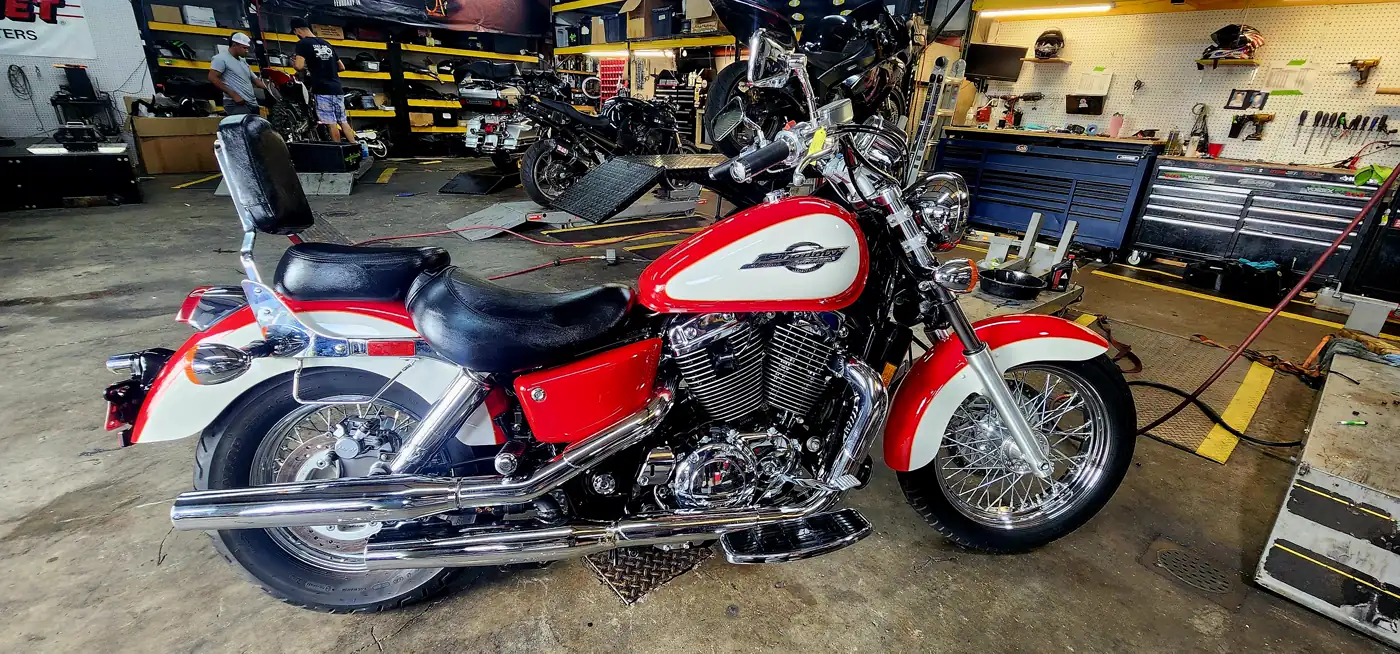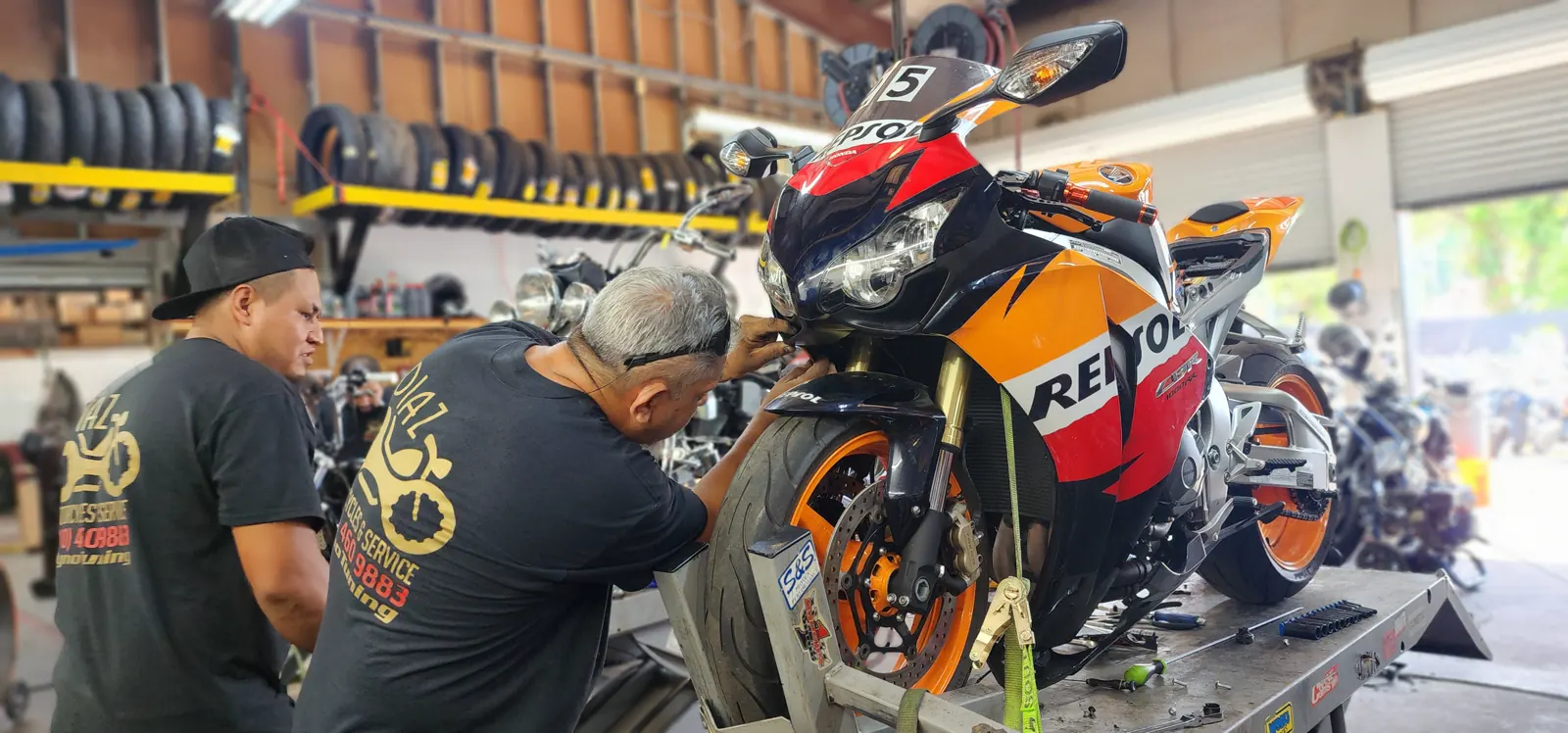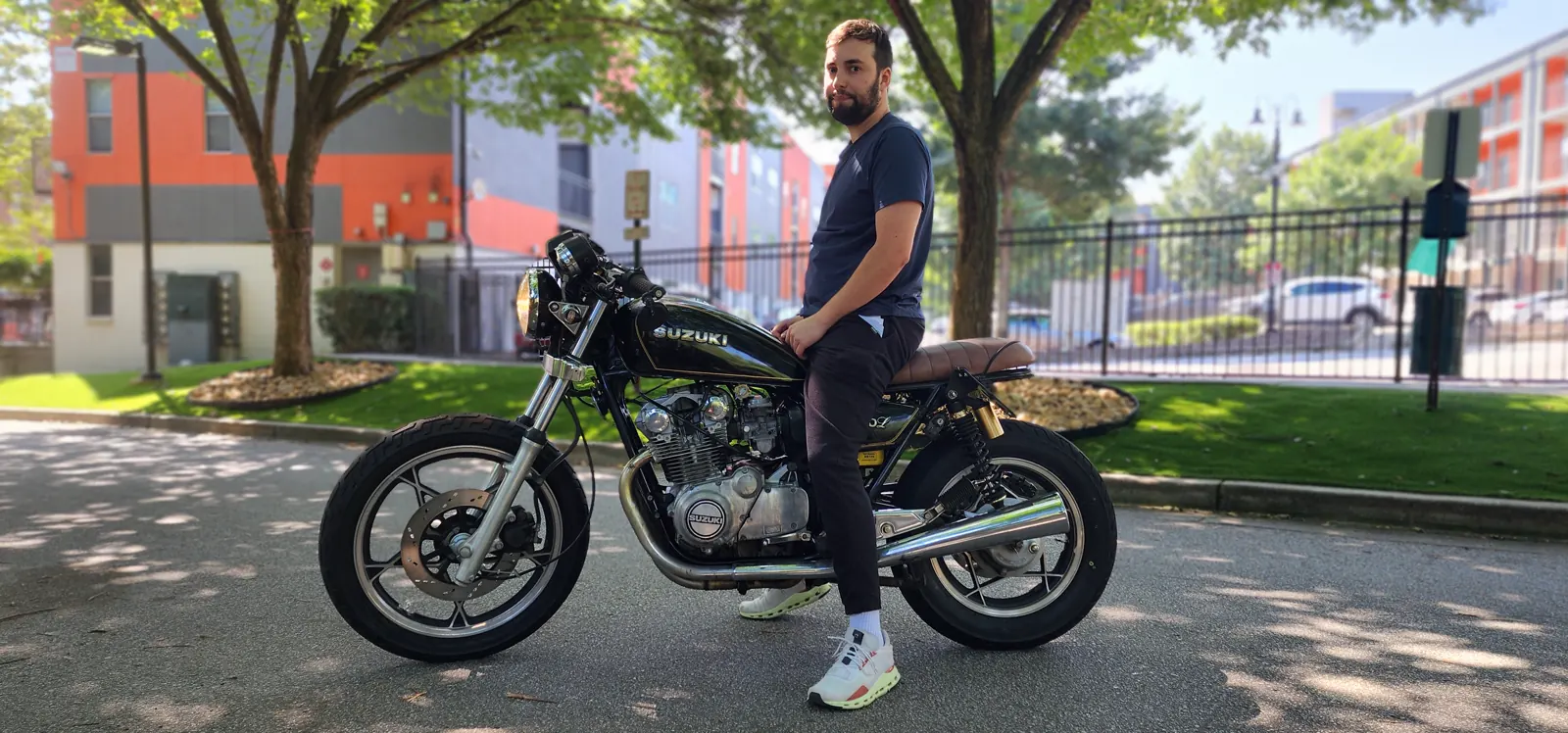
Chrome Pitting Powder Springs — What to Check
A friendly, plain-English guide to what pits your chrome, when it's safe to ride, and how we bring the shine back.
You know the drive. Even so, Macland Road at five o’clock, brake lights all the way to the light, and a Georgia sky that can’t decide whether to rain. What’s more, most bikes around here don’t fight that traffic every day anyway. After that, they wait in the garage for a clear weekend. Still, the miles a bike does log come with heat, damp air, and road grime, and that mix goes to work on the shiniest parts first. If you’ve been searching chrome pitting Powder Springs owners deal with, you’ve probably already caught your pipes or bars looking a little cloudy. Good news, though: you noticed early, and this is fixable.
The short answer first
Chrome pitting is what happens when the mirror-bright plating on your bike starts to break down. At first it shows up as a light haze you can almost wipe away with your sleeve. Also Left alone, tiny pinprick spots appear, and you can feel them catch a fingernail. Instead those little craters are the pits, and they’re corrosion working through the shine from the outside in. Besides here’s the part that should ease your mind: in most cases it’s cosmetic, and the bike is perfectly safe to ride. Actually what matters is figuring out how deep it goes and stopping it before it spreads.
So the plan for chrome pitting Powder Springs bikes is simple. We look at the whole machine, sort real pitting from surface haze, and check whether any of it has reached a part that actually does a job. Once you understand that difference, the worry drops away and a clear path opens up. Because right now the mystery is the scary part, not the metal.
What's really driving it
Georgia is tough on chrome, and West Cobb is no exception. Our summers run hot and wet, so humid air leaves a thin film of moisture on bare metal nearly every night. Spring layers on yellow pollen that turns mildly acidic the moment it gets damp. Then there’s our hard water, which is loaded with minerals that dry into stubborn white spots. None of these is dramatic on its own. Stacked together, month after month, they quietly wear chrome down.
Storage is the sneaky culprit, though. Most bikes out here live indoors in a two-car garage, parked next to the truck and ridden on weekends. That sounds safe, and mostly it is. Yet a bike put away dirty, with bug guts and brake dust still baked on, sits and stews all winter while that grime slowly etches the finish. Knowing what separates a good shop from a quick spray-and-wipe matters here, because a real detail removes what’s eating your chrome instead of smearing it around.
The usual causes, most common first
- Trapped moisture — humid nights and a bike stored damp let water sit on chrome for hours, and that’s all corrosion needs to get started.
- Road grime left on too long — brake dust, bug splatter, and tar are mildly acidic and slowly etch the surface.
- Hard-water spots — washing without drying, or a lawn sprinkler catching the bike, dries minerals right onto the metal.
- Heat on the exhaust — pipes swing through big temperature changes, which can blue and pit the chrome near the head.
- Harsh cleaning — steel wool, gritty polish, or a scouring pad scratch the plating, and rust starts inside the scratch.
- Thin or worn plating — some chrome is thinner than it looks, and once it wears through, the metal underneath has no protection.
Notice a pattern? Nearly every cause circles back to moisture plus time plus something left sitting on the surface. That’s actually great news, because all three are things you can control once you know they’re the problem.
It also helps to know what a real detail tackles that a driveway rinse never touches. Bug guts and road tar get dissolved and lifted, not rubbed in. Hard-water spots get broken down instead of buffed over. Baked-on brake dust comes off the wheels, and the engine bay gets attention too. All of that removes the exact stuff that starts pitting in the first place, so the chrome step isn’t a one-time patch — it’s part of a full clean that gives corrosion nothing to feed on.
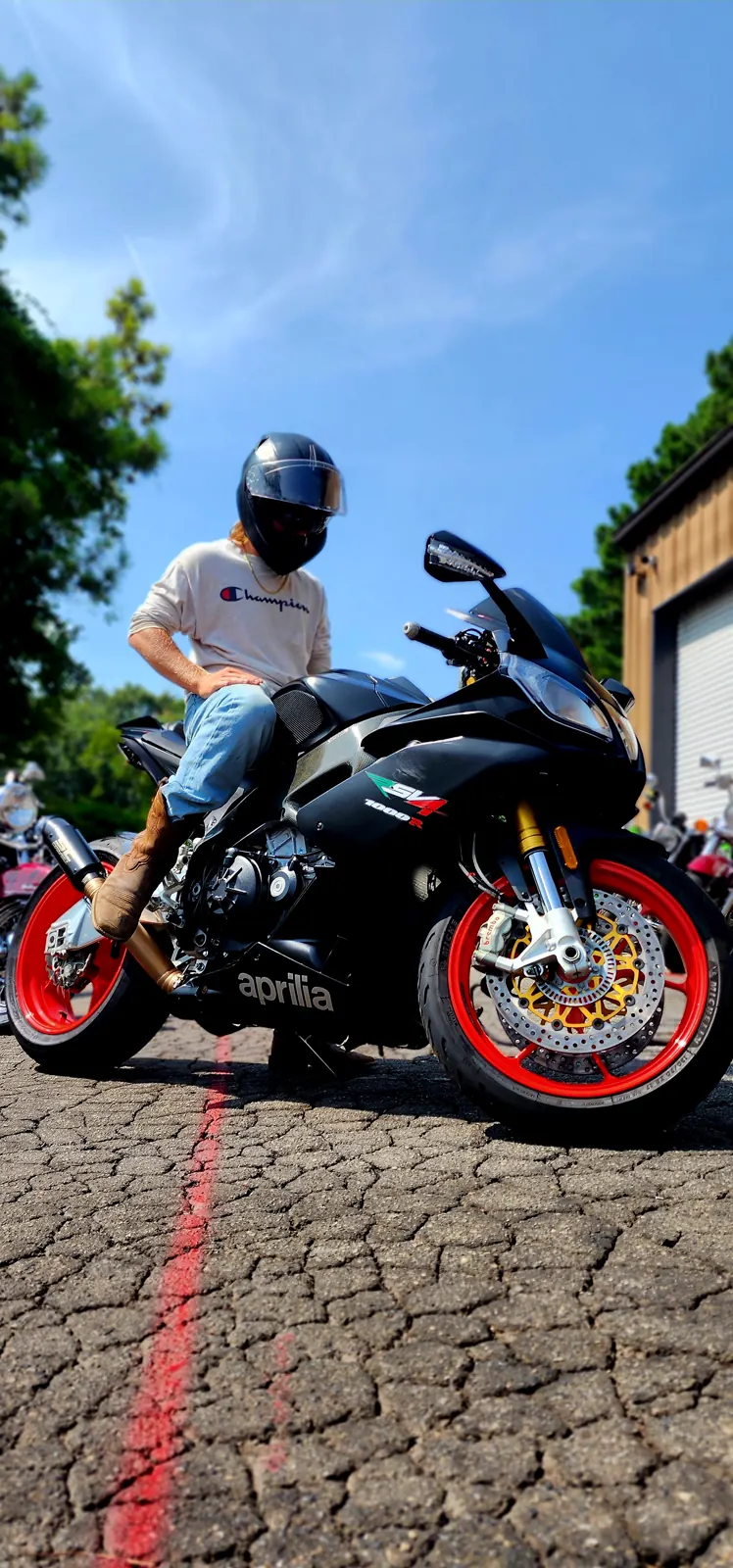
Something changes once you know what to look for. A cloudy patch stops being a mystery and becomes a checklist item. So when your bike rolls into our bay, we don’t guess and we don’t hope. We work through the same steps every single time, and that consistency is what keeps small problems small.
What we check
- The whole surface in strong light. Haze wipes clean under a proper polish; true pitting does not, and that alone tells us how far things have gone.
- The depth of the pits. Shallow pitting polishes out. Deeper craters get filled and blended, or the part heads out for re-plating if it’s too far gone.
- Wheels and spokes. On wire wheels especially, we look hard, because heavily rusted spokes are more than a looks problem.
- Fasteners and hardware. Rusty bolts can seize up, so we flag those before they become a headache.
- The exhaust. Bluing and pitting near the head tell us about heat, jetting, and how the bike has been running.
- What’s protecting it now. Bare chrome with no sealant is an open door, so we plan the protection step before you ever leave.
From there we match the work to the metal. Light haze might just need a machine polish and a good sealant, and it comes back to a deep, wet-looking shine fast. Heavier pitting takes real correction, patient hand work, and sometimes a plating referral. If you want the full list of what we do, it runs from paint correction to ceramic coating, but chrome is where the payoff shows up quickest.
Mistakes to avoid
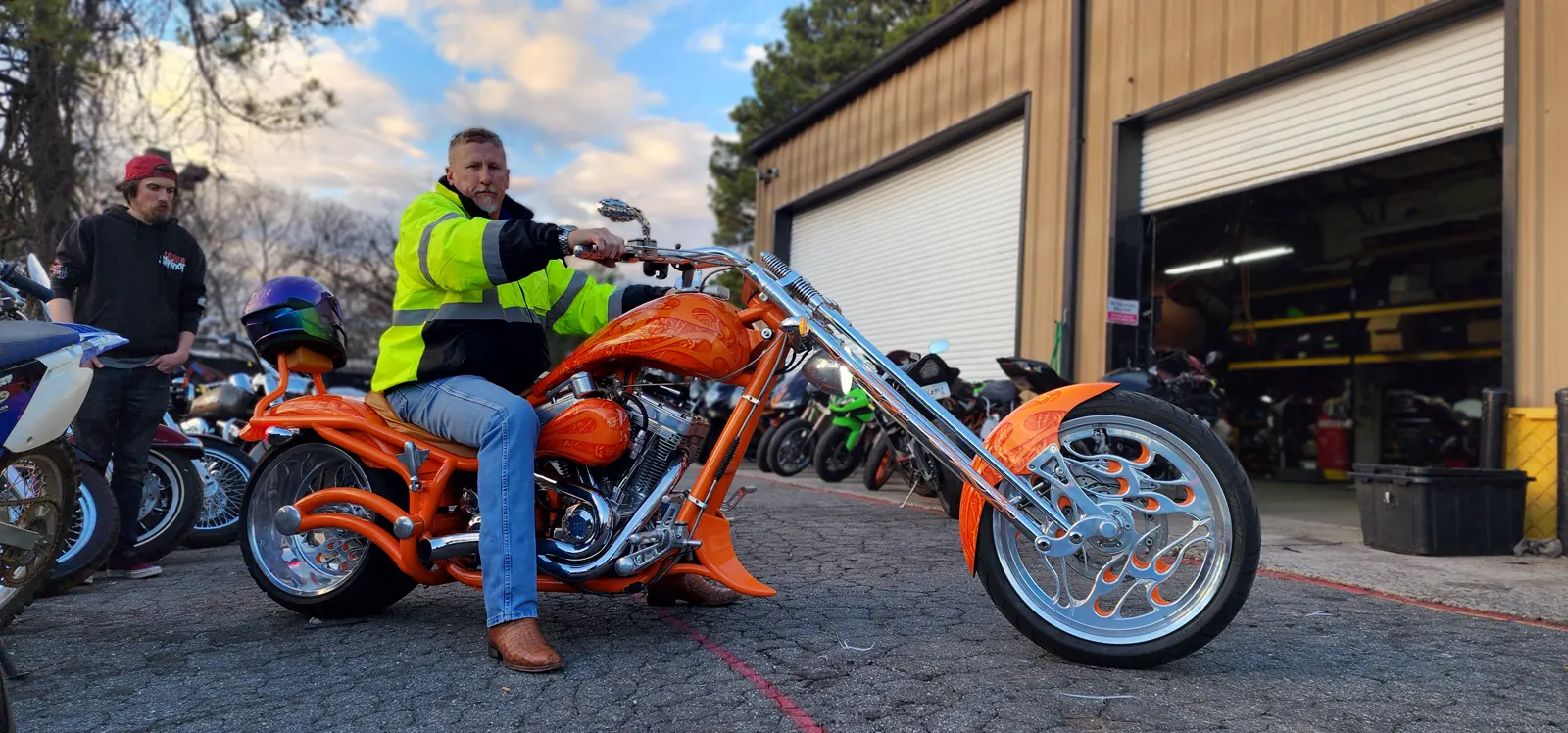
Most chrome damage we see wasn’t caused by riding at all. It was caused by good intentions and the wrong products. So before you reach for anything under the sink, here’s what to skip.
- Steel wool and scouring pads — they scratch, and every scratch turns into a rust line later.
- Harsh acids and oven or wheel cleaners — they’re far too strong for plating and can etch it in minutes.
- Putting the bike away wet — a two-minute towel dry beats a whole winter of slow corrosion.
- Ignoring early haze — that cloudy film is the cheapest, easiest stage to fix, and waiting only lets it dig in.
- Automotive paste on chrome — products made for car paint don’t always play nice with plating, so use chrome-specific care.
Do the opposite of that list and you’re most of the way home. Wash gently, dry the bike fully, protect the surface, and deal with haze the week you spot it instead of the season after. It really is that straightforward once the panic is gone.
QUICK RULE
If a haze wipes off with polish, you caught it early. If your fingernail catches a tiny crater, that’s a pit — bring it in before it spreads.
Is it safe to ride like this?
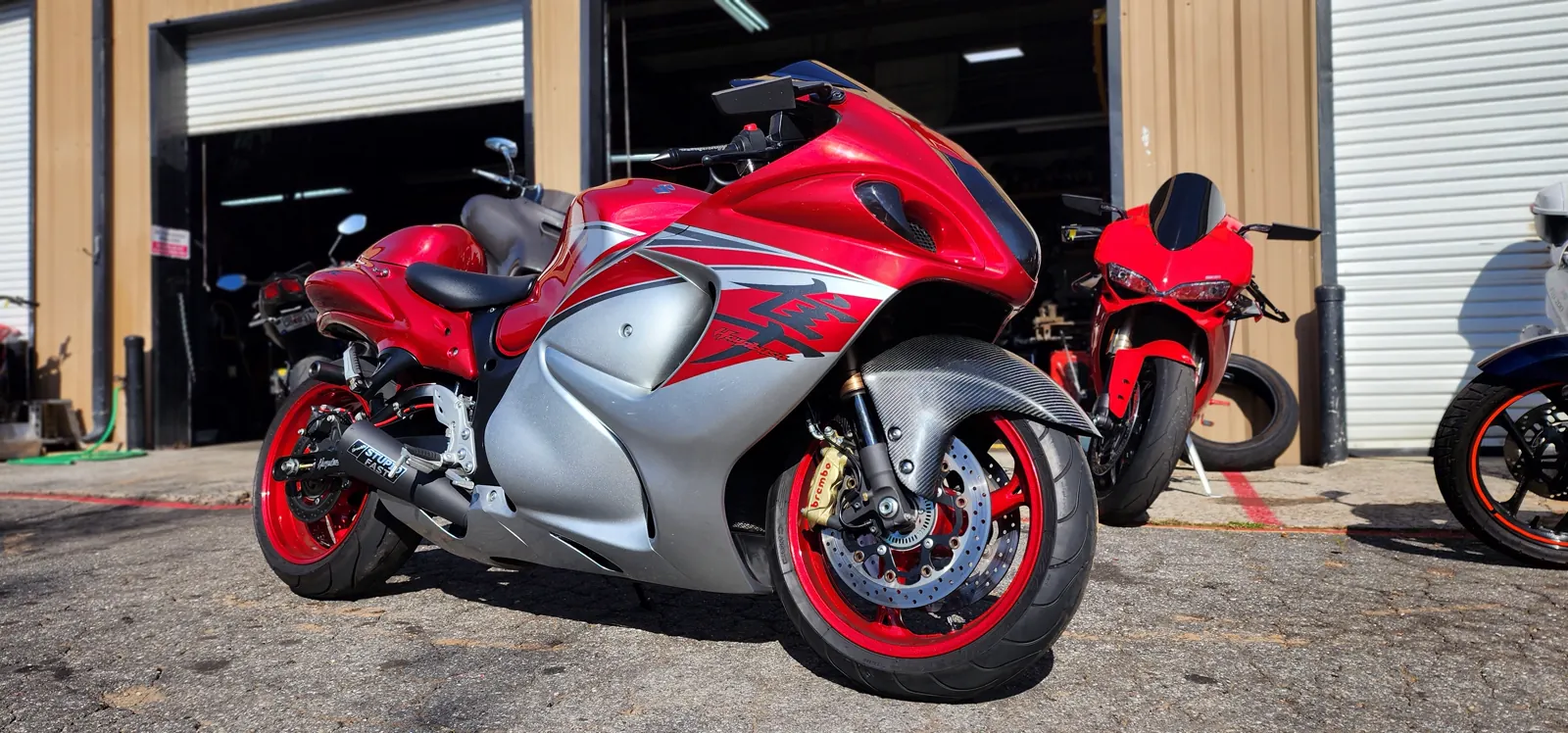
Almost always, yes. Chrome pitting is a surface problem, and a hazy pipe or a freckled fender won’t stop you from enjoying a real day out. If you’re planning the Georgia Triangle out of Stonepile Gap — SR 60 up to Suches and back over Wolf Pen Gap Road on SR 180 — cosmetic pitting isn’t going to hold you up on that full-day loop. That ride is about the corners, not the shine, and a little haze on the pipes won’t change a single one of them.
There are a couple of moments to slow down and check, though. Deep rust on wire-wheel spokes, flaking chrome on a structural part, or seized rusty fasteners all deserve a look before a long trip. Your tires earn the same honesty, especially on a bike that’s been sitting; Dunlop’s technical resources explain how flat spots and age affect grip. And if it’s been a while since you rode with real confidence, the MSF Basic RiderCourse is a great reset. None of that is chrome, but it’s all part of trusting your machine again.
Now for the part that has nothing to do with parts at all
Fixing chrome pitting Powder Springs riders bring us isn’t only about metal. It’s about how the bike makes you feel when you walk up to it in the driveway. Clean, deep chrome you can check your reflection in changes the whole machine. The tank feels slick under your palm. The bike ends up looking better than the day it rolled off the showroom floor, and honestly, that feeling is a big reason a lot of us ride in the first place.
There’s a practical side, too. A bike that’s clearly been cared for holds its value, and buyers notice bright chrome before they notice anything else. Dull, spotty metal makes a whole bike look neglected, even when the engine is flawless. Bright, deep chrome does the opposite — it tells a buyer the owner sweated the details. That counts for a lot in a town where people keep their machines for years rather than flipping them. Want the same problem from another angle? The Cartersville side of things covers a nearby market, and when a bike needs to reach us safely, how we handle that job keeps it protected door to door.
Powder Springs, from our bay to yours
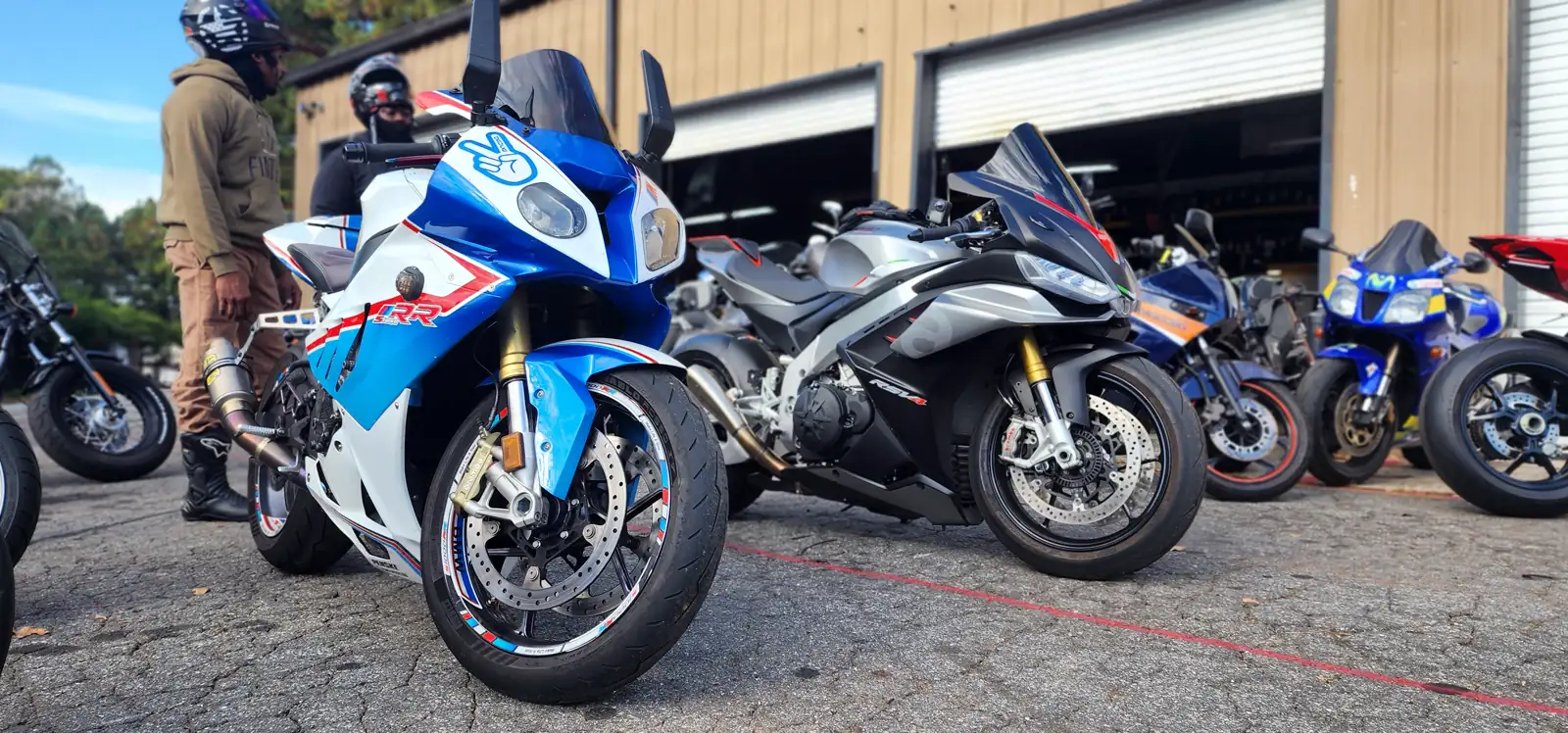
We sit right in the middle of West Cobb’s riders, and this is proper OTP territory — nobody out here calls it Atlanta. Folks roll in from Echo Mill, where the swim-and-tennis crowd keeps weekend bikes tucked in the garage, from the newer townhomes at Village at West Cobb built between 2019 and 2021, and from Croftside, the most active listing community in the city right now. Nearly all of these are single-family homes with two-car garages, which is exactly why chrome sits and pits over a long off-season.
You’ll spot bikes near the Wildhorse Trail, the mile-and-a-half connector that runs from Wild Horse Creek Park over to the Silver Comet path, and on Friday nights around McEachern High School and Walter H. Cantrell Stadium, where twelve thousand fans give this corner of Cobb its identity. Getting your bike to us is easy, too. From most of Powder Springs it’s roughly fifteen to eighteen miles up Powder Springs Road or Macland Road (GA 360) into Marietta, then east toward Barnes Mill Road — figure roughly thirty to forty minutes depending on traffic.
And if you’ve ever priced a used bike at WOW Motorcycles on Cobb Parkway North, about seventeen to nineteen miles northeast, you already know west Cobb riders travel a bit for the right shop. There’s no full-service motorcycle shop inside Powder Springs itself, so a little drive comes with the territory — and it’s a short one for work done right.
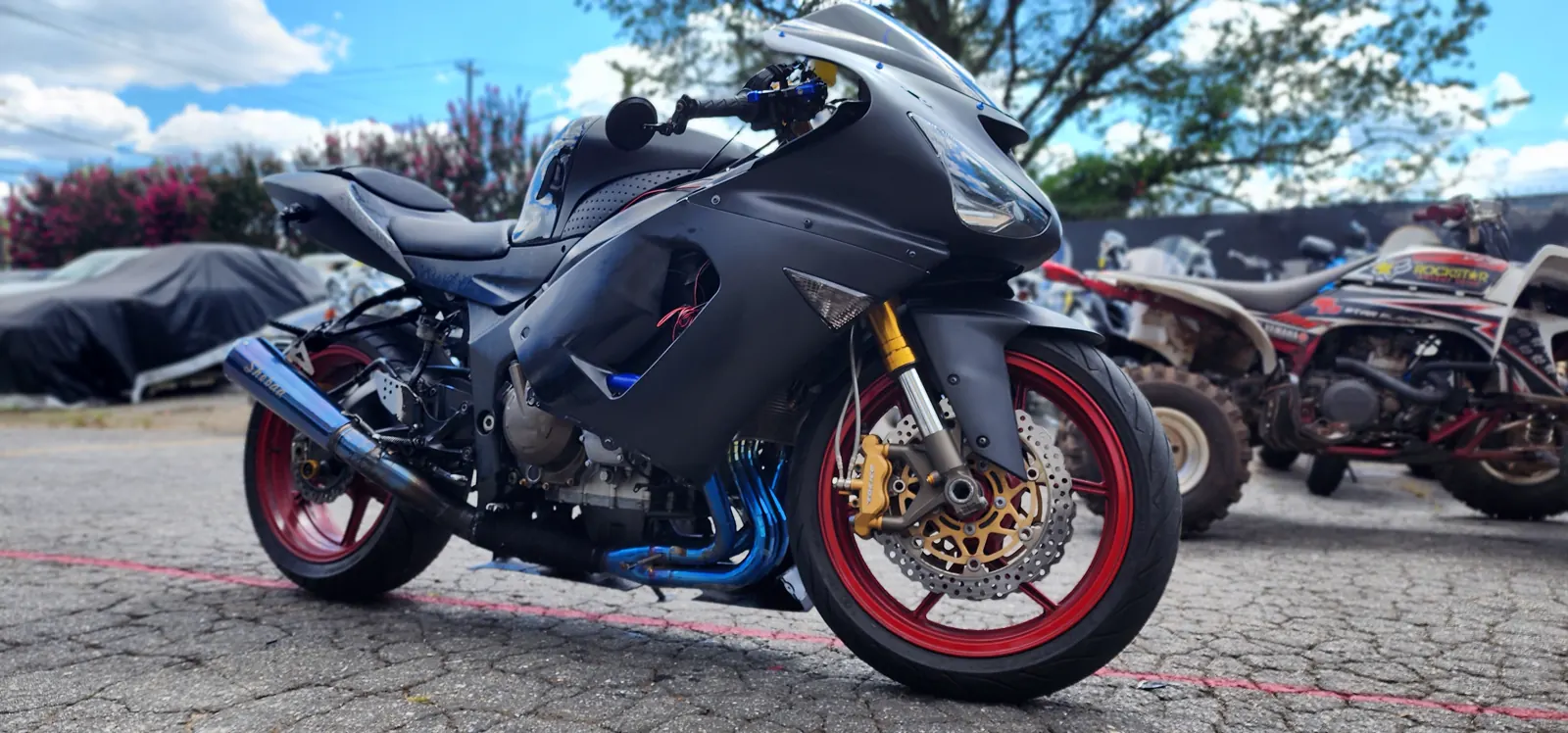
Catch the haze early, and your chrome can look better than showroom — and stay that way.
That’s the whole point. You don’t have to accept dull, freckled chrome as just part of owning a bike in Georgia. Once you know the causes and catch it at the haze stage, you’re in control of your finish instead of the weather calling the shots. Bring us the machine, tell us where it lives and how it’s stored, and we’ll hand it back gleaming — with a plan to keep it that way.
Questions Powder Springs riders ask us
What actually causes chrome pitting?
Most of the time it’s moisture plus time. Humid Georgia nights, acidic pollen, hard-water spots, and road grime left on the surface all team up to break the plating down. A bike stored dirty over winter is the classic setup, and it’s completely avoidable once you know.
Is it safe to ride with pitted chrome?
Usually, yes — pitting is a cosmetic surface issue. The exceptions worth checking are deep rust on wire-wheel spokes, flaking chrome on a structural part, or seized rusty fasteners. Have those looked at before a long trip, and you’re good to go.
How do you find the cause?
We inspect the whole bike in strong light, test whether the cloudiness polishes off, gauge how deep the pits are, and check the wheels, fasteners, and exhaust. The pattern of the damage usually tells us how it started, which tells us how to stop it coming back.
Could it be something other than pitting?
Sometimes it is. Hard-water spots, baked-on grime, and light oxidation can all look like pitting but wipe away with the right polish. That’s the best outcome, because it means the fix is simpler than you feared.
What if I just ignore it?
Small pits get bigger and can spread into rust, which is much harder to reverse than a light haze. Catching it early is far easier than waiting until the plating starts to flake, so the sooner we see it, the less work it takes.
Will a coating stop it from coming back?
A quality sealant or ceramic coating makes the surface easier to clean and helps it shed water, which slows corrosion down. It’s protection, not armor, though — it isn’t scratch-proof, and it lasts years depending on how the bike is stored and cared for.
Powder Springs is home base for us, but plenty of friends we’ve helped ride in from all over the area. We see bikes from Marietta and Smyrna, from Austell, Mableton, and Clarkdale, and out west from Hiram, Dallas, and Villa Rica. Douglasville and Lithia Springs riders make the trip too, right alongside folks from Kennesaw and Fair Oaks. Wherever you keep your bike, if the chrome’s looking tired, our door’s open.
LET'S BRING BACK THE SHINE
Ready to stop the pitting and get that mirror finish back? Text us a photo of your chrome and we’ll tell you straight what stage it’s at and what it needs. We look after Powder Springs riders like the bikes are our own — send a message and let’s get your machine gleaming again.
470-460-9883Diaz Motorcycles and Service, LLC · 847 Barnes Mill Road, Marietta, GA 30062