Enclosed Transport in Powder Springs — How to Choose
Open trailer or enclosed? Here's the honest way West Cobb riders decide before a bike ever gets tied down.
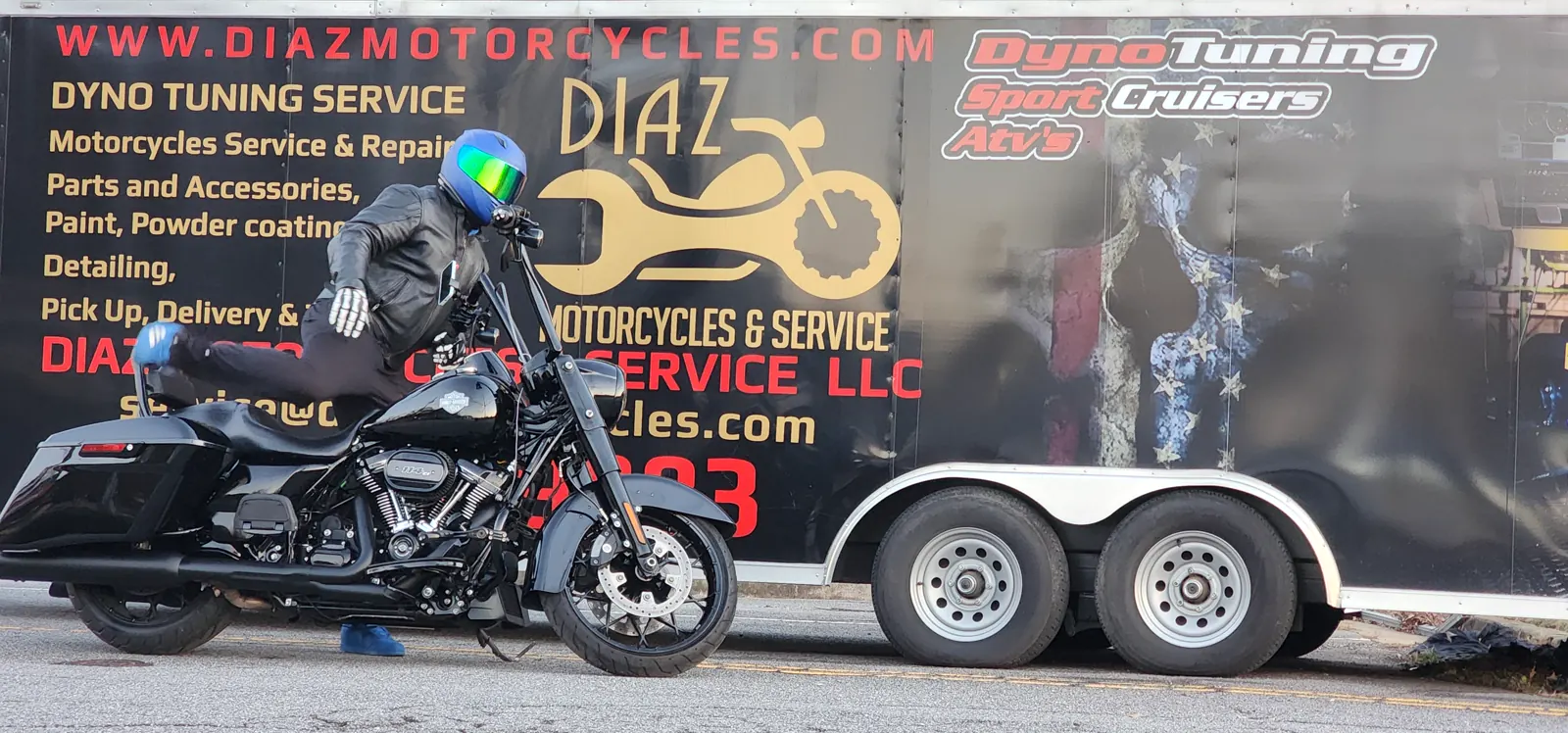
After that, Picture our shop floor on a slow Tuesday morning. Also a black Road King is up on the lift with its front wheel off the ground, and the bike that came in right before it is still ticking as it cools on the trailer outside. Instead that trailer, honestly, is the whole story. When folks ask us about enclosed transport Powder Springs riders can count on, they’re really asking one simple thing: open trailer or enclosed box, and which one is right for my bike?
So let’s answer it straight, because you came here for a real recommendation and not a shrug. Both work. Both are safe when the load is done right. Besides the choice comes down to what you’re moving and how far it’s going. Actually We’ll lay out both sides fair and square, tell you which one we’d pick for your situation, and point out the moment the other choice quietly wins.
The short answer, before anything else
Here’s our recommendation in one breath. That’s why For a short local hop with a solid, healthy bike, open transport is the smart, no-fuss pick, and we’ll tell you so even when you’re expecting us to talk you into more. It’s quick to load, easy to strap, and you’re back on the road fast. Most West Cobb pickups fit this box perfectly.
Enclosed transport earns its keep the second the stakes go up. A long haul, a rare or vintage machine, a fresh paint job, or a restoration you’ve sweated over for a year — that’s when we point you toward the enclosed trailer every time. Walls and a roof mean no road grime, no rock chips, no surprise rain shower somewhere on the interstate. If you’d wince at a single scratch, you already know the answer.
To put it plainly, choosing enclosed transport in Powder Springs isn’t about spending more for its own sake. It’s about matching the trailer to the risk. A twenty-minute local move and a two-day interstate haul carry very different odds, and the enclosed box simply removes the variables you can’t control. When we walk a customer through it, we’re really just helping them decide how much they want to leave to chance — usually the answer sorts itself out in about a minute.
What actually drives the choice
Three things move the needle, and none of them are complicated. First is distance. A ten-mile move across town and a six-hundred-mile move to another state are not the same job, and they don’t call for the same trailer. Second is what the bike is worth to you — not just the price tag, but the paint, the plating, the hours you’ve put in. Third is the weather you’d have to gamble on. Open trailers do great in clear conditions. Enclosed trailers simply don’t care what the sky does.
Your bike itself changes the math too, and this is where riders sometimes talk themselves in circles. A well-used daily bagger that’s meant to be ridden hard shrugs off an open trailer. A show-quality Softail with mirror chrome does not. If you’re weighing the two options and you want to see how folks in a different city think it through, here’s what Woodstock riders run into — same service, same trade-offs, different garages.
Two bikes with the same symptom can need completely different work. We see it all the time on the transport side, not just the wrench side. A bike that won’t start might just need a battery, or it might be hiding something bigger, and you can’t tell from the driveway. That’s exactly why “we come get it” beats every other plan for a stuck bike — you don’t have to diagnose anything to load it. If yours won’t fire up before a move, here’s what usually causes it, and either way we’ll roll it onto the trailer and sort the rest at the shop.
What we check on every single load
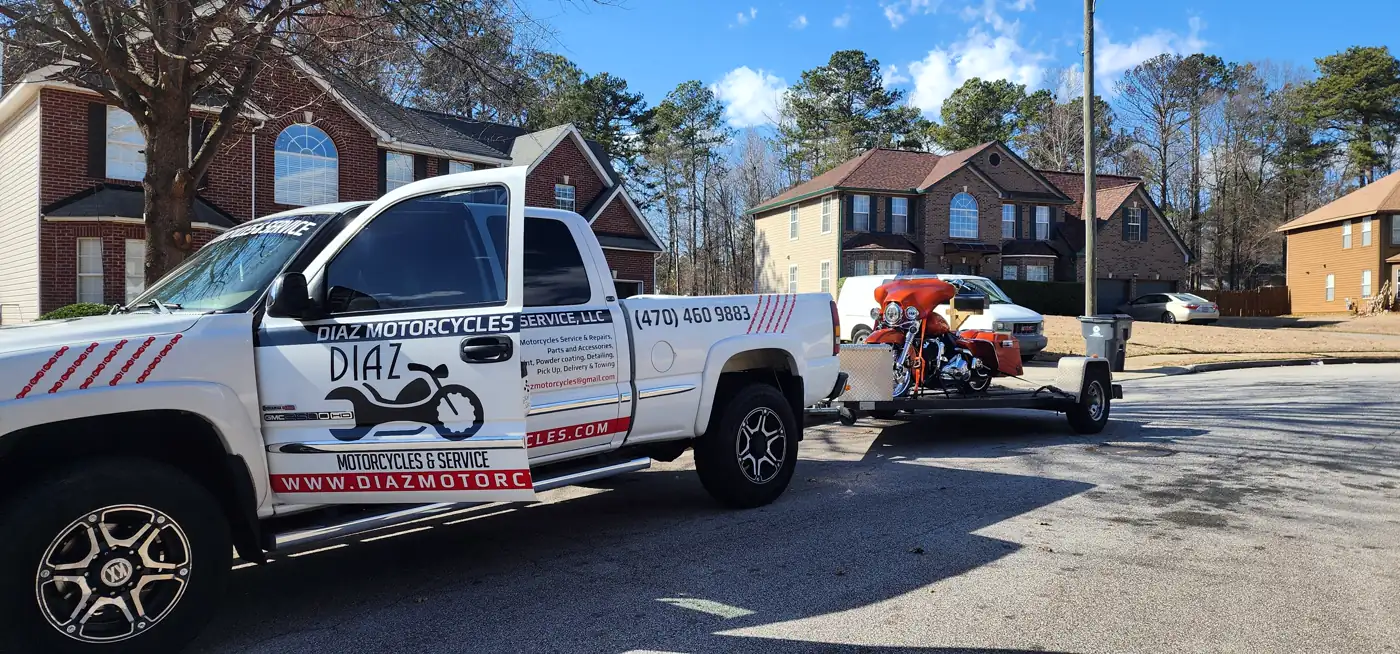
Open or enclosed, the tie-down is where a safe move is won or lost. We use soft loops around solid parts of the frame or triple tree, never around a brake line or a cable, and we snug the bike down so the front suspension compresses a bit and stays that way. That little bit of preload is the secret — it keeps the bike from bouncing loose over a rough patch. Then we chock the front wheel and add rear straps so nothing can walk sideways.
After the straps are set, we do a quick walk-around and give the bars a gentle push. If the whole trailer rocks together with the bike, it’s locked in. If the bike wobbles on its own, we start over. It takes a few extra minutes and saves a whole lot of heartache. The load is the same care whether it’s an open deck or the enclosed box — the trailer changes, but the standard never does.
The checklist we run through looks like this, and it’s the same every single time:
- Soft loops on the frame or triple tree, never on brake lines or cables
- Front wheel chocked and strapped so the fork stays compressed
- Rear tie-downs balanced left and right so the bike can’t lean
- A push test at the end — trailer and bike should move as one
- Fuel petcock off and battery secure on longer hauls
Documentation is the part most people forget until they wish they hadn’t. Before a wheel ever rolls, we take photos of the bike from every angle and note any existing scuffs with you standing right there. That way the condition is on record, plain as day, and there’s never a question later about what happened where. On an out-of-state buy or an inherited bike you’ve never laid eyes on, that paper trail is your best friend. It’s a small habit that protects you completely.
This matters a little more with an estate or inherited bike, since you often don’t know its history at all. Maybe it sat under a cover for a decade in someone’s garage. Maybe it ran fine last summer. Either way, a documented pickup gives you a clean starting point, and it means nobody can point a finger at the move if something turns up later. We’ve helped a lot of friends bring home a bike that meant something to their family, and getting it here safe and on the record is the part that lets them relax.
Mistakes to avoid
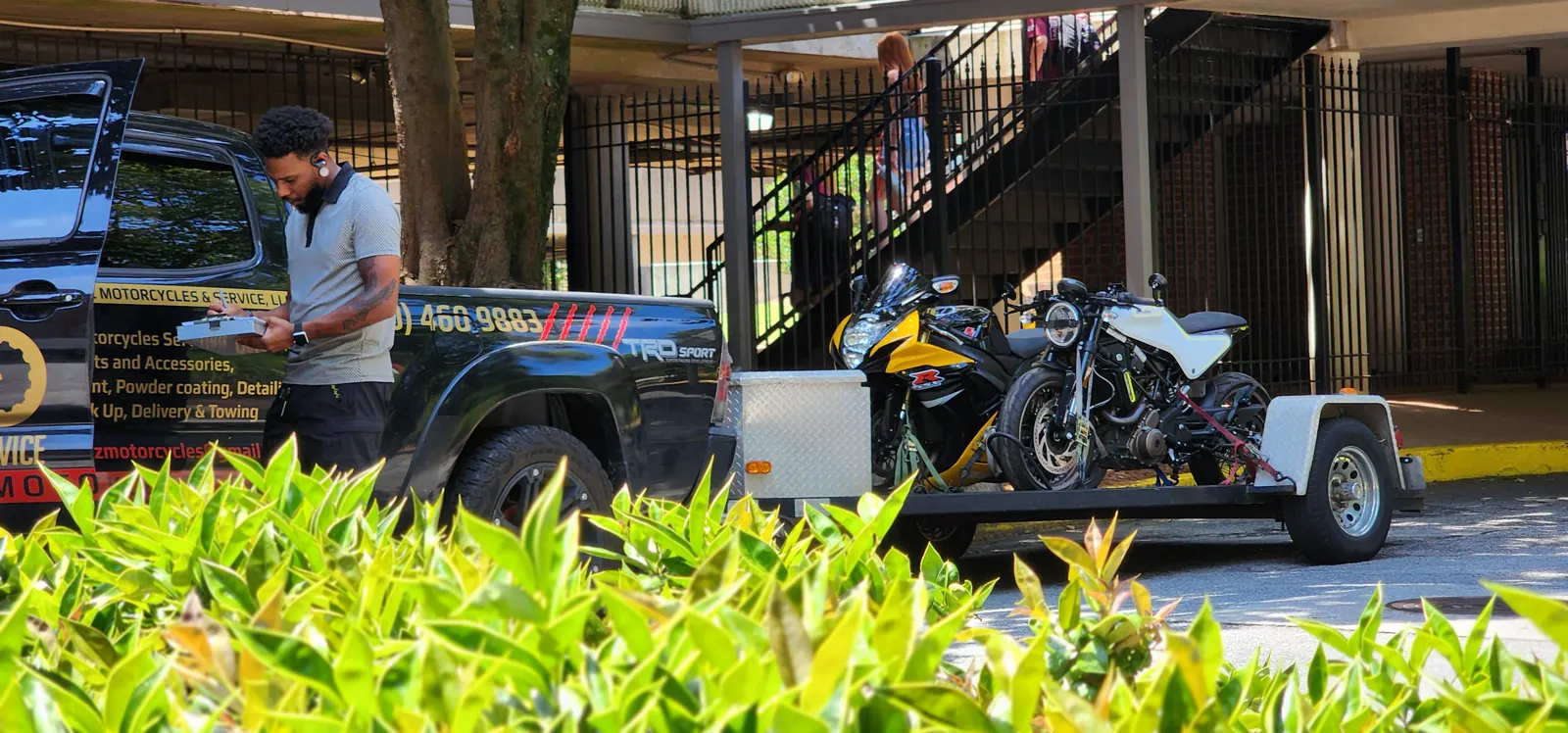
The most common one is riders trying to move a non-running bike themselves. They borrow a ramp, wrestle a dead machine up a plank alone, and something gets dropped or somebody gets hurt. There’s no medal for that. Call us instead — a stuck or won’t-run bike is the exact job where transport shines, and we’ve loaded plenty that hadn’t turned over in years. That’s really what the work covers from day one.
Another slip is skipping the enclosed trailer on a long haul because the sky looks clear at the driveway. Weather three hours down the road doesn’t ask your opinion. And a third one is over-tightening straps until the fork bottoms out hard — that stresses seals and can leave you with a leak. Snug and steady beats cranked down. If you want to double-check torque specs or fluid notes for your model before or after a move, the Harley-Davidson service information portal is a solid place to land.
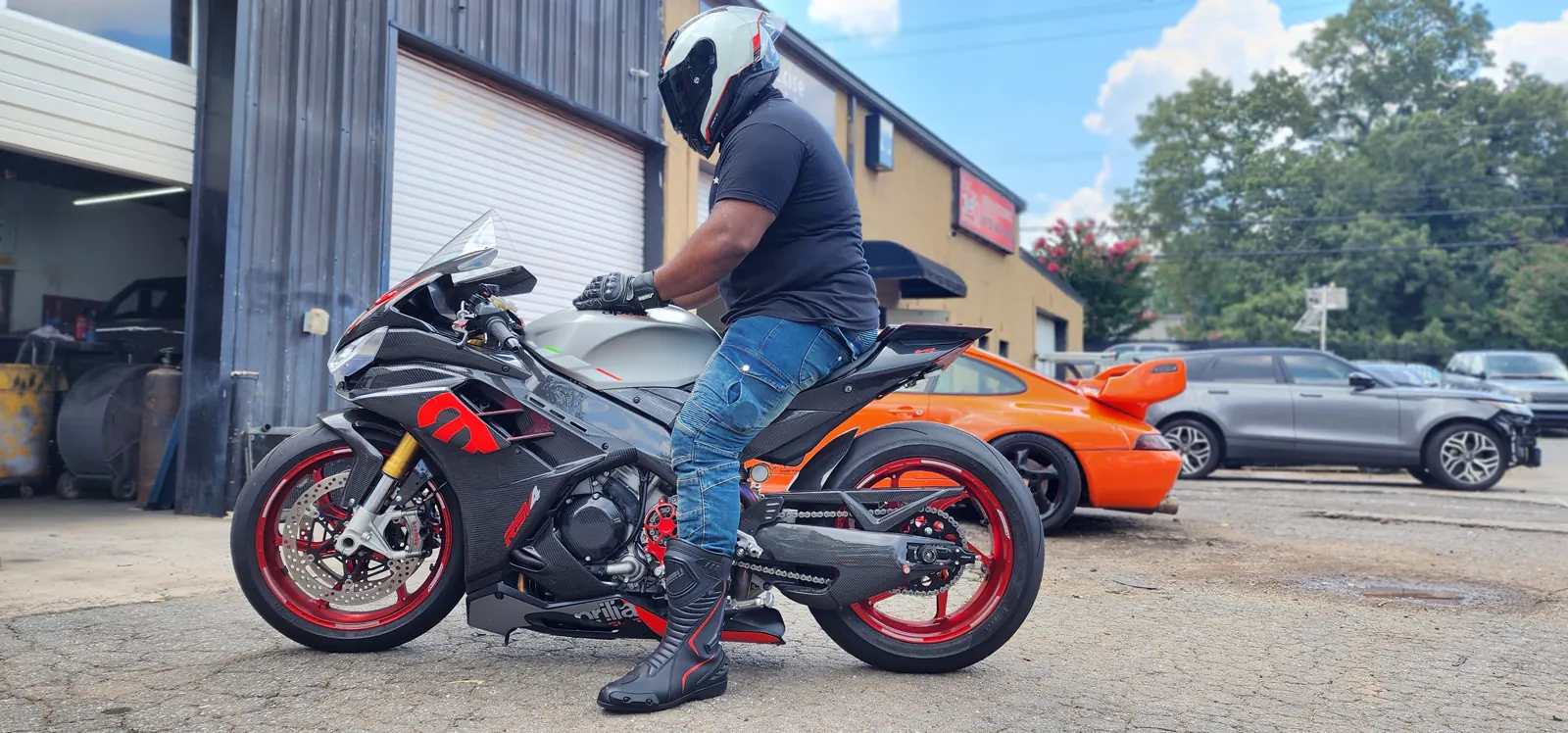
One more thing, and it’s the part riders thank us for later. On any move we handle, we hand you those before-and-after photos and the condition notes to keep. Nothing to chase down, nothing to argue about. Folks don’t always think they need it when the bike looks perfect — then a year later they’re selling that same bike, or filing something, and there’s the clean record sitting right in their phone. It costs you nothing and it never expires.
That habit matters even more when the bike is going to sit. Around here, plenty do. A machine that’s about to spend a West Cobb winter in a two-car garage should go into storage documented and clean, so spring wake-up starts from a known baseline instead of a mystery. Fresh riders brushing up on handling before the season can find MSF rider courses worth the weekend, too.
How this plays out in Powder Springs
West Cobb is homeowner rider country, and that shapes every transport call we get out here. Most bikes live indoors, get ridden on weekends down runs like GA 61 toward Dallas and Villa Rica, and are expected to last for years. In newer streets like Croftside, the city’s most active listing community right now, and in settled subdivisions like Echo Mill with its swim and tennis or the older lots over in Oakleigh, the story’s the same — the bike sits in the garage next to the truck and comes out when the weather’s right.
Because there’s no full-service motorcycle shop inside Powder Springs, the real question isn’t whether to bring the bike to us — it’s how. That’s the whole point of pickup and delivery. You don’t ride a non-running bike, and you shouldn’t have to. Our friends out here lean open trailer for a quick local move and enclosed for anything precious or far, and we help them pick without any upsell. Curious about everything under that umbrella? Here’s the full list of what we do.
The seasonal rhythm out here feeds right into this. Riding season runs March through November and peaks in spring and fall, but plenty of bikes sit through the cold months and lose a battery to it. So a lot of our enclosed transport in Powder Springs happens at the shoulders of the season — hauling a stored bike in for spring wake-up, or moving a fresh purchase before the good weather hits. Timing the move for a quiet weekday means your bike is ready the moment those mild sixty-degree days show up.
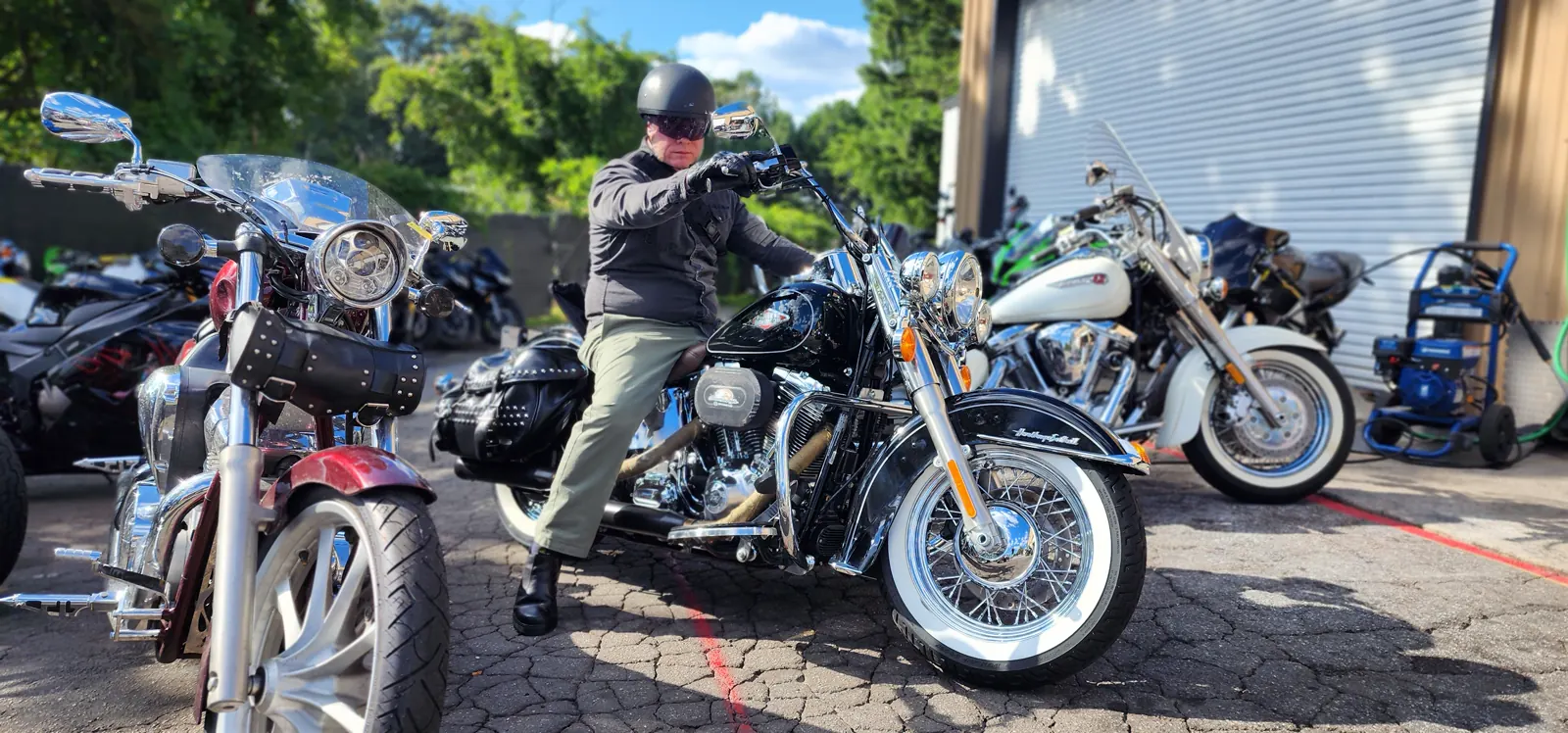
Geography does the rest. Interstate 20 sits roughly eight to ten miles south by way of C.H. James Parkway and Thornton Road, and that’s the run toward Atlanta a long-distance enclosed job usually takes. Atlanta Harley-Davidson down at 501 Thornton Road in Lithia Springs, about twelve to fifteen miles south, keeps a season bike night schedule if you like a crowd. And when your bike comes to us, it’s about fifteen to eighteen miles and roughly thirty to forty minutes up Powder Springs Road or Macland Road into Marietta, then east on Roswell Road to Barnes Mill Road. You never have to make that trip in the saddle if the bike isn’t ready — that’s what we’re for.
There’s plenty here that isn’t for riding, and that’s fine too. The Powder Springs trailhead of the Silver Comet Trail is one of the busiest access points on that fifty-nine-mile path, but it’s for walkers and cyclists only, not bikes. On a rest day, the free Seven Springs Museum in the Queen Anne-style Bodiford House at 4355 Marietta Street is a nice, quiet stop. A good move on Monday means your bike is ready for whatever the weekend brings.
The outcome you actually want
Pick the trailer that lets you stop thinking about the trailer.
When the choice is made right, you feel it. The bike shows up exactly the way it left, the paperwork’s in your hand, and you get to be a little proud of how smooth the whole thing went — no drama, no borrowed ramp, no scratch you have to explain. Open when it’s simple, enclosed when it’s precious, and a straight answer either way. Problem handled, bike protected, weekend saved. That’s the whole job, and West Cobb riders deserve nothing less.
Questions Powder Springs riders ask us
Which is right for my riding?
If you ride weekends on a healthy bike and mostly need short local moves, open transport fits you fine. If you own something rare, restored, or freshly painted and you’d hate a single chip, enclosed is your match. The way you use the bike usually points to the answer on its own.
Can I switch later?
Absolutely. The trailer isn’t a lifelong commitment — it’s a per-move decision. Plenty of our friends use an open trailer for a quick local pickup and then book enclosed the next time they’re moving something special or heading a long way. Just tell us what the job is and we’ll match it.
Which do you recommend?
For most short West Cobb moves with a solid bike, we recommend open — it’s fast and easy and there’s no reason to pay for more. For long hauls, out-of-state buys, or high-value machines, we recommend enclosed without hesitation. We’d rather steer you right than sell you extra.
Does my bike change the answer?
Yes, quite a bit. A well-used bagger meant to be ridden hard is happy on an open trailer. A show-chrome Softail, a fresh sportbike fairing, or a vintage project belongs in the enclosed box. The more the finish matters to you, the stronger the case for enclosed.
Is the upgrade to enclosed worth it?
On the right bike, yes. Enclosed means no road grime, no rock chips, and no weather gamble, which is real peace of mind on a machine you care about or a long trip. On a durable daily rider going across town, though, it’s honestly overkill — and we’ll say so.
What if my bike won't start?
That’s the easiest call there is — let us come get it. A stuck or non-running bike is exactly where transport beats every other plan, because you don’t have to diagnose or ride anything. We load bikes that haven’t fired up in years, then sort out the cause back at the shop.
We handle pickup and delivery all across West Cobb and the western metro, so beyond Powder Springs we regularly load bikes in Marietta, Austell, Mableton, Smyrna, and Fair Oaks, then swing west and south to Hiram, Dallas, Clarkdale, Douglasville, Lithia Springs, Kennesaw, and Villa Rica. If your bike is sitting in a garage anywhere in that stretch, we can bring the right trailer to your driveway.
STUCK BIKE? WE'LL COME GET IT
Whether you need a quick open-trailer hop across Powder Springs or an enclosed haul for something precious, we’ll pick the right setup and pick up your bike. No ramps to wrestle, no scratches to explain — just text us your bike and where it’s parked, and we’ll take it from there.
470-460-9883Diaz Motorcycles and Service, LLC · 847 Barnes Mill Road, Marietta, GA 30062