Chrome Pitting in Sandy Springs — Why It Happens
Those tiny spots on your chrome have a cause, and catching them early is almost always the whole fix.
It started as one speck. On the other hand one tiny spot on the exhaust, right where the sun catches it. So you rubbed it with your thumb and it did not budge. A few weeks later there were three, then a little rough patch you could feel through a rag. The chrome pitting Sandy Springs riders bring us almost always starts exactly this small — quiet, easy to miss, and easy to fix if you catch it early.
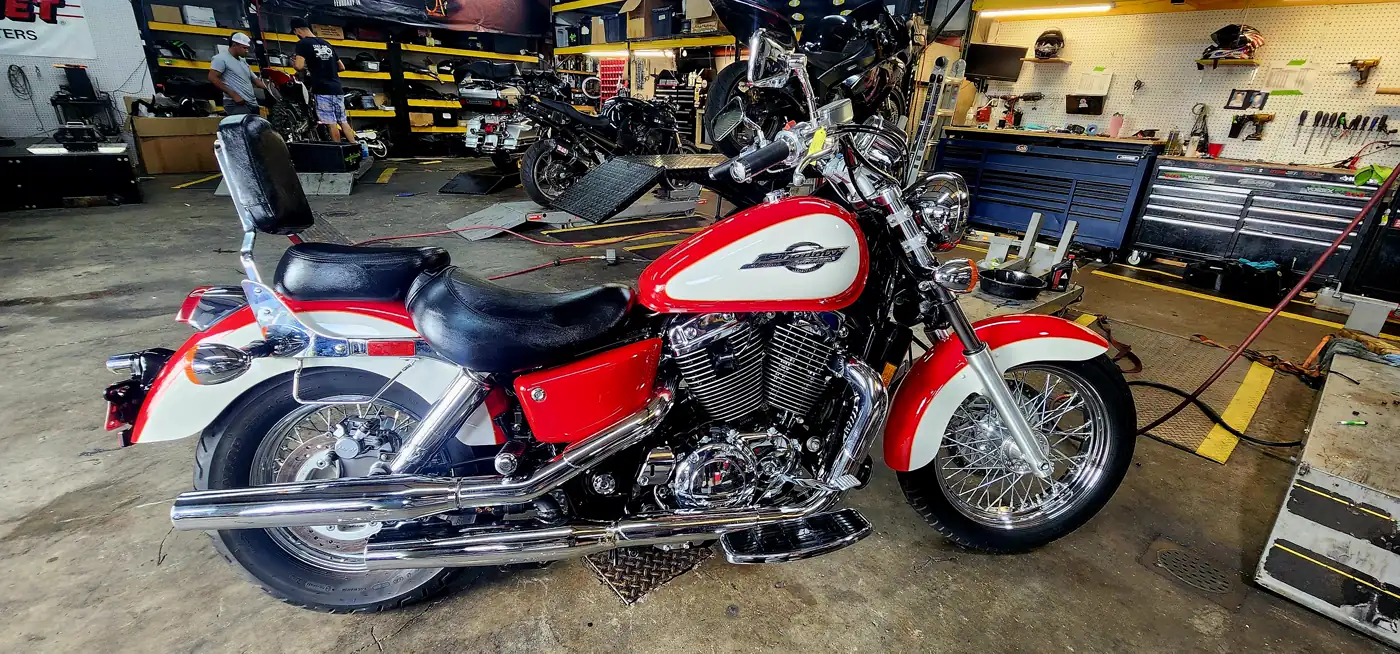
You usually notice it in the light first. The chrome loses that deep, wet-looking shine and picks up a faint cloudy haze. Run a bare finger over it and instead of glass you feel a fine grit, a little like very light sandpaper. Then come the tiny dark freckles, often around the exhaust, the fork lowers, the spokes, or the base of the mirrors. Left alone, those freckles grow into craters and start to flake. None of it happens overnight, which is exactly why it sneaks up on good riders.
First, the short version
Here is the good news, right up top. Pitting is just corrosion — rust that found a tiny weak spot in the chrome and moved in. Catch it early and it polishes off like it was never there. Catch it late and the metal under the plating is already eaten, which means that piece needs re-plating. So the whole thing comes down to time. The sooner you look, the smaller the job.
And to answer the question every rider asks first: a little surface pitting is completely safe to ride on. This is a looks problem, not a stopping problem. Your brakes, your bars, and your wheels all do their job just fine. The one real exception is when a pit digs into something that holds weight or holds parts together — a spoke, an axle, a critical bolt. That is rare, and it is exactly what a quick look catches long before it matters.
SAFE TO RIDE?
Light, cosmetic pitting is safe to ride on — treat it as a to-do, not an emergency. The time to stop and check is when a pit reaches a spoke, an axle, or a bolt that holds something together.
What actually causes it around here
Most of the time, the cause is not what you did on the road. It is where the bike sleeps. Moisture sitting on bare or thinly plated metal, hour after hour and night after night, is what starts the whole thing. Everything else just speeds it along.
Sandy Springs makes that easy. The chrome pitting Sandy Springs summers bring on has a few local helpers: humid air, weeks of pollen coating everything, and tap water that leaves hard mineral spots when it dries. Park outside, skip a wash after a wet ride, and the finish never gets a break. It is the same story just down the road, and here is what Mableton riders run into, because the weather does not care about the county line.
- Water left to dry on the metal — rain, a hose, or morning dew that beads up and just sits there.
- No garage, so the bike lives under a carport, in a lot, or on the street through every damp night.
- Hard-water spots from washing, then letting the bike air-dry in full sun.
- Pollen, bug guts, and road film that turn mildly acidic and slowly etch the surface.
- Winter road grit and the salt trucks drop before an ice event.
- Sun baking off whatever wax or sealant used to be protecting the shine.
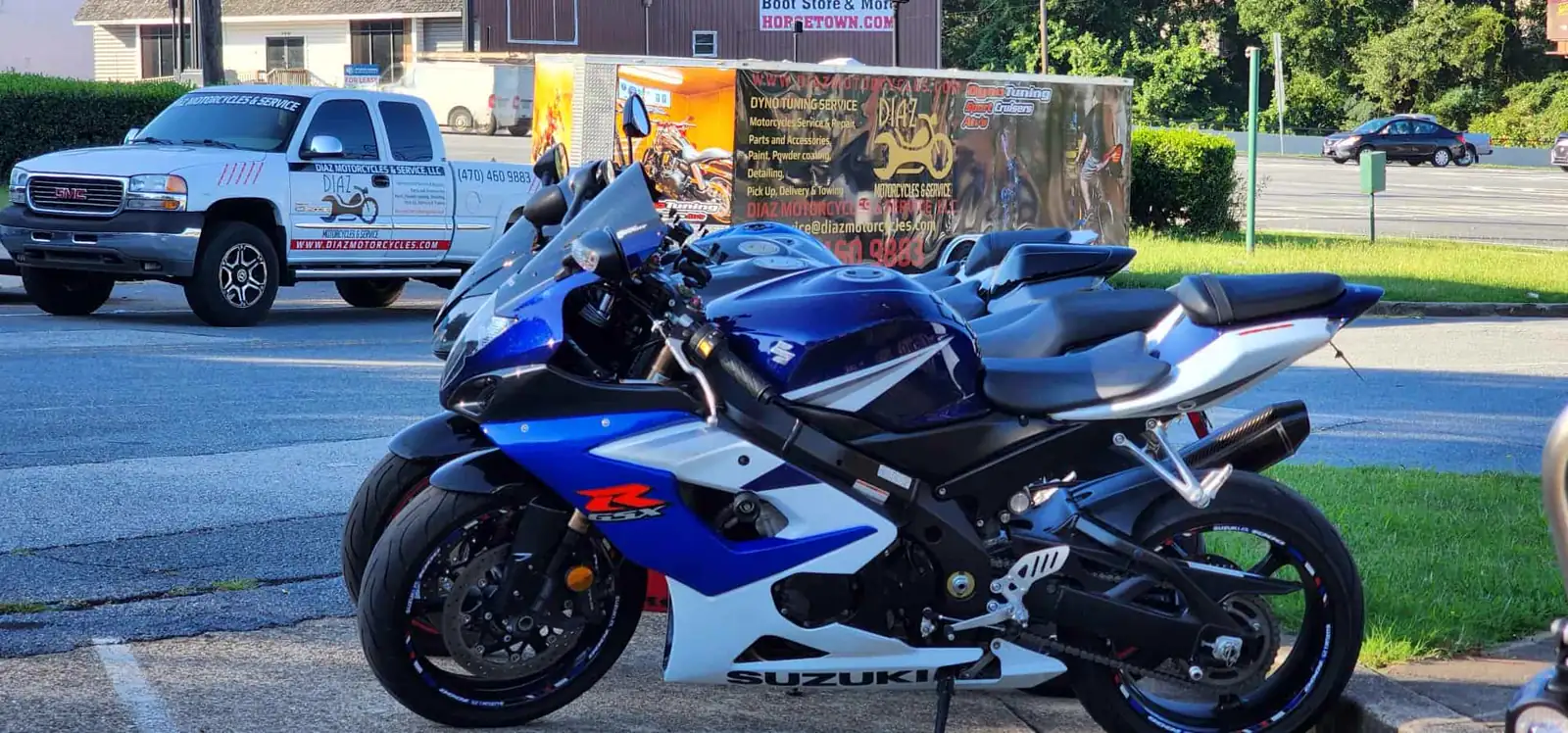
That no-garage life is common here, and not by choice. A big share of the homes in the area are rentals, and plenty of riders store under a carport, in a condo deck, or on the street with no outlet nearby for a battery tender. In neighborhoods like High Point and Wembley Hall, where classic mid-century houses line the streets, a covered outdoor spot is often the best a bike gets. A cover helps with sun, sure — but if the bike goes under damp, that cover traps the moisture right against the chrome all night.
Even the north-side garages are not automatically safe. Out in the Dunwoody Panhandle, where luxury homes sit near the Chattahoochee and a lot of ranch houses are mid-renovation, we still see gorgeous garage-kept baggers with pitting on the lower chrome. The reason is simple: a bike washed and rolled straight into a closed garage is a bike drying in a humid box. Airflow matters just as much as a roof over it.
Now, the part nobody mentions until you’re already paying for it. Surface pitting and light haze polish out. But once corrosion eats through the plating and into the base metal, no polish on earth brings it back — that piece has to be stripped and re-chromed. The difference between a quick buff and a full re-plating job is usually just a few months of ignoring it. That timing is also what changes the total more than anything else when riders ask what a real job runs.
Early, it is a rag and ten minutes. Late, it is a trip to the plater.
What we check when your bike comes in
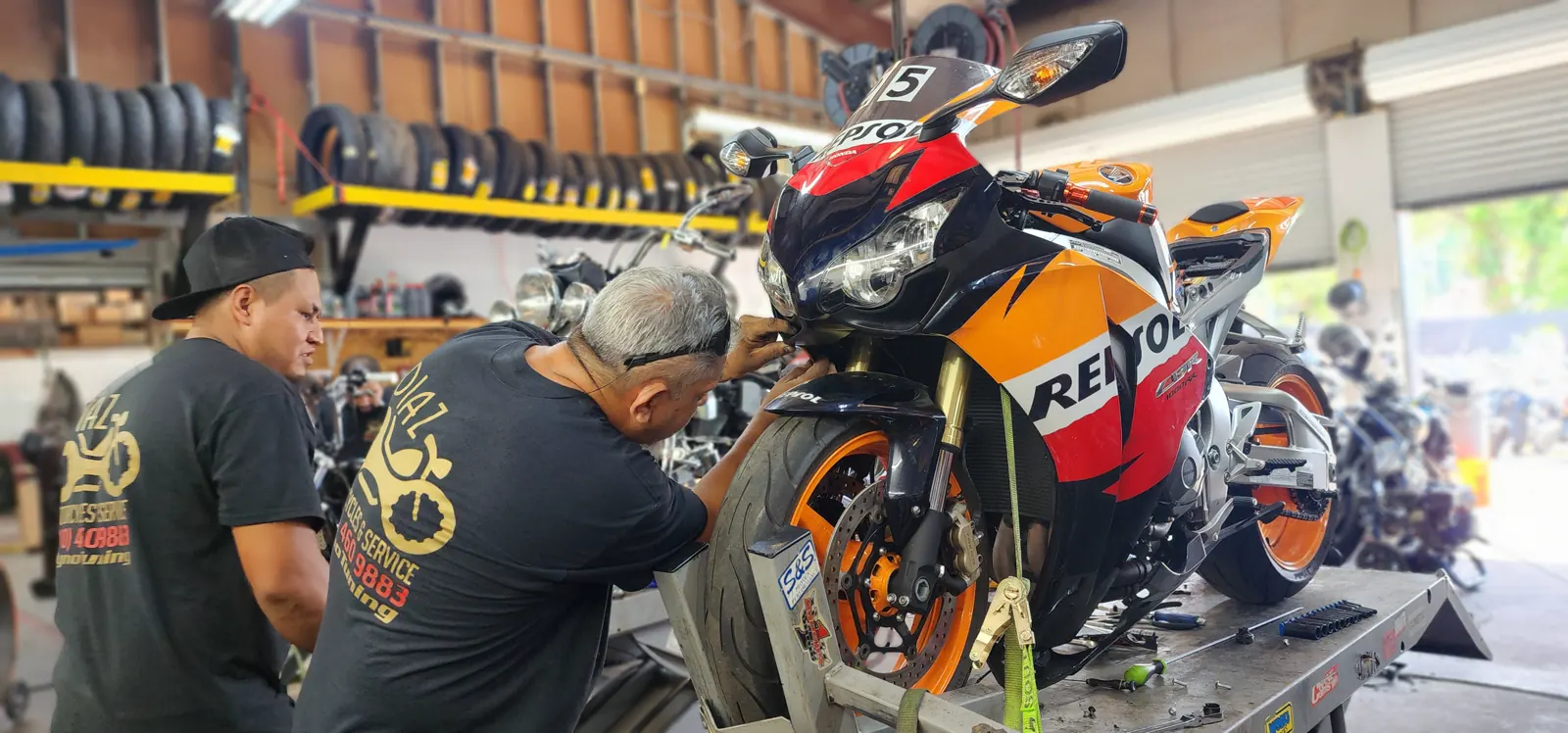
When you drop a bike by, the first thing we do is figure out how deep it goes. Not all pitting is equal, and the right fix depends entirely on the stage. So we look, we feel it with a bare hand, and we test a small hidden spot before we touch the rest. That way you know what you are dealing with before a single dollar is spent on the wrong approach.
- How deep it is — a light thumbnail test separates surface haze from true pits.
- Whether the protective clear or plating still has any life left in it.
- The spread — from pipes and covers out to fasteners, spokes, and the handlebars.
- At the same time the wheels and engine bay, where grime loves to hide pitting until it is advanced.
- The paint and trim nearby, since the same neglect that pits chrome also dulls those.
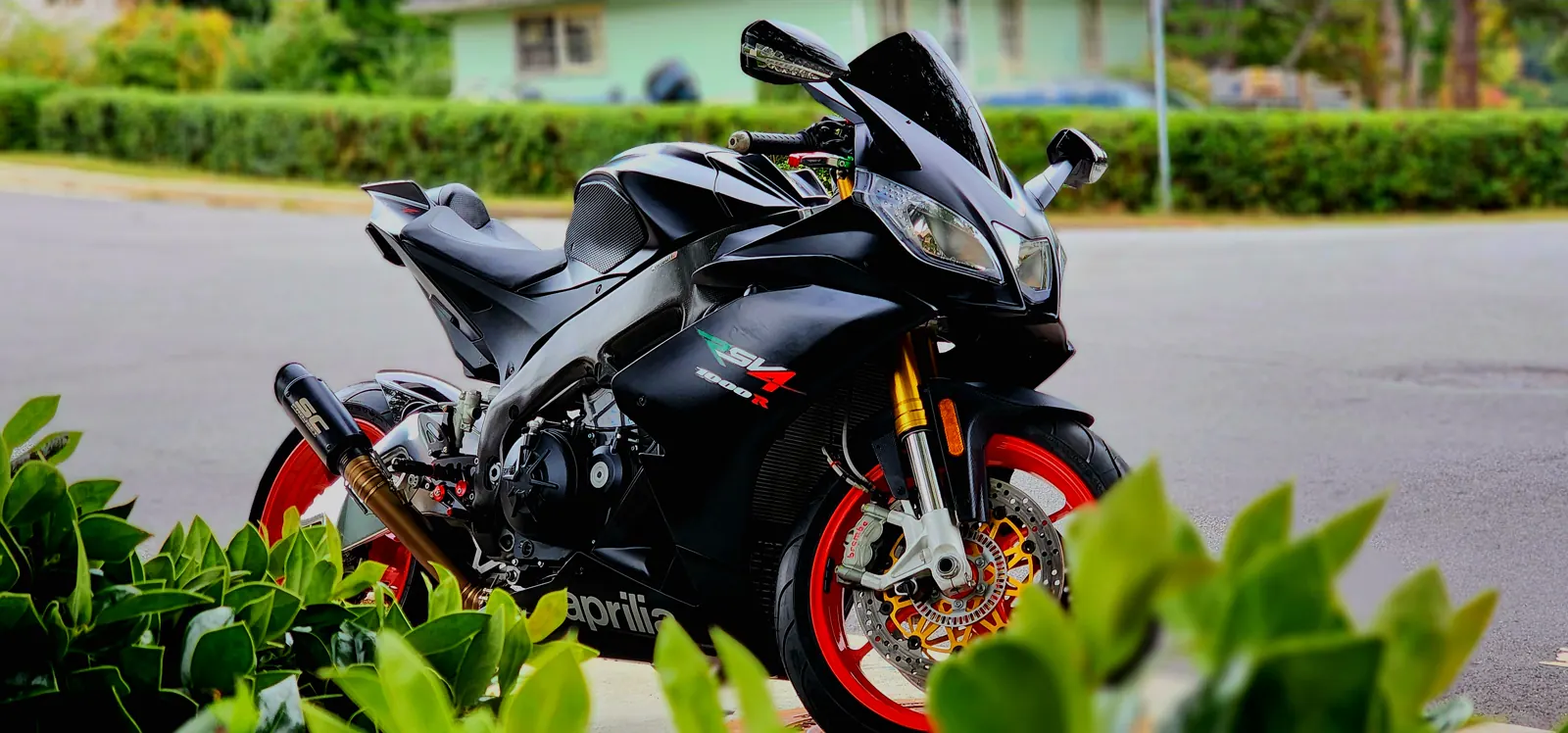
A quick wash and a real detail are not the same job, and this is where the difference really shows. As a result a wash rinses off the dirt. A detail corrects the finish — polishing out pitting and swirls, cleaning the wheels and engine bay, treating the leather and vinyl, then sealing everything so the next round of pollen slides off instead of sticking. If you want the full breakdown, here is what you get when you bring it in.
A lot of riders ask about ceramic coating, so let us be straight about it. A coating adds a slick, glassy layer over already-good chrome and paint. It makes washing easier and helps water and bug film let go instead of baking on. What it is not is a force field — it will not stop a rock chip or a scratch, and it will not undo pitting that is already there. It protects a clean, corrected finish. It cannot rescue a neglected one.
Mistakes that make it worse
Good intentions cause half the damage we see. Reaching for the wrong fix on a small spot is how a ten-minute cleanup turns into a re-plating bill. A few common habits do most of the harm.
- Scrubbing chrome with steel wool or a hard abrasive, which scratches the plating and opens more doors for rust.
- Piling chrome polish onto deep pits and expecting it to fill them — polish shines, it does not rebuild metal.
- Blasting seals and bearings with a pressure washer, forcing water exactly where you never want it.
- Rolling a wet bike under a cover and sealing that moisture against the metal overnight.
- Waiting. Pitting never once pauses to think it over.
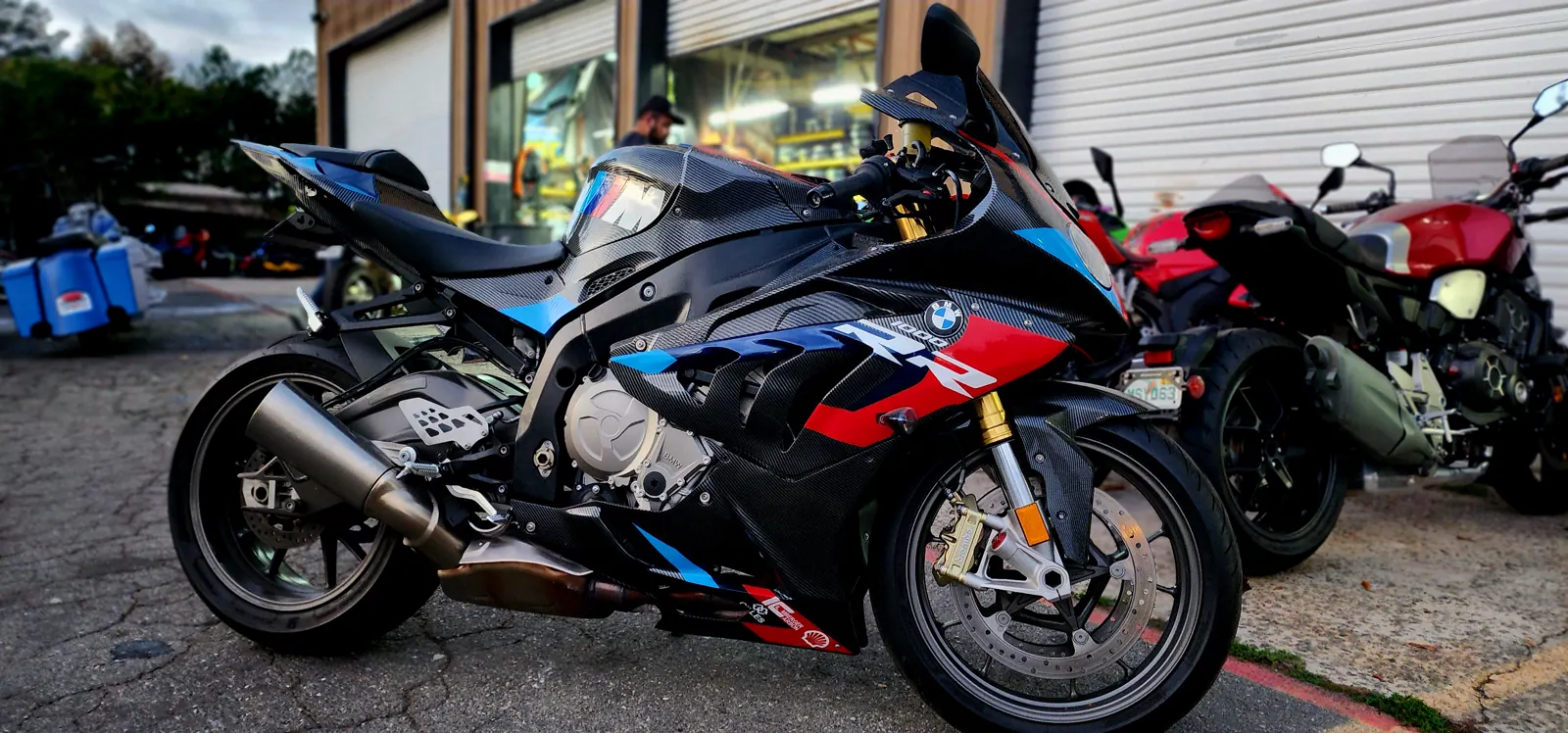
You can absolutely handle the small stuff yourself, and honestly you should. A rinse after a wet ride, a full dry with a soft towel, and a fresh coat of sealant will keep most bikes well ahead of the rust. When it has gone past that, though, it usually travels with other catch-up items — a tired battery, old fluids, a chain that has dried out — so it is worth knowing what the work covers before you decide to tackle the whole thing in the driveway.
Where you ride comes back into it
Here is the frustrating part for riders up here. Sandy Springs has almost no motorcycle shops of its own, so you are already driving somewhere for anything real. The big multi-line stores, like Mountain Motorsports Marietta about fourteen miles west, run high volume and tend to treat a detail like a side errand. We sit closer than that for a lot of the north side — roughly eight to eleven miles, usually eighteen to twenty-eight minutes across the Chattahoochee into East Cobb, with no interstate loop required.
Some bikes get hit harder than others, and this area has plenty of the vulnerable kind. North-side garages are full of chrome-heavy baggers and touring cruisers, the machines with the most bright metal to lose in the first place. All that shine is what makes them stunning. It is also just more surface for the weather to go to work on.
Even a short hop is a hassle when your bike is the very thing that needs the ride, though. So we pick up and drop off. You do not have to borrow a trailer or beg a friend with a truck. We come get it, do the work, and bring it back gleaming — which, given how many riders here store in a lot with no way to even run a hose, turns out to be the whole point.
And then there’s the part that’s just about riding again. Because a clean, protected bike is not only about resale or bragging rights at a stoplight. It is about the Saturday you finally take Riverside Drive along the water as a warm-up, then point north for the Suches Loop — the US-19, GA-60, and GA-180 triangle a lot of folks call the best thirty-five miles of riding in the state. You want to be thinking about the corners, not the corrosion.
There is real pride in it, too. Roll up to Morgan Falls Overlook Park off Roswell Road on a clear morning and a mirror-bright tank turns heads before you even kill the engine. That shine also protects your money, since a well-kept bike holds its value and buyers trust a finish they can see themselves in. If you are newer to all of this, the MSF Basic RiderCourse is a great place to begin, and Dunlop’s technical resources are worth a read for keeping the rest of the bike as sharp as the chrome.
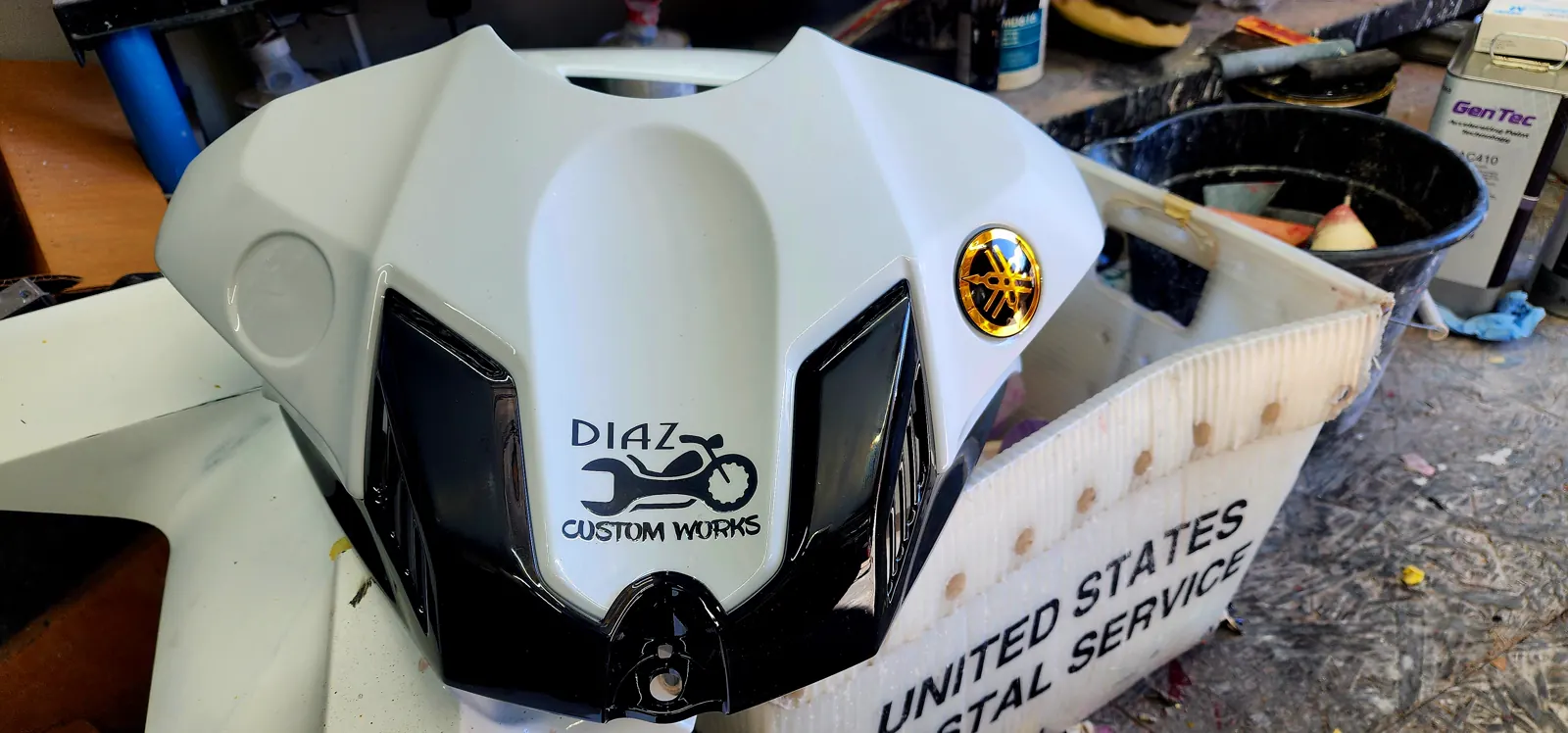
What you get back
So here is where it all lands. Bring the bike in early and you get back exactly what you had when it rolled out new — chrome you can read a license plate in, paint with real depth, and a slick, glassy feel on the tank that tells you the sealant is doing its job. Bring it in late and we can still make it right; it just takes stripping and re-plating the worst pieces first, then protecting the rest so it never gets there again.
Either way, you stop staring at that one spot every time you walk past. The bike looks like something you are proud to own again, and you leave with a simple habit to keep it that way. Beating the chrome pitting Sandy Springs weather causes is not hard — it just rewards paying attention early. That is the whole idea: less worry, more riding, and a finish that shrugs off the next Georgia summer instead of surrendering to it.
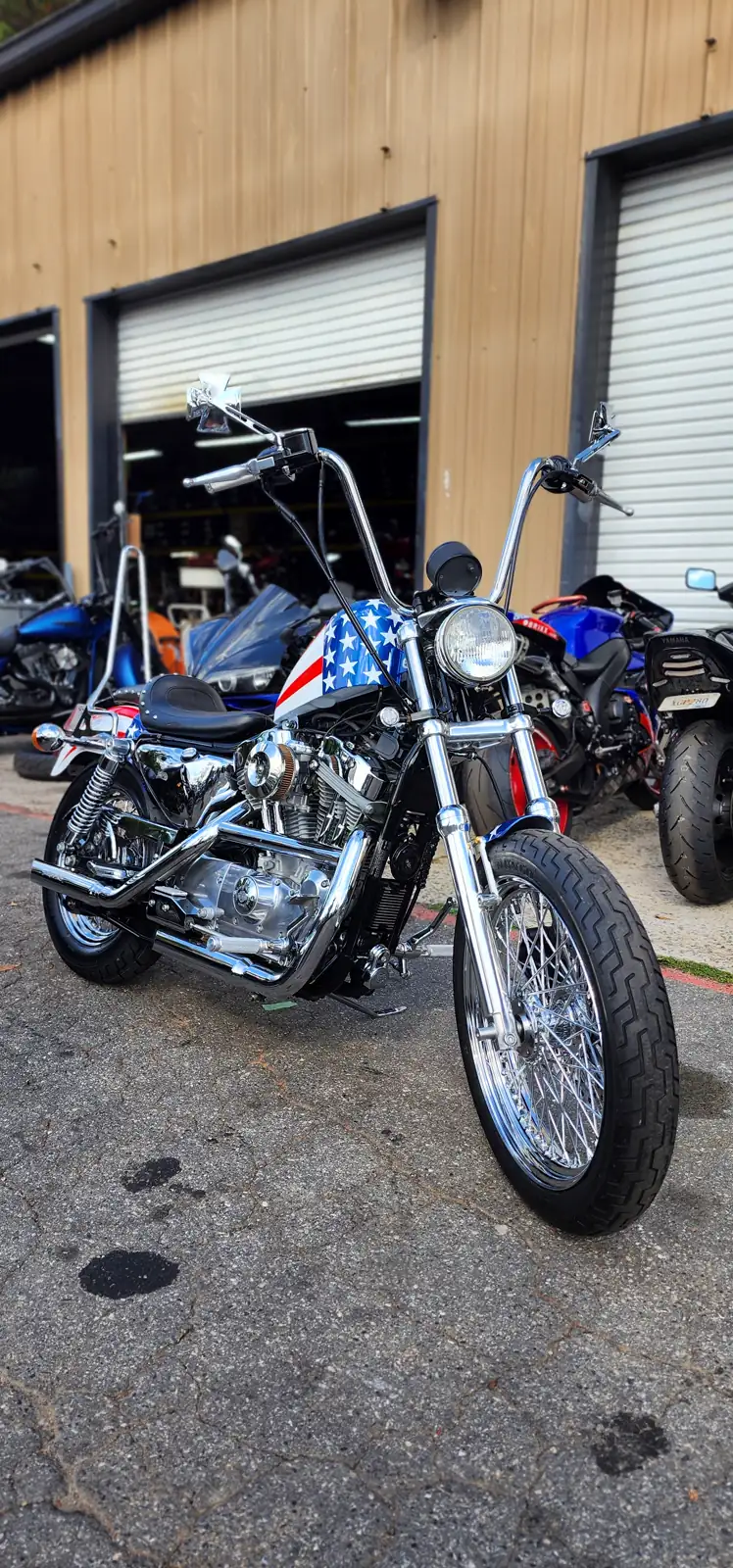
Rust is patient. Ten minutes today beats a re-plating bill next spring.
Questions Sandy Springs riders ask us
Could it be something else, not pitting?
Sometimes, yes. Hard-water spots, dried bug film, and light surface haze all look like pitting at a glance but wipe or polish right off. True pitting stays after cleaning and feels gritty under a bare finger. A quick look tells the difference in seconds, so you know exactly what you are dealing with.
Is it safe to ride like this?
Light surface pitting is a looks issue, not a safety one, so ride and enjoy it. The only time to pause is when a pit reaches a spoke, an axle, or a bolt that holds something together, which is rare and easy to spot early. When in doubt, let us take a look before your next long ride.
What actually causes chrome pitting?
Moisture sitting on the metal is the main driver, made worse by our humidity, pollen, hard water, and heat. Storing a bike outside or rolling it wet into a closed garage keeps the finish damp, and that is when rust finds a weak spot. Road grit and old, worn-off sealant speed it up from there.
Can I fix it myself?
The small stuff, absolutely. Rinse after wet rides, dry fully with a soft towel, and keep a fresh coat of sealant on the chrome, and most bikes stay ahead of the rust. Once pitting has dug into the base metal, though, it needs stripping and re-plating, and that is a job for the shop.
Will it get worse if I leave it?
It will. Pitting never sits still — it spreads and deepens until the plating flakes and the metal underneath is exposed. The finish that could have been buffed out in an afternoon turns into a re-plating job over a season or two. Catching it early is genuinely the cheapest and easiest path.
Do you pick the bike up?
We do. A lot of Sandy Springs riders store in a lot or condo deck with no way to even run a hose, so we come get the bike, do the work, and bring it back. You never have to borrow a trailer or line up a friend with a truck.
We take care of riders all over the north side and beyond. From Sandy Springs and neighboring Dunwoody, we regularly help folks in Roswell, Alpharetta, and Brookhaven, along with Chamblee and Doraville just to the east. Head the other way across the river and we are the close shop for East Cobb, Vinings, Smyrna, and Marietta. We also serve riders in Buckhead and throughout Atlanta who want real detailing without treating it like a side errand at a giant sales floor.
LET'S STOP THAT SPOT FROM SPREADING
If you have spotted the first little freckle of chrome pitting on your bike in Sandy Springs, the easy fix is a text away. Tell us what you are seeing, and we will pick the bike up, sort out how deep it goes, and bring it back shining and protected. No trailer, no hassle, no lost riding weekends.
470-460-9883Diaz Motorcycles and Service, LLC · 847 Barnes Mill Road, Marietta, GA 30062