What Really Drives Your Detail Cost in Sandy Springs
Why one bike is a quick job, another eats a full day, and why an honest shop looks before it quotes.
Meanwhile, you had the whole Saturday mapped out. Coffee at sunrise, then a long run up the Richard Russell Scenic Byway toward Brasstown Bald with the group. Then you rolled the bike into the light, the sun caught the tank, and your stomach dropped. Dull paint. Swirl marks everywhere. Water spots baked into the chrome, and bug guts still stuck by the headlight from the last ride. You didn’t want to pull up looking like that, so you texted the group and stayed home. If that stings a little, you’re exactly who we wrote this for. The first thing you want to know is the detail cost Sandy Springs shops charge for real work like that — and the honest answer is that it depends, though not in a shady way.
First, a Wash and a Detail Aren't the Same Thing
Most folks picture a detail as a fancy wash. Soap, hose, a towel, done. But a wash only lifts the loose dirt sitting on top. A real detail goes after everything a hose can’t reach — the swirl marks ground into your clear coat, the chalky oxidation stealing the shine off your paint, the hard-water minerals fused to your chrome, and the grime packed deep into your engine fins. As a result a quick wash might take twenty minutes. A full detail can eat the better part of a day. That gap is the entire reason your price moves around.
The heavy lifting is a step called paint correction. Under a bright light, your tank probably shows fine spider-web scratches from years of wiping it down the wrong way. Paint correction is machine polishing that levels those tiny scratches so light bounces back clean instead of scattering. Done right, the paint goes from flat and tired to wet-looking, with real depth you can see into. After that, a lot of riders add a ceramic coating or a sealant to lock the work in. A coating won’t make your bike scratch-proof — nothing does — but it protects the finish and makes future cleaning far easier. Bugs and grime slide off instead of digging in.
Why Georgia Is So Hard on a Finish
Your paint isn’t fading by accident. It’s got help. From June through September, Sandy Springs sits under a heat index near 95 to 100 degrees with thick humidity and near-daily afternoon storms. That heat bakes contaminants right into the clear coat. Spring then dumps a yellow blanket of pollen over everything, and since pollen is mildly acidic, it etches paint if it sits. On top of all that, we’ve got hard water. Rinse your bike, let it dry in the sun, and those minerals leave spots that turn into permanent etching if you ignore them long enough. None of this means your bike is doomed. It just means the finish needs real care, not a rinse.
Where you park matters just as much. In Sandy Springs, roughly half the housing is rental, spread across dozens of apartment complexes, and plenty of those offer no garage — just carports, surface lots, and condo decks. That means full sun, zero cover, and no outlet for the small things that protect a bike. The neighborhoods tell the story. A rider in the Dunwoody Panhandle near the Chattahoochee might keep a touring bike garaged in a renovated ranch, while a commuter over in Glenridge Close by the hospital cluster parks on the street, and a family out in established Grogans Bluff has a garage but a cruiser that’s sat untouched since fall. Same city, three very different finishes land on our bench.
So Why Does One Bike Cost More Than Another?
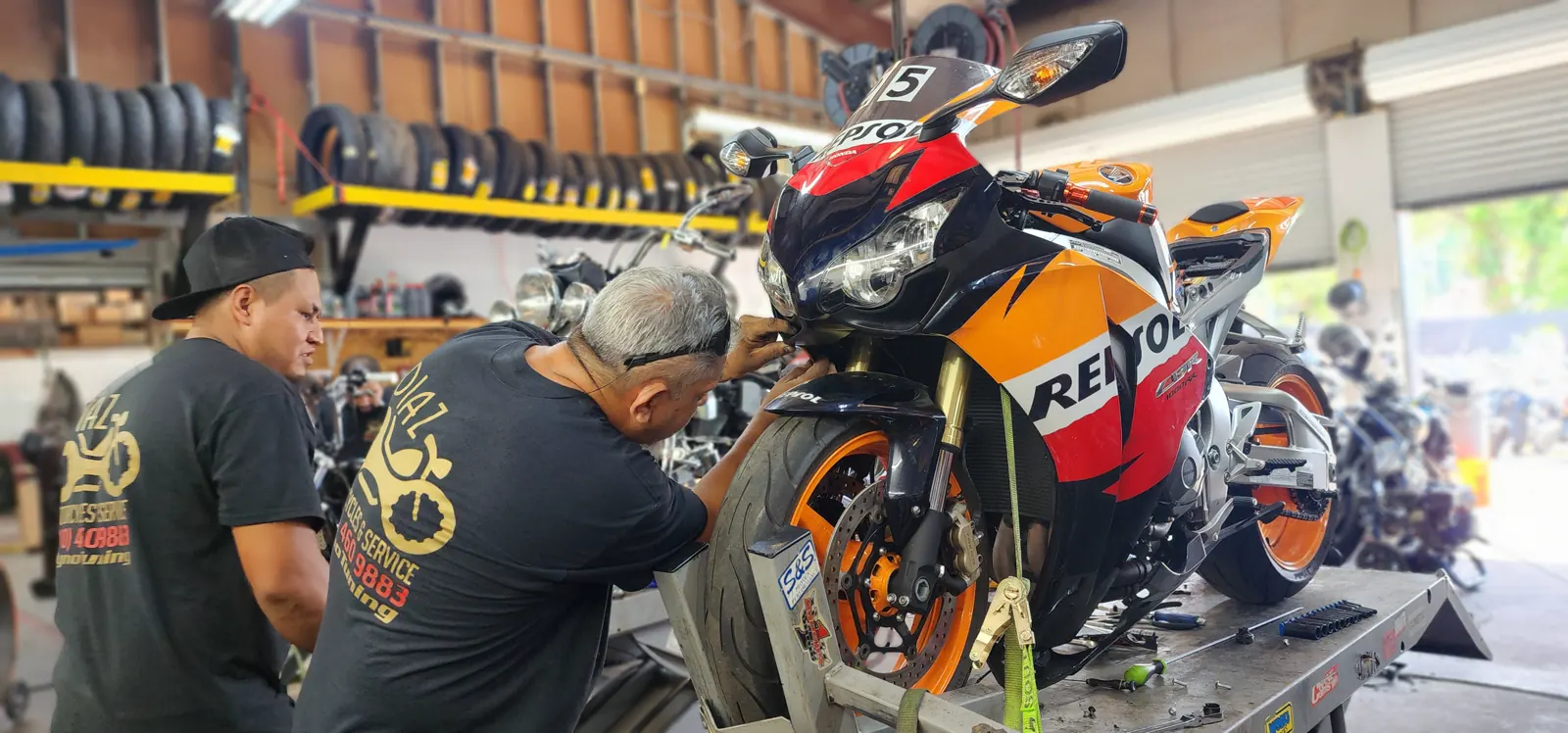
The detail cost Sandy Springs riders end up paying comes down to two things, and neither one is a mystery. The first is access. Some bikes are easy — an open cruiser with chrome out in the sun wipes down fast. Others hide their dirt. A full touring bagger has fairings, hard bags, and lowers that trap road film in places you can’t reach without pulling panels. On the other hand a faired sportbike is trickier still, since half the machine is tucked behind bodywork. More panels to remove, clean behind, and reinstall means more hands-on time, plain and simple.
The second thing is labor versus parts, and detailing leans hard toward labor. Unlike an engine repair, a detail rarely needs pricey parts. What you’re really paying for is skilled time and the right materials — cutting compounds, fine polishes, coatings, brushes, and the patience to work every inch by hand. A bike that just needs a deep clean and a wax is mostly light labor. So a bike that needs multi-stage paint correction before any coating goes on is a whole different animal, because that correction is slow, careful machine work. The materials cost a little; the hours cost more.
Most people stop reading here. That's the expensive mistake.
Here’s what happens when they do. A rider gets a rough idea, decides a detail is a luxury, and puts it off another season. Meanwhile the pollen, heat, and water spots keep working. Light swirls that a single polish would have fixed turn into etching that needs deeper correction. So the job that was small in April is bigger by August. Catching it early is almost always the cheaper path, and it keeps your bike looking like the machine you fell for in the first place.
How We Land on Your Number
This is where a lot of shops lose your trust, so we’ll be straight with you. An honest shop won’t quote a detail sight-unseen. We can’t. The real detail cost Sandy Springs bikes run comes down to their exact condition, and two Kawasaki Ninjas of the same year can need completely different work depending on how they were stored and cleaned. A number pulled out of thin air would either overcharge you to be safe or lowball you and surprise you later. Neither one is how we treat friends we’ve helped.
So we look first. We get eyes on the bike in good light, feel the paint, check the chrome, and see how deep the swirls really go. Then we look at the panels we’ll need to remove and the spots where grime likes to hide. From there, we walk you through exactly what your bike needs and what it doesn’t. If a simple deep clean gets you ninety percent of the way there, we’ll tell you that instead of selling you the works. You’ll know the plan before we touch a thing.
What a Real Detail Actually Involves
Curious what actually happens once your bike is on our bench? Here’s the whole run, start to finish. It isn’t magic — it’s just steps done in the right order, and skipping any one of them shows up in the result.
- A pre-rinse and gentle foam bath to lift loose dirt without grinding it into the paint.
- Careful hand-cleaning of the wheels, brake dust, and engine bay, plus bug and tar removal from the front end.
- A clay treatment to pull out bonded contaminants your hands and soap can’t even feel yet.
- Machine paint correction to cut down swirls and light scratches, bringing back gloss and depth.
- Chrome polishing until it mirrors, with the rest of the metalwork brought back to a shine.
- Leather, vinyl, and plastic trim cleaned and conditioned so seats and grips don’t dry out and crack.
- A ceramic coating or sealant to protect the finish and make the next wash quick.
- Still, a final inspection under bright light, checking every panel before the bike rolls back to you.
That coating step is worth a pause. Riders always ask whether they should go with a ceramic coating or a simpler sealant, and there’s no single right answer — it comes down to how you ride, where you park, and how much upkeep you want. We break down the tradeoffs between them so you can pick with clear eyes. Either way, the goal stays the same: keep your hard-earned finish protected between details.
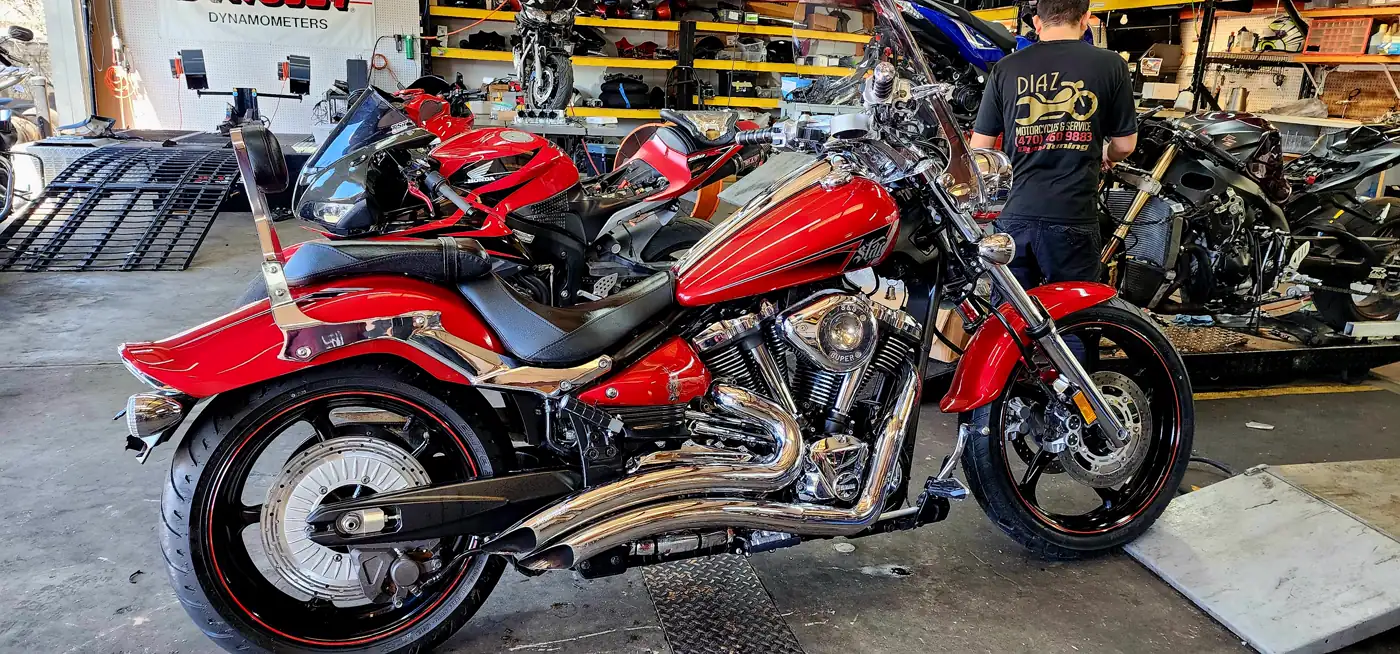
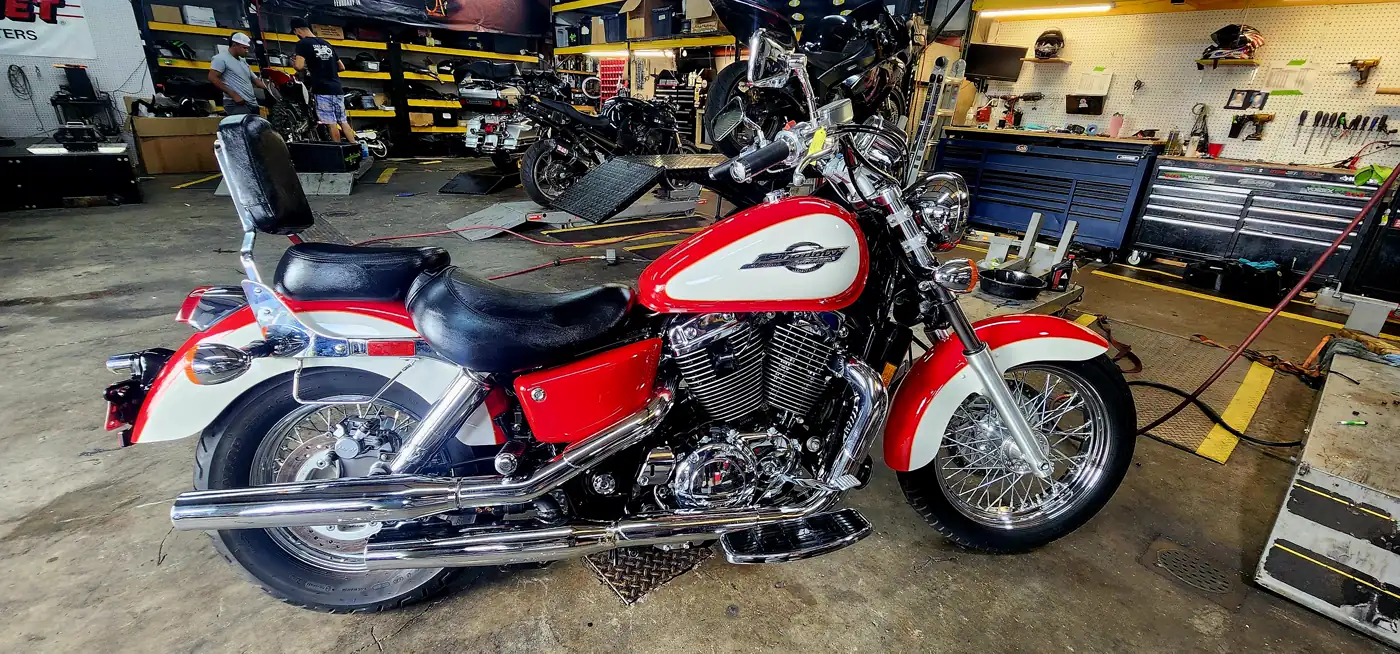
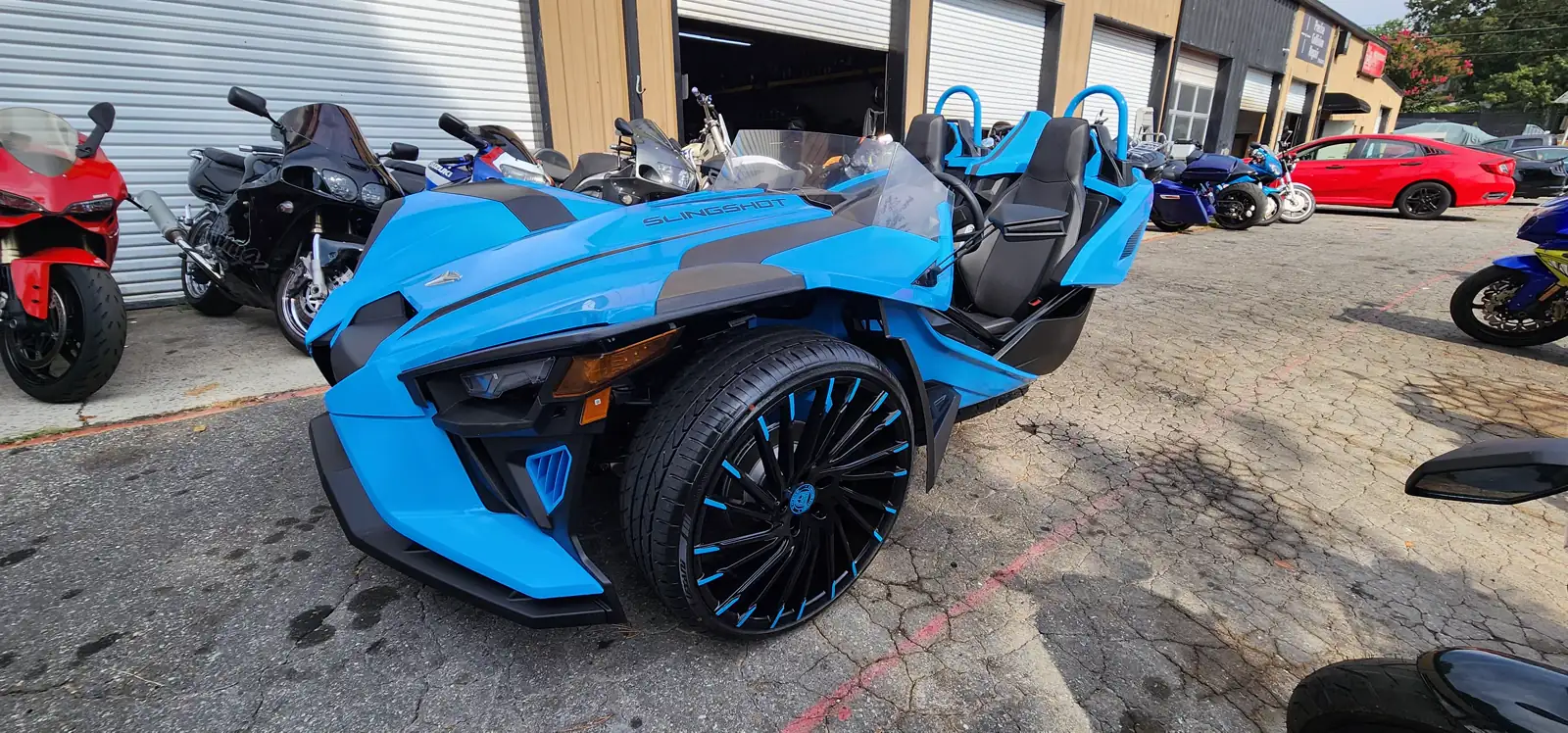
Bike type shapes every one of those steps. A chrome-heavy cruiser like a Yamaha Raider spends most of its time in polishing. Plus, a faired liter-bike spends it in panel removal and correction across big painted surfaces. A trike or a Slingshot has more square footage than a standard bike, so there’s simply more to cover. And if you want to see how this same work shakes out in another town, here’s how this plays out in Woodstock — the ideas travel, even when the bikes don’t.
The Sandy Springs Part Nobody Else Solves
Now for the local piece. Sandy Springs has no motorcycle dealership or dedicated repair shop inside the city limits, so riders here are already driving somewhere for anything real. The nearest options are a haul away. WOW Motorcycles in Marietta sits about twelve to fifteen miles west and has been around thirty years, but it’s a big new-and-used sales floor, not a detail bench. For hands-on work on your finish, you’re getting on the road either way.
The good news is that reaching us is easy, and you can skip the worst stretch in the region to do it. We’re roughly eight to eleven miles out, usually eighteen to twenty-eight minutes via Johnson Ferry Road heading west across the Chattahoochee into East Cobb — with no I-285 needed. That matters, because GA-400 terminates at I-285 in one of the most congested interchanges in the Southeast, and Georgia doesn’t allow lane splitting, so your bike gets no break in that mess. Our route dodges it entirely.
The last piece is the one people underestimate. It’s pickup and delivery.
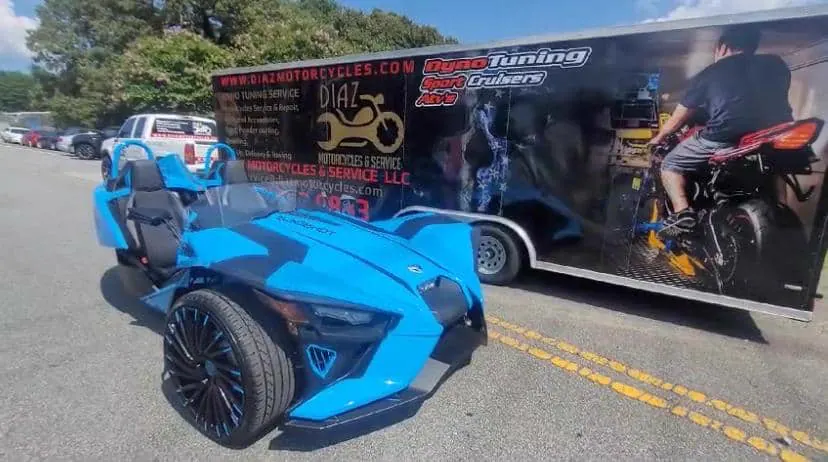
For a huge share of Sandy Springs riders, this isn’t a nicety — it’s the whole thing. If you’re storing your bike under a carport or in a condo deck with no garage, and HOA rules make on-site work impossible, getting a freshly detailed bike home clean is half the battle. So we come to you. We load your bike into our enclosed trailer, bring it to the shop, do the work, and deliver it back protected from the road the whole way. You don’t lose a Saturday sitting in a waiting room. You just get your bike back looking incredible.
And Sandy Springs is genuinely worth keeping a clean bike in. The Chattahoochee River National Recreation Area wraps twenty-two miles of shoreline right through town, so good riding is close and morning fog off the water is common. Meanwhile, Roswell Road Restaurant Row stretches roughly ten miles of independent spots that give the city its dining identity — exactly the kind of place you want to park out front and have people notice the bike, not wince at it.
What You Actually Get Back
So what’s all of this worth? Pride is the first thing, and it isn’t small. There’s a real difference between rolling up on a bike that looks tired and rolling up on chrome you can see your face in, next to a tank with depth you want to keep staring at. That slick, glassy feel under your hand is its own little reward every time you head out.
Then there’s resale, which is where the math quietly works in your favor. A bike with a protected, corrected finish and clean, conditioned leather photographs better and sells for more than an identical one that’s been baking in a lot. Buyers trust detail over adjectives — they read the reviews, then they look closely at the machine. Communities like the American Motorcyclist Association are full of riders who’ll tell you a well-kept bike sells easier, and when you go to transfer the title through the Georgia Department of Revenue, a machine that looks cared for is simply an easier deal to close.
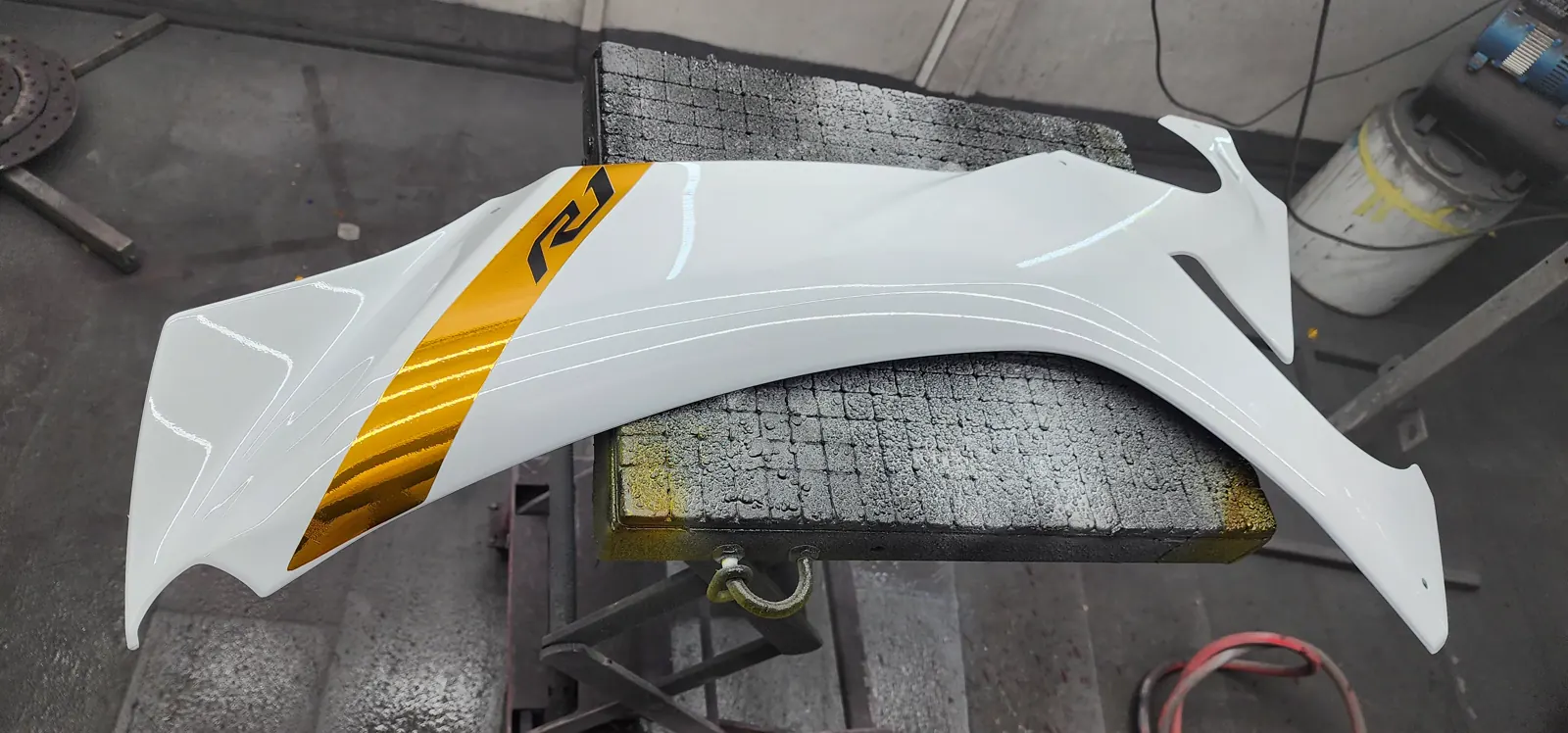
If your bike has gone past what polishing can fix — deep chips, faded panels, damage down to primer — that’s a different road, and it’s worth knowing what that service actually involves before you decide. Most bikes, though, don’t need paint. They need an honest detail from someone who’ll tell them the truth about what’s in front of them. You can see the full menu of our motorcycle detailing services and start with a simple text. You’ll walk away knowing your bike is protected, your finish is locked in, and your next ride up GA-348 is one you’ll actually want to show up for.
Questions Sandy Springs riders ask us
What's actually included in a full detail?
A full detail covers far more than a wash. We deep-clean the wheels, engine bay, and hard-to-reach spots, remove bugs and tar, clay the paint, machine-polish out swirls, shine the chrome, condition the leather and trim, then protect it all with a coating or sealant. It ends with an inspection under bright light.
How long does a detail take?
It depends on the bike and its condition. A straightforward deep clean moves quickly, while a bike that needs multi-stage paint correction takes much longer because that work is slow and careful. We’ll give you a real time frame after we look at your bike, not a guess before.
Is a detail mostly parts or mostly labor?
Almost entirely labor. Unlike an engine repair, a detail rarely needs expensive parts. What you’re paying for is skilled time plus materials like compounds, polishes, and coatings. That’s why a heavily corrected bike costs more than a quick clean — it’s the hours, not the parts.
Does my bike type change the work?
Yes, a lot. A chrome cruiser leans on polishing, a faired sportbike needs panels removed and big painted surfaces corrected, and a trike or Slingshot simply has more area to cover. That access difference is one of the biggest reasons two details can look nothing alike on paper.
What if you find something else while cleaning?
We’ll stop and tell you before doing anything extra. Sometimes a deep clean reveals a chip or a spot that needs paint rather than polish. You’ll always hear about it and decide with us — no surprises added to your bill after the fact.
Do you really pick up and deliver in Sandy Springs?
We do, and for a lot of Sandy Springs riders it’s the whole reason this works. If you store under a carport or in a condo deck with no room to detail, we load your bike into our enclosed trailer, do the work at the shop, and bring it back protected the whole way.
We take care of riders all around the north metro, not just in Sandy Springs. Friends come to us from Roswell, Dunwoody, and Alpharetta up north, from Atlanta, Buckhead, and Brookhaven in the core, and from Chamblee and Doraville over on the east side. Because our route runs west across the Chattahoochee, we’re an easy hop for riders in East Cobb, Vinings, Marietta, and Smyrna too. If you own a good bike and have nowhere close to take it, we’re closer and easier than you’d think.
LET'S MAKE IT SHINE
Ready to see your bike look the way it did the day you brought it home? Send us a text, tell us what you’re riding and where you park in Sandy Springs, and we’ll walk you through what your bike actually needs — no sight-unseen guesses. We’ll pick it up, do honest work, and deliver it back protected. Your next Saturday ride is one you’ll want to show off.
470-460-9883Diaz Motorcycles and Service, LLC · 847 Barnes Mill Road, Marietta, GA 30062