Dealer vs Indie Service Woodstock: What We'd Actually Tell You
Two good options, one honest recommendation, and the exact situation where the other one wins.
Most Woodstock mornings start the same way. You back the car down the driveway, roll onto I-575 southbound, and then you sit. Meanwhile the bike stays home under its cover with cold tires, because Georgia’s helmet law is strict and filtering between lanes is illegal, so there’s no reward for riding into that mess. Miles here don’t arrive as a slow daily trickle. Instead they arrive in big weekend gulps of mountain road, followed by quiet weeks of nothing at all. That storage-then-sprint pattern is exactly why the dealer vs indie service Woodstock question deserves a straight answer instead of a shrug.
The short answer, before anything else
Here it is without the fence-sitting. For most riders in Cherokee County, an independent full-service shop is the better long-term home for the bike, and the dealer is the better call for a short, specific list of jobs. That list is real, though, and we’re not going to pretend otherwise. Warranty repairs, open safety recalls, and factory software tied to your badge belong at that brand’s dealer, because those are things only they can file, fund, and flash. Everything else — oil, chain, brakes, tires, and the honest once-over that catches small stuff early — is work an independent handles every single day. We went deeper on what separates a good shop in its own post if you want the longer version.
So who is the dealer genuinely right for? A rider on a brand-new bike still inside factory coverage, first. Also anyone with an open recall, anyone chasing a fault that needs a brand-locked diagnostic tool, and anyone who wants the paper trail stamped by the badge on the tank. Harley owners, for instance, can pull their own maintenance documents straight from the official Harley-Davidson service information site. Hellbender Harley-Davidson sits at 993 S Cobb Dr in Marietta, roughly twenty-some miles south, and it markets to Woodstock riders on purpose. For those specific jobs, that’s a fair trip to make.
WHEN THE DEALER WINS
Warranty work, recalls, and brand-locked software updates. Those four words cover almost the whole list. If your job isn’t on it, an independent can do the same work with the same parts and usually get you back on the road sooner.
What actually drives the work on a Woodstock bike
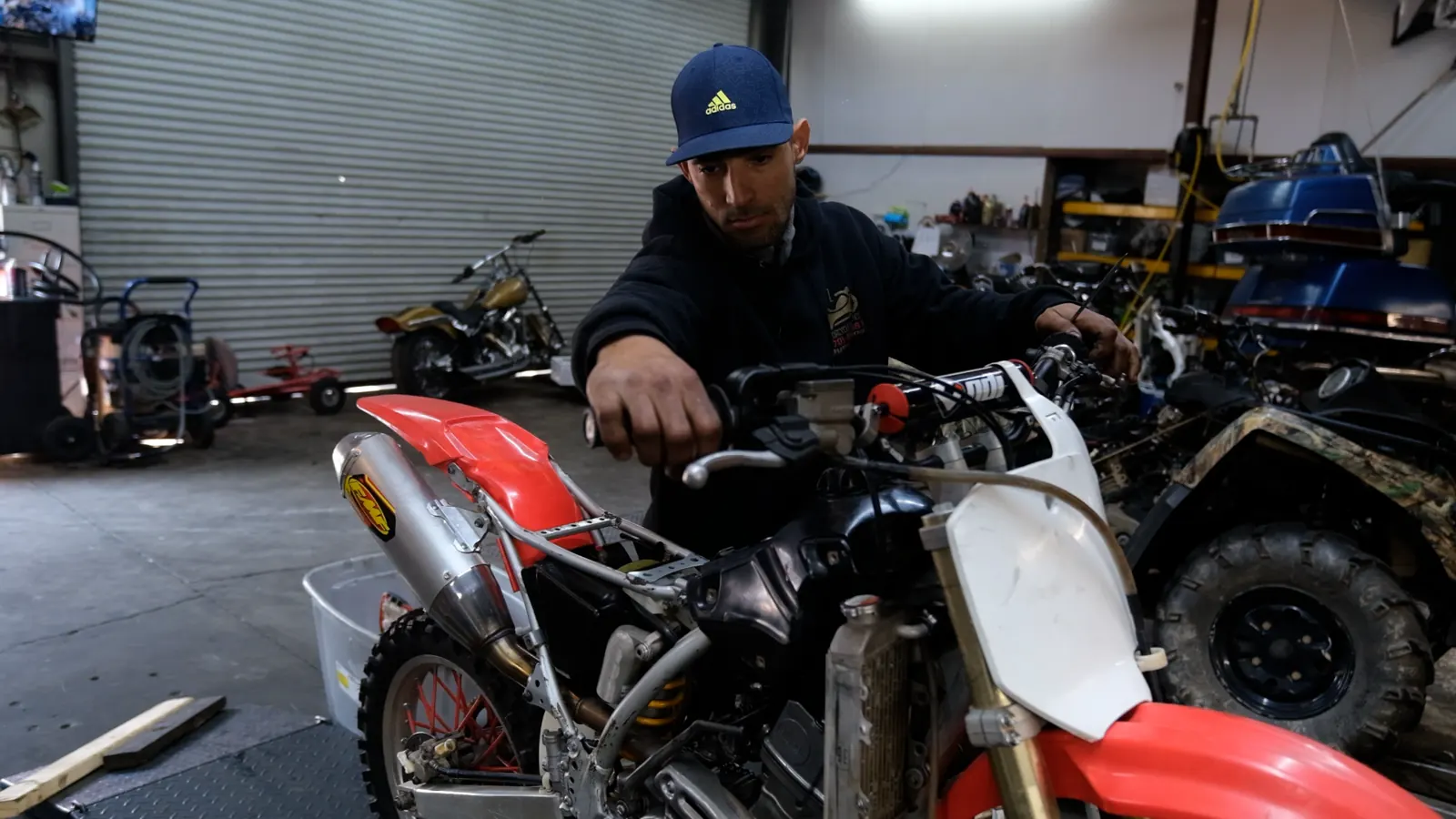
Riding here is recreational and destination-driven, and that changes everything about upkeep. I-575 is the on-ramp to the north Georgia mountains, and a rider leaving Towne Lake can be carving real elevation inside an hour to an hour and a half. Those are hard miles. Heat cycles, sustained revs, hard braking into unfamiliar corners, and a chain that’s working the whole time. Then the bike comes home and sits for three weeks while life happens. Bikes actually hate sitting more than they hate riding, which is a strange thing to explain to someone who thinks they’re being gentle.
The surfaces around town add their own flavor. Bells Ferry, Wiley Bridge, Trickum and Arnold Mill Roads are rolling, wooded and low-traffic, which is why riders love them, but they carry country-road geometry: blind crests, off-camber curves, gravel driveways and deer that don’t check for you. Growth adds grit on top. The Ridgewalk corridor keeps gaining neighbors — Glenhaven, Magnolias, Meridian, Montclair and Ridgewalk Landing — and Serenade, the newer community sharing a name with the city trail, is part of that same building boom. Every construction entrance along Ridgewalk, Towne Lake Parkway and the SR 92 corridor tracks mud and gravel onto pavement. Up north, leaves and pine straw cover damp shaded corners in fall.
Then there’s where the bike lives. Woodstock has the best storage profile in our whole radius, because the 1990s master-planned subdivisions came standard with two- and three-car garages. Towne Lake alone covers nearly 5,700 single-family homes, one of the largest planned communities in Cherokee County, and plenty of those garages have a workbench, a torque wrench and a trickle charger already. Multi-bike households are more common here than anywhere else we serve. Downtown townhomes and apartments are the smaller exception, and those riders deal with a bike parked outside through pollen season, which runs mid-March through late April and coats everything in yellow.
- Long idle stretches: old fuel, soft battery, dry chain, flat-spotted tires
- Concentrated hard miles: brake pads and fluid age faster than the odometer suggests
- Construction grit: chains, sprockets and radiators pick up abrasive dust
- Pollen season: a clogged air filter your bike will quietly try to breathe through
- Fall leaf cover and damp shade: tire condition matters more than usual
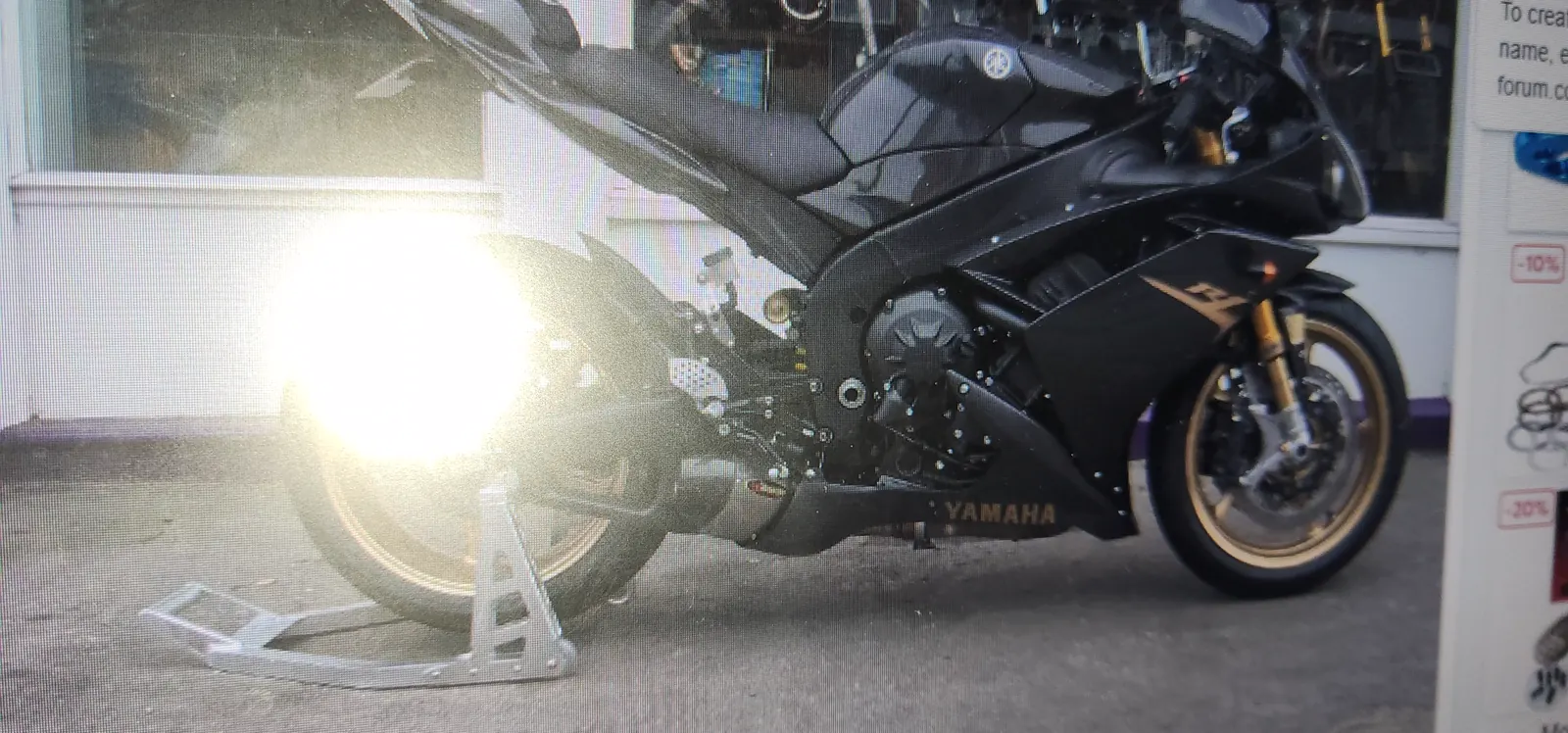
Something changes once you know what to look for. Riders who’ve watched a chain get measured, or seen brake fluid poured into a clear cup next to fresh fluid, stop treating service as a mystery tax and start treating it as a schedule they control. That’s the real difference between the two paths, honestly. It isn’t that one turns a wrench better. It’s whether anyone shows you the old part, tells you what it was doing, and explains what happens if you wait. Once you’ve had that conversation twice, you can predict your own bike. Framed that way, the dealer vs indie service Woodstock debate stops being about buildings and starts being about information.
What a real service actually covers, in plain words
A service is a list, not a ritual. First the fluids get handled: engine oil and its filter, brake fluid front and rear, coolant if your bike is liquid-cooled, and final-drive or gearbox oil where the bike calls for it. Next comes the wear stuff you can see. Chain slack and chain condition, sprocket teeth, brake pads and rotor thickness, tire tread depth and tire age, and the air filter. Then the boring checks that save the most trouble: fasteners, cables, wheel bearings, lights, battery health and charging output, plus a hunt for leaks and weeping seals.
| The job | Why it matters | What early catching saves |
|---|---|---|
| Oil and filter | Keeps heat and metal moving out of the engine | Engine wear you can't undo |
| Chain and sprockets | Loose or dry chains chew sprockets fast | Replacing one part instead of three |
| Brake pads and fluid | Fluid absorbs moisture as it ages | Rotors, and a lot of confidence |
| Tires | Age and cracking matter as much as tread | Grip on damp, shaded mountain pavement |
| Battery and charging | Sitting bikes drain quietly | A ride day that doesn't get canceled |
Now the honest part about intervals. Your owner’s manual sets them, not us, and not a shop’s wall chart. Every model has its own numbers, and mixing them up is how people end up doing too much on one item and far too little on another. So we work from your book, then adjust for how you actually ride. A bike that eats mountain miles in bursts and sleeps in a garage between them gets a different rhythm than one ridden a little every week. You can see the full list of what we do if you’d rather scan it than read it.
Mistakes worth skipping
- Waiting for a noise. By the time a chain or a bearing gets loud, it’s already taken something else with it.
- Judging by odometer alone. A bike that sat for two seasons needs attention that the mileage never shows.
- Skipping brake fluid because the brakes still feel fine. Fluid pulls in moisture whether you ride or not.
- Guessing at chain slack. Too tight is harder on the bike than too loose, and both are easy to measure.
- Assuming an older bike is a lost cause. Plenty of great machines get written off for a part that’s still available.
- Letting pollen season pass without checking the air filter, then wondering why the bike feels lazy.
There’s one more that’s specific to this area. Riders here get told no a lot. If a bike is more than about fifteen years old and it isn’t a Harley, most in-city shops around Woodstock simply won’t take it, because they’re each narrowly scoped by design — suspension only, or newer Japanese only, or Harley and custom only, or locked to one brand’s sign out front. That’s not a knock on any of them. It’s just a gap, and it’s the gap we built our shop to fill. All brands, all ages, including the ones with a little patina on them. For a lot of riders, that single fact settles the dealer vs indie service Woodstock question before any other comparison even starts, because a shop that says yes beats a shop with a fancier lobby every time.
The cheapest repair is almost always the one you caught while it was still small.
Now for the part that has nothing to do with parts at all. The thing riders actually choose between isn’t a dealer’s toolbox and an independent’s toolbox, because both have good tools. What they’re choosing is who picks up the phone, who remembers the bike, and who tells them the truth when the answer is “that can wait until fall.” Dealers rotate staff and run service departments by volume. Independents live or die on whether you come back. Neither of those facts makes anyone a villain, but they do point in different directions over five years of ownership.
Woodstock riders are unusually good at spotting the difference, too. This is a research-heavy crowd that reads reviews, asks specific technical questions, and Googles a shop thoroughly before ever calling. Part of that is simply who lives here. It also helps that Traxxion Dynamics, a nationally known motorcycle and mountain-bike suspension manufacturer, is headquartered right here at 261 Rope Mill Pkwy. When a town builds world-class suspension in its own backyard, the technical literacy of the whole riding population goes up. Riders here talk about damping and sag the way other towns talk about the Woodstock Trolley running folks from downtown out to the outlets.
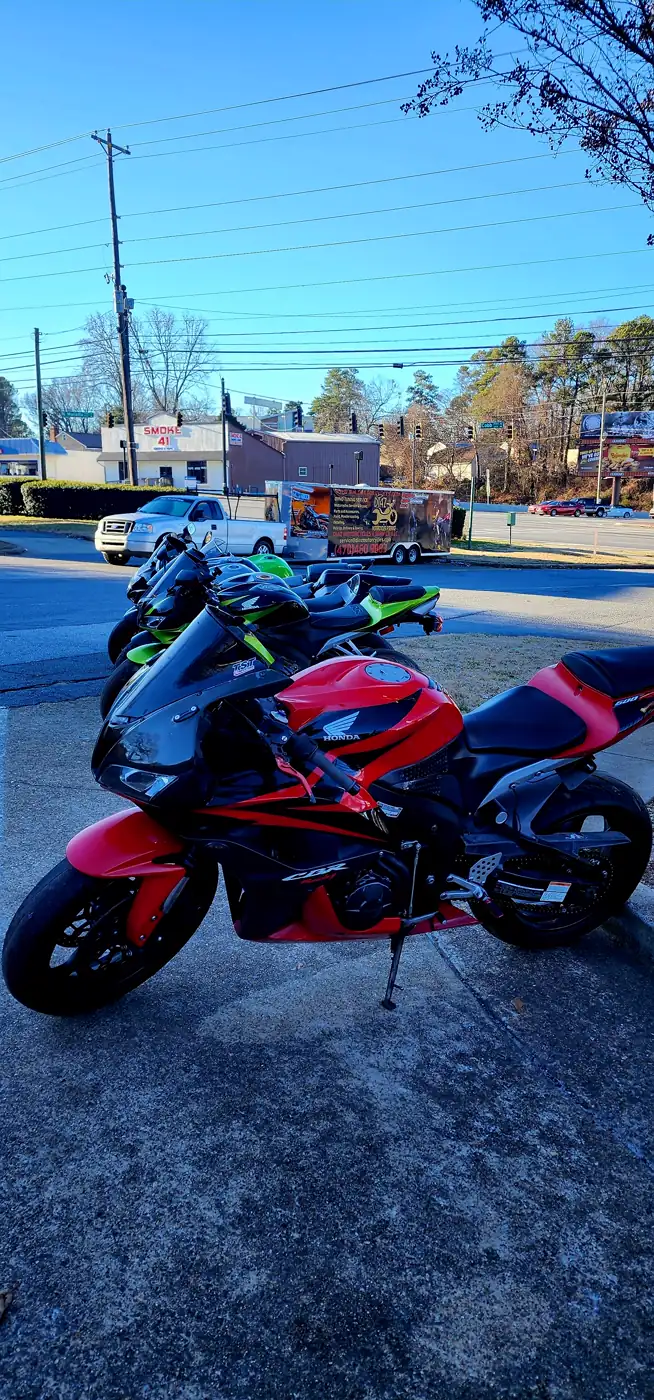
That literacy shows up in the work people ask for. Sport-touring and adventure bikes define the local segment — GS, Tenere, Adventure, Tiger, Multistrada, Africa Twin — alongside premium touring baggers, Gold Wings, modern hyper-nakeds, and a European mix that over-indexes here compared to anywhere else nearby. Those owners tend to do their own basic upkeep on the garage bench and hire out the specialist jobs. Tuning is a good example, and we wrote up how we handle that job in detail. The same tradeoffs play out south of us too, which we covered from the Atlanta side of things.
What choosing well actually gets you
Control. That’s the honest payoff, and it’s better than it sounds. When you know your intervals from your own manual, when someone shows you the worn chain next to the new one, and when nothing on your bike is a surprise, riding stops being a gamble on whether today is the day something goes wrong. You plan a mountain run on a Friday and the bike is ready on Saturday. Sharpening the rider helps too, and the MSF rider courses are a genuinely good use of a weekend.
Getting the bike to us is easier than people expect. From Woodstock it’s roughly fifteen to nineteen miles, about twenty-five to thirty-five minutes, running I-575 south to I-75 south, then east on Roswell Road to Barnes Mill Road. If the interstate is having one of those days, Bells Ferry Road south into north Cobb is the calmer surface alternative and a nicer ride anyway. Drop-off takes a few minutes, and we’ll talk through what we find before anything gets touched. Multi-bike households are welcome to bring two at once, which happens more here than most places. We’ll also tell you if a job truly belongs at the dealer, because sending you to the right place is a lot cheaper for both of us than doing work twice.
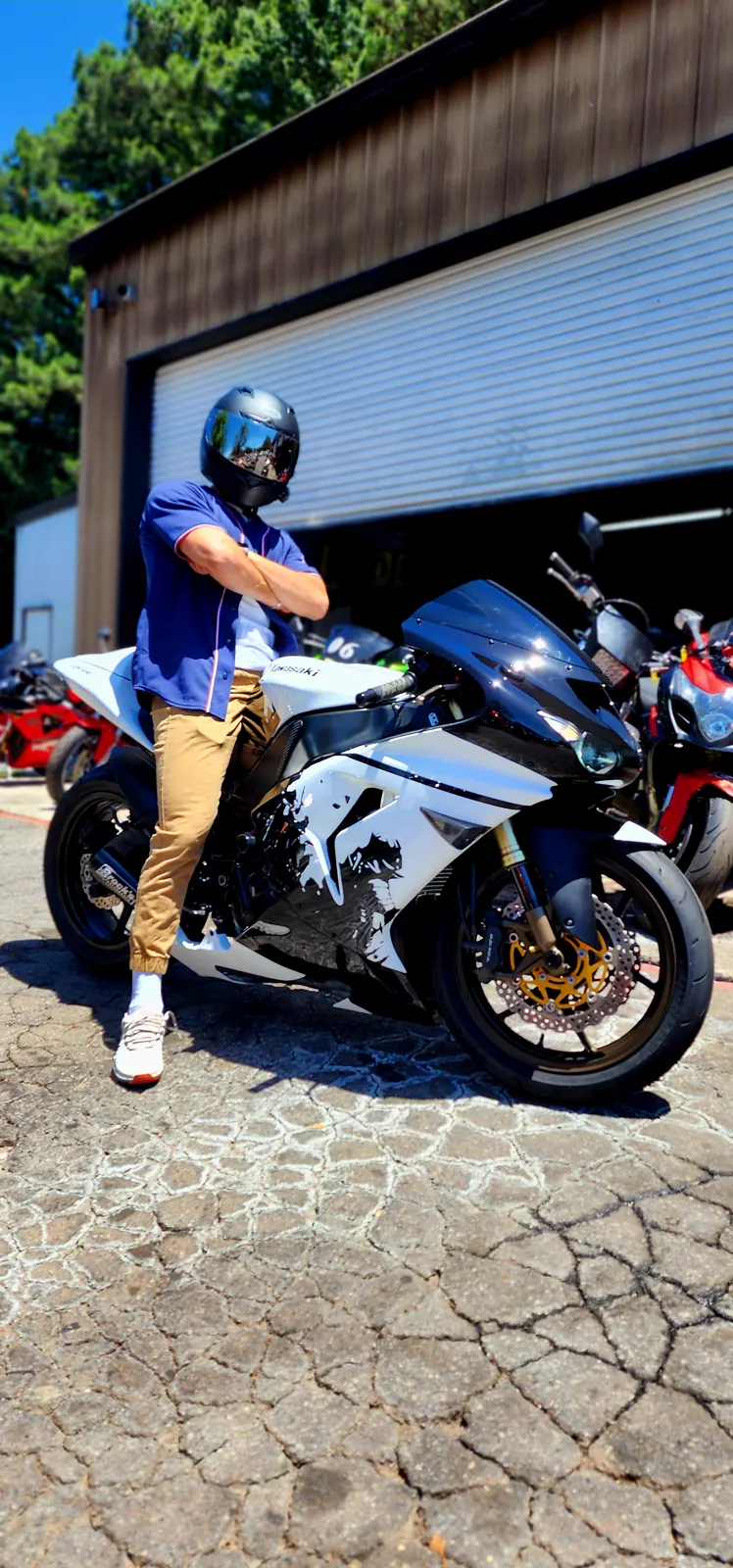
So make the call that fits the job in front of you. Warranty, recall, or factory software, go to the badge. Everything else, bring it to people who’ll work on your bike whether it’s brand-new, twenty years old, Japanese, European, or something nobody else wanted to touch. That’s the whole comparison, and you’re now holding the answer instead of hoping someone hands it to you.
Questions Woodstock riders ask us
Which do you actually recommend, dealer or independent?
For most riders, an independent full-service shop for everything routine, and the dealer for warranty repairs, recalls, and factory software tied to your brand. That’s not a hedge, it’s just where each one is genuinely stronger. If your bike is out of warranty and has no open recalls, an independent is the better home for it.
Does my bike change the answer?
Sometimes, yes. A brand-new bike still under coverage should see the dealer for anything the warranty might touch, because you paid for that coverage already. Older bikes flip the other way fast, especially non-Harley machines past about fifteen years, since most in-city shops around Woodstock won’t take them at all. Ours will.
What's the real difference once the bike is on the lift?
The parts and fluids can be identical, and often are. The difference is who explains the work to you, whether you see the old parts, and whether the same person remembers your bike next visit. Dealers run by volume and rotate staff. Independents run on repeat riders, so they tend to tell you when something can wait.
Is upgrading parts during a service worth it?
It depends on how you ride. If you’re doing hard mountain miles up I-575 on weekends, better brake pads, fresh fluid and quality tires pay you back immediately in confidence. Cosmetic upgrades can wait. We’ll tell you plainly which is which rather than adding things to the ticket.
How often should I service my bike?
Your owner’s manual sets the intervals, and we work from your book rather than a generic chart. Then we adjust for real life, because a bike that sits for weeks and then runs hard mountain roads ages differently than one ridden a little every day. Bring the manual if you have it and we’ll build the schedule together.
Which one should I pick if I only remember one rule?
Warranty, recall, or factory software goes to the dealer. Everything else goes to a good independent. That single rule covers almost every decision you’ll make about your bike, and it saves you from driving across town for work that could’ve been done nearby.
We’re based in Marietta and we see riders from all over the north metro, with Woodstock and Towne Lake among the most frequent trips down I-575. Riders come to us from Canton and Holly Springs to the north, Ball Ground a little further up, and Acworth, Kennesaw and Cartersville out to the west. On the east side we regularly work with folks from Roswell, East Cobb, Alpharetta and Milton, plus riders right here in Marietta who just roll in on a Saturday. If you’re within an easy ride of any of those, you’re within an easy ride of us.
BRING IT IN, WOODSTOCK
Text or call us and tell us what your bike is doing, or what it isn’t doing. We’ll give you a straight answer about whether it’s a dealer job or ours, even when that answer sends you somewhere else. Woodstock riders make the run down I-575 all the time, and we’ll have your bike sorted before your next mountain weekend.
470-460-9883Diaz Motorcycles and Service, LLC · 847 Barnes Mill Road, Marietta, GA 30062