Detail Cost East Cobb — Real Prices
What really drives the number on a motorcycle detail, and why a good shop won't guess before it sees your bike.
Two riders rolled their bikes out of the same quiet, garage-lined street in East Cobb last spring, and both were a little embarrassed by how dull the paint had gone. One grabbed a bucket, a sponge, and an hour on a Saturday. The other picked up the phone and asked a smarter question first: what the detail cost East Cobb riders actually pay depends on, and why one bike costs more to bring back than the next. Six months later, one machine still looks tired under the light. The other looks better than the day it left the showroom. Same problem, two very different roads.
Here’s the thing about that first rider. His wash wasn’t wrong, it was just small. The grime came off the tank, sure, but the swirls stayed, the chrome stayed hazy, and the water spots baked right back on by noon. He did honest work with the wrong tool for the job. The second rider didn’t spend a fortune, either. He just understood that a real detail and a driveway wash are two completely different animals, and knowing the difference is the whole game. So let’s walk through it the way we’d explain it to a friend leaning on the shop counter.
A Wash And A Real Detail Aren't The Same Job
What’s more, a wash is surface. Soap, water, a rinse, and you’re done. It knocks off the dust and the bug splatter from your last ride, and for a bike that just needs to be presentable, that’s plenty. Also a detail goes deeper, layer by layer, and it treats the finish as something to restore rather than just rinse. That’s why the two never cost the same and never should. One is a chore. The other is closer to bodywork for your paint, your chrome, and your leather all at once.
This heart of a real detail is paint correction. That’s the step most people have never actually seen up close. Under a bright light, factory clear coat is full of tiny swirls and light scratches from years of wiping, riding, and rain. Paint correction uses a machine polisher and graded compounds to level those marks out, so light bounces off the paint clean instead of scattering. The result is depth, like you’re looking into the color instead of at it. If you want the deeper version of that story, our write-up on what that service actually involves breaks the whole process down step by step.
After correction comes protection, and this is where ceramic coating gets talked about a lot and understood a little. Instead a ceramic coating is a liquid that bonds to your clear coat and cures into a hard, slick layer. It makes the surface shed water, resist pollen and grime, and wipe clean with far less effort. What it is not is a force field. Plenty of riders think a coating means their bike can never be scratched again, and that’s just not true. It protects and it eases cleaning, and it lasts years depending on how you care for it, but a hard hit or a careless wipe can still leave a mark. Set the expectation right and you’ll love it.
THE HONEST TRUTH ON CERAMIC
Ceramic coating makes cleaning easier and adds real gloss and protection. It is not scratch-proof and it is not armor. Anyone who tells you otherwise is selling, not explaining.
Georgia Is Genuinely Rough On A Finish
Now, why does any of this matter more here than somewhere dry and mild? Because Georgia is hard on paint and metal in ways riders don’t always connect. The summer heat bakes contaminants into clear coat. That humidity keeps everything a little damp. Spring pollen coats every surface in a fine yellow grit that acts like sandpaper when you wipe it wrong. And our hard water leaves mineral spots that etch if they sit in the sun. Run down Roswell Road, also known as GA-120, on a pollen-heavy April morning and your fresh wash is fighting a losing battle by the time you reach the Square.
East Cobb bikes have their own twist, too. Most of them are garage-kept toys, ridden on Saturday mornings down Johnson Ferry Road toward the Chattahoochee and Paper Mill Road for coffee, then tucked back inside. That’s great for keeping them out of the rain. But a bike that sits still still collects dust, still gets touched, and still picks up water spots from a quick rinse that never fully dried. Low miles doesn’t mean a flawless finish. It just means the damage builds slower and hides better, right up until strong light shows it all at once.
Now flip it around and look at it from the bike’s side. Your machine has been sitting in a warm garage, quietly gathering a film you can’t quite see. Every casual wipe with a dry rag has dragged that grit across the clear coat and left a faint web of scratches. The chrome has clouded from humidity and skin oils. This leather seat has dried a touch stiff. None of it is dramatic on its own. Together, it’s the difference between a bike that reads “nice” and one that stops people in a parking lot. The bike isn’t asking for a miracle. It’s asking for the layers to come off in the right order.
What Actually Drives The Number
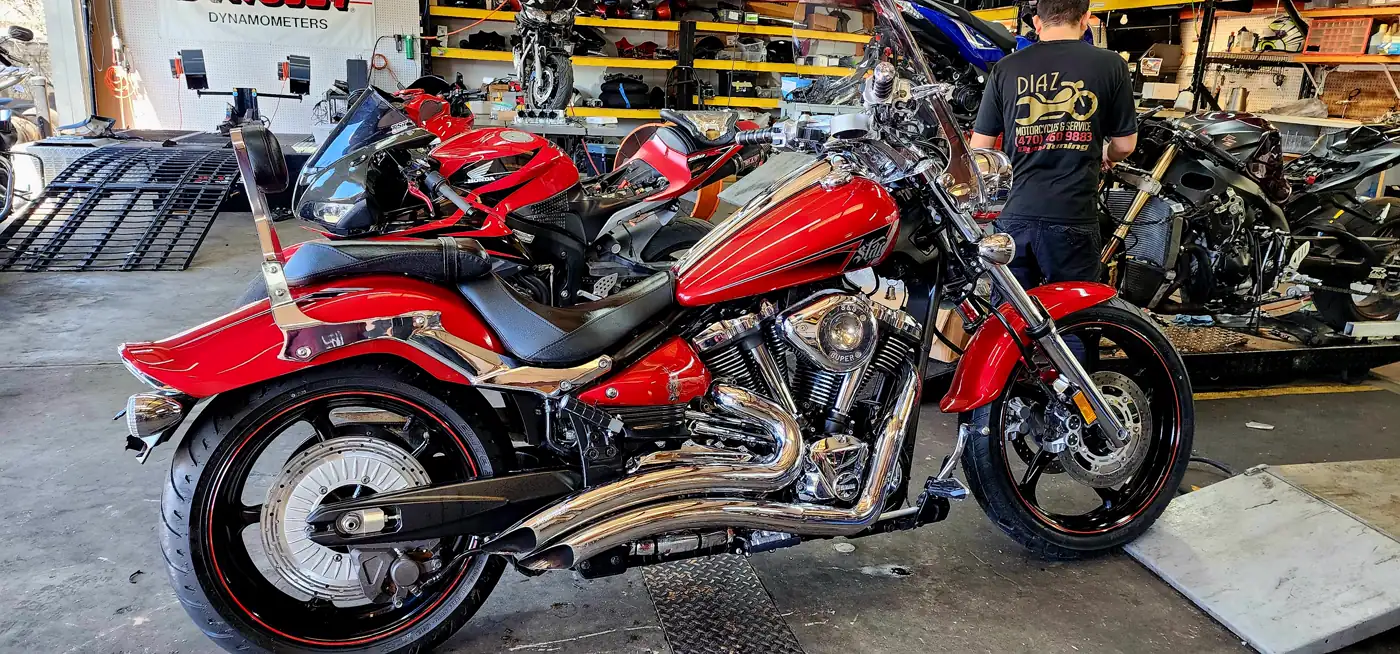
Here’s where we answer the real question. On a detail, most of what you’re paying for is labor and skill, not parts. There are supplies involved, like compounds, coatings, pads, and quality cleaners, and good product costs more than the stuff under your kitchen sink. But the big driver is time, and time is a function of your specific bike. Besides a stripped-down naked bike with clean lines is quick to work. After that, a dresser loaded with chrome, bags, fairings, and trim has three times the surface and a dozen tight spots, so it takes far longer to do right. If you want a plain look at what our team handles, the service page lays out the full menu.
So what makes one job bigger than another? Actually a few honest things stack up, and every one of them costs time rather than parts:
- How much chrome, trim, and hardware there is to polish by hand versus by machine
- The condition you start from — light haze wipes out fast, but deep swirls need multiple correction passes
- How much of the surface is buried behind bags, fairings, and guards that have to be worked around
- Baked-on trouble like tar, bug guts, and etched water spots that need dedicated removal steps
- Whether you want protection added, like a sealant or a full ceramic coating, and how far the correction goes first
- The state of the leather, vinyl, and plastic trim, which each get their own cleaning and conditioning
Access is the quiet one on that list, and it’s often the biggest. Polishing a flat tank is easy. Getting a machine or a hand into the pocket behind an engine guard, around a shock, or under a fender takes patience and adds real minutes. Two bikes that look the same size can be an hour apart in labor purely because one hides its dirt in places the other doesn’t. That’s not padding. That’s the actual work.
How We Walk The Job, Start To Finish
To make the labor make sense, here’s the order we actually move through on a full detail. Every bike is a little different, but the sequence rarely changes:
- That’s why a thorough wash to strip loose dirt and film so nothing gets dragged across the paint later
- Decontamination — bug and tar removal, plus clearing hard-water spots before they get polished in
- Wheel and engine-bay cleaning, the grimy areas that a wash never really reaches
- Paint correction with a machine polisher, removing swirls and light scratches in graded passes
- Chrome polishing by hand until it throws back a clean reflection
- Restoring plastic and trim so faded pieces look deep and new instead of chalky
- Leather and vinyl care to clean and condition the seat and any covered surfaces
- Either way a sealant or ceramic coating to lock in the gloss and make future cleaning far easier
Notice that the shiny final coat comes last on purpose. Coating a swirled finish just seals the swirls under glass. That’s why a rushed shop that skips straight to a spray-on shine gives you a bike that looks great in the shade and rough in the sun. Do the correction first, then protect it, and the gloss holds. Riders over in Cartersville ask us the same questions, and we walked through their version in our note for the riders over in Cartersville, since the finish enemies are the same across north Georgia.
How We Decide, And Why We Won't Guess
This is the part that reassures people once they hear it. An honest shop won’t quote a full detail sight-unseen, and that’s a good sign, not a dodge. We can talk in general terms all day, but the real number lives in the details we can only see in person, like how deep the swirls actually go, whether that chrome cloud is surface haze or the start of pitting, and how many hidden pockets your model hides its grime in. That’s really what the detail cost East Cobb question is asking, and it’s a question that deserves an answer based on your bike instead of a stranger’s. In short a quote pulled out of thin air only ever goes one of two ways: too high to be fair, or too low to be honest.
A shop that quotes your detail before it sees your bike is guessing. A shop that looks first is respecting your machine and your money.
So we look, we tell you what your finish needs versus what it doesn’t, and you decide how far to go. No pressure to buy the top package if a mid-level correction gets you where you want to be. And because we’re actually inside East Cobb, off Roswell Road, that look doesn’t cost you a half-day. Most riders here are two to five miles out and under fifteen minutes away. Compare that to loading up and hauling across the county to a dealer counter like Indian Motorcycle of Marietta over on Cobb Parkway near The Big Chicken, which is a fine shop but a real drive, and closed Sunday and Monday when your weekend actually happens.
There’s a detail in all this that changes how you’ll ride out of here. Once your finish is corrected and coated, upkeep gets almost easy. The slick surface means a quick rinse does most of the work, pollen and bug splatter let go instead of clinging, and you spend Saturdays riding instead of scrubbing. If you’re the type who likes the why behind everything, the same thinking shows up in the shop next door on the dyno side, and we gave that its own home in the full rundown on it. Care done right makes everything after it simpler.
What It Feels Like When You Get It Back
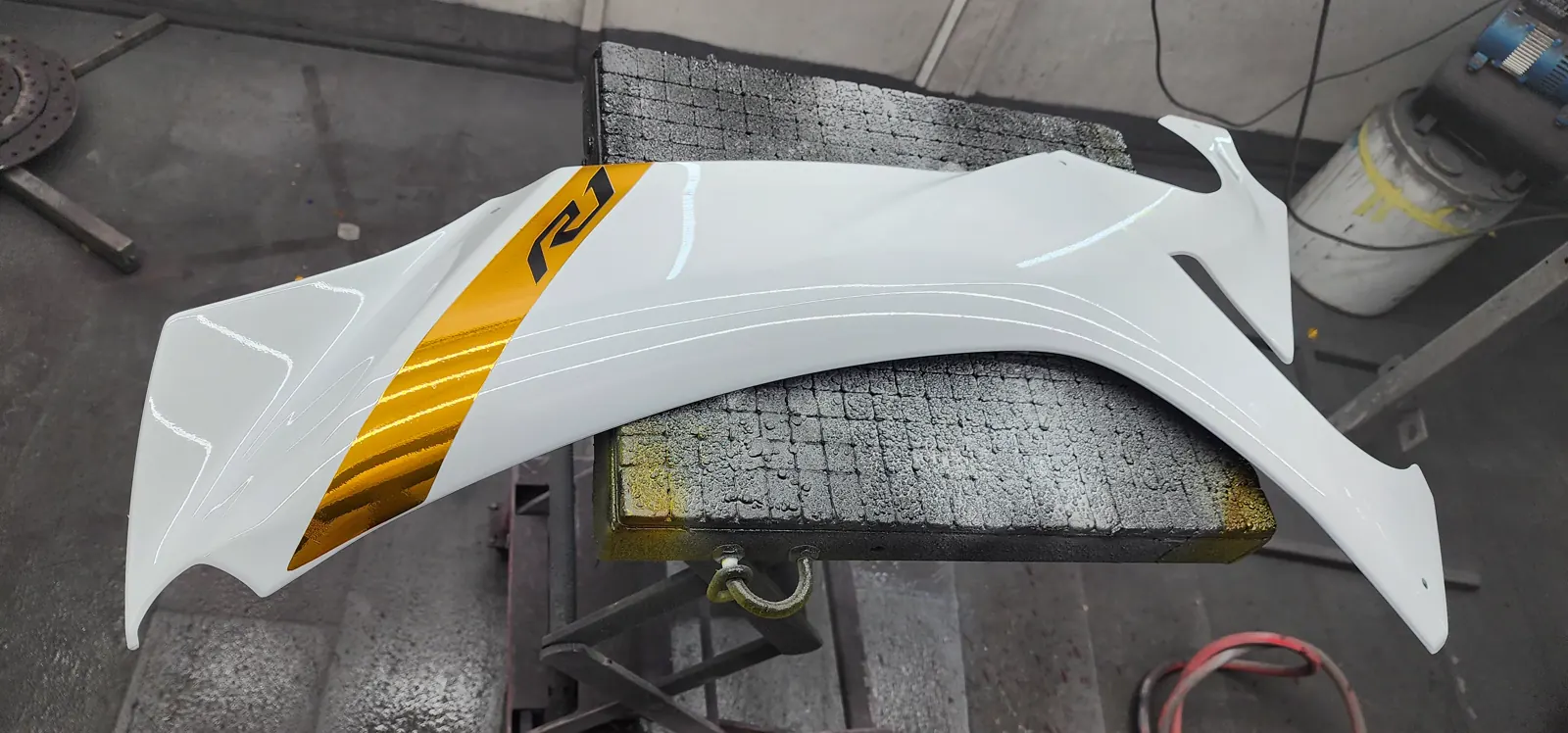
Words undersell this part. At the same time a properly detailed bike doesn’t just look clean, it looks deep. The paint has a wet, three-dimensional gloss you can almost fall into. That tank feels slick and glassy under your palm, so smooth your hand slides. The chrome throws back a reflection sharp enough to check your part in. The trim looks new instead of gray, and the seat is soft and rich again. Roll a bike like that out for the Saturday coffee run and you’ll catch neighbors from Windsor Oaks to Chestnut Creek doing a double take, the same way people slow down for the manicured fairways at Atlanta Country Club.
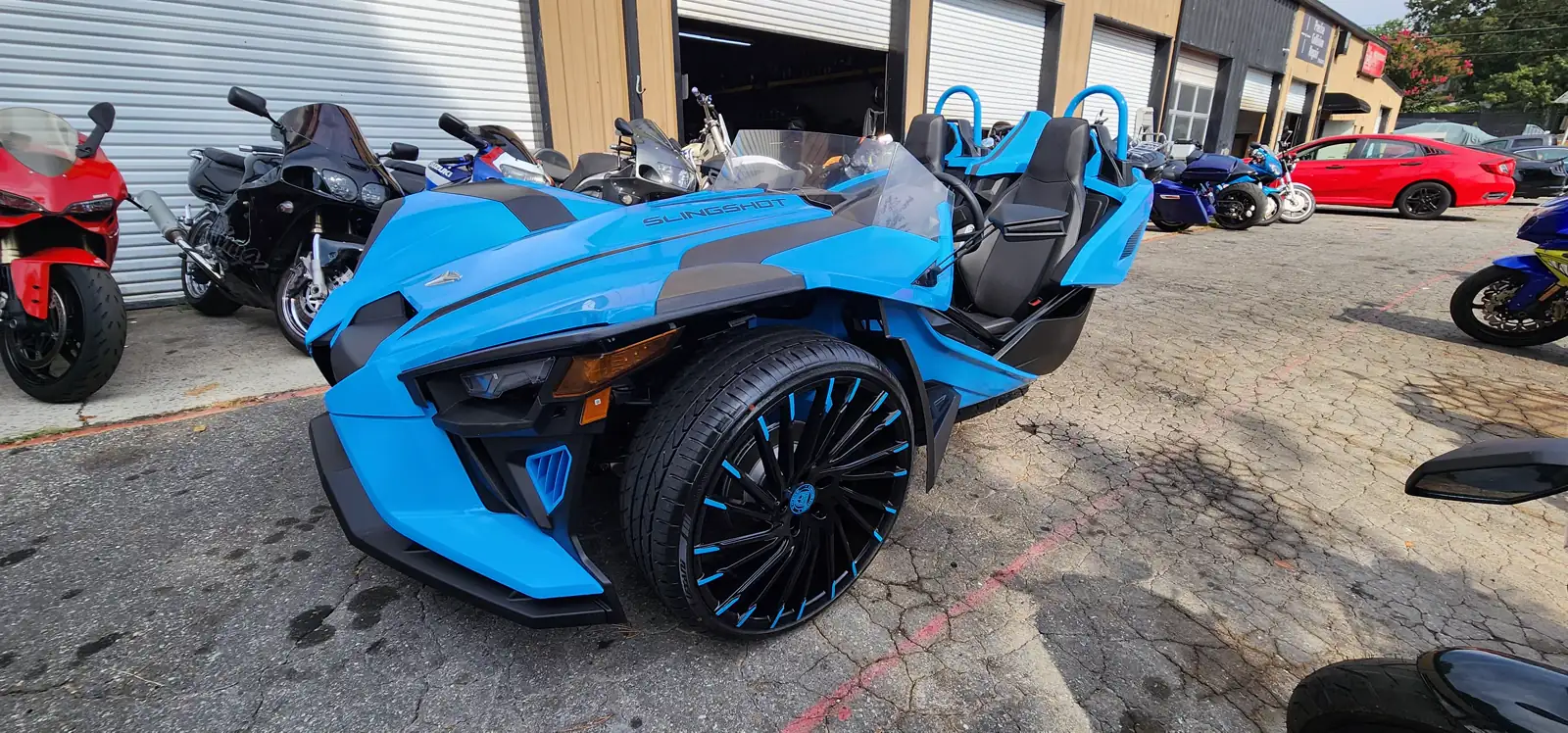
And it’s not just pride, though pride is a fine reason. As a result a finish that’s been corrected, coated, and cared for holds its value. When it’s time to sell or trade, a bike that gleams tells a buyer the whole machine was loved, and that shows up in what they’ll pay. The Motorcycle Industry Council tracks how much of riding is about ownership and long-term care, not just the ride itself, and a great detail sits right at that intersection. It also pairs naturally with custom paint. If you’re already dreaming about a new color, correcting and protecting it afterward is how you keep that fresh-out-of-the-booth look for years, depending on how you care for it.
Where This Leaves You
Back to our two riders. The one who understood the difference didn’t spend recklessly. He just asked the right question, let a shop actually look, and picked the level of work his bike needed. Now his machine looks better than new and cleans up in minutes. That’s the whole point of understanding what drives a detail. When you know a wash and a detail are different jobs, know that labor and access set the price, and know why a good shop looks before it quotes, there are no surprises left to fear. There’s just a beautiful bike and a plan to keep it that way.
Questions East Cobb riders ask us
On a detail, am I paying for parts or labor?
Almost all of it is labor and skill, plus quality supplies like compounds, pads, and coatings. There are no expensive parts in a detail the way there are in a repair. What you’re really paying for is time on your specific bike, and that time changes a lot from one machine to the next.
Does the type of bike change the work?
A great deal. A stripped-down naked bike is quick, while a loaded bagger with chrome, bags, and fairings has three times the surface and far more tight spots to reach. Two bikes the same size can be an hour or more apart in labor purely because of how much they hide.
What happens if you find something worse once you start?
We tell you before we touch it. If a chrome cloud turns out to be early pitting or the swirls run deeper than expected, we stop and explain the options so you decide. You’ll never get a surprise added to the bill without a conversation first.
How do I avoid surprises on price?
Let the shop see the bike before anyone quotes a full detail. An honest look at your paint, chrome, and trim is the only way to give a real number. A quote made sight-unseen is a guess, and it’s usually either too high to be fair or too low to be honest.
What makes one detail bigger than another?
How much chrome and trim there is, the condition you start from, how much surface is buried behind bags and guards, baked-on trouble like tar and water spots, and whether you add a coating. Each one adds time, and time is what drives the job.
Is ceramic coating really scratch-proof?
No, and be careful with anyone who says it is. Ceramic coating adds gloss, sheds water, and makes cleaning far easier, and it lasts years depending on care. But it’s protection, not armor, so a hard hit or a careless wipe can still leave a mark.
The shop sits right inside East Cobb, so a detail here doesn’t cost you a half-day of driving. We take care of riders all across Marietta and Roswell, plus Sandy Springs, Kennesaw, Woodstock, and Smyrna, along with folks coming in from Vinings, Alpharetta, Dunwoody, Canton, Acworth, and greater Atlanta. Most of East Cobb is two to five miles out and under fifteen minutes away, which beats hauling your bike across the county to a dealer counter that’s closed on the weekend anyway.
BRING YOUR BIKE BY, WE'LL LOOK FIRST
Wondering what a real detail would do for your machine? Don’t settle for a phone-quote guess. Roll into the shop right here in East Cobb, let us actually look at your paint, chrome, and leather, and we’ll tell you straight what it needs and what it doesn’t. No pressure, no mystery, just an honest plan to make your bike look better than the day you bought it. Send us a text or stop in.
470-460-9883Diaz Motorcycles and Service, LLC · 847 Barnes Mill Road, Marietta, GA 30062