Dyno Tune vs Stock Gainesville — Which Is Right
A fair, plain-words rundown of both choices, plus exactly how we decide which one your bike needs.
For example, here’s the straight answer, right up front. If you’ve changed anything on your bike — a slip-on, an air filter, a full exhaust — a tune almost always wins. If your bike is bone stock and you ride it gentle around town, stock is just fine. So the real call in a dyno tune vs stock Gainesville riders keep asking about comes down to two things: what you’ve bolted on, and how you ride.
That’s it. Even so, that’s the whole decision in one breath. But you probably want to know why, and you want a reason you can trust instead of a sales pitch. So let’s walk through it the way we would at the counter, with the bike sitting right there between us and nobody rushing.
It Started With A Slip-On And A Bright Orange Light
What’s more, a friend from up in Longstreet Hills rolled in last spring with a shiny new exhaust and a headache. After that, He’d bolted on a slip-on he loved, fired the bike up, and the engine light glowed bright orange. Also the bike popped and crackled on every roll-off. Instead it ran hot sitting in traffic on the way down. Besides he was sure he’d broken something expensive.
He hadn’t broken a thing. The bike was just confused. Actually his neighborhood sits near Alta Vista Cemetery, where General James Longstreet is buried and the streets carry his name, and our friend had ridden past it a hundred times without once thinking about fuel maps. That’s why, he was thinking hard about them, because that brand-new pipe had thrown the bike’s fueling sideways. Nothing was wrong with the metal. Something was wrong with the math.

Why A Bike Runs Lean Or Rich
Every engine burns a mix of air and fuel. Get that mix right and the bike feels smooth, pulls clean, and stays happy. Of course, get too much air and not enough fuel, and we call that lean. Get too much fuel and not enough air, and we call that rich. Both feel bad, just in different ways.
A lean bike runs hot. It surges. It hesitates when you crack the throttle, and it can ping. A rich bike runs sluggish and sooty, fouls plugs, and gets thirsty. Your bike came from the factory tuned somewhere safe in the middle, aimed at millions of riders in every climate on earth. In fact, that safe setting is not your setting. It never was, and it was never meant to be.
Think of it like a pair of boots off the rack. They fit well enough to walk out the door, and for a lot of folks that’s plenty. But the factory built that fit for the average of everybody, not for your feet, your terrain, or the miles you actually put in. A fuel map is the same idea. Change the parts on the bike, or ask more of it than average, and that off-the-rack fit starts to pinch in ways you can feel through the throttle.
Now bolt a freer-flowing exhaust onto that engine. Suddenly more air moves through, but the factory brain is still pouring in the old amount of fuel. The mix goes lean. That’s the popping. Then the heat. That’s the light. Add an air filter and you’ve nudged it further still. The bike didn’t fail — it’s just doing exactly what you’d expect when you change the airflow and leave the fuel alone.
What A Dyno Actually Measures
A dyno is a big drum the rear tire spins against while the bike is strapped down and going nowhere. As the engine pulls, the dyno reads how hard it’s working across the whole rev range. A sensor in the exhaust reads that air-and-fuel mix in real time. So we get to watch, second by second, whether your bike is running lean, rich, or right — at idle, in the middle, and flat-out.
That’s the magic of it. We’re not guessing from the seat of our pants. We’re reading the truth off the bike itself. From there we change the fuel map, either by flashing the ECU or dialing a Power Commander, until every part of the rev range sits where it should. If you want what that service actually involves spelled out step by step, we’ve got that written up too.
The internet will tell you one thing. Of course, the bikes tell us another. Online you’ll read that stock is always plenty and tuning is a waste unless you’re racing. Then a real bike rolls onto our drum with a fresh exhaust, reads dangerously lean up top, and the owner’s been riding it that way for months. The forum was talking about a stock bike. His bike hasn’t been stock since the day the pipe went on.
Your Two Options, Laid Out Fair
Let’s be honest about both, because both are right for somebody. This isn’t a trick where one side is a trap. A dyno tune vs stock Gainesville decision only feels hard because nobody lays out who each choice is genuinely for. So here it is, plain.
Staying Stock — Who It's Right For
If your bike is exactly how it left the factory and you like it that way, leave it be. Stock is right for you when:
- You haven’t touched the intake, exhaust, or air filter
- You ride relaxed — commutes, coffee runs, easy Saturday loops
- The bike feels smooth, starts clean, and never runs hot on you
- You just bought it, nothing’s changed, and it already runs great
There’s no shame in stock. A well-kept factory bike is a joy, and plenty of our friends never change a thing. If that’s you, save your money for gas and tires and go ride. Honestly, the smartest tune sometimes is the one you don’t need yet.
A Dyno Tune — Who It's Right For
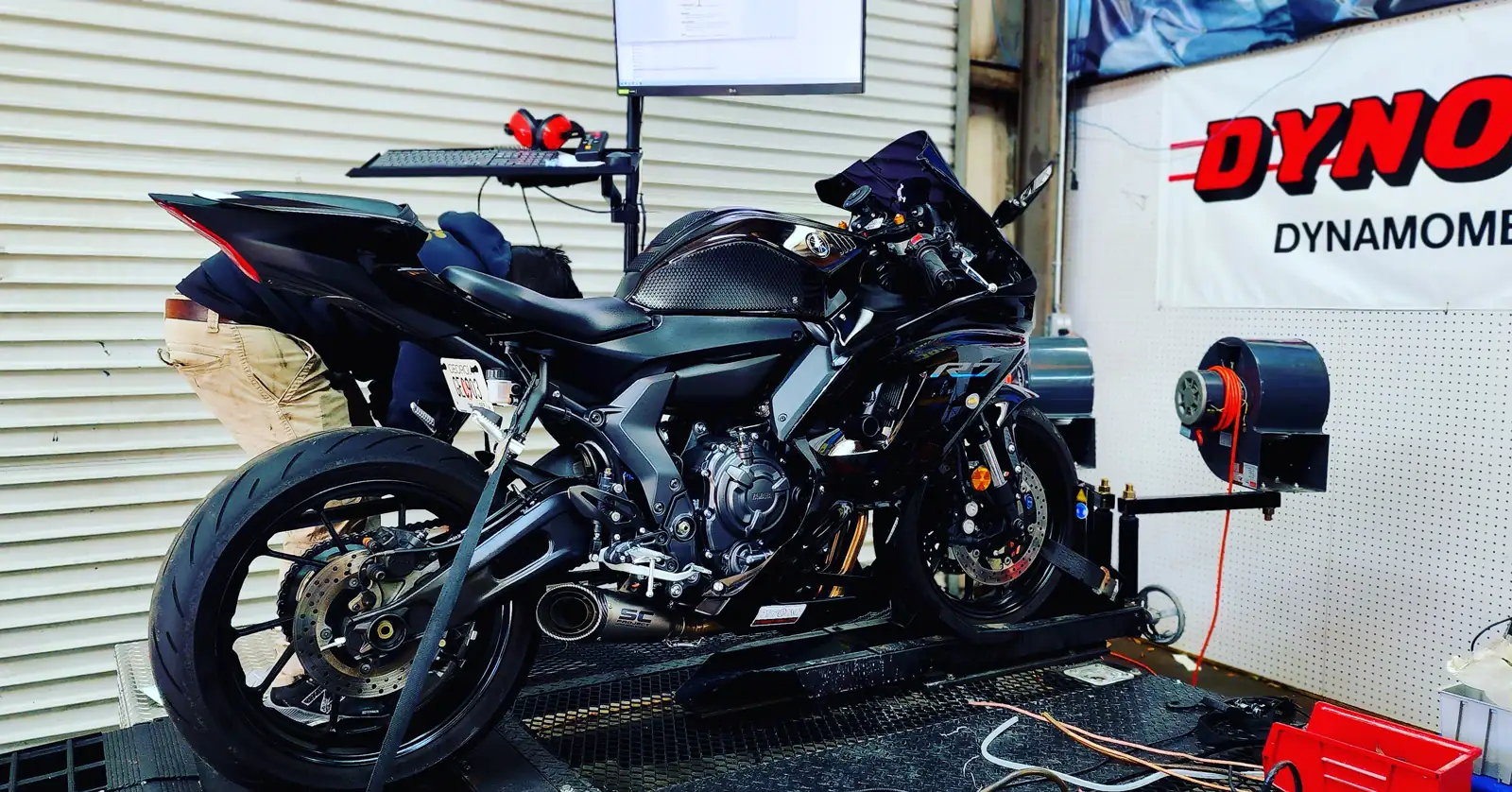
A tune earns its keep the moment you’ve changed how the bike breathes, or you’re asking more of it than a factory setting was built to give. Go with a dyno tune when:
- You’ve added a slip-on, full exhaust, air filter, or intake
- The bike pops, hesitates, surges, or runs hotter than it used to
- You chase lap times, since Michelin Raceway Road Atlanta is only 25 to 30 minutes down in Braselton
- You want the throttle to feel crisp and the power to come in clean and predictable
Around here, that last group is bigger than folks think. Gainesville sits at the mouth of the mountains, so plenty of sportbike riders are track-day regulars, and a track bike with an off map is leaving grip and confidence on the table. Cruiser and touring riders benefit too — a smooth, correct fuel map turns a jerky low-end into buttery drive on a long haul. Want the technical side for high-revving bikes? We wrote the full rundown on it.
How We Decide Which One You Need
We don’t decide for you and we don’t upsell. First we ask what’s on the bike and how you ride it. Then, if there’s any question, we put it on the dyno and let the numbers settle the argument. A stock bike that reads clean gets sent home stock — we’ll tell you flat that it doesn’t need us. A modified bike reading lean gets fixed. The bike gets a vote, and its vote is loud.
| If this is you | The honest call |
|---|---|
| Bone-stock bike, easy street miles | Stay stock — leave it alone |
| Added a slip-on, filter, or exhaust | Dyno tune |
| Chasing lap times near Road Atlanta | Dyno tune |
| Bike runs lean, hot, pops, or hesitates | Dyno tune |
| Just bought it, nothing changed, runs great | Stay stock |
This is where we’re a little different from the shops closer to home. Gainesville Motorsports over at 2750 Browns Bridge Road has been family-owned at one spot since 1974, and they’re the folks to see for routine service — oil, tires, warranty work, all of it. What no verified shop in Hall County offers is an in-house dyno with real custom mapping. That’s the gap we fill, and it’s the whole reason a trip our way is worth it. For a quick look at what our team handles, it’s all on one page.

A Quick Story, Because It Makes This Concrete
Remember our friend from Longstreet Hills with the popping exhaust? He almost didn’t come. He read online that a slip-on was too small a change to bother tuning, and he lives out past the grand old homes of the Green Street District, a good haul from us. But the light kept nagging and the heat in traffic worried him, so he made the drive down.
On the dyno, his bike read lean right where he felt the surge. We flashed a fresh map, took a couple of pulls to confirm it, and the light went dark. He rode home that evening and texted us the next morning after a loop on GA-53 around the north end of Lake Lanier. No popping. No heat. The throttle felt like a different bike, he said — one he actually trusted. That’s the part the forum never mentioned. The advice online was right for a stock bike, and dead wrong for his. Same words, opposite answer, because his bike had quietly stopped being stock the day that pipe went on. One dyno session settled a debate a dozen threads couldn’t.
What It Feels Like After
Here’s the feeling, and it’s the reason people make the trip. A correct tune isn’t about a bragging number. It’s about the bike doing what your wrist asks, right now, every time. The snatchy on-off goes away. In fact, the hesitation off idle disappears. The bike runs cooler in stop-and-go, so those brutal June afternoons in the high 90s stop cooking your legs at every light. Smoother fueling can even be a touch kinder on the gas.
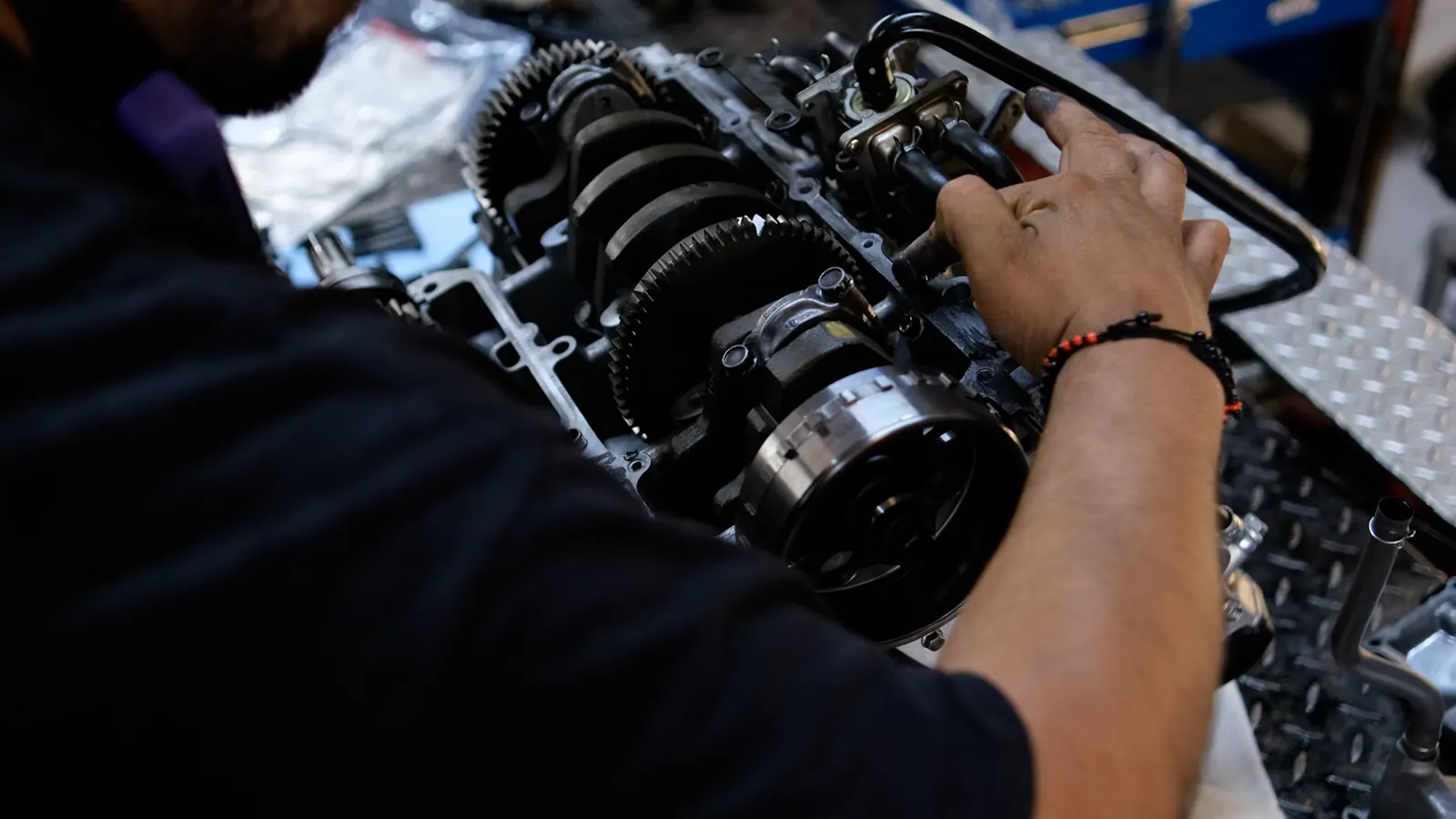
There’s a longevity angle too. A lean, hot-running engine works against itself, and heat is what wears parts out. Dial the mix in and the engine stops fighting. It runs at a friendlier temperature, and friendlier temperatures are gentle on the metal over the long haul. Getting your riding gear and habits squared away matters just as much — the Georgia Motorcycle Safety Program is a solid place to start, and Dunlop’s technical resources are worth a read on how tires and grip tie into all of it.
So — Which One?
Stock is right until the day it isn't. The bike will tell you which day that is.
Here’s the clean finish. Bone stock and ridden easy? Stay stock and go enjoy it. Changed how the bike breathes, or asking it to perform at Road Atlanta? Tune it, and don’t lose sleep over the choice. That’s the honest bottom line on a dyno tune vs stock Gainesville riders can actually act on — no fence-sitting, no scare tactics. If you’re still unsure, the dyno removes the guesswork in one session. The friends we’ve helped over in riders over in Dallas landed on the exact same rule of thumb, and it holds up bike after bike.
THE SHORT VERSION
Stock bike, easy miles: leave it alone. Any bolt-ons, any track time, or any lean, hot, or hesitating feel: put it on the dyno. When in doubt, the numbers decide — not us, and not a forum.
And yes, we know it’s a drive. From your side of Lake Lanier, figure roughly 55 to 62 miles and somewhere around 65 to 85 minutes, whether you take the lake route or drop down the interstate — that’s an estimate off the map, not a stopwatch reading. We know 365 and the long run down are heavily trucked, with blown retreads and debris to watch for, so we make it easy: we’ll talk pickup and delivery so your bike gets to us and back without you burning a Saturday. Whether you live near the Green Street District, out in Saddle Creek Farms on the bigger lots, or anywhere in between, one deliberate trip gets it sorted for the whole season.
Questions Gainesville riders ask us
Which should I pick — a dyno tune or stock?
If your bike is fully stock and you ride it easy, stay stock. If you’ve added an exhaust, filter, or intake, or you’re chasing track times, get it tuned. When you’re genuinely unsure, we put it on the dyno and the air-fuel readings make the call for you.
What's the real difference between the two?
Stock is the factory’s one-size-fits-everybody fuel map. A dyno tune is a map built for your exact bike, mods, and riding, measured on the dyno. Stock is safe and generic. A tune is dialed-in and specific, which is why it feels crisper.
Which one lasts longer?
A correct tune is often easier on the engine over time. A modified bike left on the stock map can run lean and hot, and heat is what wears parts. Dial the mix in and the engine runs cooler and stops fighting itself, which is gentle on the metal for the long haul.
Which is right for my kind of riding?
Relaxed street and commuter miles on a stock bike do great as-is. Track days near Road Atlanta, spirited mountain runs, or any bike with bolt-ons lean toward a tune. Tell us how and where you ride and we’ll point you straight, even if the answer is leave it stock.
Can I switch later if I change my mind?
Absolutely. Stay stock now, add a pipe next spring, and come get tuned then — nothing about staying stock today closes the door. An ECU flash or Power Commander map can also be updated later if you add more parts down the road.
Do I really have to make the drive from Gainesville?
It’s a real trip, roughly 55 to 62 miles and about 65 to 85 minutes as an estimate off the map. But no verified Hall County shop offers in-house dyno tuning, so it’s a destination job. We’ll set up pickup and delivery so one trip covers your whole riding season.
We tune and wrench for riders all across Northeast Georgia and Hall County, so the drive is worth it no matter which corner you’re coming from. Friends roll in from Oakwood and Flowery Branch just south of town, from Braselton near the track, and from Buford and Sugar Hill down the lake. We see bikes out of Clermont, Lula, Murrayville, and Talmo up in the countryside, plus Chestnut Mountain, Dahlonega in the foothills, and Cumming across the water. Wherever you keep your bike, we’ll help it run right.
STOCK OR TUNED — LET'S SETTLE IT
Not sure whether your bike should stay stock or get a dyno tune? Text us from Gainesville and tell us what’s on it and how you ride. We’ll give you a straight answer, set up pickup and delivery so the drive isn’t your problem, and if the dyno’s the only way to know for sure, we’ll let the numbers decide. No pressure, no upsell — just the honest call.
470-460-9883Diaz Motorcycles and Service, LLC · 847 Barnes Mill Road, Marietta, GA 30062