Dyno Tuning Cost Cartersville: What Really Sets the Price
A plain-English look at what a dyno measures, why bikes run lean or rich, and what actually changes the size of the job.
As a result your first big bagger doesn’t ride like the bike you traded in. On the other hand Roll on the throttle at a light and it hesitates for half a beat. So Sit in traffic on 41 and the engine bakes your right leg. Then crack it open on an open stretch, and there’s a flat spot right where you expected a shove. Still, None of that means the bike is broken. Plus, it means the machine is talking to you, and it’s asking for a proper setup, which is right where the dyno tuning cost Cartersville riders ask about starts to make sense. Meanwhile, a tune is simply how you teach a new-to-you bike its manners.
We see this all the time. A friend rolls in on something new to them. Maybe it’s a Road Glide that just replaced a smaller cruiser. Maybe it’s a liter sportbike after years on a 600. The bike is healthy, the valves are fine, yet it stumbles, runs hot, or surges at a steady cruise. Nine times out of ten, the engine is just guessing at how much fuel to add, and it’s guessing wrong for the parts on that bike and the air over Bartow. The good news is that guessing is a fixable problem, and fixing it is one of our favorite jobs.
The bike isn't broken — it's guessing
Every engine needs the right mix of air and fuel to fire clean. When there’s too little fuel for the air coming in, we call that lean. A lean bike runs hot, pops on decel, and feels flat when you want punch. When there’s too much fuel, that’s rich, and a rich bike runs sloppy, fouls plugs, smells heavy, and wastes the power you paid for. From the factory, your ECU is set for a stock bike breathing stock air in average weather. That map is a decent starting guess, but it’s still a guess.
The moment you change something, that guess drifts further from reality. Bolt on a slip-on, a full exhaust, or a freer intake, and suddenly the engine breathes differently than the factory assumed. Even a hot, humid Bartow afternoon shifts the math. So the bike keeps pouring in its pre-set amount of fuel while the air moving through has changed. That mismatch is the stumble, the heat, and the flat spot our friends describe when they first walk in the door.
What a dyno actually measures
A dyno is just a rig that lets the bike run hard while it stays put. We strap the bike to a heavy drum, and it pulls against that drum like it’s climbing a long hill. Meanwhile, sensors read how much power the rear wheel lays down across the whole rev range, from a lazy idle to redline. At the same time, a wideband probe sits in the exhaust and reads exactly how lean or rich the engine is at every throttle position. That’s the part no parking-lot guess can give you. Real numbers, from your bike, on that day.
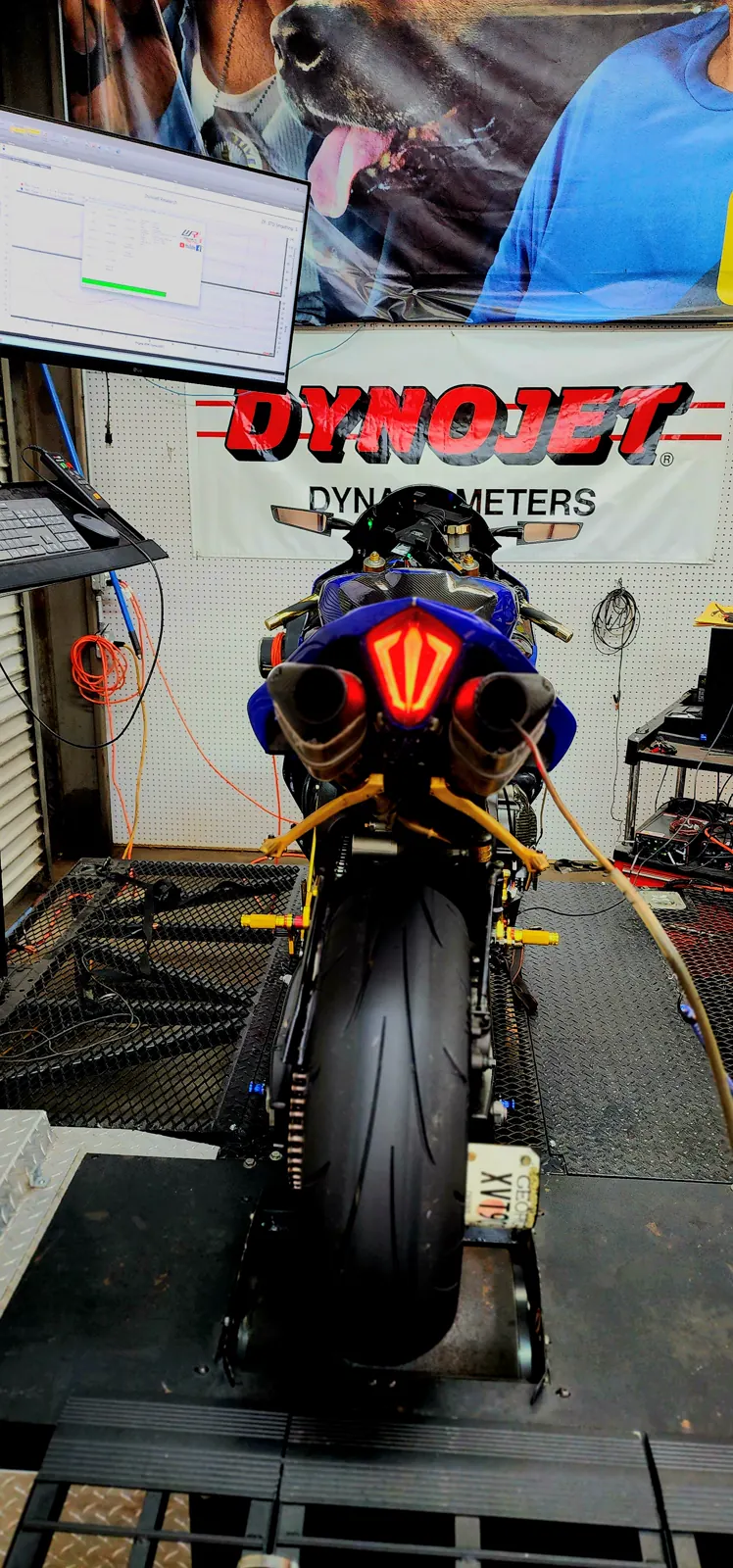
Those numbers matter more here than in a lot of places. Bartow is a show-me county. Plenty of our friends work in manufacturing and the trades, and they size up a shop the way they’d size up a machine. They want part numbers, torque specs, and a before-and-after graph they can hold. A dyno gives us all three. We can print the run before we touch a thing, print the run after, and set the two curves side by side so you see exactly what your money bought. Nobody has to take our word for it.
That printout also keeps everyone honest. Because we tune to a real reading instead of a hunch, the engine ends up fed correctly at every point you actually use, not just at wide-open throttle. If you want a deeper look at how our crew approaches it, our service page walks through the equipment and the mindset. The short version is that we’d rather measure than assume.
There's a version of this that's cheap and a version that isn't
That one sentence explains most of the price questions we get. Two bikes can walk in with the same engine and leave with wildly different bills, and neither friend got treated unfairly. The difference lives in what the bike needs and how hard it is to reach. So let’s break down the two ends of the range, since the honest answer to dyno tuning cost Cartersville questions always starts with what’s actually on your bike.
On the cheaper end, some bikes just need the brain they already have retaught. We flash the ECU, which means reprogramming the computer your bike was born with, and we dial the fuel and timing to match your parts. There’s no new hardware to buy. It’s mostly our labor and dyno time. A bike with light bolt-ons and easy sensor access can often go this route, and it’s a clean, tidy job.
On the pricier end, a bike might need real hardware added before we can even tune it. That could mean a piggyback unit like a Power Commander to take command of the fuel, an autotune module so the map keeps itself honest, a fresh oxygen sensor, or a full custom map for a big cam or head work. Now there are parts stacked on top of labor, and the job grows. Neither path is a rip-off. They’re just different amounts of work, and we’ll always tell you which one your bike is asking for.
Access changes things too, and folks forget this one. Some bikes hand you the sensors and connectors in about a minute. Others make you pull a tank, peel off fairings, or strip half a bagger’s bodywork just to reach a single plug. That’s labor you can’t skip, and it’s a big reason two bikes with matching engines can be very different jobs. If you want the ground-level view of what that service actually involves, we laid it out step by step in a companion post.
| Smaller, tidier job | Bigger job |
|---|---|
| ECU flash only | Piggyback unit plus modules added |
| Light bolt-ons | Cam, head work, or a full custom map |
| Easy sensor access | Tank, fairings, or bodywork to remove |
| Stock computer keeps control | New hardware controls the fuel |
How we decide what your bike needs
Here’s the actual process, start to finish, so there’s no mystery. We don’t hide it, because the more you understand it, the easier it is to trust the number at the end. Every bike walks the same road, and we talk you through each stop as it happens.
- First we sit down and go through your mods and your goals. A touring rider chasing cool, smooth cruising gets a different map than someone hunting top-end punch.
- Next we make a baseline dyno pull with the bike exactly as it arrived. That’s the honest snapshot of where you’re starting.
- Then we read the air-fuel numbers across the whole rev range and mark every spot that’s running lean or rich.
- From there we decide the path: flash the existing ECU, or add hardware like a Power Commander first, then tune.
- We tune in steps, pull after pull, nudging the fuel and timing and re-reading the exhaust until the curve is clean everywhere you ride.
- Last comes a final verification pull and a printout, so you leave with proof of the before and the after in your hand.
Notice that the size of the job reveals itself along the way. We can’t know if your bike needs a new sensor until we read it. We can’t know how buried a connector is until we’re standing over it. That’s not a stall tactic. It’s just the honest order things happen in, and it keeps you from paying for parts your bike never needed.
Something worth knowing before you book anywhere
No honest shop will hand you a firm quote over the phone, sight-unseen. When someone rattles off a fixed price before they’ve seen your bike, they’re either guessing high to protect themselves or guessing low to get you in the door. Both cost you in the end. We’d rather look, read, and tell you the truth, because a tune priced by fantasy usually turns into a surprise later. If you want to see how this plays out in Woodstock, we covered the same honest-quote issue for our riders there.
Real in-house dyno work is also rarer around here than you’d think. Bartow is well served for Harley and a couple of the big brands, but a true multi-line performance shop with its own dyno is thin on the ground. Plenty of the big multi-line dealers sell you the bike, then send the tuning out the door to someone else. A place like RideNow Powersports Canton over on Riverstone Parkway, roughly a half-hour east of town, is a fine spot to buy a machine, but custom mapping in-house is a different animal. We keep the whole job under one roof, which means one crew owns the result.
Our friends come from all over Bartow, too. Some are restoring a project bike in a garage off the Downtown Business District, one of the town’s five locally designated historic districts and its old commercial core. Some live in the older homes around the North Erwin Street Historic District, which sits on the National Register of Historic Places. And plenty are new owners settling into D.R. Horton’s Parkside at Carter Grove, tucked inside Carter Grove Plantation, who bought a bike the same season they bought the house. Different streets, same question: what will this tune really cost, and why.
What it feels like after
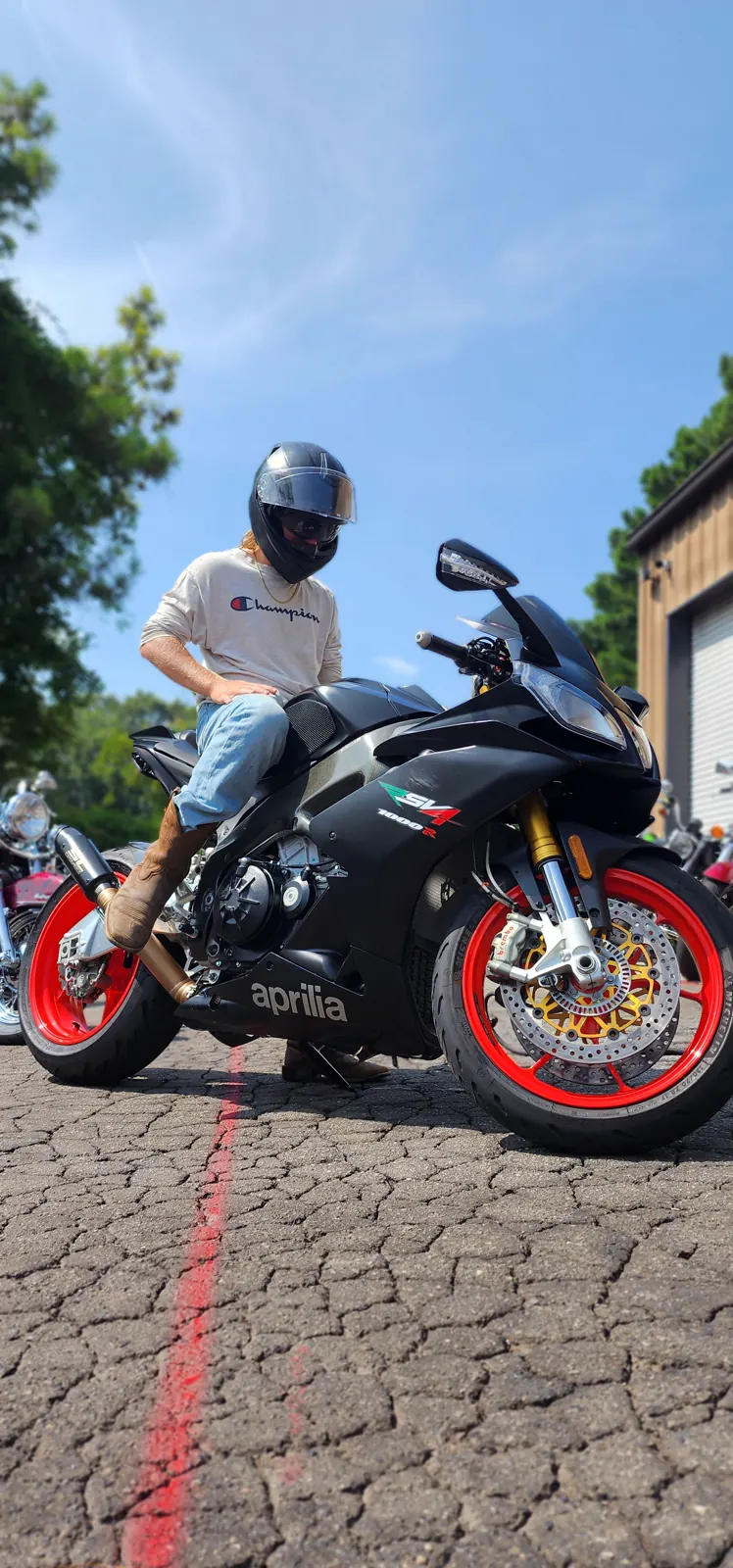
This is the part our friends grin about. The stumble at the light? Gone. Roll the throttle and the bike just goes, smooth and linear, like it finally knows what you’re asking. The heat coming off the engine in traffic drops, because a properly fed motor isn’t running lean and cooking itself. The surge at a steady cruise flattens out into calm, even power. It’s the same bike you rode in on, only now it’s fed right, and the difference lands the first time you leave the lot.
You feel it most where it counts. Point the front wheel up Red Top Mountain Road toward the park on Lake Allatoona, and the low-speed manners make the twisty stuff easy. Head north on 411 for the big rides, and a clean map pays off all day. If you ever chase the Johns Mountain to Cloudland Canyon route, that documented 72-mile northwest Georgia loop on GA-136, Armuchee Road, Pocket Road and Floyd Springs Road plus the Lookout Mountain Scenic Highway out of Villanow, you’ll want that predictable throttle in the corners. Autumn is peak season on that ride, and a smooth-running bike makes the whole leaf-peeping run better.
There’s a safety angle too, and it’s a real one. A predictable throttle means no ugly surprise when you’re threading a corner or rolling out of a stop. The folks at the Motorcycle Industry Council track how riders actually use their bikes, and NHTSA crash data underlines why smooth, controlled inputs matter on two wheels. A good tune isn’t only about power. It’s about a machine that does exactly what your wrist tells it, every single time.
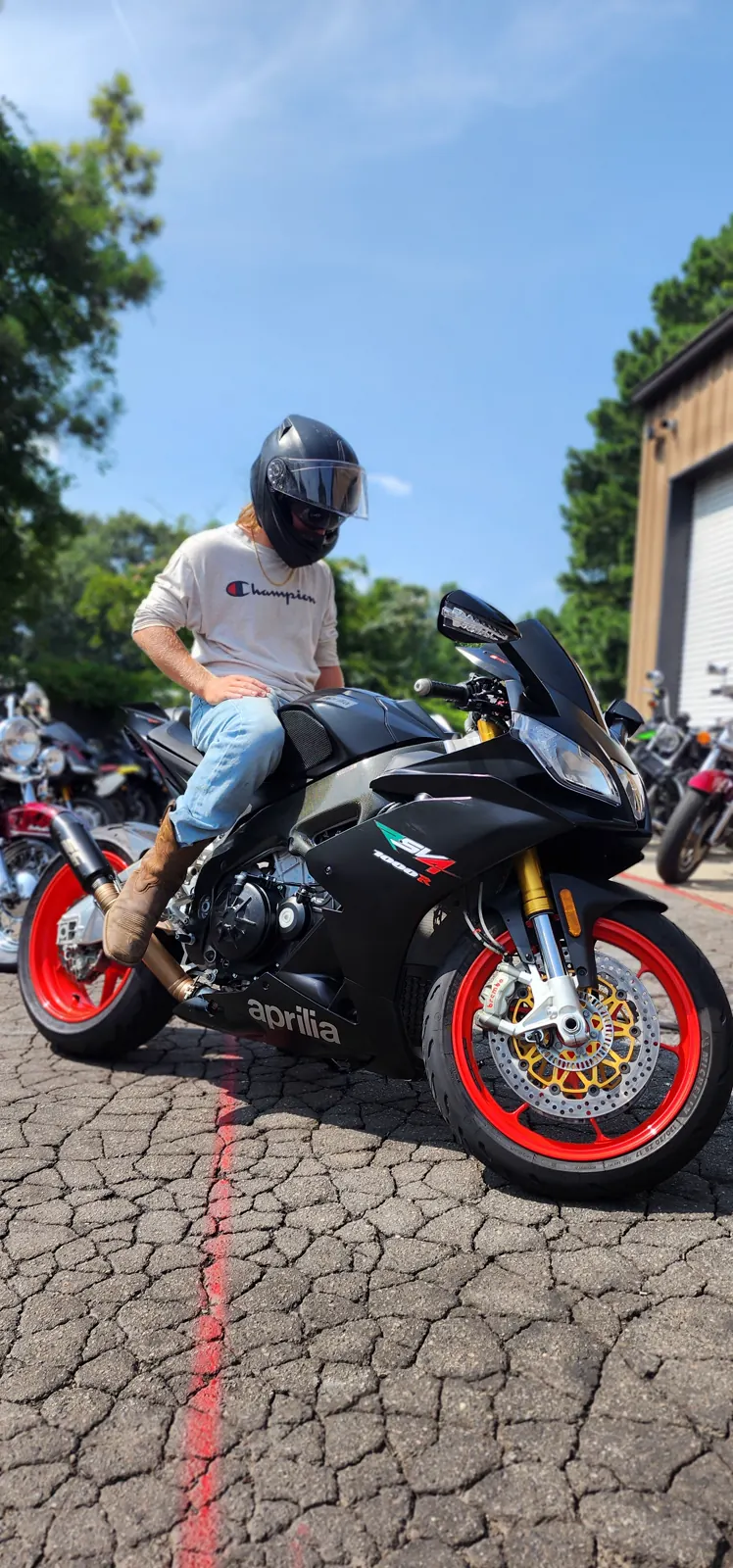
The honest bottom line
Cartersville is a genuine motorcycle town, and this touring and bagger culture is exactly the crowd that needs a real tune after an exhaust and intake swap. You’ll see the crossover everywhere, from the classic machines at the Savoy Automobile Museum to the crowds that pass through the sprawling LakePoint Sporting Community out in Emerson on a big weekend. Riders here know good mechanical work when they see it, and they tell their friends. That’s why we lead with the truth instead of a phone-quote fairy tale.
So when you ask us the price, we’ll ask to see the bike. We’ll read it, tell you whether it’s a flash or a hardware job, and lay out the labor before we start. If you’re still weighing a full custom map against leaving it stock, we broke down the tradeoffs between them so you can decide with clear eyes. Either way, you’ll finish knowing exactly what you’re paying for and why, which is how it should have worked all along.
We price the bike in front of us, not the fantasy on the phone.
Questions Cartersville riders ask us
What if you find something else while you're in there?
We stop and call you before we touch it. If a baseline pull shows a bad sensor, a vacuum leak, or a tired plug, we show you the reading and let you decide. Nothing extra gets done without your yes first, so there are no surprises when you pick the bike up.
How do I avoid surprises on the final number?
Come in and let us look. Once we’ve read the bike, we walk you through whether it’s a simple ECU flash or a hardware job, and we spell out the labor before any work starts. Because we tune to real dyno readings and not a hunch, the plan we give you up front is the plan you pay for.
What makes one tune a bigger job than another?
Two things: what the bike needs and how hard it is to reach. A light flash on an easy-access bike is small. Adding a Power Commander, an autotune module, or a full custom map for a cam turns it into a bigger job, and so does peeling off a tank or bagger bodywork just to reach the sensors.
Why can't you quote it over the phone?
Because an honest number needs the bike in front of us. We can’t tell if your machine needs new hardware or just a re-flash until we read it, and we can’t see how buried a connector is until we’re standing over it. A phone quote is either padded for safety or lowballed to get you in the door, and both cost you later.
What's included in the work?
A baseline pull, a full read of your air-fuel across the rev range, the tune itself done in steps, and a final verification pull with a printout you keep. You leave with a before-and-after graph, so you can see exactly what changed on your own bike.
Do you tune more than Harleys?
Yes. We’re a multi-line shop, so cruisers, baggers, metric touring bikes, sportbikes, and project bikes all come through. That mix matters in Bartow, where a true in-house dyno that handles every brand is hard to find close to home.
We tune bikes for riders all across the northwest metro, not just inside the Cartersville line. Friends roll in from Acworth, Emerson, and Kennesaw to the south, from White, Adairsville, and Rydal up the north end of Bartow, and from Euharlee, Kingston, and Taylorsville out west. We also see plenty of Canton, Woodstock, and Dallas riders who’d rather have their custom mapping done in-house than shipped out to a third party. Wherever you keep your bike, the process is the same: we read it, we plan it, and we tell you the truth before we start.
GET YOUR BIKE TUNED RIGHT
Ready to feel what a proper tune does for your bike? Text us a few photos and the mods on your machine, and we’ll tell you what to expect before you ever ride up. We’ll read your bike on our own dyno, show you the before-and-after graph, and give you an honest plan on the labor. Cartersville riders deserve real in-house mapping, not a job shipped out the door. Reach out today and let’s set it up.
470-460-9883Diaz Motorcycles and Service, LLC · 847 Barnes Mill Road, Marietta, GA 30062