Dyno Tuning Cost Smyrna: What Actually Drives the Number
A plain-language look at what happens on the dyno, what makes one tune bigger than another, and why an honest shop asks to see the bike first.
Then again, you don’t have to know what’s wrong with your bike. Really. You can walk in and say “it feels flat right off idle, and it gets weirdly hot sitting in traffic,” and that is plenty to work with. Naming the part is our job. Describing the feeling is yours. Even so, most riders who ask us about dyno tuning cost Smyrna start exactly there, with a symptom instead of a diagnosis, and honestly that’s the better place to start. A feeling is real information. We can put numbers to it.
It usually starts with a commute, not a track day
Meanwhile, Picture a rider who lives a few blocks off Market Village. In fact, that said, Coffee downtown, bike out of the apartment lot, fifteen minutes to an office near Cumberland. For example, that short hop is the whole use case. But the bike has started doing something odd. After that, it surges a little at steady throttle. It runs hot when Windy Hill Road backs up on a Braves night. And when the light finally goes green, the pull off the bottom feels lazy, like the engine is waiting on something.
Nothing is broken. No warning light. What’s more, the rider isn’t imagining it either, and that’s the frustrating part. Since Georgia doesn’t allow lane splitting, a bike in Smyrna sits in the same stop-and-go heat a car does, and a fussy fuel map shows up worst in exactly those conditions. So the bike feels great on an open run toward the Chattahoochee River crossings and cranky on the way to work. Same bike, two personalities.
What a dyno actually measures
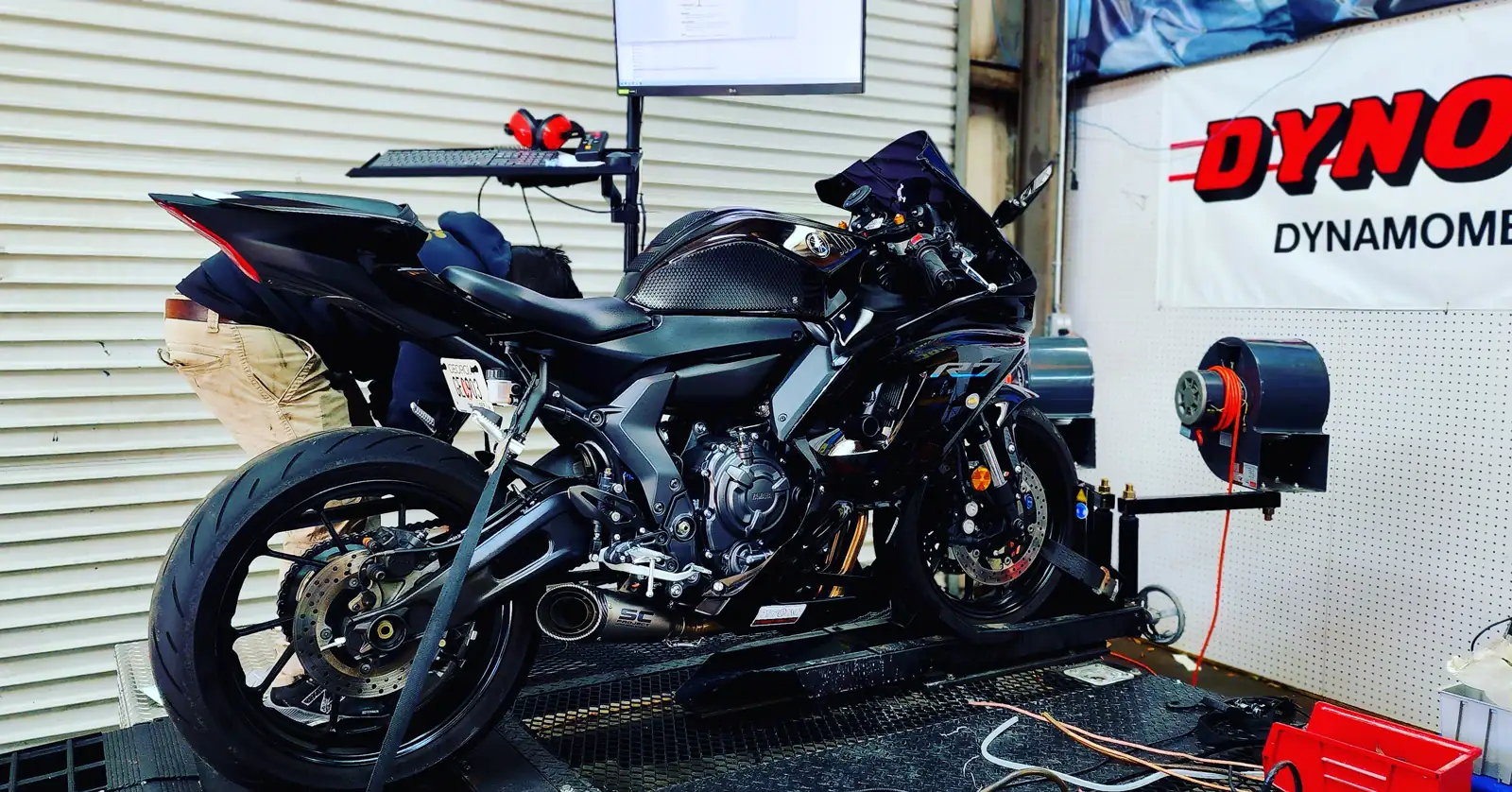
So and Better yet, a dyno is a roller in the floor. Still, we strap the bike down over it, the rear wheel spins the roller, and the machine measures how hard that wheel pushes. Plus, From that push we get horsepower and torque across the whole rev range. Not one number. A curve. Meanwhile a sniffer in the exhaust reads the air-fuel mixture at every point on that curve, so we can see what the engine is being fed while it works.
Think of it as a treadmill with a heart monitor. The bike runs in place, and we watch what it does under real load instead of guessing from the seat. That matters because your right wrist can tell us where something feels wrong, but it can’t tell us why. The dyno fills in the why.
IN PLAIN WORDS
A dyno doesn’t add power by itself. It shows us the truth about the engine so we can fix what’s holding power back.
Lean, rich, and why your bike came that way
Engines burn a mix of air and fuel. Too little fuel for the air is “lean.” Lean runs hot, surges at steady throttle, pops on decel and feels sharp but nervous. Too much fuel is “rich.” Rich runs sooty and soft, fouls plugs, wastes gas and feels lazy. Neither one means your bike is junk. Both are common right out of the crate.
Here’s the part that surprises people. Factory maps are built to pass emissions tests and to work everywhere, from sea level to the mountains, in any weather, on whatever fuel a country sells. So they lean things out in the cruise range and pad the edges for safety. Your bike isn’t tuned for you. It’s tuned for an average that doesn’t exist. Add a slip-on exhaust or a free-flowing filter and the mix drifts further off, because now the engine breathes differently than the map expects.
Here's what a good shop checks that a rushed one skips
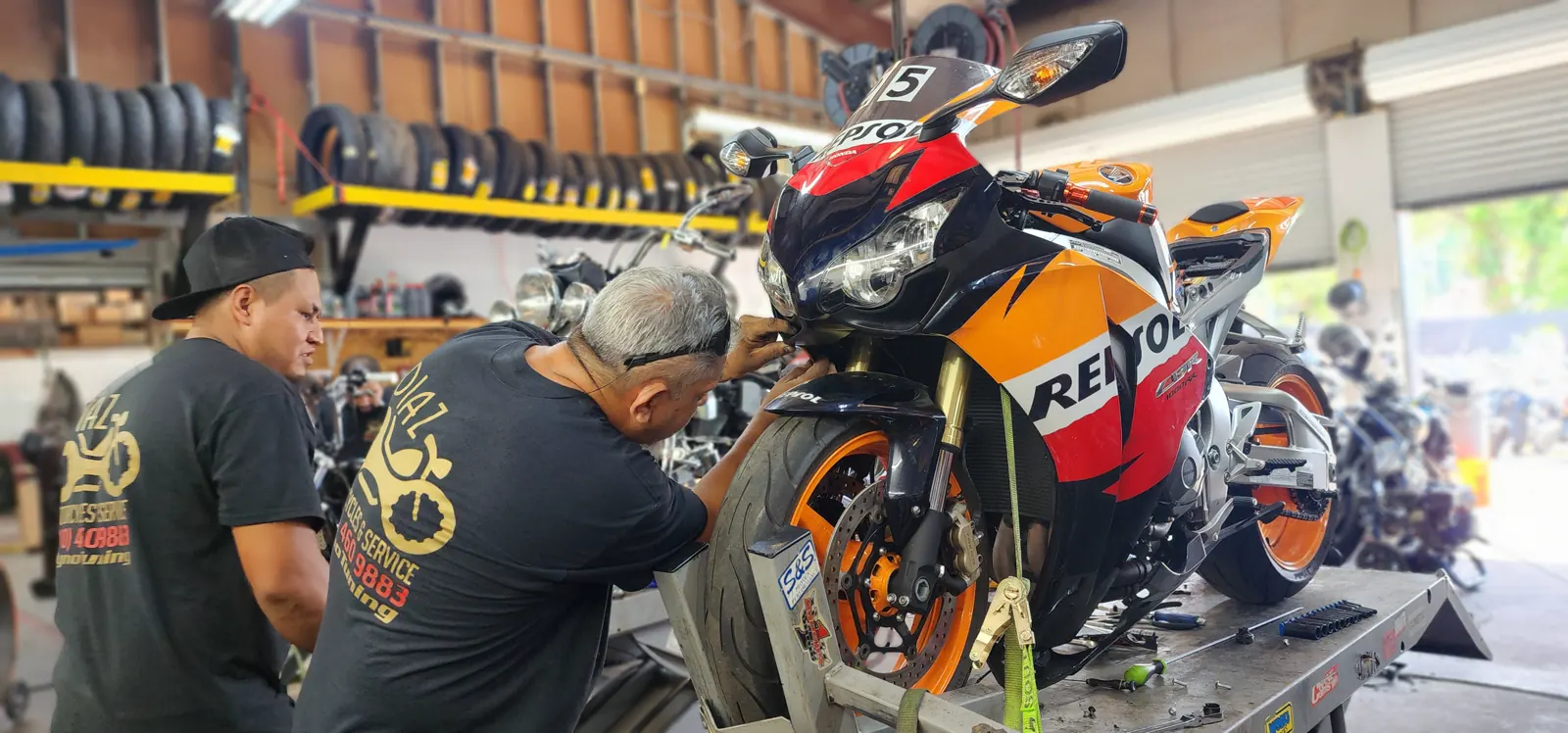
This is where jobs start to separate. A rushed shop straps the bike down, loads a canned file, prints a sheet and sends you home. That takes an hour and sometimes it’s fine. Often it isn’t, because a tune written on top of a mechanical problem just hides it. Before we change a single number, we go looking.
- Air filter condition, because a clogged filter fakes a rich reading every time
- Spark plugs, which tell a story about how the engine has been burning fuel for months
- Valve clearance history, since tight valves change how the engine breathes and no map fixes that
- Exhaust leaks, which suck fresh air into the sniffer and make a healthy bike read lean
- Chain, sprockets and tire pressure, all of which change the numbers the roller sees
- Throttle bodies and any sync issue on multi-cylinder bikes
- Battery and charging health, because weak voltage confuses the injectors and the logging both
None of that is glamorous. All of it protects you from paying for a tune that fights a mechanical problem. If we find something in that list, we tell you before we go further, and you decide. That’s the whole deal.
Your options, in order of how far they go
There isn’t one thing called “a tune.” There are a few different jobs wearing the same name, and the gap between them is the single biggest driver of what the work costs. Here’s the short version, smallest to largest.
- A piggyback module like a Power Commander, which sits between the stock computer and the injectors and corrects fueling without touching the factory brain.
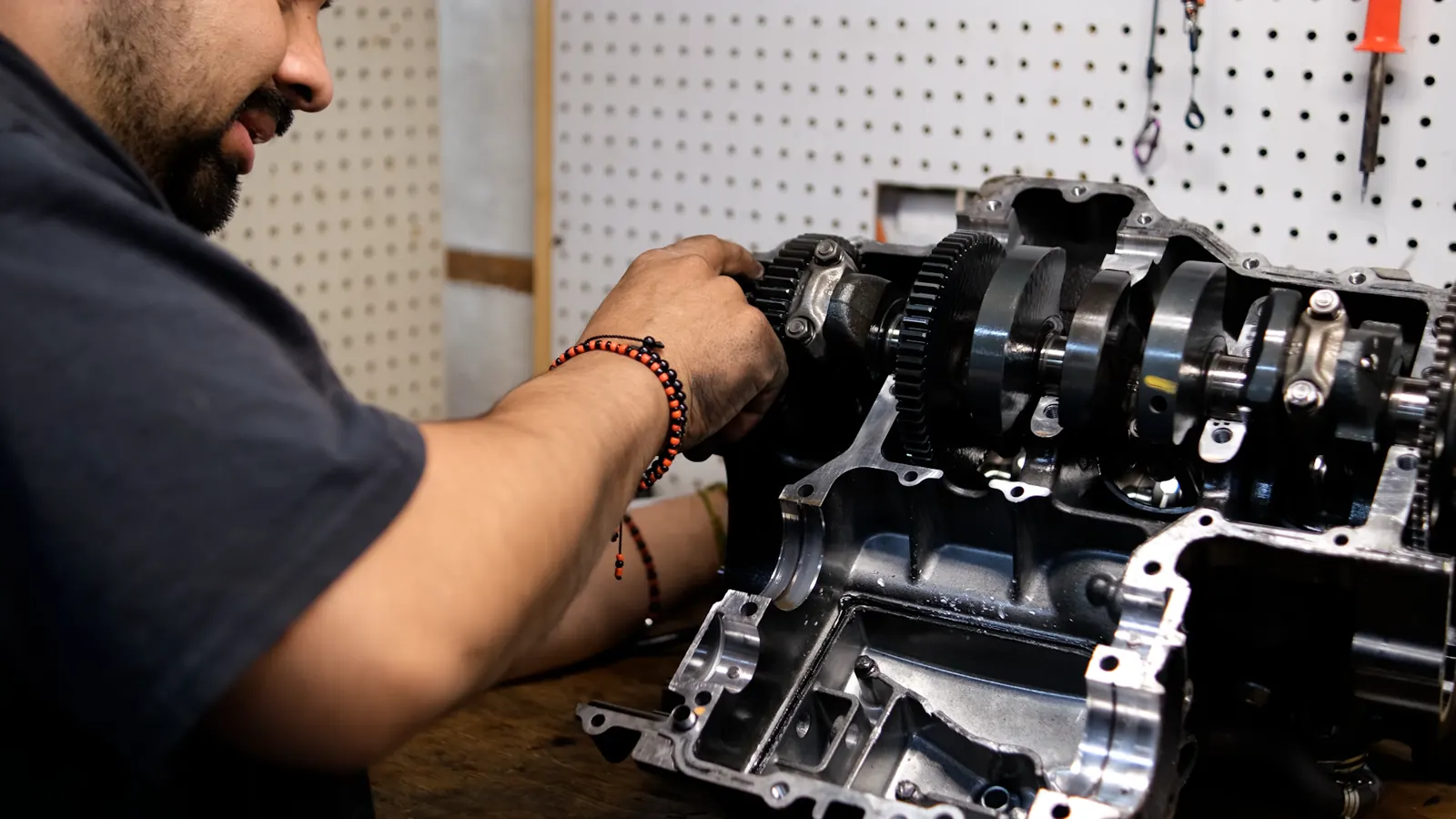
- An ECU flash, where we rewrite the bike’s own computer directly. This can reach things a piggyback can’t, like ignition timing, rev limit, throttle response and certain restrictions.
- A custom map developed live on the dyno for your exact bike, your exhaust, your filter, your altitude, run by run until the curve is clean.
- A full build tune, where hardware changed enough — cams, big-bore, forced induction — that we’re mapping a fundamentally different engine.
Each step up means more time on the roller, more runs, more data and more decisions. That’s really the honest answer to dyno tuning cost Smyrna riders are looking for: the job scales with how far you’re going, not with a flat menu price. A piggyback on a clean stock bike and a full build tune are barely the same species of work. If you’re weighing a stock setup against a mapped one, we broke down the tradeoffs between them in a separate post. Riders comparing across towns can also see how this plays out in Powder Springs, where commutes look different and so do the answers.
Parts versus labor, without a single dollar sign
Every tuning job splits into two buckets. Parts are the physical things: a module, a wiring harness, a wideband sensor bung welded into the pipe, plugs, a filter. Labor is time — bench time, dyno time, and the run-adjust-run-again loop that makes a map actually good.
On tuning work, labor is usually the bigger bucket, and access is why. Some bikes hand you the ECU under the seat in two minutes. Others hide it under the tank, behind the airbox, under a fairing that comes off in pieces. That’s pure hands-on time before any tuning begins. Modern classics and naked bikes tend to be friendly. Fully faired sportbikes and premium European sport-touring and ADV machines take longer just to open up. Same tune, very different clock.
How we decide what your bike needs
We start with the ride, not the parts catalog. Where do you ride, how far, how often, and what bugs you? A rider doing short hops between King Springs and the office wants clean throttle at low speed and less heat in traffic. A weekend rider chasing the river corridor toward Vinings wants midrange pull. Those are different tunes on the same model.
Then we baseline. We run the bike as it sits and record what it’s doing now. That baseline is your proof later — it’s how you know what changed instead of taking our word for it. After that we make a plan, tell you what’s involved, and only then do we start writing. You can see what we take care of here, and if you want the mechanical walkthrough in more detail, here’s what that service actually involves.
Here's how this played out for someone over by Silver Comet Trail
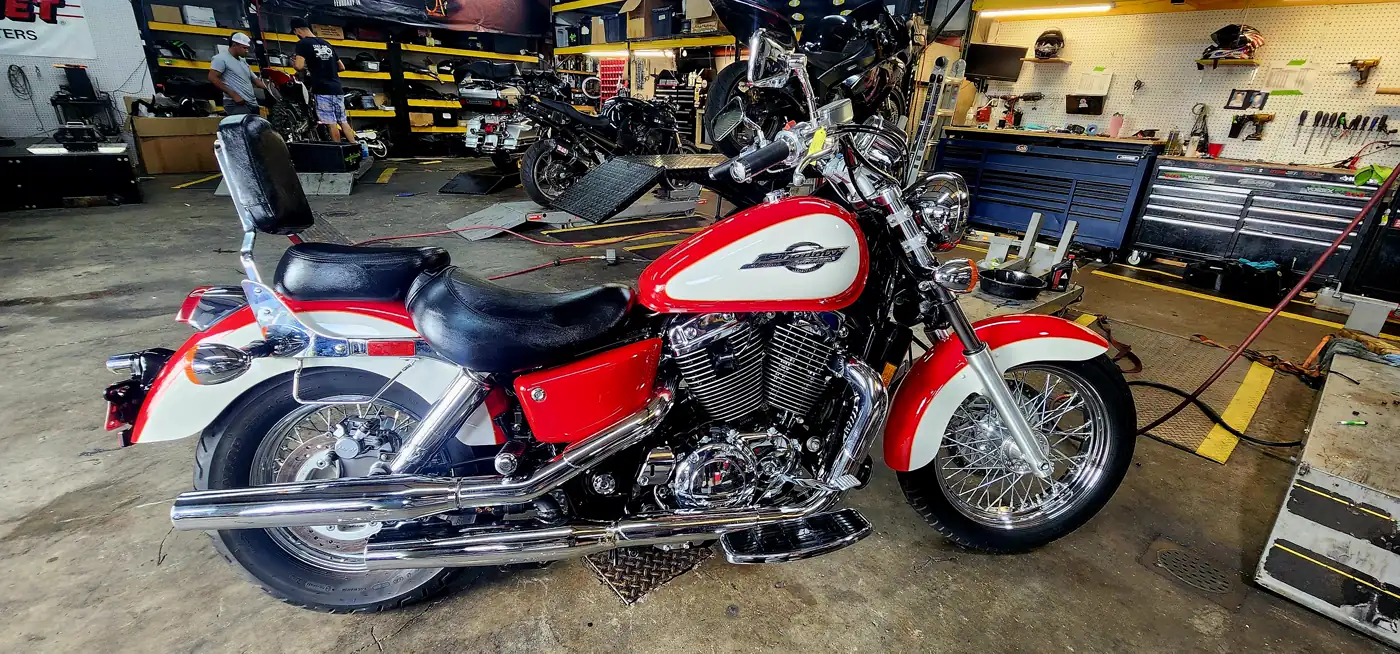
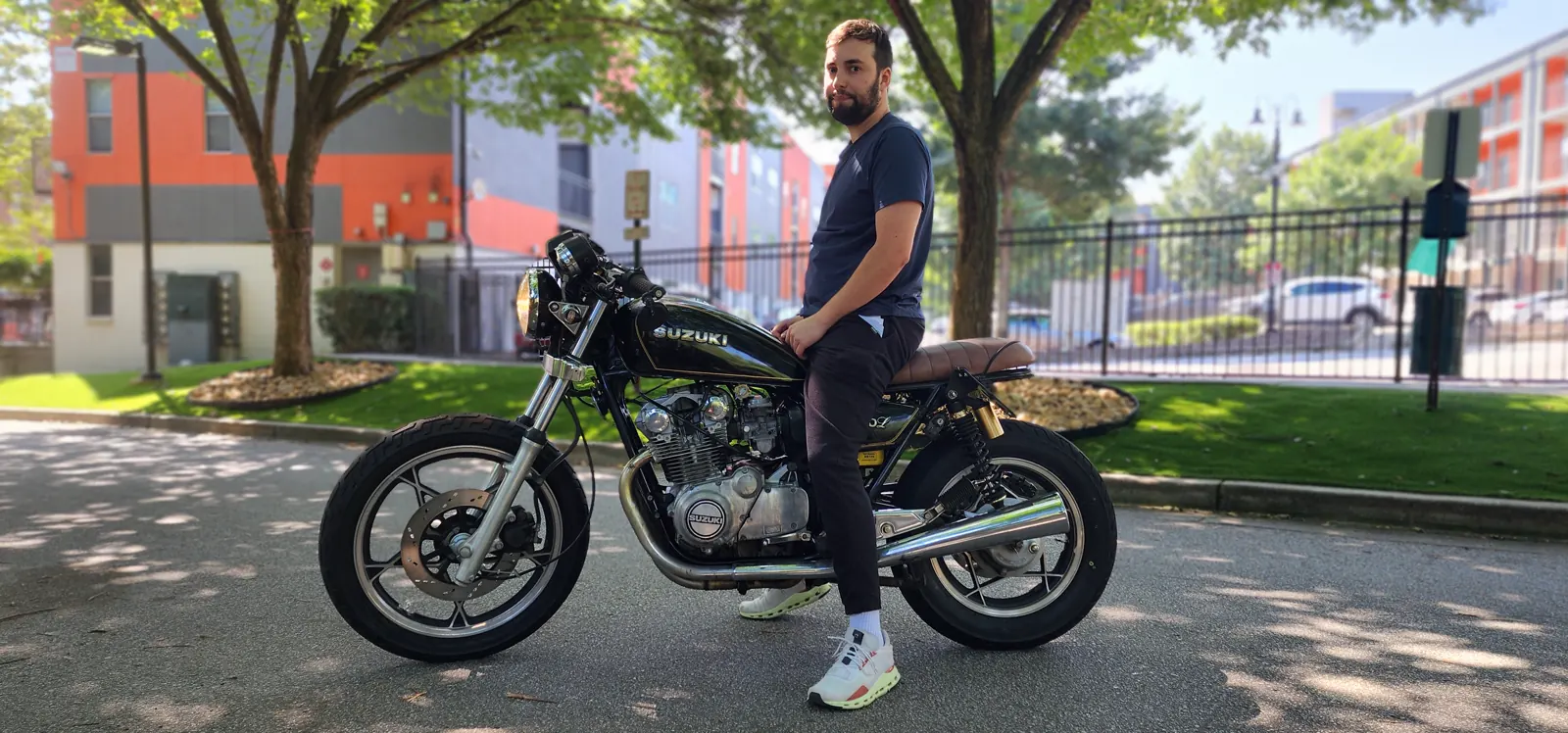
A friend we helped parks near the Smyrna end of the Silver Comet Trail, close to where the trail starts its long run west. Naked bike, slip-on exhaust installed by the previous owner, no tune after. It surged at a steady forty and cooked his right leg in summer traffic. He’d been told it was “just how they run.”
It wasn’t. The baseline pull showed it running lean through the exact cruise range where he spends his life, which is the classic aftermarket-pipe-with-a-stock-map story. We also found an exhaust leak at the header that was skewing the readings, so we fixed that first. Then we mapped it properly, run after run. He picked it up, rode it home, and texted us from a table at Muss & Turner’s to say the surge was gone and his leg wasn’t cooking anymore. That’s a good afternoon.

What it actually feels like after
People expect a tune to feel like a rocket. Usually it feels like relief. The snatchy on-off throttle smooths out. The bike pulls from where you actually ride instead of only up top. Heat drops in traffic because the engine isn’t running lean while it idles. Fueling stops fighting you at parking-lot speed, which matters a lot when you’re threading an apartment lot near Oakdale or Vinings Landing with a full backpack.
Riders describe it as the bike finally doing what their hand asked for. No surprise, no hesitation, no lurch. It’s the same machine, just honest now.
There’s a quieter benefit too. A bike with clean fueling is easier on itself. It isn’t running hot at idle, isn’t washing the cylinder walls with extra fuel, isn’t fouling plugs every few thousand miles. Over a few Georgia summers of commuting, that adds up in the best way, because the parts that usually wear early stop getting punished. Smoother is also simply nicer to live with when you’re stuck behind a line of brake lights on a hot afternoon.
A good tune doesn't make your bike louder. It makes it agree with you.
Why we won't quote it sight-unseen
You can call any shop and get a number over the phone. What you can’t get over the phone is accuracy. We don’t know your exhaust, your filter, your ECU generation, your valve history or whether there’s a leak faking a lean reading. Quoting blind means one of two things happens: we guess high and you overpay, or we guess low and call you mid-job with bad news. Neither is a good look.
So we look first. We tell you what we found, what it takes, and what it will and won’t change. Then you decide with real information. If you’d rather not drive, that’s fine too — Smyrna has no full-service motorcycle shop inside city limits, and while a mobile option like Mini Boss Mobile Mechanic covers the city, dyno work needs the roller, so the bike does have to come to us. From Market Village that’s about eleven miles, usually twenty-two to twenty-eight minutes up South Cobb Drive or Atlanta Road and over on Roswell Road.
Timing it right
January and February are the quiet window here, and that’s the smart time to book tuning or ECU work. Winter is also when short-hop commuters collect the worst problems anyway, since a fifteen-minute ride never fully heats the engine, which leaves moisture in the oil and a battery that never quite catches up. Come in during the slow months and you roll into spring sorted, right about when the jonquils start showing up all over the Jonquil City. If you want broader context on riding trends, the Motorcycle Industry Council tracks it nationally.
The takeaway is simple. You don’t need to arrive with a diagnosis. You need to arrive with a description, and we’ll do the rest — measure it, show you the curve, explain the choices in plain words, and let you pick. That’s it.
Questions Smyrna riders ask us
What's actually included in a dyno tune?
A baseline run to see where your bike stands, a health check on filter, plugs, leaks and sync, then live mapping with an air-fuel sensor in the exhaust. We do run after run until the curve is clean. You leave with before-and-after numbers, not just a promise.
How long does it take?
A straightforward tune on an easy-access bike is usually a same-day job. Bikes with hidden ECUs, heavy bodywork or extra hardware take longer, and a full build tune can run into a second day. We give you a realistic window once we’ve seen the bike, not before.
Is it mostly parts or mostly labor?
On tuning work, labor almost always leads. Parts might be a module, a sensor bung or fresh plugs. The bulk is hands-on time: getting to the ECU, running the bike, reading the data and adjusting it again. Access is the biggest single variable.
Does my type of bike change the work?
Yes, quite a bit. Naked bikes and modern classics tend to be quick to open up. Faired sportbikes and premium European sport-touring or ADV machines take real time just to reach the computer. Scooters and small-displacement bikes have their own quirks too.
What if you find something else while it's here?
We stop and call or text you. If a tight valve, an exhaust leak or a tired plug is going to make the tune worse, you should hear about it before we spend your time. Nothing extra gets done without a yes from you first.
Can I just text you instead of calling?
Please do. Text is the fastest way to reach us, send a photo of your setup or ask a quick question between meetings. You don’t have to sit on hold during your workday to get an answer from a real person here.
We take care of riders all over the west side of metro Atlanta. Smyrna sits about eleven miles from the shop, and we see plenty of folks from Marietta, Vinings, Mableton and Austell every week. Riders come to us from Atlanta, Sandy Springs and Buckhead when they want mapping done in-house instead of shipped out. We also serve East Cobb, Powder Springs, Douglasville, Kennesaw and Fair Oaks, whether the bike is a daily commuter or a weekend machine that only sees the good roads.
TEXT US ABOUT YOUR BIKE
If your bike feels flat, surges at cruise or cooks you in Smyrna traffic, send us a text and describe it in your own words. No technical vocabulary required. Tell us what it’s doing and what you ride, and we’ll tell you straight what’s involved, what we’d check first, and whether a tune is even the right move for you.
470-460-9883Diaz Motorcycles and Service, LLC · 847 Barnes Mill Road, Marietta, GA 30062