Faded Motorcycle Paint Roswell — What to Check
That chalky, washed-out tank has a cause you can name and a fix you can plan. Here's how to read what your paint is telling you.
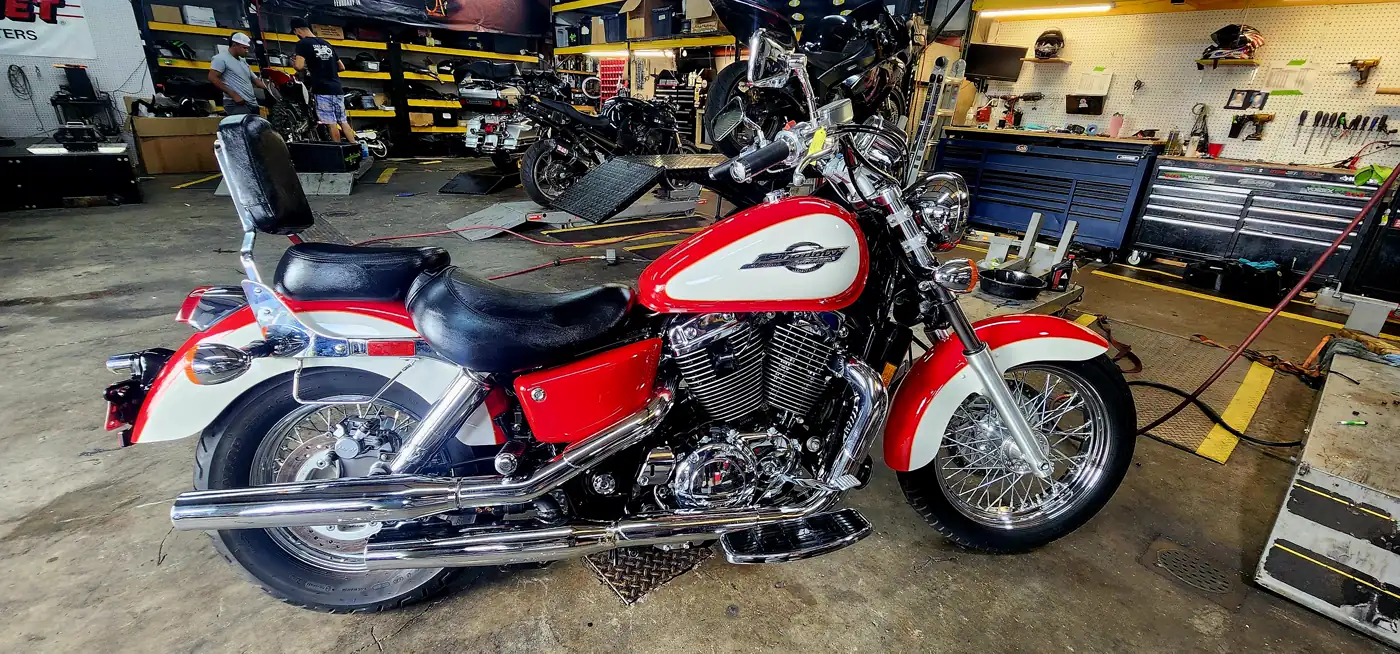
Even so, Want to know the number-one thing that rolls into our bays on a bright Saturday morning? What’s more, it isn’t a blown motor or a bent rim. After that, it’s a rider who parks, points at the tank, and tells us the color just doesn’t look like the color anymore. Also that worn, washed-out look is exactly what faded motorcycle paint Roswell riders bring us, more often than almost any other single complaint. Instead here’s the good part up front: it’s fixable, and it gets a whole lot easier to fix once you know exactly what you’re looking at.
So let’s clear the air, because a lot of folks feel embarrassed about it. Besides you see a friend’s bike gleaming, then glance at your own tank thinking you did something wrong. You didn’t. Actually Faded paint is one of the most normal things that happens to a motorcycle, and it says almost nothing about the rider.
The myth: faded paint means a cheap bike or a lazy owner
The story people tell themselves is that shiny paint equals a careful owner and dull paint equals a neglected one. That’s the myth, and it’s a stubborn one. Truth is, some of the most babied bikes in North Fulton show up faded, and plenty of barn-find beaters have paint that still pops.
Fading doesn’t care how much you love the bike. It cares about sun, chemistry, heat, and time. A garage queen by a sunny window can fade while a daily rider under a cover holds its color. So if you’ve been beating yourself up over a chalky tank, you can stop right now. This is physics, not a report card.
What's really happening to your paint
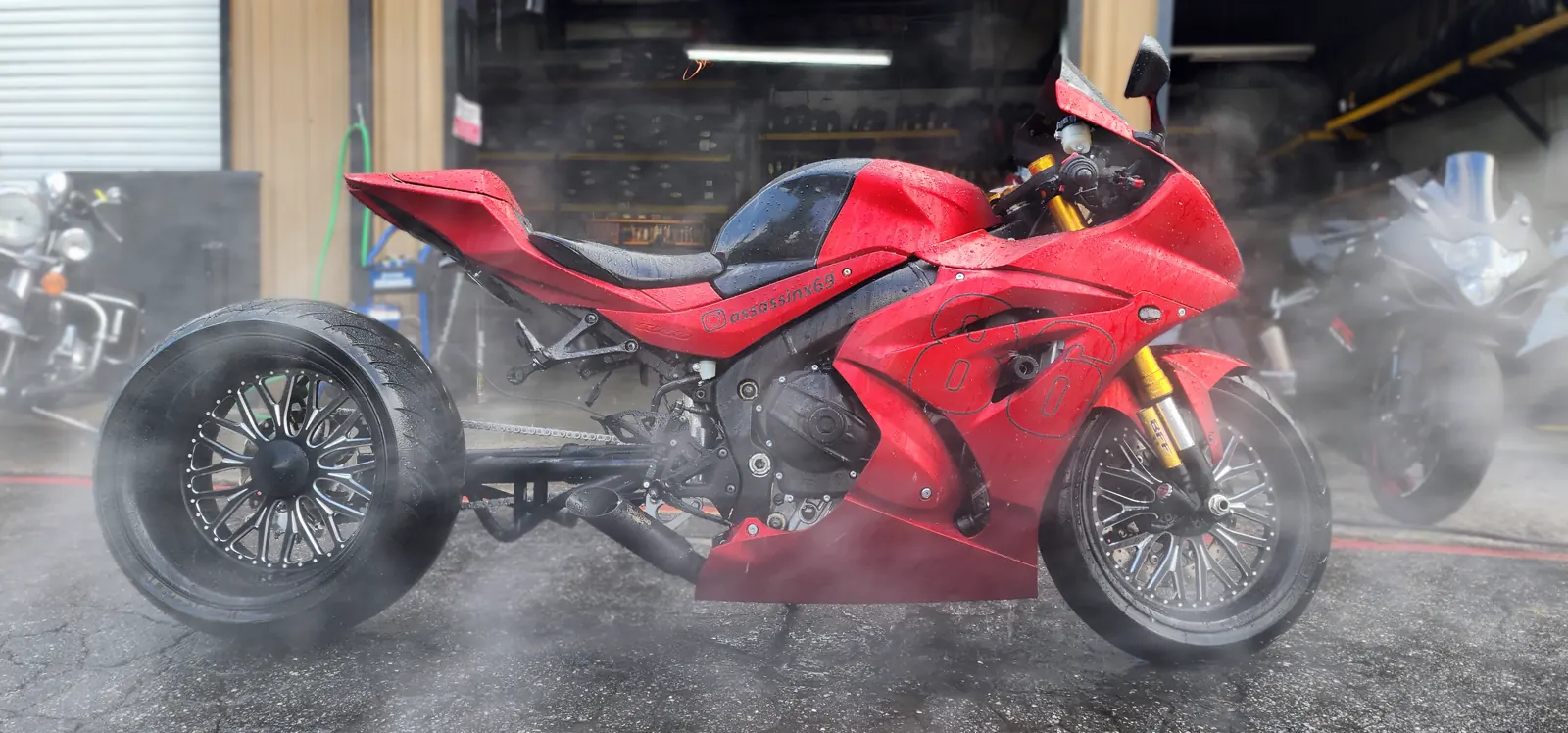
Your bike’s finish is built in layers, kind of like a cake. Primer at the bottom, then the color coat you actually see, and on top a clear coat that acts like a shield. That clear layer is the real hero. It takes the sun, the rain, the bug guts, and the wash rag so the color underneath stays protected. When paint looks faded, nine times out of ten the color itself is fine. It’s the clear coat above it that’s worn thin, gone hazy, or started to break down.
Think of it like sunglasses. New clear coat is a bright, clean lens. Old clear coat is a scratched, cloudy lens, and everything you look at through it goes dull. The color hasn’t changed. Your window to it has. That’s why the faded motorcycle paint Roswell owners hate can often come roaring back once we cut through or replace that top layer, and it’s why a quick coat of wax only fools you for a weekend.
The most common causes, plainest first
Now for the useful part. Here’s what actually causes fading, in the order we see it most often, so you can play detective on your own bike before you ever call us.
- Sun and UV. This is the big one by a mile. Ultraviolet light slowly cooks the clear coat and dries out the color underneath. Reds and candies fade first, then blacks go gray. If your bike sleeps outside, or near a sunny window, the sun is almost always the main suspect.
- Washing habits. A dirty rag, a gritty sponge, or a harsh cleaner drags tiny scratches across the clear coat every single time. Those little swirls scatter the light and read to your eye as dullness. It builds up so slowly you never catch it happening.
- Age and thin factory clear. A lot of bikes leave the factory with a fairly thin clear coat to save weight and cost. Give it enough years and it simply wears down to nothing, no matter how gentle you’ve been.
- Heat cycles. Paint near the tank tunnel, the pipes, or the engine gets baked and cooled thousands of times. That constant expanding and shrinking tires the finish out faster in those spots, which is why fading is often patchy, not even.
- Old or budget respray. If the bike was painted cheaply before you owned it, that clear coat can chalk, yellow, or peel early. Bargain paint tends to announce itself a couple summers in.
Notice a theme? Almost every cause on that list attacks the clear coat, not the color. That’s genuinely great news, because it means the fix is usually about restoring or rebuilding that top shield rather than repainting the whole machine. Something changes once you know what to look for. You stop seeing a ruined tank and start seeing a tired lens with good color waiting underneath.
Here’s the quick home test. Run a clean finger across a faded spot. If you pick up a faint chalky film, that’s oxidized clear coat surrendering, and it often responds beautifully to a machine polish. If instead you feel rough edges, flaking, or bare spots where the shine has lifted away, the clear coat has failed and you’re looking at a refinish on that panel. Either way, you now know more about your paint than most riders ever bother to learn.
When it's just looks, and when it's a warning
Let’s answer the question that’s really on your mind. Can you keep riding a faded bike? In almost every case, absolutely yes. Fading by itself is cosmetic. It’s a looks problem, not a safety problem, and a chalky tank has never once stopped a bike from getting you home. Ride it, enjoy it, and fix the paint when the timing suits you.
That said, there’s one situation where dull paint is trying to tell you something. If the clear coat has peeled all the way down to bare metal on a steel tank, water can now reach that metal. Bare steel plus Georgia humidity eventually means rust, and rust on a fuel tank is the kind of thing you want to catch early. So the honest line is this: faded and smooth means ride happy. Peeled down to raw metal, cracked, or bubbling means get it sealed before the weather does the deciding for you. Watch those exposed spots, keep them dry, and you control the timeline instead of the other way around.
THE QUICK RULE
Chalky but smooth to the touch? Cosmetic. Ride it. Peeled to bare metal, cracked, or bubbling? Still safe to ride, but get that panel sealed before moisture starts rust. You decide when, not the tank.
How we find the real cause
When a faded bike comes in, we don’t reach for a spray gun first. We reach for good light and clean hands. Reading paint correctly is the whole game, because the fix for tired clear coat and the fix for failed clear coat are completely different jobs, and guessing wrong wastes your time.
- We look in real light, not shop fluorescents. Rolling the panel under sunlight shows swirls, haze, and thin spots that hide indoors.
- We feel the surface. Smooth chalk gets one plan. Rough, flaking, or lifted edges get another.
- We check the whole bike, not just the loud spot. Fading tells a story about how the bike was stored, and matching that story keeps a repair invisible.
- We test a small hidden area first. A gentle polish on a corner tells us fast whether the shine is recoverable or gone for good.
- Then, and only then, we tell you the plan in plain words, with no surprises waiting at pickup.
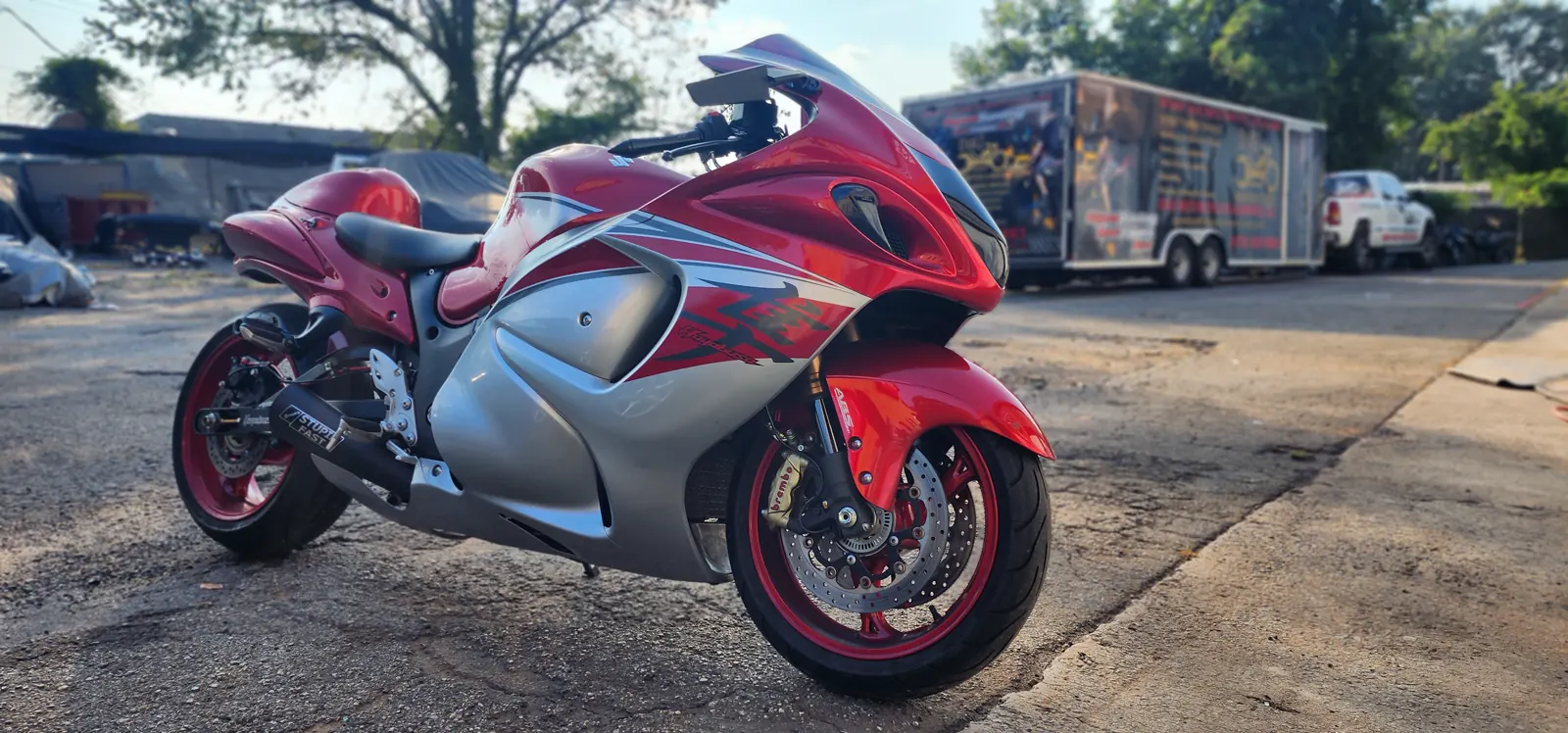
Sometimes the answer is a machine polish that pulls years of dullness off in an afternoon. Sometimes it’s a refinish on one panel, color-matched so carefully that nobody can tell the tank from the fenders. Matching an existing color is one of the trickiest skills in this trade, because sun shifts a factory shade over time, so “stock red” on a ten-year-old bike isn’t the same red anymore. Getting that match dead-on happens in our bays every week, and it’s why we don’t farm this work out to anybody else.
How to spot a paint shop worth trusting
Roswell has no shortage of places that will touch a motorcycle, but real custom paint under one roof is genuinely rare around here. Most shops send it out to a third party, add a markup, and cross their fingers on the color match. So if you’re comparing options, here’s what separates a good shop from a coin flip.
- They paint in-house. Their own booth, their own hands. That means they own the result instead of blaming the guy they shipped it to.
- They talk about prep before color. The best paint jobs are eighty percent bodywork and sanding. If a shop only wants to chat about flashy graphics, keep looking.
- They won’t rush the timeline. Real paint needs time to lay down, cure, and clear properly. Anyone promising a same-day custom finish is cutting a corner you’ll see in a year.
- They’ll show you old work. Candy, metallic, flake, pinstriping, murals, a clean color change. Proof beats promises every time.
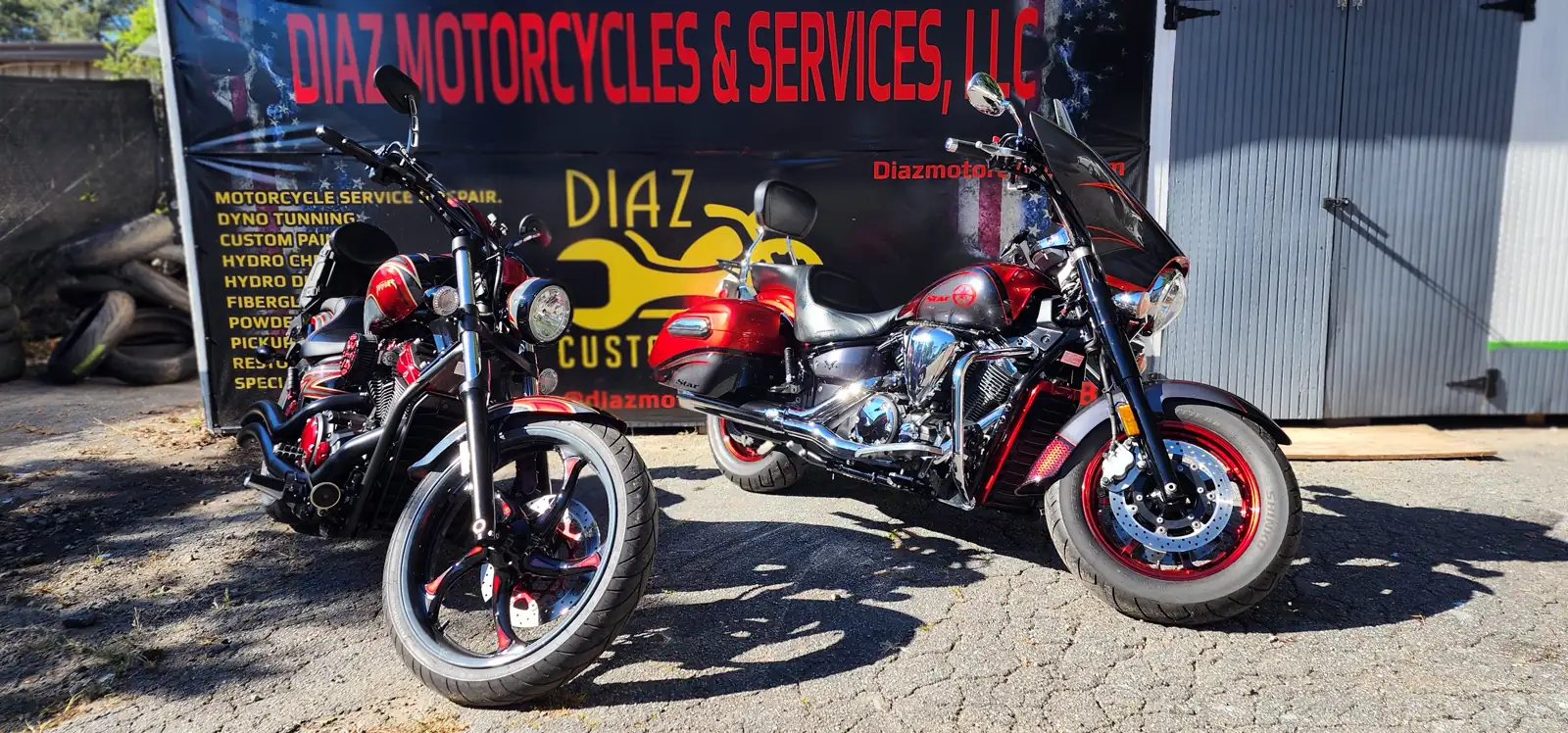
That prep point deserves a second look, because it’s where cheap jobs die. Before a drop of color goes down, the panel gets stripped, dents worked out, primed, and block-sanded flat as glass. Skip that and every ripple underneath shows straight through the shine. It’s the boring, invisible part, and it’s what separates a finish that turns heads near Barrington Hall from one that looks tired by the next riding season. If you want the full walk-through of what happens in our bays, we lay every step out for you.
Why Roswell riders end up at our door
Getting to us is about as easy as directions get. From Canton Street and Historic Roswell you point the bike west on Roswell Road, which is GA 120, cross the Chattahoochee, and it becomes Marietta’s own Roswell Road as it drops you into East Cobb near the shop. It’s one road, roughly a fifteen-to-twenty-minute hop, and no, that isn’t a survey figure, just the honest feel of the ride. Folks on the Holcomb Bridge and GA 400 side have a slightly longer pull, but it’s still a single clean shot.
North Fulton has real dealer muscle. Killer Creek Harley-Davidson runs a full service department and a busy H.O.G. chapter right there on Alpharetta Highway. It’s great for a lot of things, but custom paint and color restoration just aren’t in that lane, which is the exact gap we were built to fill. And because so many of you store bikes in older two-car garages around Martin’s Landing, near that fifty-three-acre lake, or in the upper-tier streets of Barrington, we know you’ve got room to park a machine but not always room to work on one. So we’ll come grab the whole bike, or just the tank and panels, and keep your week running.
There’s a reason Roswell riders sweat their paint more than most. This is a town that restored Barrington Hall and guards the historic village character of Crabapple up in North Roswell, where old homes sit beside brand-new luxury builds. People here care how things are kept. The same eye that notices a chipped shutter notices a chalky tank at a stoplight, and a fresh finish reads like pride out on Willeo Road, that tight, tree-lined river run past the Chattahoochee Nature Center where half of us shake down a bike after service. And if your rides lean toward the Chattahoochee River National Recreation Area, with the Vickery Creek, Island Ford, and Gold Branch units all brushing the edge of town, your paint lives outdoors more than you’d think.
The part that has nothing to do with parts
Now for the part that has nothing to do with parts at all. Ask any rider what the most personal thing they’ve ever done to a bike is, and almost none will say the exhaust or the tires. They’ll say the paint. Your color is your signature, the first thing a stranger sees at a gas pump and the last thing you look at when you shut the garage door at night. When it fades, a little piece of that pride fades with it, and getting it back feels bigger than a cosmetic job has any right to feel.
Faded paint isn't a verdict on the rider. It's a lens gone cloudy, and clearing it brings the color, and the pride, right back.
That pride is why we treat a candy finish or a clean flake job like it matters, because to you it does. We’re the same crew handling performance work, so if you ever pair a fresh look with real power, here’s how we handle that job on the dyno, and you can read up on Dynojet’s dyno center to see the machine we run. Newer rider brushing up first? The MSF rider courses are a solid start before you chase horsepower or fresh color.
Here’s where you land after all this. A faded tank is not a disaster and it is not your fault. It’s a worn shield over good color, it’s almost always safe to keep riding, and it’s a fixable job you schedule on your terms. You know the causes now, you know the home test, and you know what a real shop looks like. Fading in the neighboring cities works the same way, so if a friend across the river asks, point them to the Sandy Springs side of things. Either way, you’re in the driver’s seat now, and that’s exactly where a rider ought to be.
Questions Roswell riders ask us
What actually causes motorcycle paint to fade?
Sun and UV light are the biggest cause by far, drying out the clear coat that shields your color. After that come gritty wash habits, a naturally thin factory clear coat, heat cycling near the tank and pipes, and old budget respray work that chalks early. In most cases the color itself is fine and it’s the clear coat on top that’s worn out.
Is it safe to ride with faded paint?
Almost always, yes. Fading by itself is purely cosmetic and won’t affect how the bike runs or stops. The one exception is when the clear coat has peeled down to bare metal on a steel tank, because that can let moisture start rust over time. Even then it’s still safe to ride, but you’ll want that panel sealed sooner rather than later.
How do you find the real cause of the fading?
We read the paint in real sunlight, feel the surface with clean hands, and check the whole bike instead of just the loud spot. A gentle test polish on a hidden corner tells us fast whether the shine can be brought back or the panel needs a refinish. Only after that do we give you a plain-English plan with no surprises at pickup.
Could my dull paint be something other than fading?
Sometimes what looks like fading is really a haze of fine wash scratches, or oxidation you can polish away in an afternoon. Other times it’s failed clear coat that’s cracking or lifting, which needs a refinish instead. Running a clean finger across the spot usually tells the difference: chalky and smooth points to polishing, while rough or flaking points to a paint job.
What happens if I just ignore it?
If the paint is faded but still smooth, ignoring it costs you nothing but shine, and you can fix it whenever you like. The risk only shows up when clear coat has peeled to bare metal, because moisture can then start rust that spreads and gets harder to fix. Catching that early keeps a small cosmetic job from turning into real bodywork later.
Can you match the fix to my existing color?
Yes, and matching is one of the skills we’re proudest of. Sun slowly shifts a factory shade, so an older bike’s color isn’t the same as fresh stock paint, and a good match accounts for that. We blend and clear the repair so a single refinished panel disappears against the rest of the bike.
We take care of riders all across North Fulton and the northwest metro, so besides Roswell we regularly see bikes from Alpharetta, Milton, Johns Creek, and Crabapple on the North Fulton side, along with plenty of friends over in East Cobb, Marietta, Kennesaw, and Woodstock. Sandy Springs, Dunwoody, and Mountain Park riders make the short hop too, and folks from Atlanta proper bring us the jobs their local shops won’t touch. If your color has gone chalky anywhere in that stretch, the drive to us is an easy one.
LET'S BRING YOUR COLOR BACK
If the paint on your bike has gone dull, don’t guess and don’t beat yourself up over it. Text us a photo of the tank from Roswell and we’ll tell you straight whether it’s a quick polish or a refinish, then set up pickup so you never have to load the bike yourself. Your color is your signature, and we’d love to make it snap in the light again.
470-460-9883Diaz Motorcycles and Service, LLC · 847 Barnes Mill Road, Marietta, GA 30062