Faded Paint Sandy Springs — Why It Happens
Late summer sun turns a proud tank dull. Here's what's really going on, and why it's fixable.
At the same time every year around late August, the shop phone starts ringing with the same worry. The sun has been beating down since June, the heat index has been parked near 100 for weeks, and a rider finally walks out to the garage and really looks at their tank. The red isn’t red anymore. It has faded to a tired pink. That’s the season for faded paint Sandy Springs riders come to know, and if you’re staring at a dull tank right now, you’re in very good company.
So let’s talk about it plainly. You’ve got a symptom, you don’t fully know the cause yet, and you probably want one answer above all the rest: is this just cosmetic, or is something actually wrong with the bike? Here’s the good news right up front. Faded paint is almost never a mechanical problem. It’s a finish problem, and finish problems have fixes. That means you can stop worrying that your engine or your frame is somehow to blame.
What you're really asking
When a rider points at a washed-out tank, the real question underneath is bigger than the color. You’re wondering if the bike is aging faster than you thought, and honestly, you’re a little sad, because a motorcycle is a personal thing and yours stopped looking like yours. All of that is normal, and none of it means you neglected the bike. Paint fades on well-loved machines that live outside, and around here, a lot of machines live outside.
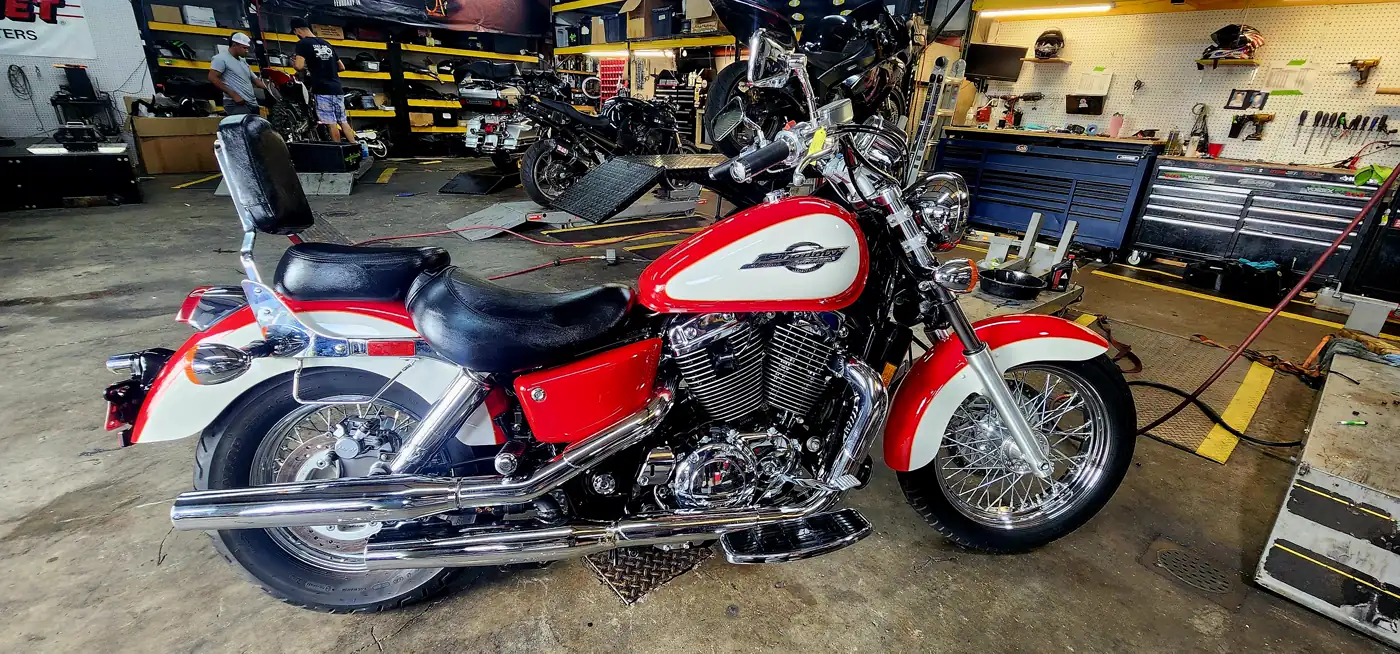
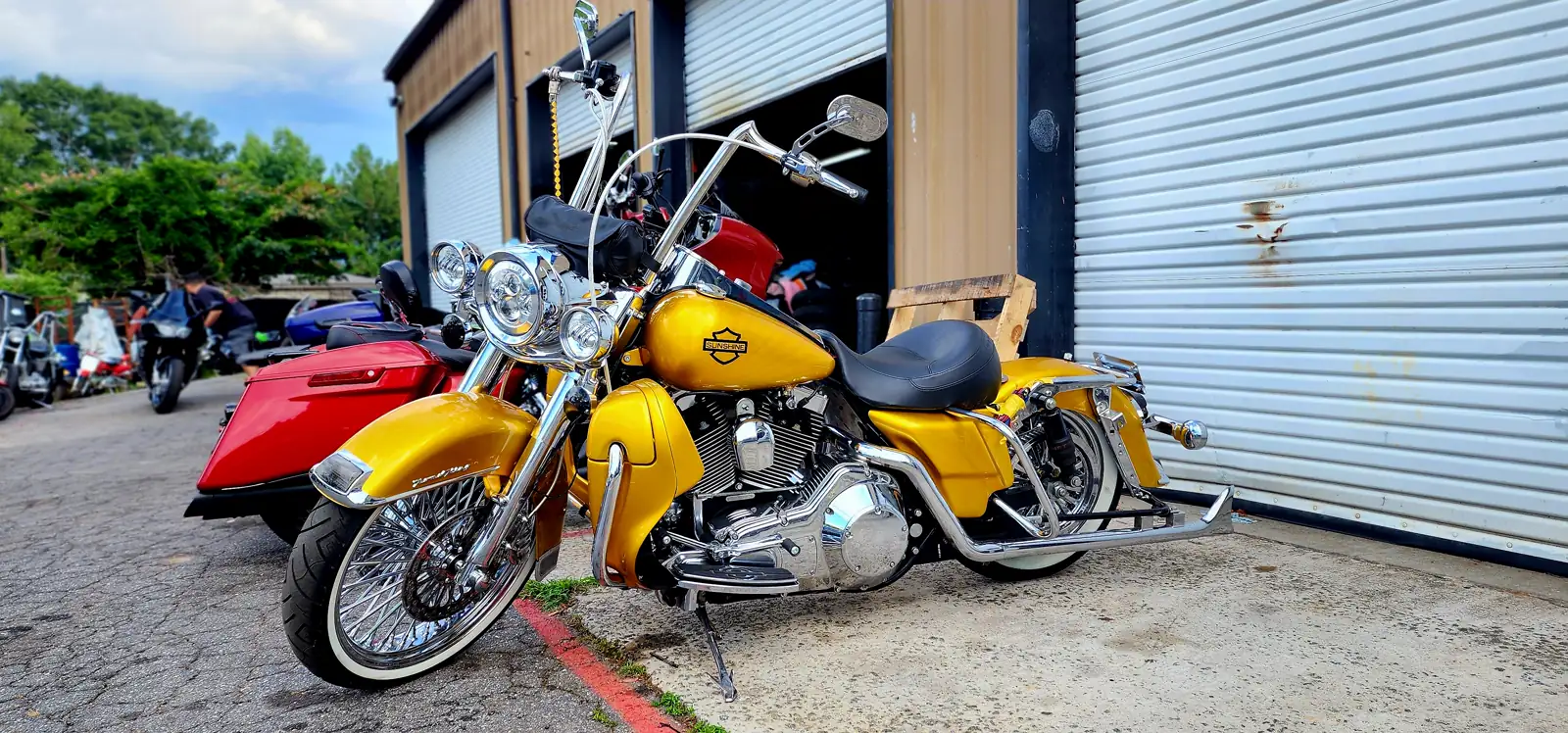
Fading usually shows up as a few clear signs. The color goes flat and chalky instead of deep, so reds drift toward pink and blacks drift toward a dusty gray. The gloss dies first, and the surface that used to throw a mirror-shine now looks like a matte photo. In bad cases you’ll see a milky haze, or the clear coat starts peeling at the edges of a panel where the sun hits hardest.
The honest answer: what's actually happening
Fading is the finish breaking down from the top layer down, and there are a handful of usual suspects. Let’s take them in order, most common first, so you can spot which one is yours.
Ultraviolet light is the number one cause. Sunlight carries UV energy that slowly cooks the clear coat and breaks the bonds in the pigment underneath. Reds and yellows fade the fastest because those pigments are the most fragile. Georgia summers are long and bright, and a bike parked in full sun day after day takes the full dose. This is why the tank and the top of the fender fade before the sides do. The sun simply lands on them longer.
Heat is the close second, and it partners with the sun. A dark tank sitting in a surface lot can get blistering hot to the touch. That heat cycle, hot all afternoon and cool at night, stresses the clear coat over and over until it dulls and micro-cracks. Add our humidity and near-daily summer storms, and moisture works into any crack the heat opened up.
Bad washing habits are a quiet third. Harsh degreasers, dish soap, and dirty rags full of grit put tiny scratches in the clear coat, and each scratch scatters light instead of reflecting it. A lot of riders think their paint is fading when really the gloss is just scratched to death, while the color under it is often fine.
Covers can hurt more than they help. A cover thrown over a warm bike traps moisture against the paint, and if the wind flaps it, the inside rubs the finish like a slow sander. We’ve helped friends whose bikes faded worse under a cover than they would have out in the open.
Age and the original paint quality round it out. Factory clear coat is thin. Some older bikes never had much to begin with. Once that thin layer wears through, the color is exposed and it goes fast. If you own a bike from the 1970s or 80s, this is often the real story, and it’s why so many of those machines look tired even when the engine runs like new.
So is it safe to ride?
Almost always, yes. Faded paint by itself is cosmetic. It doesn’t touch your brakes, your tires, or your engine, so you can ride to work tomorrow without a second thought. There’s one exception worth knowing. When the clear coat actually peels and bare metal or bare plastic gets exposed, that spot can start to rust or the plastic can get brittle in the sun. That’s still not a safety issue, but it’s the moment cosmetic damage starts becoming real damage. If you’re seeing bare metal, don’t panic, just don’t let it sit for a full season. Everything before that stage can wait until you’re ready.
What changes the picture
Here’s the part that surprises people. Two bikes with the same symptom can need completely different work. One rider’s dull tank comes back to life with a good machine polish and fresh sealant, because the color underneath was healthy and only the gloss was gone. Another rider’s tank looks identical from six feet away, but the clear coat has failed all the way through, and that one needs to be stripped, prepped, based, and re-cleared from scratch. Same look, totally different job.
How do we tell them apart? We look close, in good light, and we touch it. If the surface polishes up and the color deepens under a little compound, the paint is still there and we’re in the easy camp. If the color stays chalky no matter what, or the clear is flaking, the finish is done and polishing would just be lipstick on it. A lot of shops guess. We’d rather look first, because the honest answer saves you from paying for the wrong fix. If you want to see how the numbers shake out either direction, we broke down what changes the total in a separate post.
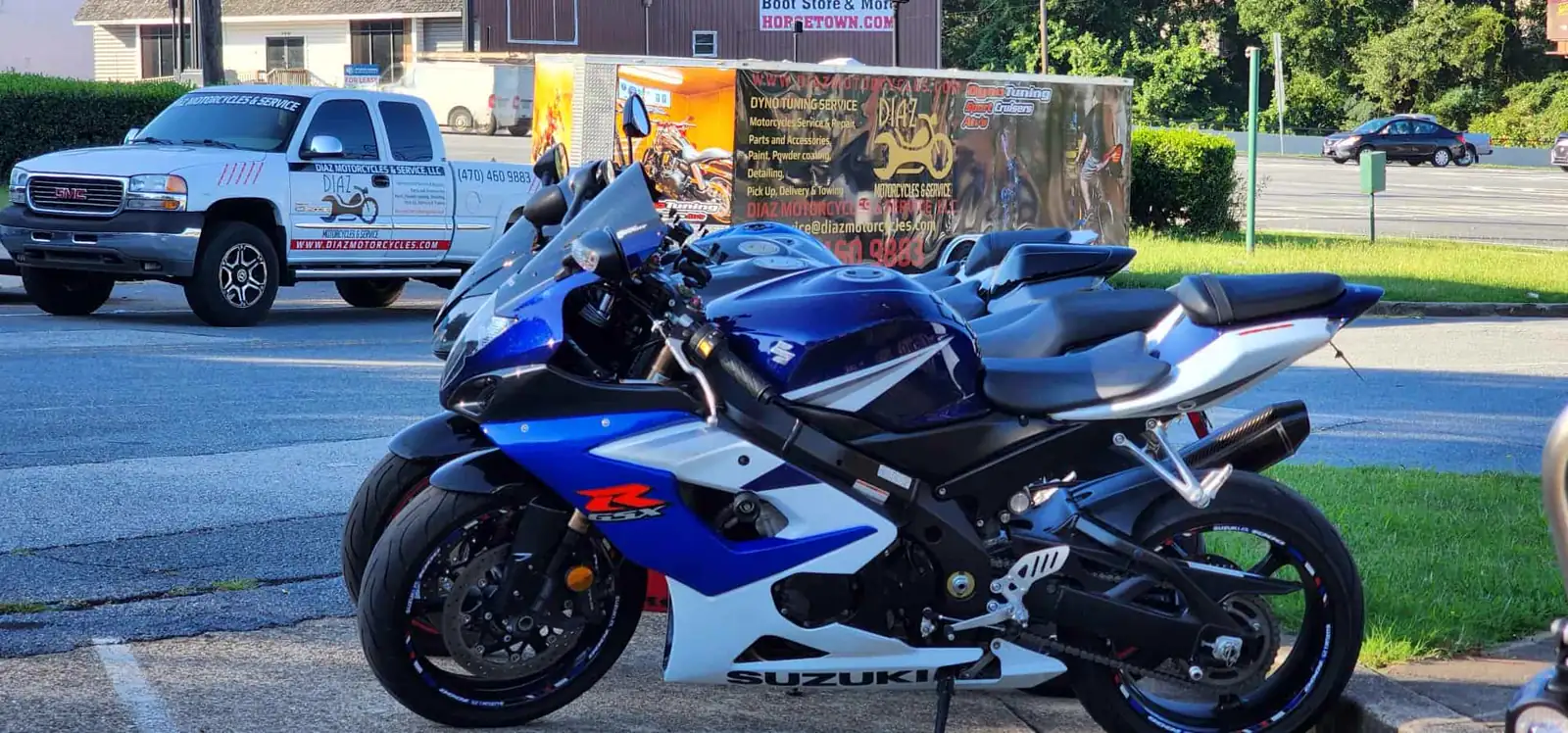
The bike itself changes things too. A solid factory color is the simplest to bring back or match. Metallics and candies are harder, because the flake and depth have to be rebuilt in layers, not sprayed on flat. And if your fade is only on one panel from a repair, matching that panel to a sun-aged bike is its own skill, because we’re not just matching the paint code, we’re matching that code plus five summers of sun. That’s the honest reason a real custom job takes the time it takes, and why the timeline depends on the work in front of us rather than a number we’d make up.
How we actually do it
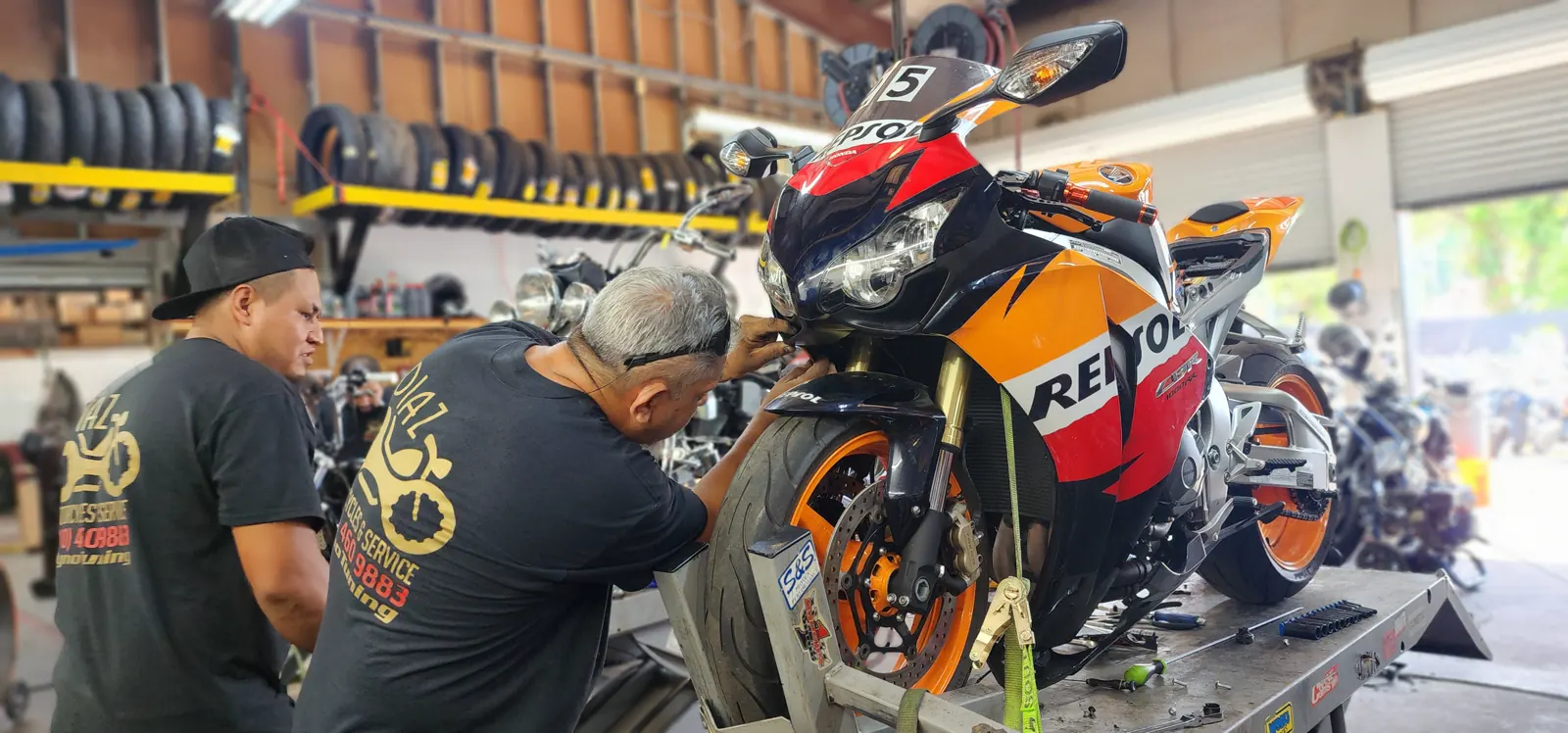
When a faded bike comes to Diaz Custom Works, the real work happens before any color goes on. Most people picture spraying. The truth is that prep and bodywork decide whether a paint job looks incredible or looks cheap, and it’s most of the labor. Here’s the plain-language version of the road a tank travels through our booth.
- We strip the old finish and get down to a clean, sound surface. Any dents, chips, or road rash get filled and blocked flat, because paint hides nothing. It actually magnifies a wavy panel.
- We prime and prep, then sand it smooth again. This is the boring, patient part nobody sees and everybody feels when the final gloss is dead flat and perfect.
- We lay the base coat, which is your actual color. On metallics and candies this is several careful layers, building the depth and the flake so it reads rich instead of painted-on.
- We shoot the clear coat over the top. Clear is the armor and the shine. It’s what makes the color look wet and deep, and it’s what protects the base from the same UV that faded your last finish.
- We let it cure, then wet-sand and buff the clear to a mirror. This final polish is where a tank goes from good to the kind of gloss that stops people in a parking lot.
That’s also where custom comes in, if you want it. Once a bike is in the booth for color anyway, riders often add the thing they always pictured: airbrushed graphics, a mural, pinstriping by hand, a candy finish that changes in the light, or a full color change to something that’s finally theirs. Almost no shop around here does this under one roof. Most farm it out or don’t touch it, while we keep it in our own booth, which is exactly why we lead with it. If you’re curious how our crew thinks about a build, here’s how our crew approaches it from the first sketch on.
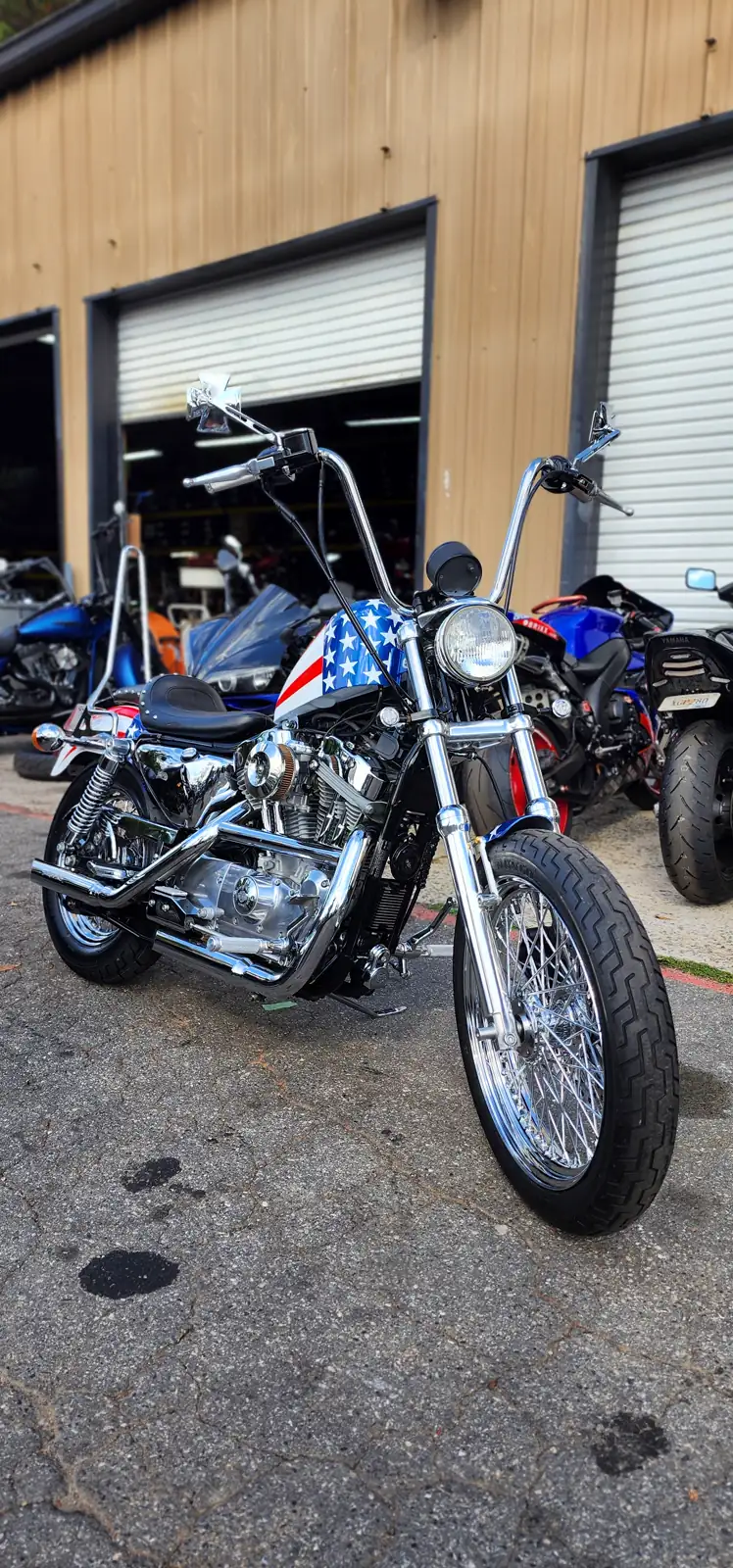
Not every job is a full custom, and that’s fine. Plenty of friends we’ve helped just wanted their original color back, deep and glossy like the day they bought it. Others came in with a scraped fairing and left with a matched panel nobody can find. The point is that faded paint isn’t the end of a bike’s good looks. It’s the start of the best it’s ever looked.
A custom paint job is the most personal thing a rider does to a bike. It should look like you, not like everyone else.
The local part: why Sandy Springs sees so much of this
Sandy Springs is a genuinely tough town on paint, and it’s not the riders’ fault. It’s the setup. A huge share of homes here are rentals, spread across apartment corridors and older complexes, and that means a lot of good bikes live under carports, in condo decks, in surface lots, or right on the street. No garage means no shade and no shelter, so the sun and the heat get the full year with your finish. That’s the real engine behind so much faded paint Sandy Springs summers leave behind.
Then there’s the road life. Roswell Road runs like the city’s spine, about ten miles of retail on aging pavement full of utility-cut patches and manhole lips, and daily miles on rough surface throw up grit that grinds at a clear coat over time. Riders in Riverside near the river, families in Deerfield, and the established streets of Overton Hills all deal with the same sun and the same pavement. A bike parked near the Chattahoochee River National Recreation Area picks up river humidity on top of the heat, and after a night out at the Sandy Springs Performing Arts Center at Byers Theatre, that same bike sits in a lot soaking up UV the whole show. None of that is neglect. It’s just life in a city with almost nowhere to garage a motorcycle.
It’s worth saying Sandy Springs has no motorcycle shop of its own inside the city, so riders here already drive somewhere for anything real. WOW Motorcycles sits about twelve to fifteen miles west in Marietta and has served the area for decades on the sales side. For paint and bodywork specifically, though, an in-house booth is rare, and that’s the gap we fill. If you ride East Cobb roads too, here’s what East Cobb riders run into on the same subject.
One thing riders thank us for later
One more thing, and it’s the part riders thank us for later. You don’t have to trailer a whole bike across town to get paint done. On most jobs, the tank and the panels are all that need to come off, and those fit in a car or ride over on our trailer while you keep the rest of the bike at home. For a city where a lot of folks have no garage and no easy way to load a machine, that’s not a small thing. It’s the difference between getting it handled and putting it off for another summer.
The drive itself is short when the whole bike does come. Diaz is roughly eight to eleven miles out, usually eighteen to twenty-eight minutes via Johnson Ferry Road west across the Chattahoochee into East Cobb, and it’s the same daily-ride road plenty of Sandy Springs riders already know. No interstate required, and from the Riverside and Powers Ferry side it’s under fifteen minutes. If you want to see the range before you decide, here’s what the work covers from color matches to full builds.
WHILE THE BIKE'S IN
If you’re riding rough Sandy Springs pavement, it’s a smart time to check the tires too. Michelin’s own guides help you read tread and age, and Georgia DOT tracks the roadwork that chews up your rubber. See Michelin’s motorcycle tire resources and Georgia DOT.
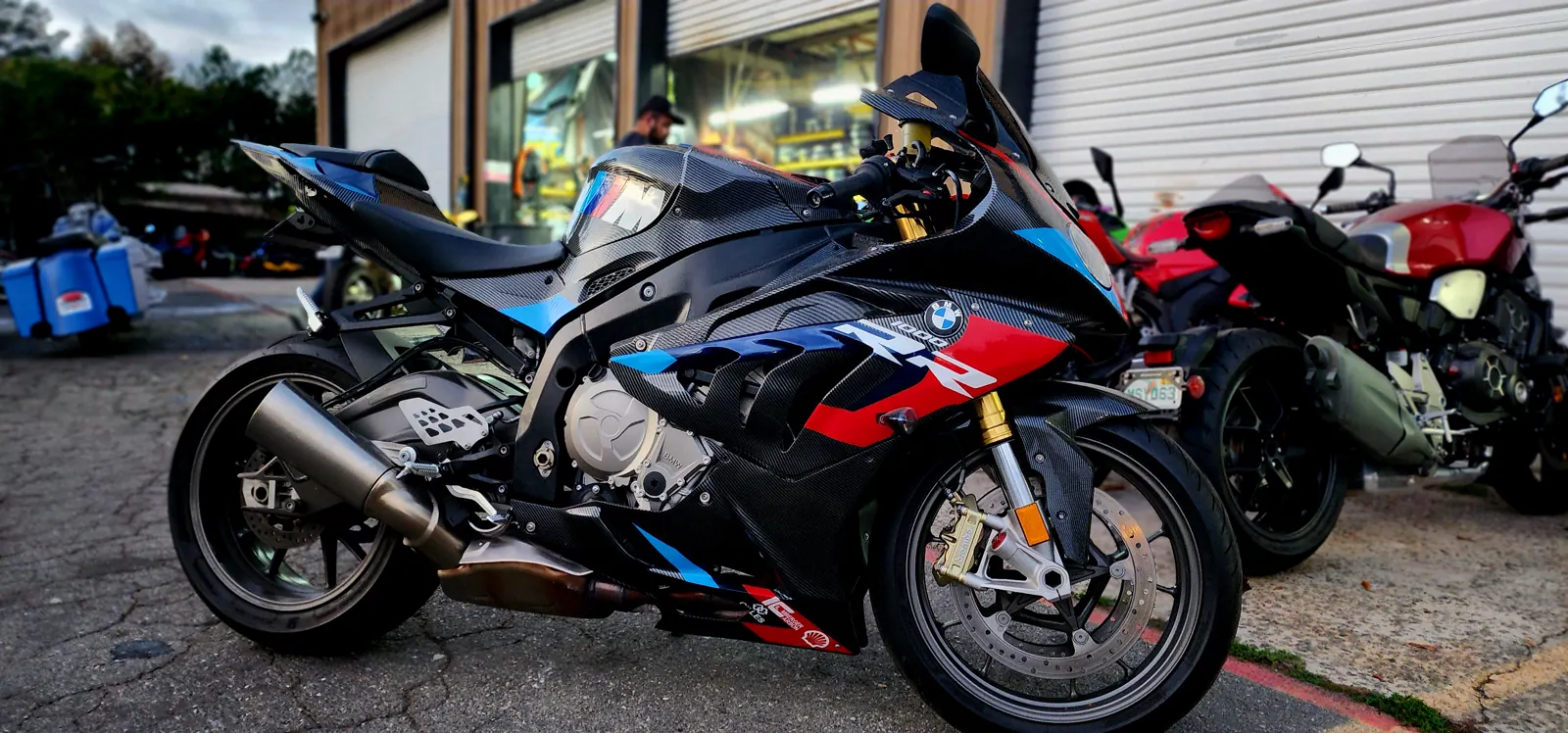
How it ends: a tank that looks like yours again
Here’s where all of this lands. Faded paint is a finish problem, it’s safe to ride on right up until the clear coat peels, and it’s completely fixable. Better than fixable, really, because you get to decide what comes back. Maybe that’s the exact factory color, deep and wet again, or maybe it’s the graphics you’ve pictured for years. Either way, you walk out with a bike that turns your head in the driveway, and that pride is the whole point. A finished tank catching the afternoon light, flake dancing under fresh clear, gloss so deep it looks liquid, that’s a feeling worth the wait. Your bike should look like yours, and we’d love to help make it so.
You didn't neglect your bike. The sun just had its turn. Now it's yours.
Questions Sandy Springs riders ask us
Will the fading get worse if I leave it?
Yes, slowly. UV and heat keep working every summer, so a dull tank generally gets duller and the gloss keeps dying. As long as the clear coat is intact, though, it’s only cosmetic and there’s no rush. Once you see peeling or bare metal, that’s the point to act before it turns into rust or brittle plastic.
How urgent is it, really?
For most riders, not urgent at all. Faded paint doesn’t affect how the bike runs or stops, so you can ride all season and fix it when you’re ready. The one time it becomes time-sensitive is when the clear coat fails and exposes bare metal or plastic, because that’s when weather can start doing real damage.
What happens if I just ignore it?
Usually the color keeps flattening and the shine keeps fading, which is a slow cosmetic slide. If you ignore actual peeling, though, exposed metal can corrode and plastic can crack, and then a simple refinish turns into repair plus paint. Catching it before that stage keeps the job simpler.
How do you figure out the real cause?
We look at it up close in good light and we touch the surface. If a little polish brings the color and gloss right back, the paint is healthy and only the top layer was tired. If it stays chalky or the clear is flaking, the finish has failed and it needs a proper strip and refinish. We check first so you don’t pay for the wrong fix.
Could it be something other than fading?
Sometimes, yes. What looks like fading is often just fine scratches and haze from harsh washing, and that polishes out with the color underneath still perfect. Water spots, oxidation, and cover rub can all fake a fade too. That’s exactly why we inspect before we quote a plan.
Do I have to bring the whole bike in?
Often not. On most paint jobs, only the tank and panels need to come off, and those can ride over in a car or on our trailer while the rest of the bike stays home. For riders without a garage or an easy way to load a bike, pickup and delivery makes the whole thing simple.
We paint and refinish bikes for riders all across the north metro, not just Sandy Springs. Friends roll in from Roswell, Dunwoody, and Alpharetta to the north, from Buckhead, Vinings, and Atlanta to the south, and from Brookhaven, Chamblee, and Doraville out east. Because the shop sits in Marietta just across the Chattahoochee, East Cobb and Smyrna riders have the shortest trip of all. Wherever you park, the sun treats paint about the same, and the fix is the same friendly one.
LET'S BRING THE COLOR BACK
If your tank has gone flat and chalky, don’t let another Sandy Springs summer have its way with it. Text us a photo of the fade and we’ll tell you honestly whether it polishes out or needs a refinish, and whether just the tank and panels can make the trip. Ask about pickup and delivery too. Your bike should look like yours again, and we’d love to make that happen.
470-460-9883Diaz Motorcycles and Service, LLC · 847 Barnes Mill Road, Marietta, GA 30062